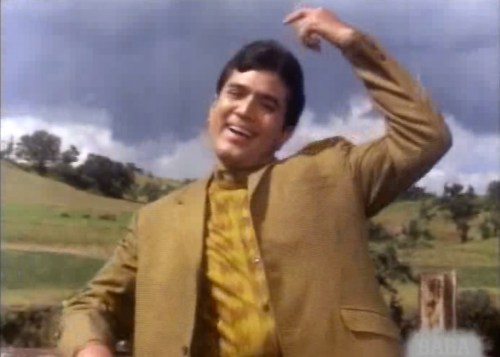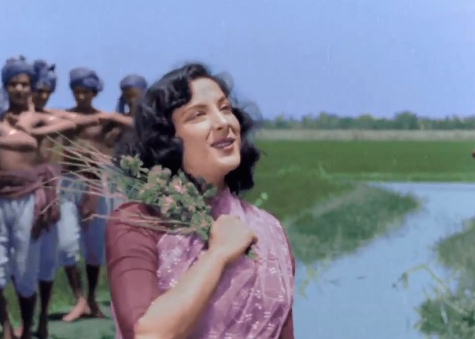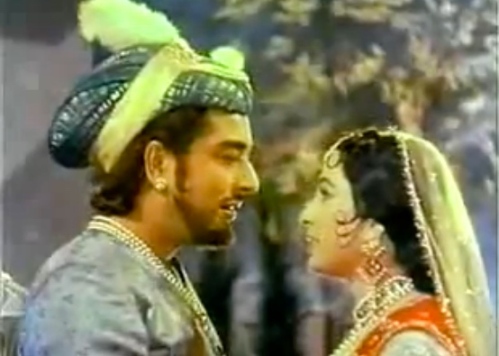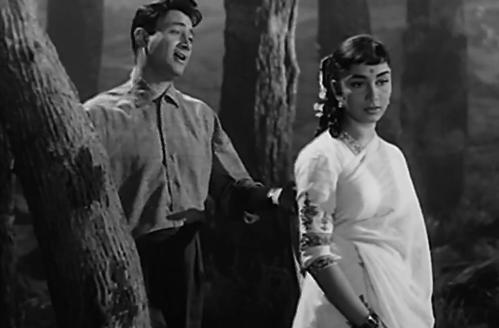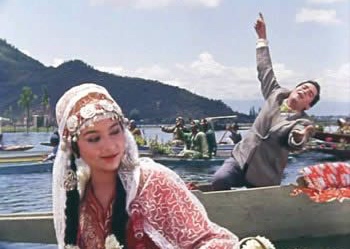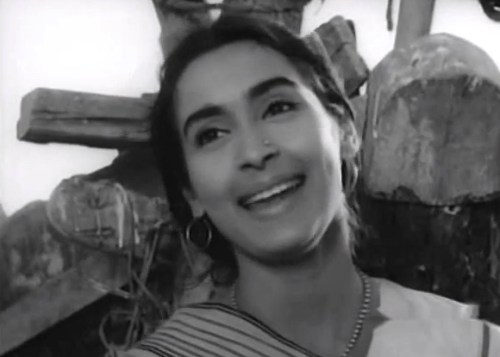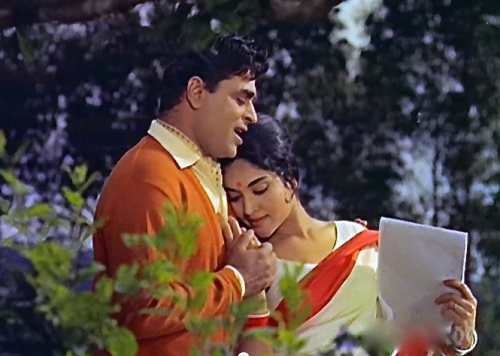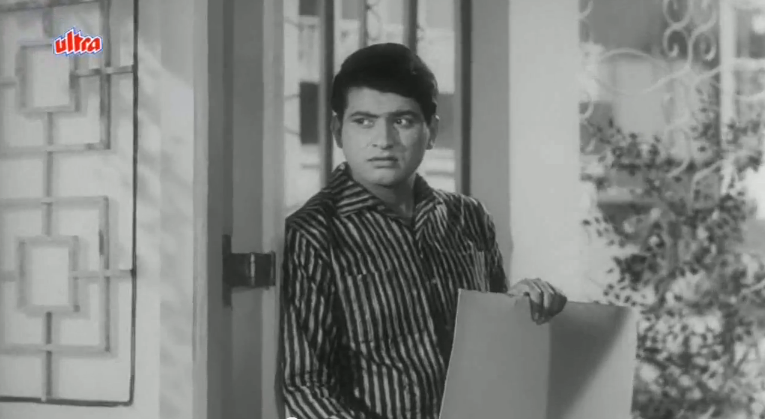

Chura Liya Hai Lyrics & Translation: Let’s Learn Urdu-Hindi

Zeenat aman chura liya hai asha bhonsle

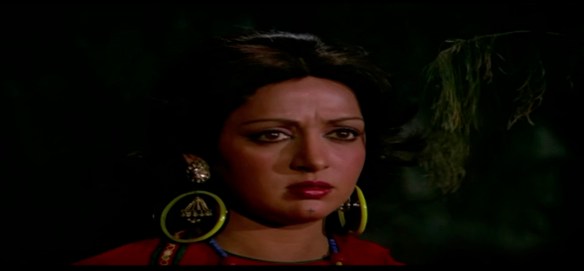
Zeenat Aman opens “Chura Liya Hai” with a perfectly harmonious clanking of bar goblets in Yaadon Ki Baraat (1973). R.D. Burman achieved this sound by actually clanking a spoon against a glass!

Today we showcase the lyrics and English translation to “Chura Liya Hai” from retro classic Yaadon Ki Baraat (1973).

The robust musical composition of “Chura Liya Hai” is nothing short of genius: its instrumental experimentation and rich layers of orchestral nuance are what made R.D. Burman such a radical revolutionary in the industry. But first we must start by discussing the comical opening sequence of Zeenat Aman fake guitaring. I’m sorry, but this can’t be ignored, nor can anyone’s feelings about it be overstated.

Have you ever seen someone play the guitar, Zeenat? Does the timing of when you pluck strings and when the guitar emits sound make sense to you? Or were you rushing through the scene because Elvis was calling and wanted his white jumpsuit back?
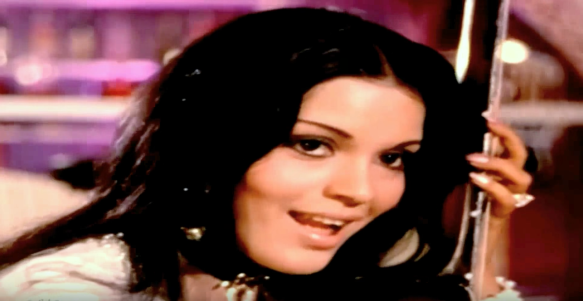
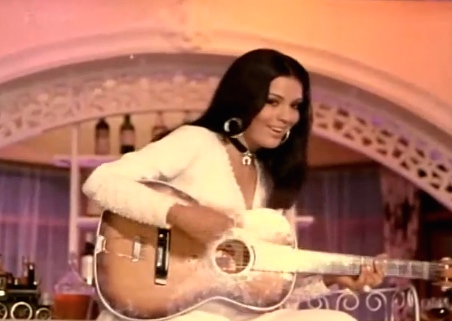
Zeenat Aman pretending to play guitar in Yaadon ki Baraat

Abandoning all pretense, Zeenat Aman gives her guitar a hug in Yaadon ki Baraat (1973).

I’ll move on. Director Nasir Hussein’s hit film Yaadon Ki Baraat plays upon the classic Hindi film trope of three-brothers-separated-in-childhood who reunite as adults and serve up some nice cold justice on a platter. I’m waiting for someone to remix this as a sister story with a welcome whiff of feminism, but it’s fine. While I would argue Waqt and Amar, Akbar, Anthony made far more note-worthy contributions to cinema, Yaadon Ki Baraat was a formulaic commercial success despite the gauche performance by its leading man Vijay Arora. And yes, I have strong feelings about those protruding ruffles on his tuxedo shirt, but I’ll spare you.
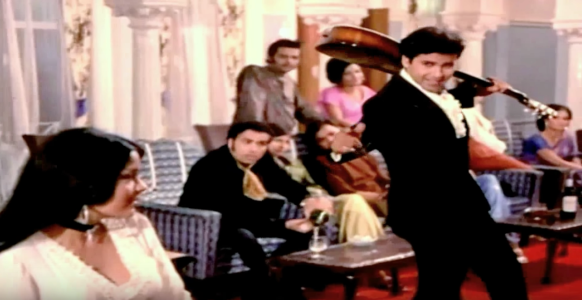
Vijay Arora in Chura liya hai.png

Vijay Arora casually throws the guitar he does not know how to hold over his shoulder in “Chura Liya Hai” from Yaadon Ki Baraat (1973). In doing so, Zeenat realizes she has found someone who truly understands her.

Vijay Arora plays one of the three brothers who falls for the wealthy daughter of his adoptive father’s employer (played by Zeenat Aman). With vocals that have reached peak Rafi perfection (just years before his voice took a turn for the husky), Vijay easily lands the girl by transforming “Chura Liya Hai” into a flirtatious duet when he pipes up mid-way through the number.

We hope you enjoy our lyrics and English translation to “Chura Liya Hai” below! God bless you, Majrooh Sultanpuri. Punjabi words like lahuu never make it to mainstream Bollywood songs.

Chura Liya Hai Lyrics & English Translation:

ASHA: Churaa liyaa hai tumne jo dil ko
If you steal my heart
Nazar nahii.N churaanaa, sanam
Do not steal your gaze away from me, my beloved
Badal ke merii tum zindagaanii
Even as you change my life
Kahii.N badal na jaanaa, sanam
Do not go and change yourself, my beloved

Ho! le liyaa dil, oh! Haaye meraa dil!
Oh you have taken my heart! Oh, sigh, my heart!
Haaye, dil lekar mujhko na behlaanaa
Sigh, as you take my heart, do attempt to pacify me

Churaa liyaa hai tumne jo dil ko
If you steal my heart
Nazar nahii.N churaanaa, sanam
Do not steal your gaze away from me, my beloved
Badal ke merii tum zindagaanii
Even as you change my life
Kahii.N badal na jaanaa, sanam
Do not go and change yourself, my beloved

Bahar banke aauu.N kabhii tumhaarii duniyaa mei.N
I will become the Spring and enter your world
Guzar na jaaye yeh din kahii.N issii tamannaa mei.N
Let my days not disappear with this desire
Tum mere ho, ho! tum mere ho, aaj tum itnaa waadaa karte jaanaa
You are mine, oh! You are mine, today you can only leave if you promise me this

Churaa liyaa hai tumne jo dil ko
If you steal my heart
Nazar nahii.N churaanaa, sanam
Do not steal your gaze away from me, my beloved
Badal ke merii tum zindagaanii
Even as you change my life
Kahii.N badal na jaanaa, sanam
Do not go and change yourself, my beloved

RAFI: Ho! sajaau.Ngaa luT kar bhi tere badan ki Daali ko
Oh! I would destroy myself to decorate the branches of your body
Lahuu jigar ka duu.Ngaa hasii.N labo.N ki laalii ko
I will give the blood from my heart for the rouge of your lips
Hai wafaa kyaa is jahaa.N ko, ek din dikhlaa duu.Ngaa mai.N diiwaanaa
One day, this crazy man will show the world what a true promise is

Churaa liyaa hai tumne jo dil ko
If you steal my heart
Nazar nahii.N churaanaa, sanam
Do not steal your gaze away from me, my beloved
Badal ke merii tum zindagaanii
Even as you change my life
Kahii.N badal na jaanaa, sanam
Do not go and change yourself, my beloved

Ho! le liyaa dil, oh! Haaye meraa dil!
Oh you have taken my heart! Oh, sigh, my heart!
Haaye, dil lekar mujhko na behlaanaa
Sigh, as you take my heart, do attempt to pacify me

Churaa liyaa hai tumne jo dil ko
If you steal my heart
Nazar nahii.N churaanaa, sanam
Do not steal your gaze away from me, my beloved
Hmmm hmmm hmmmm
Hmmm hmmm hmmmm

Glossary:

churaanaa: to steal; dil: heart; nazar: gaze; sanam: beloved; badalnaa: to change; zindagaanii: life; behlaanaa: to pacify; Bahaar: Spring; duniyaa: world; guzaar jaanaa: to pass; tamannaa: desire; waadaa: promise; sajaanaa: to decorate; luT: ruin, destruction; badan: body; Daalii: branch; lahuu: blood [Panjabi]; jigar: liver/heart; hasii.N: beautiful; lab: lips; laalii: redness; jahaa.N: world; din: day; dikhlaanaa: to show; diiwaanaa: crazy (in love), a la Beyonce
Vijay Arora and Zeenat Aman in Yaadon Ki Baarat.png

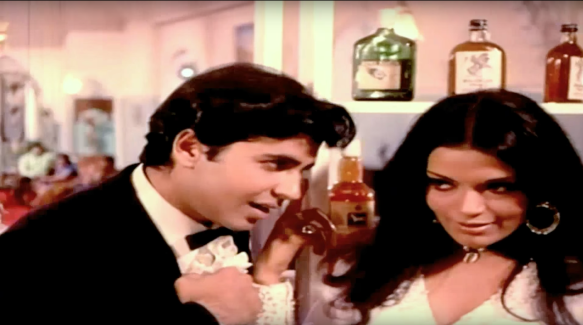
Zeenat Aman and Vijay Arora  act all like they didn’t notice the other one is singing straight at them in “Chura Liya hai” from Yaadon Ki Baraat (1973).

You guys might recall that album “You’ve Stolen My Heart” by the Kronos Quartet and Asha Bhonsle in 2005. It features this song…and let’s just say, my heart didn’t get stolen. To me, this song could not be improved upon–and I rarely ever question the absolute sublimity of a Rafi-Lata duet. Here, I have come to appreciate what Asha uniquely brings to this song–a kind of vivacity and playfulness that Lata would have done very differently–and I wouldn’t change it even if I could!

-Mrs. 55
Mere Naina Sawan Bhado Lyrics & Translation: Let’s Learn Urdu-Hindi

Rajesh Khanna rainy guitar mere naina sawan bhado

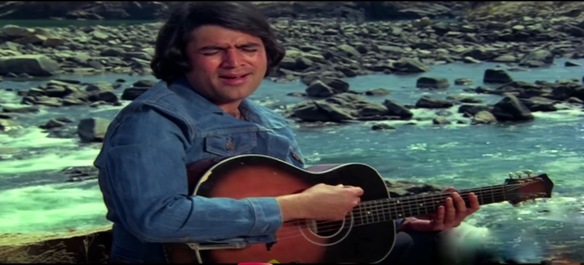
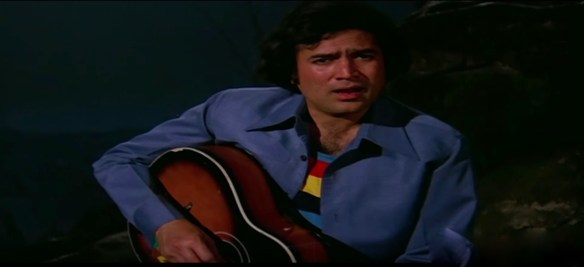
Rajesh Khanna soaks his blue bell bottoms as he croons to Hema Malini in the rain in Mehbooba (1976).

Today we highlight the lyrics and English translation of “Mere Naina Sawan Bhado” from Mehbooba (1976). Starring Hema Malini and Rajesh Khanna, Mehbooba is a dramatic reincarnation (punar-janam) love story that can only exist in Bollywood. When contemporary pop singer (played by Rajesh Khanna) is gifted an antique sitar for his birthday, he begins to unravel the mysteries of his past life and search for the woman whose musical talent once mesmerized him (played by the lovely Hema Malini). Mehbooba journeys from hip city life of 1970s Bombay to a countryside royal court of the 1800s where a court musician and dancer fall in love despite the misgivings of society.

First sung by Hema Malini in their past life when she believes Rajesh Khanna has deceived her, the female version of “Mere Naina Sawan Bhado” is a tragic rendition, bursting with lovely alaaps that befit the classical nature of that period’s music. “Mere Naina Sawan Bhado” is reprised later in the film in the modern day as Rajesh Khanna seeks to remind Hema Malini (now reincarnated as a local village belle) of their former bond. The male version is…well, steamier, in one sense of the word.

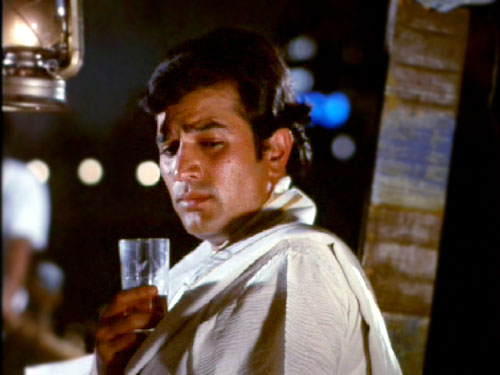
One of Mehbooba‘s most iconic scenes occurs when Rajesh Khanna begins to sing “Mere Naina Sawan Bhado” in the middle of a raging stormy night, luring Hema Malini from her sleep to discover the mysterious voice filling the air. Lightening flashes menacingly, everyone’s hair is blowing wildly, and still the guitar plays on (check out more on Bollywood rain songs here!). While the male version sung by Kishore Kumar is arguably more popular (Kumar himself ranked this song in his top ten personal favorites!), the female version sung by Lata Mangeshkar is as hauntingly beautiful and enhances our understanding of the former.

Hema Malini Mere Naina Sawan Bhado Mehbooba

Hema Malini’s memories of a past life are stirred when she hears “Mere Naina Sawan Bhado” from Mehbooba (1976).

Mehbooba was written by Gulshan Nanda who also wrote the screenplay of Neel Kamal (1968)–a film about a woman who visits an old palace where she discovers she was a court dancer in her previous life and that her former lover is still searching for her. Sound kind of familiar? We all see what you did there, Gulshan. Mehbooba will also literally carry a sense of deja-vu for to anyone who has seen Kudrat (1981), conveniently also starring Rajesh Khanna and Hema Malini caught in a punar-janam love tangle. However, Kudrat is a darker film with flashes of expressionist inspiration that elevate the entire genre and likely contributed to its greater commercial success.

With music by R.D. Burman and lyrics by Anand Bakshi, “Mere Naina Sawan Bhado” is a passionate tribute to old memories. We hope you appreciate the lyrics and learn from our English translation of both versions of “Mere Naina Sawan Bhado” below!

Mere Naina Sawan Bhado Lyrics and English Translation:

Male version:

Mere nainaa saawan-bhaado.N
My eyes are like the monsoons
Phir bhii meraa man pyaasaa
Yet still my mind remains thirsty

Aye dil diiwaane, khel yeh kyaa jaane?
Oh crazy heart, what does it know of this game?
Dard bharaa yeh giit kahaa.N se
From where does this pain-filled song
In ho.NTho.N pe aaye? duur kahii.N le jaaye
come to these lips? Take me far away
Bhuul gayaa kyaa? bhuulke bhii hai
What have I forgotten? Even though I forget
Mujhko yaad zaraa saa, phir bhii meraa man pyaasaa
I remember a little, yet still my mind is thirsty

Baat puraanii hai, ek kahaanii hai
This is an old conversation, this is a story
Ab sochuu.N tumhe.N, yaad nahii.N hai
Now I think you do not remember
Ab sochuu.N nahii.N bhuule woh saawan ke jhuule
Now I think you could not forget those swing sets of the rainy season
Rut aaye, rut jaaye deke
I saw the seasons come and go
JhuuThaa ek dilaasaa, phir bhii meraa man pyaasaa
This lie is a consolation, yet still my mind is thirsty

Baraso.N biit gaye, hamko mile bichhaDe
Ages have passed since we met and were separated
Bijurii bankar, gagan pe chhamke
We were like lightening that sparkled in the sky
Biite samay kii rekhaa, mai.N ne tumko dekhaa
But that line of time has passed since I saw you
Man sang aa.Nkh-michaulii khele
Playing hide and seek with my mind
Aashaa aur niraashaa, phir bhii meraa man pyaasaa
(were) hope and despair, yet still my mind is thirsty

Female version:

Mere nainaa saawan-bhaado.N
My eyes are like the monsoons
Phir bhii meraa man pyaasaa
Yet still my mind remains thirsty

Ghungharuu kii chham-chham, ban gayii dil kaa gham
The sound of the dancing bells become the sadness of my heart
Duub gayaa dil, yaado.N mei.N
My heart drowned in memories of you
Ubharii berang lakiire.N, dekho yeh tasviire.N
Only to emerge as colorless sketches, look at these portraits
Suune mahal mei.N naach rahii hai
In a lonely palace, still dancing
Ab tak ek rakkaasaa, phir bhii meraa man pyaasaa
Even now is a performer, yet still my mind is thirsty

Glossary:

nainaa: eyes; saawan-bhaado.N: the 5th and 6th months of the Panjabi (Nanakshahi) calendar that comprise the monsoon season; man: mind; pyaasaa: thirsty; dil: heart; diiwaanaa: crazy; khel: game; dard: pain; bharaa: filled; giit: song; kahaa.N: where; ho.NTh: lips; duur: far; bhuulnaa: to forget; yaad: memory; puraanii: old; kahaanii: story, legend; sochnaa: to think; bhuulnaa: to forget; jhuulaa: swing set; rut: season; jhuuThaa: lie; dilaasaa: consolation; baras: age, years; biitnaa: to pass; milnaa: to meet; bichhaDnaa: to be separated; bijuri: lightening; gagan: sky; chhamaknaa: to sparkle; samay: time; rekhaa: line; aa.nkh-michaulii: hide-and-seek; aashaa: hope; niraashaa: despair; gham: sadness; Duubnaa: to drown; ubharii: raised; berang: without color; lakiraaa: line; tasviir: picture; suunaa: lonely, mahal: palace; naachnaa: to dance; tak: until; rakkaasaa: dancer

Rajesh Khanna Mehbooba guitar mere naina sawan

Smooth-operator Rajesh Khanna executes his devastating wink mid-guitar pluck, completely obliterating anyone’s initial repulsion at his haircut.

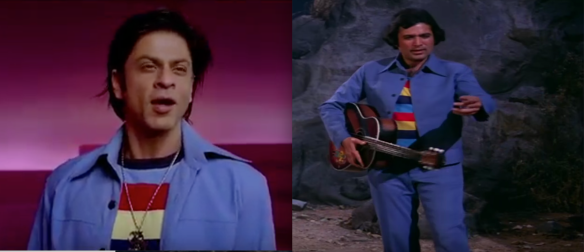
Did you know Rajesh Khanna actually sings the first antra of the song in a separate scene that takes place in broad daylight? He opens with his famous wink that still manages to induce swoons despite his distractingly dated ‘do! Think I’m the only one obsessed with the hair and outfits in these films? This week our local independent movie theatre happened to be doing a Bollywood series (obviously, I soaked up every moment), including a special screening of Om Shanti Om (2007). During the song “Main Agar Kahoon,” something felt eerily familiar…check out Shah Rukh Khan’s outfit below to see what I mean! It’s one of the many subtle meta classic film references that make Om Shanti Om such a brilliant work!

Shah Rukh Khan imitates Rajesh Khanna's unforgettable blue ensemble with a rainbow top in Om Shanti Om (2008).

Shah Rukh Khan imitates Rajesh Khanna’s scarring unforgettable blue bell bottom ensemble with a rainbow top in Om Shanti Om (2007).

– Mrs. 55
The Top 30 Best Music Albums of Classic Bollywood

The greatest music albums from classic Bollywood have been chosen. Which songs made the list of Hindi films’s top 30?

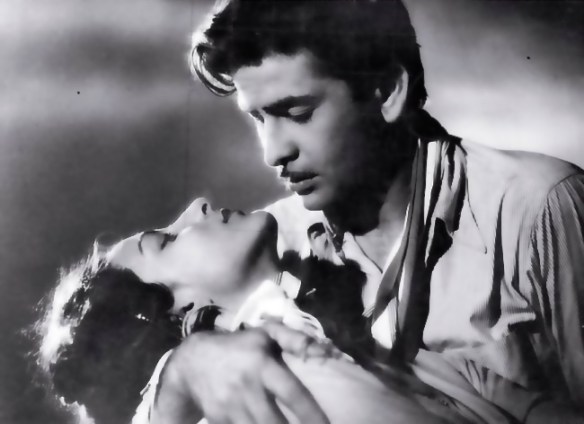
Raj Kapoor Nargis Iconic BarsaatIntroduction

Welcome to the greatest music of classic Bollywood! We at Mr. and Mrs. 55 – Classic Bollywood Revisited! have compiled our ultimate list of the top 30 best classic Bollywood film soundtracks of all-time. Music is the very soul of classic Bollywood, a legacy of beauty and style that once lit the world. These soundtracks showcase the most talented artists of Bollywood and are as diverse and transformative as the films to which they lent their magic. Long after the cinema lights fade, this music remains in the air, haunting us with desire, sustaining us through tragedy, and enchanting our daily experiences in the world.
Soundtracks of all Hindi films released between the years of 1945 to 1985 were considered and ranked based on the merit of lyrics, musical composition and complexity, historical and cultural value, vocal performance, and accomplishments of the soundtrack elements as an ensemble. Topping our list are composers Sachin Dev Burman, Rahul Dev Burman, Naushad, and the duo Shankarsingh Raghuwanshi and Jaikishan Dayabhai Panchal (often credited as Shankar-Jaikishen) whose works both defined and reinvented Bollywood. Like our enormously popular list of the Top 30 Greatest Classic Bollywood Films of All Time, these soundtracks embrace the unexpected.

The advent of music in Bollywood binds the stormy history of a shackled India emerging from depression and war with the golden age of Hollywood musical film. Many believe that films with de rigeur musical numbers is a unique hallmark of Hindi cinema. However, the early “talkie” pictures of India such as Alam Ara (1931) were heavily influenced by the popular western films like The Jazz Singer (1927) and Showboat (1929) in which the new sound technology instantly propelled musical film as the most profitable genre. Hollywood directors like Busby Berkeley whose signature spectacle was the mass ornament and nimble-footed singer-dancers like Fred Astaire and Ginger Rogers helped contribute to the hundreds and hundreds of musical films cherished by the western world during the 1930s-1950s. The then universal convention of five to seven musical numbers peppering a film was easily embraced and adapted by Hindi movie directors who introduced Hindustani musical traditions to their work. Playback singers such as Lata Mangeshkar, Mohammed Rafi, Kishore Kumar, and Asha Bhonsle were as celebrated as the actors for whom they lent their voices. Often before a film was released, a Bollywood movie’s soundtrack was played repeatedly on the radio, reaching the hearts of millions across the country who may not have afforded the luxury to see the actual film in theatres.

While Hollywood eventually diverged from the musical film genre by the late 1960s, India was awakening to its own golden era of film in which music dominated the sensory milieu. Perhaps it was the escapism of music with its perfect harmonies and piercing poetry that touched the newly freed country still finding its identity. From solemn hymns of the countryside to feverish cabarets of city nightlife, from extravagant orchestras to solitary sitar solos, and from singers whose voices seem to descend from heaven, these soundtracks unleashed new eras of possibility and romance. The music of classic Bollywood will change you forever. For a few fleeting minutes, the ideals you dreamed of are made real.

Take this journey with us through the best music albums of yesteryear Hindi cinema. This music the way is was meant to be. This is classic Bollywood.

The Top 30 Best Classic Bollywood Soundtracks of All Time:

1. Pakeezah

Pakeezah Meena Kumari Chalte Chalte

Ghulam Mohammed and Naushad, 1971

2. Guide

Guide

S.D. Burman, 1965

3. Mughal-e-Azam

Mughal-e-Azam

Naushad, 1960

4. Nagin

Nagin

Hemant Kumar, 1954

5. Aradhana

Aradhana

S.D. Burman, 1969

6. Teesri Manzil

Teesri Manzil

R.D. Burman, 1966

7. Barsaat

Barsaat

Shankarsingh Raghuwanshi and Jaikishan Dayabhai Panchal, 1949

  • Hawa Mein Udta Jaye – Lata Mangeshkar
  • Chhod Gaye Balam – Lata Mangeshkar and Mukesh
  • Jiya Beqarar Hai – Lata Mangeshkar
  • Mujhe Kisise Pyar – Lata Mangeshkar
  • Patli Kamar Hai – Lata Mangeshkar and Mukesh

8. Anarkali

Anarkali

C. Ramachandra, 1953

  • Yeh Zindagi Usiki Hai – Lata Mangeshkar
  • O Zindagi Ke Denewale – Hemant Kumar
  • O Aasmanwale – Lata Mangeshkar
  • Jaag Dard-e-Ishq – Lata Mangeshkar and Hemant Kumar
  • Mohabbat Aisi Dhadhkan Hai – Lata Mangeshkar
  • Mujhse Mat Pooch – Lata Mangeshkar
  • Aaja Ab To Aaja – Lata Mangeshkar

9. Kati Patang

Kati Patang

R.D. Burman, 1970

  • Jis Gali Mein – Mukesh
  • Yeh Jo Mohabbat Hai – Kishore Kumar
  • Na Koi Umang Hai – Lata Mangeshkar
  • Yeh Shaam Mastani – Kishore Kumar
  • Pyaar Diwanaa Hota Hai – Kishore Kumar
  • Aaj Na Chhodenge – Lata Mangeshkar and Kishore Kumar

10. Chori Chori

Chori Chori

Shankarsingh Raghuwanshi and Jaikishan Dayabhai Panchal, 1956

  • Panchi Banoon Udti – Lata Mangeshkar
  • Aaja Sanam – Lata Mangeshkar and Manna Dey
  • Jahan Main Jaati Hoon – Lata Mangeshkar and Manna Dey
  • Yeh Raat Bheegi Bheegi – Lata Mangeshkar and Manna Dey
  • Rasik Balma – Lata Mangeshkar
  • Man Bhavan Ke Ghar – Lata Mangeshkar and Asha Bhonsle

11. Taj Mahal

Taj Mahal

Roshan, 1963

12. Hum Dono

Hum Dono Abhi Na Jao Dev Anand Sadhana

Jaidev, 1961

13. Jewel Thief

Jewel Thief

S.D. Burman, 1967

14. Caravan

Caravan

R.D. Burman, 1971

  • Piya Tu Ab To – Asha Bhonsle
  • Chadti Jawani – Lata Mangeshkar and Mohammed Rafi
  • Kitna Pyara Wada – Lata Mangeshkar and Mohammed Rafi
  • Goriya Kahan – Asha Bhonsle and Mohammed Rafi
  • Ab Jo Mile Hai – Asha Bhonsle

15. Bobby

Bobby Main Shayar To Nahin

Laxmikant Shantaram Kudalkar and Pyarelal Ramprasad Sharma, 1973

  • Main Shayar To Nahin – Shailendra Singh
  • Bahar Se Koi Andhar – Lata Mangeshkar and Shailendra Singh
  • Jhoot Bole Kauwa Kate – Lata Mangeshkar and Shailendra Singh
  • Mujhe Kuch Kehna Hai – Lata Mangeshkar and Shailendra Singh
  • Na Mangoon Sona Chandi – Manna Dey and Shailendra Singh

16. Pyaasa

Pyaasa

S.D. Burman, 1957

  • Jaane Woh Kaise – Hemant Kumar
  • Aaj Sajan Mohe – Geeta Dutt
  • Hum Aap Ki Ankhon Mein – Geeta Dutt and Mohammed Rafi
  • Jane Kya Tune Kahi – Asha Bhonsle
  • Yeh Duniya Agar Mil Bhi Jaaye – Mohammed Rafi

17. Abhiman

Abhiman

S.D. Burman, 1973

18. Anand

Anand

Salil Choudhury, 1971

19. Kabhi Kabhi

Kabhi Kabhi

Mohammed Zayur Khayyam, 1976

20. Baiju Bawra

Baiju bawra

Naushad, 1952

  • O Duniya Ke Rakhwale – Mohammed Rafi
  • Man Tarpat Hari Dar – Mohammed Rafi
  • Mohe Bhool Gaye Sanwariya – Lata Mangeshkar
  • Jhoole Mein Pawan Ke – Lata Mangeshkar and Mohammed Rafi
  • Tu Ganga Ki Mauj – Lata Mangeshkar and Mohammed Rafi

21. Mother India

Mother India

Naushad, 1957

22. Madhumati

Madhumati

Salil Choudhury, 1958

  • Aaja Re Pardesi – Lata Mangeshkar
  • Dil Tadap Tadap – Lata Mangeshkar and Mukesh
  • Suhana Safar – Mukesh
  • Ghadi Ghadi Mora Dil – Lata Mangeshkar
  • Chadh Gayo Papi Bichua – Lata Mangeshkar and Manna Dey

23. Basant Bahar

Basant Bahar

Shankarsingh Raghuwanshi and Jaikishan Dayabhai Panchal, 1956

  • Duniya Na Bhaye Mohammed Rafi
  • Bhaye Bhanjana – Manna Dey
  • Ja Ja Re Ja – Lata Mangeshkar
  • Main Piya Teri – Lata Mangeshkar
  • Nain Mile Chain Kahan – Lata Mangeshkar and Manna Dey

24. Aar Paar

Aar Paar

O.P. Nayyar, 1954

  • Babuji Dheere Chalna – Geeta Dutt
  • Sun Sun Sun Zalima – Geeta Dutt and Mohammed Rafi
  • Kabhi Aar Kabhi Par – Shamshad Begum
  • Yeh Lo Main Haari Piya – Geeta Dutt
  • Hoon Abhi Main Jawan – Geeta Dutt

25. Kashmir Ki Kali

Kashmir Ki Kali

O.P. Nayyar, 1964

26. Bandini

Bandini

S.D. Burman, 1963

  • Ab Ke Baras Bhej – Asha Bhonsle
  • O Re Mahji – S.D. Burman
  • Mora Gora Ang Laile – Lata Mangeshkar
  • Jogi Jab Se Tu Aaya – Lata Mangeshkar
  • O Janewale Ho Sake – Mukesh

27. Sangam

Sangam

Shankarsingh Raghuwanshi and Jaikishan Dayabhai Panchal, 1964

28. Yaadon Ki Baraat

Yaadon Ki Baraat

R.D. Burman, 1973

  • Chura Liya Hai – Asha Bhonsle and Mohammed Rafi
  • Aapke Kamre Mein – Asha Bhonsle and Kishore Kumar
  • Lekar Hum Deewana Dil – Asha Bhonsle and Kishore Kumar
  • Meri Soni Meri Tamana – Asha Bhonsle and Kishore Kumar
  • Yaadon Ki Baraat – Mohammed Rafi and Kishore Kumar

29. Amar Prem

Rajesh Khanna Amar Prem

R.D. Burman, 1972

  • Chingari Koi Bhadke – Kishore Kumar
  • Raina Beeti Jaaye – Lata Mangeshkar
  • Kuch To Log Kahenge – Kishore Kumar
  • Yeh Kya Hua – Kishore Kumar
  • Bada Natkhat Hai Yeh – Lata Mangeshkar

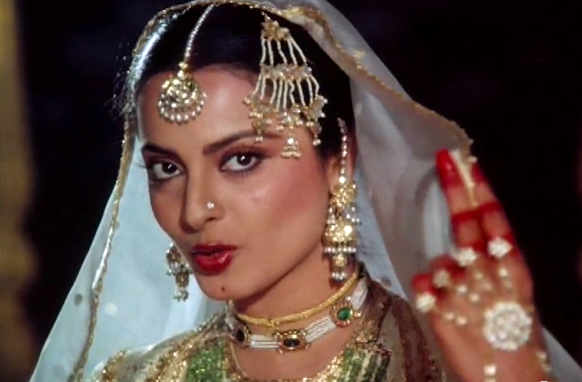
30. Umrao Jaan

Rekha2_UmraoJaan

Mohammed Zayur Khayyam, 1981

Find out more about these and other classic Bollywood soundtracks on our song pages! Which soundtracks do you consider among classic Bollywood’s all-time best and why? Leave us a comment and let us know!

– Mrs. 55
Naina Barse Rimjhim Rimjhim Lyrics and Translation: Let’s Learn Urdu-Hindi

Sadhana

Sadhana excels in her role as the mysterious femme fatale of Woh Kaun Thi? (1964)

Happy Halloween to our readers! What better way to celebrate with a classic ghost song featuring Lata Mangeshkar’s spooky vocals, Sadhana’s haunting beauty, and Madan Mohan’s soul-stirring composition? In the spirit of Halloween, we are sharing the lyrics and English translation to nainaa barse rimjhim rimjhim from Raj Khosla’s suspense thriller Woh Kaun Thi? (1964).

In a previous post, we have discussed how Woh Kaun Thi? is the quintessential example of film noir being adapted for vintage Hindi cinema.  In this film, Dr. Anand (Manoj Kumar) encounters a mysterious woman (Sadhana) on a stormy night and offers to give her a ride in his car. After she makes a strange request to be dropped off at a local cemetery, he hears this woman sing the first part of nainaa barse – a song that continues to haunt him at various points throughout the film. Later in the movie, Dr. Anand is called to see a patient in an old mansion that is rumored to be haunted. When he arrives at this mansion, the patient has already died and she appears to be the same woman that he encountered on the stormy night. In an even more strange turn of events, Dr. Anand’s fiancee is murdered suddenly by a cyanide injection. To alleviate his grief and loneliness, Dr. Anand is set up by his mother to his marry a new woman named Sandhya. Much to his surprise, Dr. Anand finds on his wedding night that his new wife looks exactly like the supposedly dead woman he gave a ride to in the film’s opening scene! Like Dr. Anand, the audience is left confused as they grapple with the film’s eponymous question: Woh kaun thi? Who was she?

Throughout her career, Lata Mangeshkar earned a reputation for her haunting renditions of ghost songs in films. Some of her most influential and beautiful hits are used as ghost songs in their respective movies: aayegaa aanevaalaa from Mahal (1949), tuu jahaa.n jahaa.n chalegaa from Mera Saaya (1966), kahii.n diip jale kahii.n dil from Bees Saal Baad (1962), and gumnaam hai koii from Gumnaam (1965). In an interview for her 80th birthday, the melody queen humorously remarks about her career: mai.n ne sab se zyaadaa gaanaa gaaye hai.n bhuuto.n ke (I have sung the most songs for ghosts!).

An interesting and apt anecdote: when this song was being filmed in Kufri (near Shimla), Lata had not yet had the opportunity to record the song in the studio. Much to the surprise of the crowd that had gathered to watch the filming, actress Sadhana shot her scenes by lip-syncing to a version of this song rendered by music director Madan Mohan himself – perhaps a bit creepy but also a rare treat!

Did you know that Woh Kaun Thi? was inspired by a British play called The Woman In White (1859) written by Wilkie Collins? Raj Khosla’s mentor Guru Dutt had attempted to create a film based on the same story a few years earlier in 1959. He abandoned this project entitled Raaz in which he was supposed to play the male lead while Waheeda Rehman played the female lead. Interestingly, this film was supposed to have been R.D. Burman’s debut as a solo music director.

-Mr. 55
MK

Manoj Kumar plays a confused doctor who is recurrently haunted by a mysterious woman and her song in Woh Kaun Thi? (1964)

Naina Barse Rimjhim Rimjhim (Version 1): Lyrics and Translation

nainaa barse rimjhim rimjhim
My eyes shed tears, drop by drop,
piyaa tore aavan kii aas
in hopes of your return, my beloved.
nainaa barse, barse, barse
My eyes shed tears.

yeh laakho.n gham, yeh tanhaayii
Thousands of sorrows and this solitiude
muhabbat kii yeh rusvaayii
are all part of love’s disgrace. 
kaTii aisii kaii raate.n
I have spent several such nights
na tum aaye na maut aayii
where neither you came to me, nor my death. 
yeh bi.ndiyaa kaa taaraa
The star of my beauty spot
jaise ho a.ngaaraa
burns brightly like an ember.
mahandii mere haatho.n kii udaas
Even the henna on my hands is sullen.

nainaa barse rimjhim rimjhim
My eyes shed tears, drop by drop,
piyaa tore aavan kii aas
in hopes of your return, my beloved.
nainaa barse, barse, barse
My eyes shed tears.

MK

Manoj Kumar’s restrained and understated performance falls short in comparison to Sadhana’s dynamic portrayal of the leading character in Woh Kaun Thi? (1964).  

Naina Barse Rimjhim Rimjhim (Version 2): Lyrics and Translation

nainaa barse rimjhim rimjhim
My eyes shed tears, drop by drop,
piyaa tore aavan kii aas
in hopes of your return, my beloved. 
nainaa barse, barse, barse
My eyes shed tears.

adhuuraa huu.n mai.n afsaanaa
I am an incomplete story. 
jo yaad aauu.n chale aanaa
When you remember me, come back to me. 
meraa jo haal hai tujh bin
The state that I am in without you, 
voh aa kar dekhte jaanaa
come to me and see it for yourself. 
bhiigii bhiigii palke.n
My eyelashes are moist, 
chham-chham aa.nsuu chhalke.n
as my tears drip, sounding like the jingle of an anklet.  
khoyii khoyii aa.nkhe.n hai.n udaas
My eyes are lost and sullen.

nainaa barse rimjhim rimjhim
My eyes shed tears, drop by drop,
piyaa tore aavan kii aas
in hopes of your return, my beloved. 
nainaa barse, barse, barse
My eyes shed tears.

Sadhana

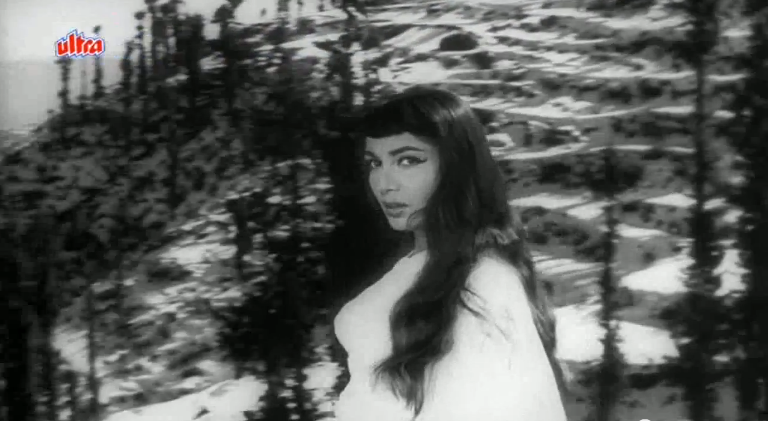
Sadhana’s dashing beauty shines against the backdrop of Shimla in the Himalayas in Woh Kaun Thi? (1964)

Naina Barse Rimjhim Rimjhim (Version 3): Lyrics and Translation

nainaa barse rimjhim rimjhim
My eyes shed tears, drop by drop,
piyaa tore aavan kii aas
in hopes of your return, my beloved.
nainaa barse, barse, barse
My eyes shed tears.

voh din merii nigaaho.n me.n
Those days remain in my eyes. 
voh yaade.n merii aaho.n me.n
Those memories remain in my sighs. 
yeh dil ab tak bhaTaktaa hai
This heart still wanders
terii ulfat kii raaho.n me.n
along the paths of your love. 
suunii suunii raahe.n, sahmii sahmii baahe.n
Along those empty paths, with my nervous arms, 
aan.kho.n me.n hai barso.n kii pyaas
my eyes carry a thirst unslaked for years.

nazar tujh bin machaltii hai
My sight wavers without you. 
muhabbat haath maltii hai
My love repents in desperation. 
chalaa aa mere parvaane
Please come to me, my moth. 
vafaa kii shamaa jaltii hai
The candle of faithfulness still burns brightly. 
o mere hamraahii, phirtii huu.n ghabraayii
Oh, my soulmate! I wander about afraid. 
jahaa.n bhii hai, aa jaa mere paas
Wherever you are, please come to me.

nainaa barse rimjhim rimjhim
My eyes shed tears, drop by drop,
piyaa tore aavan kii aas
in hopes of your return, my beloved. 
nainaa barse, barse, barse
My eyes shed tears.

Glossary

nainaa: eyes; barasnaa: to rain; rimjhim: onomatopoeia for the dripping noise of rain; aavan: return, arrival; aas: hope; adhuuraa: incomplete; afsaanaa: story; haal: state, condition; palak: eyelid, eyelash; chham-chham: onomatopoeia for the jingling noise of an anklet; chhalaknaa: to drip; udaas: sullen, gloomy; tanhaayii: solitude; rusvaayii: disgrace; maut: death; bi.ndiyaa: beauty spot; angaaraa: cinder, ember; mahandii: henna, nigaah: eyes; aah: sigh; sahmaa: nervous; baras: year; pyaas: thirst; nazar: glance, sight; machalnaa: to waver; haath malnaa: to repent; parvaanaa: moth; vafaa: faithfulness; shamaa: candle; hamraahii: soulmate, companion; phirnaa: to wander about; ghabraayaa: afraid.

Sadhana

     Those eyes! 

Mera Kuch Saamaan Lyrics and Translation: Let’s Learn Urdu-Hindi

Anuradha Patel plays an impetuous and free-spirited woman who haunts her former lover and his current wife with her gift for poetry. in Ijaazat (1987)

Anuradha Patel plays an impetuous and free-spirited woman who haunts her former lover and his current wife with her gift for poetry in Ijaazat (1987).

Released in 1987, Gulzar’s Ijaazat starring Naseeruddin Shah, Rekha, and Anuradha Patel is a film that falls outside of the time period traditionally associated with the “Golden Era” of Hindi cinema. Although we tend to feature films from the 1950s-1970s on this blog, an exception must be made for this film because of its timeless soundtrack composed by R.D. Burman, penned by Gulzar, and sung by Asha Bhonsle. Today, we present the lyrics and English translation to an ever-haunting gem from Ijaazat (1987): meraa kuchh saamaan

Based on the Bengali story Jatugriha by Subodh Ghosh, this film presents the classic love triangle trope often used to excess in Bollywood in a refreshingly subtle and poignant manner that reflects the high caliber of Gulzar’s artistry as a poet-turned-director. The story in this film revolves around the relationships among three main characters: Mahinder (Naseeruddin Shah), Sudha (Rekha), and Maya (Anuradha Patel). Mahinder, a young photographer, has been engaged to his childhood friend Sudha for five years in an arrangement made by his grandfather (Shammi Kapoor). In spite of this arrangement, Mahinder falls passionately in love with the impulsive and free-spirited Maya, but he is too afraid to confide the truth to his grandfather. When pressured to go through with the wedding, the conflicted Mahinder reveals his true feelings to Sudha. However, when Maya suddenly disappears from his life, Mahinder decides to honor his grandfather’s wishes and marries Sudha after all. Even at the end of the film, a lingering question remains: why would Sudha agree to marry a husband who did not truly love her?

Rekha struggles deeply as she is forced to grapple with her husband's history with Anuradha Patel and its effects on their marriage in Ijaazat (1987)

Rekha offers an understated performance as a vulnerable wife forced to grapple with her husband’s history with an ex-lover and its devastating effects on their marriage in Ijaazat (1987)

As the companionship between Sudha and Mahinder begins to grow, the underlying presence of Maya as an unwanted third party in their marriage inevitably leads to marital discord. Mahinder’s unresolved feelings for Maya and Sudha’s awareness of these feelings gradually creates tension that escalates once Maya re-appears in their lives and rekindles a friendship with Mahinder through letters, phone calls, and poems. Mahinder indulges Maya’s attention-seeking actions at each opportunity, deepening the rift that already exists between him and his wife. Despite many efforts to adjust to the very tangible presence of Maya in their lives, Sudha comes to realize that she will never be able to live happily with Mahinder and decides to walk away from her marriage. The turmoil and tragedy of this film goes on to culminate in a conclusion that is surprisingly positive and heart-warming–without completely spoiling the ending here, I will just say that fans of Shashi Kapoor will not be disappointed!

In spite of its portrayal of a relatively ordinary story, Ijazaat stands out from other films in the same vein because of its evocative dialogues, nuanced character development, and, of course, the beautiful music and poetry found in its soundtrack. In the context of the film, meraa kuchh saamaan is a poem addressed to Mahinder from Maya that captures the essence of their troubled relationship with remarkable finesse and sophistication. In this poem, Maya asks Mahinder to return her things back to her–these requests are not for the return of physical objects but rather for memories of their time spent together. Gulzar’s evocative poetry in an unusual free verse format earned him the National Film Award and Filmfare Award for Best Lyricist in 1988, while Asha Bhonsle won the National Film Award for Best Female Playback Singer for her soulful rendition of this song.

a

Anuradha Patel’s character is unique to the version of Jatugriha that is presented in Ijaazat (1987), as the original story depicted the woes of a troubled marriage between a husband and wife without the “other woman” character.

Those of you familiar with this classic already may have wondered why Gulzar chose to use the number 116 in the last stanza of this song to describes the number of moonlit nights spent together by the protagonists. Some have suggested that 116 nights may indicate that Maya and Mahinder were involved in a relationship four months in duration (with four new moons), while others have suggested it is a reference to the number of phases of the moon found in ancient Indian literature. Interestingly, when asked in an interview about the interpretation of this number, Gulzar said: It’s not the number which is important, it’s important that somebody kept the count of the moonlit nights of which they spent together.”  This number went on to carry special significance for Gulzar as he recounts in a 2005 interview that he has written lyrics for exactly 116 of R.D. Burman’s songs during his career. 
Lyrics and Translation:

mera kuchh saamaan tumhare paas paDaa hai
Some of my belongings remain with you.
saavan ke kuchh bhiige bhiige din rakhe hai.n
A few wet monsoon days,
aur mere ek khat me.n lipaTii raat paDii hai
and a night folded into one of my letters.
voh raat bujhaa do, meraa voh saamaan lauTaa do
Extinguish that night, and return my things to me.

patjhaD hai kuchh, hai na?
It was autumn then, no?
patjhaD me.n kuchh patto.n kii girane kii aahaT
The rustling whispers of leaves falling in autumn.
kaano.n me.n ek baar pahan ke lauT aayii thii
I had brought back those whispers once by wearing them as earrings.
patjhaD kii voh shaakh abhii tak kaa.np rahii hai
A branch of autumn still trembles in the breeze.
voh shaakh giraa do, meraa voh saamaan lauTaa do
Make that branch fall down, and return my things to me.

ek akelii chhatrii me.n jo aadhe-aadhe bhiig rahe the
When we both became drenched in the rain under a single umbrella,
aadhe giile aadhe sukhe, sukhaa to mai.n le aayii thii
half of our things became wet. I had brought the dry half back with me that day.
giilaa man shayad bistar ke paas paDaa ho
But perhaps my drenched heart remained next to the bed.
voh bhijvaa do, meraa voh saamaan lauTaa do
Send that back, and return my things to me.

ek sau solaah chaa.nd kii raate.n, ek tumhaare kaa.ndhe kaa til
One hundred and sixteen moonlit nights, and the single mole on your shoulder.
giillii maha.ndii kii khushbuu, jhuuTh-muuTh ke shikve kuchh
The fragrance of wet henna, and some fake tantrums.
jhuuTh-muuTh ke vaade bhii sab yaad karaa duu.n?
Shall I remind you of all the false promises too?
sab bhijvaa do, meraa voh saamaan lauTaa do
Send all of them back, and return my things to me.

ek ijaazat de do bas, jab isko dafnaauu.ngii
When I bury these these things, just grant me the permission
mai.n bhii vahii.n so jaauu.ngii
To lay myself to sleep among them.
mai.n bhii vahii.n so jaauu.ngii
To lay myself to sleep among them.

Glossary

saamaan: belongings, things; saavan: monsoon; bhiigaa: drenched, wet; khat: letter; lipaTnaa: to wrap, fold; bujhaa denaa: to extinguish; lauTaa denaa: to return; patjhaD: autumn; pattaa: leaf; giranaa: to fall; aahaT: whisper, faint noise; pahanna: to wear; shaakh: branch; giraa denaa: to make something fall; chhatrii: umbrella; aadhaa: half; giilaa: wet; sukhaa: dry; bistar: bed; bhijvaanaa: to have something sent; ek sau solaah: 116; kaa.ndh: shoulder; til: mole; maha.ndii: henna: khushbuu: fragrance; jhuuTh-muuTh: fake, false; shikvaa: complaint, tantrum; vaadaa: promise: yaad karaa denaa: to remind; ijaazat: permission; dafnaanaa: to bury: so jaanaa: to sleep.


In 2005, Asha Bhonsle in collaboration with the Kronos Quartet reprised several of her old songs as a tribute to her late husband R.D. Burman in the album You’ve Stolen My Heart: Songs from R.D. Burman’s Bollywood. In recognition of her work on this album, Asha received her second Grammy nomination in the category of Best Contemporary World Music. When asked to name her favorite song from the album, she said it was meraa kuchh saamaan because it “is very close to my heart as it transports me back into time when I was with Pancham.” (Source).

 -Mr. 55