Zindagi Ke Safar Mein Guzar Lyrics and Translation: Let’s Learn Urdu-Hindi

Rajesh Khanna regret aap ki qasam

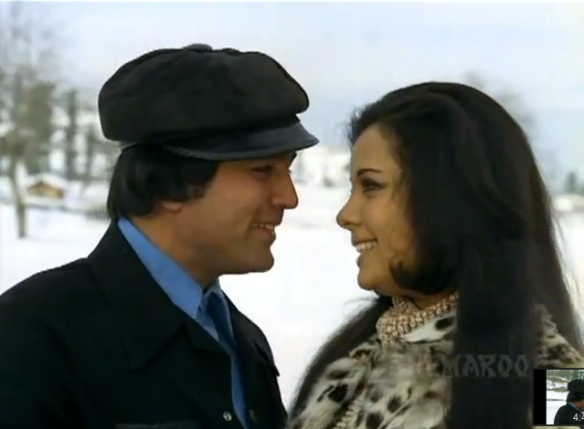
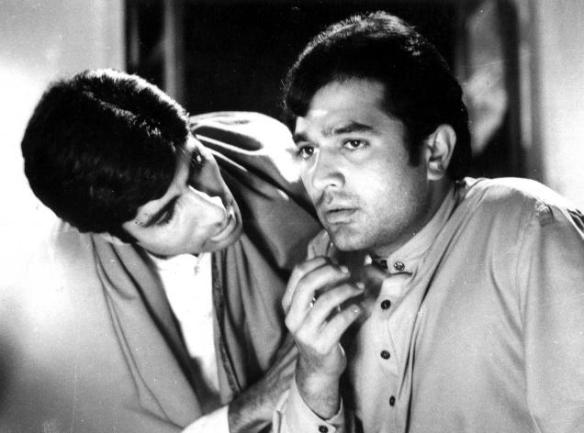
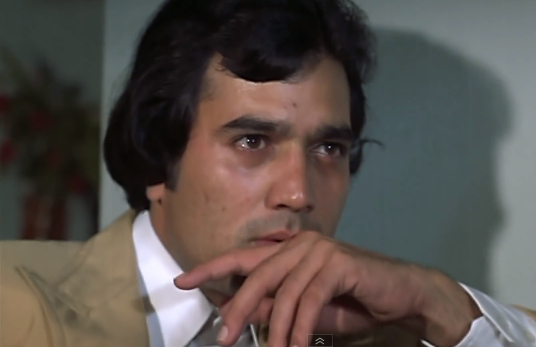
Rajesh Khanna reflects on the choices he made and the love he lost in Aap Ki Kasam (1974).

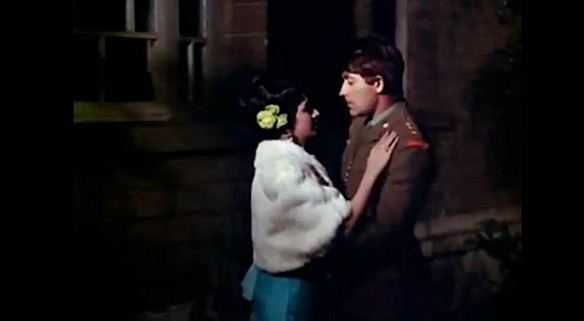
Happy New Year’s to all our fans and lovers of classic Bollywood! In the spirit of the holiday, we present the lyrics and full English translation to the thought-provoking “Zindagi Ke Safar Mein Guzar” from Aap Ki Kasam (1974). In this song, lyricist Anand Bakshi explores the regret of one man who loses his chance to spend time with the people he loves. Rajesh Khanna plays a successful businessman who neglects and mistrusts his loving wife Mumtaz, ultimately costing him his marriage and family. Wanting desperately to make amends, Khanna soon realizes he is unable to change the past. For anyone still thinking of a New Year’s Resolution, this Kishore Kumar hit is sure to inspire!
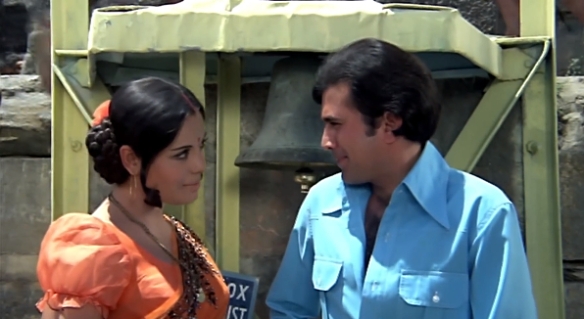
happier times with mumtaz in aap ki kasam

Ignoring the eyesore of Delhi that is Mumtaz’s horrendous puffy orange sari blouse, happier times once reigned for the estranged couple in Aap Ki Kasam (1974).

Like time itself, linear movement is the emphasis of director J. Om Prakash’s gorgeous mis-en-scène. From symbolic train tracks or plodding footsteps to fantasy-pixie Mumtaz’s unidirectional trajectory through the woods, Kishore Kumar’s rich vocals are underlined by a feeling of racing forward with no way of turning back. “Zindagi Ke Safar Mein” shines in stark contrast to the romantic “Karvaten Badalte Rahe” duet sung during a high-key moment of the film. Of equal importance, the song is also a textbook example of the Bollywood cliche demonstrating a strong correlation between despondency of the hero’s love life with the length of the hero’s beard.
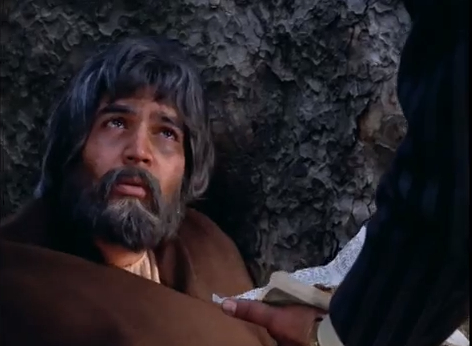
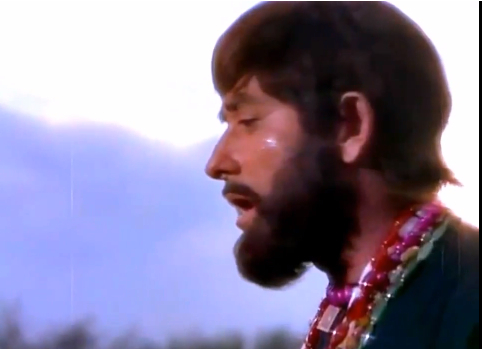
rajesh khanna beard aap ki qasam

By the time “Zindagi Ke Safar Mein” finishes, Rajesh Khanna has spiraled into total despondency as evidenced by his increasing length of beard.

We hope that listening to this song may inspire you to appreciate the moments you have with your loved ones over the holidays. So take a break from the daily grind and let those people know how much you care–don’t be a Rajesh Khanna! You’ll find the lyrics and our English translation of the sentimental hit “Zindagi Ke Safar Mein Guzar Jaate Hai” from Aap Ki Kasam (1974) below. Follow along with the video on youtube and let us know YOUR New Year’s resolution in the comments!

Zindagi Ke Safar Mein Guzar Jaate Hai Lyrics and Translation:

Zindagii ke safar mei.N guzar jaate hai.N jo maqaam
Those places you pass in the journey of life
Woh phir nahii.N aate
They never return
Woh phir nahii.N aate
They never return

Phuul khilte hai.N, log milte hai.N
Flowers bloom, people meet
Magar patjhaD mei.N jo phuul muDjhaa jaate hai.N
But that flower which dies in Autumn
Woh bahaaro.N ke aane se khilte nahii.N
It does not bloom with the coming of Spring
Kuch log ek roz jo bichhaD jaate hai.N
Those people from whom you are separated one day
Woh hazaaro.N ke aane se milte nahii.N
A thousand others may come, but you will not meet them again
Umr bhar chahe koi pukaaraa kare unkaa naam
Even though you may call their names the rest of your life
Woh phir nahii.N aate
They never return
Woh phir nahii.N aate
They never return
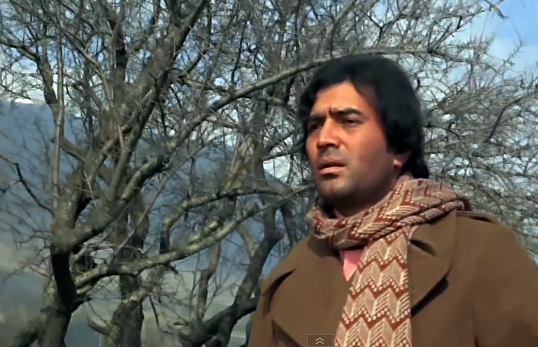
rajesh khanna wanders aimlessly in aap ki qasam

Overcome with regret, Rajesh Khanna wanders aimlessly in Aap Ki Kasam (1974).

Aa.Nkh dhokaa hai, kya bharosaa hai?
Your eye deceives you, what is the truth?
Suno, dosto.N, shak dostii kaa dushman hai
Listen, friends, doubt is the enemy of friendship
Apne dil mei.N ise ghar banaane na do
Do not let doubt reside in your heart
Kal tadapnaa paDe yaad mei.N jinkii
Those people whose memories will torment you tomorrow
Rok lo rooThkar, unko jaane na do
Stop them when they are upset, do not let them leave
Baad mei.N pyaar ke chahe bhejo hazaaro.N salaam
For later, even though you may wish to greet them with love a thousand times
Woh phir nahii.N aate
They never return
Woh phir nahii.N aate
They never return
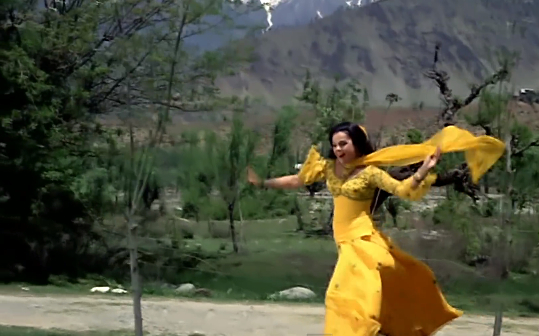
mumtaz fantasy

In epic slow-motion, Mumtaz prances through the forest of Rajesh Khanna’s fantasy, chunni billowing in the wind.

Subaah aatii hai, raat jaatii hai
Morning comes, the night departs
Yuu.n hii waqt chaltaa hii rehtaa hai, ruktaa nahii.N
In this manner, time marches on, it does not stop
Ek pal mei.N yeh aage nikal jaata hai
In a single moment, time moves forward
Aadmi Theek se dekh paataa nahii.N
Man is unable to see this well
Aur parde pe manzar badal jaata hai
And the view continues to change
Ek baar chale jaate hai jo din raat subaah shaam
But once those days and nights, and those mornings and evenings pass
Woh phir nahii.N aate
They never return
Woh phir nahii.N aate
They never return

Zindagii ke safar mei.N guzar jaate hai.N jo maqaam
Those places you pass in the journey of life
Woh phir nahin aate
They never return
Woh phir nahin aate
They never return

Glossary:

zindagii: life; safar: journey; guzar jaanaa: to pass, maqaam: place, landmark, milestone; phuul: flower; log: people; patjhaD: Autumn; muDjhaanaa: to become destroyed; bahaar: Spring; khilnaa: to bloom; ek roz: one day; bichhaD jaanaa: to become separated; hazaar: a thousand; umr bhar: whole life; pukaarnaa: to call; naam: name; aa.Nkh: eye; dhokaa: deception, trick; bharosaa: trust; shak: doubt; dostii: friendship; dushman: enemy; ghar: home; taDapnaa: to torment, to flutter; yaad: memory; roknaa: to stop; rooThna: to be upset; jaanaa dena: to let someone leave; baad mei.N: later on, bhejnaa: to send; salaam: greeting; subaah: morning; raat: night; yuu.N hii: in this manner, like this; waqt: time; pal: moment; aadmi: man; thiik se: properly, well; pardaa: veil, [in this case, a movie screen]; manzar: view; badal jaanaa: to change; ek baar: once, one time; din: day; shaam: evening
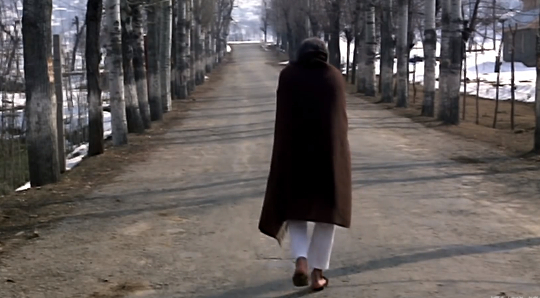
Rajesh Khanna walks away from the camera

In my favorite shot of the film, Rajesh Khanna walks away from the camera, leaving the viewer alone in the cold Winter morning in Aap Ki Kasam (1974).

For the Urdu snobs, you may note that the plural of the multi-layered term maqaam is technically maqaamaat. The suffix –aat is necessary to denote plurality of certain vocabulary with an Arabic origin, however modern Hindustani often omits this mark of purist pretension–particularly when it would throw off a song’s rhyming scheme! But if you’re quick, you’ll still hear it used in classic film dialogues. Other examples include:

kaaghazaat (pieces of paper)
zevaraat (jewels)
makaanaat (stores)
jawaharaat (rubies)
ma’luumaat (information)

Zindagi Ke Safar Mei.N” was requested by fan Agar Raheem. Our resolution for the New Year is to keep up quicker with requests from fans! If you haven’t seen your request in one of our blog posts yet, don’t worry–it’s coming! Thank you for the fantastic year we’ve had together, and our best wishes for a joyful and prosperous 2014!

Old Classic Bollywood Save the Date!

2014 is going to be a particularly memorable year for us because Mrs. 55 is getting married! Get ready because, you guessed correctly, it’s going to be a classic Bollywood-themed wedding!

-Mrs. 55
Papa Jaldi Aaja Na Lyrics and Translation: Let’s Learn Urdu-Hindi

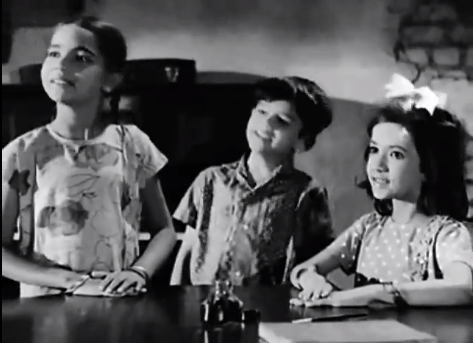
kids

These adorable children await their father Bharat Bhushan’s return from an overseas journey in Taqdeer (1967).

Here at Mr. and Mrs. 55, we wish you a very merry Christmas and send you our warmest season’s greetings! Although songs that depict Christmas are few and far between within the realm of Bollywood cinema (see last year’s post on Jingle Bells/Aao Tumhein Chand Pe Le Jaaye), there is no dearth of songs that celebrate the values comprising the essence of the holiday spirit.  While you shouldn’t hold out for a guest appearance by Santa Claus or good old Rudolph, many Hindi films from the Golden Era revolve around the aspects of Christmas that many people cherish the most: sharing happiness with others, celebrating love, and strengthening family bonds. Today, in honor of Christmas , we present a children’s classic from Taqdeer (1967) that evokes the holiday spirit through its heart-warming depiction of familial love: pappaa jaldii aajaa na.

Directed by A. Salaam Taqdeer (1967) is a Hindi remake of the Konkani film Nirmon (1966) that narrates a powerful story about a destitute widow (played by Shalini Mardolkar) whose husband (played by Bharat Bhushan) is thought to have died in a tragic shipwrecking. Struggling to make ends meet, she accepts a marriage proposal from her husband’s wealthy friend (played by Kamal Kapoor) for the sake of her family. Although money is no longer an issue for them, Shalini and her children struggle to find happiness in the absence of their warm and loving husband/father. Although his family thinks that he is deceased, it turns out that Bharat miraculously survived the shipwrecking but lost all of his memory prior to the accident as a result of amnesia. Several years later, Bharat’s amnesia resolves when he hears a performance of a song (“jab jab bahaar aayii“) that he had taught to one of his former music students. After his memory returns, Bharat returns home to Goa and encounters the harsh reality of the sacrifices his family has been forced to make in his absence. How will Bharat be reunited with Shalini and his children? Watch the full movie here to find out!

Composed by Laxmikant-Pyarelaal and penned by Anand Bakshi, this song is presented at the beginning of Taqdeer after Bharat has embarked on his overseas journey. Equipped with the gentle maternal beauty of Lata Mangeshkar’s voice, Shalini leads her children (voiced by Sulakshana Pandit, Ila Desai, and Meena Petki) in a song to ask for their father’s safe and prompt return home. Naturally, part of the reason that the children await their father’s return is because they are excited to receive the new toys and gifts that he will bring home for them from abroad. Yet, the line “guDiyaa chaahe na laanaa, pappaa jaldii aajaa na!” illustrates how the children dearly miss their father’s love and support regardless of whether they receive his gifts or not.

Indeed, this heart-warming song can serve as a reminder of what is truly important to us at this time of the year. The most important part of the holiday season is not exchanging gifts and reveling in new excitement of our new toys, clothes, or gadgets. Rather, the greatest gift that we can receive for the holidays is the opportunity to live, laugh and cherish the company of our family and loved ones. Still looking for ideas on how to spend your quality time this holiday season? Mrs. 55 and I recommend putting on your favorite old Bollywood flick and letting the bonding begin with those that matter to you the most. Until next time…

-Mr. 55
Shalini

Shalini Mardolkar writes a letter to her husband to tell him how much the family misses him in Taqdeer (1967)


Papa Jaldi Aaja Na: Lyrics and Translation

saat samundar paar se, guDiyo.n ke bazaar se
From a doll store across the seven seas,
achhii sii guDiyaa laanaa
please bring us back a doll. 
guDiyaa chaahe na laanaa, pappaa jaldii aajaa na!
Whether you bring a doll or not, please come home soon, Papa!

tum pardes gaye jab se, bas yah haal huaa tab se
Ever since you went abroad, our lives have not been the same.
dil diivaanaa lagtaa hai, ghar viraanaa lagtaa hai
My heart has gone mad, as this house feels desolate without you.
jhilmil chaa.nd sitaaro.n ne, darvaazo.n diivaaro.n ne
The shining Moon and stars, these doors and walls,
sab ne puuchha hai ham se: kab jii chhuuTegaa gham se?
they all have asked me, “When will your heart be liberated of sorrow?
kab hogaa unkaa aanaa? pappaa jaldii aajaa na!
When is the date of his return?” Please come home soon, Papa!

maa.n bhii loDii nahii.n gaatii, ham ko nii.nd nahii.n aatii
Since Mom does not sing lullabies anymore, we have trouble falling asleep.
khelkhilaune TuuT gaye, sangiisaathii chhuuT gaye
Our toys are broken, and our companions have left our side.
jeb hamaarii khaalii hai aur aatii diivaalii hai
Our pockets are empty, yet Diwali is still to come.
ham sab ko na taDpaao, apne ghar vaapas aao
Please do not torment us any longer. Once you return home,
aur kabhii phir na jaanaa. pappaa jaldii aajaa na!
never leave us again. Please come home soon, Papa!

khat na samjho taar hai yah, kaaghaz nahii.n hai pyaar hai yah
Consider this a telegram, not a letter. It is made of love, not paper.
durii aur itnii durii, aisii bhii kyaa majbuurii?
There is such distance between us. What compels you to be so far?
tum koii naadaan nahii.n, tum isse anjaan nahii.n
You are not naive, nor are you unaware that
is jiivan ke sapne ho, ek tum hii to apne ho
you are my dream in this life. I consider only you to be mine. 
saaraa jag hai begaanaa, pappaa jaldii aajaa na!
I am estranged from the rest of the world. Please come home soon, Papa!

saat samundar paar se, guDiyo.n ke bazaar se
From a doll store across the seven seas,
achhii sii guDiyaa laanaa
please bring us back a doll.  
guDiyaa chaahe na laanaa, pappaa jaldii aajaa na!
Whether you bring a doll or not, please come home soon, Papa!

Shalini

Shalini Mardolkar and her children are not the same without their beloved head of household Bharat Bhushan in Taqdeer (1967).


Glossary

samundar: sea; guDiyaa: doll; bazaar: store, market; jaldi: soon, quickly; pardes: abroad; viraanaa: empty, desolate; jhilmil: shining; darvaazaa: door; diivaar: wall; chhuTnaa: to escape/depart, to be free of; loDii: lullaby; khel-khilaune: toys; sangii-saathii: companions; jeb: pocket; khaalii: empty; taDpaanaa: to torment; duurii: distance; majbuurii: compulsion, helplessness: anjaan: unaware; jag: world; begaanaa: estranged, alien.

Nutcracker

In my holiday best for my first viewing of The Nutcracker by Tchaikovsky!

Classic Bollywood for Dummies: 15 Hidden Signs, Tricks, and Clichés

Classic Bollywood for Dummies

Scenes from classic Bollywood often make zero sense when taken out of context. In fact, much of classic Bollywood makes no sense even in context.

Bollywood is bursting at the seams with cliches. Do you remember your first old Bollywood film? Or worse, when you forced your previously uninitiated friend to watch a classic Hindi film with you? What about that game-changing moment when you realized you could predict the film’s outcome based solely on the simple fact that Lata Mangeshkar only sang for the real heroine and Asha Bhonsle always sang for the vamp?

We at Mr. and Mrs. 55 know how it goes. We understand the mass confusion that can ensue during a naive viewing party. The recovery can take years. You see, classic Bollywood movies have a secret language of their own. So we’ve put together a guide to old Bollywood films: a compilation of hidden signs, tricks, and cliches that make understanding any classic Hindi film WAY easier. Think of our list of 15 key cinematic tropes of Bollywood as a translation for what the director is really trying to tell you. Welcome to Classic Bollywood for Dummies.

1. A woman faints in the middle of a public gathering.

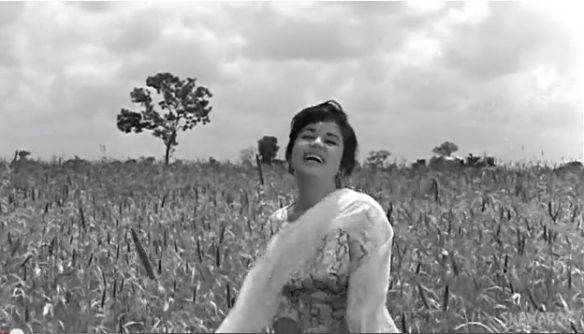
mother india faint pregnant

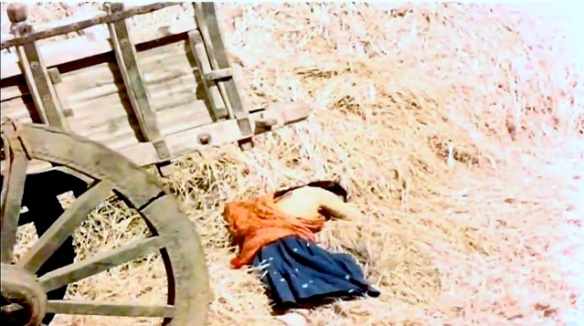
In her starring role as Mother India (1959), Nargis collapses after an agricultural celebration into a pile of hay. There can be only one explanation.

She’s pregnant. Is there a valid physiological explanation for this? Questionable. Did it happen to every single Indian woman who ever became pregnant in the 1950s-70s? Obviously. As far as the director is concerned, it sure beats filming an episode of morning sickness.

2. The camera pans from a couple making eyes at each other to the mountainside.

RK

Mumtaz and Rajesh Khanna start to get uncomfortably close before the camera hurriedly pans away from the threatened PG moment in Aap Ki Kasam (1974).

Expect a baby soon. The scenic pan is one of the most classic tropes of Hindi cinema. When a camera pans away to nature’s beauty just before the money, it’s the director’s way of letting the audience know that everything we dreamed of happening is happening…only they can’t let you watch because of censorship law. The baby always shows up on cue a few scenes later . check out how it’s done in “Karvaten Badalte Rahe” from Aap Ki Kasam (1974).

3. If there are two (or three!) possible love interests, but only one is wearing traditional Indian clothes.

Nanda teen devian indian clothes

Framed by rural imagery with a white chunni billowing the wind, is it any surprise that corn-fed Nanda is the chosen one in Teen Devian (1965)?

He’s going to pick the more Indian one. Despite our hero’s love of the wild wild West, when it comes down to marrying someone he can proudly introduce to his mother, he picks the girl who consistently wears traditional Indian clothing. Equally ridiculous is the director’s oh-so-subtle hint that the film vamp has morally reformed when she at last dons a sari in place of her miniskirt.

4. The camera pans to a candle by the bed and the flame blows out.

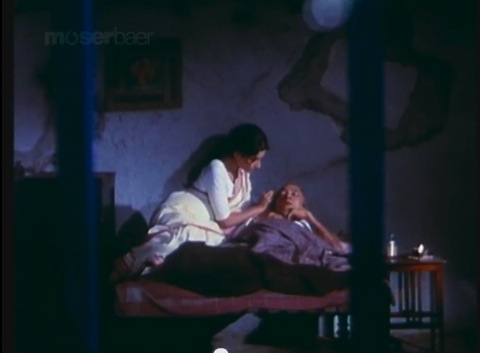
aradhana saphal hogi teri

Sharmila Tagore comforts her ill father by convenient candlelight in Aradhana (1971).

Don’t expect that character to return in act II. I don’t know what it is about filming a death scene, that classic Bollywood actors and directors balked at the thought. They’ll usually cover you up until that very last breath–and then the camera will suddenly zoom-in on the candle by the bedside. When the candle blows out, it’s game over for our sick friend.

5. Fog enters the scene.

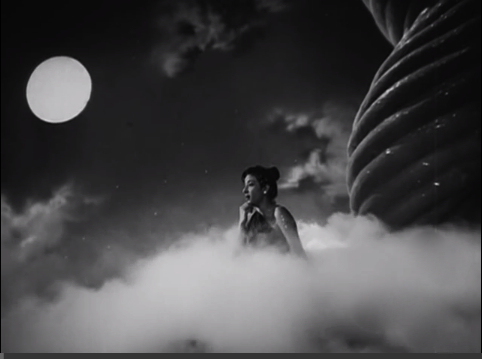
ghar aayaa mera pardesi fog awaara

In a sequence famously choreographed by French artist Madame Simki, Nargis appears in the moonlight shrouded by fog in Awaara (1951).

There is a 50/50 chance this is all just a dream sequence. Fog indicates that this scene is taking place inside someone’s (or a collective) imagination, but may have never really happened. Song sequences are particularly notorious for this maneuver, portraying fantasies that are not congruent with everyone’s real relationships in the scene immediately following. Take everything you see enhanced by a fog machine with a generous grain of salt.

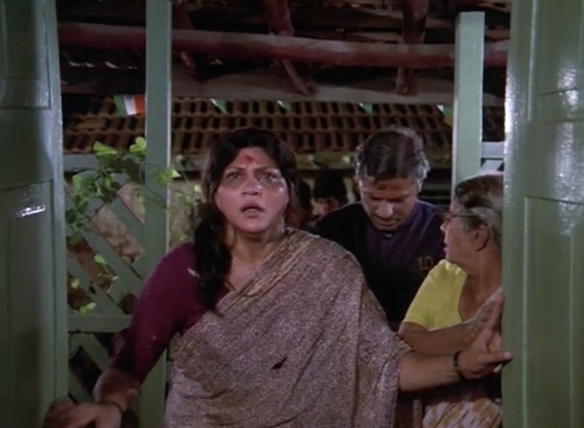
6. A woman’s sindoor gets smudged.

sindoor smudge amar akbar anothony

Nirupa Roy’s sindoor gets smudged in the opening sequence of Amar, Akbar, Anthony (1977). By the look on her face, it is clear she understands the cinematic implications.

Her husband is as good as dead now. The symbolism of the red sindoor (not to be confused with any old party bindi!) is well-understood by native audiences to denote that a woman is married. If you didn’t know that, and further didn’t know that the director likes to take artistic leaps of judgement, you would probably not understand the horrors of accidentally smearing your sindoor in a classic Bollywood film.

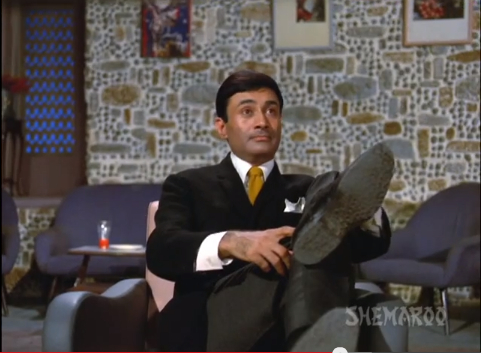
7. A male lead has distinctive shoeware.

dev anand shoe jewel thief

The integrity of Dev Anand’s feet is questioned in Jewel Thief (1967), demanding removal of his shoes at what is about to become a much more interesting house party.

He’s the secret villain. From having feet of two different sizes in Yaadon Ki Baarat (1973), missing toes in Jewel Thief (1967), or the white shoes of death in Humraaz (1967), footware has an important and sinister role in classic Bollywood. Beware the man who draws attention to his shoes. It may mean he has something hidden up his sleeve.

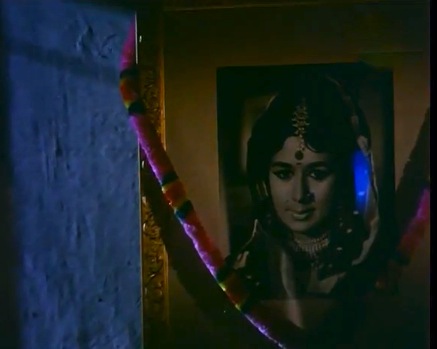
8. Someone’s photo suddenly has a garland around it and they’re nowhere to be seen.

nanda ek pyar ka nagma hai

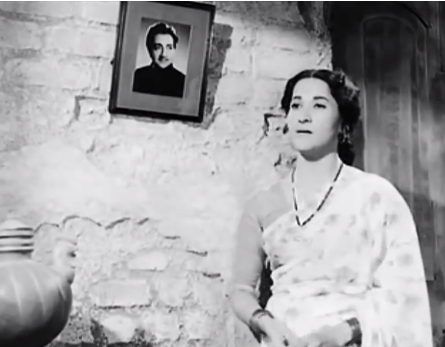
Manoj Kumar keeps a garlanded photo of his deceased wife in Shor (1972).

That character is now dead. This subtle Indian custom has tricked many a naïve Bollywood viewer. Look specifically for a garland around the frame–it’s no mere decoration! A garland around someone’s photograph indicates that this beloved member of the troop has passed on to greater things. The director assumes you take this for granted as he does, so don’t let this prevent you from following the rest of the film, awaiting that character’s overdue return.  “Ek Pyar Ka Nagma Hai” from Shor (1972) pulls the rug out from under our feet masterfully with this textbook trick.

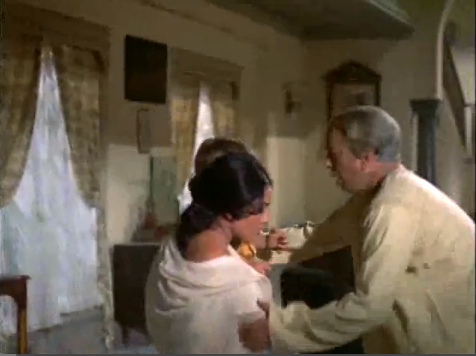
9. When anyone goes to touch an elder’s feet and they try to stop them.

kati patang touching elder's feet

Nasir Hussain awkwardly attempts to block Asha Parekh from touching his feet in their first encounter in Kati Patang (1971). He will prove solid from this point on.

That elder is a good person. We can count on them. The custom generally goes that when someone younger meets or takes leave of an elder, he or she bows down and touches their feet out of respect. You’ll only rarely see this formality taken to completion because if the elder is a good guy, they try to block you halfway, as if to indicate that they are not worthy of such a show of deference. Of course, even the elaborate blockage itself is a formality, but both parties have to give it their best shot. And if the elder successfully intercepts the feet-touching, he or she is officially going to be your friend for life.

10. A miracle occurs. Mom gets her eyesight back after a freak accident, or the lover you thought was dead returns to life.

Rishi Kapoor Amar Akbar Anthony

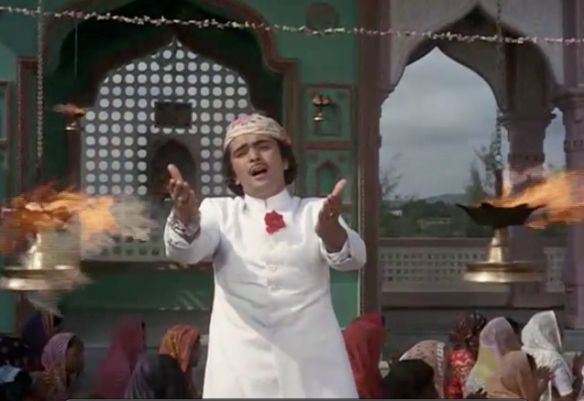
No matter what your faith, Rishi Kapoor proves devotion pays in Bollywood by divinely igniting the temple lamps using nothing more than his boyish good looks in Amar Akbar Anthony (1977).

Someone has recently prayed. I dare you to point out a Hindi film in which the hero or heroine prays and God doesn’t listen. Usually, the opening line goes something like this, “Bhagwan, main ne tujhe aaj tak kuch nahin manga.” [God, until today I have not asked you for anything.] You would think miracles were a dime a dozen in the ’70s.

11. The nightclub has white people in it.

bramachari white people in nightclub

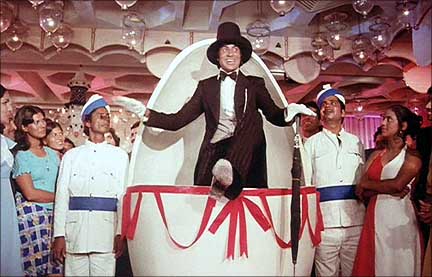
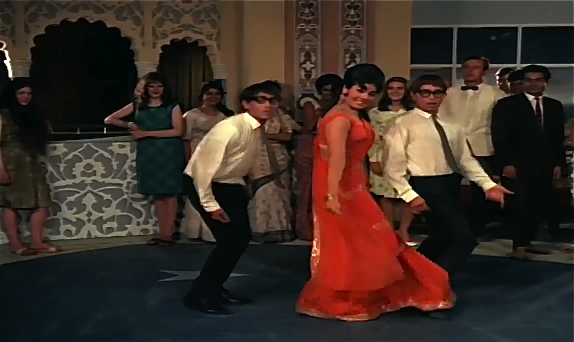
Mumtaz dazzles her fan-base with grooves even the white folk can’t keep up with in Brahmachari (1968). How many can you count boosting the decor of this hep cat joint?

This is a really, really fancy joint. The director is trying to let you know that hero must be super cool and this place is really fashionable. You get extra points if there is a white woman in the heroine’s posse of girlfriends. I don’t like it either, but these are just the rules of the game.

12. A woman is dressed in all white and sings.

Sadhana2_WohKaunThi

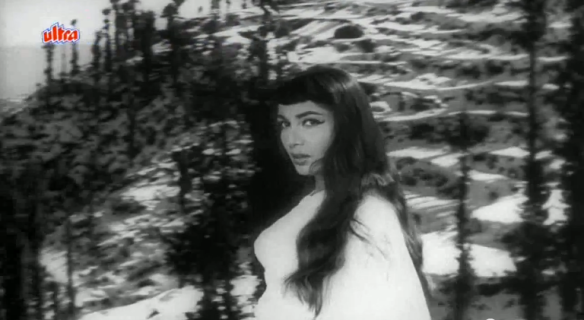
With sari white as snow, the mysterious femme fatale Sadhana creeps on Manoj Kumar in Woh Kaun Thi? (1964)

She might be dead. An all-white sari means she’s either a widow or dead, but you can narrow it down that if she’s singing a Lata song, she’s probably dead. The ghostly femme fatale is a hallmark of the Indian film noir genre.

13. Pran walks onto the set.

pran bhramachari

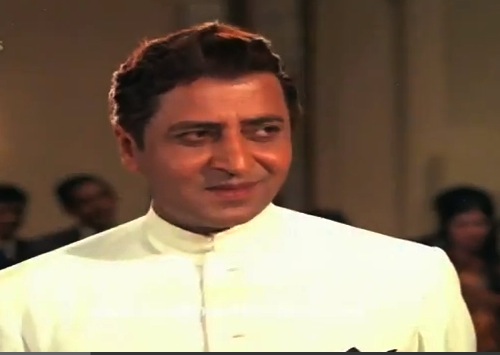
Oh, Pran. Did you never get your day in the sun?

Despite his obvious game, Pran will never get the girl. So don’t be too worried. I don’t care if he’s the richest, the suavest, or even the best looking guy in the film. His matrimonial prospects are always foiled. On a related note, if you see “And…Pran!” flash at the end of the opening titles, you know the film is going to be good.

14. Lymphosarcoma of the intestine is diagnosed.

amitabh bachan rajesh Khanna anand

Amitabh Bachhan diagnoses Rajesh Khanna with the dreaded lymphosarcoma of the intestine, sealing his fate in Anand (1971).

They will die. Kiss this character goodbye right now for death is inevitable. We dedicated an entire post to this bizarre Bollywood trade secret.

15. The hero grows a beard.

Rajkumar beard heer ranjha

Rajkumar’s suffering is so much more believable once he sprouts more hair in Heer-Ranjha (1970).

Things have really gotten bad. Tragedy has hit a new low. Young Indian men who have no place among the clergy do not grow beards without a reason. In classic Bollywood, that logical reason is misfired love. Once you spot the hero shirking his daily man-scaping duties, his romantic prospects have hit rock bottom.

Feeling like you’ve been struck by lightening? Our all-inclusive Classic Bollywood for Dummies is the first step toward enlightenment! Did we miss a key clue to classic Bollywood films you wish you had known? Add to our list in the comments!

– Mrs. 55

Neele Gagan Ke Tale Lyrics and Translation: Let’s Learn Urdu-Hindi

Neele Gagan Ke Tale 2

Rajkumar gets romantic with his co-star Vimi in “Neele Gagan Ke Tale” from Humraaz (1967)

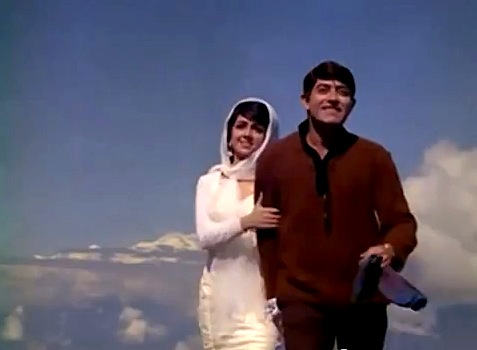
Next we showcase the lovely lyrics and English translation of “Neele Gagan Ke Tale” from Humraaz (1967). Set against a peaceful blue sky, Rajkumar and Vimi express their young love for each other as the voice of Mahendra Kapoor floats above. Because of this, the song carries a timeless quality marked by omniscience, as if everything we see is approved by Heaven. Whether a gentle horseback ride or riverside rendez-vous, “Neele Gagan Ke Tale” focuses just as much attention on the protagonists as it does on the wonder of nature. With an opening number as famously idyllic as this, Humraaz effectively lulls the viewer into a false sense of security. A highly underrated mystery thriller, the film shifts gears radically, filled with exciting turns and unexpected cameos until the shocking, but artistically very satisfying end. But that Elysian paradise of “Neele Gagan Ke Tale” where lovers dream and Earth is in bloom will continue to live on forever.

Rajkumar Vimi Neele Gagan ke Tale Humraaz 1967

Mahendra Kapoor’s  “Neele Gagan Ke Tale” is appropriately filmed against a beautiful deep blue sky.

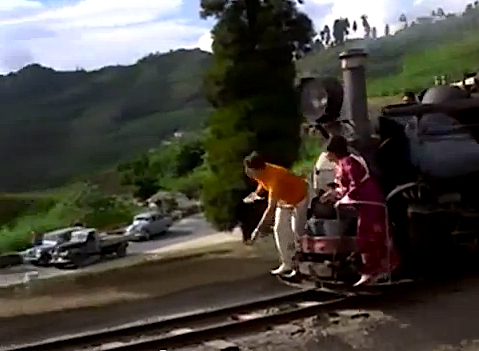
Humraaz is also a rare showcase of Mahendra Kapoor’s talent as a singer. Music director Ravi is often credited as making Kapoor’s career with opportunities and expressiveness that other music directors famously denied him. A devoted Mohammed Rafi disciple, Mahendra Kapoor was often brushed aside by music directors like O.P. Nayyar, who unfairly referred to Kapoor as “besuraa” or “tuneless” in comparison! Ravi, however, believed in Kapoor’s unique talent and freely demonstrated his ability with Sahir Ludhianvi lyrics from the tragic “Chalo Ek Baar Phir Se” to the romantic “Kisi Patthar Ki Murat Se” also from Humraaz. The evergreen hit “Neele Gagan Ke Tale” won Kapoor the filmfare award for Best Playback Singer in 1967! And indeed, one listen of Kapoor’s resonant, tender vocals in this sweet ballad will quickly quell any dissent (which, coming from myself, a fight-to-the-death Rafi groupie, says a lot)! Paired with the blissfully romantic landscapes of India’s beloved tea estates in Darjeeling, the song is truly one of the most gorgeous classic Bollywood has to offer.

Rajkumar Vimi darjeeling Humraaz

Rajkumar and Vimi enjoy the peaceful Darjeeling landscapes in Humraaz (1967).

We hope you enjoy the full lyrics and English translation of “Neele Gagan Ke Tale” below. Follow along with the video and let us know how much you love the escapist fantasy of it all in the comments!

Neele Gagan Ke Tale Lyrics and Translation:

Hey neele gagan ke tale
Beneath the blue sky
Dhartii ka pyaar phale
The love of earth blossoms
Aise hii jag mei.N aate hai.N subahe.N
In this place the morning arrives
Aise hii shaam Dhale
In this place the evening falls
Hey neele gagan ke tale
Beneath the blue sky
Dhartii ke pyaar phale
The love of earth blossoms

Shabnam kii motii phoolo.N pe bhikre
The pearls of morning dew spread upon the flowers
Dono.N kii aas phale
And both of their desires flourish
Hey neele gagan ke tale
Beneath the blue sky
Dhartii ke pyaar phale
The love of earth blossoms

Bhalkaatii bele.N mastii mei.N khele
The sprawling branches play joyfully
PeDo.N se milke gale
And meet the embrace of the trees
Hey neele gagan ke tale
Beneath the blue sky
Dhartii ke pyaar phale
The love of earth blossoms

Nadiyaa kaa paanii dariyaa se milke
The water of the stream meets the river
Saagar kii or chale
And travels toward the ocean
Hey neele gagan ke tale
Beneath the blue sky
Dhartii ke pyaar phale
The love of earth blossoms

Glossary:

neelaa: blue; gagan: sky; tale: below; dhartii: earth; pyaar: love; phalna: to blossom; jag: place; subaah: morning; shaam: evening; Dhalnaa: to set, to diminish; shabnam: dew; motii: pearl; aas: desire; bhalkaatii: sprawling, winding; bel: branch; mastii: intoxication, joy; peD: tree; gale: embrace; nadiyaa: stream: paanii: river; dariyaa: river; saagar: ocean; or: toward, direction

Rajkumar Vimi Humraaz Neele gagan ke tale

Rajkumar is one heck of a handsome soldier as he bids a tender farewell to Vimi in Humraaz (1967).

Fun fact: “Neele Gagan Ke Tale” also makes our list of favorite “horse songs” found in Bollywood films because of its opening trot!

-Mrs. 55

Chhupa Lo Yun Dil Mein Lyrics and Translation: Let’s Learn Urdu-Hindi

Mamta Suchitra Sen Chhup Lo Yun Dil

Suchitra Sen wishes her daughter will never meet a Fate like her own in Mamta (1966).

Today we showcase the lyrics and English translation to the soulful “Chhupa Lo Yun Dil Mein” from Mamta (1966). One of Majrooh Sultanpuri’s greatest pieces, the calming lyrics set the tone for both the song’s music and its picturization, entering the film as fluidly as it ebbs away, as if an extension of the dialogue the audience so yearns to hear. “Chhupa Lo Yun Dil Mein” is an expression of unwavering romantic devotion set to a soothingly monastic pace.

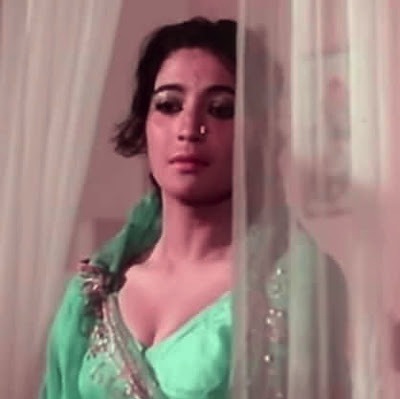
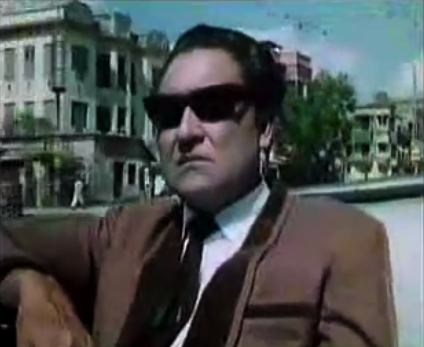
Suchitra Sen and Ashok Kumar play two lovers who were unable to wed because of class differences, but never forget their love for one another. Suchitra later marries an abusive husband, and ultimately is forced into becoming a courtesan to survive. She tearfully gives up her only daughter so that her child can escape her mother’s ignominious shadow. In the aftermath, “Chhupa Lo Yun Dil” is not lipsynced, but rather the female voice is picturized on a lingering image of Suchitra Sen fading behind a drawn curtain, while the male is picturized on Ashok Kumar shrouding his eyes behind a pair of sunglasses. Poetically fitting, both literally conceal themselves from the viewer in a song dedicated to the beauty of hidden worship.

Ashok Kumar Mamta 1966 sunglasses

Ashok Kumar pensively shields his emotions in Mamta (1966).

Roshan’s soundtrack of Mamta is as gorgeous as it is diverse (see our earlier translation of “Rahe Na Rahe Hum“). “Chhupa Lo Yun Dil” employs a rare paucity of musical instrumentation: from the opening chimes of temple manjira to the traditional bansuri echoing alone in the empty cinematic space, the song emphasizes the ascetic nature of their devotion. To match, the romantic lyrics are infused with religious imagery, and director Asit Sen carefully constructs shots that instead of bring the hero and heroine closer together, in fact emphasize their distance (even their eyelines don’t match!). Indeed, perhaps the song is not two lovers singing to each other after all. The song can be read instead as a mother singing to the daughter she will leave forever, and a father discovering a new meaning to his life by caring for the child in her mother’s memory.

Based in Bollywood’s favorite raaga Yaman, “Chhupa Lo Yun Dil” is one of the most moving Hemant Kumar-Lata Mangeshkar duets of all time. We hope you enjoy our English translation to the lyrics of “Chhupa Lo Yun Dil Mein” below!

Chhupa Lo Yun Dil Mein Lyrics and Translation:

MALE:
Chhupaa lo yuu.N dil mei.N pyaar meraa
Hide my love inside your heart
Ki jaise mandir mei.N lau diye kii
Like the flame of a candle inside a temple

FEMALE:
Tum apne charano.N mei.N rakh lo mujhko
Keep me by your feet
Tumhaare charano.n ka phuul huu.N mai.N
For I am the flowers beneath your footsteps
Mai.N sar jhukaaye khaDii hoo.n priitam
I am standing with my head bowed, my beloved one
Ki jaise mandir mei.N lau diye kii
Like the flame of a candle inside a temple

MALE:
Yeh sach hai jeenaa thaa paap tum bin
It is true that to live without you was a sin
Yeh paap mai.N ne kiyaa hai ab tak
I have committed this sin until now
Magar thii man mei.N chhabii tumhaariI
But your image was always in my mind
Ki jaise mandir mei.N lau diye kii
Like the flame of a candle inside a temple

FEMALE:
Phir aag birhaa ki mat lagaanaa
Please do not light the fire of separation again,
Ki jal ke mai.N raakh ho chukii hoo.N
For I have already burned into ashes

MALE:
Yeh raakh maaThe pe mai.N ne rakh lii
I have worn those ashes upon my forehead
Ki jaise mandir mei.N lau diye kii
Like the flame of a candle inside a temple

BOTH:
Chhupaa lo yuu.N dil mei.N pyaar meraa
Hide my love inside your heart
Ki jaise mandir mei.N lau diye kii
Like the flame of a candle inside a temple

Glossary:

chhupaanaa: to hide; mandir: temple; lau: flame; diyaa: candle; charan: footsteps; phuul: flower; sar jhukaanaa: to bow [one’s] head; khaDaa: standing; priitam: loved one; jiinaa: to live; paap: sin; man: mind; chhabii: image; aag: fire; birhaa: separation; jalna: to burn; raakh: ashes; maaThe: forehead

Gorgeous Suchitra Sen Mamta 1966

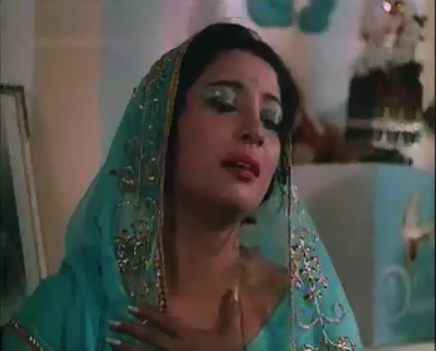
Suchitra Sen’s glittery teal eyeshadow brilliantly matches her sari before becoming soaked in tears in Mamta (1966).

Famous Bengali director Asit Sen was well-known for making films with a refreshingly strong female lead, from Khamoshi (1969) starring Waheeda Rehman to Safar (1970) starring Sharmila Tagore. His mentor was none other than auteur Bimal Roy of Parineeta (1953) fame, which undoubtedly influenced the stories he chose to tell in his own directorial works. This beautiful Mamta song was requested by fan Jiyati Verma! Thank you for the great request!

– Mrs. 55