Hai Apna Dil To Awaara Lyrics and Translation: Let’s Learn Urdu-Hindi

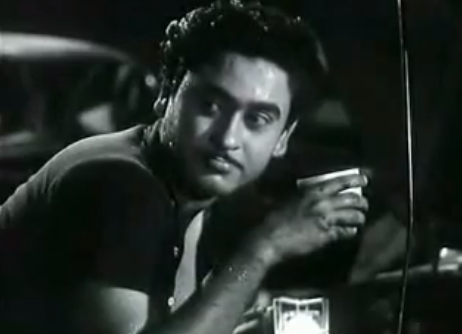
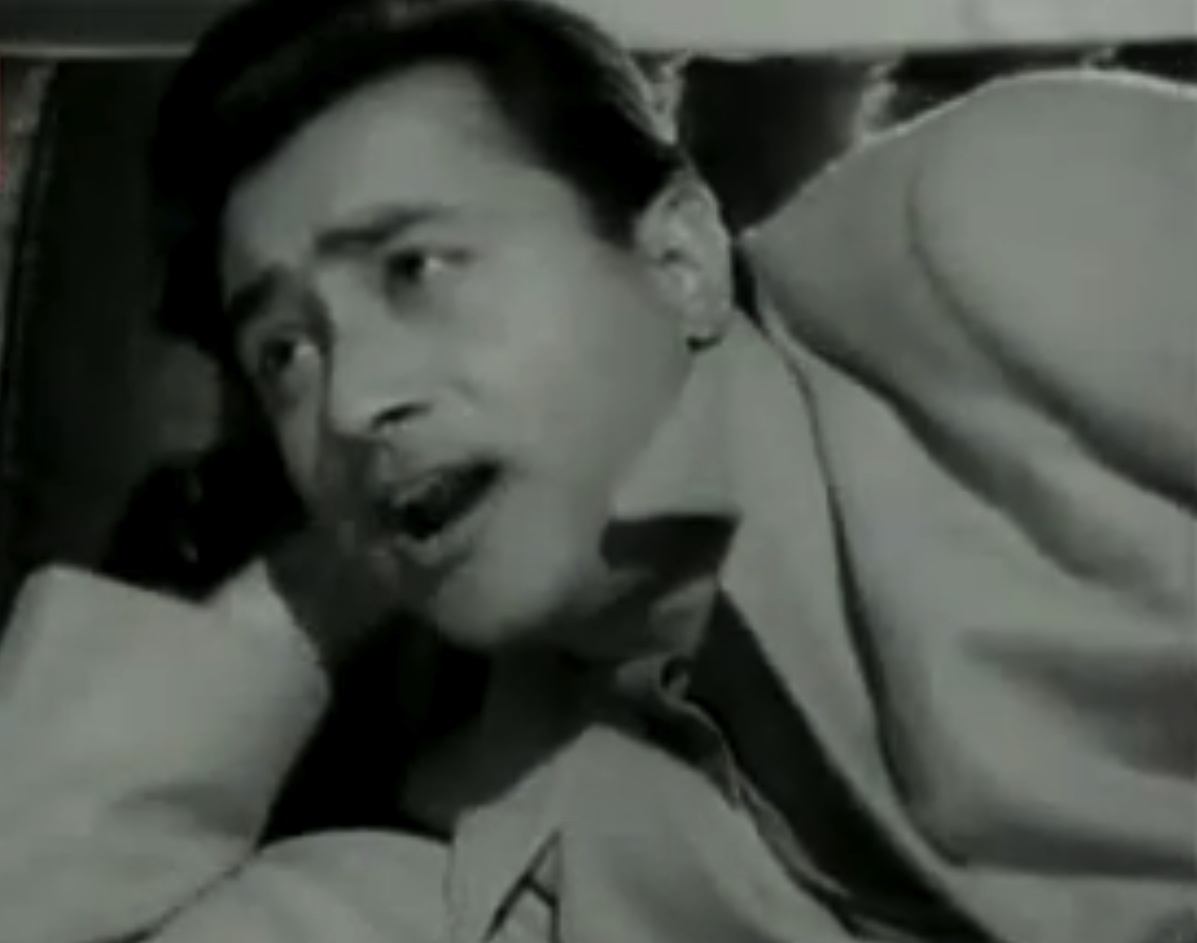
Dev Anand croons “Hai Apna Dil To Awara” aboard a moving train in Solva Saal (1958).

You gotta love this song. Hemant Kumar, whose forte is usually deep soulful melodies, outshines everyone in this catchy classic. Dev Anand stars with the lovely Waheeda Rehman in 1958 quasi-noir Solva Saal, mostly memorable for this all-time hit “Hai Apna Dil To Awara” picturized on a train. What is it about Dev Anand and trains? “Jab Pyaar Kisi Se Hota Hai” is also sung on a moving train to a sulky heroine, although by that point, Dev had perfected the look and ventured outside the train’s window! But that’s another story.

Directed by the legendary Raj Khosla, the shining moments of Solva Saal are clearly the fruits of a brilliant collaboration. While somewhat obscure, the film delivers a high-paced plot with enough twists to keep you glued, but enough groans to make you want to immediately watch a more redeeming Dev-Waheeda film soon after (I strongly recommend Guide).
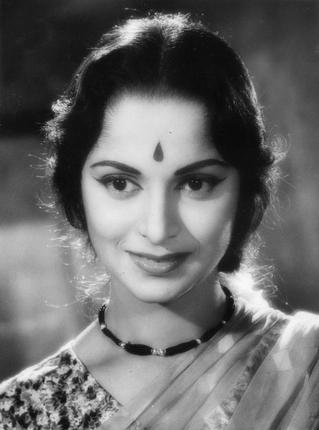
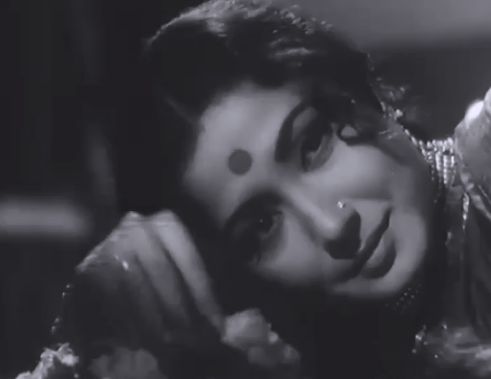
Drop-dead beautiful Waheeda Rehman plays a risk-taking jilted lover in Solva Saal (1958). Seriously, Waheeda. Stop being so gorgeous!!

The lyrics of this song, penned by Urdu maestro Majrooh Sultanpuri, are just plain and simple fun. In it, the hero personifies his own heart, speaking as if it were another being with a mind and will separate from his own. It’s so clear that Waheeda is having trouble keeping her mind on the awkward guy next to her she’s supposed to be eloping with!

For anyone more in the mood for melodrama, there’s also a “sad” version of this song just before the hero and heroine sort out their differences and live happily ever after. Until then, follow along with the youtube song of the happier classic, and enjoy our lyrics and translation to “Hai Apna Dil To Awara below!


Hai Apna Dil To Awara Lyrics and Translation

Hai apnaa dil to aawaaraa
My heart is a vagabond
Na jaane kis pe aayegaa
I wonder to whom he will take a liking

Haseeno.N ne bulaayaa, gale se bhii lagaayaa
Many beautiful women called me, they even embraced me
Bahut samjhayaa, yahii.N na samajhaa
They tried hard to explain, but my heart did not understand
Bahut bholaa hai bechaaraa
The poor thing is way too innocent
Na jaane kis pe aayegaa
I wonder to whom he will take a liking

Ajab hai diiwaanaa, na ghar na Thiikaanaa
My heart is a strange madman, he has no house and no abode
Zameen se begaanaa, falak se judaa
He has no roots with the Earth, he is distanced from Heaven
Yeh ek tuutaa huaa taaraa
He is a shooting star
Na jaane kis pe aayegaa
I wonder upon whom he will fall

Zamaanaa dekhaa saaraa, hai sab kaa sahaaraa
I have seen this whole world, I have everyone’s support
Yeh dil hii humaaraa, huaa na kisii kaa
Only this heart of mine never gave himself to anyone
Safar mei.N hai yeh banjaaraa
He is a gypsy on a journey
Na jaane kis pe aayegaa
I wonder to whom he will take a liking

Hua jo kabhii raazii, to milaa nahii.N qaazii
If he ever agreed to someone, no pandit could be found
Jahaa.N pe lagii baazii, wohii.N pe haaraa
Wherever he has taken a gamble, he lost
Zamaane bhar kaa naakaaraa
He is rejected by the whole world
Na jaane kis pe aayegaa
I wonder to whom he will take a liking

Glossary:

awaaraa: vagabond; bhola: innocent, pure; bechaaraa: poor thing; ajab: odd; diiwaanaa: madman (from love), ghar: house, Thikaanaa: abode, shelter; zameen: Earth; begaanaa: distanced, estranged; falak: sky, Heaven; tuutaa hua taaraa: a fallen star; sahaaraa: support; safar: journey; banjaaaraa: gypsy, nomads of North Indian origin; raazi: agreement, qaazi: a judge who in Islamic faith can legalize a marriage as witness; baazi: a gamble, a round of cards, haaraa: lose; naakaaraa: rejected

A brief note on the word “vagabond.” The somewhat arcane term is inevitably used across many sources to translate the Hindi word aawaara dating back to Raj Kapoor’s breakthrough film of the same name-so for posterity’s sake, I have translated it similarly. Still, I have never held that the word does justice to what aawaaraa is. Just to clarify, someone who is an aawaaraa is not necessarily a vagrant with all the connotations that come with the English usage—i.e. homeless, unemployed, etc. Aawaaraa, especially as it is commonly used poetically in Hindi films, is someone carefree, independently wandering and unwilling to be tied down. It’s a subtle, but pretty important distinction. I’m glad we’re all on the same page on this.
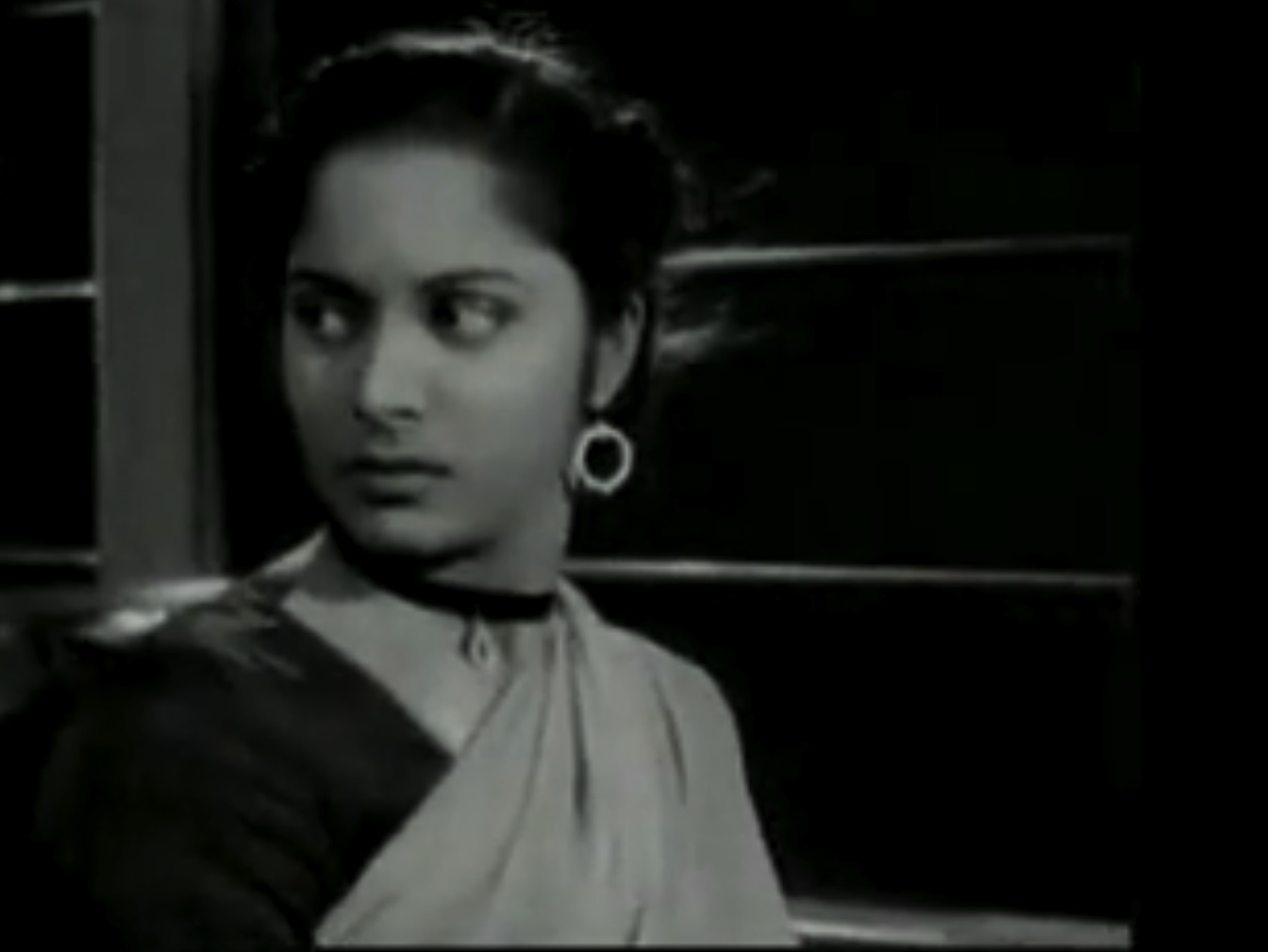
Waheeda Rehman pretends to be annoyed by Dev Anand’s playful song. Don’t be a such a party-pooper!

More importantly, does anyone else question the slightly awkward cheering and whoops that occur to punctuate this otherwise straightforward song? Listen carefully right during the interlude music just before the last stanza. I mean, can you imagine being a chamcha in S.D. Burman’s brainstorming session when someone decided this was a great idea? And furthermore, I don’t think that the voice is Hemant’s or Dev Anand’s doing the whooping. That means some random chamcha had to come in to the recording studio, put on the headphones, stand in front of an isolated mic, and make these wild sounds that S.D. Burman mixed lovingly into the track.

CHAMCHA: How was that, Boss?

BURMAN: Almost, almost. Right there, where it sounds like you’re having an esophageal hernia. Give me a little more of that kind of enthusiasm.

CHAMCHA: [whoops brains out]

BURMAN: Brilliant! That is precisely the touch that this composition needed. Aloo tikkis are on me tonight!

The whole thing just strikes me as trippy. Of course, we know R.D. Burman took those spastic noises to new heights in the decades following, so I guess we now know where it came from!

– Mrs. 55

Plagiarism in Hindi Film Music: Is Imitation the Most Sincere Form of Flattery?

Music directors in the Bollywood industry today are often accused of plagiarizing songs without giving proper credit to the original sources. Pritam Chakraborty, in particular, comes to mind as a composer who has been subjected to such accusations in recent times. Yet, lifting tunes is not a new trend in the industry: its origins can be  traced back to the industry’s earliest days when music directors of the Golden Era composed melodies heavily inspired by unattributed sources. Below, let’s take a listen to some plagiarized works composed by five of the greatest music directors of yesteryear: R.D. Burman, S.D. Burman, Shankar-Jaikishan, Salil Chowdhury, and O.P. Nayyar.

 R.D. Burman

Among the music directors of his time, R.D. Burman was perhaps the most notorious for composing inspired tunes.  Within the list that I’ve provided below, the magnitude of plagiarism varies from song to song. Some numbers below are direct lifts from their originals, such as the cult classic “mahbuubaa mahbuubaa” from Sholay (1975). Others represent more subtle variations of plagiarism: for instance,  the Kishore Kumar classic “dilbar mere kab tak mujhe” only takes it mukhDaa from “Zigeunerjunge” but has original antaras and interludes.  As a musician, I personally feel that the latter form of lifting is somewhat justifiable because it still reflects a level of creativity and originality on the part of the composer. The direct copying of tunes, however, raises ethical concerns and may have even placed music directors like R.D. Burman in legal trouble had such songs been released today.  Regardless of your opinion on this issue, what is universally striking about the list of songs below is the diversity of sources from which R.D. Burman drew his inspiration.  Collectively, the original melodies come from a smorgasbord of musical genres from all over the world: traditional folk, American pop, Greek, German, French, and even Iranian rock!

aao twist kare.n (Bhoot Bangla, 1965)  / “Let’s Twist Again” (Chubby Checker, 1962)
churaa liyaa hai tum ne  (Yaadon Ki Baraat,  1973) / “If It’s Tuesday, This Must Be Belgium” (Bojoura, 1969)
teraa mujhse hai pahle kaa naataa koii  (Aa Gale Lag Ja, 1973)/ “The Yellow Rose of Texas” (Traditional)
mahbuubaa, mahbuubaa (Sholay, 1975) / “Say You Love Me” (Demis Roussos, 1974)
mil gayaa ham ko saathii (Hum Kisi Se Kum Nahin, 1977) / “Mamma Mia” (ABBA, 1975)
jahaa.n terii yah nazar hai (Kaalia, 1981) / “Heleh Maali” (Zia Atabi, 1977)
kaisaa teraa pyaar (Love Story, 1981) / “I Have A Dream” (ABBA, 1979)
dilbar mere kab tak mujhe (Satta Pe Satta, 1982) / “Zigeunerjunge” (Alexandra, 1967)
kahii.n na jaa  (Bade Dilwala, 1983) / “La Vie En Rose” (Edith Piaf, 1955)
tum se milke  (Parinda, 1989) / “When I Need You” (Leo Sayer, 1977)

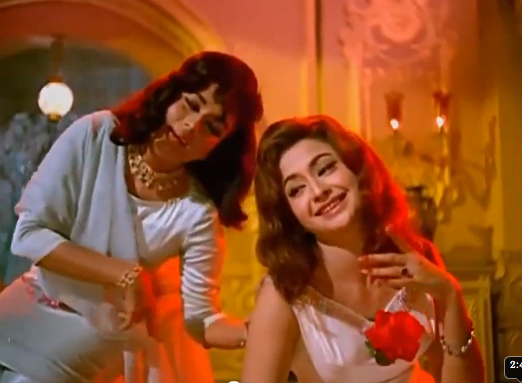
Zeenat Aman sizzles in “churaa liyaa tum ne” from Yaadon Ki Baraat (1973)

S.D. Burman

Like his son, S.D. Burman has also composed melodies that reflect marked inspiration from foreign sources.  Although we have already investigated the influence of Tagore’s music on S.D. Burman in a previous post, we now observe how his compositions also were inspired by non-Indian genres.  For a composer who was rather traditional in his musical output, who would have imagined that he lifted material from Mexican, Italian, and American country melodies?

chaahe koi khush ho (Taxi Driver, 1954) / “Tarantella” (Traditional)
jiivan ke safar me.n raahii
 
(Munimji, 1955) / “Mexican Hat Dance” (Traditional)
ek laDkii bhiigii bhaagii sii (Chalti Ka Naam Gaadi, 1958) / “Sixteen Tons” (Tennessee Ernie Ford, 1955)
ham the vah thii (Chalti Ka Naam Gaadi, 1958) / “Watermelon Song” (Tennessee Ernie Ford, 1957)
yah dil na hotaa bechaaraa (Jewel Thief, 1967) / “March” (Bridge on the River Kwai, 1957)
saalaa mai.n to sahab ban gayaa (Sagina, 1974) / “Chella Lla” (Renato Carosone, 1959)

The ever-versatile Kishore Kumar stars in a comic role in Chalti Ka Naam Gaadi (1955)

Shankar-Jaikishan

In my opinion, Shankar-Jakishan were the quintessential music directors of Bollywood’s Golden Age. They combined the authenticity of traditional Indian music with the modern sophistication of Western influences to produce songs that appealed to the masses. It’s not surprising that some of their tunes reflect inspiration from foreign influences, but what is remarkable is that several of the songs listed below are remembered today as some of this duo’s most treasured gems.  Two songs from Chori Chori (1956), two songs from Gumnaam (1965), and the title track of Jab Pyar Kisi Se Hota Hai (1961) — among many other hits — were heavily inspired by existing Western numbers. I think you’ll be surprised to see some of your favorites on the list below…

ghar aayaa meraa pardesii (Awaara, 1952) / “Al Balad El Mahboub” (Umm Kulthum)
aajaa sanam madhur chaa.ndnii me.n ham (Chori Chori, 1956) / “Tarantella” (Traditional)
panchii banuu.n uDtii phiruu.n (Chori Chori, 1956) / “Coming Through The Rye” (Traditional)
aigo aigo yah kyaa ho gayaa?
(Boyfriend, 1961) / Stupid Cupid” (Connie Francis, 1958)
jiyaa ho jiyaa kuchh bol do  (Jab Pyar Kisi Se Hota Hai, 1961) / “Broken-Hearted Melody” (Sarah Vaughan, 1959)
sukuu sukuu (Junglee, 1961) / “Sucu Sucu” (Ping Ping, 1961)
dekho ab to kis ko nahii.n hai khabar (Janwar, 1964) / “I Want To Hold Your Hand” (The Beatles, 1963 )
gumnaam hai koii (Gumnaam, 1965) / “Charade” (Henry Mancini and Orchestra, 1963)
jaane chaman sholaa badan (Gumnaam, 1965) / “Autumn Leaves” (Nat King Cole, 1956)
le jaa le jaa meraa dil (An Evening in Paris, 1967) / “Man of Mystery” (The Shadows, 1960)
kaun hai jo sapno.n me.n aayaa? (Jhuk Gaya Aasman, 1968) / “Marguerita” (Elvis Presley, 1963)

Rajendra Kumar definitely breaks conventions of automobile safety during the picturization of “kaun hai jo sapno.n me.n aayaa?” from Jhuk Gaya Aasman (1968).

Salil Chowdhury

Salil Chowdhury’s compositions always reflect an intelligent and sophisticated mastery of music that set him apart from his peers in the industry.  Instead of describing the songs listed here as cases of plagiarism, I would be more likely to categorize them as adaptations. When Salil Chowdhury used another Western melody as an inspiration, he always managed to make it his own by adding something special that would resonate with Indian audiences. Take, for example, the evergreen Talat-Lata duet “itnaa mujhse tu pyaar baDhaa.” Although the mukhDaa is clearly inspired by Mozart’s Jupiter Symphony, Salil composes new antaras that beautifully complement the original melody.  As another example, consider “bachpan o bachpan” from Memdidi (1961).  Inspired by the children’s rhyme “A Tisket, A Tasket,” Salil takes the melody to a new level of complexity by inserting operatic interludes sung by our beloved diva Lata Mangeshkar.  Bravo!

dharti kahe pukaar ke (Do Bigha Zameen, 1953) / “Meadowlands” (Lev Knipper, 1934)
halke halke chalo saa.nvare (Tangewaali, 1955) / “The Wedding Samba” (Edmund Ros and Orchestra,  1950)
dil taDap taDap ke (Madhumati, 1957) / “Szla Dziewczka” (Traditional)
zindagii hai kyaa, sun merii jaan  (Maya, 1961) / “Theme from Limelight [from 3:27] ” (Charlie Chaplin, 1952)
itnaa na mujhse tu pyaar baDhaa (Chhaya, 1961) / “Molto allegro” from Symphony No. 40 (Wolfgang Amadeus Mozart, 1788)
bachpan o bachpan (Memdidi, 1961) / A Tisket, A Tasket” (Traditional)
aa.nkho.n me.n tum ho (Half-Ticket, 1962) / “Buttons and Bows” (Dinah Shore, 1948)

Vijayantimala coyly hides behind a tree in the picturization of “dil taDap taDap ke” from Madhumati (1957)

O.P. Nayyar

O.P. Nayyar is known for his characteristically Western-inspired approach to crafting melodies for Hindi films, but his contribution to our list of directly plagiarized songs is relatively small in comparison to some of his peers in the industry. The most well-known example here is, of course,  the Rafi-Geeta duet “yah hai bambaaii merii jaa.n” which has been lifted from its predecessor “My Darling Clementine.”

baabuujii dhiire chalnaa (Aar Paar, 1954) / “Quizas, Quizas, Quizas(Trio Los Panchos, 1947)
yah hai bambaii merii jaa.n (C.I.D., 1955) / “My Darling Clementine” (Traditional)
lakho.n hai.n yahaa.n dilvaale (Kismat, 1968) / Red River Valley” (Traditional)

Biswajeet hams it up for Babita during the picturization of “lakho.n hai.n yahaa.n dilvaale” in Kismat (1968)

What is your opinion on plagiarism in Hindi film music? Was it acceptable for music directors of this time to lift material from Western sources in order to introduce musical diversity to Indian audiences? Or, is it unethical for such plagiarism to occur without giving credit to the original musicians who created the songs in the first place? Let us know in the comments, and feel free to share any examples that go along the theme of this post!

-Mr. 55

The Glorification of Alcohol in Hindi Cinema

A study released in April of this year claimed that Indian adolescents aged 12-16 exposed to alcohol consumption in films were nearly three times more likely to drink than their peers who did not watch Bollywood movies. While this study most likely pertains to the movies released in the industry today, I would venture to say that the origins of this trend can be traced back to films from the Golden Era of Bollywood cinema. Indeed, the consumption of alcohol has been glorified on India’s silver screen for decades, especially through portrayal of sharaab (alcohol) songs in films. Here, I’ve compiled a list of my five favorite male and female sharaab numbers from the Golden Era–let’s take a closer look at these examples to examine how the consumption of alcohol has been portrayed cinematically and its implications on Indian culture.

“Girls Just Want To Have Fun”

In Bollywood’s earliest days, drinking alcohol in films was portrayed as a strictly masculine activity, à la Devdas and other Bollywood heroes who have famously drowned their sorrows in liquor. In contrast, the idealized image of the traditional Indian woman did not permit the depiction of female alcohol consumption in the media.  This trend began to change in the 60s when films depicted heroines and female actresses playing roles in which they partook in the consumption of the Devil’s nectar, just like their male counterparts. As you can see below, the contexts in which female characters drink vary from film to film: alcohol has been used by the women of Bollywood as a coping mechanism, a means of revenge, or just a way to have a good time.

na jaao saiyaa.n (Sahib Bibi aur Ghulam, 1962): In this film based on a Bengali novel by Bimal Mitra, Meena Kumari gives one of her career’s best performances as Chhoti Bahu. Chhoti Bahu is married to young zamii.ndar (played by Rehman), who neglects his wife at home in order to take part in debauchery at local brothels on a nightly basis. In desperate need of her unfaithful husband’s companionship, she decides to take up drinking in order to keep him away from those pesky courtesans at night. In this heartbreaking song sung by Geeta Dutt, Chhoti Bahu drunkenly entreats her husband to stay at home and spend the night with her. In a truly unfortunate example of art mimicing real life, both Geeta and Meena would succumb to alcoholism as a way to cope with their unhappy marriages in the coming years. For those of you who enjoy this song, be sure to check out Hemant Kumar’s Bengali version of the same tune: “olir katha shune.

Meena Kumari, as Chhoti Bahu, tragically turns to alcoholism in Sahib Bibi aur Ghulam (1962).

piike hum tum jo chale aaye hai.n (Gumnaam, 1965): This film (reviewed by us here) is a suspense thriller loosely based on the Agatha Christie novel And Then There Were None. The story revolves around seven vacationers who find themselves on a remote island in the middle of nowhere after a plane crash. One by one, they are murdered off and the big question is, of course: whodunnit? In the midst of all this tension, two of the vacationers, Miss Kitty (played by Helen) and Asha (played by Nanda), decide to loosen up and have some fun with a few drinks. In this comical duet sung by Asha Bhonsle and Usha Mangeshkar, the two actresses appear to be having the time of their lives in a drunken stupor on screen. I mean, who wouldn’t be having a good time if they were getting drunk with Helen?

Helen and Nanda get sloppy together in Gumnaam (1965). If you excuse the stumbling, Helen actually looks quite sophisticated in this scene because she’s not wearing one of her characteristically outrageous wigs/outfits.

aao huzuur tum ko (Kismat, 1968): This Asha-OP Nayyar collaboration is an all-time classic from the soundtrack of Kismat (along with “kajraa muhabbatvaalaa“). The film’s narrative is so outrageous that it’s not even worth summarizing here, but this song is picturized on the actress Babita, who is the mother of Karisma and Kareena Kapoor. Babita never managed to gain much success as a heroine, and that’s not surprising given that it’s unclear whether she is drunk or undergoing eplipetic fits in this particular scene. She certainly does make a statement though and manages to embarass the hero Biswajeet with her public intoxication at this party. Regardless of the picturization, Asha Bhonsle adds all the right expressions here to make this an unforgettable sharaab number on the basis of the song alone. Her vocal control in the extended introduction (“ham se raushan hai chaa.nd aur taare...”) before the song’s first stanza is especially commendable. 

Babita has probably had one too many in this scene from Kismat (1968)

kaise rahuu.n chup (Inteqaam, 1969): Inteqaam is an entertaining (but occaisionally illogical) thriller that stars Sadhana as a woman who seeks revenge against her former boss because he framed her for a theft that she did not commit. As part of her elaborate plan for revenge, she intends to marry her boss’s son (played by Sanjay Khan) and bring shame to his entire family by revealing that the new bahu is, in fact, a convicted criminal! In this song, Sadhana further embarasses her boss’s family by  acting extremely intoxicated under the influence of alcohol at a public gathering. (Technically, this might not be considered a genuine sharaab song because Sadhana is putting on a facade of being drunk without actually consuming, but I liked this song too much to pass up putting it on the list.) This soundtrack composed by Laxmikant-Pyarelal is particularly memorable today because it casts a different light on Lata Mangeshkar, who was considered to be staunchly conservative and traditional in her playback output.  Lata surprises us all by agreeing to sing two sizzling cabaret numbers in addition to this drinking song for the film–listen to her nail those hiccups during the interludes!

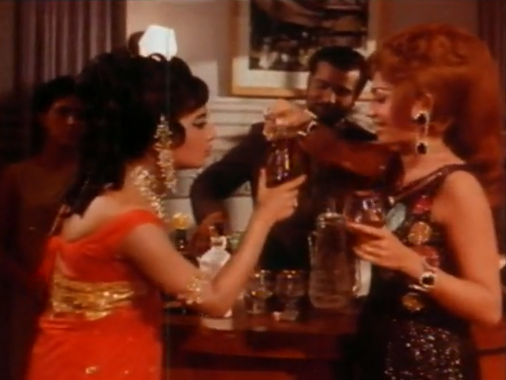
Helen serves Sadhana another glass in Inteqaam (1969)

piyaa tuu ab to aajaa (Caravan, 1971): Asha Bhonsle and R.D. Burman come together to produce one of their biggest musical hits together with this classic item number from Caravan. Asha’s performance here solidified her status as the queen of cabaret singing in Hindi cinema. Furthermore, Helen’s portrayal of a nightclub dancer on screen during this song is considered the quintessential Bollywood cabaret performance. Helen’s dance moves are completely outrageous here but she makes it work somehow (see Mrs. 55’s step-by-step breakdown here). Given the ridiculousness of the situation here, you can’t really blame Helen for the heavy drinking…it certainly doesn’t stop her from completely owning the stage during her performance!

Helen gives one of the best cabaret performances of her career in Caravan (1971)

“Alcohol May Be Man’s Worst Enemy…”

Unlike their female counterparts, the men of Bollywood cinema have been imbibing alcohol since the industry’s earliest days. The most popular context for male drinking in Hindi films occurs when the hero resigns himself to heavy drinking in order to drown his sorrows, usually caused by woman-related heartbreak. While female characters are often stigmatized for their drinking and public intoxication, it is more acceptable for men of the silver screen to use alcohol consumption to deal with their grief.  Other contexts where actors are depicted consuming alcohol include scenes of male-male bonding (bromances, anyone?) and seduction of heroines and courtesans. Though Bollywood has glamorized the consumption of alcohol for both genders, the effect is far more pronounced for males, as evident in the examples I’ve selected below.

mujhe duniyaavaalo sharaabii na samjho (Leader, 1964): Even though its soundtrack is full of gems like “tere husn kii kyaa tariif karuu.n” and “ek shahanshah ne banvaa ke ek hasii.n taaj mahal,” Leader is one mess of a film starring Dilip Kumar and Vijayantimala. Dilip Kumar stars as a law graduate and aspiring political revolutionary who falls in love with a princess (played by Vijyantimala). The script has so many holes that it’s difficult to discern the overall message of this film, but there are some scenes of comic relief between Vijayantimala and Dilip Kumar that are worth remembering. By far, however, the main attraction here is the soundtrack composed by Naushad. In this particular number, an intoxicated Dilip Kumar claims that he has been forced to take up drinking to grapple with society’s evils.

Vijayntimala tries to stop a drunk Dilip Kumar from embarassing himself too much at this party in Leader (1964).

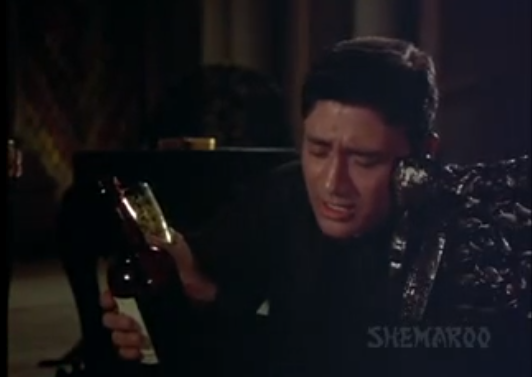
din Dhal jaaye (Guide, 1965): Where do I even begin with the praise for Vijay Anand’s Guide? Mrs. 55 and I both love everything about this film: the unique story written by R.K. Narayan, the stellar performances by Dev Anand and Waheeda Rehman, and of course, the unforgettable soundtrack composed by S.D. Burman. Each and every song from this film is an absolute gem. In this particular Rafi solo picturized on Dev Anand, the hero drowns his sorrows about lost love in alcohol. The melancholic expression that pervades throughout this scene is enhanced by the beautifully crafted lyrics and tune.

Dev Anand turns to the bottle when love goes sour in Guide (1965).

chuu lene do naazuk ho.nTho.n ko (Kaajal, 1965): With this Rafi number penned by Sahir Ludhianvi and composed by Ravi, Raaj Kumar tries to get Meena Kumari, his on-screen shaadi-shudhaa (virtuous) wife, to come to the dark side by having a drink. Alcohol glorification occurs is at its finest in these lyrics: it is referred to as “mubarak cheez,” or a blessed thing.  Meena Kumari excels, as usual, at looking incredibly uncomfortable and disturbed by Raaj Kumar’s advances in this scene.

A drunk Raaj Kumar tries to get Meena Kumari on his team in Kaajal (1965).

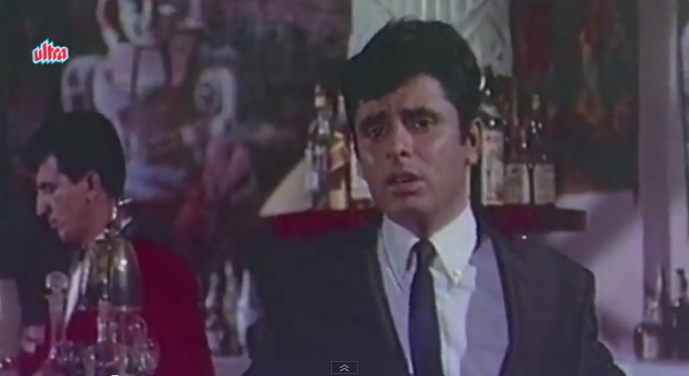
jo unkii tamanna hai barbad ho jaa (Inteqaam, 1969): This film certainly features a lot of alcohol consumption on screen. In addition to the drunk Lata number discussed above, this Rafi solo from Inteqaam is picturized on Sanjay Khan as he laments being a mere object in Sadhana’s plans for revenge. Rajinder Krishan’s lyrics are exquisite in their ability to capture the essence of being deceived in love.

Handsome Sanjay Khan turns to alcohol to get over Sadhana’s deception in Inteqaam (1969)

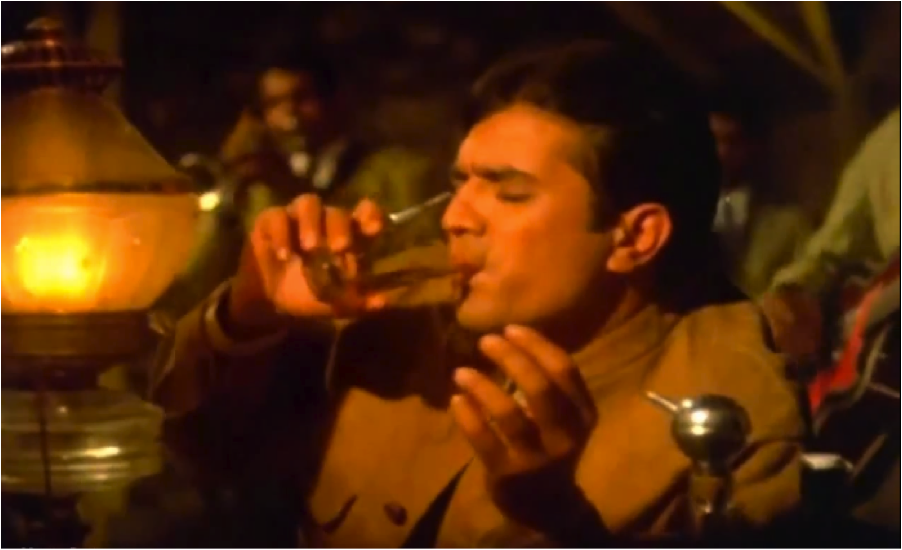
yeh jo muhabbat hai (Kati Patang, 1970): Directed by Shakti Samanta, this film features an evergreen soundtrack composed by R.D. Burman. This particular number sung by Kishore Kumar is one of Bollywood’s most treasured drinking songs, and it features a handsome and bitter Rajesh Khanna drinking the night away because he was stood up at the altar by his wife-to-be.  Asha Parekh watches from a distance, not yet aware of the fact that she is the woman responsible for his heartache.

Rajesh Khanna drinks another glass of liquid courage before singing about the pain of disloyal love in Kati Patang (1970).

What are some of your favorite sharaab/daaru songs from Bollywood films? Let us know in the comments! We’ll understand if your typing is a little bit off…
Mr. 55

Perpetuating Gender Norms in Abhiman

Abhiman Amitabh Bacchan Jaya

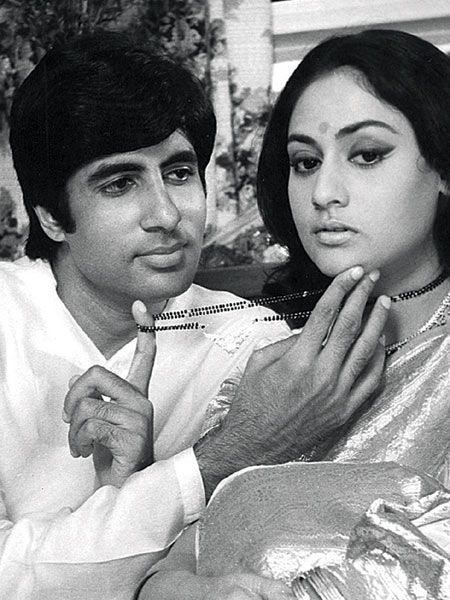
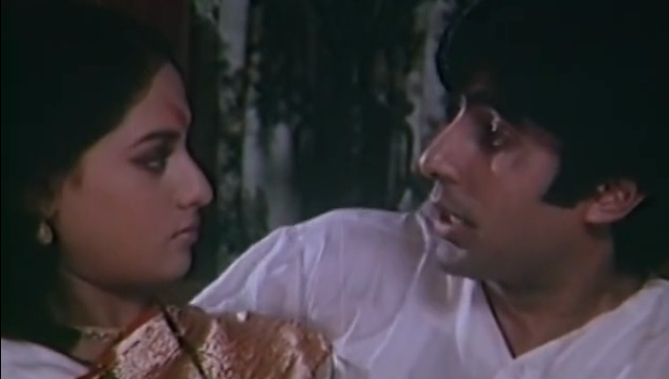
Art mimics life in Abhiman (1973) starring Amitabh Bachchan and Jaya Bhaduri

Everyone loves a bit of filmi gossip. I have been meaning to watch the film Abhiman (1973) ever since I discovered sometime in elementary school that Amitabh Bachchan was actually married (and now an old man) and to none other than Jaya Bhaduri. Like other Bollywood classics that are spicily known to mimic life itself, such as Kaagaz Ke Phool (1959) or Silsila (1981), Abhiman too has a wealth of behind-the-scenes parallels.

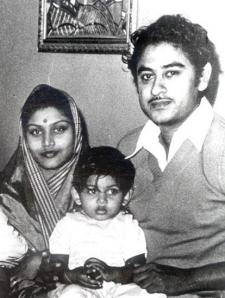
The film tells the story of a husband and wife singing duo—and the rift that forms between them as her career far overshadows his. Before I discuss the gender stereotypes that run rampant in this film, did you know that Abhiman is rumored to be based upon real-life singer Kishore Kumar’s relationship with his first wife Ruma Guha Thakurta? Given that Kishore sings half the songs of this film, it gets pretty juicy. Ruma was a hugely successful Bengali singer and actress (not to mention the niece of legendary filmmaker Satyajit Ray!) whose career was soaring during the time of their marriage. Ruma’s songs were super hits in the Bengali industry and she acted in more than 100 films, starting as a child actress. Kishore and Ruma married in 1951, had a son together Amit Kumar (who was a reasonably successful playback singer himself in the 80s), but the two divorced in 1958. In fact, Kishore proposed to his next wife Madhubala while still married to Ruma. Don’t you just love it?

Kishore Kumar with his first wife Ruma Guha Thakurta and their son Amit Kumar (circa 1953).

The gossip gets even better. After filming Abhiman, Jaya Bhaduri edged out of the acting industry to play housewife while Amitabh continued to make some of his greatest hits—the reason? At the time, people strongly suspected it was in order to prevent art mimicking real life! She was afraid of her own marriage suffering the fate of the marriage they had portrayed together on screen. Whether that’s completely true or not, we certainly don’t know—but their rocky relationship (and Amitabh’s later affair with Rekha) was certainly a hot subject of tabloids for years.

Furthermore, Jaya actually went to Lata Mangeshkar studio recordings for research for her character. In the film she mimics how Lata used to hold her saarii and stand on stage. You might even go so far as to say that this film represents what might have happened to Lata Mangeshkar herself had she married! Ah, the drama.

As far as the movie goes, beyond pure gossip value and an amazing soundtrack, Abhiman doesn’t do much but make your blood boil in one long heteronormative manifesto.

Jaya Bhaduri plays a rising singer in Abhiman (1973)

Amitabh can only be happy when he is the bread-winner and when praise of his wife reflects a praise of his decision to marry her. But when Jaya is recognized as an individual talent, he is unable to bear the competition—she’s a better singer, brings in better money, and let’s face it, better looking. So naturally, being a modern man, he turns to alcohol and the company of other women. Meanwhile, the pure-hearted wife stays a social recluse in her husband’s house, yearning for his return.

amitabh bachchan abhiman

Amitabh Bachchan plays a jealous husband in Abhiman (1973)

The film takes an interesting twist—Jaya miscarriages and Bollywood simplifies this emotional tragedy by turning Jaya into a living statue whose only hope for recovery will be to hear her husband sing again. After all, that was her only wish in life, right? Amitabh even goes so far as to suggest electric shock therapy for her. I almost died.

The film’s overt “male gaze” turns Jaya into unintelligent object of curiosity and manipulation–a far cry from that vibrant and talented woman who once threatened her husband’s social sphere. There’s something disturbing about this message, but hey, what do I know. If you’re looking for a far more realistic portrayal of a similar situation, check out Judy Garland’s performance in A Star Is Born (1954), but otherwise enjoy S.D. Burman’s sublime soundtrack without tainting it with what Abhiman will attempt to pass off as completely normal gender expectations of the period.

– Mrs. 55

abhiman jaya and amitabh bachchan

Jaya Bhaduri and Amitabh Bachchan struggle to save their marriage in Abhiman (1973)

Rabindranath Tagore’s Influence on S.D. Burman

Rabindranath Tagore (1861-1941) and S.D. Burman (1906-1975)

Due to my upbringing in a Bengali household, I am intimately familiar with Rabindra-sangeet: the genre of songs written and composed by Nobel laureate Rabindranath Tagore. As a composer, artist, novelist, playwright, poet, and philosopher, Tagore has left a lasting legacy on Indian culture through his vast collection of works in a variety of mediums. Although the purism and simplicity of Tagore’s style might suggest that Bollywood is an inappropriate forum to celebrate his art, several music directors from the Golden Age of Hindi cinema have been known to use Tagore songs as inspirations for their musical compositions. The music director who is most well-known for this practice is none other than the illustrious S.D Burman. S.D. Burman is one of the most succesful music directors in the history of the Bollywood industry, and his songs from films such as Bandini (1963), Guide (1965), Jewel Thief (1967), and Aradhana (1969) are still considered all-time classics today. His filmi compositions tend to draw upon inspiration from Bengali folk traditions (e.g. bhatiaalii, saari, etc. ), but here I’d like to draw your attention to a collection of S.D. Burman compositions that are derived from Rabindra-sangeet:

meraa sundar sapnaa biit gayaa (Do Bhai, 1949): From one of S.D. Burman’s first hit scores in the Bollywood industry, this song is considered to be Geeta Dutt’s breakthrough as a playback singer in Hindi films. The mukhDaa of this song is inspired by a Bilaaval-based Tagore composition called “radono bharaa e basonto.” Geeta does an excellent job of expressing the sorrow and pain of this song with her voice, and it is truly unfortunate that the lyrics here would become a reality for her during her tumultuous marriage to Guru Dutt in the next decade.

Playback singer Geeta Dutt (1930-1972) with her husband Guru Dutt (1925-1964)

nain diivaane (Afsar, 1950): This Pilu-based composition is skilfully rendered by Suraiyya, a leading singer/actress who became a huge sensation in Bollywood during the 1940s. Bollywood as we know it today relies on actors and actresses lip-syncing songs sung by playback singers; however, in its very early days, actresses like Suraiyya used to sing their own songs for films. In spite of their dual talents, singer-actresses were not able to survive the onslaught of the Mangeshkar monopoly in the 1950s, and the playback singing paradigm became the standard that is still maintained today in the industry. In any case, this song is based on an extremely popular Tagore composition called “sediin duujane duulechhiinuu bone.” S.D. Burman literally did a copy-paste job here, as the melody of the entire Hindi song is identical to the Bengali original. While loosely basing a mukhDaa on a previous composition is somewhat acceptable, recycling a whole song written by another composer begs the question: should S.D. Burman have given credit to Tagore for this composition?

Singer/actress Suraiyya (1929-2004)


 jaaye.n to jaaye.n kahaa.n? (Taxi Driver, 1954): S.D. Burman won his first Filmfare Award for Best Music Director for this song from Taxi Driver in 1954. As is often the case, the male version of the song (sung by Talat Mehmood) is more popular than the female version (sung by Lata Mangeshkar). Although S.D. Burman modified the raga of his composition to more closely resemble Jaunpuri, the first line of the mukhDaa is instantly recognizable as the main phrase from Tagore’s Bhairavi-based classic  “ he khoniiker otiithhii.” Note that the Tagore original that I have provided here is sung by Hemanta Mukherjee (a.k.a Hemant Kumar), who, in addition to achieving fame as a Hindi playback singer/music director, was known for his beautiful renditions of Rabindra-sangeet in Bengali.

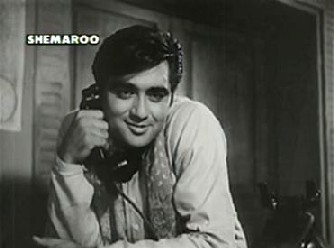
jalte hai.n jiske liye: (Sujata, 1959): This probably qualifies as my favorite “telephone song” from a Hindi film. Here, Sunil Dutt woos Nutan over the phone with this gem as he croons to Talat Mehmood’s silky vocals on playback (notice the characteristic quiver that we know and love!). Although this composition is often considered an all-time classic song of romance, fans of this song may be surprised to know that the mukhDaa is taken directly from a Tagore composition named “ekodaa tumii priye.”

Sunil Dutt serenades Nutan over the telephone with “jalte hai.n jiske liye” in Sujata (1959)

meghaa chhaye aadhii raat (Sharmilee, 1971): Out of all the compositions listed here, the inspiration from Tagore is the most difficult to hear in this song because it does not involve the mukhDaa. Rather, S.D. Burman seems to have inserted a small segment of  laho laho tuule laho (0:26-0:40) into the antara of this raga Patdeep-based classic from Sharmilee. What a trickster, huh?

tere mere milan kii yeh rainaa (Abhimaan, 1973): By far, this is the most famous example where  S.D. Burman has been inspired by Rabindra-sangeet.  In his last hit film score (for which he won his second  Filmfare Award for Best Music Director), S.D. Burman recycles the mukhDaa from Tagore’s Mishra Khamaj-based “jodii taare nai chiinii go sekii?” in this evergreen duet of Lata Mangeshkar and Kishore Kumar. Burman’s antaras are a beautiful addition to the original composition, so we won’t give him too much trouble for his rehashing of Tagore here. Note that the Bengali original that I have linked to here is sung by Kishore Kumar, another Hindi playback singer who was famous for his renditions of Rabindra-sangeet in Bengal.

Amitabh and Jaya Bacchan sing the duet “tere mere milan kii yeh raina” on stage during the climax of Abhimaan (1973).

Although S.D. Burman was often inspired by Tagore in his compositions, he never recorded or sang a single piece of Rabindra-sangeet throughout his career. The reason behind this is, of course, family feuding–an unavoidable staple of all things related to Indian culture. Here’s the story: S.D Burman’s father Nabadwip Chandra Dev Burman was set to be the direct heir to the throne of Tripura when the current king passed away in 1862. However, the crown went to Nabadwip’s paternal uncle Birchandra Dev Burman due to some dirty palace politics. Because Rabindranath Tagore had a very close relationship with Birchandra Dev Burman, S.D. Burman avoided meeting Tagore throughout his lifetime and refused to perform Rabindra-sangeet out of principle. Nevertheless, in spite of this tiff, it is undeniable that S.D. Burman had a great deal of respect for Tagore as a musician given the influence of Rabindra-sangeet on his compositions.

–Mr. 55