Na Tu Zameen Ke Liye Lyrics and Translation: Let’s Learn Urdu-Hindi

Dilip Kumar Na Tu Zameen Ke Liye 5

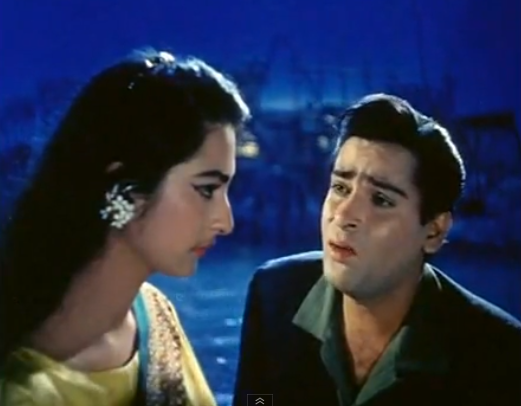
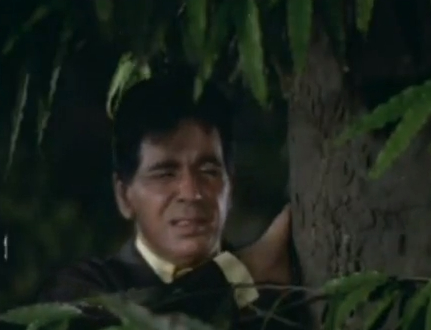
Dilip Kumar is horrified to learn of his wife Bindu’s betrayal in Dastan (1972).

We now present the lyrics and English translation to the emotional Sahir Ludhianvi ghazalNa Tu Zameen Ke Liye” from Dastan (1972). Sung by Mohammed Rafi as the hero Dilip Kumar reels from the shock of discovering an affair between his wife Bindu and best friend Prem Chopra, “Na Tu Zameen Ke Liye” is a sympathetic voice in a world of disloyalty.

The true magic of the song comes from the lyrics from the pen of Sahir Ludhianvi–but you may be surprised to learn that this song is not entirely original! With the ghazal “Na Tu Zameen Ke Liye” Ludhianvi draws from the beautiful Sir Muhammed Iqbal (1877-1938) poem of the same name and contains the portending line:

Maqaam-e parvarish-e aah wa naalaa hai yeh chaman. Na sair-e gul ke liye hai, na aashiyaan ke liye.” [This garden is a place for you to sigh and see visions. It is neither for taking a leisurely stroll nor building a home.”]

Similarly, Ludhianvi’s lyrics warns the hero of the dangers lurking beneath the surface of circumstances too good to be true. “Na Tu Zameen Ke Liye” is a gleaming lotus of poetry that is well-worth the wait of an otherwise rather lackluster film. Thematically, the song is reminiscent of Ludhianvi’s earlier tragic poem, “Chalo Ek Baar Phir Se,” which carries the heavy burden of deception. Thrown from that garden of love into a world of disorder, “Na Tu Zameen Ke Liye” seeks clarity in an hazy, unforgiving world.
Dilip Kumar Na Tu Zameen Ke Liye 3

With tears and heartbreak, Dilip Kumar realizes his marriage is a sham in Dastan (1972). But I mean, your wife was played by Bindu…anyone could’ve seen that coming a mile away…

Check out the video of Dilip Kumar’s despair and follow along with our English translation of Sahir Ludhianvi’s gem “Na Tu Zameen Ke Liye” below!

Na Tu Zameen Ke Liye Lyrics and Translation:

Na tuu zameen ke liye hai na aasmaan ke liye
You belong to neither the earth nor the sky
Teraa wajuud hai ab sirf dastaan ke liye
Your existence belongs to legend alone

PalaTke suu-e chaman dekhne se kya hogaa?
What can be gained by looking back toward the garden of love?
Woh shaakh hii na rahii jo thii aashiyaa.N ke liye
For that branch no longer exists, which once belonged to your nest
Na tuu zameen ke liye hai na aasmaan ke liye
You belong to neither the earth nor the sky

Garaz-parast jahaa.N mei.N, wafaa talaash na kar
In this self-centered world, do not search for faithfulness
Yeh shaii banii thii kisii duusre jahaa.N ke liye
For such a thing was designed for a world other than our own
Teraa wajuud hai ab sirf dastaan ke liye
Your existence belongs to legend alone

Na tuu zameen ke liye hai na aasmaan ke liye
You belong to neither the earth nor the sky

Glossary:

zameen: earth; aasmaan: sky; waajuud: existence; sirf: only dastaan: story, legend; palaTnaa: to turn around; soo-e chaman: direction of the garden–a reference to Amir Khusrau ghazal 248 describing an idyllic garden of young lovers; shaakh: branch; aashiaa.N: dream house, nest; garaz-parast: self-centered, selfish; jahaa.N: world; wafaa: faithfulness, loyalty; talaash: search; shaaii: thing, object

Getting teary-eyed? Calm down, there’s a happy ending to this dastaan. Sharmila Tagore adroitly steps in as the patient lover who soothes a haggard Dilip Kumar’s broken heart. Frankly, could any man ask for more?!

Sharmila Tagore Dastaan

Sharmila Tagore selflessly hides her undying love for hero Dilip Kumar in Dastaan (1972).

This Sahir Ludhianvi ghazal was requested by loyal fan muskaan! Hope you enjoyed and keep those requests coming!

Mrs. 55

Teri Bindiya Re Lyrics and Translation: Let’s Learn Urdu-Hindi

Amitabh Bacchan marries a village girl with a golden voice in Abhimaan (1973)

Today, we present the lyrics and English translation of an evergreen duet from Hrishikesh Mukherjee’s Abhimaan (1975): terii bi.ndiyaa re . Starring Amitabh Bacchan and Jaya Bhaduri, Abhimaan narrates the story of an ill-fated love between two singers that eventually approaches it breaking point when a husband’s masculine ego suffers a wound from his wife’s overwhelming professional success.

Given that this film revolves around a playback singing couple, the composition of its soundtrack naturally demanded a music director par excellence. In this case, director Hrishikesh Mukherjee chose veteran composer S.D. Burman to do the job–and what a job he did! Aside from the duet presented here, the Lata solos “nadiyaa kinaare,” “ab to hai tum se,” and “piyaa binaa,” the Kishore solo “miit na milaa re man kaa,” and the Lata-Kishore duet “tere mere milan kii yah rainaa” are still cherished by fans today. S.D. Burman’s compositions in this film won him his last Filmfare Award for Best Music Director before his death in 1975.

The duet terii bindiyaa re is sung by Lata Mangeshkar and Mohammed Rafi at a point in the film where Amitabh Bacchan introduces his newly wedded wife Jaya Bhaduri at their wedding reception. In response to a request, they sing this duet for the guests at their party. Here, Majrooh Sultanpuri’s lyrics describe the allure of a woman’s ornaments, specifically her bi.ndiyaa (beauty spot), jhumkaa (earring), and ka.nganaa (bangle).  Voiced by Lata Mangeshkar on playback, Jaya Bhaduri offers an on-screen performance that illustrates a wife’s admiration and respect for her husband. Since this song takes place before Amitabh Bacchan’s tragic descent into insecurity, he is able to reciprocate with affection and warmth.  However, after this performance, a classical musician (played by David) in the audience recognizes that Jaya is the technically superior singer and expresses concern about the couple’s future…watch the film to see how the drama unfolds!

Those of you who are more musically inclined may have noticed that this song is based in rupak taal, a 7-beat rhythmic cycle that was used far less frequently by Bollywood composers than kaharva taal (8 beats) or dadra taal  (6 beats). Interestingly, S.D. Burman has also used this unconventional rhythmic pattern skillfully in the film’s other popular duet tere mere milan kii yah rainaa

What are some of your other favorite Hindi songs that describe female ornaments? Feel free to share with us in the comments! Until next time…

– Mr. 55

Jaya Bacchan gives a Filmfare Award-winning performance as a humble and talented singer whose success in the music industry ultimately hurts her husband’s ego.

Teri Bindiya Re: Lyrics and Translation

terii bi.ndiyaa re, re aay haay!
Your beauty spot, oh!
sajan, bi.ndiyaa le legii terii ni.ndiyaa
Oh beloved, my beauty spot will steal away your sleep.
re aay haay! terii bindiyaa re
Oh, your beauty spot!

tere maathe lage hai.n yuu.n jaise chandaa taaraa
It clings to your forehead like a star to the moon.
jiyaa me.n chamke kabhii kabhii to, jaise koii a.ngaaraa
It shines in my heart from time to time, as if it were a glowing ember.
tere maathe lage hai.n yuu.n
It clings to your forehead.
sajan, nindiyaa le legii, le legii, le legii merii bi.ndiyaa
Beloved, my beauty spot will steal away your sleep.
re aay haay! teraa jhumkaa re
Oh, your earring!
chain lene na degaa sajan tum kaa
It will not let you be at peace, beloved.
re aay haay! meraa jhumkaa re
Oh, my earring!

meraa gahnaa balam tuu, tose saj ke Doluu.n
You are my jewelry, beloved.  Adorning myself with you, I will dance.
bhaTakte hai.n tere hii nainaa, mai.n to kuchh na boluu.n
Your eyes wander, yet I say nothing at all.
meraa gahnaa balam tuu
You are my jewelry, beloved.
to phir yah kyaa bole hai, bole hai, bole hai teraa ka.nganaa?
Then, what is it that your bangle says?
re aay haay! meraa kanganaa re
Oh, my bangle!
bole re ab to chhuuTe na teraa a.nganaa
It says that it will not leave your courtyard.
re aay haay! teraa ka.nganaa re
Oh, your bangle!

tuu aayii hai sajaniyaa, jab se merii ban ke
Beloved, since you came to me and became mine,
Thuumak-Thuumak chale hai tu, merii nas-nas khanke
your strutting has made me feel a jitter in my veins.
tuu aayii hai sajaniyaa
Beloved, since you came to me.
sajan, ab to chhuuTe na, chhuuTe na, chhuuTe na, teraa anganaa
Beloved, it will not leave your courtyard.
re aay haay! teraa ka.nganaa re
Oh, your bangle!
sajan, ab to chuuTe na teraa a.nganaa
Beloved, it will not leave your courtyard.
re aay haay! teraa a.nganaa re
Oh, your courtyard!

*Female lines in red are sung by Lata Mangeshkar. Male lines in green are sung by Mohammed Rafi. 

Glossary

bindiyaa: beauty spot; nindiyaa: sleep; jiyaa: heart; chamkaanaa: to shine, glow; angaaraa: ember; jhumkaa: earring; sajan: beloved; gahnaa: jewelry; balam: beloved; tose: from you, an archaic form of ‘tujhse‘; sajnaa: to adorn; Dolnaa: to swing, dance; bhaTaknaa: to wander; nainaa: eye; kanganaa: bangle; chhuTnaa: to leave, forsake; a.nganaa: courtyard; sajaniyaa: beloved; Thumak-Thumak chalnaa: to strutter; nas-nas: veins; khanaknaa: to jitter.

In her first major non-vamp role, Bindu plays the ‘other woman’  as  a rich socialite who fawns over Amitabh Bacchan in Abhimaan (1973).

Ehsaan Tera Hoga Mujhpar Lyrics and Translation: Let’s Learn Urdu-Hindi

Shammi Kapoor’s wistful gaze wins over hearts as he pines about unconditional love in Junglee (1961)

Our next translation is a truly special song from Subodh Mukherjee’s Junglee (1961): ahsaan teraa hogaa mujh par. Junglee stars Saira Banu in her debut role as a stunning Kashmiri beauty who wins over a stoic, arrogant businessman played by Shammi Kapoor. This film was instrumental in launching Saira Banu’s career as a heroine and solidifying Shammi Kapoor’s image as a charming loverboy. As an aside, this film is also noteworthy because it ushered in an era of producing mainstream Bollywood films in Eastman color!

Composed by Shankar-Jaikishan and penned by Hasrat Jaipuri, this song ranks among my all-time favorites rendered by the inimitable Mohammed Rafi. This touching melody rooted in raga Yaman Kalyan with heartfelt words expressing the beautiful struggles of unconditional love is perfectly suited for Mohammed Rafi’s delicate, velvety vocals.  Shammi Kapoor’s on-screen portrayal–especially that sensual look in his eyes–adds to Rafi’s romantic rendition.

Lata Mangeshkar has done an apt job performing a second shorter “sad” version of this song in film. Yet it somehow lacks the magic and sensual ease of Rafi’s rendition, and this might be attributed to Shankar-Jakishan’s decision to have Lata sing this song in the same “male scale” as Rafi. For more on this phenomenon, please see our previous post on the role of the soprano voice in Hindi film music here.

Please enjoy this veritable gem of Hindi film music by reading the lyrics and our English translation provided below! Until next time…

-Mr. 55

16-year-old Saira Banu makes a stunning debut alongside Shammi Kapoor in Junglee (1961)

Ehsaan Tera Hoga Mujhpar: Lyrics and Translation

ahsaan teraa hogaa mujh par
You would be granting me a favor 
dil chahtaa hai vah kahne do
if you permit me to reveal my heart’s desires. 
mujhe tum se muhabbat ho gayii hai
I have fallen in love with you. 
mujhe palko.n kii chaa.nv me.n rahne do
Please let me dwell in the shadows of your eyelashes.

tum ne mujhko ha.nsnaa sikhayaa
You taught me how to smile,
rone kahoge ro le.nge ab
yet I would cry now upon your request.
aa.nsuu kaa hamaare gham na karo
Please do not mourn for my tears.
ve bahte hai.n to bahne do
They have started to flow, so let them fall.
mujhe tum se muhabbat ho gayii hai
I have fallen in love with you.
mujhe palko.n ki chaa.nv me.n rahne do
Please let me dwell in the shadows of your eyelashes.

chaahe banaa do chaahe miTaa do
Whether you build me up or destroy me, 
mar bhii gaye to de.nge duaaye.n
I will give you my blessings even if I die. 
uD uD ke kahegii khaak sanam
Oh beloved, as they fly in the air, my ashes will say:
yah dard-e-muhabbat sahne do
“Let us bear the burden of this pain in love.”
mujhe tum se muhabbat ho gayii haii
I have fallen in love with you.
mujhe palko.n kii chaa.nv me.n rahne do
Please let me dwell in the shadows of your eyelashes.

ahsaan teraa hogaa mujh par
You would be granting me a favor. 

Glossary

ahsaan: favor; muhabbat: love; palke.n: eyelids, eyelashes; aa.nsuu: tears; gham karnaa: to mourn; bahnaa: to flow; miTaa denaa: to destroy; duaaye.n: blessings; uDnaa: to fly; khaak: ashes; sanam: beloved; dard-e-muhabbat: pain in love; sahnaa: to endure, tolerate.

Junglee (1961) showcases the beauty of the Kashmiri countryside.

Bahut Shukriya Badi Meherbani Lyrics and Translation: Let’s Learn Urdu-Hindi

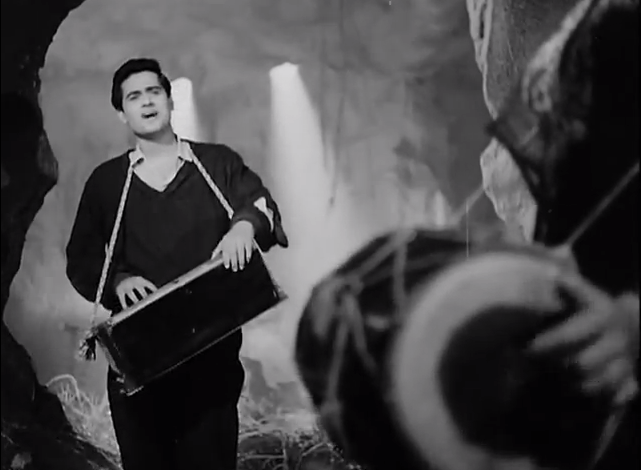
Tall and handsome Joy Mukherjee serenades Sadhana with a harmonium in hand in Ek Musafir Ek Hasina (1962)

HAPPY THANKSGIVING! In the spirit of giving thanks today, we are presenting one of Hindi cinema’s most cherished expressions of gratitude: “bahut shukriyaa baDii maharbaanii” from Ek Musafir Ek Hasina (1962). Directed by Raj Khosla, this film presents Joy Mukherjee and Sadhana in their second film together after debuting in Love in Simla (1960).  Despite some plot loopholes  and scattered character development, this film is worth a watch for Sadhana’s sublime beauty, O.P Nayyar’s evergreen soundtrack, and the cinematic portrayal of Kashmir.  This movie must have done something right because it became the second-biggest hit at the box office in 1962!

Mohammed Rafi is at his playful best as he sings for Joy Mukherjee’s character, a wounded soldier who has fallen in love with Sadhana after being hit with classic Bollywood’s most popular disease: amnesia! Asha Bhonsle also makes her presence felt despite being given a single stanza to sing here.  Although the Lata-Rafi pairing was the golden standard at the time, the unique chemistry shared between Asha and Rafi in such duets as this one is undeniable. The true star here, however, is music director O.P. Nayyar. Despite his lack of formal musical training, O.P. Nayyar was gifted with a natural talent for composing memorable melodies that appealed to the masses. Here, he draws upon Kashmiri folk influences to craft a tune that has truly survived the test of time. Of special note in this song is the interplay of the harmonium and dholak, two instruments that were often passed over by many music directors for more robust alternatives (e.g. strings, tabla, etc). This orchestration  is  an integral part of the song and it has even been reflected in the picturization: Joy Mukherjee serenades with a harmonium strapped around his neck as Sadhana accompanies on the dholak.

Given the special occasion of Thanksgiving, we hope that the portrayal of thankful sincerity in this song will inspire you to go say dhanyavaad, shukriya, or thank you to the loved ones in your life. Before the food coma from dinner sets in, take a listen to this gem and follow along with the lyrics and our English translation below. Enjoy!

–Mr.55

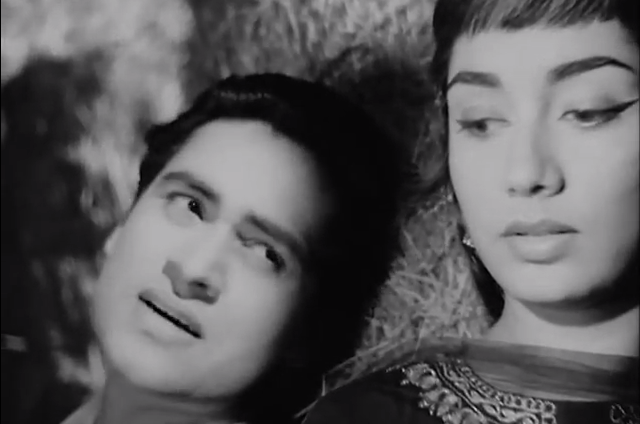
Who is wearing more make-up here? Joy or Sadhana? 🙂

Bahut Shukriya Badi Meherbani: Lyrics and Translation

bahut shukriyaa baDii maharbaanii
Many thanks for the great kindness you have shown
merii zindagii me.n, huzuur, aap aaye
by coming into my life, oh beloved. 
qadam chuum luu.n, yaa ki aa.nkhe.n bichha duu.n?
Shall I kiss your feet or wait in desperation?
karuu.n kyaa yah merii samaj me.n na aaye
I cannot understand what I should do.

karuu.n pesh tum ko nazaraana dil kaa
I shall offer you my heart as a gift
ki ban jaaye koii afsaanaa dil kaa
so that a tale of the heart is created.
khudaa jaane aisii suhaanii ghaDii phir
God knows that such a lovely moment
merii zindagi me.n palaT ke na aaye
may never return again in my life. 
bahut shukriya…
Many thanks... 

khushii to bahut hai, magar yah bhii gham hai
I am experiencing much happiness, but also some sorrow
ki yah saath apnaa qadam do qadam hai
because our companionship is limited to taking only a few steps together.
magar yah musaafir duaa maangtaa hai
Yet this traveler prays that
khudaa aap se phir kisii din milaaye
God may arrange for us to meet again one day 
bahut shukriya…
Many thanks…

mujhe Dar hai mujh me.n ghuruur aa na jaaye
I am afraid that I may become filled with pride.
laguu.n jhuumne me.n, suruur aa na jaaye
As I begin to dance, I fear that I may be overcome with exhilaration.
kahii.n dil na meraa yah taariif sun kar
I hope that, upon hearing your praises, my heart
tumhaaraa bane aur mujhe bhuul jaaye
does not become yours while forgetting me. 

bahut shukriyaa baDii maharbaanii
Many thanks for the kindness you have shown
merii zindagii me.n, huzuur, aap aaye
by coming into my life, oh beloved.

*Male lines in black are sung by Mohammed Rafi. Female lines in red are sung by Asha Bhonsle. 

Glossary

shukriyaa: thanks; maharbaanii: kindness; huzuur: beloved; qadam: foot, step; chuum lenaa: to kiss; aankhe.n bichhaa denaa: to wait desperately; samaj: understanding; pesh karnaa: to offer; nazaraanaa: gift; afsaanaa: tale; suhaanii: lovely; palaT ke aanaa: to return;  musaafir: traveler; duaa maangnaa: to pray; ghuruur: pride; suruur: exhilaration; taariif: praise.

Joy and Sadhana share great (and perhaps unexpected) on-screen chemistry in Ek Musafir Ek Hasina (1962)

Diwali Songs from Classic Bollywood

Happy Diwali! For all our readers and fans observing the occasion, what could be better than a list of 10 classic Bollywood Diwali songs to enjoy over the celebrations today? For a country of over 1 billion Hindus and an industry that absolutely loves to celebrate any kind of occasion with song and dance, Bollywood has a surprisingly low number of Diwali songs in its films. I mean, think about it–Diwali is the country’s largest national holiday, lends itself brilliantly to poetry (festival of lights imagery, the story of the Ramayan, etc.), and is practically bound to succeed by virtue of having very little with which to compete. People are aching for these songs, yet they hardly exist–much less ones worth hearing over and over.

Dharmendra Jugnu Diwali

Dharmendra celebrates Diwali with fireworks and song in Jugnu (1973).

To be sure, plenty of great Diwali bhajans exist outside the realm of Bollywood (look no further than Tulsidas classic “Shri Ram Chandra”), many of which have excellent covers by our favorite playback singers. But within the films? The pickings are slim. I’ve got a theory as to why this might be the case. Let us consider the example of Christmas as we know it in America. When we think of great Christmas jingles, the songs we name predominantly come from hit singers or church traditions–with only a few actually having made it to popular culture from films, despite Hollywood having had a long and successful musical film movement (Judy Garland’s gorgeous “Have Yourself a Merry Little Christmas” comes to mind).

So perhaps Bollywood is no different. Because singing a song about Diwali actually requires Diwali to be a major part of the plot, the happy coincidence rarely occurred–much less with the good fortune of also having been a brilliant composition. Furthermore, celebrations like Holi, for which we can name at least a handful of terrific Bollywood songs, actually lend themselves much better to an upbeat and colorful party on-screen–so musical composition could be a bit more relaxed. With Diwali, you’re treading on sacred ground–and why mess with something that non-filmi bhajans do way better anyway?

Still, a few intrepid pioneers prevailed, and while some are more memorable than others, you’ll find plenty of hidden gems! Below find our list of 10 classic Bollywood Diwali songs that will get the festivities started old-school style! Click the song names to get to the link to youtube.

10 Classic Bollywood Diwali Songs:

1. Kaise Diwali Manaye Lala (Mohammed Rafi, Paigham 1959)

Be prepared from some ridiculous Johnny Walker antics, but a fun dance beat to get your spirits up!

2. Aayi Ab Ke Saal Diwali (Lata Mangeshkar, Haqeeqat 1965)

On a somber note, this haunting Lata Mangeshkar melody from war epic Haqeeqat is a stark reminder of families in grieving this time of year.

3. Is Raat Diwali Kaise (Mohammed Rafi, Shamshad Begum, & Asha Bhonsle, Sabse Bada Rupaiya 1955)

Oh, what?! A Diwali qawwali?! SIGN ME UP! A peppy song describing Diwali festivities sung in traditional qawwali style that gets you clapping along.

4. Laakhon Taare Aasman Mein (Mukesh and Lata, Hariyali Aur Raasta 1962)

Another tragic lovers-separated-on-Diwali-night song starring Manoj Kumar and Mala Sinha, but the melody is sweet and watching Manoj Kumar mope is never such a bad thing. The Lata-Mukesh chemistry works well as always!

5. Jagmati Diwali Ki Raat Aa Gayi (Asha Bhonsle, Stage 1951)

We’re really getting old-school with this one. It’s a rare early song that sounds more like Geeta Dutt than Asha Bhonsle to me. It builds to a frenzy at the end that’s kind of exciting!

6. Deep Diwale Ke (Kishore Kumar, Jugnu 1973)

This may be one of the more popular Diwali songs on our list–sung by lively Kishore Kumar and picturized on Dharmendra with a bunch of happy school kids, you can’t go wrong!

7. Ek Woh Bhi Diwali Thi (Mukesh, Nazrana 1961)

For some balance, here’s another sad song by the inimitable Mukesh-Raj Kapoor duo. Everyone is having a grand time outside partying with sparklers, while moody Raj Kapoor broods upon the days that once were.

8. Deep Jalenge Deep Diwali Aayi Ho (Geeta Dutt, Paisa 1957)

As a connoisseur of Geeta Dutt obscurities, I love this song. With a joyous melody and that gentle lulling voice, it’s one of the better gems on this list!

9. Mele Hain Chiragon Ke Rangeen Ki Diwali Hai (Lata, Nazrana, 1961)

This would be the “happy version” counterpoint to the Raj Kapoor tragedy from earlier. You can see why Raj Kapoor is sad these days are over–everyone’s having a grand old time and it doesn’t hurt to have the voice of a goddess Lata to back you up!

10. Aayi Hai Diwali (Geeta Dutt and Shamshad Begum, Sheesh Mahal 1950)

Another early period Diwali song–and a duet no less! The whole household is bustling with activity and women all over join the chorus for the celebrations!

Even sexy song siren Helen puts on her serious face for a Diwali moment in Lahu Ke Do Rang (1979).

Here are two bonus tracks for extra thrills:

11. Aayi Diwali (Zohrabai Ambalewali, Rattan 1944)

The oldest song on our list! And of course, it’s a Greek tragedy–but rare and exciting for any fans of early early Bollywood. Before the days of Lata Mangeshkar, 1940s playback singer Zohrabai Ambalewali turned music director Naushad into an overnight sensation with this hit!

12. Jyot Se Jyot Jagate Chalo (the exciting Lata version! Sant Gyaneshwar, 1964)

OK, so this song might not be *technically* a Diwali song per se, but it’s thematically spot-on! And I just discovered the Lata Mangeshkar version to compliment the Mukesh version, which I had thought existed in isolation. I can’t believe I did not know about this sooner, I’m so happy right now!

This Diwali special was brought in by request from one of our favorite readers muskaan. We wish everyone a joyous Diwali and a prosperous year ahead!

– Mrs. 55