The Bollywood Bromance: Songs of Manly Love

There are few things cuter than a wholesome die-hard Indian bromance. In the past decade, the term “bromance” has become popularized by the American media and by high-grossing summer flicks that explore its comedic aspects—but its roots can be traced back to Hollywood first academy award for best picture Wings (1927). This silent heart-wrenching World War I love-fest between two men inspired dozens of commercial hits down the road from Butch Cassidy and the Sundance Kid (1969) to Top Gun (1986). Say what you want about those films, however, Bollywood was unarguably where this concept blossomed to its colorful fullest.

Perhaps it’s cultural—I can remember visiting Simla when I was younger and seeing teenage boys holding hands as they walked down the street. It was just considered a normal expression of friendship. Things have changed plenty since my childhood, but regardless, the marketability of the bromance genre may also likely stem from what had (and has) been for a long time a male-dominated industry–from directors to screenwriters all the way down to the lowly production assistants. In fact, in the early pre-talkie years of Indian cinema, women were not even allowed to act in films, much less attend viewings. Y-chromosome melodrama sells, and sells big. The bonds of manly love have been a glorified subject of Bollywood expression since time immemorial and has inspired some of the best movies you’ll ever watch.

In this post, we’ll explore our top 5 “bromantic” songs of yesteryear films long before the days of Dostana (2008) and even Qurbani (1980). From declaring eternal devotion to sobbing over betrayal, each one has a special place in our hearts and cinematic history.

Amitabh Bachhan and Dharmendra sing out their love in Sholay (1975)

Yeh Dosti (Sholay 1975):

This song is the crowning jewel of Bollywood bromance. Set at the beginning of an all-time megahit, this song showcases two men (Amitabh Bachhan and Dharmendra) riding a single motorcycle and singing their love for each other. Chest-hair is just blowing in the wind as their friendship is put to the test at the film’s climax. Overdone slightly, but a timeless tear-jerker!

Raj Kapoor pours his heart into his sad song of betrayed trust in Sangam (1964)

Dost Dost Na Raha (Sangam 1964):

Talk about tragedy. Raj Kapoor flies to war and saves his country, only to return and discover that his wife Vijayantimala is really in love with his own best friend Rajendra Kumar. This song of betrayal and lost friendship played morosely on the living room piano makes everyone in the room awkward. Please note that low-cut v-neck top. No, I’m not referring to Vijayantimala.

Rajesh Khanna and Amitabh Bachhan being adorable in Namak Haraam (1978)

Diye Jalte Hai.N (Namak Haraam 1973):

A Rajesh Khanna classic. Although best friends, Rajesh Khanna and Amitabh Bachhan come from two very different socio-economic statuses, ultimately leading to a huge public morally-charged battle of principles. Rajesh Khanna plays the good guy as usual, and his on-screen chemistry with Bachhan evokes the joy audiences loved in Anand! Did I mention the obligatory and visible fluffy chest hair?

Facing starvation and homelessness, two boys find friendship in Dosti (1964)

Chahoonga Mai.N Tujhe (Dosti 1964):

This film was unique in that it is entirely about two teenage boys (neither of whom were big stars then) and the sacrifices they make for each other. Did I mention the hero is blind and homeless? It makes it more endearing. This beautiful Mohammed Rafi song of tragedy is when the hero realizes his best friend is better off without him, and decides to get out of his way forever. These are kids, guys. It’s really, really cute.

Pran works to get a smile out of Amitabh Bachhan in Zanjeer (1973). This is a must-see–Pran is just such a beast in this movie.

Yaari Hai Imaan Mera (Zanjeer 1973):

Oh, Pran, you are a legend. This famous song celebrates the friendship between an Indian (Amitabh Bacchan) and an Afghani patthan (the inimitable Pran). He embodies this character so skillfully—look at how he twirls and gives that sly shake of the head, you’d think he had grown up in a mountainous outskirt of Kabul. See, Bollywood knows how to cross political boundaries too!

An extremely honorable mention goes to “Anhoni Ko Honi” from Amar Akbar Anthony (1979). Does it really count as a bromance if they’re actually supposed to be brothers?

Amitabh Bacchan, Vinod Khanna, and Rishi Kapoor are three brothers on a mission in Amar Akbar Anthony (1979)

Share with us your thoughts and additions to our list!

-Mrs. 55

Rabindranath Tagore’s Influence on S.D. Burman

Rabindranath Tagore (1861-1941) and S.D. Burman (1906-1975)

Due to my upbringing in a Bengali household, I am intimately familiar with Rabindra-sangeet: the genre of songs written and composed by Nobel laureate Rabindranath Tagore. As a composer, artist, novelist, playwright, poet, and philosopher, Tagore has left a lasting legacy on Indian culture through his vast collection of works in a variety of mediums. Although the purism and simplicity of Tagore’s style might suggest that Bollywood is an inappropriate forum to celebrate his art, several music directors from the Golden Age of Hindi cinema have been known to use Tagore songs as inspirations for their musical compositions. The music director who is most well-known for this practice is none other than the illustrious S.D Burman. S.D. Burman is one of the most succesful music directors in the history of the Bollywood industry, and his songs from films such as Bandini (1963), Guide (1965), Jewel Thief (1967), and Aradhana (1969) are still considered all-time classics today. His filmi compositions tend to draw upon inspiration from Bengali folk traditions (e.g. bhatiaalii, saari, etc. ), but here I’d like to draw your attention to a collection of S.D. Burman compositions that are derived from Rabindra-sangeet:

meraa sundar sapnaa biit gayaa (Do Bhai, 1949): From one of S.D. Burman’s first hit scores in the Bollywood industry, this song is considered to be Geeta Dutt’s breakthrough as a playback singer in Hindi films. The mukhDaa of this song is inspired by a Bilaaval-based Tagore composition called “radono bharaa e basonto.” Geeta does an excellent job of expressing the sorrow and pain of this song with her voice, and it is truly unfortunate that the lyrics here would become a reality for her during her tumultuous marriage to Guru Dutt in the next decade.

Playback singer Geeta Dutt (1930-1972) with her husband Guru Dutt (1925-1964)

nain diivaane (Afsar, 1950): This Pilu-based composition is skilfully rendered by Suraiyya, a leading singer/actress who became a huge sensation in Bollywood during the 1940s. Bollywood as we know it today relies on actors and actresses lip-syncing songs sung by playback singers; however, in its very early days, actresses like Suraiyya used to sing their own songs for films. In spite of their dual talents, singer-actresses were not able to survive the onslaught of the Mangeshkar monopoly in the 1950s, and the playback singing paradigm became the standard that is still maintained today in the industry. In any case, this song is based on an extremely popular Tagore composition called “sediin duujane duulechhiinuu bone.” S.D. Burman literally did a copy-paste job here, as the melody of the entire Hindi song is identical to the Bengali original. While loosely basing a mukhDaa on a previous composition is somewhat acceptable, recycling a whole song written by another composer begs the question: should S.D. Burman have given credit to Tagore for this composition?

Singer/actress Suraiyya (1929-2004)


 jaaye.n to jaaye.n kahaa.n? (Taxi Driver, 1954): S.D. Burman won his first Filmfare Award for Best Music Director for this song from Taxi Driver in 1954. As is often the case, the male version of the song (sung by Talat Mehmood) is more popular than the female version (sung by Lata Mangeshkar). Although S.D. Burman modified the raga of his composition to more closely resemble Jaunpuri, the first line of the mukhDaa is instantly recognizable as the main phrase from Tagore’s Bhairavi-based classic  “ he khoniiker otiithhii.” Note that the Tagore original that I have provided here is sung by Hemanta Mukherjee (a.k.a Hemant Kumar), who, in addition to achieving fame as a Hindi playback singer/music director, was known for his beautiful renditions of Rabindra-sangeet in Bengali.

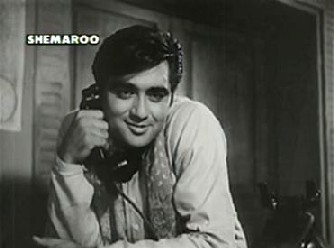
jalte hai.n jiske liye: (Sujata, 1959): This probably qualifies as my favorite “telephone song” from a Hindi film. Here, Sunil Dutt woos Nutan over the phone with this gem as he croons to Talat Mehmood’s silky vocals on playback (notice the characteristic quiver that we know and love!). Although this composition is often considered an all-time classic song of romance, fans of this song may be surprised to know that the mukhDaa is taken directly from a Tagore composition named “ekodaa tumii priye.”

Sunil Dutt serenades Nutan over the telephone with “jalte hai.n jiske liye” in Sujata (1959)

meghaa chhaye aadhii raat (Sharmilee, 1971): Out of all the compositions listed here, the inspiration from Tagore is the most difficult to hear in this song because it does not involve the mukhDaa. Rather, S.D. Burman seems to have inserted a small segment of  laho laho tuule laho (0:26-0:40) into the antara of this raga Patdeep-based classic from Sharmilee. What a trickster, huh?

tere mere milan kii yeh rainaa (Abhimaan, 1973): By far, this is the most famous example where  S.D. Burman has been inspired by Rabindra-sangeet.  In his last hit film score (for which he won his second  Filmfare Award for Best Music Director), S.D. Burman recycles the mukhDaa from Tagore’s Mishra Khamaj-based “jodii taare nai chiinii go sekii?” in this evergreen duet of Lata Mangeshkar and Kishore Kumar. Burman’s antaras are a beautiful addition to the original composition, so we won’t give him too much trouble for his rehashing of Tagore here. Note that the Bengali original that I have linked to here is sung by Kishore Kumar, another Hindi playback singer who was famous for his renditions of Rabindra-sangeet in Bengal.

Amitabh and Jaya Bacchan sing the duet “tere mere milan kii yeh raina” on stage during the climax of Abhimaan (1973).

Although S.D. Burman was often inspired by Tagore in his compositions, he never recorded or sang a single piece of Rabindra-sangeet throughout his career. The reason behind this is, of course, family feuding–an unavoidable staple of all things related to Indian culture. Here’s the story: S.D Burman’s father Nabadwip Chandra Dev Burman was set to be the direct heir to the throne of Tripura when the current king passed away in 1862. However, the crown went to Nabadwip’s paternal uncle Birchandra Dev Burman due to some dirty palace politics. Because Rabindranath Tagore had a very close relationship with Birchandra Dev Burman, S.D. Burman avoided meeting Tagore throughout his lifetime and refused to perform Rabindra-sangeet out of principle. Nevertheless, in spite of this tiff, it is undeniable that S.D. Burman had a great deal of respect for Tagore as a musician given the influence of Rabindra-sangeet on his compositions.

–Mr. 55

The Best Qawwalis of Bollywood Films

Rishi Kapoor Amar Akbar Anthony Bollywood Qawwali

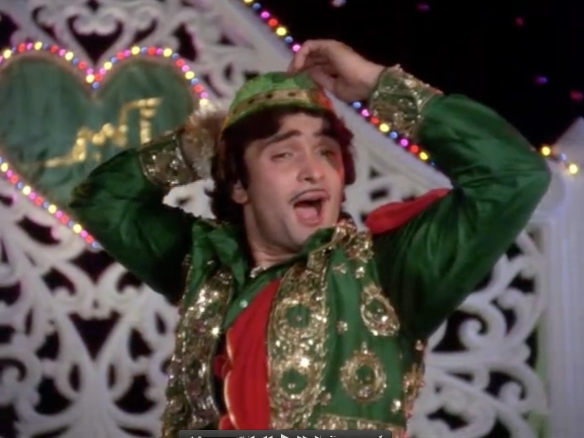
Rishi Kapoor charms his audience singing the famous qawwali “Pardah Hai Pardah” from Amar Akbar Anthony (1979).

The qawwali from films has a hallowed place in the history of the Hindi music industry. A mystic tradition more than 700 hundred years old, the qawwali gained prominence in Bollywood initially through 1950s Muslim social dramas and grew so much in popularity that its influences became mainstream–even continuing to live on today. We present our list below of the best qawwalis of Bollywood films.

But let us first define what precisely is a qawwali? The great Indian poet Amir Khusrau (d. 1326) is considered the founding father of the qawwali genre, having composed songs for the first time in this style to celebrate the death of his spiritual guide Nizamuddin Aulia. The qawwali is the authentic Sufi spiritual song that transports the mystic toward union with God. For centuries, Sufi communities in the Indian subcontinent have sustained this musical tradition in the mahfil-e-sama, or assembly for listening. The qawwali was a religious experience for both listener and performer: as the listener hopes for a spiritual experience of intensity and immediacy to transcend his or her conscious striving, the trained performer seeks to present in song a vast treasure of poetry that articulate and evoke a mystical experience for the audience.

Madhubala impresses the Mughal prince in the classic qawwali “Teri Mehfil Mei.N Qismat” from Mughal-e-Azam (1960)

The qawwali performance usually begins after the evening and may last all night until the morning prayers. The word qawwali means “words” worthy of remembrance, and as such the qawwali traditionally has a devotional aspect in praise of God. Even most “secular” qawwalis found in popular Bollywood movement can be read in this way, although superficially the lyrics have another literal meaning. The harmonium has replaced what was traditionally a sitar as musical accompaniment, but equally important are the tabla and the signature qawwali cyclic hand clapping that increase in speed during the performance. The tarz or tune of the qawwali is normally identified by the first line of the text, which is often a part of the refrain couplet. Although the qawwal was traditionally male, both men and women have enjoyed and excelled at performing the modern qawwali.

Rishi Kapoor dazzles his audience as a popular qawwal in the 1979 blockbuster Amar Akbar Anthony.

Unlike in Hindustani classical music, while taal and raagaa usage is the same, the qawwali places a greater emphasis on the poetic text and the delivery of its message than on musical ornamentation. In many of its vast incarnations within Bollywood, the qawwali became synonymous with a musical debate, a verbal battle (often between the sexes) to outwit the other side on topics that usually boil down to love or the pain of love. That kind of screen chemistry, as you can imagine, is prime Bollywood flirting territory just waiting to be sung.

Let’s take a look at how this genre evolved in mainstream Bollywood into one of the most beloved musical genres of the industry. Here are some highlights:

Humen To Loot LiyaAl Hilal (1958):

One of the first qawwalis to hit the silver screen, no list is complete without this retro low-budget gem. The music is really quite simple, but extremely catchy.

Yeh Ishq Ishq HaiBarsaat Ki Raat (1960):

This qawwali is an Urdu-lover’s paradise. Filled with complex words and allusions you’ll never use in real life, “Yeh Ishq Ishq Hai” set the stage for classy performance duels between men and women that is still considered the greatest Bollywood qawwali for its poetry (see our post for a full English translation!)

Sharma Ke Yeh Kyo.NChaudhvin Ka Chand (1960):

A fun twist on the traditional qawwali, two women sing (Asha Bhonsle and Shamshad Begum) with the latter taking the masculine side and the former taking the feminine.

Teri Mehfil Mei.N QismatMughal-e-Azam (1960):

Oh, does it get any better than this? Every moment of Mughal-e-Azam is a poetic dream and this briliant qawwali is no less. Shamshad Begum battles Lata Mangeshkar for the Prince’s approval of their take on love, each lyric outwitting the last. See our translation with glossary for more!

Nigahe.N Milane KoDil Hi To Hai (1963):

Asha Bhonsle’s greatest contribution to this genre, this qawwali has some beautiful Urdu and probably the most thrilling sargams you’ll find in any of her songs. See our translation with glossary here!

Tumhe Husn Dekhe – Jab Se Tumhe Dekha Hai (1963):

OK, so sure, this qawwali is not particularly memorable for its musical ingenuity (you may or may not cringe the entire way), but how often are you going to behold Shammi and Shashi Kapoor on screen at the same time?! This fascinating qawwali is worth a watch if only for its star value! Kudos to Geeta Bali for holding her own!

Mehengai Maar GayiRoti Kapada Aur Makaan (1974):

This qawwali has a unique flavor–taken from one of Manoj Kumar’s popular Indian propoganda films, the lyrics carry an interesting social message outside the realms of romantic love.

Pardah Hai PardahAmar Akbar Anthony (1979):

A Mohammed Rafi gem, this qawwali ranks among the best of the best. After watching Rishi Kapoor’s enthusiastic performance, you’d believe he was born to be a qawwal. The song is a must-see for anyone interested in the genre.

And just to throw in the contemporary, here’s a picture of me performing the qawwali at last year’s Harvard Ghungroo!

At a Harvard Ghungroo performance of Asha Bhonsle’s “Nigaahe.N Milane Ko.”

-Mrs. 55

How To Wink Like Bombay Superstar Rajesh Khanna

You know you’ve tried it. In the 1970s, few Indian men hitting the discotheques hadn’t. The moves of Rajesh Khanna were so powerful, so devastating that the BBC actually made a documentary on his lifestyle entitled “Bombay Superstar” to introduce him to the West. Rajesh Khanna’s signature wink was and remains the final word in Bollywood seduction. If executed correctly, the wink has a 100% success rate. You can see the wink in almost any of Rajesh Khanna songs, including the evergreen Yeh Shaam Mastani from Kati Patang (1970). For everyone who’s still having trouble, I’ve broken down how to pull off this infallible move in 5 easy-to-master steps.

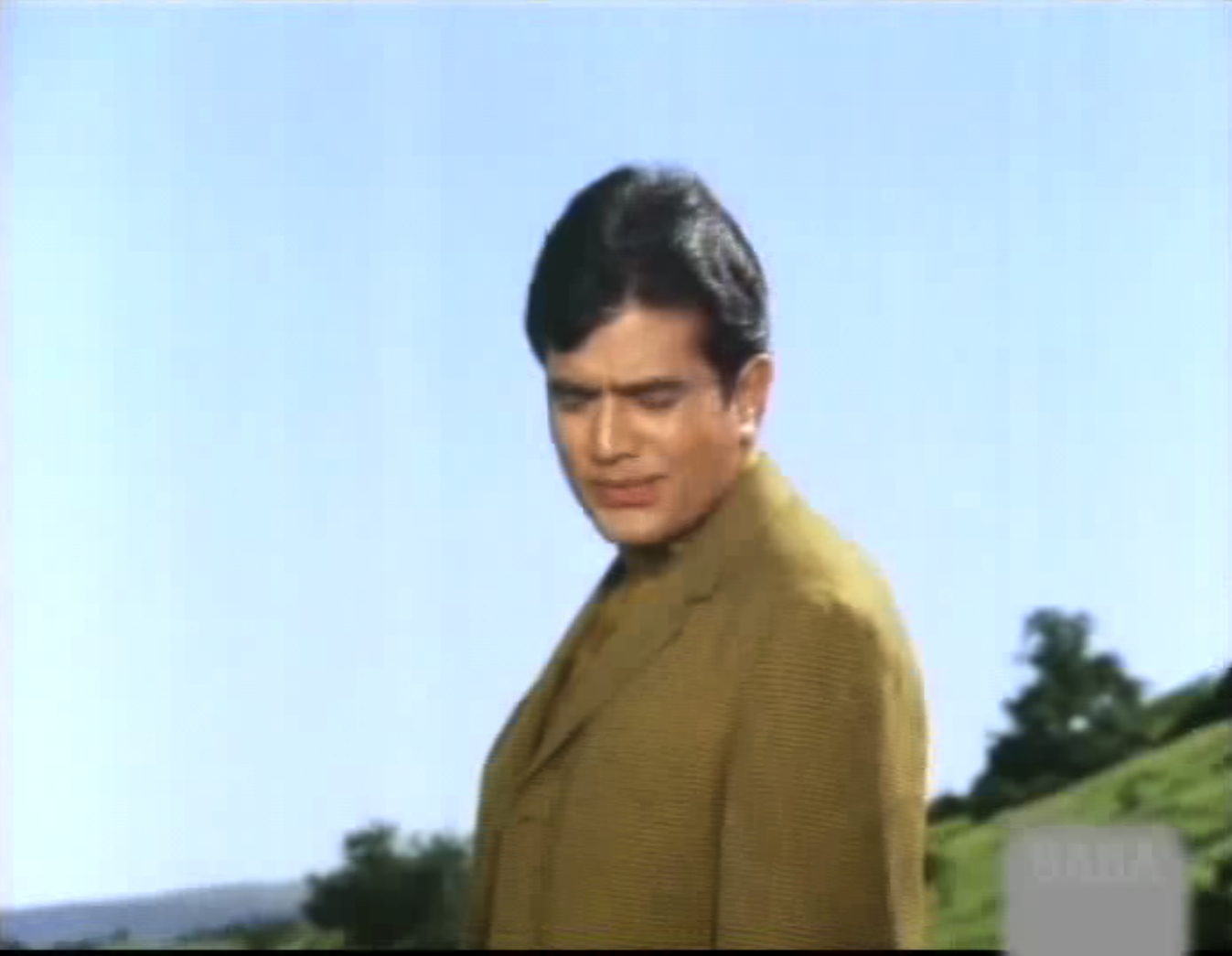
Step 1: Eyes on the prize. Make full, deliberate eye-contact with the chosen target. Make sure she sees you and can sense something’s approaching. Notice the arched brow and the pursed lips–Rajesh Khanna knows how to concentrate when it counts.

Rajesh Khanna locks gazes with Asha Parekh, and both parties mentally prepare themselves for the upcoming wink.

Step 2: Shut your eyelids. The key here is simultaneously tilting your head posterolaterally with the chin leading the way. This takes some very dedicated practice and coordination, so please don’t attempt this in public before you’ve put in the time. Subtle, right? Rajesh Khanna was as talented as he was beautiful.

In the devastating second step of his all-purpose wink, Rajesh Khanna coyly tilts his head and bats his eyelids. A palpable shudder is felt across the mountainside.

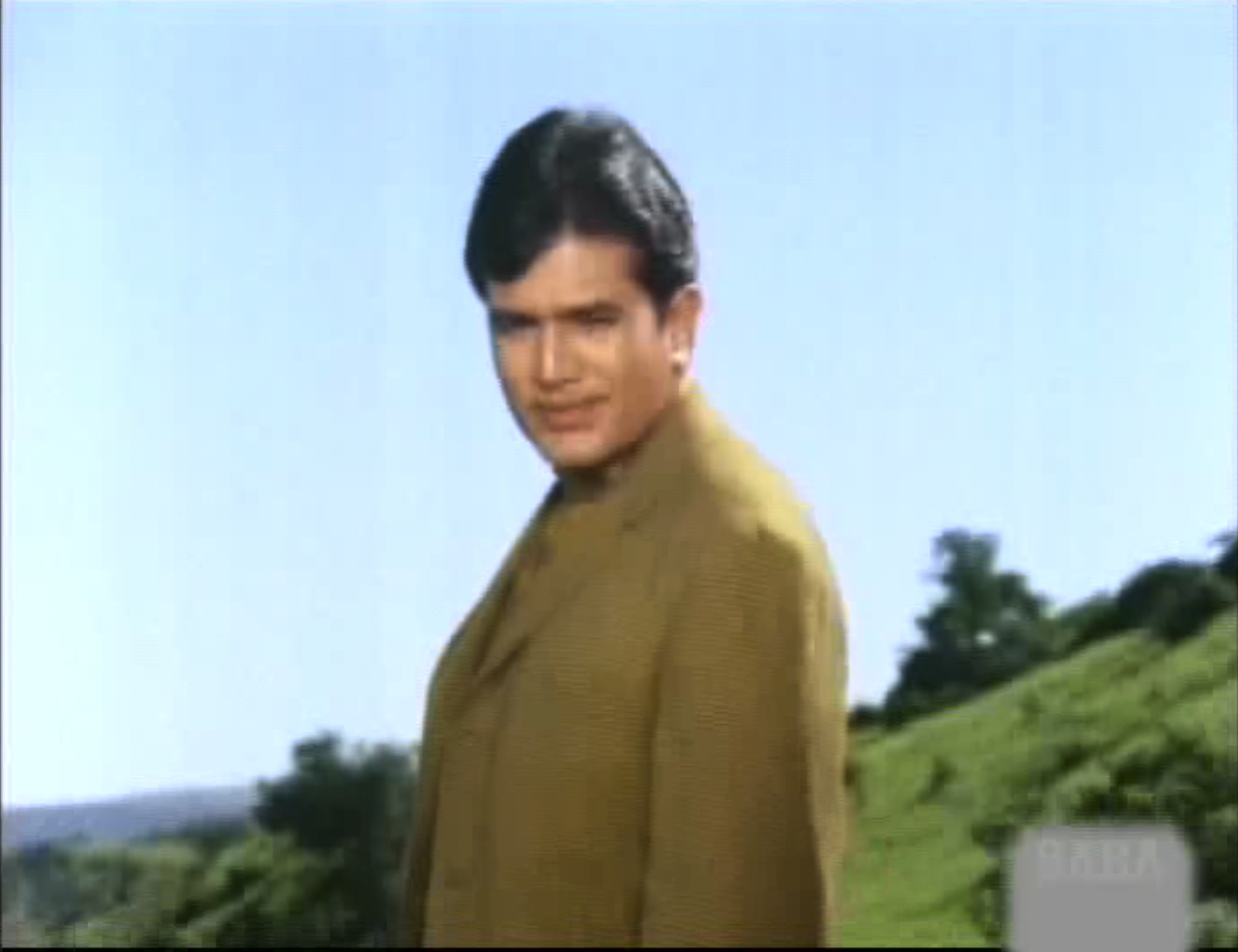
Step 3: Act natural. Return immediately to starting position, maintaining eye contact with a sly smile as if what just occurred was normal. You’ll have plenty of time to gauge audience response after.

Rajesh Khanna smiles slyly. He knows the wink just happened. He also knows you know the wink just happened. But the song isn’t done yet, and neither is he.

Step 4: Finish the song. Above all, keep singing. You gotta finish what you started. The violins are still playing and Kishore Kumar’s only on the first antra so hold that gameface until the last note.

Rajesh Khanna resists the urge to assess his wink’s immediate success and instead brings the song to a steady finish, thus heightening the wink’s effect.

Step 5: Watch and weep. This should not really qualify as a step. Observe the target’s resulting awe and proceed to take the win by a. proposing to her, b. holding her hand or c. reprising the film’s theme song.

Asha Parekh is moved literally to tears by the awesome power of Rajesh Khanna’s wink. Another one bites the dust.

That’s it folks–5 simple steps to becoming a Bombay Superstar. No Rajesh Khanna song is really complete with out it! For your viewing pleasure and further studies, check out Rajesh Khanna’s “Yeh Jo Chilman Hai” from Mehboob Ki Mehndi (1971). Then find some hair gel, a colorful ascot, and get winking.

-Mrs. 55

Two or Three Things I Know about Mira Nair: Thoughts from a Former Intern

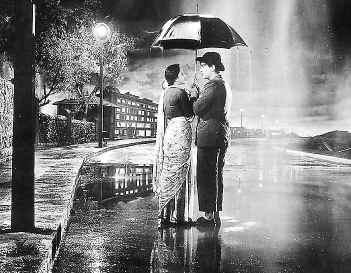
Nargis and Raj Kapoor in one of the most iconic shots of classic Indian cinema from Shree 420 (1955)

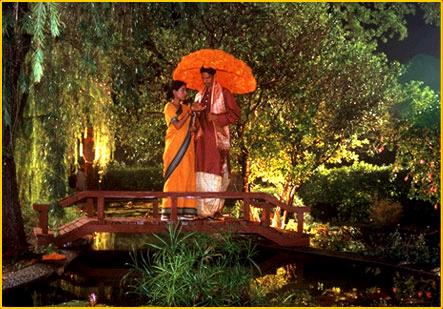
A scene from Mira Nair’s Monsoon Wedding (2001) inspired by Raj Kapoor’s classic

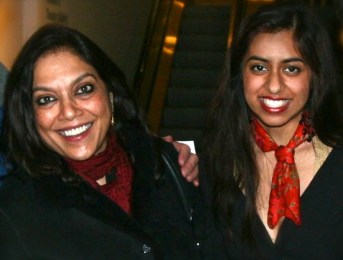
After the summer of my sophomore year, I was fortunate enough to intern with my favorite contemporary director Mira Nair. Both of us had studied film production at Harvard University and incidentally under the same professor! I first met Mira at his film screening at the Museum of Modern Art in New York City when I spotted her in the audience. My heart was beating so fast, I could hardly sit still through the screening. After the show, I gave her my impromptu elevator speech and joined the crew at Mirabai Films that summer!

Intern Mira Nair

Mira Nair and I at the MoMA my sophomore year. Note the glazed look in my eyes. Best day ever!

I was twelve years old when I saw Monsoon Wedding (2001) and have yet to find a movie from my generation that I love more. Mira’s other films include Vanity Fair, Salaam Bombay, The Namesake, Kama Sutra, and Amelia, but what does any of this have to do with old Hindi cinema? I want to talk about a side to her movies that you may not have been familiar with—that is, the impact of classic Bollywood on her work.

Perhaps you can recall that scene from Monsoon Wedding in which the wedding planner marries the housemaid beneath an umbrella. Look familiar? It should! Mira was directly inspired by Raj Kapoor’s famous song “Pyaar Hua Iqrar Hua” in directing this scene. Like Nargis and Raj Kapoor walking together on a rainy night, huddled together beneath an umbrella, Mira’s characters strike the same pose to celebrate their romance at the height of the Indian monsoons.

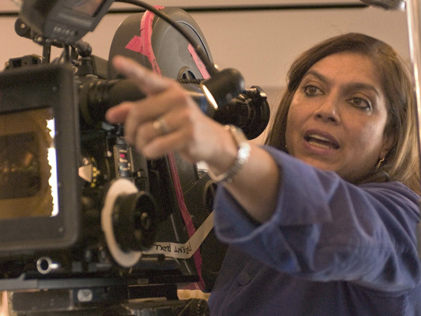
On-set and behind-the-camera with Hollywood director, Mira Nair.

In the front lobby of Mirabai Films hangs an original hand-painted movie poster of Aurat (1940), Mehboob Khan’s little-known precursor to the later smash-hit Mother India (1959). Its relative obscurity (and the eagerness to explain) brings a pride that can only be known to a fellow old Bollywood fanatic. By her desk is a beautiful and fascinating work of photography taken of the interior of R.K. Studios. Mira once explained how the studio in her photograph seems so unassuming and bland, but there, in an inconspicuous back wall besides an empty soda bottle hangs a small, telling picture of the greatest showman of India—Raj Kapoor himself. Despite his wealth and glamour, he and his colleagues maintained an inspiring sense of humility throughout his career that inspired hers.

If you’re looking for more celebrity interest, there is a great scene in her film, Vanity Fair (2004), in which the heroine (played fearlessly by Reese Witherspoon) makes an ill-received attempt to blend in among a high-class dinner party. Guess what? The scene was inspired by none other that the classic song Jaane Woh Kaise from Guru Dutt’s classic Pyaasa! In fact, Mira love it so much and wanted to make sure she captured Dutt’s spirit so precisely, that she got the whole cast together and watched Pyaasa for a movie night before the shoot. You heard me, people. If you have yet to watch Pyaasa yourself and are still looking for reasons to make the commitment, try this: Reese Witherspoon has seen it and you haven’t. Enough said.

Guru Dutt makes the room incredibly uncomfortable in Pyaasa (1957), an inspiration for Reese Witherspoon’s future character in Vanity Fair (2004).

And did you know Mira was very close friends with bold auteur Satyajit Ray? Mira’s favorite of his films include The Apu Trilogy and Days and Night in the Forest (1970), the latter of which was actually screened at the Harvard Film Archive last year with Sharmila Tagore in person! (I obviously had front row seats, almost underwent cardiac arrest upon seeing Sharmila in person, and begged for an autograph that is now framed on my desk. But that’s neither here nor there.) In fact, after growing up on these films, Mira came to respect Sharmila so much as an actress, and eagerly cast her in one of her first indie films called Mississippi Masala (1991)!

There are a million other ways old Bollywood films have influenced her work, and I have highlighted only a few that I know from working with her personally. Watch her films and let us know which others you can spot! Until then, put Pyaasa on your early Christmas list.

-Mrs. 55