Ramaiya Vastavaiya Lyrics and Translation: Let’s Learn Urdu-Hindi

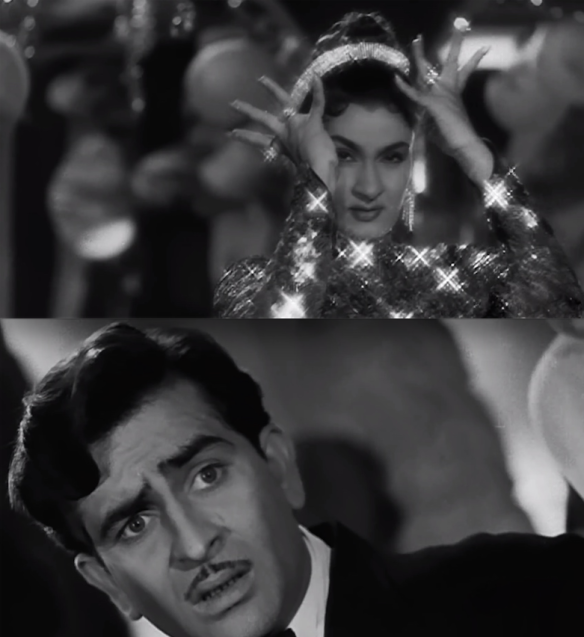
Raj Kapoor Nadira Shree 420

In a classic example of a dutch angle, Raj Kapoor recoils from the snake-like Nadira in Shree 420 (1955).

Today we present the lyrics and English translation of the famous “Ramaiya Vastavaiya” from Raj Kapoor’s 1955 blockbuster Shree 420. One of the most priceless gems of India’s Golden Age of Cinema, Shree 420 is a showman’s dream. In an era when the aesthetic of film was still an experimental playground, Raj Kapoor’s Shree 420 is as original and evocative as it was 60 years ago.

Raju, played by Raj Kapoor himself, arrives in Bombay as a patriotic simpleton crooning “Mera Joota Hai Japani.” In a pawnshop, Raju encounters Vidya (played by Nargis, in her final romantic appearance opposite Raj Kapoor under his banner production company), a pretty teacher who is selling her bangles to help pay for her struggling school (and whose name redundantly means “knowledge.”) For the next few weeks, Raju works hard to both earn a decent living at a laundry service and to woo the principled Vidya, dreaming of a simple and happy future family.

However, this utopian simplicity does not last long. When Raju delivers some pressed shirts to a wealthy flat, he meets Maya (whose name significantly means “illusion”), a high society woman who thrives on parties and gambling with the rich. She recognizes Raju’s untapped potential as a cunning cardshark, and lures him to a fancy soiree where she introduces him as Rajkumar, the Prince of Pipalinagar, of all things ridiculous. This brief taste of luxury and easy money leads Raju to agree to form a partnership with the corrupt industrialist Seth Dharamanand, bringing him instant wealth.

But Raju’s whirlwind romance with high Bombay society is stained by the shame Vidhya instills in him for his actions, and one night at the nightclub, he sees Maya and her world of illusion for what they truly are. He runs away in horror back to the slums that once gave him a home. Enter the song “Ramaiya Vastavaiya,” a cute villager number complete with chorus girls in native dress and a heavy-handed reminder that yes, poor people can be happy too.
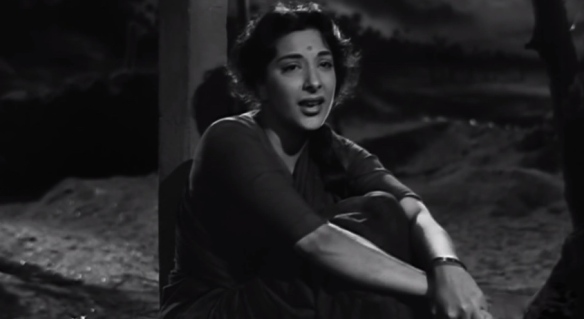
Nargis Shree 420 ramaiya vastavaiya

Nargis plays a virtuous, impoverished schoolteacher who struggles to give her students a better life in Shree 420 (1955).

Of course, the question you really want answered is, what the heck does “Ramaiya vastavaiya” mean?

It turns out Ramaiya vastavaiya is Telegu for respectfully asking, “Ram, won’t you come?” Legend has it that music composer Shankar Singh Raghuvanshi, who grew up in Hyderabad where Telugu is a dominant language, had been demonstrating his composition to director Raj Kapoor using placeholder Telugu lyrics. When Raj Kapoor heard the tune, he loved it so much, he wanted the Telugu title lyrics to be included in the final version! And perhaps the convenient symbolism did not escape Raj Kapoor–like Lord Ram returning at last to his kingdom, Raju finally comes back to the people who love him and his true home.

But all that aside, the real reason everyone has adored “Ramaiya Vastavaiya” for generations is simply that it’s so darn catchy. If you hear it once, you’ll be humming it all day! We hope you enjoy our English translation to the lyrics of this all-time favorite below. Follow along with the video and let us know in the comments how much your mind was blown like ours by the discovery of Ramaiya vastavaiya‘s Telugu roots.

Ramaiya Vastavaiya Lyrics and English Translation:

Mohammed Rafi:
Ramayyaa vastaavayyaa, ramayyaa vastaavayyaa
Ram, will you return?
Lata Mangeshkar:
Mai.N ne dil tujhko diyaa
I have given you my heart
Chorus:
Haa.N ramayyaa vastaavayyaa, ramayyaa vastaavayyaa
Yes, Ram, will you return?
Mai.N ne dil tujhko diyaa
I have given you my heart
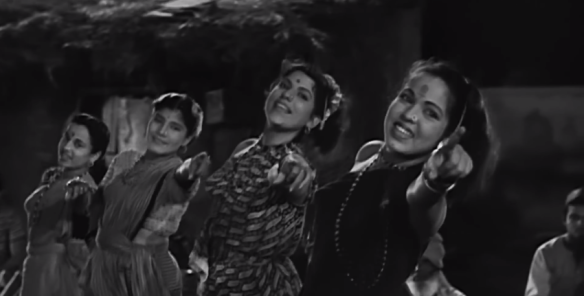
village girl

Dancer Sheela Vaz plays a stock village girl with all the right morals in Shree 420 (1955). While shooting the song, Sheila Vaz, who did not speak Hindi, studied a translation of “Ramaiya Vastavaiya” and faked it till she made it!

Mohammed Rafi:
Naino.N mei.N thii pyaar kii roshnii
In your eyes was the light of love
Teri aankho.N me yeh duniyaadaari na thii
This worldliness was not in your eyes then
Lata Mangeshkar:
Tu aur thaa teraa dil aur thaa
You were different, your heart was different
Tere man mei.N yeh miThi kaTaari na thii
This sweet dagger was not in your heart then
Mohammed Rafi:
Mai.n jo dukh paauu.N, to kyaa? Aaj pachhataauu.N, to kyaa?
If I become sad, so what? If I regret today, so what?
Chorus:
Maine dil tujhko diyaa
I have given you my heart
Oh ramayyaa vastaavayyaa, ramayyaa vastaavayyaa
Oh, Ram, will you return?

Mohammed Rafi:
Us desh mei.N tere pardes mei.N
In that country, in your foreign land
Sone chaa.Ndi ke badle mei.N bhikate hai.N dil
Instead of gold and silver, they sell hearts
Lata Mangeshkar:
Is gaao.N mei.N, dard ki chhaao.N mei.N
In this village, in the shadow of pain
Pyaar ke naam par hii dhaDakte hai.N dil
Hearts beat only in the name of love
Chaand taaro.N ke tale, raat yeh gaatii chale
In the tent of the moon and stars, the night sings this songs
Maine dil tujhko diyaa
I have given you my heart
Chorus:
Oh ramayyaa vastaavayyaa, ramayyaa vastaavayyaa
Oh, Ram, will you return?
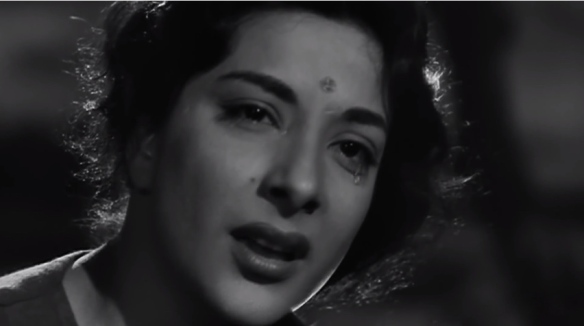
Nargis Shree 420 ramaiya vastavaiya

Joining in on the song playing on everyone’s lips in town, Nargis mourns for her lost love in Shree 420 (1955).

Lata Mangeshkar:
Yaad aati rahii dil dukhaati rahii
I still remember you, my hearts still grieves
Apne man ko manaanaa na aayaa hame.N
But I do not know how to conciliate my own mind
Tu na aaye to kyaa? Bhuul jaaye, to kyaa?
If you do not come, so what? If you forget, so what?
Pyaar karke bhulaanaa na aayaa hame.N
But having fallen in love, I do not know how to make myself forget
Wohii se duur se hii, tu bhi yeh keh de kabhii
Even from far away, say this sometime
Maine dil tujhko diyaa
I have given you my heart
Chorus:
Oh ramayyaa vastaavayyaa, ramayyaa vastaavayyaa
Oh, Ram, will you return?
Mukesh:
Maine dil tujhko diyaa
I have given you my heart
Chorus:
Oh ramayyaa vastaavayyaa, ramayyaa vastaavayyaa
Oh, Ram, will you return?

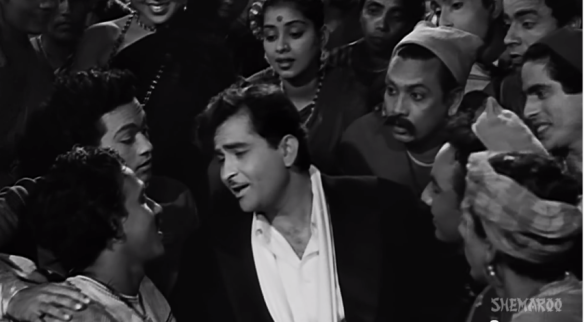
Raj Kapoor Ramaiya Vastavaiya Shree 420

Embodying the return of Lord Ram, Raj Kapoor leaves the glitzy world of Bombay nightlife to engage a captive audience of villagers in Shree 420 (1955).

Mukesh:
Rastaa wohii aur musaafir wohii
The path is the same and the traveler is the same
Ek taaraa na jaane kahaa.N chhup gayaa
But I do not know where that star has hidden itself
Duniyaa wohii duniyaawaale wohii
The society is the same, the citizens are the same
Koi kyaa jaane kiskaa jahaa.N luT gayaa
No one knows whose world has been destroyed
Merii aankho mei.N rahe, kaun jo mujh se kahe?
Who once told me to remain forever in their eyes?
Maine dil tujhko diyaa
I have given you my heart
Chorus:
Oh ramayyaa vastaavayyaa, ramayyaa vastaavayyaa
Oh, Ram, will you return?

Glossary:

Ramya vastavaiyaa: Ram, will you come (Telugu); dil: heart; nain: eyes; pyaar: love; roshnii: light; aankhe.N: eyes; duniyaadaari: wordliness; man: mind; heart; miiThaa: sweet; kaTaarii: small dagger; dukh: sadness; pacchtaanaa: to regret; desh: country (India); pardes: foreign country; sonaa: gold; chaa.Ndii: silver; [kisi ke] badle mei.N: in place of [something]; bhiktaanaa: to sell; gaao.N: village; dard: pain; chaao.N: shadow; naam: name: dhaDaknaa: [the heart] to beat; chaa.Nd: moon; taaraa: star; raat: night; gaanaa: to sing; yaad aanaa: to remember; dukhaanaa: to grieve; manaanaa: to conciliate, to cajole; bhuul jaanaa: to forget; bhuulaanaa: to make [someone] forget; duur: far away; kabhii: sometime; rastaa: path; musaafir: traveler; chhup jaanaa: to hide; duniyaa: society, the world; duniyaawaale: citizens; jahaa.N: world; luT gayaa: destroyed
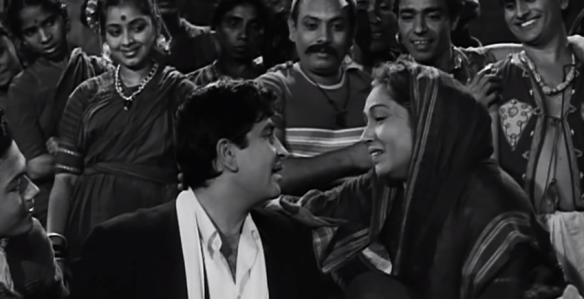
Lalita Pawar Raj Kapoor Shree420

With motherly affection, Lalita Pawar welcomes Raj Kapoor back to the fold with open arms in Shree 420 (1955).

The moral dilemma that plagues Raju’s existence eventually comes to a climax when Seth Dharamanand, Maya, and Raju are incriminated for swindling money from the poor to build communal houses. Seeking to atone for the past, Raju address the scores of poor people awaiting a home. Perhaps it is impossible to build houses for each person individually, he says, but they are a group of a million people, now united, and if they go to the government and demand land, they have the power to build their own homes with their combined money. The cure to poverty for the nation, he preaches, is not dishonesty, but hard-work and determination. Raju is released from his charges, and returns to the lifestyle of an honest workingman as he began, joined by Vidya who has forgiven him. The film finishes, humbled and hopeful, with the two heading down the road of life together.

Thank you to our fans Mustafa and Onima Thakur for this inspiring request!

-Mrs. 55

P.S. Be sure to watch the music video of this song and appreciate Raj Kapoor’s novel song transitions! Halfway through the song, the camera tracks “Ramaiya Vastavaiya” as it is picked up from the dancing villager’s circle by a passing horse carriage, overheard by a bicyclist, who carries the melody to Nargis sitting alone miles away, thereby fluidly retaining the realism of the sequence. Song transitions were still uncharted territory in this infant age of cinema–and Raj Kapoor, like the the great Guru Dutt, was a genius and pioneer. OK, OK I promise that’s the last thing I’m going to say about this song–but seriously, every scene in this movie is a film-lover’s gold mine!
Khoya Khoya Chand Lyrics and Translation: Let’s Learn Urdu-Hindi

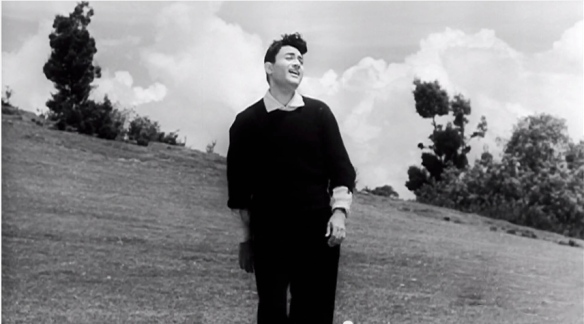
dev anand Khoya Khoya chand kala bazaar

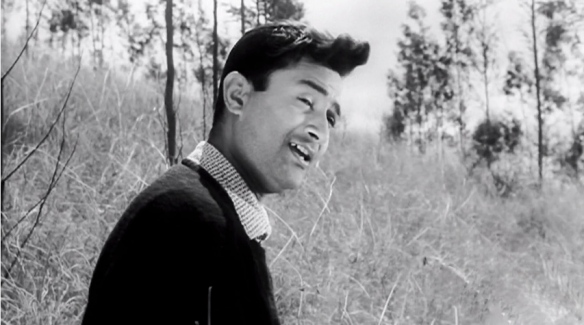
Dapper Dev Anand floats through Ooty with hair that could make Tintin jealous in Kala Bazaar (1960).

Today we highlight the lyrics and English translation to Mohammed Rafi’s “Khoya Khoya Chand” from the film Kala Bazaar (1960). Dev Anand stars as a poor bus conductor with an ailing mother who becomes desperate when he loses his job. He turns to the black market and makes a fortune in underground business dealings. Although he is able to provide well for his mother, he is ashamed when he meets the pure-hearted, but strong-willed Waheeda Rehman who spurns all forms of dishonesty. The strength of Kala Bazaar is in its character study, and though perhaps occasionally heavy-handed, the personalities it portrays are not stereotypic. Both Dev Anand and Waheeda Rehman carry flaws as they navigate the grey space of their moral boundaries, adding a welcome warmth to the film.

Like the effortlessly romantic “Likhe Jo Khat Tujhe,” “Khoya Khoya Chand” makes my top three Mohammed Rafi songs of all time (bonus points if you can guess the third!) Set upon the peaceful Ooty landscape and brimming with whimsy, “Khoya Khoya Chand” is Dev Anand’s ode to the woman he loves and the crossroads at which they stand. The camera breezes alongside him, a cinematographic embodiment of the changing winds, and soars left and right as flirtatiousy as Shailendra’s lyrics. “Khoya Khoya Chand” is quite literally a breath of fresh air that will change the characters (and possibly you) forever! With an open sky of possibility above, what’s there not to love?

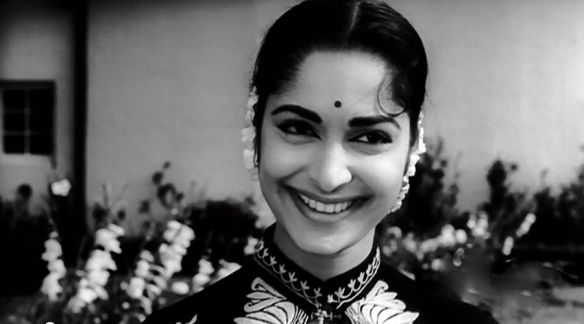
Waheeda Rehman Khoya Khoya Chand

With bold and unafraid eyebrows that make no excuses, Waheeda Rehman glows in the elegant black-and-white cinematography of Kala Bazaar (1960).

We hope you enjoy our English translation of the playful hit song “Khoya Khoya Chand” below! Follow along with our lyrics to the video here and try not to get dizzy as the camera spins with Dev Anand through the Ooty countryside!

Khoya Khoya Chand Lyrics and Translation:

O ho ho, khoya khoya chaand, khula aasmaan
The lost moon in the open sky
Aankhon mei.N saari raat jaayegi
The whole night will fly before your eyes
Tumko bhi kaise nee.Nd aayegi
How will you be able to sleep?
Oh oh, khoya khoya chaand…
Oh, the lost moon

Mastii bharii hawaa jo chalii
The blowing wind is filled with intoxication
Khil khil gayii yeh dil ki kalii
The flower of my heart has blossomed
Man ki gali mein hai khalbalii
There is an agitation in the alley of my soul
Ke unko to bulaao
For I must call out to her
O ho ho, khoya khoya chaand
Oh, the lost moon…

Taare chale, nazaare chale
Stars go, sights go
Sang sang mere woh saare chale
They all go along with me
Chaaro.N taraf ishaare chale
Signals come from every direction
Kisi ke to ho jaao
That I must become someone else’s
O ho ho, khoya khoya chaand
Oh, the lost moon…

Aisii hii raat, bheegii sii raat
On a rainy night like this
Haatho.N mein haath hote voh saath
If she was beside me, hand in hand
Keh lete unse dil kii yeh baat
I would tell her these words from my heart
Ab to na sataao
Now do not torture me
O ho ho, khoya khoya chaand
Oh, the lost moon…

Hum miT chale jinke liye
The person for whom I would disappear
Bin kuch kahe woh chhup chhup rahe
Without saying a word, she sits quietly
Koi zaraa yeh unse kahe
Someone tell her
Na aise aazmaao
Do not test me like this

O ho ho, khoya khoya chaand, khula aasmaan
The lost moon in the open sky
Aankhon mei.N saari raat jaayegi
The whole night will fly before your eyes
Tumko bhi kaise nee.Nd aayegi
How will you be able to sleep?
Oh oh, khoya khoya chaand…
Oh, the lost moon

Glossary:

chaand: moon; aasmaan: sky; aa.Nkh: eye; raat: night; [kisi ko] nee.Nd aanaa: to fall asleep; mastii: intoxication; hawaa: wind; khilnaa: to bloom; dil: heart; kalii: flower; man: soul; galii: alleyway, street; khalbalii: agitation; bulaanaa: to call; taaraa: star; nazaaraa: sights, vision; sang sang: alongside, together; chaaron taraf se: from 4 directions, from everywhere; ishaaraa: signal, sign; bheegii: rainy, wet; haath: hand; baat; word; sataanaa: to torture; miTnaa: to disappear; chhup: quiet; aazmaanaa: to test; to try

dev anand khoya khoya chand kala bazaar 2

I see you, you sneaky lover of men with vintage hairstyles. Wanna piece of this pompadour?

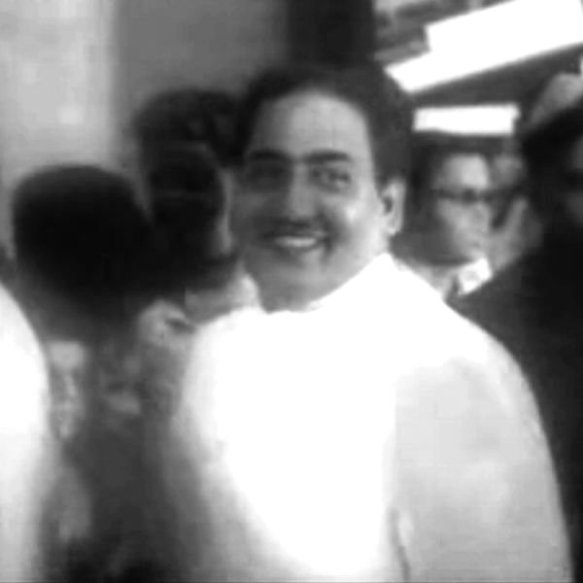
One of the best moments of Kala Bazaar is earlier in the film when Dev Anand and his posse are selling black market tickets to the premier of the film Mother India (1957)! Real archival footage from the premiere is blended seamlessly into the narrative, giving us a glimpse at the hysteria and excitement of a real-life star-studded movie premiere in the Golden Age of Bollywood. Watch as Mohammed Rafi, Nargis, Lata Mangeshkar, Guru Dutt, Dilip Kumar, Rajendra Kumar and many more make unexpected real-life cameos! There are few things I love more than the existential fairyland that is a film about films.

Mohammed Rafi at the Mother India (1957) premier

Famed playback singer Mohammed Rafi smiles at the real-life Mother India (1957) premiere as seen in Kala Bazaar (1960)!

This fun-loving song was requested by two faithful fans, Sudipta Banerjee and Himani Sood! Many thanks for the brilliant request and if you’re trapped in a snowstorm this week like we are, we hope these lyrics remind you of the joys of warm weather soon to come!

– Mrs. 55

Yeh Mera Prem Patra Lyrics and Translation: Let’s Learn Urdu-Hindi

Yeh Mera Prem Patra Sangam Rajendra kumar vijayantimala

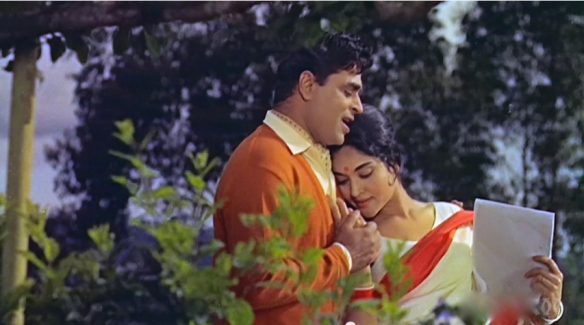
Vijayantimala reads a love letter from her childhood sweetheart Rajendra Kumar in “Yeh Mera Prem Patra” from Sangam (1964).

Happy Valentine’s Day to all our fans! In celebration of this romantic holiday, we present the lyrics and English translation to one of our favorite love songs, “Yeh Mera Prem Patra” from the hit film Sangam (1964). Radha (played by Vijayantimala) and Gopal (played by Rajendra Kumar) play two childhood lovers who have kept their feelings hidden because of Kumar’s best friend, Sundar (played by Raj Kapoor), who has professed his unwavering devotion to Radha for years. Although Radha spurns Sundar’s love, Sundar begs his best friend Gopal to make sure no other man spoils his chances when Sundar is called to serve in the air force on the northern front.

But then! Sundar is killed while serving his country–and in their shared mourning, Radha and Gopal can finally express their undying love for one another. A shining moment in Mohammed Rafi’s career, “Yeh Mera Prem Patra” is their outpouring of uninhibited romance. With a heavenly chorus in the air that highlights the dream-like world in which the two now find themselves, Radha runs across an open meadow to Gopal as he writes her a love letter. In fact, she is so eager to discover what he has written, that her sari falls from her shoulder in her haste, revealing the front of her blouse.

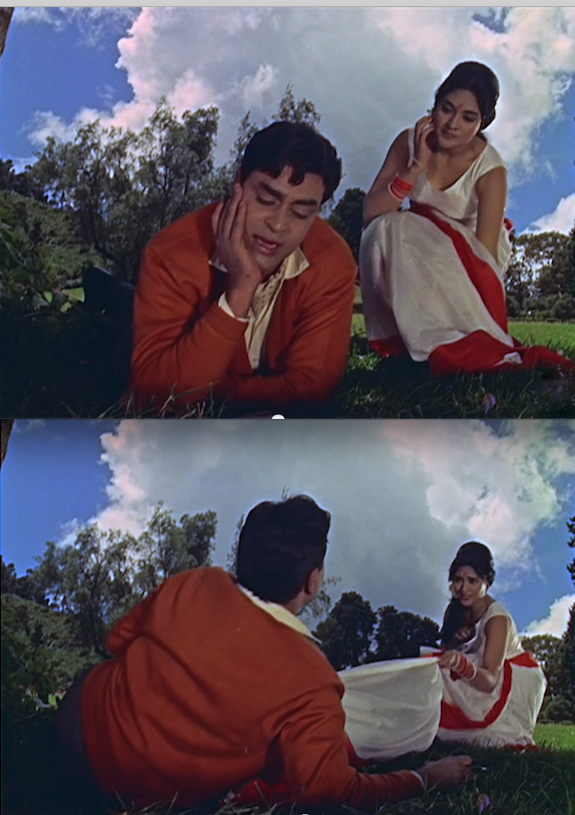
Let’s pause right here. For anyone uninitiated to classic Hindi films, believe me when I say, this NEVER happens. The heroine in classic Bollywood would never let her sari fall so revealingly, and surprisingly, Radha makes NO moves to adjust it. The scene is filmed brilliantly–because of the camera’s position, the sari show is purely for the viewer to ponder–Gopal is facing the audience and cannot see what we have all noticed. It’s as if the director, Raj Kapoor, is telling us that the romance we are witnessing is not purely chaste. And indeed, the like the Radha-Gopal of Hindu mythology, the film’s two lovers are not to be destined for eternal bliss.

Yeh Mera Prem Patra sari tussle

ABOVE: Vijayantimala quietly approaches Rajendra Kumar with her sari having fallen off her shoulder. BELOW: Rajendra Kumar and Vijayantimala tussle for the end of her sari playfully while the low camera height emphasizes the beautiful open skies.

The song references the famous Ganga and Jamuna rivers from whose geographical confluence with the river Saraswati (sangam), the film derives its name. The triangular symbolism and references to the sangam is evoked throughout the film, with each character embodying one of the three ancient rivers. Sangam made history as Raj Kapoor’s first technicolour film and one of the first Bollywood films to be shot in exotic locals such as Venice, Paris and Switzerland.

But beneath all the glitter, did you know there’s actually true love story behind this sweet poem? At the age of 20, the famed Urdu lyricist of “Yeh Mera Prem Patra,” Hasrat Jaipuri, fell in love his own Radha, a young Hindu woman from hometown in Jaipur. Though they never married, she would inspire many of his greatest poems. Jaipuri later recalled fondly in an interview:

“Meri haveli ke samne, ek badi khoobsurat ladki rehti jiska naam tha Radha. Aur ishq ka mahzab se, zaat paat se, koi taaluq nahii.N. Kisi se bhi ho sakta hai, kisi se bhi kiya jaa sakta hai. To mera unse pyaar hua. Taalim maine sher-o-shayari ki, mere naanaa madhoom/manhoom se haasil ki?, lekin ishq ka sabak jo hai, woh Radha ne padhaayaa ki ishq kya cheez hai.”

[“Near my home a very beautiful girl lived named Radha. And neither religion nor caste and creed have any power over love. It can happen with anyone and it can happen to anyone. And so I fell in love with her. I may have trained in poetry from my grandfather, but the lesson of love was taught by Radha.”]

“Yeh Mera Prem Patra” is the very love letter that Jaipuri wrote to his real life Radha–more than 20 years before Raj Kapoor would use the same sweet poem in Sangam! So this Valentine’s Day, we at Mr. and Mrs. 55 recommend you do something old-fashioned and write your special someone a romantic love letter! For inspiration, soak up Hasrat Jaipuri’s shy, tender lyrics and our English translation to the sentimental love letter, “Yeh Mera Prem Patra” below!

Yeh Mera Prem Patra Lyrics and Translation:

Meherbaa.Nlikhuu.N? “Haseenaa” likhuu.N? Yaa “dilruubaa” likhuu.N?
Should I write “compassionate one”? Should I write “beautiful one”? Or should I write “beloved”?
Hairaan huu.N ki aap ko is khat mei.N kyaa likhuu.N
I am puzzled by what to write in this letter to you

Yeh meraa prem patra paDh kar, ki tum naaraaz na honaa
When you read this love letter of mine, may you not be angry
ki tum merii zindagii ho, ki tum merii bandagii ho
For you are my life, for you are my prayer

Tujhe mai.N chaand kehtaa thaa, magar us mei.N bhi daagh hai
I used to call you the moon, but in the moon are blemishes
Tujhe suraj mai.n kehtaa thaa, magar us mei.N bhi aag hai
I used to call you the sun, but in the sun is ablaze
Tujhe itnaa hii kehta huu.N ki mujhko tumse pyaar hai, tumse pyaar hai, tumse pyaar hai
I tell you only this that I love you, I love you, I love you

Tujhe Gangaa mai.N samajhuu.Ngaa, tujhe Jamunaa mai.N samajhuu.Ngaa
I will think of you as the Ganges River, I will think of you as the Jamuna River
Tu dil ke paas hai itnii, tujhe apnaa mai.N samajhuu.Ngaa
You are so close to my heart, I will think of you as my own
Agar mar jaauu.N ruuh bhaTakegii tere intezaar mei.N, intezaar mei.N, intezaar mein
If I die, my soul will wander waiting for you, waiting for you, waiting for you

Yeh meraa prem patra paDh kar, ki tum naraaz na honaa
When you read this love letter of mine, may you not be angry
ki tum merii zindagii ho, ki tum merii bandagii ho
For you are my life, for you are my prayer

Glossary:

meherbaa.N: compassionate one; likhnaa: to write; haseenaa: beautiful lady; dilruuba: lover; hairaan: puzzled, stunned; khat: letter; prem: love; patra: letter; paDhnaa: to read; naaraaz: angry; zindagii: life; bandagii: prayer; chaand: moon; daagh: flaw, blemish; suraj: sun; aag: fire; pyaar: love; Gangaa: Ganges River; Jamunaa: Jamunaa River; dil: heart; [kisi ke] paas: to be nearby [something]; mar jaanaa: to die; ruuh: soul; bhaTaknaa: to wander; intezaar: wait

romance in the garden

Rajendra Kumar and Vijayantimala romance each other in a sunlit garden in Sangam (1964). For once in his life, Rajendra Kumar’s outfit of choice adds to the ambiance rather than destroys.

One of my favorite moments both musically and cinematically in this song comes at the very end when Lata Mangeshkar picks up the chorus over a beautiful wide tracking shot of the lovebirds walking hand-in-hand in the Elysian forest. This heavenly moment can only be seen and heard in the movie, it was tragically cut from the record version we know so well!

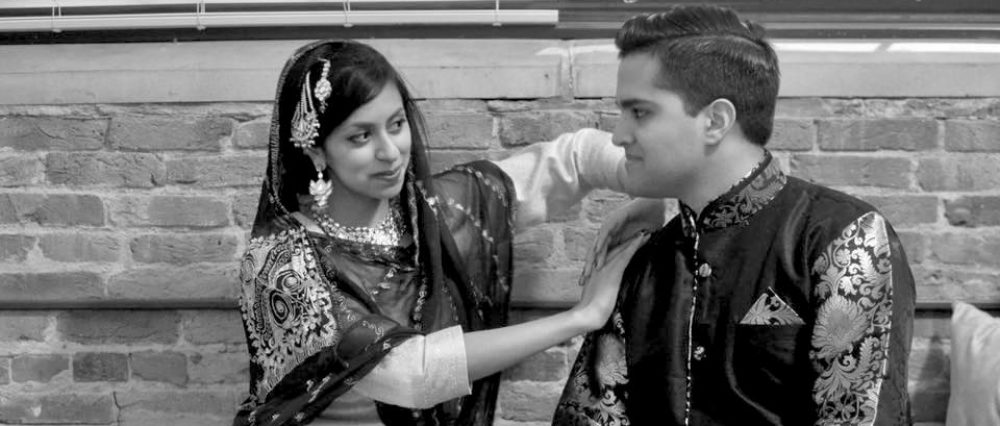
Mrs. 55 wedding

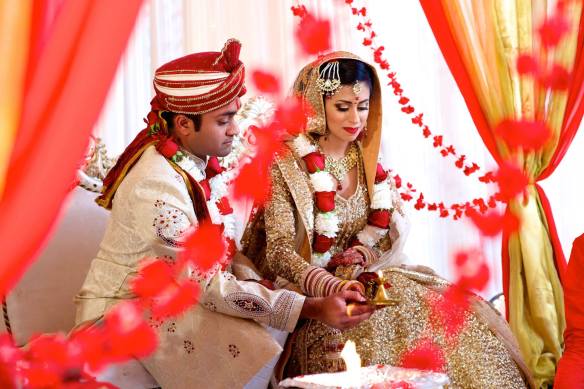
As promised, here is a photograph of Mrs. 55 finally marrying her college sweetheart last December!

Mrs. 55 adab arz

Adab arz hai! This love poem is dedicated to my very romantic new husband and personal Bollywood hero!

Soon after this song, Sundar surprises the couple by returning from war alive! Sundar then marries Radha because his devoutly loyal friend Gopal is unable to tell him his true feelings (like a typical Bollywood bromance, don’t you just love how the woman has basically ZERO say in all this?). Inevitably, of course, the famous love letter is later discovered and Raj Kapoor is heartbroken. See our English translation of the epic self-pitying “Dost Dost Na Raha” for more of the drama that unfolds!

But let us temporarily forget all that on this lovely Valentine’s Day. This beautiful ode was requested by dedicated fan Inderjit Wassi! Thank you for the poetic request!

– Mrs. 55

Spooky Songs of Classic Bollywood: The 15 Most Haunting Melodies of Yesteryear

Biswajeet Bees Saal Baad film noir kahin deep jale

Biswajeet is haunted by a mysterious voice singing of love and murder in Bees Saal Baad (1962).

Happy Halloween! What better way to give yourself the creeps than with a vintage Hindi film song! Mr. 55 and I once hosted a Spooky Song-themed study break on-campus during which we projected old Hindi film noirs on a large screen, drank rooh afza and jammed nerdily to Lata’s high notes. Was it any surprise the two of us were the only ones really having an awesome time? Join us in our countdown to the spookiest song of classic Bollywood! When I say scary, I’m not referring to Vinod Khanna’s lime green tuxedo in Aan Milo Sajna (although it might give you nightmares). I’m talking about the real deal here. These are songs that will keep you up at night, that will haunt your waking moments as you grapple with the symbolism. And if you see a mysterious woman in a white-sari floating around your house this evening…well, don’t say we didn’t warn you!

The Fifteen Scariest Songs from Old Hindi Films!

15. Tujhko Pukare Mera Pyar (Neel Kamal 1968)

Few things are scarier than being buried alive. Rajkumar haunts his Mughal-era lover through the ages even when she is reborn as a 1960s desperate housewife.

14. Gagan Jhanjhana Rah (Nastik 1954)

This song is a hidden gem. Hemant Kumar actually impersonates God in this song with a voice that booms from the heavens amidst a stormy apocalpyse. The chorus is so darn creepy in this song, you might feel real chills from the wind sound effects mixed into the song!

13. Waqt Ne Kiya (Kaaghaz Ke Phool 1957)

What makes this song so spooky and yet so beautiful? It’s all in the lighting and the spectres lingering in the room–read our translation for more!

12. Jayen To Jayen Kahan (Taxi Driver 1954)

In our translation of this all-time creeper, we discuss the emptiness of the song’s mis-en-scene to heighten a feeling of abandonment, leaving you nothing but Dev Anand’s perfect pompadour to ease the pain.

11. Akele Hain Chale Aao (Raaz 1967)

While the movie Raaz may be a clunk, “Akele Hain” (that is reprised in a male and female version!) will certainly leave you clawing after your security blanket. Insider hint: Rajesh Khanna takes his shirt off later on in the movie if you can sit through the rest of the film.

10. Raat Andheri (Aah 1953)

In this heartbreaking social drama, Raj Kapoor plays a handsome tuberculosis patient unable to marry the girl of his dreams because of his illness. In the throes of self-pity, the minor key music haunts him as his own life slips away. Tragic, yes, but mostly just creepy.

9. Sau Baar Janam Lenge (Ustadon Ke Ustad 1963)

Mohammed Rafi’s unearthly beautiful voice echoes through the mist in this song like a phantom from the other world. The woman in mourning seems ready to commit suicide at any moment during the song, keeping the audience on their toes!

8. Dekhi Zamane Ki Yaari (Kaaghaz Ke Phool 1957)

This gentle song of disillusioned love beckons you in like a tantalizing dream, and then drags you to perdition as you scream over the ethereal chorus. Our earlier translation of Dekhi Zamane discusses the transitions of the song from fantasy to absolute nightmare!

7. Koi Duur Se Aawaz De Chale Aao (Sahib Biwi Aur Ghulam 1962)

One of my favorite songs in this genre, Guru Dutt is awakened in the middle of the night by a tender lament floating through the halls of the large empty mansion in which he works. Who is this mysterious and sad woman with the enchanting song? You HAVE to watch this genius star-studded film and find out!

6. Jane Kahan Gaye Woh Din (Mera Naam Joker 1970)

Good thing I don’t have a fear of clowns or this song would have permanently wrecked my childhood. Raj Kapoor plays a circus performer who has lost all those he has ever loved. He enters a private Hell in which he is bound to perform in his clown garb to an unfeeling audience, always smiling on the outside and crying on the inside. Brace yourself for several attempts at artsy camera tricks to make him float that could not be more creepy.

5. Gumnaam Hai Koi (Gumnaam 1965)

Based on the Agatha Christie novel “And Then There Were None,” Gumnaam is a kitsch-lovers delight. Drop-dead gorgeous (literally) Lata Mangeshkar’s voice haunts a group of travelers as they meander through a nameless forest. Newsflash! The “ghost” of this song actually chimes in with a high-pitch thrill when the music goes quiet, so listen carefully!

4. Naina Barse (Woh Kaun Thi? 1964)

One of the best examples of a femme fatale in Hindi films, “Naina Barse” is sung by a ghostly woman haunting her lover from a former lifetime. Her flowing white sari against the endless, crisp white snow of a Simla winter set the perfect stage for a nightmare. The woman in a white sari is a classic cliche–read more about its meaning here!

3. Kahin Deep Jale Kahin Dil (Bees Saal Baad 1964)

This song hardly needs an introduction, so famous is its eerie tune. One of the most brilliant shots is the slow crane down from above the chandelier to Biswajeet’s horrified stare at the piano. But has anyone else ever noticed the film version has the interlude violins playing an entire octave lower than in the recorded version?? It totally blew my mind when watching the film–and both ways are equally horrifying!

2. Jhoom Jhoom Dhalti Raat (Kohra 1964)

Stylistic symbolism sets this creepster apart from its competitors. My favorite moment in this song is when the shadow figures do an interpretive dance in the sand, acting out the “choDo piyaa mera, choDo haath” line. I get chills every time I watch this–the cinematography is genuinely brilliant and haunting!

1. Aayega Aanewala (Mahal 1949)

Welcome to the spookiest song of Bollywood! Nothing will ever top the song that officially taught Bollywood everything it needed to know about horror. Don’t expect any corpses to pop out of the closet–this song is way to classy for that. See our translation of this unbeatable classic for more!

So…I know I’m not going to be able to sleep tonight. What are your favorite spooky songs from Bollywood films? Tell us the scenes that have haunted your waking hours for years (think Sadhana declaring “Mujhe khoon achha lagtaa hai” on a rainy night)! Mr. 55 and I both hope you have a very Happy Halloween!

– Mrs. 55

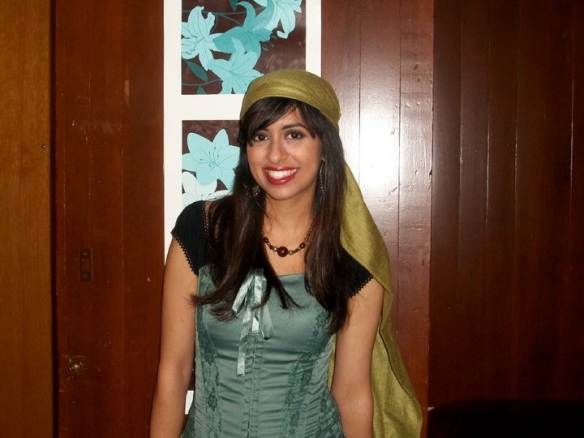
Mrs. 55 in her go-to gypsy girl costume. When all else fails...

Mrs. 55 in her go-to gypsy girl costume. When all else fails…tie a chunni on your head.

Yeh Duniya Yeh Mehfil Lyrics and Translation: Let’s Learn Urdu-Hindi

Priya Rajvansh Heer Raanjha

Priya Rajvansh, as Heer, displays her usual limited range of emotion as a beautiful Panjabi maiden in Heer Raanjha (1970).

Today we showcase the full lyrics and English translation to “Yeh Duniya Yeh Mehfil” from Heer Raanjha (1970). Heer Raanjha tells the famous story of two star-crossed lovers, immortalized by the epic poem by Panjabi Sufi Waris Shah (1722-1798) . So handsome it hurts, Rajkumar is a perfect romantic hero as the charming Ranjha of the tale. When he falls for Heer, the daughter of a wealthy Jat family from a neighboring village (played by Priya Rajvansh), jealous relatives scheme to end their courtship. As she is married off against her will to another man, Rajkumar is overcome with devastation.

Like other great poems steeped in the Sufi tradition, Heer Ranjha has multiple layers of interpretation, one of which is man’s eternal quest for God. This is exemplified by the film’s most famous song, “Yeh Duniya Yeh Mehfil” sung by the great Mohammed Rafi. At once a song of lament for the love he has lost as well as an ode to yogic renunciation, “Yeh Duniya Yeh Mehfil” manages to express a yearning for a connection while embracing the search for a higher meaning.

The beautifully-written story of Heer Ranjha is a fundamental part of classical Panjabi literature, a poem my grandparents growing up in pre-partition Panjab were made to read and analyze in school. Waris Shah’s detailed and authentic description of rural Panjabi life around the turn of the 16th century is a pleasure to study today. To convert this leviathan of a poem to film was a daunting challenge met by the great modern Urdu poet, Kaifi Azmi. He wrote the entire script for the 1970 film entirely in verse. Every line gleams with ornamentation, and only Rajkumar with his characteristically mesmerizing dialogue delivery can lend it the stateliness it deserves. One of my favorite verses from the film is below:

Us se kehna ki tum meraa ek khwab ho, jo chamakta hai dil mei.N woh mahataab ho. [Tell her that you are a dream of mine, that you are the moonlight glittering in my heart.]

Us se kehna ki gehuyo.N ke kheto.N ka rang, tilmatii huii titliyo.N kii umang. [Tell her that she is the is the color of wheat fields, that she is the joy of the fluttering butterflies.]

Us se kehna ki jharno.N kaa chanchal shabaab, ghat ki taazgii, aabroo-e-janaab. [Tell her that she is the the playful youth of the waterfalls, the freshness of a mountain pass, and the honour of our elders.]

Us se kehna ki jhoolo.N kii angdaiyaa.N aur uDhte dupatto.N kii shenaiyaa.N. [Tell her that she is the movement of swings and the music of flying dupattas.]

Us se kehna ki chakki ke geeto.N kii aag, ladkhadatii jawaanii, machaltaa suhaag. [Tell her that she is the fire of the song of the mills, the trembling youth, the excitement of a wedding night.]

Us se kehna ki dulhano.N ke kaajal kii pyaas, pehle bauchhaar kii garam aur Thandii miithaas. [Tell her that she is the thirst of a bride’s kajal and the hot and cold sweetness of the first rain.]

Itnii ra.Nginiyo.N ko jab ek jaa kiyaa, Heer kudrat ne tab tujhko paida kiyaa. [When all this colors were made into one, then nature created you, Heer.]

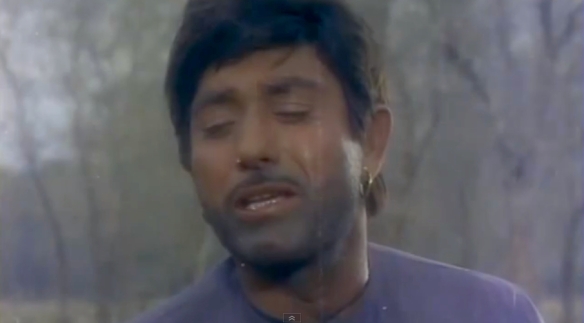
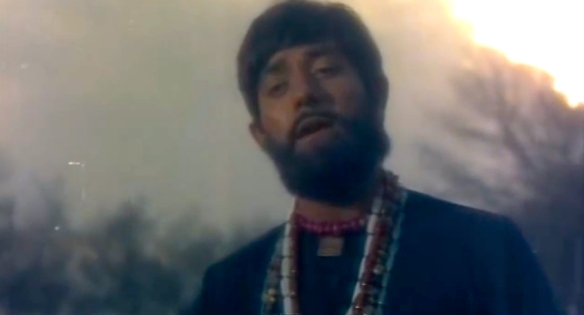
Your heart’s fluttering, right? “Yeh Duniya Yeh Mehfil” also a brilliant example of the classic Bollywood cliche about men’s facial hair. The more manscaping that needs to be done, the more the hero has fallen out of touch with reality. Check it out:

Rajkumar 5 o'clock shadow

At first Ranjha displays an appropriately  manly 5 o’clock shadow. However, his depression takes a nosedive from bad…


Rajkumar lumbarjack beard

…to worse with a full on lumberjack look. This get-up quickly transitions to…


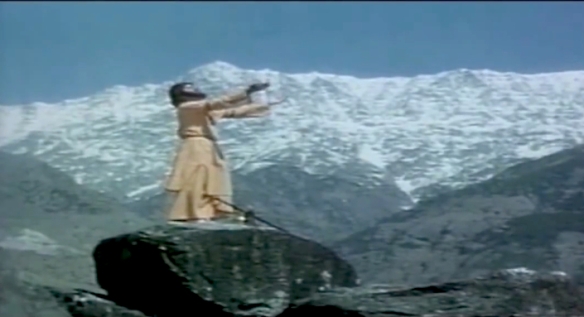
Rajkumar yogi beard

…WHAT THE…where did Ranjha go??!

But before you rush to give your own facial hair a much-needed trim, allow us to share our English translation and lyrics of “Yeh Duniya Yeh Mehfil” below! Follow along with the video and let us know how much you love a good song of self-pity in the comments!

Yeh Duniya Yeh Mehfil Lyrics and Translation:

Yeh duniyaa yeh mehfil mere kaam ki nahii.N
This world and these people are not for me

Kisko sunaaoo.N haal dil-e-beqaraar kaa?
Whom should I tell the state of my restless heart?
Bujhtaa huaa chiraagh hoo.N apne mazaar kaa
I am the extinguished flame of my own mausoleum
Aye kaash bhool jaaoo.N, magar bhooltaa nahii.N
If only I could forget, but I am unable to forget
kis dhoom se uthaa thaa janaazaa bahaar kaa
with what uproar marched the funeral of Spring

Apnaa pataa mile, naa khabar yaar kii mile
I know neither my own whereabouts nor have I heard news from friends
Dushman ko bhii naa aisii sazaa pyaar kii mile
Even enemies do not receive such a punishment for love
Unko khudaa mile hai.N khudaa kii jinhe talaash
Others meet the God for whom they have searched
Mujhko bas ek jhalak mere dildaar kii mile
Let me have just one glance from my beloved

Saharaa mei.N aake bhii, mujhki Thikaanaa na milaa
Even as I enter the wilderness, I found no shelter
Gham ko bhoolaane kaa koii bahaanaa naa milaa
I found no pretense to erase the memory of my sadness
Dil tarase jis mei.N pyaar ko, kyaa samajhoo.N us sansaar ko?
What can I understand about the world in which my heart remains longing for love?
Ek jiitii baazii haar ke, mai.N DhuunDhuu.N bichhaDe yaar ko
Upon losing a winning gamble, I must search for my lost friend

Duur nigaaho.N se aa.Nsuu bahaataa hai.N koii
Far from my gaze, someone is shedding tears
Kaise na jaaoo.N mai.N, mujhko bulaataa hai.N koii
How can I resist going when someone calls to me?
Yaa TuuTe dil ko joD do, yaa saare bandhan toD do
Either let me mend this broken heart or let me break all ties
Aye parbat, rastaa de mujhe! Aye kaanto.N, daaman chhoD do!
Oh mountains, show me the path! Oh thorns, let go of my embrace!

Yeh duniyaa yeh mehfil mere kaam ki nahii.N
This world and these people are not for me

Glossary:

duniyaa: world, society; mehfil: company, gathering of people; haal: state, health; dil: heart; beqaraar: restless; bhujnaa: to extinguish; chiraagh: lamp; mazaar: mausoleum; kaash: if only, would that; bhoolnaa: to forget; dhoom: noise, uproar; janaazaa: funeral; bahaar: Spring; pathaa: whereabouts, address; khabar: news; yaar: friend; dushman: enemy; sazaa: punishment; pyaar: love; khudaa: God; [kisii kii] talaash: in search [of someone]; jhalak: glance; dildaar: beloved; saharaa: wilderness; Thikaanaa: shelter; gham: sadness; [kisi ko] bhoolaanaa: to make [something] forgotten; bahaanaa: excuse, pretense; [kisi ko] tarasnaa: to long [for something], samajhnaa: to understand; sansaar: world; baazi: a hand (ie. in a game of cards or a gamble); haarnaa: to lose; DhuunDhnaa: to search; bichhaDnaa: to be separated; duur: far; nigaahe.N: gaze; aa.Nsuu bahaanaa: to shed tears; bulaanaa: to call; yaa: either, or; TuuTaa: broken; joDnaa: to mend, to bring together; bandhan: tie, knot; toDnaa: to break; parbat: mountain; rastaa: path; kaa.Ntaa: thorn; daaman: embrace; chhoDnaa: to leave, to let go

Rajkumar yogi heer raanjha

Rajkumar goes rogue and renounces the world as a yogi upon learning that his beloved has married another. Epic shots like these earned Jal Mistry the Filmfare Award for Best Cinematography in 1971!

The line “mere kaam ki nahii.N” is particularly difficult to translate. The word “kaam” is in its simplest form translated as “work.” However, the word has numerous subtleties in Hindustani. With this line, Kaifi Azmi is expressing his dissatisfaction with and inability to function in the world and society as he has experienced them.

This song was requested by our fan Raju! Thank you for the brilliant Urdu treat!

– Mrs. 55