Hai Isi Mein Pyar Ki Abhroo Lyrics and Translation: Let’s Learn Urdu-Hindi

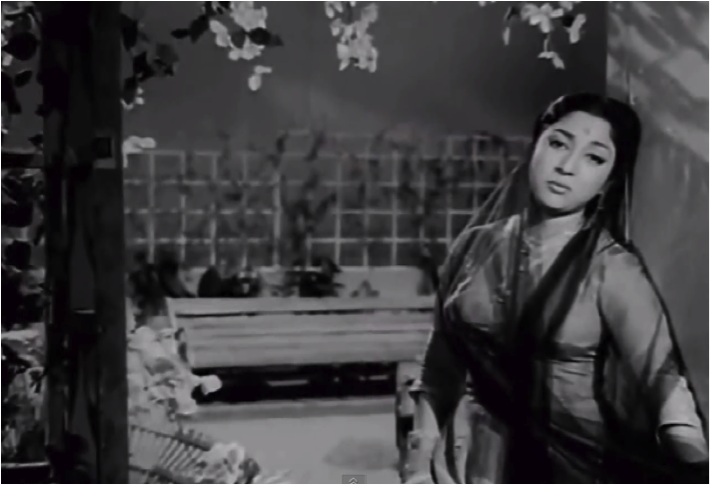
Mala Sinha experiences the pain of rejection in Anpadh (1962) from her husband Dharmendra due to her illiteracy.

As a sequel to our previous post on “aap ki nazaro.n samjhaa,” I have provided an English translation and glossary for another memorable ghazal from Anpadh (1962): “hai isii me.n pyaar kii aabhruu.” As a quick refresher, Anpadh narrates the story of a wealthy but illiterate woman (played by Mala Sinha) who is married off to an educated gentleman (played by Dharmendra).  When Dharmendra asks Mala to recite a poem for him for her on their wedding night, she is compelled to reveal her darkest secret: her parents never taught her how to read or write.  After hearing this, Dharmendra is furious that his parents lured into arranging his marriage to an uneducated woman because of the large dowry. As he spurns Mala for her lack of education, she expresses her sadness through this song, which was composed by Madan Mohan and penned by Raja Mehndi Ali Khan.

I’ll be the first to admit that these lyrics are a tad excessive in the drama department, but this is exactly the kind of song that you need when you’re in the mood to wallow. The essence of heartache is and the pain of rejection are illustrated beautifully in these words,  so listening to a song like this can really hit the spot when you’re love-sick and need to get that sulking out of your system.  Although one can find beauty in the lyrics, it is difficult to overlook that this ghazal also carries an underlying subtext of misogyny that reflects societal attitudes of the time. Take, for instance, the mukhDaa where Mala proclaims that she finds pride in her beloved’s cruelty: “hai isii me.n pyaar kii aabhruuwah jafaa kare, mai.n vafaa karuu.n” (In this, I find the pride of love: he is cruel to me, yet I remain faithful to him).  You won’t (and shouldn’t!) find such a line sung by the heroines in the Bollywood industry today.

Even if the lyrics for this song are too much for you to handle, I am certain that you can appreciate this song for its musical value. Madan Mohan has composed an evergreen melody that tugs at your heartstrings, and Lata Mangeshkar pulls through with a winning rendition. As an aside, I thought that I would share an alternate version of this song rendered by Madan Mohan himself using a different tune.  This alternate melody was not used in the film, and I am guessing that was because it sounds too happy to suit the melancholic nature of these lyrics. Take a listen to both versions for yourself, and enjoy the translation and glossary that we have provided below! Requests for future posts, as always, should be e-mailed to themrandmrs55@gmail.com.

The intensity of Mala’s pain depicted in this song highlights the urgency of Anpadh‘s message about the need educate Indian girls.

Hai Isi Mein Pyar Ki Abhroo: Lyrics and Translation

hai isii me.n pyaar kii aabhruu
In this, I find the pride of love:
wah jafaa kare mai.n vafaa karuu.n
He is cruel to me, yet I remain faithful to him.
jo vafaa bhii kaam na aa sake
Although this love is in vain,
to wahii kahe ki mai.n kyaa karuu.n
It now dictates my actions.

mujhe gham bhii unkaa aziiz hai
Even the sadness I feel is dear to me,
ki unhii kii dii huii chiiz hai
Because it is something given to me by him.
yahii gham hai ab merii zindagii
This sadness has become my life,
ise kaise dil se judaa karuu.n?
how shall I separate it from my heart?

jo na ban sake mai.n wah baat huu.n
I am the matter that cannot be,
jo na khatm ho mai.n wah raat huu.n
And I am the night that cannot end. 
yah likhaa hai mere nasiib mein
It is written in my destiny
yuu.n hii shamma ban ke jalaa karuu.n
That I shall burn here like a candle.

na kisii ke dil kii huu.n aarzuu
I am not the desire of anyone’s heart
na kisii nazar ki huu.n justajuu
Nor am I the object of anyone’s glances.
mai.n wah phuul huu.n jo udaas ho
I am that flower which is wilted.
na bahaar aaye to kyaa karuu.n?
If the spring does not arrive, what shall I do?

hai isii me.n pyaar kii aabhruu
In this, I find the pride of love.

Glossary

aabhruu: pride; jafaa: cruelty; vafaa: loyalty, love; aziiz: dear; judaa: separate; khatm: end; nasiib: destiny, fate; shamma: candle; aarzuu: desire; justajuu: quest, search; udaas: sullen, wilted.

Phool Ahista Phenko Lyrics and Translation: Let’s Learn Urdu-Hindi

Mumtaz is at her sassy finest on screen during this blazing duet from Prem Kahani (1975)

Our next translation comes from Prem Kahani (1975), a hit film set during the peak of India’s struggle for freedom from British rule that stars Mumtaz, Rajesh Khanna, and Shashi Kapoor in  another take on the archetypal Bollywood love triangle. Rajesh Khanna plays the role of an apolitical poet with aspirations of teaching literature who becomes involved in a revolutionary freedom fighter movement to avenge his brother’s murder during a peace protest. He engages in a passionate romance with Mumtaz; however, when she boldly asks to marry him, he turns her down. The reason? Knowing the risks that he will face as a revolutionary, he does not want Mumtaz to be subjected to the cruelties of becoming widowed. Deeply hurt by this rejection,  Mumtaz agrees to marry the man of her father’s choosing. In the mean time, Rajesh kills his brother’s murderer and becomes a fugitive highly sought after by the police. One day, while visiting his sister-in-law’s house, he is shot by police who arrive to search the premises. In order to recover from his wound, Rajesh flees to seek refuge at his best friend Shashi Kapoor’s place. When Rajesh arrives, he finds that it is the day of Shashi’s wedding! Rajesh meets the new bride, and — you guessed it — it is none other than Mumtaz.

In this context, the meaning of the lyrics in “phuul aahistaa phe.nko” come truly alive. The tension at home between Mumtaz and Rajesh Khanna is painfully palpable, and in the midst of this mess, the clueless Shashi calls for the start of an informal mushaira (poetry recital).  If you’re interested in the poetry preceding this song, you can listen to the back-and-forth of the witty retorts between Rajesh and Mumtaz at this link here.  The poetry leads seamlessly into the introduction of this memorable Lata-Mukesh duet, which was composed by Laxmikant-Pyarelal and penned by Anand Bakshi. This gem is a perfect example of how songs in Bollywood films can be used  to express emotions that cannot be described as gracefully with dialogue alone.

Through these lyrics, Rajesh takes the opportunity to express his sorrow for letting Mumtaz go and playing with her heart. Mumtaz, with some sassy lines of her own, chides Rajesh for the way that he treated her. In order to fully understand these lyrics, it is important note that the thematic message of this song revolves around a key metaphor: the roses discussed here represent womankind. Like flowers, Indian women must grapple with a delicate and fragile fate as they endure the pain inflicted by the thorns of society’s constraining norms.  Thus, when Rajesh claims in the mukhDaa that roses must be plucked gently (phuul aahistaa phe.nko, phuul baDe naazuk hote hai.n), Mumtaz sarcastically questions the sincerity of his politesse during her antara (baDii khuubsuurat shikaayat hai yah, magar sochiye kyaa sharafat hai yah?). In her heart, she wishes Rajesh had not been overly concerned with her well-being so that their marriage could have occurred (in spite of her prospects of becoming widowed).  By channeling her emotions into anger, Mumtaz now hopes that the same kind of pain will ultimately afflict Rajesh so that he can understand the heartbreak she was forced to endure because of his decisions (jo rulaate hai.n logo.n ko ek din khud bhii rote hai.n).

As you can tell, this song is power-packed with emotional intensity and some beautifully crafted poetry–I highly recommend a listen if you have not received the opportunity to hear it yet. Follow along with our translation and glossary below, and as always, remember to send in your requests to themrandmrs55@gmail.com!

–Mr.55

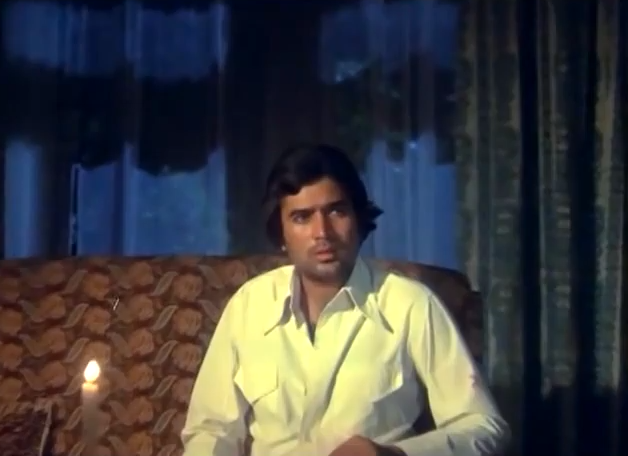
Rajesh Khanna recites poetry that expresses deep regret for letting his beloved Mumtaz slip away in Prem Kahani (1975)

Phool Ahista Phenko: Lyrics and Translation

kahaa aap kaa yah bajaa hii sahii
What you have said is entirely correct: 
ki ham beqadar, bevafaa hii sahii
I am insensitive and unfaithful. 
bade shauq se jaaiye chhoD kar
With pleasure, you may leave me and go away.
magar sahan-e-gulshan se yuu.n toD kar
But, from the rose garden,

phuul aahistaa phe.nko, phuul baDe naazuk hote hai.n
Gently pluck the roses, for they are very delicate. 
vaise bhii to ye badqismatnok pe kaa.nto.n kii sote hai.n
Indeed, these ill-fated flowers must reside on the tips of thorns.

baDii khuubsuurat shikaayat hai yah
You have expressed quite a lovely grievance,
magar sochiye, kyaa sharaafat hai yah?
but please consider whether it is mere politesse.
jo auro.n kaa dil toDte rahte hai.n
Those who continue to break others’ hearts 
lage choT unko to yah kahte hai.n ki
say this when they become hurt themselves: 
phuul aahistaa phe.nko, phuul baDe naazuk hote hai.n
Gently pluck the roses, for they are very delicate. 
jo rulaate hai.n logo.n ko ek din khud bhii rote hai.n
Those who make others cry shed their own tears one day.

kisii shauk ko baagh kii sair me.n
During a stroll in the garden,
jo lag jaaye kaa.nTaa koii pair me.n
when a thorn pierces your foot,
khafaa husn phuulo.n se ho kis liye?
why do you become angry with the roses, oh beautiful one?
ye maasuum hai.n, bekhataa is liye
They are innocent and faultless.
phuul aahistaa phe.nko, phuul baDe naazuk hote hai.n
Gently pluck the roses, for they are delicate.
ye kare.nge kaise ghaayal? ye to khud ghaayal hote hai.n 

How can they hurt others? They are wounded themselves.

gulo.n ke baDe aap hamdard hai.n
You are quite sympathetic to the beauty of these roses.
bhalaa kyo.n na ho? aap bhii mard hai.n
And why not? You are also a man!
hazaaro.n savaalo.n kaa hai ek javaab
A thousand questions have this one answer.
fareb-e-nazar yah na ho, ai janaab
My dear, don’t let your eyes deceive you.
phuul aahistaa phe.nko, phuul baDe naazuk hote hai.n

Gently pluck the roses, for they are delicate.
sab jise kahte hai.n shabnam, phuul ke aa.nsuu hote hai.n
What people call dew drops are, in fact, the tears shed by roses

*Female lines sung by Lata Mangeshkar are denoted in red. Male lines sung by Mukesh are denoted in black.

Glossary

bajaa: correct; beqadar: insensitive; bevafaa: unfaithful; shauq se: with pleasure; sahan: courtyard; gulshan: rose garden; phe.nknaa: to pluck, throw; aahistaa: slowly, gently; naazuk: delicate; badqismat: ill-fated; nok: tip; shikaayat; grievance; sharaafat: politesse, decency; choT: injury, wound; shauk: thorn; baagh: garden; sair: promenade, stroll; khafaa: angry; maasuum: innocent; bekhataa: faultless; gul: rose; hamdard: sympathetic; fareb-e-nazar: delusion of sight; shabnam: dew drops.  

The handsome yet clueless Shashi Kapoor is unaware of the tumultuous history between his wife Mumtaz and best friend Rajesh Khanna in Prem Kahani (1975). 

Plagiarism in Hindi Film Music: Is Imitation the Most Sincere Form of Flattery?

Music directors in the Bollywood industry today are often accused of plagiarizing songs without giving proper credit to the original sources. Pritam Chakraborty, in particular, comes to mind as a composer who has been subjected to such accusations in recent times. Yet, lifting tunes is not a new trend in the industry: its origins can be  traced back to the industry’s earliest days when music directors of the Golden Era composed melodies heavily inspired by unattributed sources. Below, let’s take a listen to some plagiarized works composed by five of the greatest music directors of yesteryear: R.D. Burman, S.D. Burman, Shankar-Jaikishan, Salil Chowdhury, and O.P. Nayyar.

 R.D. Burman

Among the music directors of his time, R.D. Burman was perhaps the most notorious for composing inspired tunes.  Within the list that I’ve provided below, the magnitude of plagiarism varies from song to song. Some numbers below are direct lifts from their originals, such as the cult classic “mahbuubaa mahbuubaa” from Sholay (1975). Others represent more subtle variations of plagiarism: for instance,  the Kishore Kumar classic “dilbar mere kab tak mujhe” only takes it mukhDaa from “Zigeunerjunge” but has original antaras and interludes.  As a musician, I personally feel that the latter form of lifting is somewhat justifiable because it still reflects a level of creativity and originality on the part of the composer. The direct copying of tunes, however, raises ethical concerns and may have even placed music directors like R.D. Burman in legal trouble had such songs been released today.  Regardless of your opinion on this issue, what is universally striking about the list of songs below is the diversity of sources from which R.D. Burman drew his inspiration.  Collectively, the original melodies come from a smorgasbord of musical genres from all over the world: traditional folk, American pop, Greek, German, French, and even Iranian rock!

aao twist kare.n (Bhoot Bangla, 1965)  / “Let’s Twist Again” (Chubby Checker, 1962)
churaa liyaa hai tum ne  (Yaadon Ki Baraat,  1973) / “If It’s Tuesday, This Must Be Belgium” (Bojoura, 1969)
teraa mujhse hai pahle kaa naataa koii  (Aa Gale Lag Ja, 1973)/ “The Yellow Rose of Texas” (Traditional)
mahbuubaa, mahbuubaa (Sholay, 1975) / “Say You Love Me” (Demis Roussos, 1974)
mil gayaa ham ko saathii (Hum Kisi Se Kum Nahin, 1977) / “Mamma Mia” (ABBA, 1975)
jahaa.n terii yah nazar hai (Kaalia, 1981) / “Heleh Maali” (Zia Atabi, 1977)
kaisaa teraa pyaar (Love Story, 1981) / “I Have A Dream” (ABBA, 1979)
dilbar mere kab tak mujhe (Satta Pe Satta, 1982) / “Zigeunerjunge” (Alexandra, 1967)
kahii.n na jaa  (Bade Dilwala, 1983) / “La Vie En Rose” (Edith Piaf, 1955)
tum se milke  (Parinda, 1989) / “When I Need You” (Leo Sayer, 1977)

Zeenat Aman sizzles in “churaa liyaa tum ne” from Yaadon Ki Baraat (1973)

S.D. Burman

Like his son, S.D. Burman has also composed melodies that reflect marked inspiration from foreign sources.  Although we have already investigated the influence of Tagore’s music on S.D. Burman in a previous post, we now observe how his compositions also were inspired by non-Indian genres.  For a composer who was rather traditional in his musical output, who would have imagined that he lifted material from Mexican, Italian, and American country melodies?

chaahe koi khush ho (Taxi Driver, 1954) / “Tarantella” (Traditional)
jiivan ke safar me.n raahii
 
(Munimji, 1955) / “Mexican Hat Dance” (Traditional)
ek laDkii bhiigii bhaagii sii (Chalti Ka Naam Gaadi, 1958) / “Sixteen Tons” (Tennessee Ernie Ford, 1955)
ham the vah thii (Chalti Ka Naam Gaadi, 1958) / “Watermelon Song” (Tennessee Ernie Ford, 1957)
yah dil na hotaa bechaaraa (Jewel Thief, 1967) / “March” (Bridge on the River Kwai, 1957)
saalaa mai.n to sahab ban gayaa (Sagina, 1974) / “Chella Lla” (Renato Carosone, 1959)

The ever-versatile Kishore Kumar stars in a comic role in Chalti Ka Naam Gaadi (1955)

Shankar-Jaikishan

In my opinion, Shankar-Jakishan were the quintessential music directors of Bollywood’s Golden Age. They combined the authenticity of traditional Indian music with the modern sophistication of Western influences to produce songs that appealed to the masses. It’s not surprising that some of their tunes reflect inspiration from foreign influences, but what is remarkable is that several of the songs listed below are remembered today as some of this duo’s most treasured gems.  Two songs from Chori Chori (1956), two songs from Gumnaam (1965), and the title track of Jab Pyar Kisi Se Hota Hai (1961) — among many other hits — were heavily inspired by existing Western numbers. I think you’ll be surprised to see some of your favorites on the list below…

ghar aayaa meraa pardesii (Awaara, 1952) / “Al Balad El Mahboub” (Umm Kulthum)
aajaa sanam madhur chaa.ndnii me.n ham (Chori Chori, 1956) / “Tarantella” (Traditional)
panchii banuu.n uDtii phiruu.n (Chori Chori, 1956) / “Coming Through The Rye” (Traditional)
aigo aigo yah kyaa ho gayaa?
(Boyfriend, 1961) / Stupid Cupid” (Connie Francis, 1958)
jiyaa ho jiyaa kuchh bol do  (Jab Pyar Kisi Se Hota Hai, 1961) / “Broken-Hearted Melody” (Sarah Vaughan, 1959)
sukuu sukuu (Junglee, 1961) / “Sucu Sucu” (Ping Ping, 1961)
dekho ab to kis ko nahii.n hai khabar (Janwar, 1964) / “I Want To Hold Your Hand” (The Beatles, 1963 )
gumnaam hai koii (Gumnaam, 1965) / “Charade” (Henry Mancini and Orchestra, 1963)
jaane chaman sholaa badan (Gumnaam, 1965) / “Autumn Leaves” (Nat King Cole, 1956)
le jaa le jaa meraa dil (An Evening in Paris, 1967) / “Man of Mystery” (The Shadows, 1960)
kaun hai jo sapno.n me.n aayaa? (Jhuk Gaya Aasman, 1968) / “Marguerita” (Elvis Presley, 1963)

Rajendra Kumar definitely breaks conventions of automobile safety during the picturization of “kaun hai jo sapno.n me.n aayaa?” from Jhuk Gaya Aasman (1968).

Salil Chowdhury

Salil Chowdhury’s compositions always reflect an intelligent and sophisticated mastery of music that set him apart from his peers in the industry.  Instead of describing the songs listed here as cases of plagiarism, I would be more likely to categorize them as adaptations. When Salil Chowdhury used another Western melody as an inspiration, he always managed to make it his own by adding something special that would resonate with Indian audiences. Take, for example, the evergreen Talat-Lata duet “itnaa mujhse tu pyaar baDhaa.” Although the mukhDaa is clearly inspired by Mozart’s Jupiter Symphony, Salil composes new antaras that beautifully complement the original melody.  As another example, consider “bachpan o bachpan” from Memdidi (1961).  Inspired by the children’s rhyme “A Tisket, A Tasket,” Salil takes the melody to a new level of complexity by inserting operatic interludes sung by our beloved diva Lata Mangeshkar.  Bravo!

dharti kahe pukaar ke (Do Bigha Zameen, 1953) / “Meadowlands” (Lev Knipper, 1934)
halke halke chalo saa.nvare (Tangewaali, 1955) / “The Wedding Samba” (Edmund Ros and Orchestra,  1950)
dil taDap taDap ke (Madhumati, 1957) / “Szla Dziewczka” (Traditional)
zindagii hai kyaa, sun merii jaan  (Maya, 1961) / “Theme from Limelight [from 3:27] ” (Charlie Chaplin, 1952)
itnaa na mujhse tu pyaar baDhaa (Chhaya, 1961) / “Molto allegro” from Symphony No. 40 (Wolfgang Amadeus Mozart, 1788)
bachpan o bachpan (Memdidi, 1961) / A Tisket, A Tasket” (Traditional)
aa.nkho.n me.n tum ho (Half-Ticket, 1962) / “Buttons and Bows” (Dinah Shore, 1948)

Vijayantimala coyly hides behind a tree in the picturization of “dil taDap taDap ke” from Madhumati (1957)

O.P. Nayyar

O.P. Nayyar is known for his characteristically Western-inspired approach to crafting melodies for Hindi films, but his contribution to our list of directly plagiarized songs is relatively small in comparison to some of his peers in the industry. The most well-known example here is, of course,  the Rafi-Geeta duet “yah hai bambaaii merii jaa.n” which has been lifted from its predecessor “My Darling Clementine.”

baabuujii dhiire chalnaa (Aar Paar, 1954) / “Quizas, Quizas, Quizas(Trio Los Panchos, 1947)
yah hai bambaii merii jaa.n (C.I.D., 1955) / “My Darling Clementine” (Traditional)
lakho.n hai.n yahaa.n dilvaale (Kismat, 1968) / Red River Valley” (Traditional)

Biswajeet hams it up for Babita during the picturization of “lakho.n hai.n yahaa.n dilvaale” in Kismat (1968)

What is your opinion on plagiarism in Hindi film music? Was it acceptable for music directors of this time to lift material from Western sources in order to introduce musical diversity to Indian audiences? Or, is it unethical for such plagiarism to occur without giving credit to the original musicians who created the songs in the first place? Let us know in the comments, and feel free to share any examples that go along the theme of this post!

-Mr. 55
Aye Mere Watan Ke Logo Lyrics and Translation: Let’s Learn Urdu-Hindi

A rare photograph depicting Lata Mangeshkar’s performance of “ai mere vatan ke logo” at the Ramlila Maidan in New Delhi on Republic Day,1963

On behalf of Mrs. 55 and me, I’d like to wish all of our readers a happy Indian Independence Day! In celebration of this holiday, we have provided the lyrics and translation for an all-time patriotic classic: ai mere vatan ke logo. Although this song is not technically a Bollywood song, all of the artists involved in its production are legends of the Hindi film industry: composer C. Ramachandra, poet Kavi Pradeep, and of course, singer Lata Mangeshkar. Kavi Pradeep was inspired to write the lyrics of this poem after being moved by the losses India suffered during the Sino-Indian War of 1962. His tribute to the Indian soldiers who fought in the war has become immortalized in this touching anthem, which is remembered today as one of the finest Hindi songs in the patriotic genre.

Even a song like this, however, was not immune to the drama of the Bollywood industry. It has been reported by journalist Raju Bharatan that C.Ramachandra originally composed this song as a duet between Lata and her younger sister Asha Bhonsle. Allegedly, Lata managed to coax her sister out of the situation using questionable tactics and went on to record the song as a solo because she wanted it for herself. If this story is not merely Bollywood gossip, I certainly don’t condone the lack of sisterly love–but I can say that you’d be hard-pressed to find anyone who thinks Lata didn’t do complete justice to this gem.

Kavi Pradeep (left), Lata Mangeshkar (center), C. Ramachandra (right)

In fact, a popular story has been recounted over the years about how Prime Minister Pandit Jawaharlal Nehru was moved to tears when Lata debuted this number at the Ramlila Maidan in New Delhi just two months after the war ended.  Lata narrates this incident in her own words:

Following the Chinese attack on India in 1962, Pradeep ji wrote this song and I sang it for the first time in Delhi on Republic Day on 26th January, 1963. C. Ramchandra conducted the few musicians who were performing on stage with me. That year, many stars and music directors from Bombay were in Delhi, including Dilip Kumar, Raj Kapoor, Naushad Ali, Shankar-Jaikishan and Madan Mohan. Once I finished singing, I sat down behind the stage and asked for a coffee.

Mehboob Sahib came rushing to me and said: ‘Lata! Where is Lata? Panditji is calling you.’ I followed him outside and when Pandit ji saw me, he stood up. Indira ji and many leading politicians were there too.

Mehboob Sahib introduced me saying: ‘This is Lata Mangeshkar.’ He said: ‘beTii, tum ne aaj mujhe rulaa diyaa’ [Child, you have brought tears to my eyes today].

Given the occasion, we hope that you’ll take a moment to listen to this evergreen patriotic anthem and commemorate the brave heroes who have fought to protect the freedom of our beloved motherland over the years. Jai Hind!

–Mr. 55

Aye Mere Watan Ke Logo: Lyrics and Translation

ai mere vatan ke logo, tum khuub lagaa lo naaraa
Oh, my fellow citizens! Chant slogans in praise of our country.
yah shubhdin hai ham sab kaa, laharaa lo tiiranga pyaaraa
This is an auspicious day for us all,  so fly our beloved tri-color flag.
par mat bhuulo siimaa par viiro.n ne hai praan ga.nvaaye
Yet, do not forget that brave soldiers have lost their lives on our borders.
kuchh yaad unhe.n bhii kar lo, jo laut ke ghar na aaye
Remember those who have not returned home.

ai mere vatan ke logo, zaraa aa.nkh me.n bhar lo paani
Oh, my fellow citizens! Shed a few tears.
jo shahiid hue hai.n unkii, zaraa yaad karo qurbaanii
Remember the sacrifice of those martyrs.
tum bhuul na jaao unko, is liye suno yah kahaanii
Listen to this story so that you do not forget them.
jo shahiid hue hai.n unkii, zaraa yaad karo qurbaani
Remember the sacrifice of those martyrs.

jab ghaayal huaa himaalay, khatre me.n paDii aazaadii
When the great Himalayas were wounded and our freedom was in danger,
jab tak thii saa.ns laDe ve, phir apnii laash bichha dii
They fought until their last breath and then laid their corpses to the ground.
sangiin pe dhar kar maatha, so gaye amar baliidaanii
Resting their heads on bayonets, these immortal martyrs fell into an eternal sleep.
jo shahiid hue hai.n unkii, zaraa yaad karo qurbaanii
Remember the sacrifice of those martyrs. 

jab desh me.n thii diivaalii, ve khel rahe the holii
When our country celebrated Diwali, they were playing Holi on the battlefield.
jab ham baiThe the gharo.n me.n, ve jhel rahe the golii
As we sat comfortably in our homes, they were firing bullets.
the dhanya javaan ve apane, thii dhanya vah unkii javaanii
Blessed were those soldiers, and blessed was their youth.
jo shahiid hue hai.n unkii, zaraa yaad karo qurbaanii
Remember the sacrifice of those martyrs.

koii sikh koii jaaT maraaThaa, koii gurkhaa koii madaraasii
Some were Sikh, Jaat, or Marathi; some were Gurkha or Madrasi.
sarhad par marnevaala har viir thaa bhaaratvaasii
But each man who died on the border was an Indian,
jo khuun giraa parvat par, wah khuun thaa hindustaanii
And the blood that stained the mountainside was Indian blood.
jo shahiid hue hai.n unkii, zaraa yaad karo qurbaanii
Remember the sacrifice of those martyrs. 

thii khuun se lathpath kaayaa, phir bhii banduuk uThaa ke
Although their bodies were soaked in blood, they still raised their guns.
das das ko ek ne maaraa, phir gir gaye hosh ga.nvaa ke
Each man shot tens of enemy soldiers and then fell unconscious to the ground.

jab ant samay aayaa to kah gaye ki ab marte hai.n
When the final moment came, they said: “Now we shall die.
khush rahnaa desh ke pyaaro, ab ham to safar karte hai.n
My beloved countrymen, stay happy. We now begin our final journey to the afterlife.”
kyaa log the ve diivaane, kyaa log the ve abhiimaanii
They displayed such passion and dignity.
jo shahiid hue hai.n unkii, zaraa yaad karo qurbaani
Remember the sacrifice of those martyrs.

tum bhuul na jaao unko, is liye kahii yah kahaanii
This story has been recounted so that you do not forget them.
jo shahiid hue hai.n unkii, zaraa yaad karo qurbaani
Remember the sacrifice of those martyrs.

jai hind, jai hind kii senaa
jai hind, jai hind, jai hind!
Victory to India and its armed forces!

Glossary

vatan: motherland; naaraa: slogan; shubhdin: auspicious day; tiirangaa: tri-color; siimaa: boundary; viir: brave; praan: life; shahiid: martyr; qurbanii: sacrifice; ghaayal: wounded; khatre me.n: in danger; aazaadii: freedom; laash: corpse; bichhanaa: to lay; sangiin: bayonet; amar: immortal; balidaanii: martyr; golii jhelnaa: to fire a bullet; dhanya: blessed; sarhad: border; khuun: blood; lathpath: soaked; kaayaa: body; hosh: senses, conscious; abhimaanii: dignified; senaa: army.

Mausam Hai Aashiqana Lyrics and Translation: Let’s Learn Urdu Hindi

Meena Kumari Pakeezah 4

Meena Kumari pines for an unseen admirer in “Mausam Hai Ashiqana” from Pakeezah (1971).

We revive our popular Pakeezah series and bring you the lyrics and English translation to “Mausam Hai Ashiqana” from Pakeezah (1971) in honor of Meena Kumari’s 80th birthday today! This beautiful melody rendered, of course, by none other than Lata Mangeshkar carries the sense of gently waking up from a dream. Indeed, “Mausam Hai Ashiqana” is sung just as Meena Kumari discovers the abode of her secret admirer–and is filled with joy and hope for the future. The song is one of Pakeezah‘s finest (what does that even mean though, when EVERY song from Pakeezah is a crown jewel?!), and focuses heavily on scenic imagery and the landscape. Perhaps this too is because of Meena Kumari’s growing sickness as filming of Pakeezah became more and more delayed (see our post on behind-the-scenes drama!)

Pakeezah Meena Kumari 3

Meena Kumari passes the long hours daydreaming of her beloved in Pakeezah (1971).

The sounds of birds chirping are even woven into the opening of the musical track with a shot of silhouetted birds flying across the sunrise: a symbol of Pakeezah’s new freedom. The whole effect is feel-good and tender–especially coming after the traumatic elephant attack of the previous scene. Unlike the other semi-classical Lata solos in the film, “Mausam Hai Ashiqana” is pure filmi bliss outside the mujra setting. At last, Pakeezah is able to express a sincere and true anticipation for her beloved’s arrival–sentiments that Pakeezah had before only pretended to feel when dancing before an audience. Queen of her own realm, Pakeezah eagerly explores the new landscape for once without the fetters of a cruel society. Find the lyrics and translation to “Mausam Hai Ashiqana” below and follow along on youtube!

Mausam Hai Aashiqana Lyrics and Translation: Let’s Learn Urdu Hindi

Mausam hai aashiqaanaa
The season is amorous
Aye dil kahii.N se unko aise mei.N DhoonD laanaa
Oh my heart, find him somewhere and bring him to me

Kehna ki ruth jawaan hai
Tell him that the atmosphere is youthful
Aur hum taras rahe hai.N
And that I am pining for him
Kaali ghaTaa ke saaye
The shadows of dark clouds
Phir humko Das rahe hai.N
Are once more attacking me
Dar hai na maar Daale
I am afraid they will kill me
Saawan ka kya Thikaanaa?
What shelter can there be from the rains?

Suraj kahii.N bhii jaaye
The sun may go anywhere
Tum par na dhuup aaye
But let sunlight not fall upon you
Tumko pukaarte hai.N in gesuuo.N ke saaye
The shade of my tresses calls out to you
Aa jaao, mai.N bana doo.N palkon kaa shaamiyaanaa
Come, I will make a tent for you from my eyelids

Phirte hai.N hum akele
I wander about alone
Baaho.N mei.N koi lele
Let someone take me in their arms
Aakhir koii kahaa.N tak tanhaaiiyo.N se khele?
After all, for how long can one play with loneliness?
Din ho gaye hai.N zaalim
The days have become cruel
Raate.N hai.N qaatilaanaa
The nights are murderous

Yeh raat yeh khamoshii
This night, this silence
Yeh khwaab se nazaare
These visions from my dreams
Jugnuu hai.N ya zameen par utre hue hai.N taare?
Are these fireflies or stars that have fallen to Earth?

Bekhwaab merii aankhe.N
My eyes are without dreams
Madhosh hai zamaanaa
But the world seems intoxicated

Mausam hai aashiqaanaa
The season is amorous
Aye dil kahii.N se unko aise mei.N DhoonD laanaa
Oh my heart, find him somewhere and bring him to me

Glossary:

mausam: season; aashiqaanaa: amorous; ruth: atmosphere; jawaan: youthful, young; taras rehna: to be pining; ghaTaa: cloud; saayaa: shadow; Dar: fear; maar Daalnaa: to kill; saawan: rains; Thikaana: shelter; suraj: sun; dhuup: sunlight; gesuu: tresses of hair; shaamiyaanaa: tent; tanhaaii: loneliness; zaalim: cruel; qaatilaanaa: murderous; khamoshii: silence; khwaab: dream; jugnuu: firefly; madhosh: intoxicated

Pakeezah Meena Kumari 1

Waiting for Rajkumar to return home, Meena Kumari sings a song of longing in Pakeezah (1971).

Can we also talk about how Meena Kumari is seen to be wearing an oversized khaki button down during bits of this song, as in, she is wearing his shirt! I never put that together before. Oh, it’s the little things! For more translations from the musical epic that is Pakeezah, check out our English translation of Chalte Chalte!

-Mrs. 55