Hai Apna Dil To Awaara Lyrics and Translation: Let’s Learn Urdu-Hindi

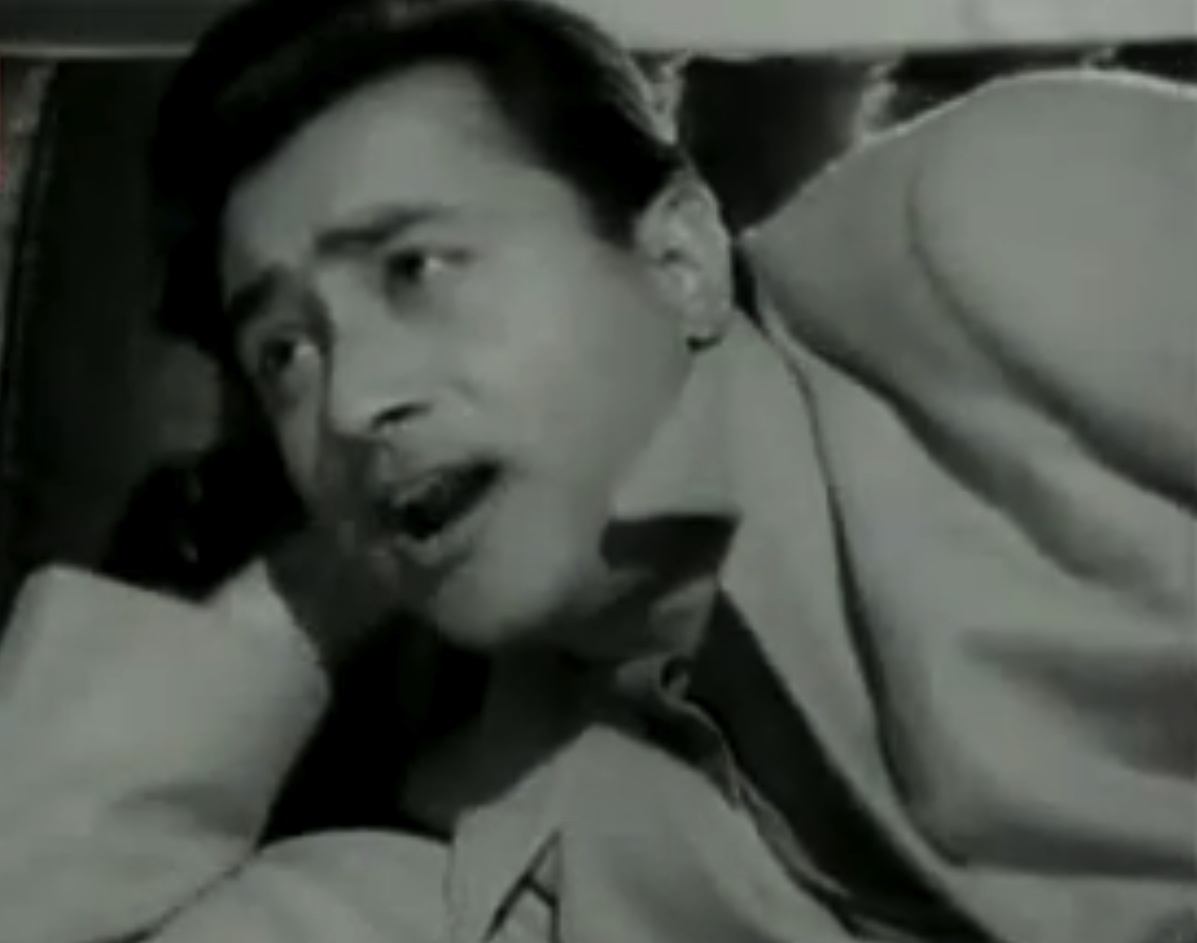
Dev Anand croons “Hai Apna Dil To Awara” aboard a moving train in Solva Saal (1958).

You gotta love this song. Hemant Kumar, whose forte is usually deep soulful melodies, outshines everyone in this catchy classic. Dev Anand stars with the lovely Waheeda Rehman in 1958 quasi-noir Solva Saal, mostly memorable for this all-time hit “Hai Apna Dil To Awara” picturized on a train. What is it about Dev Anand and trains? “Jab Pyaar Kisi Se Hota Hai” is also sung on a moving train to a sulky heroine, although by that point, Dev had perfected the look and ventured outside the train’s window! But that’s another story.

Directed by the legendary Raj Khosla, the shining moments of Solva Saal are clearly the fruits of a brilliant collaboration. While somewhat obscure, the film delivers a high-paced plot with enough twists to keep you glued, but enough groans to make you want to immediately watch a more redeeming Dev-Waheeda film soon after (I strongly recommend Guide).
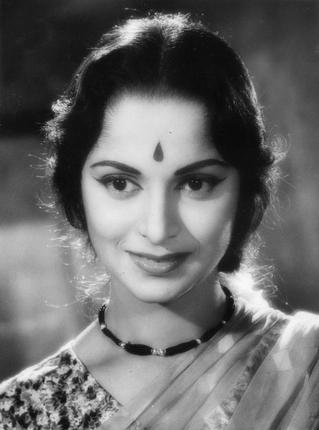
Drop-dead beautiful Waheeda Rehman plays a risk-taking jilted lover in Solva Saal (1958). Seriously, Waheeda. Stop being so gorgeous!!

The lyrics of this song, penned by Urdu maestro Majrooh Sultanpuri, are just plain and simple fun. In it, the hero personifies his own heart, speaking as if it were another being with a mind and will separate from his own. It’s so clear that Waheeda is having trouble keeping her mind on the awkward guy next to her she’s supposed to be eloping with!

For anyone more in the mood for melodrama, there’s also a “sad” version of this song just before the hero and heroine sort out their differences and live happily ever after. Until then, follow along with the youtube song of the happier classic, and enjoy our lyrics and translation to “Hai Apna Dil To Awara below!


Hai Apna Dil To Awara Lyrics and Translation

Hai apnaa dil to aawaaraa
My heart is a vagabond
Na jaane kis pe aayegaa
I wonder to whom he will take a liking

Haseeno.N ne bulaayaa, gale se bhii lagaayaa
Many beautiful women called me, they even embraced me
Bahut samjhayaa, yahii.N na samajhaa
They tried hard to explain, but my heart did not understand
Bahut bholaa hai bechaaraa
The poor thing is way too innocent
Na jaane kis pe aayegaa
I wonder to whom he will take a liking

Ajab hai diiwaanaa, na ghar na Thiikaanaa
My heart is a strange madman, he has no house and no abode
Zameen se begaanaa, falak se judaa
He has no roots with the Earth, he is distanced from Heaven
Yeh ek tuutaa huaa taaraa
He is a shooting star
Na jaane kis pe aayegaa
I wonder upon whom he will fall

Zamaanaa dekhaa saaraa, hai sab kaa sahaaraa
I have seen this whole world, I have everyone’s support
Yeh dil hii humaaraa, huaa na kisii kaa
Only this heart of mine never gave himself to anyone
Safar mei.N hai yeh banjaaraa
He is a gypsy on a journey
Na jaane kis pe aayegaa
I wonder to whom he will take a liking

Hua jo kabhii raazii, to milaa nahii.N qaazii
If he ever agreed to someone, no pandit could be found
Jahaa.N pe lagii baazii, wohii.N pe haaraa
Wherever he has taken a gamble, he lost
Zamaane bhar kaa naakaaraa
He is rejected by the whole world
Na jaane kis pe aayegaa
I wonder to whom he will take a liking

Glossary:

awaaraa: vagabond; bhola: innocent, pure; bechaaraa: poor thing; ajab: odd; diiwaanaa: madman (from love), ghar: house, Thikaanaa: abode, shelter; zameen: Earth; begaanaa: distanced, estranged; falak: sky, Heaven; tuutaa hua taaraa: a fallen star; sahaaraa: support; safar: journey; banjaaaraa: gypsy, nomads of North Indian origin; raazi: agreement, qaazi: a judge who in Islamic faith can legalize a marriage as witness; baazi: a gamble, a round of cards, haaraa: lose; naakaaraa: rejected

A brief note on the word “vagabond.” The somewhat arcane term is inevitably used across many sources to translate the Hindi word aawaara dating back to Raj Kapoor’s breakthrough film of the same name-so for posterity’s sake, I have translated it similarly. Still, I have never held that the word does justice to what aawaaraa is. Just to clarify, someone who is an aawaaraa is not necessarily a vagrant with all the connotations that come with the English usage—i.e. homeless, unemployed, etc. Aawaaraa, especially as it is commonly used poetically in Hindi films, is someone carefree, independently wandering and unwilling to be tied down. It’s a subtle, but pretty important distinction. I’m glad we’re all on the same page on this.
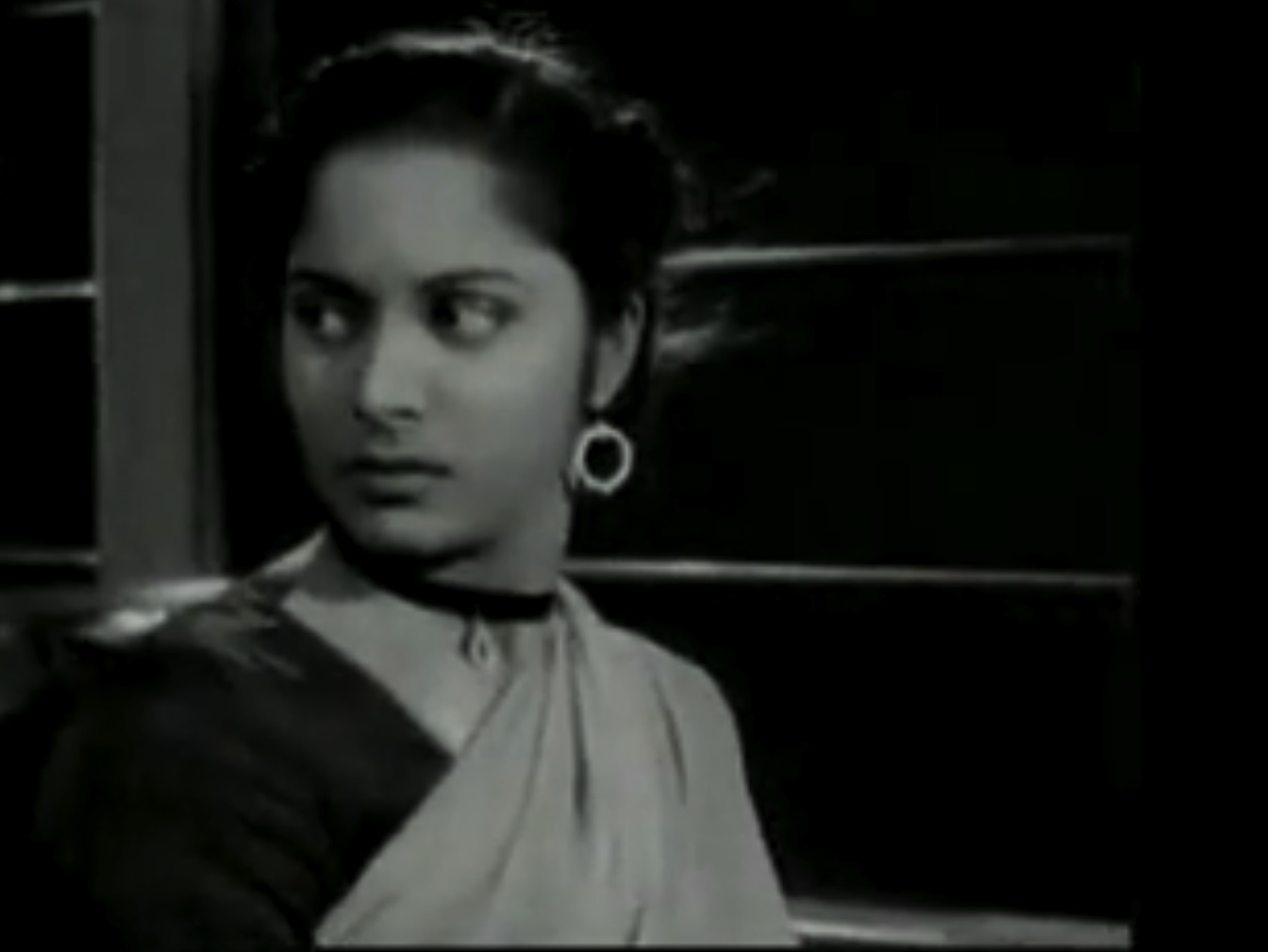
Waheeda Rehman pretends to be annoyed by Dev Anand’s playful song. Don’t be a such a party-pooper!

More importantly, does anyone else question the slightly awkward cheering and whoops that occur to punctuate this otherwise straightforward song? Listen carefully right during the interlude music just before the last stanza. I mean, can you imagine being a chamcha in S.D. Burman’s brainstorming session when someone decided this was a great idea? And furthermore, I don’t think that the voice is Hemant’s or Dev Anand’s doing the whooping. That means some random chamcha had to come in to the recording studio, put on the headphones, stand in front of an isolated mic, and make these wild sounds that S.D. Burman mixed lovingly into the track.

CHAMCHA: How was that, Boss?

BURMAN: Almost, almost. Right there, where it sounds like you’re having an esophageal hernia. Give me a little more of that kind of enthusiasm.

CHAMCHA: [whoops brains out]

BURMAN: Brilliant! That is precisely the touch that this composition needed. Aloo tikkis are on me tonight!

The whole thing just strikes me as trippy. Of course, we know R.D. Burman took those spastic noises to new heights in the decades following, so I guess we now know where it came from!

– Mrs. 55

Phool Ahista Phenko Lyrics and Translation: Let’s Learn Urdu-Hindi

Mumtaz is at her sassy finest on screen during this blazing duet from Prem Kahani (1975)

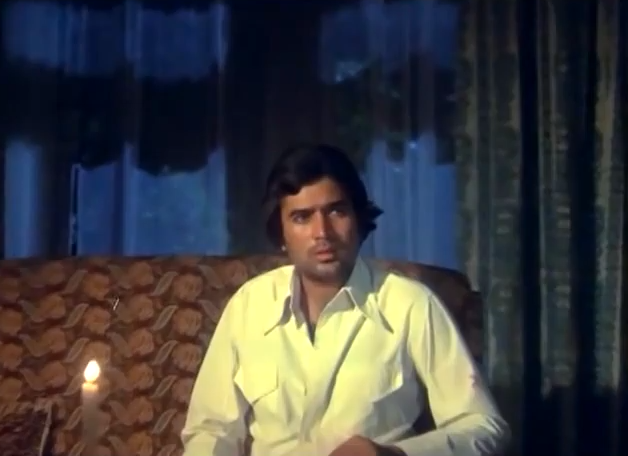
Our next translation comes from Prem Kahani (1975), a hit film set during the peak of India’s struggle for freedom from British rule that stars Mumtaz, Rajesh Khanna, and Shashi Kapoor in  another take on the archetypal Bollywood love triangle. Rajesh Khanna plays the role of an apolitical poet with aspirations of teaching literature who becomes involved in a revolutionary freedom fighter movement to avenge his brother’s murder during a peace protest. He engages in a passionate romance with Mumtaz; however, when she boldly asks to marry him, he turns her down. The reason? Knowing the risks that he will face as a revolutionary, he does not want Mumtaz to be subjected to the cruelties of becoming widowed. Deeply hurt by this rejection,  Mumtaz agrees to marry the man of her father’s choosing. In the mean time, Rajesh kills his brother’s murderer and becomes a fugitive highly sought after by the police. One day, while visiting his sister-in-law’s house, he is shot by police who arrive to search the premises. In order to recover from his wound, Rajesh flees to seek refuge at his best friend Shashi Kapoor’s place. When Rajesh arrives, he finds that it is the day of Shashi’s wedding! Rajesh meets the new bride, and — you guessed it — it is none other than Mumtaz.

In this context, the meaning of the lyrics in “phuul aahistaa phe.nko” come truly alive. The tension at home between Mumtaz and Rajesh Khanna is painfully palpable, and in the midst of this mess, the clueless Shashi calls for the start of an informal mushaira (poetry recital).  If you’re interested in the poetry preceding this song, you can listen to the back-and-forth of the witty retorts between Rajesh and Mumtaz at this link here.  The poetry leads seamlessly into the introduction of this memorable Lata-Mukesh duet, which was composed by Laxmikant-Pyarelal and penned by Anand Bakshi. This gem is a perfect example of how songs in Bollywood films can be used  to express emotions that cannot be described as gracefully with dialogue alone.

Through these lyrics, Rajesh takes the opportunity to express his sorrow for letting Mumtaz go and playing with her heart. Mumtaz, with some sassy lines of her own, chides Rajesh for the way that he treated her. In order to fully understand these lyrics, it is important note that the thematic message of this song revolves around a key metaphor: the roses discussed here represent womankind. Like flowers, Indian women must grapple with a delicate and fragile fate as they endure the pain inflicted by the thorns of society’s constraining norms.  Thus, when Rajesh claims in the mukhDaa that roses must be plucked gently (phuul aahistaa phe.nko, phuul baDe naazuk hote hai.n), Mumtaz sarcastically questions the sincerity of his politesse during her antara (baDii khuubsuurat shikaayat hai yah, magar sochiye kyaa sharafat hai yah?). In her heart, she wishes Rajesh had not been overly concerned with her well-being so that their marriage could have occurred (in spite of her prospects of becoming widowed).  By channeling her emotions into anger, Mumtaz now hopes that the same kind of pain will ultimately afflict Rajesh so that he can understand the heartbreak she was forced to endure because of his decisions (jo rulaate hai.n logo.n ko ek din khud bhii rote hai.n).

As you can tell, this song is power-packed with emotional intensity and some beautifully crafted poetry–I highly recommend a listen if you have not received the opportunity to hear it yet. Follow along with our translation and glossary below, and as always, remember to send in your requests to themrandmrs55@gmail.com!

–Mr.55

Rajesh Khanna recites poetry that expresses deep regret for letting his beloved Mumtaz slip away in Prem Kahani (1975)

Phool Ahista Phenko: Lyrics and Translation

kahaa aap kaa yah bajaa hii sahii
What you have said is entirely correct: 
ki ham beqadar, bevafaa hii sahii
I am insensitive and unfaithful. 
bade shauq se jaaiye chhoD kar
With pleasure, you may leave me and go away.
magar sahan-e-gulshan se yuu.n toD kar
But, from the rose garden,

phuul aahistaa phe.nko, phuul baDe naazuk hote hai.n
Gently pluck the roses, for they are very delicate. 
vaise bhii to ye badqismatnok pe kaa.nto.n kii sote hai.n
Indeed, these ill-fated flowers must reside on the tips of thorns.

baDii khuubsuurat shikaayat hai yah
You have expressed quite a lovely grievance,
magar sochiye, kyaa sharaafat hai yah?
but please consider whether it is mere politesse.
jo auro.n kaa dil toDte rahte hai.n
Those who continue to break others’ hearts 
lage choT unko to yah kahte hai.n ki
say this when they become hurt themselves: 
phuul aahistaa phe.nko, phuul baDe naazuk hote hai.n
Gently pluck the roses, for they are very delicate. 
jo rulaate hai.n logo.n ko ek din khud bhii rote hai.n
Those who make others cry shed their own tears one day.

kisii shauk ko baagh kii sair me.n
During a stroll in the garden,
jo lag jaaye kaa.nTaa koii pair me.n
when a thorn pierces your foot,
khafaa husn phuulo.n se ho kis liye?
why do you become angry with the roses, oh beautiful one?
ye maasuum hai.n, bekhataa is liye
They are innocent and faultless.
phuul aahistaa phe.nko, phuul baDe naazuk hote hai.n
Gently pluck the roses, for they are delicate.
ye kare.nge kaise ghaayal? ye to khud ghaayal hote hai.n 

How can they hurt others? They are wounded themselves.

gulo.n ke baDe aap hamdard hai.n
You are quite sympathetic to the beauty of these roses.
bhalaa kyo.n na ho? aap bhii mard hai.n
And why not? You are also a man!
hazaaro.n savaalo.n kaa hai ek javaab
A thousand questions have this one answer.
fareb-e-nazar yah na ho, ai janaab
My dear, don’t let your eyes deceive you.
phuul aahistaa phe.nko, phuul baDe naazuk hote hai.n

Gently pluck the roses, for they are delicate.
sab jise kahte hai.n shabnam, phuul ke aa.nsuu hote hai.n
What people call dew drops are, in fact, the tears shed by roses

*Female lines sung by Lata Mangeshkar are denoted in red. Male lines sung by Mukesh are denoted in black.

Glossary

bajaa: correct; beqadar: insensitive; bevafaa: unfaithful; shauq se: with pleasure; sahan: courtyard; gulshan: rose garden; phe.nknaa: to pluck, throw; aahistaa: slowly, gently; naazuk: delicate; badqismat: ill-fated; nok: tip; shikaayat; grievance; sharaafat: politesse, decency; choT: injury, wound; shauk: thorn; baagh: garden; sair: promenade, stroll; khafaa: angry; maasuum: innocent; bekhataa: faultless; gul: rose; hamdard: sympathetic; fareb-e-nazar: delusion of sight; shabnam: dew drops.  

The handsome yet clueless Shashi Kapoor is unaware of the tumultuous history between his wife Mumtaz and best friend Rajesh Khanna in Prem Kahani (1975). 

Pal Bhar Ke Liye Koi Lyrics and Translation: Let’s Learn Urdu-Hindi

Dev Anand gazes longingly at Hema Malini through the kitsch 1970s windows of her living room in Johnny Mera Naam.

Next we present the lyrics and full English translation to “Pal Bhar Ke Liye Koi,” a timelessly catchy Dev Anand jingle from the 1970 blockbuster Johnny Mera Naam. The film became the highest grossing film of Bollywood in the 1970s, and the soundtrack rose with it to glory bringing hits like this playful Kishore solo, the duet “O Mere Raja,” and Lata’s “O Babul Pyaare.” Johnny Mera Naam is an action-thriller-mystery with a splash of glamour by the gorgeous Hema Malini and a touch of class from Pran. Those were the golden days when the name “Johnny” in Bollywood implied the height of suavity, second perhaps only to the villainous sophistication of “Robert!” While the film’s storyline does not quite match up to the genius and spectacle of his earlier films of a similar genre like Jewel Thief (1967), Johnny Mera Naam delivers good clean fun for the whole family.

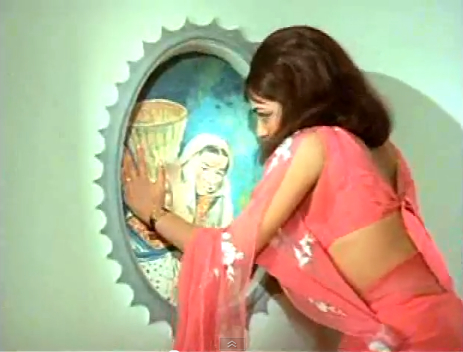
“Pal Bhar Ke Liye Koi” is one of the all-time cutest songs picturized on screen. Besides the fact that Hema Malini probably wears a saari better than any actress of yesteryear, I love the set design. Hema Malini has to literally shut every single window and blind in the house to keep Dev Anand from singing to her from outside, and the designer was forced to get really creative! I love the painting that’s actually a hidden window and the the strangle holed wall that Dev Anand uses as handcuff props. It’s adorable how he tries to woo her throughout the song, begging her to just pretend to love him–and then the clever zinger of an ending where he throws it back in her face! It’s also one of the last Dev Anand films where I feel like he is still pulling off acting the hero and flirting with younger women. As much as we love him, we wish he had not acted in too many films past this…but that’s another story.

Hema Malini cleverly disguises a window with a traditional oil painting in the wacky fun house of the Johnny Mera Naam (1970) sets.

Below enjoy our English translation of this ever-popular Kishore Kumar song. Did you know that this song was even featured at the end of a Simpsons episode in 2006 entitled, “Kiss Kiss Bangalore”? You’re killing me, people.

Pal Bhar Ke Liye Koi Lyrics and Translation

Pal bhar ke liye koii hume.N pyaar kar le
Let somebody give me momentary love
JhuTa hii sahii
Even if it is false
Do din ke liye koii iqraar kar le
Somebody say yes for a couple of days
JhuTa hii sahii
Even if it is false
Pal bhar ke liye koii hume.N pyaar kar le
Let somebody give me momentary love
JhuTa hii sahii
Even if it is false

Hum ne bahut tujhko chhup chhupke dekhaa
I have often viewed you secretively
Dil pe khiichii hai tere kaajal kii rekhaa
The darkness of your eyeliner is etched on my heart
Kajal kii rekhaa banii Lakshman kii rekhaa
That line has become a line of control now
Ram mei.N kyuu.N tuu ne Raavan ko dekhaa?
Why did you mistake Ram for Raavan?
KhaDe khiDkii pe jogii, swiikar kar le
At your window stands a Yogi, accept him
JhuTa hii sahii
Even if your acceptance is a lie
Pal bhar ke liye koii hume.N pyaar kar le
Let somebody give me momentary love
JhuTa hii sahii
Even if it is false

Hiire se jaDe tere nain baDe
Your big eyes were embedded with diamonds,
Jis din se laDe tere Dar pe paDe
The day our eyes made contact, I was floored,
Sun sun kar terii “nahii.N nahii.N”
Listening to your constant no’s,
Jaa.N apnii nikal jaaye.N na kahii.N
My life may slip away
Zaraa haa.N keh de, merii jaa.N, keh de
Just say yes, my love, say it
Merii jaa.N keh de, zaraa haa.N keh de
Call me “my love,” just say yes
Jab rain paDe ,nahii.N chain paDe
When night falls I have no peace
Nahii.N chain paDe jab rain paDe
I have no peace when night falls

Maanaa tu saare hasiino.N se hasii.N hai
I agree you are the prettiest of the pretty
Apnii bhii surat burii to nahii.N hai
But my face isn’t too bad either
Kabhii tu bhii humaaraa diidaar kar le
Why don’t you sometimes take a look at me?
JhuTaa hii sahii
Even if you are faking
Pal bhar ke liye koii hume.N pyaar kar le
Let somebody give me momentary love
JhuTa hii sahii
Even if it is false

Pal bhar ke pyaar pe nisaar saare jeevan
For a moment of your love, I would sacrifice my entire life
Hum woh nahii.N jo choD de teraa daaman
I am not someone who would leave your embrace
Apne honto.N kii ha.Nsii hum tujhko de.Nge
I will give you the laughter from my lips
Aa.Nsoo tere apni aa.Nkho.N mei.N le.Nge
And I will take the tears from your eyes
Tuu humaari wafaa kaa ek baar kar le
Believe in me just once
JhuTa hii sahii
Even if I’m just lying!

Pal bhar ke liye koii hume.N pyaar kar le
Let somebody give me momentary love
JhuTa hii sahii
Even if it is false

Glossary

jhuuTaa: untrue; iqraar: acceptance; chhup chhupke: secretively; kaajal: eyeliner; Lakshman ki rekha: the circle of protection and control drawn by Lakshman for Sita in the Ramayana; Raavan: the villain of the Ramayana into whose hands Sita temporarily fell (until Raam saved the day once more); khiDkii: window; jogii: yogi; swiikar karna: to accept; hiire: diamonds nain: eyes; Dar: doorstep; jaa.N: life; rain: night; chain: peace of mind; maanaa: agree; hasiino.N se hasii.N: the most beautiful of the beautiful; suurat: face; diidaar: glimpse; nisaar: sacrifice; damaan: embrace; ho.Nto.N: lips; ha.Nsii: laughter; aa.Nsuu: tears; wafaa: faith, belief

Note that I’ve translated “JhuuTaa hii sahii” in many slightly different ways throughout the song’s translation, to match the meaning in each stanzas particular context. But he’s basically always just saying if it’s a lie, that works too.

Hema Malini stops lying to herself and joyfully sings along to Dev Anand’s catchy “Pal Bhar Ke Liye” from Johnny Mera Naam (1970).

My favorite line from the song is from the final antra is: “Pal bhar ke pyaar pe nisaar saaraa jeevan.” Nisaar is such a fabulous Urdu vocabulary word that works so poetically right here before the word saaraa. Unfortunately, this stanza is often missing from most recordings that people have of the song (see our post on songs with hidden stanzas for more!) And without this final stanza in which initially Kishore’s voice becomes the most sweet and sincere of the whole film, you miss the whole surprise ending where Dev Anand shows that he can be just as sassy! Such a shame.

This song request came from one of our absolute favorite readers Bhuvesh! Always, if you have a request for a translation or post, be sure to send us a message!

-Mrs. 55

Plagiarism in Hindi Film Music: Is Imitation the Most Sincere Form of Flattery?

Music directors in the Bollywood industry today are often accused of plagiarizing songs without giving proper credit to the original sources. Pritam Chakraborty, in particular, comes to mind as a composer who has been subjected to such accusations in recent times. Yet, lifting tunes is not a new trend in the industry: its origins can be  traced back to the industry’s earliest days when music directors of the Golden Era composed melodies heavily inspired by unattributed sources. Below, let’s take a listen to some plagiarized works composed by five of the greatest music directors of yesteryear: R.D. Burman, S.D. Burman, Shankar-Jaikishan, Salil Chowdhury, and O.P. Nayyar.

 R.D. Burman

Among the music directors of his time, R.D. Burman was perhaps the most notorious for composing inspired tunes.  Within the list that I’ve provided below, the magnitude of plagiarism varies from song to song. Some numbers below are direct lifts from their originals, such as the cult classic “mahbuubaa mahbuubaa” from Sholay (1975). Others represent more subtle variations of plagiarism: for instance,  the Kishore Kumar classic “dilbar mere kab tak mujhe” only takes it mukhDaa from “Zigeunerjunge” but has original antaras and interludes.  As a musician, I personally feel that the latter form of lifting is somewhat justifiable because it still reflects a level of creativity and originality on the part of the composer. The direct copying of tunes, however, raises ethical concerns and may have even placed music directors like R.D. Burman in legal trouble had such songs been released today.  Regardless of your opinion on this issue, what is universally striking about the list of songs below is the diversity of sources from which R.D. Burman drew his inspiration.  Collectively, the original melodies come from a smorgasbord of musical genres from all over the world: traditional folk, American pop, Greek, German, French, and even Iranian rock!

aao twist kare.n (Bhoot Bangla, 1965)  / “Let’s Twist Again” (Chubby Checker, 1962)
churaa liyaa hai tum ne  (Yaadon Ki Baraat,  1973) / “If It’s Tuesday, This Must Be Belgium” (Bojoura, 1969)
teraa mujhse hai pahle kaa naataa koii  (Aa Gale Lag Ja, 1973)/ “The Yellow Rose of Texas” (Traditional)
mahbuubaa, mahbuubaa (Sholay, 1975) / “Say You Love Me” (Demis Roussos, 1974)
mil gayaa ham ko saathii (Hum Kisi Se Kum Nahin, 1977) / “Mamma Mia” (ABBA, 1975)
jahaa.n terii yah nazar hai (Kaalia, 1981) / “Heleh Maali” (Zia Atabi, 1977)
kaisaa teraa pyaar (Love Story, 1981) / “I Have A Dream” (ABBA, 1979)
dilbar mere kab tak mujhe (Satta Pe Satta, 1982) / “Zigeunerjunge” (Alexandra, 1967)
kahii.n na jaa  (Bade Dilwala, 1983) / “La Vie En Rose” (Edith Piaf, 1955)
tum se milke  (Parinda, 1989) / “When I Need You” (Leo Sayer, 1977)

Zeenat Aman sizzles in “churaa liyaa tum ne” from Yaadon Ki Baraat (1973)

S.D. Burman

Like his son, S.D. Burman has also composed melodies that reflect marked inspiration from foreign sources.  Although we have already investigated the influence of Tagore’s music on S.D. Burman in a previous post, we now observe how his compositions also were inspired by non-Indian genres.  For a composer who was rather traditional in his musical output, who would have imagined that he lifted material from Mexican, Italian, and American country melodies?

chaahe koi khush ho (Taxi Driver, 1954) / “Tarantella” (Traditional)
jiivan ke safar me.n raahii
 
(Munimji, 1955) / “Mexican Hat Dance” (Traditional)
ek laDkii bhiigii bhaagii sii (Chalti Ka Naam Gaadi, 1958) / “Sixteen Tons” (Tennessee Ernie Ford, 1955)
ham the vah thii (Chalti Ka Naam Gaadi, 1958) / “Watermelon Song” (Tennessee Ernie Ford, 1957)
yah dil na hotaa bechaaraa (Jewel Thief, 1967) / “March” (Bridge on the River Kwai, 1957)
saalaa mai.n to sahab ban gayaa (Sagina, 1974) / “Chella Lla” (Renato Carosone, 1959)

The ever-versatile Kishore Kumar stars in a comic role in Chalti Ka Naam Gaadi (1955)

Shankar-Jaikishan

In my opinion, Shankar-Jakishan were the quintessential music directors of Bollywood’s Golden Age. They combined the authenticity of traditional Indian music with the modern sophistication of Western influences to produce songs that appealed to the masses. It’s not surprising that some of their tunes reflect inspiration from foreign influences, but what is remarkable is that several of the songs listed below are remembered today as some of this duo’s most treasured gems.  Two songs from Chori Chori (1956), two songs from Gumnaam (1965), and the title track of Jab Pyar Kisi Se Hota Hai (1961) — among many other hits — were heavily inspired by existing Western numbers. I think you’ll be surprised to see some of your favorites on the list below…

ghar aayaa meraa pardesii (Awaara, 1952) / “Al Balad El Mahboub” (Umm Kulthum)
aajaa sanam madhur chaa.ndnii me.n ham (Chori Chori, 1956) / “Tarantella” (Traditional)
panchii banuu.n uDtii phiruu.n (Chori Chori, 1956) / “Coming Through The Rye” (Traditional)
aigo aigo yah kyaa ho gayaa?
(Boyfriend, 1961) / Stupid Cupid” (Connie Francis, 1958)
jiyaa ho jiyaa kuchh bol do  (Jab Pyar Kisi Se Hota Hai, 1961) / “Broken-Hearted Melody” (Sarah Vaughan, 1959)
sukuu sukuu (Junglee, 1961) / “Sucu Sucu” (Ping Ping, 1961)
dekho ab to kis ko nahii.n hai khabar (Janwar, 1964) / “I Want To Hold Your Hand” (The Beatles, 1963 )
gumnaam hai koii (Gumnaam, 1965) / “Charade” (Henry Mancini and Orchestra, 1963)
jaane chaman sholaa badan (Gumnaam, 1965) / “Autumn Leaves” (Nat King Cole, 1956)
le jaa le jaa meraa dil (An Evening in Paris, 1967) / “Man of Mystery” (The Shadows, 1960)
kaun hai jo sapno.n me.n aayaa? (Jhuk Gaya Aasman, 1968) / “Marguerita” (Elvis Presley, 1963)

Rajendra Kumar definitely breaks conventions of automobile safety during the picturization of “kaun hai jo sapno.n me.n aayaa?” from Jhuk Gaya Aasman (1968).

Salil Chowdhury

Salil Chowdhury’s compositions always reflect an intelligent and sophisticated mastery of music that set him apart from his peers in the industry.  Instead of describing the songs listed here as cases of plagiarism, I would be more likely to categorize them as adaptations. When Salil Chowdhury used another Western melody as an inspiration, he always managed to make it his own by adding something special that would resonate with Indian audiences. Take, for example, the evergreen Talat-Lata duet “itnaa mujhse tu pyaar baDhaa.” Although the mukhDaa is clearly inspired by Mozart’s Jupiter Symphony, Salil composes new antaras that beautifully complement the original melody.  As another example, consider “bachpan o bachpan” from Memdidi (1961).  Inspired by the children’s rhyme “A Tisket, A Tasket,” Salil takes the melody to a new level of complexity by inserting operatic interludes sung by our beloved diva Lata Mangeshkar.  Bravo!

dharti kahe pukaar ke (Do Bigha Zameen, 1953) / “Meadowlands” (Lev Knipper, 1934)
halke halke chalo saa.nvare (Tangewaali, 1955) / “The Wedding Samba” (Edmund Ros and Orchestra,  1950)
dil taDap taDap ke (Madhumati, 1957) / “Szla Dziewczka” (Traditional)
zindagii hai kyaa, sun merii jaan  (Maya, 1961) / “Theme from Limelight [from 3:27] ” (Charlie Chaplin, 1952)
itnaa na mujhse tu pyaar baDhaa (Chhaya, 1961) / “Molto allegro” from Symphony No. 40 (Wolfgang Amadeus Mozart, 1788)
bachpan o bachpan (Memdidi, 1961) / A Tisket, A Tasket” (Traditional)
aa.nkho.n me.n tum ho (Half-Ticket, 1962) / “Buttons and Bows” (Dinah Shore, 1948)

Vijayantimala coyly hides behind a tree in the picturization of “dil taDap taDap ke” from Madhumati (1957)

O.P. Nayyar

O.P. Nayyar is known for his characteristically Western-inspired approach to crafting melodies for Hindi films, but his contribution to our list of directly plagiarized songs is relatively small in comparison to some of his peers in the industry. The most well-known example here is, of course,  the Rafi-Geeta duet “yah hai bambaaii merii jaa.n” which has been lifted from its predecessor “My Darling Clementine.”

baabuujii dhiire chalnaa (Aar Paar, 1954) / “Quizas, Quizas, Quizas(Trio Los Panchos, 1947)
yah hai bambaii merii jaa.n (C.I.D., 1955) / “My Darling Clementine” (Traditional)
lakho.n hai.n yahaa.n dilvaale (Kismat, 1968) / Red River Valley” (Traditional)

Biswajeet hams it up for Babita during the picturization of “lakho.n hai.n yahaa.n dilvaale” in Kismat (1968)

What is your opinion on plagiarism in Hindi film music? Was it acceptable for music directors of this time to lift material from Western sources in order to introduce musical diversity to Indian audiences? Or, is it unethical for such plagiarism to occur without giving credit to the original musicians who created the songs in the first place? Let us know in the comments, and feel free to share any examples that go along the theme of this post!

-Mr. 55

How to Play the Awkward Miffed Lover

It happens to everyone at some point. We all hate this situation. You land the girl of your dreams, you take her to a fancy dinner party, and just when everything is going your way, her ex-lover crashes the scene. With the heavenly voice of a playback singer, the new contender bursts into dramatic song, calling out his passion with your girl in front of EVERYONE.

Plus, the more the song goes on, the more you realize you’re trapped–any interruption would only backfire. And on top of it, your girl is getting embarrassingly emotional.

So what to do? It’s clear everyone in the audience is just cheering for those two to reunite, leaving YOU with the ugly villain label. The rules of the game prevent you from simply cutting the song off short—you have no option but to helplessly be made a fool. It’s such an unfair tactic, and heroes of Bollywood films LOVE to use it.

In times like these, we reflect on the inspiring behavior of greater men. They too were placed in these compromising and uncomfortable situations. Each one had their own style, their own method of handling the filmi fire life dealt them.

As I see it, you have five main options to choose from. Let us examine their protocols below.

The Vinod Khanna: Get Angry

During the beautiful love ode “Koi Nazarana Lekar” from Aan Milo Sajna (1970), Vinod Khanna shoots daggers from his eyes at the shameless flirt Rajesh Khanna.

Option 1. Get angry. It’s bad enough that you showed up to this event in a lime green tuxedo. Complete the look and let your face turn pea green with envy. Who cares who judges you? Be a party-pooper and scowl your way through the song, sucking the joy out of everyone else’s fun.

The Rehman: Blush

Ugh. Nothing worse than having your own crimes turned into public poetry. Although it’s a black-and-white film, you can see Rehman turn a hot pink during Guru Dutt’s classic lament “Jaane Woh Kaise” from Pyaasa (1957).

Option 2. Blush. You’re guilty and there’s no hiding it. Don’t make eye contact with anyone! Instead, mentally review the cquestionable ethical decisions you took along the path that led you to this debacle. You will realize what a jerk you’ve been, and although you have to stay the course, colour will rise to your cheeks.

The Raj Kapoor: Play it off as a joke

Always a goofball, Raj Kapoor attempts valiantly to make light of the humiliating situation wrought by Dilip Kumar singing “Jhoom Jhoom Ke” from Andaz (1949).

Option 3. Play it off as a joke. You’re at a dinner party, after all and this is no time to aggravate the situation. Keep that bow-tie straight and act casual. With enough non-chalance, maybe the party-goers will think it’s only a bit of fun among friends?

The Rishi Kapoor: Give up

Horror and resignation overwhelm Rishi Kapoor’s face during Tariq’s performance of “Kya Hua Tera Wada” from Hum Kisise Kam Nahin (1979)

Option 4. Give up. Just give up. How could you have not known of this beautiful subverted love story earlier? This is entirely your fault. You’re overwhelmed with moral guilt and regret–do the righteous thing and withdraw your nomination from the ballet entirely. In this way, you can quickly drop the villain label and return to your proper place as hero!

The Pran: Enjoy the show

Pran doesn’t ruffle a feather during Shammi Kapoor’s heartfelt and passionate “Dil Ke Jharoke” from Brahmachari (1968). But hey, when you’re as devastatingly sophisticated as Pran, you wouldn’t have time for these amateurs either.

Option 5. Enjoy the show. After all, who’s worried? This other guy has nothing on you, you suave gift to womankind.  Keep the entertainment coming! Oh, I’m sorry, honey, are you crying? Here, take my silk handkerchief. You might need it.

So the next time you hear the tinkerings of a tragic song start on the piano behind you, don’t panic. There is a way out! Just pick an approach from the textbook of Hindi films. If classic Bollywood has taught us anything about these moments, it’s that they can and will happen all the time. Tell us whose approach YOU prefer!

-Mrs. 55