Hai Apna Dil To Awaara Lyrics and Translation: Let’s Learn Urdu-Hindi

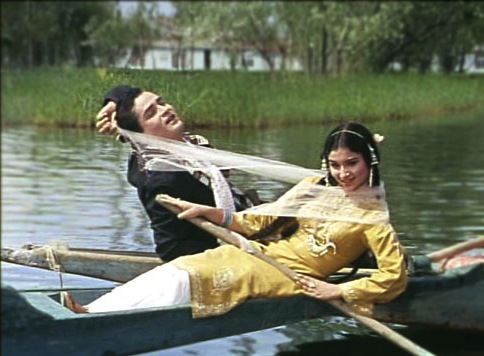
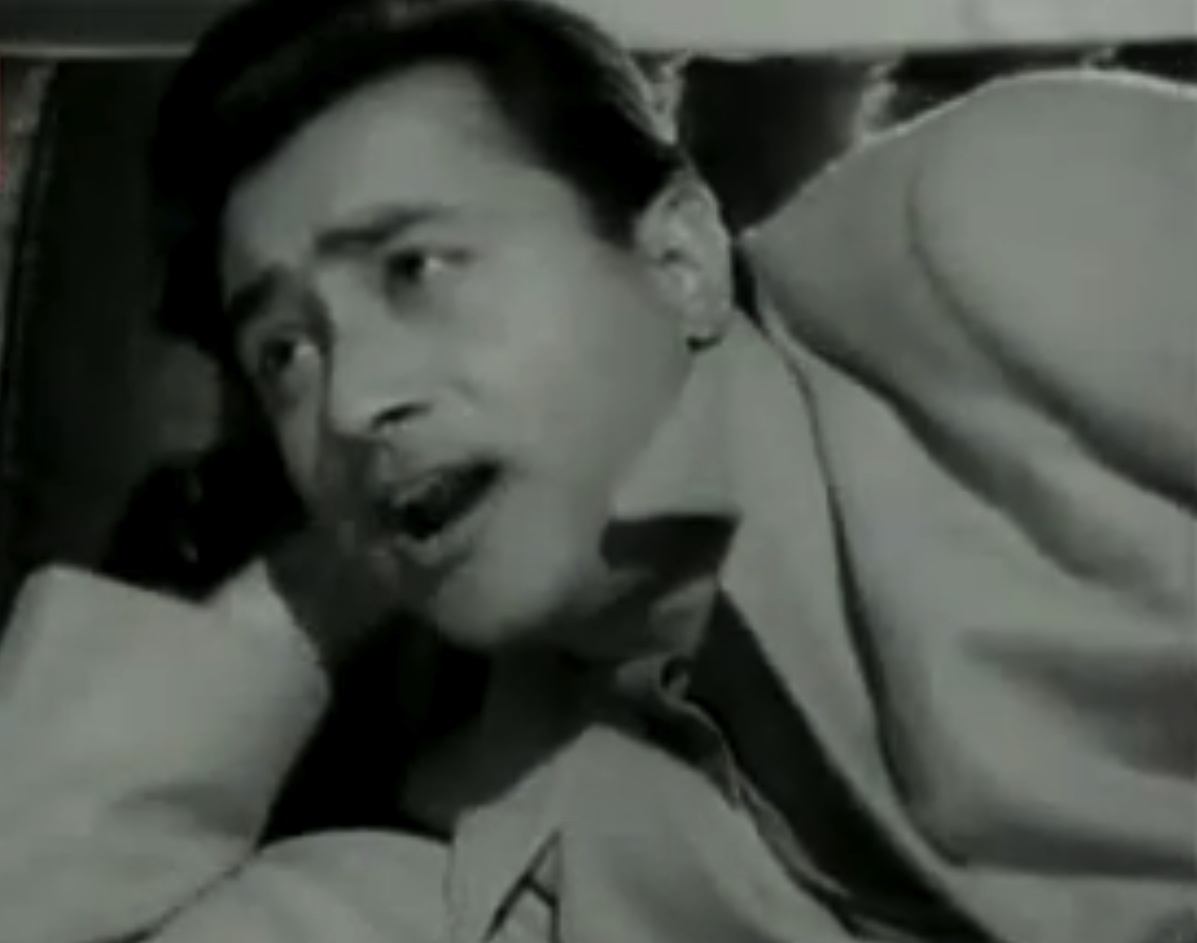
Dev Anand croons “Hai Apna Dil To Awara” aboard a moving train in Solva Saal (1958).

You gotta love this song. Hemant Kumar, whose forte is usually deep soulful melodies, outshines everyone in this catchy classic. Dev Anand stars with the lovely Waheeda Rehman in 1958 quasi-noir Solva Saal, mostly memorable for this all-time hit “Hai Apna Dil To Awara” picturized on a train. What is it about Dev Anand and trains? “Jab Pyaar Kisi Se Hota Hai” is also sung on a moving train to a sulky heroine, although by that point, Dev had perfected the look and ventured outside the train’s window! But that’s another story.

Directed by the legendary Raj Khosla, the shining moments of Solva Saal are clearly the fruits of a brilliant collaboration. While somewhat obscure, the film delivers a high-paced plot with enough twists to keep you glued, but enough groans to make you want to immediately watch a more redeeming Dev-Waheeda film soon after (I strongly recommend Guide).
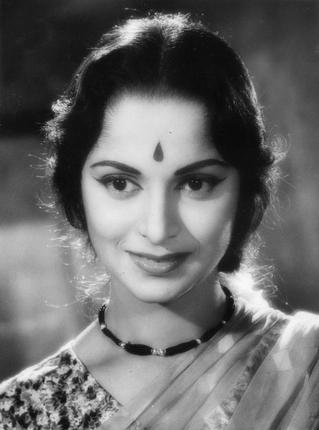
Drop-dead beautiful Waheeda Rehman plays a risk-taking jilted lover in Solva Saal (1958). Seriously, Waheeda. Stop being so gorgeous!!

The lyrics of this song, penned by Urdu maestro Majrooh Sultanpuri, are just plain and simple fun. In it, the hero personifies his own heart, speaking as if it were another being with a mind and will separate from his own. It’s so clear that Waheeda is having trouble keeping her mind on the awkward guy next to her she’s supposed to be eloping with!

For anyone more in the mood for melodrama, there’s also a “sad” version of this song just before the hero and heroine sort out their differences and live happily ever after. Until then, follow along with the youtube song of the happier classic, and enjoy our lyrics and translation to “Hai Apna Dil To Awara below!


Hai Apna Dil To Awara Lyrics and Translation

Hai apnaa dil to aawaaraa
My heart is a vagabond
Na jaane kis pe aayegaa
I wonder to whom he will take a liking

Haseeno.N ne bulaayaa, gale se bhii lagaayaa
Many beautiful women called me, they even embraced me
Bahut samjhayaa, yahii.N na samajhaa
They tried hard to explain, but my heart did not understand
Bahut bholaa hai bechaaraa
The poor thing is way too innocent
Na jaane kis pe aayegaa
I wonder to whom he will take a liking

Ajab hai diiwaanaa, na ghar na Thiikaanaa
My heart is a strange madman, he has no house and no abode
Zameen se begaanaa, falak se judaa
He has no roots with the Earth, he is distanced from Heaven
Yeh ek tuutaa huaa taaraa
He is a shooting star
Na jaane kis pe aayegaa
I wonder upon whom he will fall

Zamaanaa dekhaa saaraa, hai sab kaa sahaaraa
I have seen this whole world, I have everyone’s support
Yeh dil hii humaaraa, huaa na kisii kaa
Only this heart of mine never gave himself to anyone
Safar mei.N hai yeh banjaaraa
He is a gypsy on a journey
Na jaane kis pe aayegaa
I wonder to whom he will take a liking

Hua jo kabhii raazii, to milaa nahii.N qaazii
If he ever agreed to someone, no pandit could be found
Jahaa.N pe lagii baazii, wohii.N pe haaraa
Wherever he has taken a gamble, he lost
Zamaane bhar kaa naakaaraa
He is rejected by the whole world
Na jaane kis pe aayegaa
I wonder to whom he will take a liking

Glossary:

awaaraa: vagabond; bhola: innocent, pure; bechaaraa: poor thing; ajab: odd; diiwaanaa: madman (from love), ghar: house, Thikaanaa: abode, shelter; zameen: Earth; begaanaa: distanced, estranged; falak: sky, Heaven; tuutaa hua taaraa: a fallen star; sahaaraa: support; safar: journey; banjaaaraa: gypsy, nomads of North Indian origin; raazi: agreement, qaazi: a judge who in Islamic faith can legalize a marriage as witness; baazi: a gamble, a round of cards, haaraa: lose; naakaaraa: rejected

A brief note on the word “vagabond.” The somewhat arcane term is inevitably used across many sources to translate the Hindi word aawaara dating back to Raj Kapoor’s breakthrough film of the same name-so for posterity’s sake, I have translated it similarly. Still, I have never held that the word does justice to what aawaaraa is. Just to clarify, someone who is an aawaaraa is not necessarily a vagrant with all the connotations that come with the English usage—i.e. homeless, unemployed, etc. Aawaaraa, especially as it is commonly used poetically in Hindi films, is someone carefree, independently wandering and unwilling to be tied down. It’s a subtle, but pretty important distinction. I’m glad we’re all on the same page on this.
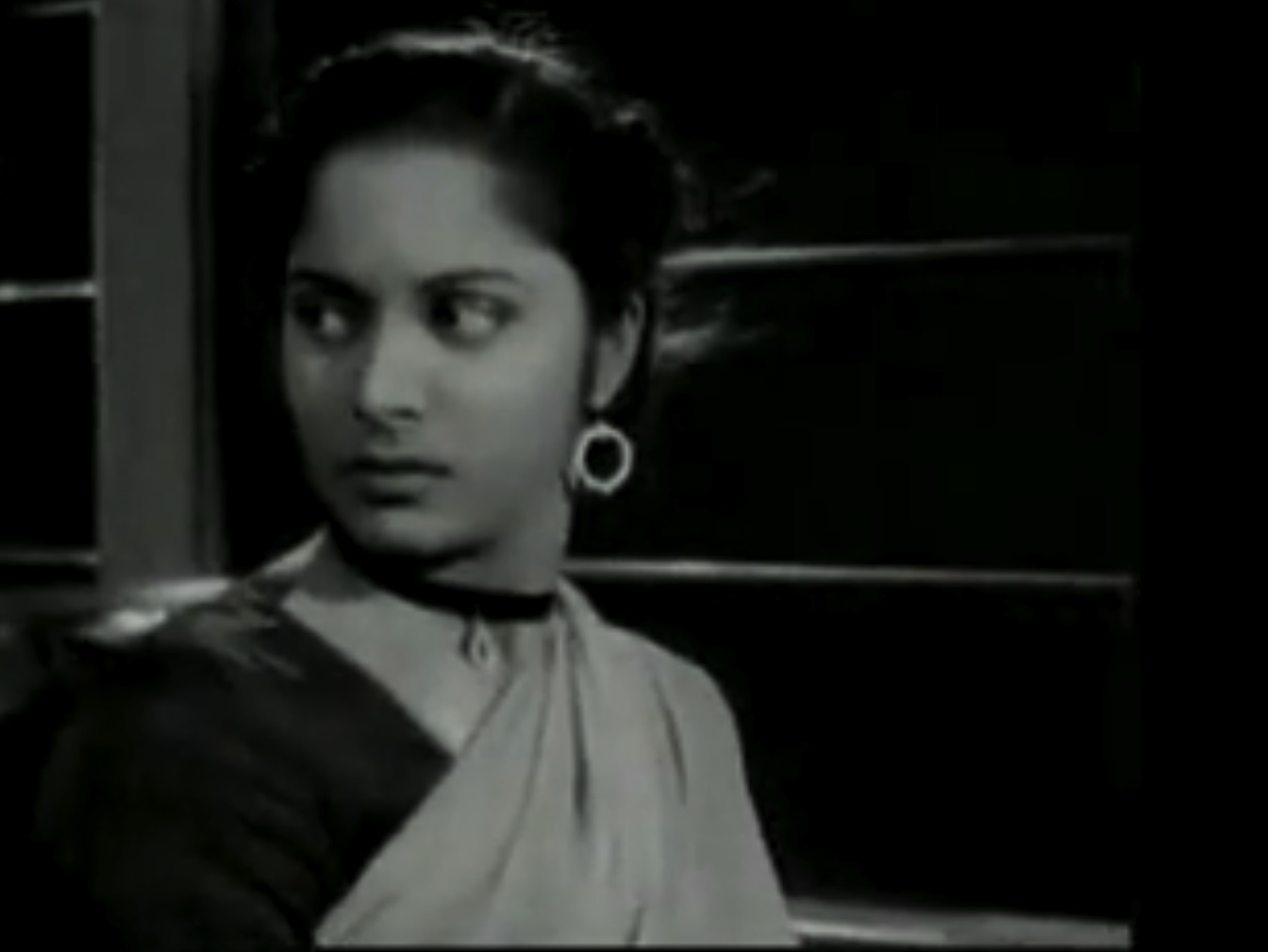
Waheeda Rehman pretends to be annoyed by Dev Anand’s playful song. Don’t be a such a party-pooper!

More importantly, does anyone else question the slightly awkward cheering and whoops that occur to punctuate this otherwise straightforward song? Listen carefully right during the interlude music just before the last stanza. I mean, can you imagine being a chamcha in S.D. Burman’s brainstorming session when someone decided this was a great idea? And furthermore, I don’t think that the voice is Hemant’s or Dev Anand’s doing the whooping. That means some random chamcha had to come in to the recording studio, put on the headphones, stand in front of an isolated mic, and make these wild sounds that S.D. Burman mixed lovingly into the track.

CHAMCHA: How was that, Boss?

BURMAN: Almost, almost. Right there, where it sounds like you’re having an esophageal hernia. Give me a little more of that kind of enthusiasm.

CHAMCHA: [whoops brains out]

BURMAN: Brilliant! That is precisely the touch that this composition needed. Aloo tikkis are on me tonight!

The whole thing just strikes me as trippy. Of course, we know R.D. Burman took those spastic noises to new heights in the decades following, so I guess we now know where it came from!

– Mrs. 55
Chingari Koi Bhadke Lyrics and Translation: Let’s Learn Urdu-Hindi

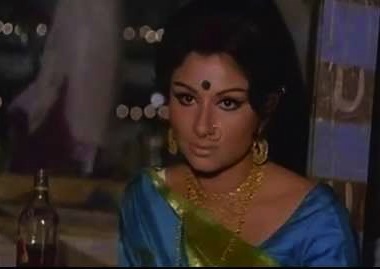
Rajesh Khanna Sharmila Tagore Amar Prem

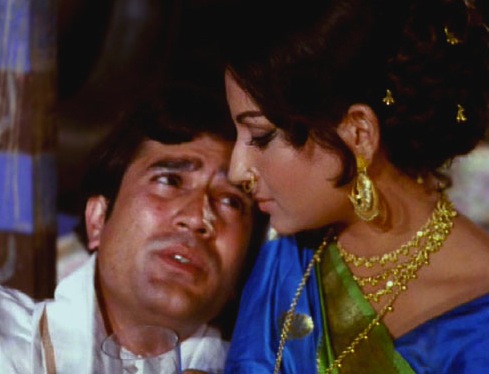
Aided heavily by hard liquor, Rajesh Khanna slips into philosophical discourse gazing at the beautiful Sharmila Tagore in Amar Prem (1972).

Our next English translation, the beautiful lyrics of “Chingari Koi Bhadke,” comes from the eternal love story Amar Prem (1972). Anand Bakshi outdoes himself with these philosophical, thought-provoking lyrics on the nature of life and the inevitability of Fate. Like other masterpieces songs of the sharaab genre in Bollywood, “Chingari Koi Bhadke” glorifies the opportunity to escape societal boundaries through alcohol.

Sung by Rajesh Khanna favorite, Kishore Kumar, “Chingari Koi Bhadke” has some of the greatest lines written in Bollywood music: “Madiira jo pyaas lagaaye, use kaun bhujaaye?” echoes the lines of the great 1935 Hindi poem by Harivanshrai Bachhan, “Madhushala”:

Kya mai.N madhushala ke andhar? Ya mere andhar madhushala?”

Indeed, the theme of an inner thirst can be found in Indian art from time immemorial–whether from spiritual seekers rejecting worldly materialism, or from thwarted lovers searching for a way out.

Amar Prem tells the story of a man trapped in a loveless marriage (Rajesh Khanna) who falls for the golden-hearted brothel songstress, Sharmila Tagore. Although both realize the world will never accept the purity of their love for one another, they remain faithful to their shared ideal of “amar prem” even as they are forced apart. Rajesh Khanna and Sharmila Tagore eventually grow older, not knowing what became of the other, but in separate ways undergo a spiritual transformation sparked by the love they shared. This immortal song, like others in the film by versatile maestro R.D. Burman (eg. “Kuch To Log Kahenge” and “Yeh Kya Hua”) is both a critique on an unforgiving society and a resignation to the laws of Nature. Intoxication itself, the profundity of these lyrics take several passes to completely envelop you, so go slowly and enjoy the full lyrics and our English translation of “Chingari Koi Bhadke” below!

Rajesh Khanna Amar Prem

Rajesh Khanna plays a good-hearted alcoholic trapped by the fetters of societal propriety in Amar Prem (1972).

Chingari Koi Bhadke Lyrics and Translation:

Chingaari koii bhadke
If someone lights a spark
To saawan use bujhaaye
Then the rains will put it out
Saawan jo agan lagaaye, use kaun bhujaaye?
But if the rains start a fire, who will put it out?

PatajhaD jo baagh mei.n ujaaDe
If a garden is destroyed in the Autumn
Woh baagh bahaar khilaaye
It will bloom again in the Spring
Jo baagh bahaar mei.N ujade, use kaun khilaaye?
But who can revive the garden that is destroyed in Spring?

Hum se mat poochho kaise
Do not ask me how
mandir TooTaa sapno.N kaa
The temple of my dreams shattered
Logo.N kii baat nahii.N hai
This is not a matter for everyone to discuss
Yeh qissa hai.N apno.N kaa
This tale is only for my own circle

Koi dushman thhais lagaaye
If an enemy strikes you a blow
To miit jiyaa bahalaaye
Then your beloved will nurse you
Manmiit jo ghaav lagaaye, use kaun mitaaye?
But who can nurse the wounds your beloved strikes?

Na jaane kya ho jaataa
I do not know what happens
Jaane hum kyaa kar jaate
I do not know what would happen
Peete hai.N to zindaa hai.N
If I drink, then I live
Na peete, to mar jaate
If I do not drink, then I die

Duniyaa jo pyaasaa rakhe
If the world is thirsty
To madiiraa pyaas bujhaaye
Then wine can slake that thirst
Madiiraa jo pyaas lagaaye, use kaun bujhaaye?
But who can slake the thirst caused by wine?

Maanaa toofaan ke aage
I agree that before a storm
Nahii.N chaltaa zor kisii kaa
No one can use force
Maujo.N ka dosh naii.N hai
Yet this is not the fault of the waves
Yeh dosh hai aur kisi kaa
It is the fault of someone else

Majhadaar mei.N naiyaa Doobe
If a boat starts to rock midstream
To maajhi par lagaaye
The boatman can lead it to shore
Maajhi jo naaw Dooboye, use kaun bachaaye?
But if the riverman drowns the boat, who can save it?

Chingaari koii bhadke
If someone lights a spark
To saawan use bujhaaye
Then the rains will put it out
Saawan jo agan lagaaye, use kaun bhujaaye?
But if the rains start a fire, who will put it out?

Glossary:

chingari: spark;  agan: fire; patajhaD: Autumn; baagh: garden; bahaar: Spring; mandir: temple; qissa: story, tale; dushman: enemy; thhais: blow; ghaav: wound; zindaa: alive; pyaasaa: thirsty; madhiira: spirits; toofaan: storm; zor: force, dosh: fault; majhdaar: midstream; Doobnaa: to drown; maajhi: boatman; naaw: small boat

Sharmila Tagore Amar Prem

Oh, Sharmila! Is there any commentary anyone can really give you for your divinely majestic presence in this film??!

No, Sir, they sure don’t make songs like they used to. I love the elegance and seeming simplicity of the picturization for this song. No big ruffles or fireworks–just a beautiful traditional instrumentation for background and a metaphorical boat ride filled with meaningful glances and serious faces. Could a song this classy even exist today?

-Mrs. 55

Mausam Hai Aashiqana Lyrics and Translation: Let’s Learn Urdu Hindi

Meena Kumari Pakeezah 4

Meena Kumari pines for an unseen admirer in “Mausam Hai Ashiqana” from Pakeezah (1971).

We revive our popular Pakeezah series and bring you the lyrics and English translation to “Mausam Hai Ashiqana” from Pakeezah (1971) in honor of Meena Kumari’s 80th birthday today! This beautiful melody rendered, of course, by none other than Lata Mangeshkar carries the sense of gently waking up from a dream. Indeed, “Mausam Hai Ashiqana” is sung just as Meena Kumari discovers the abode of her secret admirer–and is filled with joy and hope for the future. The song is one of Pakeezah‘s finest (what does that even mean though, when EVERY song from Pakeezah is a crown jewel?!), and focuses heavily on scenic imagery and the landscape. Perhaps this too is because of Meena Kumari’s growing sickness as filming of Pakeezah became more and more delayed (see our post on behind-the-scenes drama!)

Pakeezah Meena Kumari 3

Meena Kumari passes the long hours daydreaming of her beloved in Pakeezah (1971).

The sounds of birds chirping are even woven into the opening of the musical track with a shot of silhouetted birds flying across the sunrise: a symbol of Pakeezah’s new freedom. The whole effect is feel-good and tender–especially coming after the traumatic elephant attack of the previous scene. Unlike the other semi-classical Lata solos in the film, “Mausam Hai Ashiqana” is pure filmi bliss outside the mujra setting. At last, Pakeezah is able to express a sincere and true anticipation for her beloved’s arrival–sentiments that Pakeezah had before only pretended to feel when dancing before an audience. Queen of her own realm, Pakeezah eagerly explores the new landscape for once without the fetters of a cruel society. Find the lyrics and translation to “Mausam Hai Ashiqana” below and follow along on youtube!

Mausam Hai Aashiqana Lyrics and Translation: Let’s Learn Urdu Hindi

Mausam hai aashiqaanaa
The season is amorous
Aye dil kahii.N se unko aise mei.N DhoonD laanaa
Oh my heart, find him somewhere and bring him to me

Kehna ki ruth jawaan hai
Tell him that the atmosphere is youthful
Aur hum taras rahe hai.N
And that I am pining for him
Kaali ghaTaa ke saaye
The shadows of dark clouds
Phir humko Das rahe hai.N
Are once more attacking me
Dar hai na maar Daale
I am afraid they will kill me
Saawan ka kya Thikaanaa?
What shelter can there be from the rains?

Suraj kahii.N bhii jaaye
The sun may go anywhere
Tum par na dhuup aaye
But let sunlight not fall upon you
Tumko pukaarte hai.N in gesuuo.N ke saaye
The shade of my tresses calls out to you
Aa jaao, mai.N bana doo.N palkon kaa shaamiyaanaa
Come, I will make a tent for you from my eyelids

Phirte hai.N hum akele
I wander about alone
Baaho.N mei.N koi lele
Let someone take me in their arms
Aakhir koii kahaa.N tak tanhaaiiyo.N se khele?
After all, for how long can one play with loneliness?
Din ho gaye hai.N zaalim
The days have become cruel
Raate.N hai.N qaatilaanaa
The nights are murderous

Yeh raat yeh khamoshii
This night, this silence
Yeh khwaab se nazaare
These visions from my dreams
Jugnuu hai.N ya zameen par utre hue hai.N taare?
Are these fireflies or stars that have fallen to Earth?

Bekhwaab merii aankhe.N
My eyes are without dreams
Madhosh hai zamaanaa
But the world seems intoxicated

Mausam hai aashiqaanaa
The season is amorous
Aye dil kahii.N se unko aise mei.N DhoonD laanaa
Oh my heart, find him somewhere and bring him to me

Glossary:

mausam: season; aashiqaanaa: amorous; ruth: atmosphere; jawaan: youthful, young; taras rehna: to be pining; ghaTaa: cloud; saayaa: shadow; Dar: fear; maar Daalnaa: to kill; saawan: rains; Thikaana: shelter; suraj: sun; dhuup: sunlight; gesuu: tresses of hair; shaamiyaanaa: tent; tanhaaii: loneliness; zaalim: cruel; qaatilaanaa: murderous; khamoshii: silence; khwaab: dream; jugnuu: firefly; madhosh: intoxicated

Pakeezah Meena Kumari 1

Waiting for Rajkumar to return home, Meena Kumari sings a song of longing in Pakeezah (1971).

Can we also talk about how Meena Kumari is seen to be wearing an oversized khaki button down during bits of this song, as in, she is wearing his shirt! I never put that together before. Oh, it’s the little things! For more translations from the musical epic that is Pakeezah, check out our English translation of Chalte Chalte!

-Mrs. 55

Deewana Hua Badal Lyrics and Translation: Let’s Learn Urdu-Hindi

Sharmila Tagore Kashmir ki Kali

Sharmila Tagore plays a shy Kashmiri village girl in Kashmir ki Kali (1964)

Next we present the full lyrics and English translation to the jewel “Deewana Hua Badal” from Kashmir Ki Kali (1964). A beauty of beauties, “Deewaana Hua Badal” embodies the timeless dream of Kashmiri paradise. This charming duet by Mohammed Rafi and Asha Bhonsle is the highlight of the film Kashmir Ki Kali (1964), starring Shammi Kapoor and Sharmila Tagore. With a gently uplifting melody and traditional orchestration, “Deewana Hua Badal” captures a sense of pure bliss in the surroundings of the beautiful Kashmiri mountainside. Shammi Kapoor follows his lover Sharmila Tagore to the base of the famous Dal Lake where lotus flowers bloom and intricate wooden houseboats line the banks.

For centuries, Indians have been entranced by that heavenly treasure, Kashmir. Mughal emperor Jahangir famously wrote of Kashmir in the 17th century,

Gar firdaus ruhe zameen ast,
Hameen asto, hameen asto, hameen ast.”

“If there is Paradise on this Earth,
Then it is here, it is here, it is here…”

And classic Bollywood was no different. For years, all love dream sequences and the most beautiful of songs were set in Kashmir’s Shalimar gardens. Kashmir Ki Kali is but one of many films set in this paradise from that time period–before internal war and strife drove filmmakers away from Srinagar to the Swiss mountains. Being partly Kashmiri myself, I can attest to the sublimity of the countryside and what the natural beauty means to its people and history. The politics and tragedies that have plagued this gem are completely beyond the scope of this blog, but regarding its impact on Bollywood, Kashmir will remain forever the lover’s ideal.

Sharmila Tagore and Shammi Kapoor Kashmir Ki Kali Dal Lake

The famous Dal Lake of Srinagar, Kashmir is the gorgeous backdrop for “Deewana Hua Badal” from Kashmir Ki Kali (1964).

If I’m ever making a list of my favorite Bollywood songs, “Deewana Hua Badal” IS my number one choice. Since I was a little girl, this enchanting song found a special place in my heart. In fact, my own grandparents honeymooned in Srinagar by the famous Dal Lake in the early 1950s! When you listen to the sweetness of this song’s lyrics and melody, then imagine the paradise of vintage Kashmir, it’s easy to fall to in love! Please enjoy our full lyrics and English translation to “Deewana Hua Badal” below!

Deewana Hua Badal Lyrics and Translation: Let’s Learn Urdu-Hindi

Male:
Yeh dekh ke dil jhuumaa
Upon seeing her, my heart swayed
Lii pyaar ne a.NgaDaaii
And love sprang forth
Diiwaanaa huaa baadal
The clouds became mad with love
Saavan kii ghataa chhaaii
The rain clouds of Spring abounded

Aisii to merii taqdiir na thii
My fate was once not as such
Tumsaa jo koii mehboob mile
To have met a lover like you before
Dil aaj khushii se paagal hai
Today my heart is crazy with happiness
Aye jaan-e-wafaa tum khuub mile
Oh my faithful one, we met at the right time
Dil kyuu.N na bane paagal?
Why should my heart not go crazy?
Kyaa tumne adaa paaii!
What style you have!
Yeh dekh ke dil jhuumaa
Upon seeing her, my heart swayed
Lii pyaar ne a.NgaDaaii
And love sprang forth
Diiwaanaa huaa baadal
The clouds became mad with love

Female:
Jab tumse nazar takaraaii sanam
Ever since my gaze struck you
Jazabaat kaa ek tuufaan uThaa
A storm of emotions lifted within me
Tinake kii tarah mai.N Bah nikalii
Like a twig, I was swept away
Sailaab mere roke na rukaa
Despite my effort, I could not stop the flood
Jeevan mei.N machii halchal
There was a stirring in my soul
Aur bajane lagii shahanaaii
And music of the shahanaii began to play
Yeh dekh ke dil jhuumaa
Upon seeing him, my heart swayed
Lii pyaar ne a.NgaDaaii
And love sprang forth

Male
Diiwaanaa huaa baadal
The clouds became mad with love

Hai aaj naye armaano.N se
Today with new desires
Aabaad merii dil kii nagarii
The city of my heart is filled
Baraso.N se khizaa.N kaa mausam thaa
For ages it was the season of Autumn
Viiraan baDi duniyaa thi merii
My world was a barren waste
Haathon mei.N teraa aanchal
Then in my hands came the drape of your saari
Aayaa ki bahaar aayii!
And when it came, the Spring followed!
Yeh dekh ke dil jhuumaa
Upon seeing her, my heart swayed
Lii pyaar ne a.NgaDaaii
And love sprang forth

Female:
Diiwaanaa huaa baadal
The clouds became mad with love
Saavan kii ghataa chhaaii
The rain clouds of Spring abounded
Yeh dekh ke dil jhuumaa
Upon seeing him, my heart swayed
Lii pyaar ne a.NgaDaaii
And love sprang forth

Male:
Diiwaanaa huaa baadal…

Glossary

angaDaaii: a turn, a leap; diiwaanaa: crazy (in love); baadal: cloud, saawan: rain; ghataa: cloud; taqdiir: Fate; mehboob: lover; khushii: happiness; paagal: crazy; jaan-e-wafa: faithful one; nazar takraanaa: to strike a gaze; jazabaat: emotion; tuufaan: storm; tinake: twig; straw; sailaab: flood, deluge; halchal: stirring; shahanaaii: a woodwind instrument traditionally played at Indian weddings; armaan: desire; aabad: filled; nagarii: city; khizaa: Autumn; mausam: atmosphere; viraan: wasted; duniya: world; aanchal: drape of a saari or dupatta; bahar: Spring

A few notes on this translation: The word angaDaaii does not have a simple English translationPlease see our translation of Likhe Jo Khat Tujhe for further discussion of this complex word. Basically, all of those awkward stretching movements Shammi is doing in the beginning are examples of angaDaaii. Furthermore the line “deewana hua baadal…” can be interpreted in two ways! Although we have written “the clouds became mad with love,” this line could easily mean the inverse: that he who is mad with love became a cloud. This alternative meaning could make some sense–he felt so light and happy with love that he lifted up and joined the clouds. I’m not going to get carried overboard though. We will leave it up to you to decide to how interpret these famous opening lines!

Shammi Kapoor Kashmir ki Kali

Shammi Kapoor blushes and shimmies during the opening of “Deewana Hua Badal” from Kashmir Ki Kali (1964).

Some of you may question the opening performance by Shammi Kapoor in this song. Yes, he’s absurd as he comes tumbling down the stairs, bulging out of his tight clothes. Yes, his lipstick is a tad too red. And yes, you can see the line below his chin where Costumes forgot to blend his pasty white pancake foundation into his neck. But I’ve come to terms with everything Shammi is: a spastic, messy heartthrob. And since in this film, Sharmila Tagore isn’t wearing half of the sweeping cat-eyeliner that would later become her signature, someone had to wear enough make-up for the team!

– Mrs. 55

Main Zindagi Ka Saath Nibhata Lyrics and Translation: Let’s Learn Urdu Hindi

Dev Anand Hum Dono Main Zindagi Ka Saath

Dev Anand plays a philosophical military officer in Navketan Films’ all-time hit Hum Dono (1961)

We now present the full lyrics and English translation to the evergreen Mohammed Rafi solo, “Main Zindagi Ka Saath Nibhata” from the film Hum Dono (1961). As we know, Hum Dono was released in colour last year by the late film legend Dev Anand, and newly entitled Hum Dono Rangeen. The film joins a string of recently re-colourized classics such as Mughal-e-Azam (1961) and Naya Daur (1957), riding the wave of India’s general excitement to enter previously unexplored technologies in film-making–from animation to digital special effects. The amount of work that goes into a recolourization of a film is amazing–particularly a 3 hour Hindi epic. Imagine hand-painting a single frame from the film: First, you must decide which colours would best match the director’s intention and the styles of the time. Then painstakingly painting the colours onto the frame that follow to exactly match the hue of the one before, making allowances for natural shifts of shadows and lighting as the actors move. When you remember that it takes 24 frames to make 1 second of a film, you can realize the enormity of the job ahead.

Dev Anand Sadhana Hum Dono

Dev Anand imagines Sadhana appearing next to his reflection in a pool of water.

Additionally, apart from adding a splash of colour, it would seem the new editors also altered the aspect ratio of the film into a widescreen presentation. Throughout some of the songs, you’ll also see Dev Anand had added fancy fades to and from black, which are definitely classy. However, I mourn the loss of the original aspect ratio–because the film is now made for the widescreen, a portion of the frame’s top and bottom have been cut off. A bit of the magic was cut too.

But even without these external alterations, the original beauty of the film has shone for decades. Hum Dono is a war film, but the story is not strictly about war. Dev Anand plays a dual role in the film and faces a moral dilemma when he impersonates the identity of his look-alike after the latter’s presumed death. Every action he makes has spiraling and exciting ethical repercussions. The film is one of the finest Bollywood has ever produced, and like most Dev Anand films, boldly explores difficult social themes and relationships. My only regret is that it’s obviously a twin story that no one bothered to explicitly state in the script. It’s a big gripe of mine about Bollywood twin movies, and for one of the worst examples of it, Haseena Maan Jaayegi, see our previous post on Bekhudi Mein Sanam!

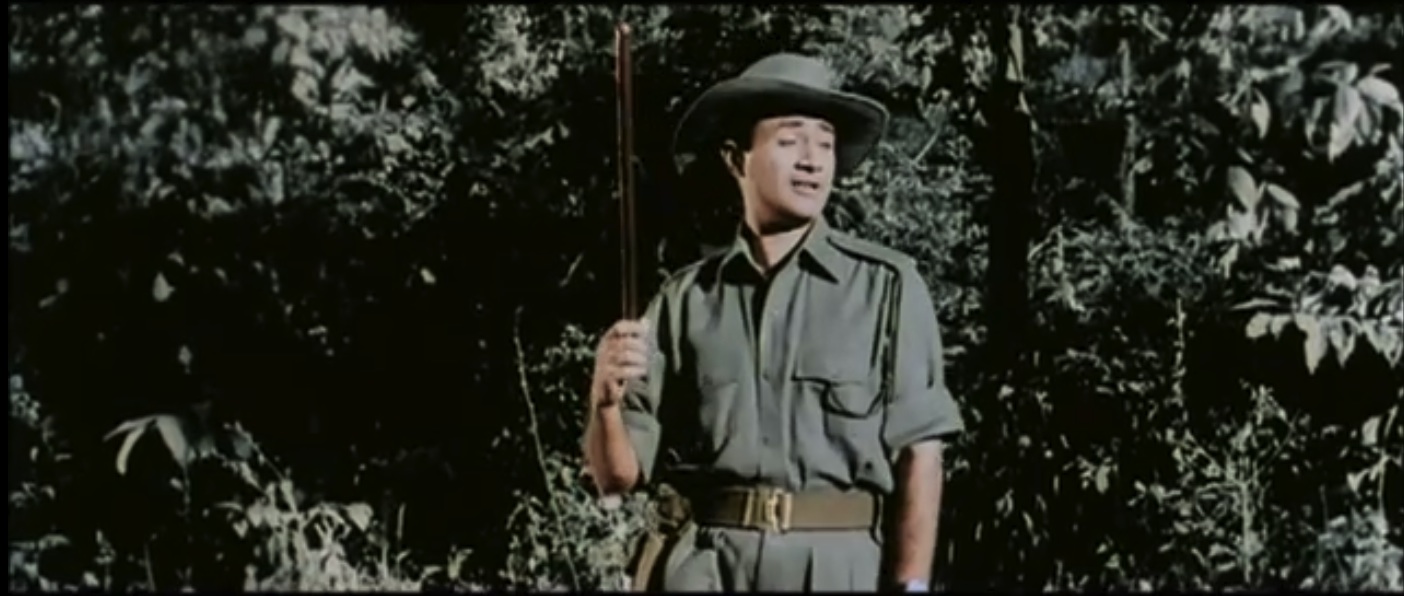
Dev Anand hum Dono Main Zindagi Ka Saath 2

Dev Anand in full military dress from Hum Dono (1961)

But the greatest achievement of Hum Dono is in its music by Jaidev. Every single song in its soundtrack is pure gold, from the Rafi-Asha love duet “Abhi Na Jaao ChoD Kar” to the majestic Lata devotional “Allah Tero Naam.” The sweet melodies of Hum Dono have remained popular today, and amongst them is the sentimental mood-lifter “Main Zindagi Ka Saath Nibhata Chala Gaya.” In it, Dev Anand expresses many of the philosophies that would present in his later films such as Guide (1965). The Vedic-inspired line “gham aur khushi ke farq na mehsuus ho jahaan” allows the hero a carefree outlook that is unusual and refreshing for a jaded military officer. Because of it, this song has retained its popularity over the years. Of interesting note, Hindi movies were not allowed to use authentic Indian Army officer outfits for their costumes. So for anyone familiar with period military wear in India, you’ll notice the epaulette on the shoulder has been adjusted so it is not an exact replicate of what was actually worn!

Check out the youtube link here, and follow along with us below for full lyrics and English translation of “Main Zindagi Ka Saath“!

Main Zindagi Ka Saath Nibhata Lyrics and Translation

Mai.N zindagii ka saath nibhaataa chalaa gayaa
I faithfully followed wherever life took me
Har fikr ko dhuei.N mei.N uDaataa chalaa gayaa
I blew every worry into a mist of smoke

Barbaadiyo.N ka shok manaanaa fizuul tha
It was pointless to grieve about my destruction,
Barbaadiyo.N ka jashn manaataa chalaa gayaa
So I kept making a celebration of my destruction!
Har fikr ko dhuei.N mei.N uDaataa chalaa gayaa
I blew every worry into a mist of smoke

Jo mil gayaa usii ko muqaddar samajh liyaa
Whatever came my way I considered to be my destiny
Jo kho gayaa mei.N usko bhulaataa chalaa gayaa
Whatever was lost to me, I kept putting out of my mind.
Har fikr ko dhuei.N mei.N uDaataa chalaa gayaa
I blew every worry into a mist of smoke

Gham aur khushi mei.N farq na mehsuus ho jahaa.N
That state where happiness and sorrow are indistinguishable
Mai.N dil ko us muqaam pe laataa chalaa gayaa
That realm is where I kept pushing my heart
Har fikr ko dhuei.N mei.N uDaataa chalaa gayaa
I blew every worry into a mist of smoke

Glossary:

zindagii: life; fikr: worry; dhuuei.N; smoke; barbaad: destruction; shok manaanaa: grieve; fizul: pointless; jashn: celebration; muqaddar: destiny, fate; bhulaanaa: to forget gham: sadness; khushi: happiness; farq: difference mehsuus: feeling; muqaam: realm

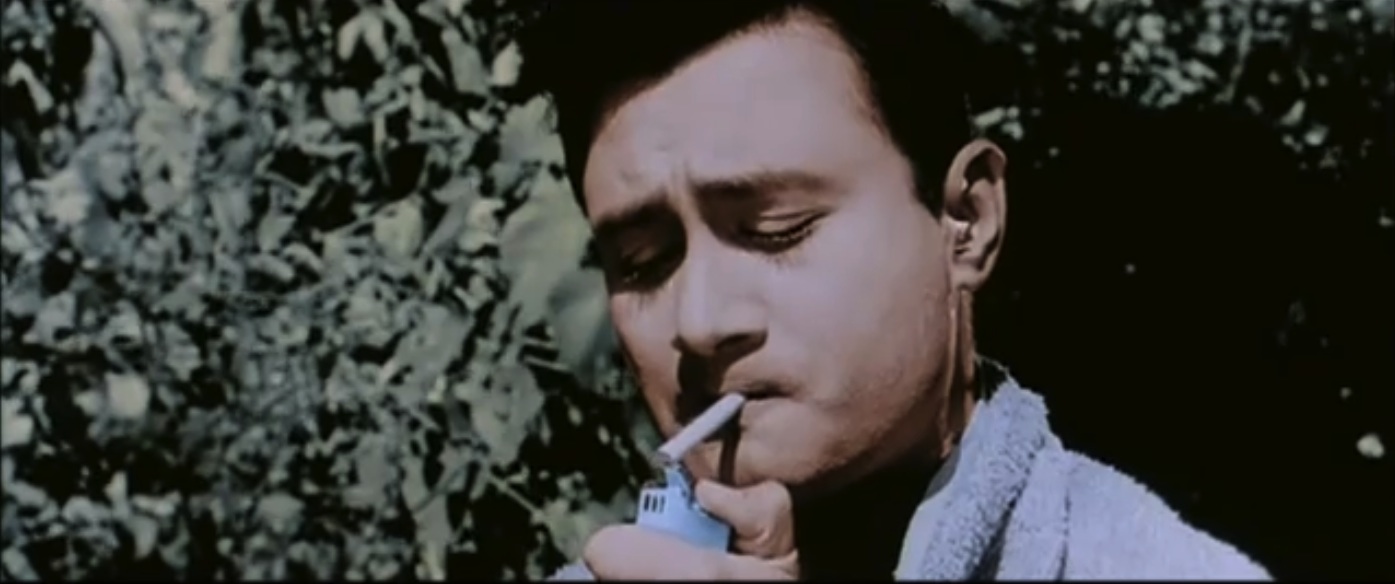
Dev Anand Hum Dono Main Zindagi Ka Saath

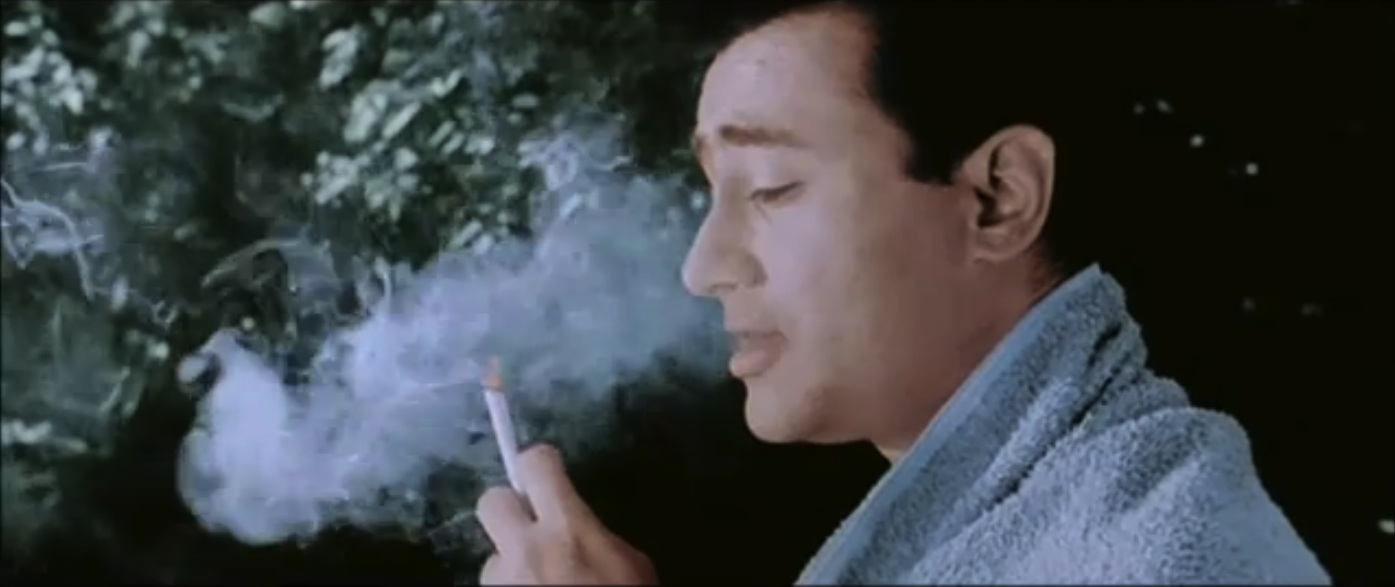
Dev Anand blows all his worries away in a puff of smoke in Hum Dono (1961)

The gentle chiming at the beginning of the song can also be found at the very end of “Abhi Na Jaao ChoD Kar” from the same film. Nice, Jaidev. Nice. This song translation was made by special request from our fan Bhuvesh! We always welcome requests from our readers, so don’t forget to drop us a line!

– Mrs. 55