Zindagi Ke Safar Mein Guzar Lyrics and Translation: Let’s Learn Urdu-Hindi

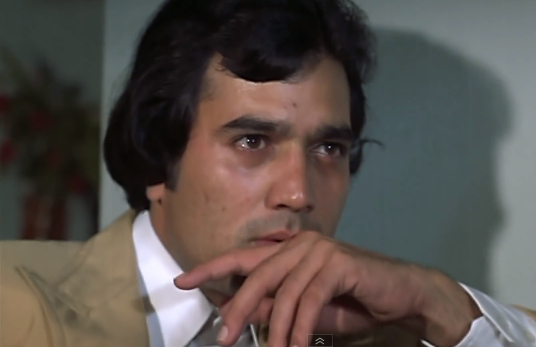
Rajesh Khanna regret aap ki qasam

Rajesh Khanna reflects on the choices he made and the love he lost in Aap Ki Kasam (1974).

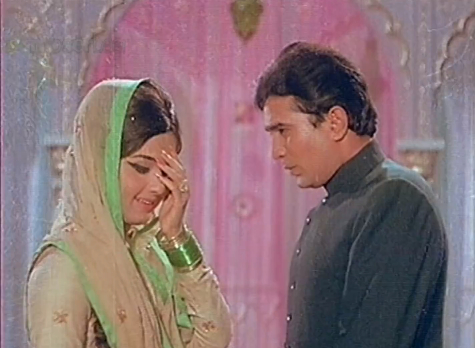
Happy New Year’s to all our fans and lovers of classic Bollywood! In the spirit of the holiday, we present the lyrics and full English translation to the thought-provoking “Zindagi Ke Safar Mein Guzar” from Aap Ki Kasam (1974). In this song, lyricist Anand Bakshi explores the regret of one man who loses his chance to spend time with the people he loves. Rajesh Khanna plays a successful businessman who neglects and mistrusts his loving wife Mumtaz, ultimately costing him his marriage and family. Wanting desperately to make amends, Khanna soon realizes he is unable to change the past. For anyone still thinking of a New Year’s Resolution, this Kishore Kumar hit is sure to inspire!
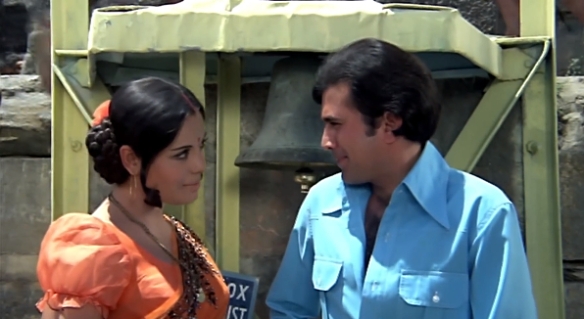
happier times with mumtaz in aap ki kasam

Ignoring the eyesore of Delhi that is Mumtaz’s horrendous puffy orange sari blouse, happier times once reigned for the estranged couple in Aap Ki Kasam (1974).

Like time itself, linear movement is the emphasis of director J. Om Prakash’s gorgeous mis-en-scène. From symbolic train tracks or plodding footsteps to fantasy-pixie Mumtaz’s unidirectional trajectory through the woods, Kishore Kumar’s rich vocals are underlined by a feeling of racing forward with no way of turning back. “Zindagi Ke Safar Mein” shines in stark contrast to the romantic “Karvaten Badalte Rahe” duet sung during a high-key moment of the film. Of equal importance, the song is also a textbook example of the Bollywood cliche demonstrating a strong correlation between despondency of the hero’s love life with the length of the hero’s beard.
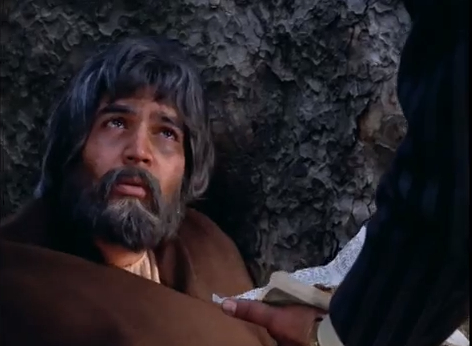
rajesh khanna beard aap ki qasam

By the time “Zindagi Ke Safar Mein” finishes, Rajesh Khanna has spiraled into total despondency as evidenced by his increasing length of beard.

We hope that listening to this song may inspire you to appreciate the moments you have with your loved ones over the holidays. So take a break from the daily grind and let those people know how much you care–don’t be a Rajesh Khanna! You’ll find the lyrics and our English translation of the sentimental hit “Zindagi Ke Safar Mein Guzar Jaate Hai” from Aap Ki Kasam (1974) below. Follow along with the video on youtube and let us know YOUR New Year’s resolution in the comments!

Zindagi Ke Safar Mein Guzar Jaate Hai Lyrics and Translation:

Zindagii ke safar mei.N guzar jaate hai.N jo maqaam
Those places you pass in the journey of life
Woh phir nahii.N aate
They never return
Woh phir nahii.N aate
They never return

Phuul khilte hai.N, log milte hai.N
Flowers bloom, people meet
Magar patjhaD mei.N jo phuul muDjhaa jaate hai.N
But that flower which dies in Autumn
Woh bahaaro.N ke aane se khilte nahii.N
It does not bloom with the coming of Spring
Kuch log ek roz jo bichhaD jaate hai.N
Those people from whom you are separated one day
Woh hazaaro.N ke aane se milte nahii.N
A thousand others may come, but you will not meet them again
Umr bhar chahe koi pukaaraa kare unkaa naam
Even though you may call their names the rest of your life
Woh phir nahii.N aate
They never return
Woh phir nahii.N aate
They never return
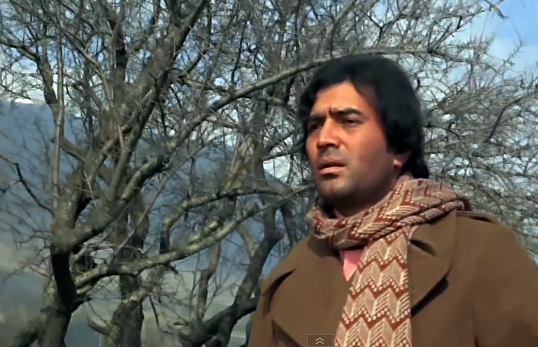
rajesh khanna wanders aimlessly in aap ki qasam

Overcome with regret, Rajesh Khanna wanders aimlessly in Aap Ki Kasam (1974).

Aa.Nkh dhokaa hai, kya bharosaa hai?
Your eye deceives you, what is the truth?
Suno, dosto.N, shak dostii kaa dushman hai
Listen, friends, doubt is the enemy of friendship
Apne dil mei.N ise ghar banaane na do
Do not let doubt reside in your heart
Kal tadapnaa paDe yaad mei.N jinkii
Those people whose memories will torment you tomorrow
Rok lo rooThkar, unko jaane na do
Stop them when they are upset, do not let them leave
Baad mei.N pyaar ke chahe bhejo hazaaro.N salaam
For later, even though you may wish to greet them with love a thousand times
Woh phir nahii.N aate
They never return
Woh phir nahii.N aate
They never return
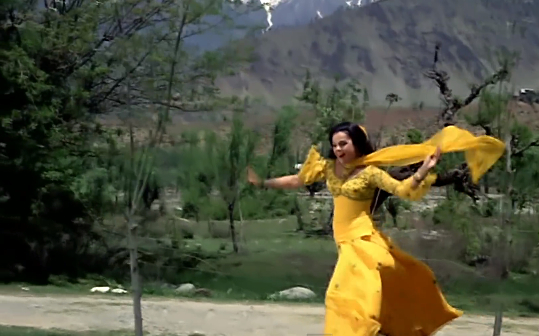
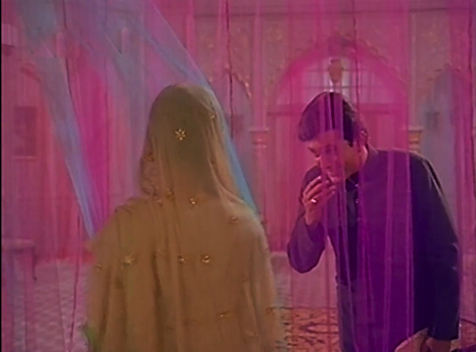
mumtaz fantasy

In epic slow-motion, Mumtaz prances through the forest of Rajesh Khanna’s fantasy, chunni billowing in the wind.

Subaah aatii hai, raat jaatii hai
Morning comes, the night departs
Yuu.n hii waqt chaltaa hii rehtaa hai, ruktaa nahii.N
In this manner, time marches on, it does not stop
Ek pal mei.N yeh aage nikal jaata hai
In a single moment, time moves forward
Aadmi Theek se dekh paataa nahii.N
Man is unable to see this well
Aur parde pe manzar badal jaata hai
And the view continues to change
Ek baar chale jaate hai jo din raat subaah shaam
But once those days and nights, and those mornings and evenings pass
Woh phir nahii.N aate
They never return
Woh phir nahii.N aate
They never return

Zindagii ke safar mei.N guzar jaate hai.N jo maqaam
Those places you pass in the journey of life
Woh phir nahin aate
They never return
Woh phir nahin aate
They never return

Glossary:

zindagii: life; safar: journey; guzar jaanaa: to pass, maqaam: place, landmark, milestone; phuul: flower; log: people; patjhaD: Autumn; muDjhaanaa: to become destroyed; bahaar: Spring; khilnaa: to bloom; ek roz: one day; bichhaD jaanaa: to become separated; hazaar: a thousand; umr bhar: whole life; pukaarnaa: to call; naam: name; aa.Nkh: eye; dhokaa: deception, trick; bharosaa: trust; shak: doubt; dostii: friendship; dushman: enemy; ghar: home; taDapnaa: to torment, to flutter; yaad: memory; roknaa: to stop; rooThna: to be upset; jaanaa dena: to let someone leave; baad mei.N: later on, bhejnaa: to send; salaam: greeting; subaah: morning; raat: night; yuu.N hii: in this manner, like this; waqt: time; pal: moment; aadmi: man; thiik se: properly, well; pardaa: veil, [in this case, a movie screen]; manzar: view; badal jaanaa: to change; ek baar: once, one time; din: day; shaam: evening
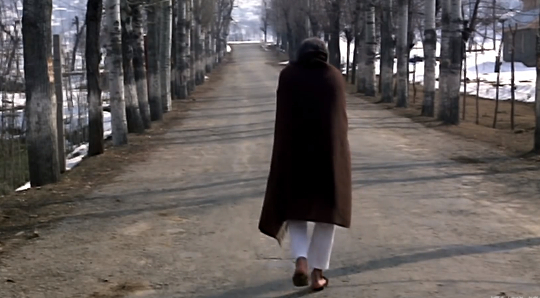
Rajesh Khanna walks away from the camera

In my favorite shot of the film, Rajesh Khanna walks away from the camera, leaving the viewer alone in the cold Winter morning in Aap Ki Kasam (1974).

For the Urdu snobs, you may note that the plural of the multi-layered term maqaam is technically maqaamaat. The suffix –aat is necessary to denote plurality of certain vocabulary with an Arabic origin, however modern Hindustani often omits this mark of purist pretension–particularly when it would throw off a song’s rhyming scheme! But if you’re quick, you’ll still hear it used in classic film dialogues. Other examples include:

kaaghazaat (pieces of paper)
zevaraat (jewels)
makaanaat (stores)
jawaharaat (rubies)
ma’luumaat (information)

Zindagi Ke Safar Mei.N” was requested by fan Agar Raheem. Our resolution for the New Year is to keep up quicker with requests from fans! If you haven’t seen your request in one of our blog posts yet, don’t worry–it’s coming! Thank you for the fantastic year we’ve had together, and our best wishes for a joyful and prosperous 2014!

Old Classic Bollywood Save the Date!

2014 is going to be a particularly memorable year for us because Mrs. 55 is getting married! Get ready because, you guessed correctly, it’s going to be a classic Bollywood-themed wedding!

-Mrs. 55
Papa Jaldi Aaja Na Lyrics and Translation: Let’s Learn Urdu-Hindi

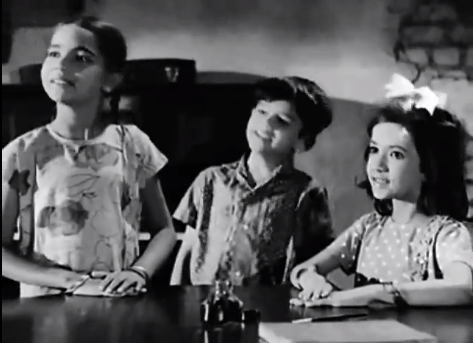
kids

These adorable children await their father Bharat Bhushan’s return from an overseas journey in Taqdeer (1967).

Here at Mr. and Mrs. 55, we wish you a very merry Christmas and send you our warmest season’s greetings! Although songs that depict Christmas are few and far between within the realm of Bollywood cinema (see last year’s post on Jingle Bells/Aao Tumhein Chand Pe Le Jaaye), there is no dearth of songs that celebrate the values comprising the essence of the holiday spirit.  While you shouldn’t hold out for a guest appearance by Santa Claus or good old Rudolph, many Hindi films from the Golden Era revolve around the aspects of Christmas that many people cherish the most: sharing happiness with others, celebrating love, and strengthening family bonds. Today, in honor of Christmas , we present a children’s classic from Taqdeer (1967) that evokes the holiday spirit through its heart-warming depiction of familial love: pappaa jaldii aajaa na.

Directed by A. Salaam Taqdeer (1967) is a Hindi remake of the Konkani film Nirmon (1966) that narrates a powerful story about a destitute widow (played by Shalini Mardolkar) whose husband (played by Bharat Bhushan) is thought to have died in a tragic shipwrecking. Struggling to make ends meet, she accepts a marriage proposal from her husband’s wealthy friend (played by Kamal Kapoor) for the sake of her family. Although money is no longer an issue for them, Shalini and her children struggle to find happiness in the absence of their warm and loving husband/father. Although his family thinks that he is deceased, it turns out that Bharat miraculously survived the shipwrecking but lost all of his memory prior to the accident as a result of amnesia. Several years later, Bharat’s amnesia resolves when he hears a performance of a song (“jab jab bahaar aayii“) that he had taught to one of his former music students. After his memory returns, Bharat returns home to Goa and encounters the harsh reality of the sacrifices his family has been forced to make in his absence. How will Bharat be reunited with Shalini and his children? Watch the full movie here to find out!

Composed by Laxmikant-Pyarelaal and penned by Anand Bakshi, this song is presented at the beginning of Taqdeer after Bharat has embarked on his overseas journey. Equipped with the gentle maternal beauty of Lata Mangeshkar’s voice, Shalini leads her children (voiced by Sulakshana Pandit, Ila Desai, and Meena Petki) in a song to ask for their father’s safe and prompt return home. Naturally, part of the reason that the children await their father’s return is because they are excited to receive the new toys and gifts that he will bring home for them from abroad. Yet, the line “guDiyaa chaahe na laanaa, pappaa jaldii aajaa na!” illustrates how the children dearly miss their father’s love and support regardless of whether they receive his gifts or not.

Indeed, this heart-warming song can serve as a reminder of what is truly important to us at this time of the year. The most important part of the holiday season is not exchanging gifts and reveling in new excitement of our new toys, clothes, or gadgets. Rather, the greatest gift that we can receive for the holidays is the opportunity to live, laugh and cherish the company of our family and loved ones. Still looking for ideas on how to spend your quality time this holiday season? Mrs. 55 and I recommend putting on your favorite old Bollywood flick and letting the bonding begin with those that matter to you the most. Until next time…

-Mr. 55
Shalini

Shalini Mardolkar writes a letter to her husband to tell him how much the family misses him in Taqdeer (1967)


Papa Jaldi Aaja Na: Lyrics and Translation

saat samundar paar se, guDiyo.n ke bazaar se
From a doll store across the seven seas,
achhii sii guDiyaa laanaa
please bring us back a doll. 
guDiyaa chaahe na laanaa, pappaa jaldii aajaa na!
Whether you bring a doll or not, please come home soon, Papa!

tum pardes gaye jab se, bas yah haal huaa tab se
Ever since you went abroad, our lives have not been the same.
dil diivaanaa lagtaa hai, ghar viraanaa lagtaa hai
My heart has gone mad, as this house feels desolate without you.
jhilmil chaa.nd sitaaro.n ne, darvaazo.n diivaaro.n ne
The shining Moon and stars, these doors and walls,
sab ne puuchha hai ham se: kab jii chhuuTegaa gham se?
they all have asked me, “When will your heart be liberated of sorrow?
kab hogaa unkaa aanaa? pappaa jaldii aajaa na!
When is the date of his return?” Please come home soon, Papa!

maa.n bhii loDii nahii.n gaatii, ham ko nii.nd nahii.n aatii
Since Mom does not sing lullabies anymore, we have trouble falling asleep.
khelkhilaune TuuT gaye, sangiisaathii chhuuT gaye
Our toys are broken, and our companions have left our side.
jeb hamaarii khaalii hai aur aatii diivaalii hai
Our pockets are empty, yet Diwali is still to come.
ham sab ko na taDpaao, apne ghar vaapas aao
Please do not torment us any longer. Once you return home,
aur kabhii phir na jaanaa. pappaa jaldii aajaa na!
never leave us again. Please come home soon, Papa!

khat na samjho taar hai yah, kaaghaz nahii.n hai pyaar hai yah
Consider this a telegram, not a letter. It is made of love, not paper.
durii aur itnii durii, aisii bhii kyaa majbuurii?
There is such distance between us. What compels you to be so far?
tum koii naadaan nahii.n, tum isse anjaan nahii.n
You are not naive, nor are you unaware that
is jiivan ke sapne ho, ek tum hii to apne ho
you are my dream in this life. I consider only you to be mine. 
saaraa jag hai begaanaa, pappaa jaldii aajaa na!
I am estranged from the rest of the world. Please come home soon, Papa!

saat samundar paar se, guDiyo.n ke bazaar se
From a doll store across the seven seas,
achhii sii guDiyaa laanaa
please bring us back a doll.  
guDiyaa chaahe na laanaa, pappaa jaldii aajaa na!
Whether you bring a doll or not, please come home soon, Papa!

Shalini

Shalini Mardolkar and her children are not the same without their beloved head of household Bharat Bhushan in Taqdeer (1967).


Glossary

samundar: sea; guDiyaa: doll; bazaar: store, market; jaldi: soon, quickly; pardes: abroad; viraanaa: empty, desolate; jhilmil: shining; darvaazaa: door; diivaar: wall; chhuTnaa: to escape/depart, to be free of; loDii: lullaby; khel-khilaune: toys; sangii-saathii: companions; jeb: pocket; khaalii: empty; taDpaanaa: to torment; duurii: distance; majbuurii: compulsion, helplessness: anjaan: unaware; jag: world; begaanaa: estranged, alien.

Nutcracker

In my holiday best for my first viewing of The Nutcracker by Tchaikovsky!

Karvaten Badalte Rahe Lyrics and Translation: Let’s Learn Urdu-Hindi


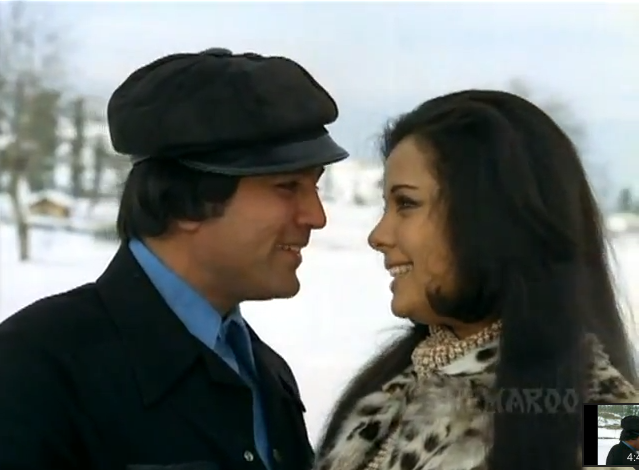
RK

Rajesh Khanna and Mumtaz frolic in pre-marital bliss in the title track from Aap Ki Qasam (1974)

Today, we present the lyrics and English translation to the title track from Aap Ki Qasam (1974): karvate.n badalte rahe.n.  Directed by J. Om Prakash, this film stars Rajesh Khanna, Mumtaz, and Sanjeev Kumar in a story that illustrates how suspicion can be the ultimate enemy to marital bliss. 

As Mumtaz’s jealous husband, Rajesh Khanna begins to doubt his wife’s fidelity when his best friend Sanjeev Kumar comes into the picture. Although Mumtaz and Sanjeev Kumar share a platonic brother-sister friendship, Rajesh Khanna’s suspicion blinds him from reality until he destroys his own marriage.  Refusing to dignify the false accusations of infidelity placed on her with a response, Mumtaz leaves him and returns to her father’s home.  When she realizes that she is pregnant with Rajesh Khanna’s daughter, she enters a second marriage (with her father’s blessings!) so that her child can be raised in a loving home.  In the mean time, Rajesh Khanna comes to his senses and realizes that his suspicion towards his wife was misguided. Unable to apologize properly to Mumtaz for his unacceptable behavior, guilt drives Rajesh Khanna to become a homeless wanderer. Several years later, Mumtaz invites him to his daughter’s wedding where all parties receive closure of sorts. However, a tragedy strikes to create an ending that seeps with melodrama in true Bollywood fashion. 

Aap Ki Qasam is remarkable in its portrayal of marital suspicion for avoiding the chauvinistic bias present in similar films of this era. Typically, female characters accused of infidelity were vilified and forced to appease their husbands regardless of whether the accusations placed upon them were were valid or not. This film breaks the patii-parameshvar (husband is God) mold by supporting a woman’s right to leave an unhappy marriage in which she is treated disrespectfully by her husband. In particular, the support that Mumtaz receives from her father (played by Rehman) in divorcing her husband and entering a second marriage is unusually refreshing for this period of cinematic history. Although it can be argued that Mumtaz’s father makes much of the decisions for her, the fact that she is not compelled to beg for forgiveness at her husband’s feet is sufficiently progressive to merit attention. Indeed, valuing a woman’s dignity and self-worth over her duty to preserve a dysfunctional marriage is the ground-breaking message that makes Aap Ki Qasam stand out among other movies from this time.

In addition to being a cherished Rajesh Khanna-Mumtaz hit, this film is remembered today for its fantastic soundtrack composed by R.D. Burman. Aside from the  Pahadi-based duet sung by Lata Mangeshkar and Kishore Kumar presented here, this album contains the popular duets “suno, haa.n kaho,” “jai jai shiv sha.nkar,” “paas nahii.n aanaa,” the beautiful Lata solo “chorii chorii chup ke chup ke,” and the philosophical Kishore solo “zindagii ke safar me.n.”  Anand Bakshi’s lyrics in “karvate.n badalte rahe.n” are marked by simplicity in their expression of the romance and trust shared between two lovers as they yearn in separation. Moreover, the beautiful snow-filled Himalayan landscape and the on-screen chemistry exhibited by Rajesh Khanna and Mumtaz add to the appeal of this duet. 

Finally, as an aside, the 1973 BBC documentary Bombay Superstar profiling Rajesh Khanna and his influence on Hindi cinema actually features a behind-the-scenes look at the making of Aap Ki Qasam through interviews with the superstar himself,  director J. Om Prakash, and co-star Mumtaz. My favorite part of this documentary is the scene that depicts the amount of work that went into picturizing a playback song for a Bollywood film (the filming of “suno, haa.n kaho” is shown in the documentary).  Check out the full documentary here on YouTube if you haven’t seen it yet! Until next time…

-Mr. 55
RK

The on-screen chemistry between Rajesh Khanna and Mumtaz allowed this pair to dominate the box office during the early 1970s.

Karvaten Badalte Rahe: Lyrics and Translation

karvate.n badalte rahe.n saarii raat ham
Tossing and turning in bed, I have been restless the entire night.
aap kii qasam, aap kii qasam
I swear by you.
gham na karo, din judaayii ke bahut hai.n kam
Do not be sad; the days of our separation are very limited.
aap kii qasam, aap kii qasam
I swear by you.

yaad tum aate rahe ek huuk sii uThtii rahii
As I remembered you, a sharp pain kept arising in my heart.
nii.nd mujhse, nii.nd se mai.n, bhaagtii chhuptii rahii
Sleep and I kept fleeing and hiding from each other.
raat bhar bairan nigoDii chaa.ndnii chubhtii rahii
The hostile, wretched moonlight continued to pierce through the entire night.
aag sii jaltii rahii, girtii rahii shabnam
A fire kept burning, as the dew continued to fall.
aap kii qasam, aap kii qasam
I swear by you.

jhiil sii aa.nkho.n me.n aashiq Duub ke kho jaayegaa
Your beloved will get lost by drowning in the loch of your eyes.
zulf ke saaye me.n dil armaan bharaa so jayegaa
Under the shadows of your tresses, his hope-filled heart will fall into slumber.
tum chale jaao, nahii.n to kuchh na kuchh ho jaayegaa
Please go away, or else something will happen between us.
Dagmagaa jaaye.nge aise haal me.n qadam
Our steps will falter out of control under these circumstances.
aap kii qasam, aap kii qasam
I swear by you.

ruuTh jaaye.n ham to tum ham ko manaa lenaa sanam
Should I sulk, please console me, oh beloved.
duur ho.n to paas ham ko tum bulaa lenaa sanam
Should you be far away, please call me to your side, oh beloved.
kuchh gilaa ho to gale ham ko lagaa lenaa sanam
Should I make a mistake, please embrace me in forgiveness, oh beloved.
TuuT na jaaye kabhii yah pyaar kii qasam
May this vow of love never be broken by us.
aap kii qasam, aap kii qasam
I swear by you.

Female lines in red are sung by Lata Mangeshkar. Male lines in green are sung by Kishore Kumar. Lines in black are sung together by Lata Mangeshkar and Kishore Kumar. 

Glossary

karvate.n badalnaa: to toss and turn in bed  (i.e. to be restless at night); qasam: a sworn oath or vow; gham karnaa: to be sad; judaayii: separation; huuk: a sharp pain; nii.nd: sleep; bhaagna: to flee; chhupnaa: to hide; bairan: hositle, cruel; nigoDii: wretched; chubhnaa: to pierce; aag: fire; shabnam: dew; jhiil: loch, lake; aashiq: beloved; zulf: tresses; saaye: shadows; armaan: hope; Dagmagaaanaa: to falter, stagger; haal: circumstances, state; qadam: steps, feet; ruuTh jaanaa: to sulk; manaa lenaa: to console; sanam: beloved; paas bulaa lenaa: to call to one’s side; gilaa: mistake; gale lagaa lenaa: to embrace; TuuT jaanaa: to be broken.

r

The snowy Himalayan foothills provide the ideal backdrop for this romantic duet from Aap Ki Qasam (1974).

Who Is Anthony Gonsalves?

anthonygonsalves amitabh

Amitabh Bachhan looks a befitting popinjay in top hat and monocle for the cult classic number “My Name Is Anthony Gonsalves.”

Who is Anthony Gonsalves? Even if you have but a fleeting knowledge of classic Bollywood, you’ll have come across the name before. Anthony Gonsalves is an enigma, a hero, and a forgotten figure in history. He is both legend and fact–a swashbuckling joker and a serious man of the world. But the truth is, few people appreciate the history while adoring the myth. His entrance into mainstream culture is unforgettable, one of the most famous scenes of the masala classic Amar Akbar Anthony (1977): It’s Easter Day and Parveen Babi has arrived at a friendly dance party with her bulging bodyguard. A mysterious over-sized egg is wheeled into the crowded room. Just when you think the spectacle is over, out bursts Amitabh Bachhan dressed as an Edwardian fop, complete with the astounding vocabulary of a deranged member of the House of Lords.

Anthony Gonsalves is a sacred tune in my house–our whole family loves the song, a particular favorite of my younger brother growing up. Everyone knows when to chime in with the sheepish “Excuse me, please!” or the womenfolk’s “Really?! WOW!” (pronounced, of course, “VOW!”) woven into the melody. But what many don’t realize is that Anthony Gonsalves nor his famously inane words are not entirely fiction.

anthony gonsalves egg

Amitabh Bachhan emerges from the life-sized party egg as a dapper Anthony Gonsalves in Amar, Akbar, Anthony (1977).

Yes, folks, Anthony Gonsalves was real. Born in 1927 in the small Goan fishing village of Majorda, Anthony Prabhu Gonsalves was a genuine and highly influential figure in the Hindi film music industry of the 1950s. He worked as a violinist in the early 1940s with none other than great musical composer Naushad, and later taught violin to eager pupils R.D. Burman and Pyarelal Ramprasad Sharma (of Laxmikant-Pyarelal fame!) in his apartment in Bandra. It is in dedication to him, his old violin teacher, that Pyarelal composed this number and thereby immortalized one of the great unsung heros of the Bollywood music industry. Originally, Amitabh’s character was named “Anthony Fernandez” and Pyarelal personally requested director Manmohan Desai change the name to the now notorious “Anthony Gonsalves” to honor his teacher. The original Anthony Gonsalves orchestrated music for epics like Mahal (1949), Pyaasa (1957), and even founded the Indian Symphony Orchestra following his love for raaga-based music with a Western flair.

Tragically, Gonsalves passed away last year in 2012 after having left a legacy of Goan-Hindustani fusion jazz across the Indian continent. When Amar Akbar Anthony was released, the reclusive artist had already disappeared from the world of filmdom on a traveling grant from Syracuse University in NY. He remained in the states where he joined the American Society of Composers, Publishers, and Authors until a quiet return to Goa later in later years, his musical days long behind him. In 2010 a documentary entitled “Anthony Gonsalves: The Music Legend” based on his life and works won the Special Jury Award at the International Film Festival of India.

The real Anthony Gonsalves, musician

The real Anthony Gonsalves (1927-2012).

Still, most of us with forever associate the name “Anthony Gonsalves” with the blustering, idiotic, and highly endearing character played by Amitabh Bachhan in Amar, Akbar, Anthony (1977). It’s impossible to brush by a song as outrageously absurd (and enjoyable!) as this one. Filled with trick photography and silly antics, the song does its best to grab the audience by the coattails and give them a good spin. You’ll probably wonder about the onslaught of random English words exploding out of Amitabh’s mouth between each stanzas. While most are indeed arbitrary 3-4 syllable English words intended to sound too fancy to bother comprehending (with disastrous and embarrassing results), the opening line shines above the others:

“Wait, wait wait! You see the whole country of the system is juxtapositioned by the hemoglobin the atmosphere because you are a sophisticated rhetorician intoxicated by the exuberance of your own verbosity!”

True, that doesn’t mean anything in relation to this song or the film (and frankly the first part of that sentence doesn’t even mean anything to anyone who knows English), but let’s take a closer gander at that last bit. In 1878 British Prime Minister Benjamin Disraeli gave a speech in reference to his liberal rival and famous orator William Ewart Gladstone in the Parliament of the United Kingdom. In the speech he spoke viciously of Gladstone as a “sophisticated rhetorician inebriated by the exuberance of his own verbosity”! Hmm..coincidence? I think not!

Parveen Babi My Name is Anthony gonsalves

Parveen Babi is totally buying all the crazy sauce Anthony Gonsalves has to sell at the Easter celebration in Amar, Akbar, Anthony (1977).

So say what you want about the other lines (oh, that gosh darned country of the system), at least one was clearly influenced by something that at one point in time had been a logical thought. Perhaps we have Anand Bakshi to thank for that. Interestingly, a 2008 box office failure was released called “My Name is Anthony Gonsalves” based on the song, but its awfulness might attest to the fact that you can only get away with something as bizarre as this once. Check out the full video of the original to see what I mean here!

At last another Bollywood mystery solved–this one requested by loyal fan Neil! You may now sleep restfully at night once more! Until next time…

-Mrs. 55