Ek Pyar Ka Nagma Hai Lyrics and Translation: Let’s Learn Urdu-Hindi

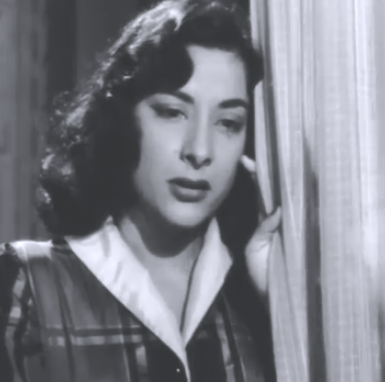
Nanda runs in two directions at once, coming and leaving, in “Ek Pyaar Ka Naghma Hai” from Shor (1972).

We next present the lyrics and full English translation to the eternal love ode “Ek Pyar Ka Nagma Hai” from Shor (1972). What makes “Ek Pyar Ka Nagma” so timeless? It is on everyone’s list of favorites. Part of it is that the lyrics are some of the best poetry written in accessible language (don’t get me wrong, personally if someone wants to burst into the Urdu-textbook “Mere Mehboob Tujhe,” I’m down for that too!). “Ek Pyar Ka Nagma” is rendered with almost magical emotion by Lata Mangeshkar and Mukesh–simultaneously a song of dream-like ecstasy and of tender nostalgia. It’s incomparable. The song speaks to a deep love between two souls undergoing hardship, to cherishing those brief precious moments spent together in happiness, and most of all, to remaining hopeful. The song is simple and evocative–and one of the most beautiful you’ll ever hear.

Manoj Kumar picturizes the famous violin introduction to “Ek Pyaar Ka Naghma” at a family beach outing.

Arriving about midway through the politcally-charged film, Shor, the song is partly told in golden-hued flashback of a family trip to the beach. Manoj Kumar plays a hard-luck activist and single father who’s wife, Nanda, is killed in a train accident.

Now some of you may at first be confused, if not disturbed, by Manoj Kumar’s radical cinematography in this sequence, typical of his edgy style. He experiments with several epigenetic, if you will, modifications at once that create an entirely signature effect: slow-motion, still photography inserts, split mirror screens. It was the 70s, and it was the time to experiment–and he’s one of the few Indian directors who did indeed drizzle these new techniques into his big screen productions. It’s unexpected, but upon closer analysis, I’ll argue works brilliantly. Manoj Kumar is no fool. To picturize a song about ephermal bliss, of prolonging a brief moment–he actually freeze frames his film to highlight the transience and importance of memory. His split frames, showing Nanda walking in and out of the center of the screen, of two halves of the beach merging, capture the duality of life that the lyrics speak of. In context, these techniques actually bring together the reflective themes of the film itself and of the love shared between its protagonists. For it, Manoj Kumar won the Filmfare Award Best Editing in 1972!

Nanda’s own reflection stares back at her as a symbolic representation of past and future in Manoj Kumar’s radical cinematography of Shor (1972).

So follow along below with our English translation of this lovely ode to carpe diem and unconditional devotion, “Ek Pyar Ka Nagma Hai” and watch the youtube version here!

Ek Pyaar Ka Naghma Hai Lyrics and Translation

Ek pyaar kaa naghmaa hai
Life is a tale of love
Maujo.N kii ravaani hai
Life is the flowing of waves
Zindagii aur kuch bhi nahii.N, terii merii kahaanii hai
Life is nothing more than your and my story

Kuch paakar khonaa hai
In gaining something, we lose something
Kuch khokar paanaa hai
In losing something, we gain something
Jeevan ka matlab to aanaa aur jaanaa hai
The meaning of life is to come and to go
Do pal ke jeevan se, ek umr churaani hai
From a few moments of existence, we must steal a whole lifetime
Zindagii aur kuch bhi nahii.N, terii merii kahaanii hai
Life is nothing more than your and my story
Ek pyaar kaa naghmaa hai…
Life is a tale of love…

Tu dhaar hai nadiyaa kii
You are the waters of a river
Mai.N teraa kinaaraa hoo.N
I am your shore
Tu meraa sahaaraa hai, mai.N teraa sahaaraa hoo.N
You are my support, I am your support
Aankho.N mei.N samandar hai, aashaao.N ka paanii hai
In my eyes is an ocean, it contains the water of hopes
Zindagii aur kuch bhi nahii.N, terii merii kahaanii hai
Life is nothing more than your and my story
Ek pyaar kaa naghmaa hai…
Life is a tale of love…

Toofaan to aanaa hai
Storms will come
Aakar chale jaanaa hai
But in the end, they will pass
Baadal hai yeh kuch pal kaa, chhaakar dhal jaanaa hai
These clouds are only momentary, after rising they will diminish
Parachhaaiiyaa.N reh jaatii, reh jaatii nishaanii hai
But these shadows remain, these symbols of you remain
Zindagii aur kuch bhi nahii.N, terii merii kahaanii hai
Life is nothing more than your and my story
Ek pyaar kaa naghmaa hai…
Life is a tale of love…

Glossary:

naghma: tale, ravaani: flowing, turning; zindagi: life; kahaanii: story; matlab: meaning; umr: age, lifetime, dhaar: water; nadiyaa: river; kinaaraa: shore; sahaaraa: support; samandar: ocean; aashaa: hope, wish; paanii: water; toofaan: storm; baadal: cloud; parchaaii: shadow; nishaanii: symbol, sign

Manoj Kumar remembers his dead wife and the love she left behind in Shor (1972).

The film, as in many Manoj Kumar patriotic hits, ends on a defiantly tragic note. Like Shaheed (1965), in which he is martyred with pride, or Upkar (1967) in which he loses his limbs for the glorious cause, in Shor too, Manoj Kumar becomes deaf–a poetic price for his son to gain back his lost voice. The film is a must-see for many reasons, if only to complete your understanding of the role Manoj Kumar played in Bollywood and defining the political tensions of his era. Although Manoj Kumar can no longer hear his late wife sing “Ek Pyar Ka Nagma Hai” to him, and from now on will no longer be able to hear his son, he remains hopeful and comforted by memories of the moments he once spent in happiness.

– Mrs. 55

Phool Ahista Phenko Lyrics and Translation: Let’s Learn Urdu-Hindi

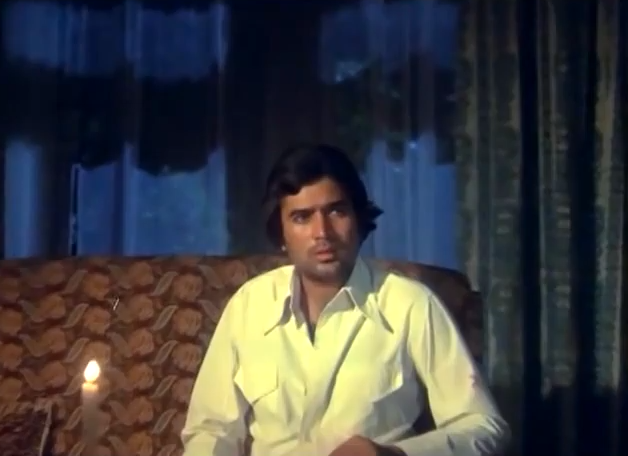
Mumtaz is at her sassy finest on screen during this blazing duet from Prem Kahani (1975)

Our next translation comes from Prem Kahani (1975), a hit film set during the peak of India’s struggle for freedom from British rule that stars Mumtaz, Rajesh Khanna, and Shashi Kapoor in  another take on the archetypal Bollywood love triangle. Rajesh Khanna plays the role of an apolitical poet with aspirations of teaching literature who becomes involved in a revolutionary freedom fighter movement to avenge his brother’s murder during a peace protest. He engages in a passionate romance with Mumtaz; however, when she boldly asks to marry him, he turns her down. The reason? Knowing the risks that he will face as a revolutionary, he does not want Mumtaz to be subjected to the cruelties of becoming widowed. Deeply hurt by this rejection,  Mumtaz agrees to marry the man of her father’s choosing. In the mean time, Rajesh kills his brother’s murderer and becomes a fugitive highly sought after by the police. One day, while visiting his sister-in-law’s house, he is shot by police who arrive to search the premises. In order to recover from his wound, Rajesh flees to seek refuge at his best friend Shashi Kapoor’s place. When Rajesh arrives, he finds that it is the day of Shashi’s wedding! Rajesh meets the new bride, and — you guessed it — it is none other than Mumtaz.

In this context, the meaning of the lyrics in “phuul aahistaa phe.nko” come truly alive. The tension at home between Mumtaz and Rajesh Khanna is painfully palpable, and in the midst of this mess, the clueless Shashi calls for the start of an informal mushaira (poetry recital).  If you’re interested in the poetry preceding this song, you can listen to the back-and-forth of the witty retorts between Rajesh and Mumtaz at this link here.  The poetry leads seamlessly into the introduction of this memorable Lata-Mukesh duet, which was composed by Laxmikant-Pyarelal and penned by Anand Bakshi. This gem is a perfect example of how songs in Bollywood films can be used  to express emotions that cannot be described as gracefully with dialogue alone.

Through these lyrics, Rajesh takes the opportunity to express his sorrow for letting Mumtaz go and playing with her heart. Mumtaz, with some sassy lines of her own, chides Rajesh for the way that he treated her. In order to fully understand these lyrics, it is important note that the thematic message of this song revolves around a key metaphor: the roses discussed here represent womankind. Like flowers, Indian women must grapple with a delicate and fragile fate as they endure the pain inflicted by the thorns of society’s constraining norms.  Thus, when Rajesh claims in the mukhDaa that roses must be plucked gently (phuul aahistaa phe.nko, phuul baDe naazuk hote hai.n), Mumtaz sarcastically questions the sincerity of his politesse during her antara (baDii khuubsuurat shikaayat hai yah, magar sochiye kyaa sharafat hai yah?). In her heart, she wishes Rajesh had not been overly concerned with her well-being so that their marriage could have occurred (in spite of her prospects of becoming widowed).  By channeling her emotions into anger, Mumtaz now hopes that the same kind of pain will ultimately afflict Rajesh so that he can understand the heartbreak she was forced to endure because of his decisions (jo rulaate hai.n logo.n ko ek din khud bhii rote hai.n).

As you can tell, this song is power-packed with emotional intensity and some beautifully crafted poetry–I highly recommend a listen if you have not received the opportunity to hear it yet. Follow along with our translation and glossary below, and as always, remember to send in your requests to themrandmrs55@gmail.com!

–Mr.55

Rajesh Khanna recites poetry that expresses deep regret for letting his beloved Mumtaz slip away in Prem Kahani (1975)

Phool Ahista Phenko: Lyrics and Translation

kahaa aap kaa yah bajaa hii sahii
What you have said is entirely correct: 
ki ham beqadar, bevafaa hii sahii
I am insensitive and unfaithful. 
bade shauq se jaaiye chhoD kar
With pleasure, you may leave me and go away.
magar sahan-e-gulshan se yuu.n toD kar
But, from the rose garden,

phuul aahistaa phe.nko, phuul baDe naazuk hote hai.n
Gently pluck the roses, for they are very delicate. 
vaise bhii to ye badqismatnok pe kaa.nto.n kii sote hai.n
Indeed, these ill-fated flowers must reside on the tips of thorns.

baDii khuubsuurat shikaayat hai yah
You have expressed quite a lovely grievance,
magar sochiye, kyaa sharaafat hai yah?
but please consider whether it is mere politesse.
jo auro.n kaa dil toDte rahte hai.n
Those who continue to break others’ hearts 
lage choT unko to yah kahte hai.n ki
say this when they become hurt themselves: 
phuul aahistaa phe.nko, phuul baDe naazuk hote hai.n
Gently pluck the roses, for they are very delicate. 
jo rulaate hai.n logo.n ko ek din khud bhii rote hai.n
Those who make others cry shed their own tears one day.

kisii shauk ko baagh kii sair me.n
During a stroll in the garden,
jo lag jaaye kaa.nTaa koii pair me.n
when a thorn pierces your foot,
khafaa husn phuulo.n se ho kis liye?
why do you become angry with the roses, oh beautiful one?
ye maasuum hai.n, bekhataa is liye
They are innocent and faultless.
phuul aahistaa phe.nko, phuul baDe naazuk hote hai.n
Gently pluck the roses, for they are delicate.
ye kare.nge kaise ghaayal? ye to khud ghaayal hote hai.n 

How can they hurt others? They are wounded themselves.

gulo.n ke baDe aap hamdard hai.n
You are quite sympathetic to the beauty of these roses.
bhalaa kyo.n na ho? aap bhii mard hai.n
And why not? You are also a man!
hazaaro.n savaalo.n kaa hai ek javaab
A thousand questions have this one answer.
fareb-e-nazar yah na ho, ai janaab
My dear, don’t let your eyes deceive you.
phuul aahistaa phe.nko, phuul baDe naazuk hote hai.n

Gently pluck the roses, for they are delicate.
sab jise kahte hai.n shabnam, phuul ke aa.nsuu hote hai.n
What people call dew drops are, in fact, the tears shed by roses

*Female lines sung by Lata Mangeshkar are denoted in red. Male lines sung by Mukesh are denoted in black.

Glossary

bajaa: correct; beqadar: insensitive; bevafaa: unfaithful; shauq se: with pleasure; sahan: courtyard; gulshan: rose garden; phe.nknaa: to pluck, throw; aahistaa: slowly, gently; naazuk: delicate; badqismat: ill-fated; nok: tip; shikaayat; grievance; sharaafat: politesse, decency; choT: injury, wound; shauk: thorn; baagh: garden; sair: promenade, stroll; khafaa: angry; maasuum: innocent; bekhataa: faultless; gul: rose; hamdard: sympathetic; fareb-e-nazar: delusion of sight; shabnam: dew drops.  

The handsome yet clueless Shashi Kapoor is unaware of the tumultuous history between his wife Mumtaz and best friend Rajesh Khanna in Prem Kahani (1975). 

Jis Gali Mein Tera Ghar Na Ho Balma Lyrics and Translation: Let’s Learn Urdu-Hindi

Rajesh Khanna serenades Asha Parekh in one of Hindi cinema’s most treasured boat songs from Kati Patang (1970)

If you’ve been following the latest news about Bollywood stars (as you should be), you might be aware of the fact that Rajesh Khanna has been hospitalized recently for exhaustion and a stomach infection. In light of this news, I thought I’d share one of my favorite songs picturized on the Bombay superstar and send along our best wishes for a speedy recovery. Below, I’ve provided the lyrics and a translation for “jis galii me.n teraa ghar na ho baalma,” a beautiful number sung by Mukesh in Kati Patang (1970).

Mukesh singing for Rajesh Khanna? Blasphemy, you might say. As we all know, Kishore Kumar was officially the playback voice for India’s beloved ‘Kaka,’ and you might hear a pairing with Mohammed Rafi on occasion. But a Mukesh song picturized on Rajesh Khanna, let alone a popular one, is quite rare indeed.

In spite of the unconventional pairing, this song from Kati Patang is an all-time classic that has been cherished by fans of Hindi cinema over the years. The beauty in the simplicity of Anand Bakshi’s lyrics here is striking. Expressing the the theme of selflessness in love, these lyrics are unique when placed into context of the film. Rajesh Khanna’s character uses this song to profess his love for Asha Parekh, a woman pretending to be a widow after fleeing the altar. At a time when societal norms prevented such women from marrying again, using such romantic lyrics to describe the love between a man and an ostensible widow is a bold move. In his inimitable style, Mukesh gives one of his career’s best performances as he sings these lyrics with sincerity and a tinge of melancholy.  To top it all off, R.D. Burman composes a simple, yet touching melody that does justice to the beauty of these lyrics. Enjoy this poignantly crafted declaration of love with our glossary and translation below!

-Mr. 55

Playing the role of a supposed widow, Asha Parekh wears a white sari throughout most of this film.

Jis Gali Mein Tera Ghar Na Ho Balma: Lyrics and Translation

jis galii me.n teraa ghar na ho baalma
Any  street on which your house does not reside
us galii se hame.n to guzarnaa nahii.n
is not a street that I shall traverse.
jo Dagar tere dvaare pe jaatii na ho
Any path that does not lead to your door
us Dagar pe hame.n paa.nv rakhnaa nahii.n
is not a path on which I shall set foot.

zindagii me.n kaii rangraliyaa.n sahii
In my life, there have been many colorful celebrations.
har taraf muskuratii ye kaliyaa.n sahii
In every direction, there are smiling flowerbuds
khuubsurat bahaaro.n kii galiyaa.n sahi
and many beautiful views of springtime.
jis chaman mei.n tere pag me.n kaa.nTe chubhe.n
Yet, the garden in which thorns pierce your feet 
us chaman se hame.n phuul chunnaa nahii.n
is not a garden from which I shall pick flowers.

haa.n ye rasme, ye qasame.n sabhii toD ke
Yes, after having broken these rituals and vows,
tu chalii aa chunar pyaar kii oDh ke
please come to me, flying your scarf of love in the air.
yaa chalaa jaauu.nga mai.n yah jag chhoD ke
Or else, I shall go away and leave this world.
jis jagah yaad terii sataane lage
The place where your memories begin to torture me
us jagah ek pal bhii Thaharana nahii.n
is not a place where I shall spend a single moment.

jis galii me.n teraa ghar na ho baalma
Any  street on which your house does not reside…

Glossary

galii: street, alley; baalma: beloved; Dagar: path; dvaaraa: door; rangraliyaa.n: colorful celebrations; kaliyaa.n: flower buds; chaman: garden; pag: foot; chubhnaa: to pierce; rasm: ritual, ceremony; qasam: vow; chunar: scarf; jag: world; sataanaa: to torture.

Rajesh Khanna charms the audience with his characteristic smile.

This song was filmed on site at Lake Nainital in Uttarakhand, India.

Bollywood’s Beloved Sopranos: Lata and Asha’s Highest Notes

I feel like we’ve all been in this situation at some point: one of your favorite aunties steps up to the microphone at the annual Diwali function, and you have a sinking fear in your heart that she’s going to embarass herself by butchering another Lata classsic on stage. As she struggles through the sky-high notes of the antara, you cringe and ask yourself why you’re here again, subjecting yourself to this torture…

Well, it turns out it’s not entirely her fault. The reality of the situation is that Bollywood songs from the Golden Era tend to be pitched at extremely high scales for the average female singer. Unless a woman is a veritable soprano like Lata Mangeshkar or Asha Bhonsle, it is going to be quite a challenge for them to sing many of the classic songs from this period in their original keys. The high-pitched soprano female voice has become a hallmark of Hindi film music, and I’d like to explore this phenomenon in greater detail with this post.

Two sisters who changed playback singing forever: Lata Mangeshkar and Asha Bhonsle.

Why are Bollywood songs for females from the Golden Era pitched at astronomically high scales? I don’t know for sure, but I definitely have a few ideas that could explain this trend. First, the high-pitched female voice is consistent with the image of the ideal Indian woman that was prevalent during the 1950s and 60s. The soprano register suggests innocence and purity, which enhanced the traditionally feminine perceptions of heroines advanced by film directors of the time. Lata Mangeshkar  is the ultimate example of this phenomenon; her voice, with its ethereal purity, has been considered the traditional female voice of India for decades. However, this explanation is less pertinent to Lata’s younger sister Asha Bhonsle. The voice of Asha, who was widely known for her experimentation with non-traditional genres such as the cabaret, is not a national emblem of purity in the same way as her elder sister’s. For this reason, an alternative explanation is needed to describe the popularity of the soprano female voice in Bollywood, and I would venture to say that this alternative explanation is rooted in musical origins. Before the arrival of the Mangeshkars onto the filmi musical scene, female singing in Hindi films was dominated by artists with heavy, nasal voices, such as Suraiyya and Shamshad Begum. Once music directors had the opportunity to work with the Mangeshkars, things changed forever: the nasalized heavy female voices were out and the delicate soprano voices were here to stay. After Lata and Asha became established as playback singers, I would argue that  music directors of the time pushed the boundaries of their compositions in terms of range to test and showcase the virtuosity of these two exceptional talents.

Before we take a listen to some of Lata and Asha’s highest highs throughout Bollywood’s musical history, explaining a little bit of musical nitty-gritty is necessary to fully appreciate the gist of what’s going on here. From my experiences with transcribing and performing many songs from this era, I would estimate that the vast majority (perhaps 90%?) of songs composed for Lata and Asha max out at F5 or F#5 (two F/F#’s above middle C on the piano) as their highest note. Therefore, in the brief list  of high notes that I’ve compiled below, I’ve only chosen to include those rare songs that surpass the typical upper limit of  F#5. Songs for both singers are listed in order of ascending pitch of the composition’s highest note.
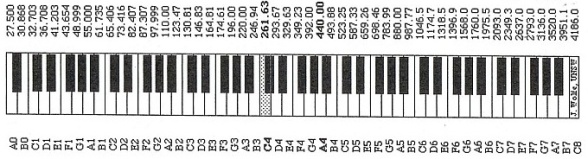
Keyboard labeled with note names and frequencies. C4 is taken as middle C. The high notes listed here range from G5 to C6.

Lata Mangeshkar: Selected High Notes

 jhuumta mausam mast mahiinaa (Ujala, 1959):  In this Lata-Manna duet composed by Shankar-Jakishan, Lata nails a G5 (taar komal ga in the key of E) when she repeats the “yalla yalla” line in the taar saptak (high octave) at the end.

ajii ruuThkar ab kahaa.n jaayiega?  (Aarzoo, 1965): Shankar-Jaikishan is once again the culprit here: listen as Lata reaches an Ab5 (taar shuddh ma in the key of Eb) in the antara of this gem picturized on Sadhana from Aarzoo. Regarding the high pitch of this song, Lata has said:

“I remember “ajii ruuThkar ab kahaa.n jaayiegaa” in Aarzoo (1965). What a high pitch that was! My ears reddened when I sang it. But I stubbornly sang at that impossible scale, refusing to admit defeat to any range. I would get very angry and sing at any range without complaining. Composers would take full advantage of my silence and keep raising the scale. In fact, I used to have arguments with Jaikishan. I would ask him, “kyaa baat hai, aap merii pariksha le rahe hai.n? mai.ne aap kaa kyaa bigaDaa hai jo aap meraa kaan laal kar rahe hai.n? (What’s the matter? Why are you testing me? What have I done that you should trouble me so much to redden my ears?)’

jiyaa o jiyaa kuch bol do (Jab Pyar Kisi Se Hota Hai, 1961): The tandem effect described below with “ahsaan teraa hogaa mujh par” is also observed here. Lata gives it her all as she reaches a Ab5 (taar komal ni in the key of Bb) in the antara of the female tandem version of the fun Rafi classic from Jab Pyar Kisi Se Hota Hai.

rasik balmaa (Chori Chori, 1957):  This Raga Shuddh Kalyan-based Shankar-Jakishan composition is one of my all-time favorites! Lata hits a G#5 (taar shuddh ga in the key of E) when she sings the antara.

Nargis in a melancholic mood as she sings “rasik balma” from Chori Chori (1957)

ahsaan teraa hogaa mujh par (Junglee, 1961):  The Rafi version of this number is an all-time classic. Although the Lata version is less popular, it is still beautiful in its own right and brings up an interesting point about scales in tandem songs from this era. In almost all cases that I can think of, music directors made the female singer of a tandem song sing her versions in the same key as the male verion. Because men tend to be more comfortable in the higher register of their voices than women, this practice often put the female playback singer at a disadvantage when it came to hitting the highest notes of the composition. But who else would be up for the challenge of adjusting to the “male scale,”  if not Lata Mangeshkar? She hits a G#5 (taar shuddh ga in the key of Ein the antara of this evergreen Shankar-Jakishan composition based in raga Yaman. Regarding the difficulties of singing tandem songs, Lata has remarked:

Actually, “ahsaan teraa hogaa mujh par” was only meant to be sung by Rafi. But the film’s hero, Shammi Kapoor, suddenly decided that the heroine should sing it as well. It was picturised with Rafi’s voice on Saira Banu and later dubbed by me. So I had to sing it in the same sur as Rafi. The same was done with “jiyaa o jiyaa kuch bol do.

tere baadalo.n kii khair (Champakali, 1957): This Bhairavi-based composition composed by Hemant Kumar and picturized on Suchitra Sen is not as well-known as the rest of the songs on this list, but it’s worth mentioning for the A5 (taar ma in the key of E) that Lata hits  at its conclusion.

ahaa rimjhim ke yeh pyaare pyaare geet  (Usne Kaha Tha, 1960):  Salil Chowdhury was known for his incorporation of ideas of Western classical music into his Indian compositions. As an example, he has Lata sing an operatic-style counterpoint passage here in which she reaches an Bb5 (atitaar sa in the key of Bb) against Talat’s rendering of the mukhda at the end of this composition. Subtle, but exquisite!

aa ab laut chale.n (Jis Des Mein Ganga Behti Hai, 1960): Shankar-Jaikishan score another point here with this patriotic composition from Jis Des Mein Ganga Behti Hai. Mukesh and Lata both sing this song, but it is not structured as a prototypical romantic duet. Mukesh takes the main lines while Lata provides a few supporting lines and interesting background vocals, including the virtuosic glide in which she nails an Bb5 (taar pa in the key of Eb) with finesse.

aaja bha.nvar/jhananana jhan baaje paayalia (Rani Roopmati, 1957): Both of these drut bandishes based in Raga Brindavani Sarang and composed by S.N. Tripathi from Rani Roopmati are truly virtuosic by Bollywood standards. Lata sounds so impressive when she nails the Bb5 (taar pa in the key of Bb) at the end of both “aaja bha.nvar” and “jhananana jhan.” In addition to showing off her range, Lata also showcases her classical training and vocal dexterity as she navigates through a host of intricate taans in both songs. I have to say Lata’s virtuosity leaves Rafi in the dust in the duet here (sorry, Mrs. 55!).
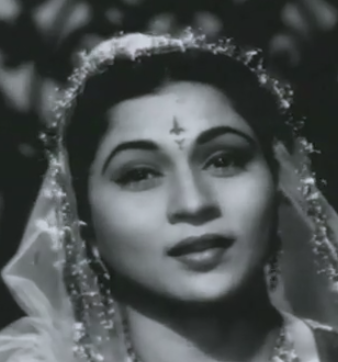
Nimmi sings “aaja bhan.var” in Rani Roopmati (1957)


ham ramchandra kii chandrakala me.n bhii
 
(Sampoorna Ramayana,
1961): The Mangeshkar sisters team up here to sing a duet from Sampoorna Ramayana composed by Vasant Desai. It’s somewhat interesting to note that the song here is actually picturized on two pre-pubescent boys, who are receiving playback from female singers. At the end of the song, there is a dramatic ascent in the melody until both sisters climax at a powerful  Bb5 (taar pa in the key of Eb).

ai dil kahaa.n terii manzil
 (Maya, 1961): Salil Chowdhury makes another contribution to our list with this composition rendered by Dwijen Mukherjee (a noted Bengali singer with a voice similar to Hemant Kumar’s) and Lata. Like “aa ab laut chale.n,” this duet is not structured traditionally; rather, Dwijen sings the main lines and Lata provides background support. Lata sounds heavenly as she hits a Bb5 (taar shuddh dha in the key of Db) in one of Salil’s signature opera-inspired vocal passages.

woh ek nigaah kyaa milii 
(Half-Ticket, 1962): To the best of my knowledge, Salil Chowdhury wins the contest for having recorded Lata’s voice at its highest pitch in the history of Bollywood cinema with this composition.  In this duet with Kishore Kumar picturized on Helen, Lata manages to hit  the elusive soprano C6 (taar shuddh dha in the key of Eb) in the second staccato sequence of the interlude played between stanzas. Her voice is so high here that it blends in naturally with the instrumental piccolo parts.  Nailing a staccato passage in the soprano register like this is incredibly impressive for a vocalist trained in the Indian tradition (in which the emphasis is not placed on vocalizing at the extremes of one’s range)–brava, Lata, brava!

Asha Bhonsle: Selected High Notes

sakhii rii sun bole papiihaa us paar (Miss Mary, 1957): You get the opportunity to hear some some sibling rivalry in this Hemant Kumar composition loosely based on Raga Tilang from Miss Mary! Lata (on Meena Kumari) and Asha (on some rando actress I can’t recognize) duke it out at the end with some intricate taans, but Asha actually takes the more complex passages and touches an Ab5 (taar shuddh ma in the key of Eb)in her last taan here. For those keeping score, Lata also hits the same note in her taan right before.

Meena Kumari in a rare non-tragic role in Miss Mary (1957)

dil na kahii.n lagaanaa (Ghunghat, 1960): I hadn’t heard this Ravi composition picturized on Helen before doing research for this post, but it’s quite special. The song is divided into several differents segments with lyrics in four different languages: Hindi, Tamil, Bengali (a cover of Geeta Dutt’s classic “tumi je amar“), and Punjabi. During in an alaap in the final Punjabi segment, Asha manages to hit an A5 (taar shuudh re in the key of G).

tarun aahe ratra ajunii (Non-Film):  This composition by Hridaynath Mangeshkar is a Marathi bhavgeet, so I guess it technically doesn’t belong on the list. Even though I don’t understand the Marathi lyrics, this is one of my favorite Asha songs because the tune and rendition are simply sublime. Here, the line “bagh tula pusatos aahe” begins on Bb3 and climbs up to A5 (taar shuddh ni in the key of Bb) with the ornament Asha sings on the words “gaar vaaraa.” In the span of one musical line, Asha covers nearly two octaves of vocal range–wow!

suunii suunii saa.ns kii sitaar par (Lal Patthar, 1971): This Shankar-Jakishan composition picturized on Rakhee from Lal Patthar is a beautiful example of the use of Raga Jayjayvanti in filmi music. In a passage towards the end of the song (beginning at 3:13), Asha touches a Bb5 (taar komal ga in the key of G). She also finishes the song off with some powerful taans. For comparison, see Shankar-Jakishan’s Jayjayvanti beauty from Seema sung by Lata (note the exquisite taankari at the end!): manmohana baDe jhuuThe

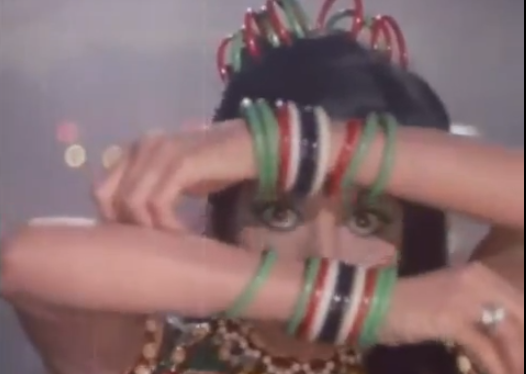
daiyaa mai.n kahaa.n aa pha.nsii (Caravan, 1971): This song from Caravan is probably remembered more for Asha Parekh’s crazy dance moves than its musical underpinnings, but this song is composed in a manner that is rather unique for Bollywood music. Most songs in Bollywood are sung at a fixed tonic (sa), but R.D. Burman experiments with a musical technique all too familiar to those who listen to 90s Western pop: the key change. He goes wild here by changing the tonic of the song by half-steps multiple times, and Asha hits a Bb5 during a transition at the very end.
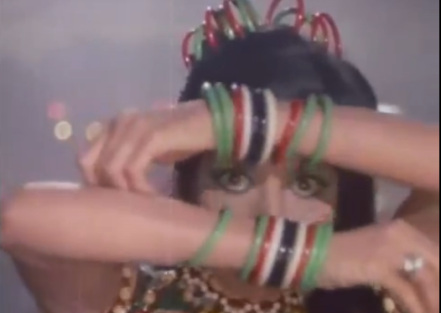
Asha Parekh hides herself on stage during the performance of “daiyaa mai.n kahaa.na aa pha.nsii” in Caravan (1971)

aa dekhe.n zaraa (Rocky, 1981): Despite my aversion to Bollywood music from the 80s, I still decided to include this song on the list for the Bb5 (taar pa in the key of Eb) that Asha manages to yell out at around 2:20.

nadii naa re na jaao shyaam (Mujhe Jeene Do, 1963): In the alaap of this Jaidev composition picturized on Waheeda Rahman, Asha nails a G#5 and briefly touches a B5 (taar pa in the key of E) before descending to pitches that are more comfortable for the average mortal.

tu mi piaci cara (Bewaqoof, 1960):  This cute S.D. Burman composition sung by Asha and Kishore features an opening line in Italian. Maybe it was the Italian lyrics that inspired S.D. Burman to have Asha sing some background operatic passages in addition to her normal lines. During one of these passages before the second-last antara, Asha hits a B5 (taar ma in the key of F#).

jo mai.n hotaa ek TuuTaa taaraa (Chhupa Rustam, 1973): This composition by S.D. Burman rendered by Asha and Kishore features some more opera-like passages at its conclusion. Asha is impressively comfortable as she nails a B5 (ati-taar sa in the key of B)  several times in a row as counterpoint against Kishore’s rendering of the mukhda!

o merii jaa.n maine kahaa (The Train, 1970): You wouldn’t expect this fun item number composed by R.D. Burman and picturized on Helen from The Train to be particularly virtuosic in terms of vocals, but Asha actually hits the a B5 (ati-taar sa in the key of B) in the song’s opening line with her leap on the word “kahaa.” For those of you listening very carefully, it’s important to keep in mind that the film version appears to be transposed a half-step higher than the album version of this song.

If you’ve managed to pay attention so far and take a listen to some of these songs, you may have noticed some interesting trends when comparing the high notes rendered by our two beloved Bollywood divas. After taking a look at the years I’ve listed next to each song, you’ll notice that all of Lata’s highest notes on this list span a range of nine years from 1956 to 1965, while Asha’s highest notes range over 24 years (!) from 1957 to 1981. The broad range of years in which Asha hit her high notes might provide evidence to those who support the notion that Asha’s voice aged better than Lata’s over the decades. But there is one caveat: the manner in which these two divas produce their high notes is distinct and may play a role in mediating this trend. If you listen carefully, you can hear that Lata always employs her “chest voice” to belt out the notes of a composition, even at the highest registers. On the other hand, Asha often employs her “head voice,” the more commonly used technique by female singers to access high notes. Head voice has a softer, gentler sound because it resonates around the nasal cavity instead of the chest during vocal production. This technique of singing is traditionally forbidden in the Indian classical tradition, so purists might consider some of Asha’s highest highs as “cheating”–head voice is sometimes even referred to as naqlii avaaz (fake voice). I’m not so much of a purist that I would discredit Asha for using her head voice in these compositions, but I will venture to say that, if asked to do so, she would not be able to hit the notes of the high soprano register in her later years using her chest voice as gracefully as Lata did during her peak.

Another interesting trend to note is how different music directors composed differently to suit the individual styles of  Lata or Asha. Although all the music directors on this list have worked extensively with both sisters, the music directors who asked Lata to sing at her highest range are not the same as the music directors who asked the same of Asha. Shankar-Jaikishan and Salil Chowdhury, by far, contribute to Lata’s highest record pitches whereas R.D. Burman and S.D. Burman seem to have saved their highest notes for Asha. Just some food for thought.

R.D. Burman teaches Asha Bhonle during a rehearsal session.

Please let us know if you find any more examples of Lata and Asha’s highest highs that are not on this list! I have attempted to find the best examples, but given the vast repertoire of Bollywood film music, I may have naturally missed out on some that are worth mentioning. Also, if you enjoyed this post, let us know in the comments and I’ll try to do some similar-themed posts in the future–perhaps next, we can take a listen to Lata and Asha’s lowest recorded notes or a an analysis of the Bollywood tenor’s highest highs? The possibilities are endless!

-Mr. 55
Kahin Door Jab Din Dhal Jaaye Lyrics and Translation: Let’s Learn Urdu-Hindi

The next song in our series will be the lyrics and English translation of the sentimental “Kahin Door Jab Din Dhal Jaaye” from the film Anand (1971). Starring power duo Amitabh Bachhan and Rajesh Khanna, Anand tells the story of how one hardened doctor’s outlook is changed by the optimism and infectious laughter of his terminally ill patient, Anand. Dr. Banerjee faces an enormous dilemma when Anand becomes not merely another patient, but a true and close friend. Through Anand, he is inspired once more to fight desperately for the lives of his patients and must come to terms with when at last to let to go of circumstances beyond his control. The film explores the complex medical ethics of urging and struggling for life instead of palliative care when death is inevitable, as well as the difficulties in transcending the professional comforts of a normal doctor-patient relationship. While bubbly, laugh-a-minute Anand is at times over the top, his character remains always endearing.

Rajesh Khanna plays a vivacious cancer patient in Anand (1971)

“Kahin Door Jab Din” comes as one of the rare moments in the film when Anand displays a softer, introspective side to his character. The translation and lyrics of the song is deeply moving–a dying man watches the sunset, reflecting with a kind of loving wistfulness on his unfulfilled dreams. The beauty of these lyrics in the context of the film evokes a sense of what Japanese art has called mono na aware–a sensitivity to ephemera, a gentle sadness for the transience of things even as they occur (in this case, his own life). It should be noted, that although I have translated some lines as referring to a woman–I think this song can be read in many different ways. The lyrics may speak to the woman Anand once loved who is no longer with him, but the womanly embodiment of his longing may be also symbolic of all unknown experiences of life that Anand will miss, for like the setting sun, his life is slowly ebbing away. To me, “Kahin Door Jab Din” is beautiful, restrained, and one of the finest examples of Rajesh Khanna’s ability to move an audience without the crutches of his famous winking and dancing.

P.S. Some of you may be interested to discover the original Bengali version of this song sung by Hemant Kumar here!

Kahin Door Jab Din Lyrics and Translation:

kahii.N duur jab din Dhal jaaye
Somewhere far away when the day dulls
saa.Njh kii dulhan badan churaaye chhupke se aaye
The dusk sneaks up, shyly like a bride
mere khayaalo.N ke aa.Ngan mei.N
In the courtyard of my imagination
koii sapno.N ke diip jalaaye, diip jalaaye
Someone lights up the lamp of my dreams

kabhii yuu.N hii, jab huii, bojhal saa.Nse.N
Sometimes when my breathing becomes burdensome for no reason
bhar aayii baiThe baiThe, jab yuu.N hii aa.Nkhe.N
When my eyes well up just sitting around
tabhii machal ke, pyaar se chal ke
Then with a loving flutter
chhue koii mujhe par nazar na aaye, nazar na aaye
Someone touches me, but I cannot see her

kahii.N to yeh, dil kabhii, mil nahii.N paate
Somewhere these hearts are unable to come together
kahii.N se nikal aaye, janamo.N ke naate
But somewhere a connection emerges that transcends many lifetimes
ghanii thii uljhan, bairii apnaa man
The problem was deep and my own heart turned against me
apnaa hii hoke sahe dard paraaye, dard paraaye
By belonging to me, yet bearing the pain of another

dil jaane, mere saare, bhed yeh gahare
My heart knows all my deep secrets
ho gaye kaise mere, sapane sunahare
How my dreams became golden
yeh mere sapne, yahii.N to hai.N apne
These are my dreams, these alone belong to me
mujh se judaa na ho.Nge inke yeh saaye, inke yeh saaye
Even their shadows cannot be separated from me

kahii.N duur jab din Dhal jaaye
Somewhere far away when the day dulls
saa.Njh kii dulhan badan churaaye chhupke se aaye
The dusk sneaks up, shyly like a bride

Glossary:

saanjh: evening; aangan: courtyard; bhojal: burdensome; machal: flutter; janamo.n ke naate: connection of many lifetimes; uljhan: problem; paraaye: another person (stranger); bhed: secret; sunahare: golden; saaye: shadow

-Mrs. 55