Perpetuating Gender Norms in Abhiman

Abhiman Amitabh Bacchan Jaya

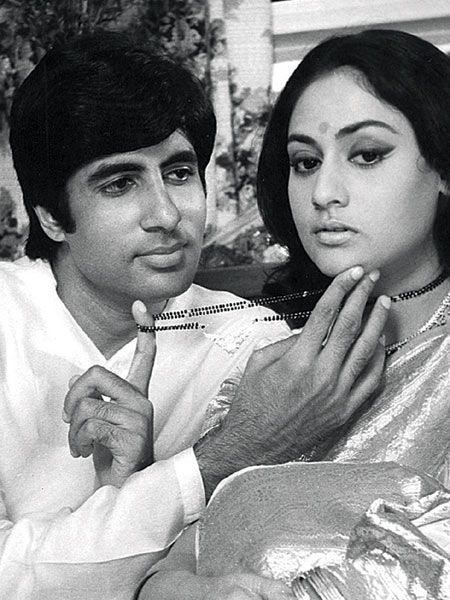
Art mimics life in Abhiman (1973) starring Amitabh Bachchan and Jaya Bhaduri

Everyone loves a bit of filmi gossip. I have been meaning to watch the film Abhiman (1973) ever since I discovered sometime in elementary school that Amitabh Bachchan was actually married (and now an old man) and to none other than Jaya Bhaduri. Like other Bollywood classics that are spicily known to mimic life itself, such as Kaagaz Ke Phool (1959) or Silsila (1981), Abhiman too has a wealth of behind-the-scenes parallels.

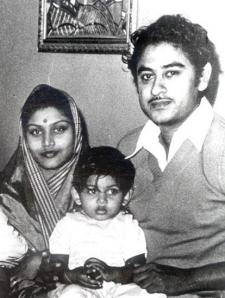
The film tells the story of a husband and wife singing duo—and the rift that forms between them as her career far overshadows his. Before I discuss the gender stereotypes that run rampant in this film, did you know that Abhiman is rumored to be based upon real-life singer Kishore Kumar’s relationship with his first wife Ruma Guha Thakurta? Given that Kishore sings half the songs of this film, it gets pretty juicy. Ruma was a hugely successful Bengali singer and actress (not to mention the niece of legendary filmmaker Satyajit Ray!) whose career was soaring during the time of their marriage. Ruma’s songs were super hits in the Bengali industry and she acted in more than 100 films, starting as a child actress. Kishore and Ruma married in 1951, had a son together Amit Kumar (who was a reasonably successful playback singer himself in the 80s), but the two divorced in 1958. In fact, Kishore proposed to his next wife Madhubala while still married to Ruma. Don’t you just love it?

Kishore Kumar with his first wife Ruma Guha Thakurta and their son Amit Kumar (circa 1953).

The gossip gets even better. After filming Abhiman, Jaya Bhaduri edged out of the acting industry to play housewife while Amitabh continued to make some of his greatest hits—the reason? At the time, people strongly suspected it was in order to prevent art mimicking real life! She was afraid of her own marriage suffering the fate of the marriage they had portrayed together on screen. Whether that’s completely true or not, we certainly don’t know—but their rocky relationship (and Amitabh’s later affair with Rekha) was certainly a hot subject of tabloids for years.

Furthermore, Jaya actually went to Lata Mangeshkar studio recordings for research for her character. In the film she mimics how Lata used to hold her saarii and stand on stage. You might even go so far as to say that this film represents what might have happened to Lata Mangeshkar herself had she married! Ah, the drama.

As far as the movie goes, beyond pure gossip value and an amazing soundtrack, Abhiman doesn’t do much but make your blood boil in one long heteronormative manifesto.

Jaya Bhaduri plays a rising singer in Abhiman (1973)

Amitabh can only be happy when he is the bread-winner and when praise of his wife reflects a praise of his decision to marry her. But when Jaya is recognized as an individual talent, he is unable to bear the competition—she’s a better singer, brings in better money, and let’s face it, better looking. So naturally, being a modern man, he turns to alcohol and the company of other women. Meanwhile, the pure-hearted wife stays a social recluse in her husband’s house, yearning for his return.

amitabh bachchan abhiman

Amitabh Bachchan plays a jealous husband in Abhiman (1973)

The film takes an interesting twist—Jaya miscarriages and Bollywood simplifies this emotional tragedy by turning Jaya into a living statue whose only hope for recovery will be to hear her husband sing again. After all, that was her only wish in life, right? Amitabh even goes so far as to suggest electric shock therapy for her. I almost died.

The film’s overt “male gaze” turns Jaya into unintelligent object of curiosity and manipulation–a far cry from that vibrant and talented woman who once threatened her husband’s social sphere. There’s something disturbing about this message, but hey, what do I know. If you’re looking for a far more realistic portrayal of a similar situation, check out Judy Garland’s performance in A Star Is Born (1954), but otherwise enjoy S.D. Burman’s sublime soundtrack without tainting it with what Abhiman will attempt to pass off as completely normal gender expectations of the period.

– Mrs. 55

abhiman jaya and amitabh bachchan

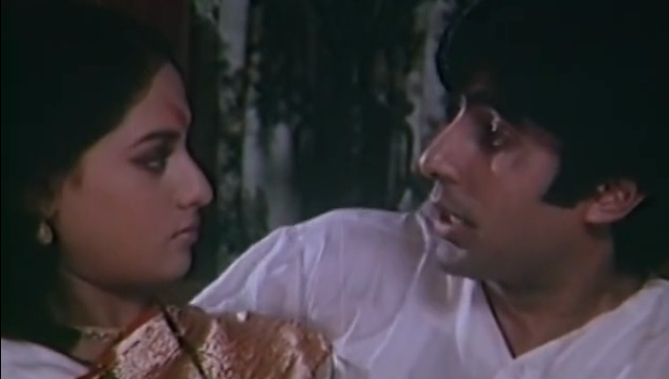
Jaya Bhaduri and Amitabh Bachchan struggle to save their marriage in Abhiman (1973)

Teri Mehfil Mein Qismat Aazmaakar Lyrics and Translation: Let’s Learn Urdu-Hindi

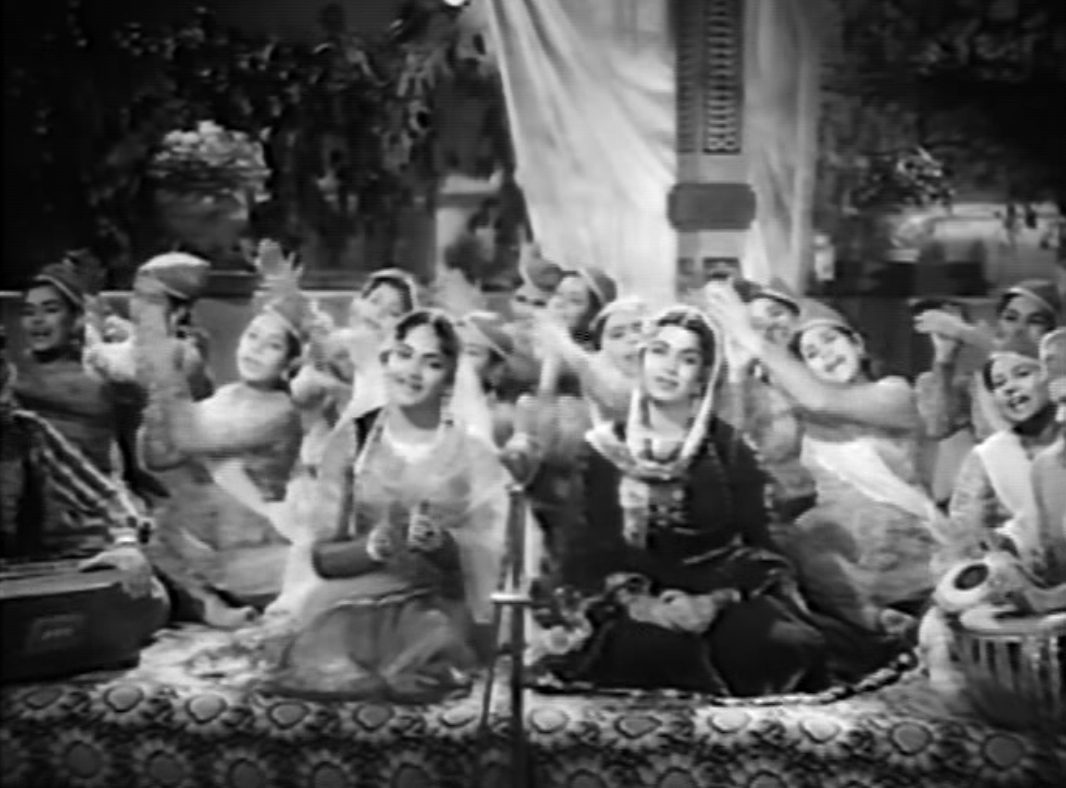
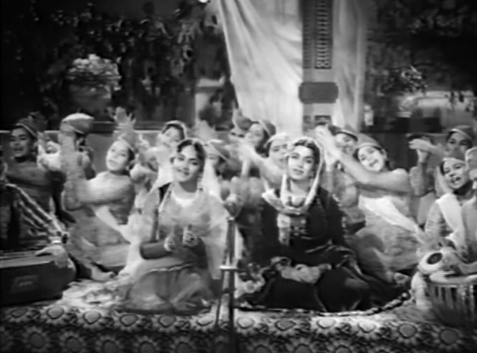
The mehfil for the qawwali looks particularly vibrant in the recolored version of Mughal-e-Azam (1960)

Directed by K. Asif, Mughal-e-Azam (1962) is one of the most cherished films in the history of Bollywood cinema. Although several films have been made around the same premise, Mughal-e-Azam is by far the most well-known depiction of the forbidden love story between Prince Salim and courtesan Anarkali.  We could write (and probably will) at least ten different posts to describe all the things we love about this movie: the intricate Urdu dialogue, the beautiful soundtrack composed by Naushad, the elaborate costumes and set design, the heartwrenching plot, and so on. Here, I’d like to  share the lyrics and translation for one of many gems found in this film’s soundtrack: terii mahfil me.n qismat aazmaakar.

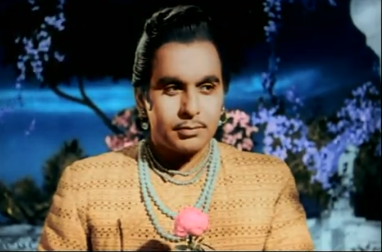
This qawwali is set between Anarkali (played by Madhubala) and her chief rival Bahar (played by Nigar Sultana) as a musical debate on the nature of love. As both women fight for his affections, Prince Salim (played by Dilip Kumar) watches the performance and is supposed to give a rose to the winner of the debate at its conclusion.The back-and-forth debate style of these lyrics is quite a rare find in Bollywood cinema, and it is even rarer to encounter such lyrics (penned by Shakeel Badayuni!) as a female-female duet. Despite being a female-female duet, there is still a subtle division of gender roles if you pay close attention to the song. From her costume, mannerisms, and lines, it could be argued that Bahar is taking on the more masculine role in this qawwali. In fact, her singing part is rendered by the more masculine of the two voices:  Shamshad Begum.

Although the lyrics of this qawwali can be interpreted as universal statements about love, there are a couple of interesting things to point out here with the context of the film’s plot in mind. For example, Bahar introduces a pun on her name when she sings “bahaare.n aaj paigham-e-muhabbat leke aayii. hai.n” (the spring has brought a message of love). Moreover, Bahar snarkily calls attention to the secret love affair between Salim and Anarkali when she claims, “kisii din yeh tamasahaa muskuraakar ham bhii dekhe.nge” (we shall smile one day and watch this spectacle). Aware that her affair with Salim is unacceptable by society’s standards, Anarkali admits that love can be hard when she sings, “muhabbat hamne maanaa zindagi barbaad kartii hai” (we admit that love can destroy one’s life”). She then posits, however, that suffering for the sake of love is worth it because lovers can leave a lasting legacy on the world after they die: “yeh kyaa kam hai ki mar jaane pe duniyaa yaad kartii hai?” Even though she’s being a little dramatic with her lines here, it’s hard not to be rooting for Anarkali over Bahar.

Salim, played by Dilip Kumar, judges the musical debate between Anarkali and Bahar.

At the end of the qawwali, Salim actually declares Bahar the winner of the debate by giving her the rose. This isn’t really a genuine victory because we know that even though Bahar wins the rose, Anarkali has already won Salim’s heart. Also, who could really lose when you have Madhubala and Lata Mangeshkar on your team at their peak of their careers? Come on, Salim, keep it real.

-Mr. 55

Teri Mehfil Mein Qismat Aazmaakar Lyrics and Translation:

Shamshad: terii mahfil me.n qismat aazamaakar ham bhii dekhe.nge
In the gathering of your court, we will test our fate. 
ghaDii bhar ko tere nazdiik aakar ham bhii dekhe.nge
We shall come close to you fleetingly and watch this spectacle. 
ajii haa.n ham bhii dekhe.nge
Yes, we shall watch this spectacle.  

Bahar, played by Nigar Sultana, being sassy as she sings a classic qawwali in Mughal-e-Azam (1960)

Lata: terii mahfil me.n qismat aazamaakar ham bhii dekhe.nge
In the gathering of your court, we will test our fate. 
tere qadamo.n pe sar apanaa jhukaa kar ham bhii dekhe.nge
We shall bow our heads at your feet and watch this spectacle 

ajii haa.n ham bhi dekhe.nge
Yes, we shall watch this spectacle.  

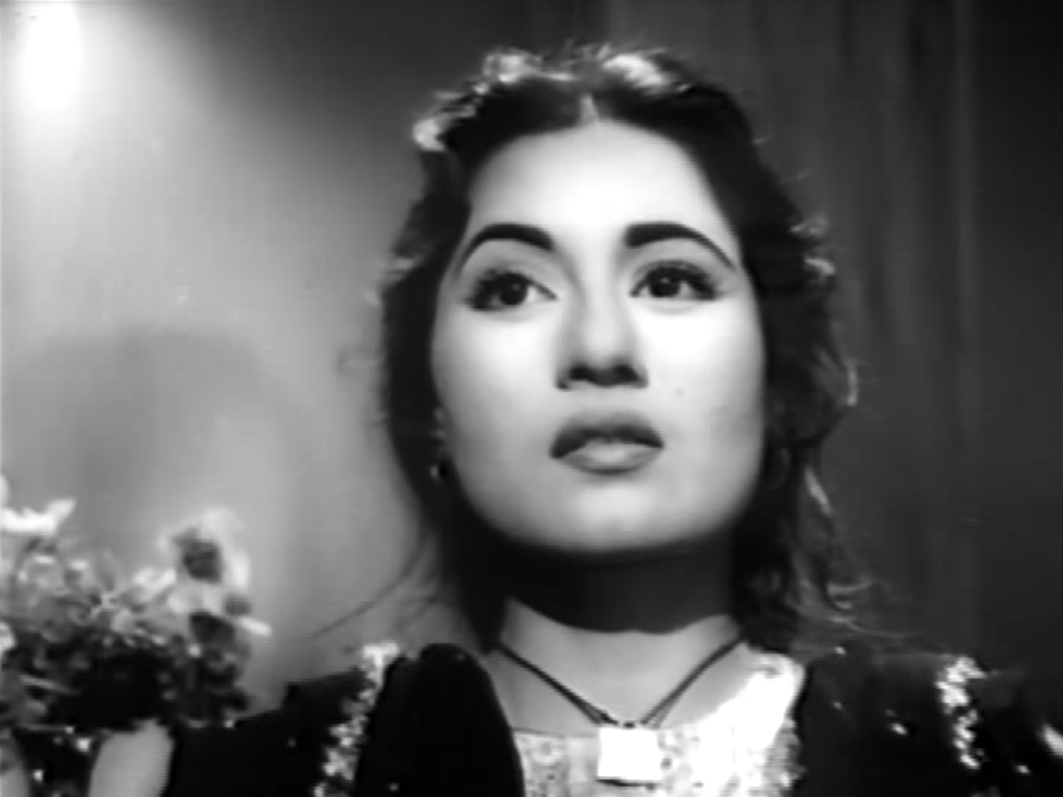
Madhubala charms all of us with her beautiful smile in Mughal-e-Azam (1960).

Shamshad: bahaare.n aaj paighaam-e-muhabbat leke aayii hai.n
The spring has brought a message of love.
baDii muddat me.n ummiido.n kii kaliyaa.n muskuraayii hai.n
The flowerbuds of hope have smiled  after  a long time. 

gham-e-dil se zaraa daaman bachaakar ham bhii dekhe.nge
We shall protect ourselves from heartache and watch this spectacle.
ajii haa.n ham bhii dekhe.nge
Yes, we shall watch this spectacle.   

 Lata: agar dil gham se khaalii ho to jiine kaa mazaa kyaa hai?
If the heart is empty of pain, then what pleasure can one find in living?
na ho khuun-e-jigar to ashq piine kaa mazaa kyaa hai?
If the heart does not bleed, then what pleasure can one find  in swallowing tears? 

muhabbat me.n zaraa aa.nsuu bahaakar ham bhii dekhe.nge
We shall shed a few tears in love and watch this spectacle. 
ajii haa.n ham bhii dekhe.nge
Yes, we shall watch this spectacle.  

Shamshad: muhabbat karnevaalo.n kaa hai bas itnaa hii afasaanaa
Such is the story of lovers: 
taDapnaa chupke chupke aahe.n bharnaa ghuT ke mar jaanaa
They quietly suffer; their eyes fill with tears; they  suffocate and die. 
kisii din yeh tamaashaa muskuraakar ham bhii dekhe.nge
We shall smile one day and watch this spectacle.  

ajii haa.n ham bhii dekhe.nge
Yes, we shall watch this spectacle.   

Lata: muhabbat hamne maanaa zindagii barbaad kartii hai
We admit that love can destroy one’s life.  
yeh kyaa kam hai ki mar jaane pe duniyaa yaad kartii hai?
But, is it unworthy if the the world remembers lovers after they die? 
kisii ke ishq me.n duniyaa luTaakar ham bhii dekhe.nge
We shall sacrifice the world for someone’s love and watch this spectacle. 
ajii haa.n ham bhii dekhe.nge
Yes, we shall watch this spectacle.  

terii mahfil me.n qismat aazamaakar ham bhi dekhe.nge
In the gathering of your court, we will test our fate. 

Glossary

qismat: fate;  aazamaanaa: to test; ghaDii bhar ko: fleetingly; nazdiik: close; qadam: feet; paighaam-e-muhabbat: message of love; baDii muddat me.n: after a long time; ummiid: hope; daaman bachaanaa: to protect; khuun-e-jigar: blood of the heart; ashq piinaa: to swallow tears; aa.nsuu bahaanaa: to shed tears; afasanaa: story; aahe.n: eyes; ghuTnaa: to suffocate; tamaaashaa: spectacle; barbaad: destroyed; luTaanaa: to sacrifice.

Yeh Ishq Ishq Hai Lyrics and Translation: Let’s Learn Urdu-Hindi

Bollywood Qawwali Barsaat Ki Raat Shyama Ratna

Ratna (left) and Shyama (right) lead the qawwali “Yeh Ishq Ishq Hai” from the hit Bollywood film Barsaat Ki Raat (196)

For our next post, we provide an English translation of “Yeh Ishq Ishq Hai” qawwali (and its prelude “Na to Caravan ki Talaash Hai“) from the all-time classic film Barsaat ki Raat (1960). For anyone familiar with the beautiful lyrics of this Sahir Ludhviani masterpiece, you know that “Yeh Ishq Ishq Hai” is the crowning jewel of the qawwali genre. The ultimate in lyrical poetry, allusions, wit, and transcendent symbolism, “Yeh Ishq Ishq Hai” was no easy task to translate and dissect. Sahir Ludhviani, who also later penned the gems from films like Taj Mahal (1963), wrote an album of love poetry for Barsaat Ki Raat--from “Zindagi Bhar Nahii.N Bhoolegi” to “Mai.N Ne Shaayad Tumhe” to la pièce de résistance, “Yeh Ishq Ishq Hai.”
Bharat Bhushan Barsaat Ki Raat qawwali

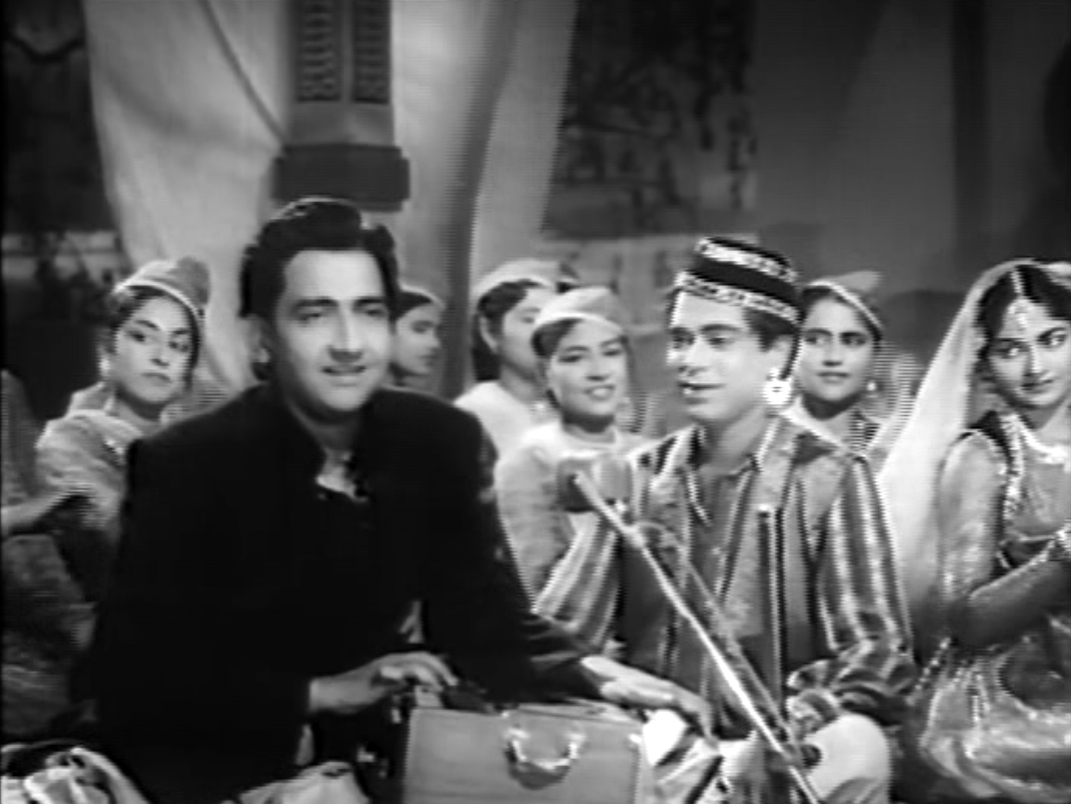
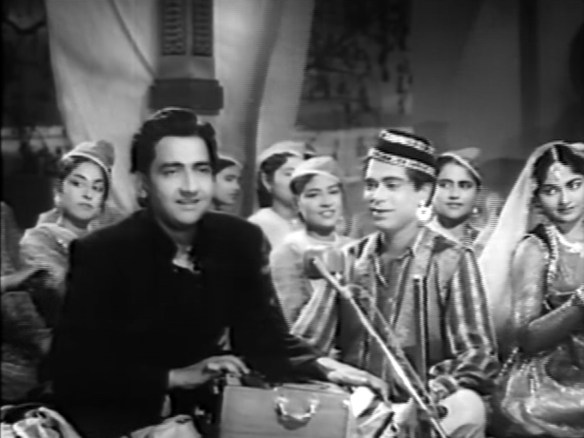
Bharat Bhushan jumps in to save the girls’ qawwali team in “Yeh Ishq Ishq Hai” from Barsaat Ki Raat (1960)

Through this culmination piece of the film’s ongoing qawwali competition, both hero (Bharat Bhushan) and the heroine (Madhubala) are reunited after a long and painful separation. Mohammed Rafi, Asha Bhonsle, and Manna Dey vie to out-do each other in this clever, powerful discussion of the meaning of love, but at the song’s climax Rafi brings the qawwali to a heart-stopping triumphant finish that wins his team the competition. It is a real pleasure to appreciate the many levels on which the qawwali can be understood–from religious, to romantic, to quite literal–after singing “ilaaj koi to maut hai,” Shyama literally falls sick to her deathbed, or as Bharat Bhushan croons, “nikalii Radha saj ke,” Madhubala appears miraculously at the doorway from the prison of her house. Come follow along with our translation of this epic qawwali and it will be clear why “Yeh Ishq Ishq Hai” made Bollywood film history!
Madhubala Barsaat Ki Raat

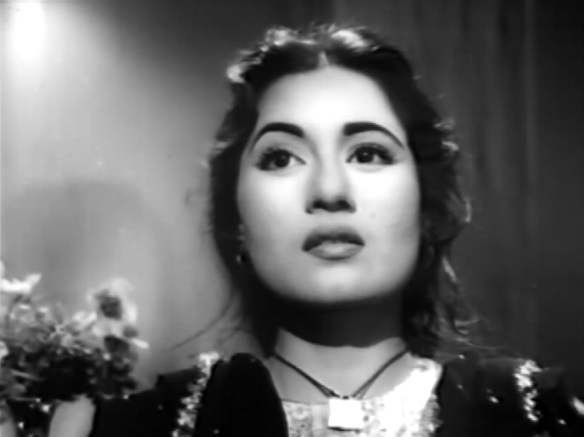
Madhubala hears Bharat Bhushan on the radio and decides to find him in Barsaat Ki Raat (1960)

Yeh Ishq Ishq Hai Lyrics and Translation

MALE:

Na to caaravaan ki talaash hai
I am not in search of a caravan
Na to humsafar ki talaash hai
I am not in search of a fellow traveler
Mere shauq-e-khaana kharaab ko teri rehguzar ki talaash hai
That ruined place of my desire searches for the path that leads to you

FEMALE:

Mere naamuraad junoon ka hai ilaaj koi to maut hai
If there is any cure for my unfortunate obsession, then it is death
Jo davaa ke naam pe zehar de
Give me that medicine whose name is poison
Usi chaaraagar ki talaash hai
I am in search of such a healer

Tera ishq hai meri aarzoo,
Your love is my desire
Tera ishq hai meri aabroo,
Your love is my honor
Dil ishq, jism ishq hai, aur jaan ishq hai
My heart is love, my body is love, and my life is love
Imaan ki jo poochho to imaan ishq hai
If you ask for faith, then that is love too
Tera ishq mai.N kaise ChhoD doo.N?
How could I ever leave your love?
Meri umr bhar ki talaash hai
That love is what I have been searching for all my life

MALE:

Yeh ishq ishq hai, ishq ishq, yeh ishq ishq hai, ishq ishq
This is love, this is love, this is love
Jaan-soz ki haalat ko jaan-soz hi samjhegaa
Only one in torment can understand the condition of a fellow sufferer
Mai.N shamaa se kehta hoo.N mehfil se nahii.N kehta
I am speaking to the flame, not to the company gathered here
Kyonki yeh ishq ishq hai, ishq ishq, yeh ishq ishq hai, ishq ishq
For this is love, this is love, this is love

FEMALE:
Sahar tak sab ka hai anjaam jal kar khaak ho jaana
By dawn, everything will burn and be reduced to ashes
Bhari mehfil mei.N koi shamaa yaa parvaana ho jaaye
Everyone in this gathering shall became either flame or moth
Kyo.N ki yeh ishq ishq hai, ishq ishq, yeh ishq ishq hai, ishq ishq
For this is love, this is love, this is love

MALE:

Vehshat-e-dil rasn-o-daar se roki na gayi
Love is not stopped by the madness of the heart or ropes and the gallows
Kisi khanjar, kisi talvaar se roki na gayi
It is not stopped by any dagger, by any sword
Ishq Majnu ki woh aavaz hai jiske aage koi Laila kisi deewaar se roki na gayi,
Love is that voice of Majnu’s which Laila followed and which no barrier could stop
Kyo.N ki yeh ishq ishq hai, ishq ishq, yeh ishq ishq hai, ishq ishq
For this is love, this is love, this is love

Woh hanske agar maa.Nge.N to hum jaan bhi dede.N,
If she laughs and asks, then I would even give my life
Haa.N yeh jaan to kya cheez hai? Imaan bhi dede.N!
Yes, after all what is this life? I would even give up my faith!
Kyo.N ki yeh ishq ishq hai, ishq ishq, yeh ishq ishq hai, ishq ishq
For this is love, this is love, this is love

Naaz-o-andaaz se kehte hai.N ki jeena hoga,
I am told that I must live with my fate gracefully
Zehar bhi dete hai.N to kehte hai.N Ki peena hoga
They give me poison, and say I must drink
Jab mai.N peetaa hoo.N to kehte hai.N ki marta bhi nahii.N,
But when I drink it, then they say I won’t die
Jab mai.N martaa hoo.N to kehte hai.N ki jeenaa hogaa
When I am dying, they say I must live
Yeh ishq ishq hai, ishq ishq, yeh ishq ishq hai, ishq ishq
For this is love, this is love, this is love

Mazhab-e-ishq ki har rasm kaDi hoti hai,
The laws and customs of love are very strict
Har qadam par koi deewaar khaDi hoti hai
At every step, there is a barrier standing
Ishq aazad hai, Hindu Na Musalmaan hai ishq,
Love is free, love is neither Hindu nor Muslim
Aap hii dharm hai aur aap hii imaan hai ishq
Your own duty and your own faith alone is love
Jis se aage nahii.N shekh-o-Brahaman dono.N,
Both Hindu and Muslim religious men cannot surpass this
Us haqeeqat ka garajtaa hua ailaan hai ishq
The reality of that thundering proclamation is love

(FEMALE in Panjabi):

Ishq na puchhe deen dharm nu, ishq na puchhe jaataan
Love does not ask your religion or creed, love does not ask your social class or caste,
Ishq de haatho.N garam lahu vich doobiyaan laakh baraataan ke
Love has drowned thousands of wedding revelers in its fiery blood
Yeh ishq ishq hai, ishq ishq, yeh ishq ishq hai, ishq ishq
This is love, this is love, this is love

MALE:
Raah ulfat ki kaThin hai ise aasaan na samajh
The path of love is dangerous, do not think it easy
Yeh ishq ishq hai, ishq ishq, yeh ishq ishq hai, ishq ishq
This is love, this is love, this is love

FEMALE:
Bahut kaThin hai Dagar panghat ki
The path to the riverside is very dangerous
Ab kya bhar luau.N mai.N Jamuna se matki?
Now how can I fill my jug with water from the banks of the Jamuna River?
Mai.N jo chali jal jamuna bharan ko dekho sakhi ji mai.N jo chali jal jamuna bharan ko
As I was on my way to fill my jug with water from the Jamuna,
Nand kishor mohe roke jhaadon
The young boy of Nanda [Krishna] stopped me
To kya bhar luau.N mai.N Jamuna se matki?
So how can I fill my jug with water from the banks of the Jamuna River?

MALE:
Ab laaj raakho more ghoonghat pat ki
Now protect my honor, this veil of mine
Jab jab Krishn ki bansi baaji,
When Krishna played his flute
Nikali Raadhaa saj ke
Radha emerged, dressed up
Jaan ajaan ka dhyaan bhulaa ke,
Forgetting all she was taught
Lok laaj ko taj ke
She left the honor of society
Haaye ban ban Doli Janak dulaari,
The darling child of King Janak [Sita] swayed into the forest
Pehenke prem ki maalaa
And wore a garland of love
Darshan jal ki pyaasi Meera
Meera thirsty for her a glimpse of her Lord
Pii gayii vishh ka pyaalaa aur phir araj kari
Drank a glass of poison and then pleaded
Ke laaj raakho raakho raakho, laaj raakho dekho dekho,
Protect my honor, protect my honor, protect my honor
Yeh ishq ishq hai, ishq ishq, yeh ishq ishq hai, ishq ishq
This is love, this is love, this is love

Allah rasool ka farmaan ishq hai
The commands of God and Mohammed are love
Yaanii Hadith ishq hai, Quraan ishq hai
The teachings of Mohammed are love, the Quraan is love
Gautam kaa aur Maseehaa kaa armaan ishq hai
The wishes of Bhudda and Christ are love
Yeh kaayanaat jism hai aur jaan ishq hai
This material existence and this life are love
Ishq sarmad, ishq hii mansoor hai
Love is everlasting, love alone is victorious
Ishq Moosa, ishq Koh-e-Toor hai
Love is Moses, love is Mt. Sinai
Khaaq ko but, aur but ko devtaa karta hai ishq
Love turns clay into idols, and idols into Gods
Intahaa yeh hai ke bande ko khuda karta hai ishq
The pinnacle is that love has the power to turn a man into a revered God
Haan.N yeh ishq ishq hai, ishq ishq, yeh ishq ishq hai, ishq ishq
Yes, this is love, this is love, this is love

Glossary:

caravaan: caravan; talaash: search; humsafar: fellow traveler; shauq-e-khaana; desires, hobbies; barbaad: ruined; rehuguzar: pathway; naamuraad: unfortunate; junoon: obsession; ilaaj: cure; maut: death; davaa: medicine; zeher: poison; chaaragar: one who treats you, doctor, healer; aarzuu: desire; aabruu: honor; jism: body; imaan: faith; jaansoz: torment, soul-burning; sahar: the time before dawn; anjaam: conclusion; khaak: ashes; parvaanaa: moth (used allegorically as one blinded by love); vehshat: madness; rasn: rope; daar: gallows; khanjar: dagger; talwar: sword; LailaMajnu: legendary ill-fated lovers; awaaz: voice; deewaar: barrier, wall; cheez: thing; naazoandaaz: pride and style, grace; mazhab: law; kaDi: strict, harsh; qadam: step; azaad: free; dharm: Hindu religious duty; haqeeqat: reality; garajnaa: to thunder; ailaan: proclaimation; deen: Islamic obedience; jaataan: caste; lahu: blood; ulfat: love; kaThin: dangerous; aasaan: easy; Dagar: pathway; maTki: jug, pot; Nand kishor: young Krishna laaj: honor; ghuunghat: veil; bansi: type of flute; dhyaan: meditation; lok: people, society; ban: forest; Dolna: to sway; Janak Dulari: The darling daughter of the mythological King Janak [Sita]; prem: love; maalaa: garland; darshan: glimpse of a deity; pyaasi: thirsty; vish ka pyaalaa: glass of poison; araj: plea; rasool: messenger [of God, Mohammed]; farmaan: commands; hadith: a report of the deeds and the teachings of Muhammed, Gautam: Buddha; Maseehaa: Jesus Christ; kaayanaat: material creation; sarmad: everlasting; mansoor: victorious, Moosaa: Moses; Koh-e-Toor: Mt. Sinai; khaaq: clay; but: idol; devtaa: God; intahaa: pinnacle, culmination

Yes, that glossary was a mouthful. Even as it is, I must warn that many of these words have a far deeper religious meaning to them that cannot be summed up in the one or two words as I have defined them. But no one said the Hindustani language was easy, and this song is just loaded with Arabic-based and Sanskrit-based vocabulary as well as references from both Hindu and Islamic traditions. It’s part of why Urdu-Hindi is such a complex, beautiful and absolutely fascinating language. Let’s take a more in-depth look at some of these lines:

  • “Ishq Majnu ki woh awaaz hai…” according to the Arab legend, similar to Romeo and Juliet, Laila and Majnu (whose nickname means “madly in love”) were two star-crossed lovers from rival families. However, Laila fled from her house to be with the one she loved and it is said that as Majnu was caught and whipped, their love was so strong that Laila screamed and blood appeared to flow from Laila’s skin instead.
  • “Bahut kaThin hai Dagar panghat ki…” is actually a line from the great Amir Khusrau qawwali written during the 13th century. The qawwali refers in one sense to the risks of dishonor faced by Radha as she attempted to fetch water, another sense explores the risks of standing up for religious beliefs (in Khusrau’s case, an allegiance to Sufi saint Nizamuddin Auliya.) The line has now become a sort of idiomatic warning to not underestimate the burden of any difficult task.
  • “Jab jab Krishna ki bansi baaji…” refers to the tales of Hindu folklore of childhood lovers Krishna and Radha, the latter of whom risked familial honor and suffered teasing and torment from her girlfriends in her love for the young Lord.
  • “Janak dulari ban ban Doli…” is a reference to the Ramayan in which Sita, upon learning of her husband Ram’s banishment to the forest, renounced her title as well. Sita, it should be recalled, had a very lavish upbringing as she was the daughter of King Janak, so this was no simple sacrifice to live in the dangerous jungle. But Sita’s love was unparalleled, and although she was not otherwise compelled to accompany Ram to the jungle, did indeed join him out of pure devotion.
  • “Darshan jal ki pyaasi Meera…” refers to the legend of Krishna devotee and Rajput Princess, Meera Bai of the 16th century. Her zealous worship and love of Krishna inspired not only many famous bhajans we know and sing today, but the resentment of her brother-in-law who frowned upon her actions (eg. mingling with the poor, ignoring her husband, etc.) He made several notorious attempts to kill her, including forcing her to drink a glass of poison that Lord Krishna is said to have transformed into nectar and saved her when she pleaded for the Lord to protect her honor.

As you can probably tell, I LOVE this qawwali. I discover new things every time I enjoy it (for example, anyone else notice how the background clappers only start shrugging their shoulders cliched bhangra-style ONLY when Ratna starts singing in Panjabi? Coincidence? I think not!) The song indeed transcends all religious and material loyalties, bringing the audience a dazzling, other-wordly experience. For anyone who’s tired of all the allegories and vocabulary quizzes, here’s the long-awaited behind-the-scenes gossip:

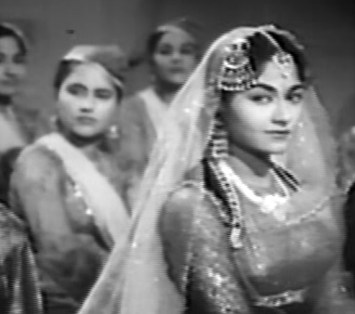
Did you know Bharat Bhushan actually got married in real life to Ratna (who ironically played the only character in the film NOT in love with him!) Surprise, right!? She was his second wife, and some even say that later mild-mannered Bharat Bhushan had had an affair with none other than Meena Kumari. Did the scandals never end in this town?

For more Urdu bliss, check out our post on the beauty of Urdu poetry in Hindi films!

-Mrs. 55
Ratna Barsaat Ki Raat

Ratna, wife of Bharat Bhushan, plays a sassy side-kick in the film Barsaat Ki Raat (1960)

Aap Ki Nazaron Ne Samjha Lyrics and Translation: Let’s Learn Urdu-Hindi

A musical match for the ages: Lata Mangeshkar and Madan Mohan

The collaboration between Lata Mangeshkar and Madan Mohan has produced some of the most cherished songs in the musical history of Hindi cinema. Think of gems such as  “lag jaa gale,” “nainaa barse rimjhim rimjhim,” or “tu jahaa.n jahaa.n chalegaa,” to name a few. Today, I’m going to share the lyrics and translation for a ghazal from Anpadh (1962) that is widely considered to be one of this duo’s finest: “aap kii nazaro.n ne samjhaa.” Penned by Raja Mehndi Ali Khan, the lyrics of this song are an equal match for the beauty of the musical composition and rendering. The beauty of the lyrics, however, is perhaps best appreciated once you can get over the whole slave-master dynamic that is going on as Mala Sinha sings to Dharmendra in the film. Although I admit that it is bizarre to refer to your lover as “banda-parvar” (master, lord), it is important to remember that these lyrics were written for the society of 1960s India: gender norms from that era differ dramtically from those established in modern times. At this time, the ideal Indian woman was expected to be submissive to her husband, and this sentiment is reflected in many songs like this one from the period.

An interesting piece of trivia: after the ghazals from Anpadh were released, it is said that composer Naushad supposedly told Madan Mohan that he would trade all of his own compositions for this one song! Although Madan Mohan rarely got his due from audiences back then, it’s nice to hear that his fellow music directors recognized his talent.

-Mr. 55

P.S. Please, for my sake, go to YouTube and give a thumbs-down to Bally Sagoo’s atrocious remix of this song. I don’t understand how these people sleep at night after they ruin the classics (seriously, how did they just change the taal here from 7-beat rupak to 8-beat kaharvaa?)

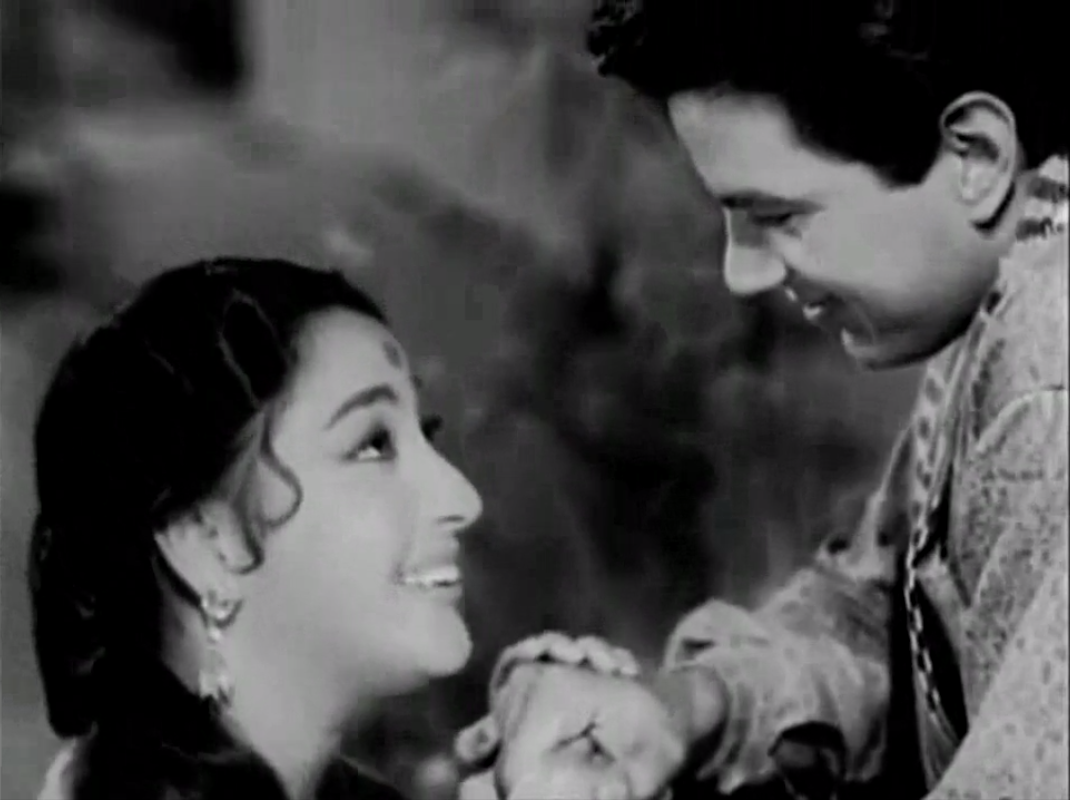
Mala Sinha expresses her devotion to the handsome Dharmendra in Anpadh (1962)

Aap Ki Nazaron Ne Samjha Lyrics and Translation

aap kii nazaro.n ne samjhaa pyaar ke qaabil mujhe
Your glances deemed me worthy of love.
dil kii ai dhaDkan Thahar jaa, mil gayii manzil mujhe
Oh stop, my heartbeats, for I have found my destination.

jii hame.n manzuur hai, aap kaa yeh faislaa
Yes, this decision of yours is acceptable to me.
kah rahii hai har nazar, bandaa parvar shukriyaa
My every glance is saying, “Thank you, oh lord!”
ha.nske apnii zindagii me.n, kar liyaa shaamil mujhe
As you brought me into your life with a smile. 

aap kii manzil huu.n mai.n, aur merii manzil aap hai.n
I am your destination, and you are mine.

kyo.n mai.n tuufaa.n se Daruu.n? meraa saahil aap hai.n
Why shall I fear the storm? You are my shore.
koii tuufaa.no.n se kah de, mil gayaa saahil mujhe
Someone tell the storms that I have found my shore.

paD gayii.n dil par mere aap ki parchhaaiiyaa.n
Your shadows have cast upon my heart.
har taraf bajne lagii.n saikDo.n shahnaaiiyaa.n
In every direction, hundreds of shahnaiis are playing in celebration
do jahaa.n kii aaj khushiyaa.n, ho gayii.n haasil mujhe
Today, I have enjoyed the happiness of both worlds.

aap kii nazaro.n ne samjhaa pyaar ke qaabil mujhe
Your glances deemed me worthy of love.

Glossary

nazar: glance; qaabil: worthy; manzil: destination; manzuur: acceptable; faislaa: decision; bandaa parvar: master, lord; haasil: achieved, obtained; saahil: shore; parchhaaiiyaa.n: shadows; saikDo.n: hundreds; shahnaaiiyaa.n: traditional Indian instrument resembling a clarinet (associated with weddings); shaamil: present.

Buried Treasure: Bollywood Songs with Hidden Stanzas

Bollywood record LP

My sweet Bollywood LP record collection.

You know how it is when you grow up listening to a song. Your mom played it on cassettes in the car, your Dad sang it while he worked, and eventually that gem from the 60s sneaks into your personal playlists when you buy an ipod. It’s all fine and dandy until years later, you’re browsing along youtube and BAM! A miracle occurs.

Turns out that song you knew and loved is only AN ABBREVIATED VERSION! The song as it’s played in the film is a whole stanza, a whole musical interlude and a half longer than you ever realized! There are few things on Earth that have the same feeling of win. It give you a rare, blissful tingle all over that can otherwise only be found by watching the wink sequence of a Rajesh Khanna film.

But why, you ask? It’s simple. Unlike now when the film soundtrack hits the iTunes store and you can download your songs one at a time, back in the good old days, marketing had to squeeze an entire soundtrack onto a single LP record (typically about 15-25 minutes per side). And if you planned on selling two hit film soundtracks on the same LP to increase sales, you could forget about musical fidelity. Something had to give.

Rajesh Khanna Farida Jalal Aradhana 3

Rajesh Khanna and Farida Jalal get sassy in the uncut version of “Baaghon Mei.N Bahaar Hai” from Aradhana (1969)

The result? Dozens of priceless compositions were slashed completely, and others had pieces ripped out from their insides to fit the needs of a hungry consumer market. Maybe I’m being melodramatic but I feel really strongly about this. Several hidden classical compositions from even the musical legend Pakeezah got shafted completely. Later as technology improved, recordings were taken from the LP versions and sold as cassettes, CDs, and mP3s. The originals can now often be found only in the films themselves or in the archives.

This is the face that got cut from “Baagho.N Mei.N Bahaar Hai.” Rajesh Khanna stars as an Indian Air Force pilot in Aradhana (1969). Are you sure it wasn’t the Navy though? Because I think I see a DREAM BOAT.

Here is a growing list of songs that over the years I’ve found are secretly much longer than I once thought:

  1. Kahin Dur Jab Din Dhal Jaaye (a whole beautiful poetic stanza is cut from the end)
  2. Piya Tose Naina (the ENTIRE magical 1965 Lata Mangeshkar opening is not in the soundtrack version–BIG travesty)
  3. In Bahaaro.N Mei.N Akelii (a whole stanza)
  4. Baaghon Mei.N Bahaar Hai (Rafi’s great comeback stanza)
  5. Aaj Kal Mei.N Dhal Gayaa (in the film, the male and female version are combined in a fabulous way)
  6. Jhumka Gira Re (a whole extra stanza and some sweet prelude music)
  7. Honton Pe Aisi (one minute of introductory dance music that is a huge game-changer)
  8. Aye Gulbadan (lost a final stanza)
  9. Thare Rahiyo (there’s a great musical a moment in the middle that gets totally cut)
  10. Dekhi Zamaane Ki Yaari (random parts are missing–granted the full thing is like 10 minutes, but it’s so worth it)
  11. Dil Ka Bhanwar Kare Pukar (an entire stanza!)
  12. Dum Maro Dum (maybe this doesn’t get cut per se, but there’s a whole reprise version that gets a huge shaft in the soundtrack!)
  13. Ghar Aayaa Mera Pardesi (all the epic dream sequence music at the end)
  14. Kahin Deep Jale Kahin Dil (missing a bunch of creepy-cool interlude music. Also anyone notice the violins play an octave lower in the film? Weird.)
  15. Khwab Ho Tum Ya (the final stanza)
  16. Koi Nazaraaane Lekar (another whole stanza)
  17. Sau Saal Pehle (a great stanza at the end!)
  18. Tujhe Jeevan Ki Dor Se (missing a culmination stanza)
  19. Tu Jahaa.N Jahaa.N Chalega (how could you cut out Lata in her prime?!)
  20. Tera Phoolo.N Jaise Rang (at least a minute worth of dance music from the end that really sets the mood!)
  21. Pal Bhar Ke Liye Koi (the sassy final stanza that puts everything into perspective!)
  22. Jhoom Jhoom Dhalti Raat (the clutch stanza that has the meaning of “Kohra” explained therefore making it the title song–but you’d never have known!)

Mess with my songs? You just watch yourself.

So you can see, it’s a mix of all-time classics and the more obscure gems. No one is safe. I beg of you to add any more you know of that are missing. Perhaps this compilation can help a fellow sufferer in need see the light!

-Mrs. 55