Na Tu Zameen Ke Liye Lyrics and Translation: Let’s Learn Urdu-Hindi

Dilip Kumar Na Tu Zameen Ke Liye 5

Dilip Kumar is horrified to learn of his wife Bindu’s betrayal in Dastan (1972).

We now present the lyrics and English translation to the emotional Sahir Ludhianvi ghazalNa Tu Zameen Ke Liye” from Dastan (1972). Sung by Mohammed Rafi as the hero Dilip Kumar reels from the shock of discovering an affair between his wife Bindu and best friend Prem Chopra, “Na Tu Zameen Ke Liye” is a sympathetic voice in a world of disloyalty.

The true magic of the song comes from the lyrics from the pen of Sahir Ludhianvi–but you may be surprised to learn that this song is not entirely original! With the ghazal “Na Tu Zameen Ke Liye” Ludhianvi draws from the beautiful Sir Muhammed Iqbal (1877-1938) poem of the same name and contains the portending line:

Maqaam-e parvarish-e aah wa naalaa hai yeh chaman. Na sair-e gul ke liye hai, na aashiyaan ke liye.” [This garden is a place for you to sigh and see visions. It is neither for taking a leisurely stroll nor building a home.”]

Similarly, Ludhianvi’s lyrics warns the hero of the dangers lurking beneath the surface of circumstances too good to be true. “Na Tu Zameen Ke Liye” is a gleaming lotus of poetry that is well-worth the wait of an otherwise rather lackluster film. Thematically, the song is reminiscent of Ludhianvi’s earlier tragic poem, “Chalo Ek Baar Phir Se,” which carries the heavy burden of deception. Thrown from that garden of love into a world of disorder, “Na Tu Zameen Ke Liye” seeks clarity in an hazy, unforgiving world.
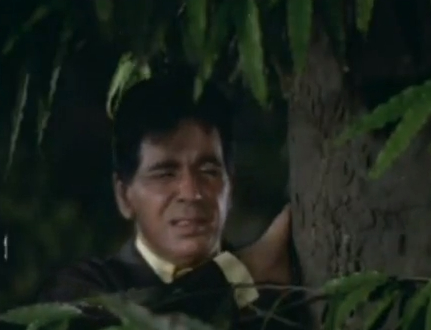
Dilip Kumar Na Tu Zameen Ke Liye 3

With tears and heartbreak, Dilip Kumar realizes his marriage is a sham in Dastan (1972). But I mean, your wife was played by Bindu…anyone could’ve seen that coming a mile away…

Check out the video of Dilip Kumar’s despair and follow along with our English translation of Sahir Ludhianvi’s gem “Na Tu Zameen Ke Liye” below!

Na Tu Zameen Ke Liye Lyrics and Translation:

Na tuu zameen ke liye hai na aasmaan ke liye
You belong to neither the earth nor the sky
Teraa wajuud hai ab sirf dastaan ke liye
Your existence belongs to legend alone

PalaTke suu-e chaman dekhne se kya hogaa?
What can be gained by looking back toward the garden of love?
Woh shaakh hii na rahii jo thii aashiyaa.N ke liye
For that branch no longer exists, which once belonged to your nest
Na tuu zameen ke liye hai na aasmaan ke liye
You belong to neither the earth nor the sky

Garaz-parast jahaa.N mei.N, wafaa talaash na kar
In this self-centered world, do not search for faithfulness
Yeh shaii banii thii kisii duusre jahaa.N ke liye
For such a thing was designed for a world other than our own
Teraa wajuud hai ab sirf dastaan ke liye
Your existence belongs to legend alone

Na tuu zameen ke liye hai na aasmaan ke liye
You belong to neither the earth nor the sky

Glossary:

zameen: earth; aasmaan: sky; waajuud: existence; sirf: only dastaan: story, legend; palaTnaa: to turn around; soo-e chaman: direction of the garden–a reference to Amir Khusrau ghazal 248 describing an idyllic garden of young lovers; shaakh: branch; aashiaa.N: dream house, nest; garaz-parast: self-centered, selfish; jahaa.N: world; wafaa: faithfulness, loyalty; talaash: search; shaaii: thing, object

Getting teary-eyed? Calm down, there’s a happy ending to this dastaan. Sharmila Tagore adroitly steps in as the patient lover who soothes a haggard Dilip Kumar’s broken heart. Frankly, could any man ask for more?!

Sharmila Tagore Dastaan

Sharmila Tagore selflessly hides her undying love for hero Dilip Kumar in Dastaan (1972).

This Sahir Ludhianvi ghazal was requested by loyal fan muskaan! Hope you enjoyed and keep those requests coming!

Mrs. 55

Tum Gagan Ke Chandrama Ho Lyrics and Translation: Let’s Learn Urdu-Hindi

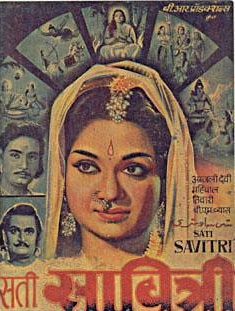
Sati Savitri

Sati Savitri (1964) portrays a Hindu myth about a wife’s unconditional devotion to her husband.

Today, we present the lyrics and English translation to a beautiful duet from Sati Savitri (1964): tum gagan ke cha.ndramaa ho. Directed by Shantilal Soni, Sati Savitri is a forgotten film in the Hindu devotional genre that narrates the love story of Savitri (played by Anjali Devi) and Satyavan (Mahipal). Savitri is celebrated in Hindu mythology as the ideal pativrata wife whose dedication to her husband allowed her to bring her husband back from Yama, the God of Death.

While the film itself has been forgotten, Laxmikant-Pyarelaal’s soundtrack for this movie is full of exquisite compositions that are still remembered today. Laxmikant and Pyarelaal had worked as assistants to the South Indian composer P. Adinarayana Rao on the music for Suvarna Sundari (1957). As the producer of Sati Savitri, P. Adinarayana Rao hired Laxmikant-Pyarelaal to compose the music for this film. In reverence of their former mentor, Laxmikant-Pyarelaal composed a classical soundtrack with several raga-based melodies. Aside from the lovely duet presented here, two stellar Lata solos from this film come to mind: jiivan Dor tumhii sang bandhii based in Yaman Kalyan and kabhii to miloge jiivan saathii based in Kalavati. 

The duet tum gagan ke cha.ndramaa ho is also rendered by Lata Mangeshkar and Manna De in raga Yaman Kalyan. In my opinion, no other playback singer renders Yaman Kalyan as gracefully as Lata does. Her prowess with this raga is matched here by Manna De, whose classical training set him apart from many of his male peers in the industry.

Apart from the beautiful melody and rendition, the lyrics of this duet are memorable for their use of chaste Hindi. Given the devotional Hindu story presented in this film, the use of Urdu poetry here would have seemed incongruous. Instead, lyricist Bharat Vyas has written a series of metaphors in pure Hindi where both Savitri and Satyavan use self-deprecating comparisons to describe themselves while using elevating comparisons to describe the other. In the mukhDaa, Savitri claims that she is the dust of the Earth whereas Satyavan is the Moon in the sky (tum gagan ke cha.ndramaa ho, mai.n dharaa kii dhuul huu.n). In response, Satyavan claims that he is merely the priest when Savitri is the prayer; he is thirst when Savitri is the nectar (tum ho puujaa mai.n pujaarii, tum sudhaa mai.n pyaas huu.n). This song certainly contains beautiful metaphors all around, but it is interesting to note that the poet decided to give the most self-deprecating line to the heroine: tum ho kaayaa mai.n huu.n chhayaa, tum kshamaa mai.n bhuul huu.n (You are the body, I am the shadow; you are forgiveness, I am the sin). Why are we not surprised?

You might have noticed that images from the film are missing from this post. Normally, when Mrs. 55 or I translate a song, we try to include images from the movie’s picturization of the song to go along with our entries. I tried searching for a long time, but I was unable to find any images or video clips of Sati Savitri on the internet (except for the film poster displayed above). If any of our readers have more information to share about this rare and forgotten film, we would love to hear about it! Until next time…

-Mr. 55

Tum Gagan Ke Chandrama Ho: Lyrics and Translation

tum gagan ke cha.ndramaa ho, mai.n dharaa kii dhuul huu.n
You are the Moon of the sky, while I am the dust of the Earth.
tum praNay ke devtaa ho, mai.n samarpit phuul huu.n
You are the God of love, while I am a devoted flower.
tum ho puujaa mai.n pujaarii, tum sudhaa mai.n pyaas huu.n
You are the prayer, I am the priest; you are nectar, I am thirst.

tum mahaasaagar kii siimaa, mai.n kinaare kii lahar
You are the boundary of the ocean, while I am a wave by the shore.
tum mahaasangiit ke svar, mai.n adhuurii saa.ns bhar
You are the notes of a profound melody, while I am an incomplete breath.
tum ho kaayaa mai.n huu.n chhayaa, tum kshamaa mai.n bhuul huu.n
You are the body, I am the shadow; you are forgiveness, I am the sin.

tum ushaa kii laalimaa ho, bhor kaa sinduur ho
You are the redness of daybreak, the vermillion of dawn.
mere praaNo.n kii ho gunjan, mere man kii mayuur ho
You are the humming of my spirit, the peacock of my mind. 
tum ho puujaa mai.n pujaarii, tum sudhaa mai.n pyaas huu.n
You are the prayer, I am the priest; you are nectar, I am thirst.

tum gagan ke chandramaa ho, mai.n dharaa kii dhuul huu.n
You are the Moon of the sky, while I am the dust of the Earth.

*Female lines in red are sung by Lata Mangeshkar. Male lines in green are sung by Manna De. 

Glossary

gagan: sky; cha.ndramaa: Moon; dharaa: Earth; praNay: love; devta: god; samarpit: devoted; pujaarii: priest; sudhaa: nectar; mahaasaagar: ocean; siimaa: boundary, border; kinaaraa: shore; lahar: wave; svar: musical note; adhuurii: incomplete; kaayaa: body; kshamaa: forgiveness; bhuul: sin, mistake; ushaa: daybreak, dawn; sinduur: vermillion; praaN: spirit; gunjan: humming; mayuur: peacock.

Goan composer Anthony Gonsalves conducts Lata Mangeshkar and Manna De on stage in Bombay (1958). Laxmikant and Pyarelaal are seated toward the right.

Kabhi Kabhi Mere Dil Mein Lyrics and Translation: Let’s Learn Urdu-Hindi

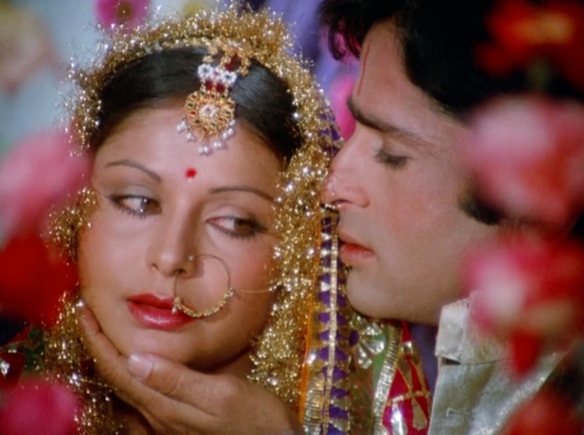
kabhi kabhi shashi kapoor rakhee 3

Shashi Kapoor and Rakhee celebrate their wedding night with song in Kabhi Kabhi (1976).

Happy Valentine’s Day! In honor of the occasion, we present the lyrics and full English translation to one of the great love poems of Hindi films: “Kabhi Kabhi Mere Dil Mein” from the 1976 star-studded mega-hit Kabhi Kabhi.

Penned by that evergreen poet Sahir Ludhianvi, “Kabhi Kabhi” remains on top of any list of Bollywood love songs. The lyrics are written from the heart in adoration of a woman on a couple’s wedding night. The song is reflective and gentle, but bursting with a beautiful excitement of what lies ahead. Kabhi Kabhi revolves around the love affairs of the protagonists and their effects on the next generation. The ageless devotion expressed in this song continues to evolve and evoke new meanings as the film progresses from one revelation to the next.

An interesting aspect of this song is that it is sung from a male perspective by a female heroine (after all, the song was dedicated to her in the first place by Amitabh Bachchan!) Lines like “Suhaag raat hai, ghunghaT uTaa rahaa hoo.N mai.N” evoke tragic irony as Rakhee feels her veil lifted by a man she does not love. Similarly, the final line “Mai.N jaantaa huu.N ki tuu gher hai, magar yuu.N hii” can be interpreted as both as an understanding that husband and wife still must get to know one another, but also as Amitabh Bachhan accepting that Rakhee now belongs to someone else. And just further to wring your heart, blind-to-reality Shashi Kapoor insists to her that if they ever meet the great poet who wrote these words, they must thank him for being with them on their wedding night. (Naturally, they all do meet up somehow–and it’s every bit a circus you can imagine!)

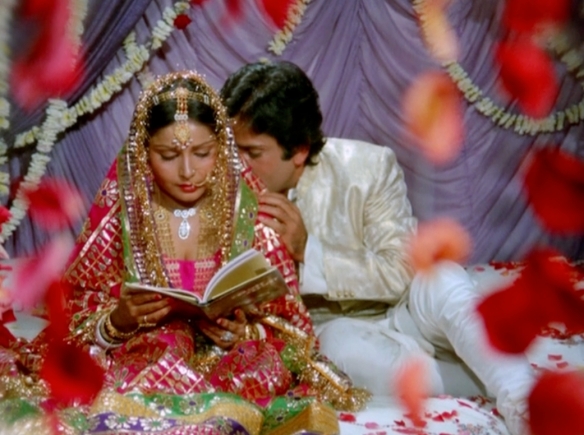
kabhi kabhi shashi kapoor rakhee 2

Rakhee sings from the anthology of poems written by a former lover in Kabhi Kabhi (1976).

You don’t need to know or appreciate the background of this song to fall head over heels for its melody and blissful lyrics. So celebrate the love in your life and enjoy our English translation of “Kabhi Kabhi Mere Dil Mein” below!

Kabhi Kabhi Mere Dil Mein Lyrics and Translation:

Mukesh:

Kabhi kabhi mere dil mei.N khayaal aataa hai
Sometimes this thought enters my heart

Lata:

Kabhi kabhi mere dil mei.N khayaal aataa hai
Sometimes this thought enters my heart
Ki jaise tujhko banaayaa gaya hai mere liye
That you were created only for me
Tu ab se pehle sitaaro.n mei.N bas rahii thii kahii.N
Before now you lived somewhere among the stars
Tujhe zameen pe bulaayaa gayaa hai mere liye
You were called to earth only for me

Kabhi kabhi mere dil mei.N khayaal aataa hai
Sometimes this thought enters my heart
Ki yeh badan, yeh nigaahe.N merii amaanat hai.N
That this body and these eyes belong to me
Yeh gesuuo.N kii ghanii chaao.N hai.N merii khaatir
These dark shadows of your hair are for me alone
Yeh honTh aur yeh baahe.N meri amaanat hai.N
These lips and these arms belong to me

Kabhi kabhi mere dil mei.N khayaal aataa hai
Sometimes this thought enters my heart
Ki jaise bajatii hai shahanaaiiaa.N sii raaho.N mei.N
As if wedding music is being played in the streets

Mukesh:

Suhaag raat hai, ghunghaT uTaa rahaa huu.N mai.N
It is our wedding night, I am lifting your veil

Lata:

Suhaag raat hai, ghunghaT uTaa rahaa huu.N mai.N
It is our wedding night, I am lifting your veil
SimaT rahii hai tuu sharmaake apne baaho.N mei.N
You shyly blush as I wrap you in my arms

Kabhi kabhi mere dil mei.N khayaal aataa hai
Sometimes this thought enters my heart
Ki jaise tuu mujhe chaahegii umr bhar yuu.N hii
That you will love me forever like this
UThegii merii taraf pyaar kii nazar yuu.N hii
That you will always lift this loving gaze to me

Mukesh:

Mai.N jaantaa huu.N ki tuu gher hai magar yuu.N hii
I know you are still a stranger, however
Kabhi kabhi mere dil mei.N khayaal aataa hai
Sometimes this thought enters my heart

Glossary:

kabhi kabhi: sometimes, from time to time; khayaal: thought; sitaaraa: star; zameen: earth; badan: body; nigaahe.N: glances, eyes; amaanat: property; gesuu: hair; ghanii: dark; chaao.N: shadow; [kisii kii] khatir: [for someone’s] sake; honTh; lips; baahe.N: arms; amaanat: belonging; shahanaaii: a wind instrument usually played at weddings; raah: path, streets; suhaag raat: wedding night; ghunghaT: veil; sharmaanaa: to become shy; umr bhar: whole life; [kisii kii] taraf: [in someone’s] direction; gher: stranger

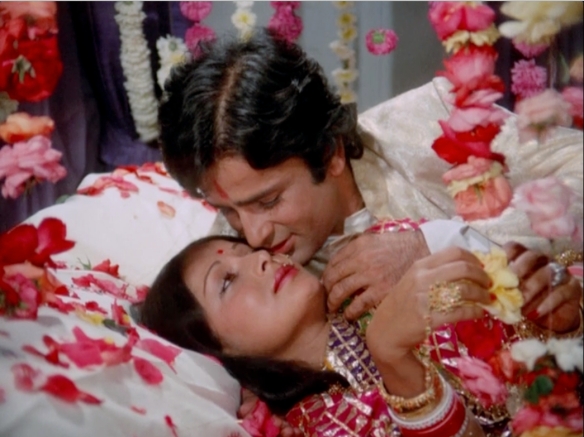
kabhi kabhi shashi kapoor rakhee 4

By the end of “Kabhi Kabhi”, the already awkward suhaag raat scene inevitably becomes more awkward.

This special Valentine’s day post is dedicated to my fiancé! It’s been two years since we’ve been together and I’ve loved every moment. Thank you for putting up with my singing old Lata songs outside my range while you’re trying to study, and for finally appreciating the epicness that is Mughal-e-Azam!

DSC_2492

My adorable fiancé and I met at as undergrads at Harvard where he was in the class ahead of me. He proposed two years later, and now we’re busy planning the wedding!

– Mrs. 55

Mata Saraswati Sharda Lyrics and Translation: Let’s Learn Urdu-Hindi

Saraswati

Saraswati, the Hindu goddess of knowledge and music, is worshipped each year on Basant Panchami.

Basant Panchami is a Hindu festival that celebrates the arrival of Spring through the worship of Saraswati, the goddess of knowledge and music. On this day, Ma Saraswati is worshipped with great fervor and devotion, especially by students in educational institutions across India.  In addition, many young children are given their first lesson in writing on this holiday through a ritual called haathe-korii. Since this auspicious holiday is coming up in just a few days on Friday, we are presenting the lyrics and English translation to one of Bollywood’s  only homages to goddess Saraswati: maataa sarasvatii shardaa from Alaap (1977).

As many of you probably know, bhajans dedicated to Saraswati are a rare commodity in the arena of Bollywood cinema. The majority of the film industry’s references to Hinduism focus on Vishnu in the form of Krishna and his consort Radha. What is the reason behind Bollywood’s obsession with Radha and Krishna? The most obvious answer is that the love stories presented in Hindi films lend themselves easily to comparisons to the romance shared between these two figures of Hinduism. Bollywood heroes can identify with flirtatious Krishna who uses his charm to seduce Radha whose delicate coyness resembles that of Bollywood heroines.  An austere deity like Saraswati, symbolizing wisdom and education, finds little glamor in an industry that is driven primarily by themes based on love and romance. 

In what context does Saraswati receive prominence in Hrishikesh Mukherjee’s Alaap (1977)? Tuned by Jaidev in Raga Bhairavi, a version of this bhajan sung by Yesudas, Madhurani, and Dilraj Kaur opens the film as Amitabh Bachhan prays to Saraswati for her blessings at the music school where he studies classical vocal. This bhajan also concludes the film when a version sung by Lata Mangeshkar and Dilraj Kaur is reprised on Rekha singing along with her son for her husband Amitabh who has contracted a severe case of tuberculosis.  The homage to Saraswati is fitting in Alaap because the film’s plot is driven in part by music. In Alaap, Amitabh Bachhan desires to become a classically trained vocalist against the wishes of his conservative father Om Prakash who refuses to accept music as a legitimate profession. He pressures Amitabh to become a lawyer like himself and the ensuing resentment leads to a bitter conflict between father and son that culminates in a tragic conclusion.

As the holiday of Basant Panchami approaches with its celebration of learning and new beginnings, we hope that you enjoy this beautiful bhajan and our English translation provided below. May Ma Saraswati bless all of us in our academic and musical pursuits during the upcoming year. Until next time…

-Mr. 55

P.S. This non-filmi Saraswati Vandana recorded by Lata is also divinely enchanting: yaa kundendu tushaar haar dhavalaa

AB

Amitabh Bacchan looks pious in white during prayers to Ma Saraswati in a music school in Alaap (1977)

Mata Saraswati Sharda: Lyrics and Translation

maataa sarasvatii sharadaa,
Mother Saraswati,
he maataa sarasvatii sharadaa!
Oh mother Saraswati!
vidyaadaanii dayaanii dukh-harinii
You are the giver of knowledge, the goddess of compassion, and the remover of sorrow.
jagatajananii jvaalaamukhii
You are the fire-mouthed mother of this world.
maataa sarasvatii sharadaa!
Mother Saraswati!

kiije sudrishTi
Please cast an auspicous glance upon us,
sevak jaan apnaa
and know us as your humble servants.
itnaa vardaan diije
Please grant us these boons:
taan, taal, aur aalaap
musical mastery of passagework, rhythm, and preludes.
buddhii ala.nkaar, sharadaa
Knowledge is your jewel, Saraswati.

he maataa sarasvatii shardaa!
Oh mother Saraswati!

Glossary

maataa: mother; sarasvatii: Hindu goddess of learning and music; sharadaa: another name for Saraswati; vidyaadaanii: giver of knowledge; dayaanii: goddess of compassion; dukh-harinii: remover of sorrow; jagatjananii: mother of the world; jvaalaamukhii: fire-mouthed; sudrishTii: auspicious glance; sevak: servant; vardaan: boon; taan: musical passagework; taal: rhythm; aalaap: prelude to a raagbuddhii: knowledge; ala.nkaar: jewel, ornamentation.

Rekha

Rekha sings a reprise of this bhajan with her son for her ailing husband Amitabh in the conclusion of Alaap (1977)

What Killed Madhubala: A Close Look at the Death of A Bollywood Icon

Rare Madhubala picture Indian actress

Madhubala, classic Bollywood actress, (1933-1969)

Madhubala was born Mumtaz Jahan Nehlavi on Valentine’s Day, February 14, 1933. Perhaps was no coincidence with such a birthday that Madhubala would grow up to become one of the most beloved romantic heroines of India. But her life could not share the happy endings of many of her films. This month, Madhubala would have turned 80 years old. Her premature death has likened Madhubala to iconic Hollywood greats like Marilyn Monroe, Judy Garland, Carol Lombard and even Bollywood’s own Meena Kumari–women of the silver screen who died before the world was ready.

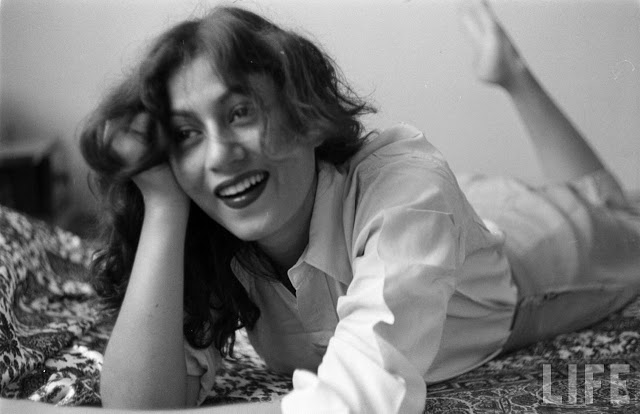
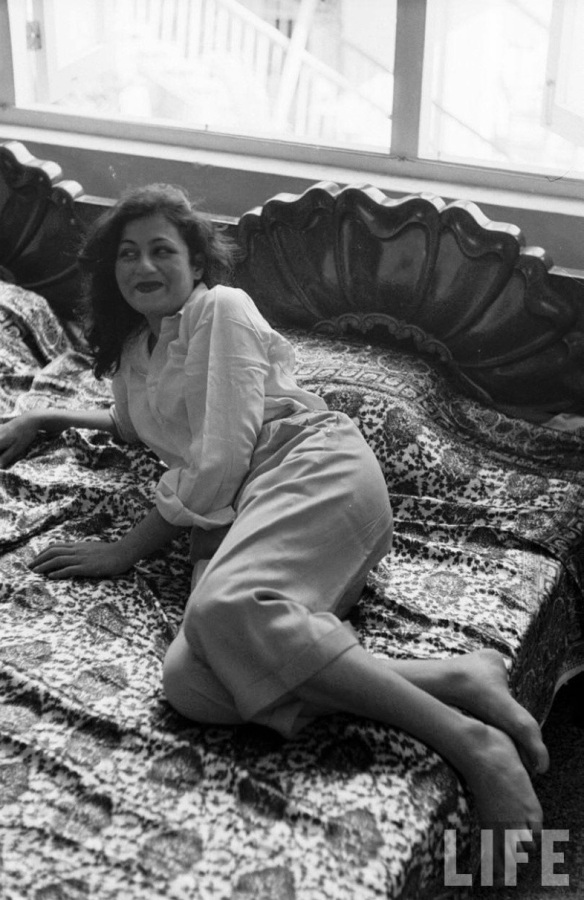
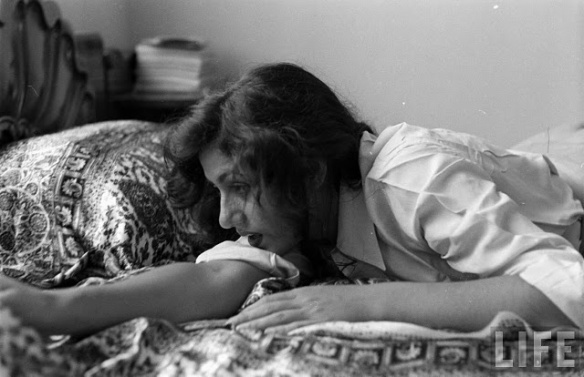
Madhubala’s unique allure was known worldwide–she had been featured in many American magazines including LIFE magazine whose rare photographs are featured in this post. Legendary director Frank Capra was eager to bring the mysterious Indian beauty to Hollywood and launch an international career–but his efforts were halted quickly by Madhubala’s conservative father. She was sought after by every great Bollywood director and actor from Dilip Kumar to Dev Anand and even romanced and married playback singer Kishore Kumar at the height of her illustrious career. For years, Madhubala was the Queen of Bollywood and the hearts of millions.

But what killed Madhubala, ending her short-lived reign? Could it have been prevented?

Rare vintage photograph of Indian actress Madhubala by LIFE magazine

Indian actress Madhubala as photographed by James Burke for LIFE magazine in 1951.

When Madhubala was born to a traditional Muslim family in Delhi, her elder sister Madhur Bhushan recalled that the baby was “blue”–a serious sign of cyanosis and poor oxygen perfusion. Madhubala had a Ventricular Septal Defect (VSD), a disorder colloquially referred to as a “hole in the heart.” A congenital abnormality of that kind allowed for mixing of both normal oxygenated blood and deoxygenated blood to be shunted through her body–an unhealthy adulteration with a bad prognosis. While a somewhat common birth defect (1 in 500 babies are born with a VSD), the medical community’s understanding of  the condition was in its infancy–VSD had first been described in 1879 and at the time of Madhubala birth, there was no treatment. Yet Madhubala continued to grow into a vivacious and beautiful young woman whose fragility was for many years known only to a few.

madhubala life magazine bed

Indian superstar Madhubala was sought by directors across the country and internationally during the height of her career.

The young beauty shot to fame in 1949 at the age of 16 in Kamal Amrohi’s Mahal with Bollywood veteran Ashok Kumar. One success followed another, establishing Madhubala as an A-grade star with a rare versatility and ebullience that hid her growing fatigue and weakness. In was not until filming scenes for Bahut Din Hue in 1954, Madhubala vomited blood on the set. It was an ominous sign that electrified the Indian media. The history of her heart defect came to public light as the mid-1950s brought her a string of failures, earning her the label “box office poison.” With skyrocketing notoriety, no longer was Madhubala’s illness a family secret.

Beautiful madhubala in a personal photograph

The lovely Madhubala in an unscripted moment in her room in Bombay.

Little did her family know, in the same year on the other side of the world at the University of Minnesota, Dr. Walt Lillehei was about to make medical history. After years of research in the field, on the morning of March 26, 1954, Lillehei performed the first surgical closure on a child with VSD. The surgery was a success that brought hope to thousands of families whose children were otherwise not expected to live past their 30th birthday.

Meanwhile in Bombay, Madhubala’s career revived and reached dazzling heights with smash hits like Chalti Ka Naam Gaadi (1958), Barsaat Ki Raat (1960) and the pinnacle of her career, Mughal-e Azam (1961). However, as Madhubala neared her 30th birthday, the grueling filming of historical epic Mughal-e Azam was to take a toll on the young actress’ health that is speculated to have hurried her demise.

An unscripted moment with Madhubala

Madhubala died on February 23, 1969 at the age of 36.

During the filming of the famous song, “Bekas Pe Karam Kijiye,” Madhubala’s performance turned art into life. The scene was of defiant courtesan Anarkali chained in the palace prison, singing for mercy. Director K. Asif actually made Madhubala perform in heavy, burdensome metal chains that weighed the actress down and cut into her skin. Her exhaustion and despair that you can see in the song are real–for a patient with VSD, such an amount of physical exertion truly mimicked the torture of her Mughal character. It became clear that her only hope lay in the the rumors of a surgical cure with the techniques recently pioneered by Dr. Lillehei.

Madhubala Life magazine

Bollywood Actress Madhubala was most remembered for her roles in Mahal (1949), Mughal-e Azam (1960), and Barsaat Ki Raat (1960).

In 1960, the actress sought treatment in London, but physicians refused to operate. Although Lillehei’s surgery had worked in children, physicians across the West had not perfected the technique in adults, and the first heart transplant in a human adult would not be performed for 7 more years. It was with a heavy spirit that Madhubala returned home to Bombay where she realized her career as an actress was over. She sought instead to enter film as a director, setting the stage to make tremendous strides for women in her directorial debut of the film Farz Aur Ishq. However, while the project was still in pre-production, Madhubala–the immortal woman with a mischievous smile and a mystical aura–succumbed to her illness at the age of 36. Tragically, within a few short years of her death, operations that closed VSDs were made widely available to adults. The history of heart surgery and Madhubala’s life crossed paths at a critical corner, but for a matter of time, never made that life-saving collision.

Rare beautiful photograph of Madhubala

The enigmatic beauty of Madhubala captures audiences generations after her death.

Perhaps if Madhubala had been born just a few years later or if Dr. Lillehei had begun his famous experiments just a few years earlier, Madhubala would have lived to see a surgery that would have allowed her to celebrate her 80th birthday today with us. Perhaps it was Madhubala’s early death itself that has immortalized her as a forever beautiful, forever carefree young woman who will remain always elusive. That ethereal woman haunting the mansion of Mahal (1949) or glittering in jewels of Mughal-e Azam (1961) is now only a shadow in our memories who vanished before time could transform her. In the words of her famous character from Mahal in which she starred at the age of 16:

Mai.N vehm nahii.N hoo.N, haqeeqat.” [“I am not an apparition, I am reality.”]

For fans of Madhubala all over, her words proved true only for a short while.

– Mrs. 55