Rahe Na Rahe Hum Lyrics and Translation: Let’s Learn Urdu-Hindi

Suchitra Sen Ashok Kumar Mamta

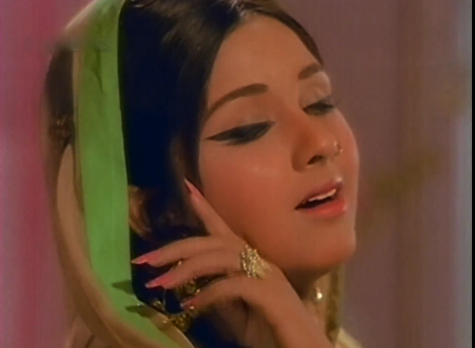
Ashok Kumar and Suchitra Sen star in the beautiful Asit Sen film Mamta (1966).

Today we showcase the lyrics and English translation of the melodious “Rahe Na Rahe Hum” from the film Mamta (1966). This gentle beauty sung by Lata Mangeshkar captures an inspiring philosophy on losing a loved one. An optimistic melody balances the tragic sentiments of its lyrics. While Ashok Kumar must leave Suchitra Sen to study law abroad, he pledges his loyalty to her upon the forthcoming separation and asks her to sing for him before he leaves.

The film Mamta explores the sacrifices Suchitra makes upon becoming a mother and like the thematically-similar blockbuster Aradhana (1969) demonstrates the resilience of a woman wronged by society. Majrooh Sultanpuri wrote the lyrics to Roshan’s superb compositions for Mamta that have kept the film’s legacy alive today. “Rahe Na Rahe Hum” continues to be a favorite with its playful chime opening and nectar-sweet vocals that betray the heartache of the scene.

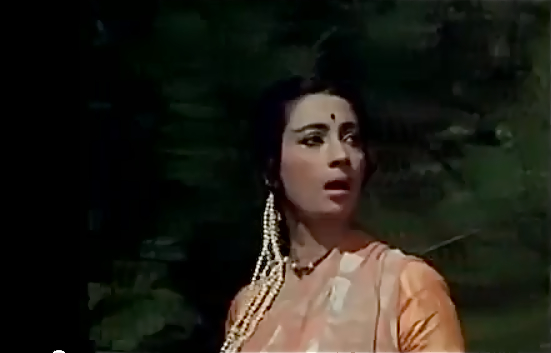
Suchitra Sen in Mamta

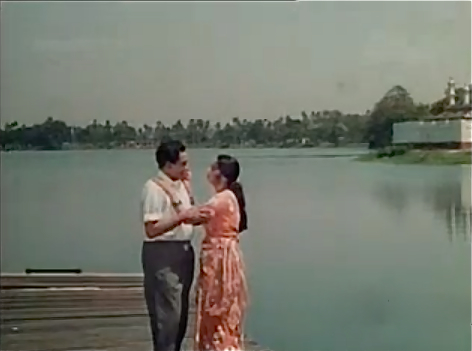
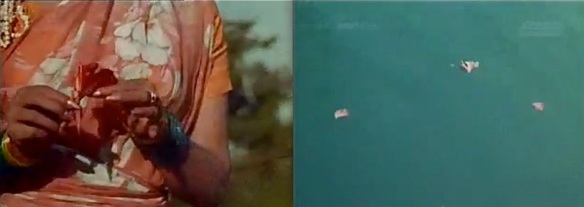
Suchitra Sen tears the petals from a flower on the eve of her separation from Ashok Kumar (right) and tosses the torn petals into the pond (left). The imagery of Suchitra’s identification with a flower recurs throughout the song and film–note how even her saari is decorated with a floral pattern!

“Rahe Na Rahe Hum” captures an appreciation of transience, framed as a neglected yet wonderous consequence of continuity, and highlights the transcendence of attachment to worldly phenomena such as seasons, physical proximity, and even time itself.

The tender line “ashqo.N se bhiigii chandnii mei.N ek sadaa si sunoge chalte chalte” allows simultaneously for mourning and recovery. While Suchitra acknowledges he will miss her, those tears of sadness will not last through the end of his journey that both know he must continue without her. Like the flowers petals that fall away drifting into the pond, Suchitra’s presence is not fettered by a set manifestation. Ultimately “Rahe Na Rahe Hum” is far more than mere words of consolation—it is an ode to love that celebrates the permanence of memory.

Suchitra Sen in Mamta

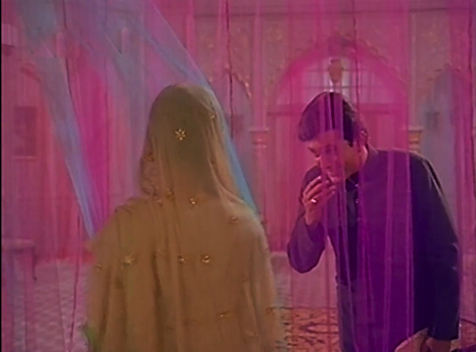
Suchitra Sen sings “Rahe Na Rahe Hum” as a parting gesture to the man she loves in Mamta (1966).

We hope you enjoy the full lyrics and English translation to the beautiful “Rahe Na Rahe Hum” below. Note that the plural pronoun “hum” can be translated as either “we” or “I.” I’ve chosen the singular for poetic purposes, but you can see how this no-doubt deliberate subtlety on the part of Sultanpuri sahib may color the translation slightly differently with each read. Watch the original song here!

Rahe Na Rahe Hum Lyrics and Translation: Let’s Learn Urdu-Hindi

Rahe na rahe hum mahakaa kareN.ge
Whether or not I am here, this fragrance will remain
Banke kali banke sabaa baagh-e-wafaa mei.N
As if a flower, as if a breeze in our devoted garden

Mausum koi ho, is chaman mei.N rang barse rahe.Nge hum khiraamaa
Whatever the weather may be in our garden, I will fill it gracefully with color
Chaahat ki khushbuu yuu.N hii zulfo.N se uDegii khizaa ho ya bahaare.N
The sweet fragrance of our love will still fly from my hair, whether Autumn or Spring
Yuu.N hii jhuumte aur khilte rahe.Nge
I will continue to sway and blossom
Banke kali banke sabaa baagh-e-wafaa mei.N
As if a flower, as if a breeze in our devoted garden
Rahe na rahe hum…
Whether or not I am here…

Khoye hum aise kyaa hai milnaa kyaa bichhaDnaa nahii.N hai yaad humko
I am so deeply lost in love that I no longer know separation from unity
Kooche mei.N dil ke jab se aaye sirf dil ki zameen hai yaad humko
Ever since you entered the lanes of my heart, I can only remember its world of love
Ise sarzameen pe hum to rahe.Nge
In that realm I will remain
Banke kali banke sabaa baagh-e-wafaa mei.N
As if a flower, as if a breeze in our devoted garden
Rahe na rahe hum…
Whether or not I am here…

Jab hum na ho.Nge, jab hamaare khaak pe tum rukoge chalte chalte
When I am gone, when you pause by my ashes as you walk
Ashqo.N se bhiigi chaandnii mei.N ek sadaa si sunoge chalte chalte
In the rainy moonlight that is wet from my tears, you will hear my call as you walk
Wohii pe kahii.N hum tum se mile.Nge
There somewhere, we both will meet again
Banke kali banke sabaa baagh-e-wafaa mei.N
As if a flower, as if a breeze in our devoted garden

Rahe na rahe hum mahakaa kareN.ge
Whether or not I am here, this fragrance will remain
Banke kali banke sabaa baagh-e-wafaa mei.N
As if a flower, as if a breeze in our devoted garden

Glossary:

mahaknaa: [a fragrance] to spread, kali: flower; sabaa: breeze; baagh: garden; wafaa: loyalty, devotedness; mausam: weather, atmosphere; chaman: garden; rang: color; khiraamaa: gracefully; chaahat: love, desire; khushbuu: sweet fragrance; zulf: hair; khizaa: Autumn; bahaar: Spring; jhuumnaa: to sway; khilnaa: to blossom; milnaa: to meet; bichhaDnaa: to separate; kooche: lane; zameen: world; yaad: memory; sarzameen: realm, society; khaak: ashes; ashq: tears; bhiigii: wet, rainy; chaandnii: moonlight, sadaa: call, voice

You may be interested to note that there is a duet version of this gem that is reprised at the end of the film by Mohammed Rafi and Suman Kalyanpur. Yes, it was the days of the famous Rafi-Mangeshkar feud–hence why the duets of the film necessitated recruiting additional singers (also from the same film, the flirtatious hit “In Baharo.N Mei.N Akeli” by Rafi and Asha as well as “Chhupa Lo Yuu.N Dil” featuring Lata and Hemant Kumar).

This song was requested by the one and only “lalten“! Let us know in the comments, does this song make you feel happy or bring tears to your eyes?

– Mrs. 55

Aye Mere Pyare Watan Lyrics and Translation: Let’s Learn Urdu-Hindi

IndianIndependenceDay

In honor of India’s 67th Independence Day on August 15th, we offer the lyrics and English translation to a patriotic classic from Kabuliwala (1961): ai mere pyaare vatan.

Inspired by a Tagore short story of the same name, Hemen Gupta’s Kabuliwala (1961) narrates the story of a dry fruit seller named Rehman (played by Balraj Sahni) who leaves Afghanistan to come do business in India. Missing the daughter he was compelled to leave behind in his homeland, Rehman finds comfort in befriending a young Bengali girl named Mini in Calcutta.

This emotionally stirring film is accompanied by an equally beautiful soundtrack composed by Salil Chowdhury and penned by Prem Dhawan. By all accounts, the most memorable song from this soundtrack is ai mere pyaare vatan. Sung with incredible pathos by Manna De, this song has become one of the filmi world’s greatest contributions to the oeuvre of Indian patriotic music. The prominence that this song has gained in the desh-bhakti genre of Indian music is somewhat ironic given its context in the film: it is picturized on Rehman, an alienated Pathan in India who yearns for his homeland of Afghanistan.

In the sphere of Hindi film music, ai mere pyaare vatan is considered one of the most beautiful expressions of love for one’s homeland–a universal force that can transcend all cultural boundaries. On this special day, let us embrace the patriotic spirit of these lyrics and remember always to treat our homelands with honor, love and respect.

-Mr. 55
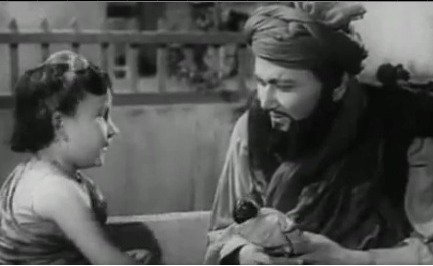
Balraj Sahni befriends a young girl who reminds him of his daughter back home in Afghanistan in Kabuliwala (1961)

Chhabi Biswas befriends a young girl who reminds him of his daughter back home in Afghanistan in the Bengali version of Kabuliwala (1957)

Aye Mere Pyare Watan: Lyrics and Translation

ai mere pyaare vatan, ai mere bichhDe chaman
Oh my dearest homeland, oh my lost garden!
tujh pe dil qurbaan
I shall sacrifice my heart for you.
tuu hii merii aarzuu, tuu hii merii aabruu 
You are my desire, you are my honor.
tuu hii merii jaan 
You are my life.

tere daaman se jo aaye un havaao.n ko salaam
I shall salute the winds that pass through your foothills.
chuum luu.n mai.n us zubaa.n ko jis pe aaye teraa naam
I shall kiss those lips that take your name. 
sab se pyaarii subaah terii sab se ra.ngii.n terii shaam 
You have the most beautiful of dawns and the most colorful of evenings.
tujh pe dil qurbaan 
I shall sacrifice my heart for you.

maa.n kaa dil ban ke kabhii siine se lag jaataa hai tuu
Sometimes you cling to my chest as my mother’s heart,
aur kabhii nanhii.n sii beTii ban ke yaad aataa hai tuu
and sometimes I remember you as my little daughter.
jitnaa yaad aataa hai mujhko utnaa taDpaataa hai tuu
The more I remember you, the more you torment me.
tujh pe dil qurbaan
I shall sacrifice my heart for you.

chho.D kar terii zamii.n ko duur aa pahu.nche hai.n ham
Having left your land, I have arrived somewhere far from home.
phir bhii hai yahii.n tamannaa tere zarro.n kii qasam
Swearing by every particle of your essence, I still harbor the desire
ham jahaa.n paidaa hue us jagah pe nikle dam
to take my last breath where I was born.
tujh pe dil qurbaan 
I shall sacrifice my heart for you.

ai mere pyaare vatan, ai mere bichhDe chaman
Oh my dearest homeland, oh my lost garden!
tujh pe dil qurbaan
I shall sacrifice my heart for you.

Glossary

vatan: homeland; bichhaDnaa: to be separated, lost; chaman: garden; qurbaan: sacrifice; aarzuu: desire; aabruu: honor; daaman: foothills; zubaa.n: tongue, lips, language; rangii.n: colorful; siinaa: chest; nanhii.n: little, young; taDpaanaa: to torment; tamanna: desire; zarra: particle; dam: breath.

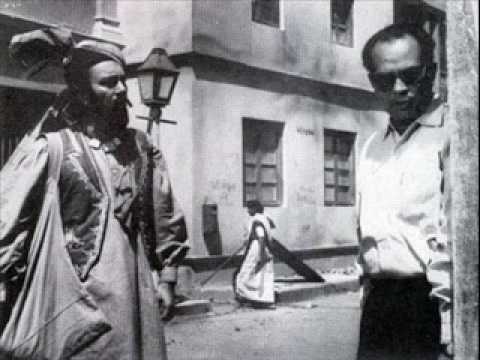
Balraj Sahni on-screen with producer Bimal Roy in Kabuliwala (1961)

Balraj Sahni on-screen with producer Bimal Roy in Kabuliwala (1961)

Yeh Kya Jagah Hai Doston Lyrics and Translation: Let’s Learn Urdu-Hindi

Rekha Umrao Jaan Yeh Kya Jagah Hai Doston

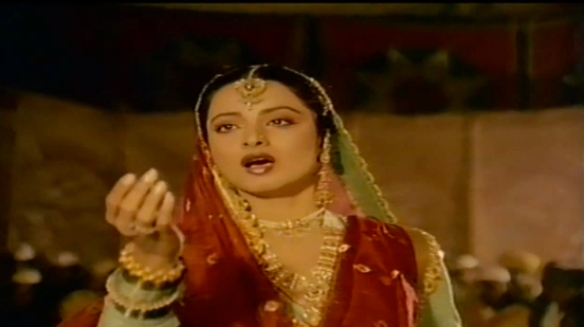
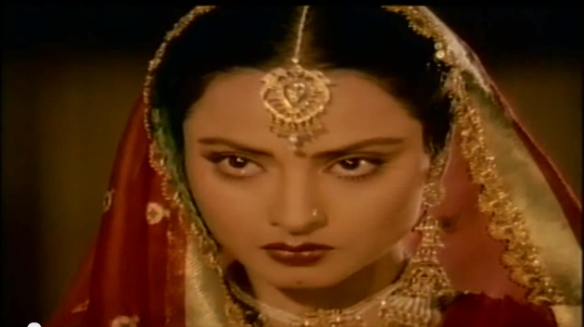
Rekha stars as a courtesan with a heart of gold in Umrao Jaan (1981).

We next present the beautifully tragic lyrics and English translation of “Yeh Kya Jagah Hai Doston” from Umrao Jaan (1981). Umrao Jaan is a heart-breaking film with depths more profound than the glittery tawaif dances it showcases. Based on the 1899 Urdu novel by Mirza Hadi Ruswa entitled, “Umrao Jaan Ada,” the 1981 film stays largely true to the original text.

Delving into the decadence of 19th century Lucknowi society, Umrao Jaan Ada portrays the rituals of a fascinating culture marked by luxury and oppression. I first read Ruswa’s novel during my junior year of college in Urdu class and fell in in love with the resilience of the story’s heroine.

Rekha in Umrao jaan 1981

Searching for a familiar face in a crowd of strangers, Rekha remains alone in Umrao Jaan (1981).

Interestingly, the framing of the 1981 Muzaffar Ali-directed film differs from the novel, told as a chronological account instead of a reminiscence. For me, this changes the tone of the film entirely: in the novel, the audience knows that although Umrao Jaan has suffered greatly in her lifetime, she eventually finds the peace and independence she deserves.

In the film, however, Umrao Jaan’s fate is unclear. We are left only with the stirring final image of her somber reflection in the mirror of her childhood home—an identity so long defined by others now confronted by its owner. Knowing these alternate endings colours the implications of Asha Bhonsle’s emotional “Yeh Kya Jagah Hai Doston” preceding them.

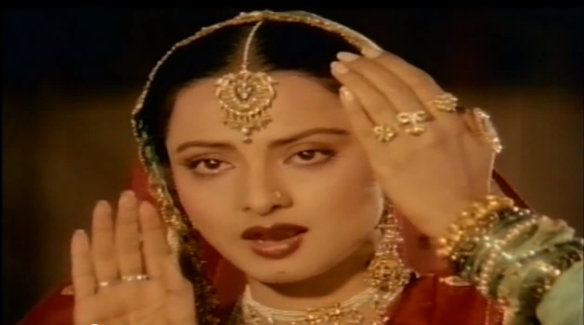
Rekha Umrao Jaan 2

Rekha hides a tear as Umrao Jaan sings to a gathering in her hometown of Faizabad.

Just prior to the film’s finale, Umrao Jaan (portrayed by Rekha) is asked to perform a song in her own town of Faizabad where she is now regarded as a pariah or stranger. The poetry that results in “Yeh Kya Jagah Hai Doston” evokes that sense of loss and confusion—a blameless fall from Eden with no path forward. As her own mother listens quietly outside the tent, Umrao Jaan’s addressing the unfamiliar gathering as “doston” becomes perhaps less ironic and more of an earnest plea.

Written by Shahryar with music by Khayyam, “Yeh Kya Jagah Hai Doston” is a counterpoint to the film’s earlier musical gems “In Ankhon Ki Masti” and “Dil Cheez Kya Hai.” With no ulterior motives, Umrao Jaan at last sings and dances as herself, voicing the real emotions within her heart. Many consider this song to be the film’s greatest composition.

We hope you enjoy our lyrics and translation to the soulful swansong, “Yeh Kya Jagah Hai Doston” below! Let us know your favorite Umrao Jaan moment in the comments!

Yeh Kya Jagah Hai Doston Lyrics and Translation:

Yeh kyaa jagah hai dosto.N?
What place is this, friends?
Yeh kaunsaa dayaar hai?
What kind of world is this?
Had-e-nigaah tak jahaa.N, ghubaar hii ghubaar hai
Where, as far as the eye can see, there are only dust storms

Yeh kis maqaam par hayaat mujhko lekii aa gayii?
To what realm has life brought me?
Na bas khushii pe hai jahaa.N, na gham pe ikhtiyaar hai
In this place I have no control over my happiness, and no choice in my sorrow

Tamaam umr ka hissaa maa.ngtii hai zindagii
Life demands an account of all my years
Yeh meraa dil kahe to kyaa? Yeh khud se sharmasaar hai
What will this heart of mine answer? It is so ashamed of itself

Bulaa rahaa hai kaun mujhko chilmano.N ki us taraf?
Who is calling me from the other side of those blinds?
Mere liye bhi kyaa koi udhaas beqaraar hai?
Is anyone there for me who is restless in sorrow?

Yeh kyaa jagah hai dosto.N?
What place is this, friends?
Yeh kaunsaa dayaar hai?
What kind of world is this?
Had-e-nigaah tak jahaa.N, ghubaar hii ghubaar hai
Where, as far as the eye can see, there are only dust storms

Glossary:

jagah: place; dayaar: world, region; had-e nigaah tak: until the limits seen by the eye; ghubaar: dust storm; maqaam: realm; hayaat: life; bas: power; khushii: happiness; gham: sorrow; ikhtiyaar: choice, tamaam umr: whole life, all the years; hissaa: account; zindagi: life; khud: self; sharmasaar: embarrassed, ashamed; chilman: curtains made of reeds, blinds; udhaas: sorrow; beqaraar: restless

As I read the pages of Ruswa’s novel, I was so struck by his descriptions of the admirable training in classical arts given to students of the kothe. These talents that in today’s society would be so valued as the pinnacle of culture, instead branded these women for a lifetime of ignominy. Today such diligence in the study and practice of classical voice, dance, and poetry is so rare and impressive!

Rekha in Umrao Jaan Yeh Kya Jagah Hai Doston

Ethereal beauty Rekha yearns for acceptance from her long-lost family in Umrao Jaan (1981).

For the grammar junkies among us, you may wonder why the “jagah” in this song is pronounced to rhyme with “yeh” instead of “kyaa.” Strictly speaking, the Lucknowi pronunciation of the word is the long “aah,” however, for poetic fluidity, Asha Bhonsle pronounces it here in the alternate form. Regional variants exist in the Hindustani language for similar words such as subah and vajah!

– Mrs. 55

Tu Jahan Jahan Chalega Lyrics and Translation: Let’s Learn Urdu-Hindi

SD

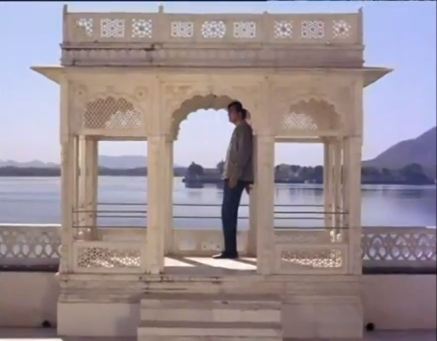
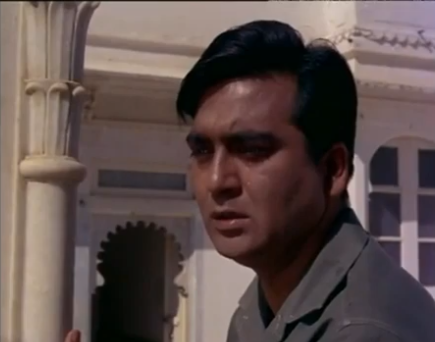
Against the stunning backdrop of the Lake Palace in Udaipur, Sunil Dutt mourns the loss of  his deceased wife in Mera Saaya (1966)

Today, we present the lyrics and English translation to the title track from Raj Khosla’s Mera Saaya (1966): tuu jahaa.n jahaa.n chalegaa. This timeless classic is embedded within the hearts of Hindi film music fans as an ode to love and its ability to provide strength and support during the most trying of circumstances.  

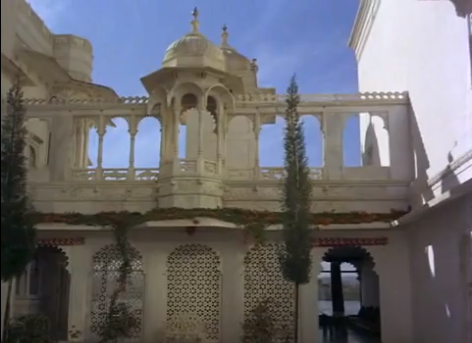
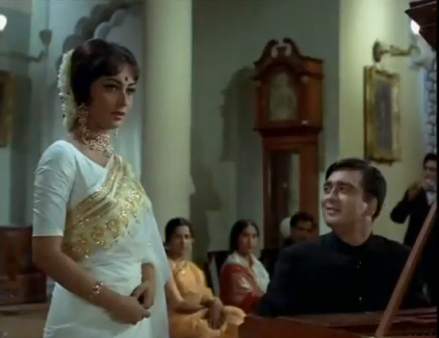
Unlike many songs from this era, tuu jahaa.n jahaa.n chalegaa is not used exclusively as a playback song in Mera Saaya. One version of this song plays in the background while a tormented Sunil Dutt sulks in confusion after an accused dacoit resembling his deceased wife (double role played by Sadhana) claims to be his wife weeks after her death. As he trudges around the beautiful Lake Palace (now one of India’s most luxurious and romantic hotels!) in Udaipur, Sadhana is nowhere to be found but we hear this song sung in full by her saayaa (shadow). Later in the film, tuu jahaa.n jahaa.n chalegaa is reprised in full when Sunil Dutt is listening to a record of his wife’s singing and a joyful flashback occurs to a party where Sadhana sings this song for guests along with his accompaniment on the piano. Interestingly, since Sunil Dutt taped his wife’s singing over an existing record, we hear a snippet of vah bhuulii dastaa.n, another haunting Lata-Madan Mohan gem from Sanjog (1961), during this version of the song.  

Mera Saaya (1966) contains some beautiful shots of the Lake Palace in Udaipur, Rajasthan

Mera Saaya (1966) has some beautiful shots of the Lake Palace in Udaipur, Rajasthan.

The title track from Mera Saaya epitomizes the magic that resulted from the collaboration between playback singer Lata Mangeshkar and music director Madan Mohan. An interesting anecdote about this song’s creation really brings this fact to life! After lyricist Raja Mehndi Ali Khan had completed the words, Madan Mohan had great difficulty composing a melody to finish the song. When Lata arrived on the day of this song’s recording, he told her the tune was not yet ready. Lata asked to see the lyrics and after humming a few lines, she said, “bhaiyaa, is me.n nand raag kaa istamaal kyo.n nahii.n karte?” Lata’s suggestion was enough to get Madan Mohan’s creative juices flowing, and he finished composing the tune in a jiffy. Decades later, this exquisite and gentle melody is still remembered as the textbook example of Raga Nand (a.ka. Anandi Kalyan) being used in Hindi film music!

Before tuu jahaa.n jahaa.n chalegaa was recorded, Raj Khosla was planning to release this movie under the name of Saaya. After listening to this song, he was so struck by its poetry that he decided to change the film’s title to Mera Saaya upon Madan Mohan’s suggestion. In my opinion, this type of camaraderie and rapport shared between artists of the Golden Era of Hindi films played a key role in producing cinema and music that has everlasting appeal. 

SD S

In a flashback, Sunil Dutt reminisces fondly about accompanying his wife on the piano to the title track of Mera Saaya (1966).

Does your shadow follow someone special in your life? If so, don’t forget to share this song and translation with that person! Thank you to one of our readers Ayla for sending in a request for this post. Until next time…

-Mr. 55

Tu Jahan Jahan Chalega: Lyrics and Translation

tuu jahaa.n jahaa.n chalegaa, meraa saayaa saath hogaa
Wherever you go, remember that my shadow will be with you.

kabhii mujhko yaad kar ke jo bahe.nge tere aa.nsuu
Whenever you shed tears in my memory,
to vahii.n pe rok le.nge unhe.n aa ke mere aa.nsuu
my tears will come and stop them in their tracks.
tuu jidhar kaa rukh karegaa, meraa saayaa saath hogaa
In whichever direction you face, remember that my shadow will be with you.

tuu agar udaas hogaa to udaas huu.ngii mai.n bhii
Should you ever become sad, then I will also partake in your sorrow.
nazar aauu.n yaa na aauu.n tere paas huu.ngii mai.n bhii
Whether you see me or not, I will always be by your side.
tuu kahii.n bhii jaa rahegaa, meraa saayaa saath hogaa
No matter where you are going, remember that my shadow will be with you.

mai.n agar bichhaD bhii jaauu.n, kabhii meraa gham na karnaa
Should I ever become separated from you, never mourn on my behalf.
meraa pyaar yaad kar ke kabhii aa.nkh nam na karnaa
Never moisten your eyes with tears in memory of my love.
tuu jo muD ke dekh legaa, meraa saayaa saath hogaa
Whenever you turn back to look at me, remember that my shadow will be with you. 

meraa gham rahaa hai shaamil, tere dukh me.n tere gham me.n
My sorrow has always remained present in your sorrow.
mere pyaar ne diyaa hai tera saath har janam me.n
My love has always accompanied you in every birth.
tuu koii janam bhii legaa, meraa saayaa saath hoga
In whichever birth you take, remember that my shadow will be with you.

tuu jahaa.n jahaa.n chalegaa, meraa saayaa saath hogaa
Wherever you go, remember that my shadow will be with you.

Glossary

saayaa: shadow; kisii ke saath honaa: to be with someone; bahnaa: to flow; aa.nsuu: tears; rok lenaa: to stop; rukh karnaa: to face; udaas: sad; nazar aanaa: to be seen; bichhaD jaanaa: to be separated; gham karnaa: to mourn; aa.nkh nam karnaa: to moisten eyes with tears; muD ke dekh lenaa: to turn back and look; shaamil rahnaa: to remain present; dukh: sorrow; kisii kaa saath denaa: to accompany someone;  janam: birth.

SD

Sunil Dutt’s portrayal of a grieving husband haunted by past memories in Mera Saaya (1966) is bold and compelling.