Yeh Mera Prem Patra Lyrics and Translation: Let’s Learn Urdu-Hindi

Yeh Mera Prem Patra Sangam Rajendra kumar vijayantimala

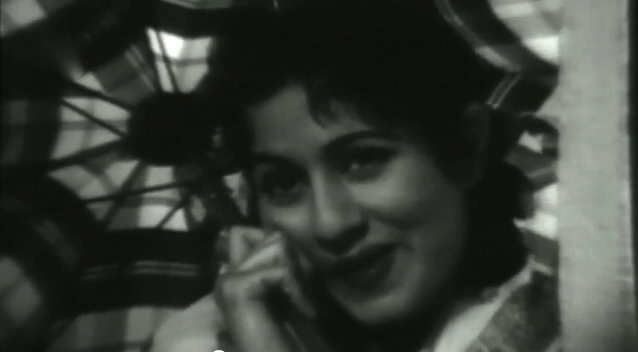
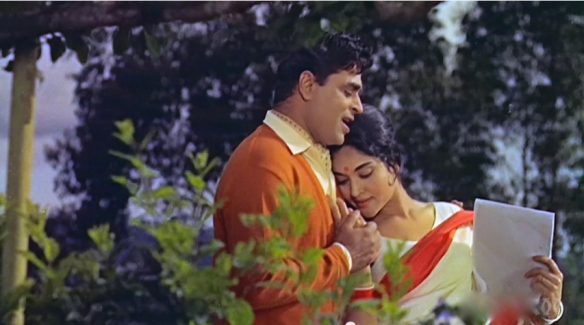
Vijayantimala reads a love letter from her childhood sweetheart Rajendra Kumar in “Yeh Mera Prem Patra” from Sangam (1964).

Happy Valentine’s Day to all our fans! In celebration of this romantic holiday, we present the lyrics and English translation to one of our favorite love songs, “Yeh Mera Prem Patra” from the hit film Sangam (1964). Radha (played by Vijayantimala) and Gopal (played by Rajendra Kumar) play two childhood lovers who have kept their feelings hidden because of Kumar’s best friend, Sundar (played by Raj Kapoor), who has professed his unwavering devotion to Radha for years. Although Radha spurns Sundar’s love, Sundar begs his best friend Gopal to make sure no other man spoils his chances when Sundar is called to serve in the air force on the northern front.

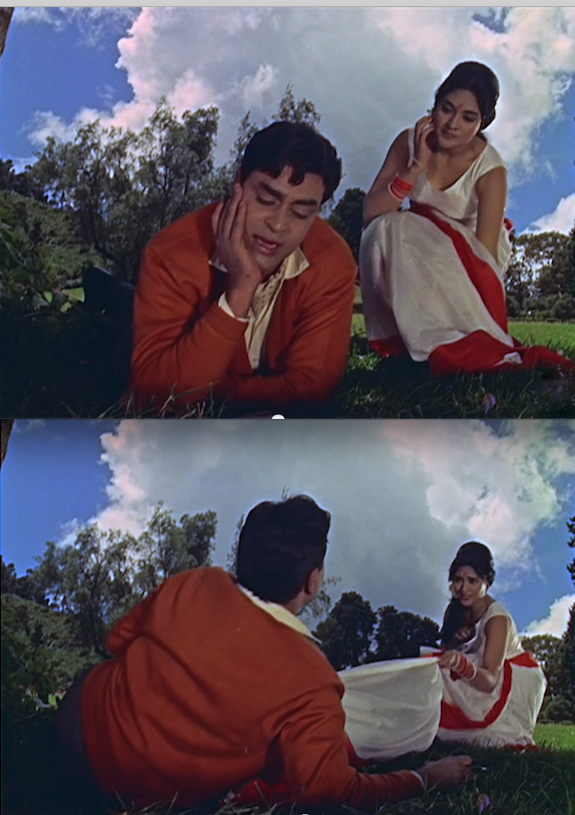
But then! Sundar is killed while serving his country–and in their shared mourning, Radha and Gopal can finally express their undying love for one another. A shining moment in Mohammed Rafi’s career, “Yeh Mera Prem Patra” is their outpouring of uninhibited romance. With a heavenly chorus in the air that highlights the dream-like world in which the two now find themselves, Radha runs across an open meadow to Gopal as he writes her a love letter. In fact, she is so eager to discover what he has written, that her sari falls from her shoulder in her haste, revealing the front of her blouse.

Let’s pause right here. For anyone uninitiated to classic Hindi films, believe me when I say, this NEVER happens. The heroine in classic Bollywood would never let her sari fall so revealingly, and surprisingly, Radha makes NO moves to adjust it. The scene is filmed brilliantly–because of the camera’s position, the sari show is purely for the viewer to ponder–Gopal is facing the audience and cannot see what we have all noticed. It’s as if the director, Raj Kapoor, is telling us that the romance we are witnessing is not purely chaste. And indeed, the like the Radha-Gopal of Hindu mythology, the film’s two lovers are not to be destined for eternal bliss.
Yeh Mera Prem Patra sari tussle

ABOVE: Vijayantimala quietly approaches Rajendra Kumar with her sari having fallen off her shoulder. BELOW: Rajendra Kumar and Vijayantimala tussle for the end of her sari playfully while the low camera height emphasizes the beautiful open skies.

The song references the famous Ganga and Jamuna rivers from whose geographical confluence with the river Saraswati (sangam), the film derives its name. The triangular symbolism and references to the sangam is evoked throughout the film, with each character embodying one of the three ancient rivers. Sangam made history as Raj Kapoor’s first technicolour film and one of the first Bollywood films to be shot in exotic locals such as Venice, Paris and Switzerland.

But beneath all the glitter, did you know there’s actually true love story behind this sweet poem? At the age of 20, the famed Urdu lyricist of “Yeh Mera Prem Patra,” Hasrat Jaipuri, fell in love his own Radha, a young Hindu woman from hometown in Jaipur. Though they never married, she would inspire many of his greatest poems. Jaipuri later recalled fondly in an interview:

“Meri haveli ke samne, ek badi khoobsurat ladki rehti jiska naam tha Radha. Aur ishq ka mahzab se, zaat paat se, koi taaluq nahii.N. Kisi se bhi ho sakta hai, kisi se bhi kiya jaa sakta hai. To mera unse pyaar hua. Taalim maine sher-o-shayari ki, mere naanaa madhoom/manhoom se haasil ki?, lekin ishq ka sabak jo hai, woh Radha ne padhaayaa ki ishq kya cheez hai.”

[“Near my home a very beautiful girl lived named Radha. And neither religion nor caste and creed have any power over love. It can happen with anyone and it can happen to anyone. And so I fell in love with her. I may have trained in poetry from my grandfather, but the lesson of love was taught by Radha.”]

“Yeh Mera Prem Patra” is the very love letter that Jaipuri wrote to his real life Radha–more than 20 years before Raj Kapoor would use the same sweet poem in Sangam! So this Valentine’s Day, we at Mr. and Mrs. 55 recommend you do something old-fashioned and write your special someone a romantic love letter! For inspiration, soak up Hasrat Jaipuri’s shy, tender lyrics and our English translation to the sentimental love letter, “Yeh Mera Prem Patra” below!

Yeh Mera Prem Patra Lyrics and Translation:

Meherbaa.Nlikhuu.N? “Haseenaa” likhuu.N? Yaa “dilruubaa” likhuu.N?
Should I write “compassionate one”? Should I write “beautiful one”? Or should I write “beloved”?
Hairaan huu.N ki aap ko is khat mei.N kyaa likhuu.N
I am puzzled by what to write in this letter to you

Yeh meraa prem patra paDh kar, ki tum naaraaz na honaa
When you read this love letter of mine, may you not be angry
ki tum merii zindagii ho, ki tum merii bandagii ho
For you are my life, for you are my prayer

Tujhe mai.N chaand kehtaa thaa, magar us mei.N bhi daagh hai
I used to call you the moon, but in the moon are blemishes
Tujhe suraj mai.n kehtaa thaa, magar us mei.N bhi aag hai
I used to call you the sun, but in the sun is ablaze
Tujhe itnaa hii kehta huu.N ki mujhko tumse pyaar hai, tumse pyaar hai, tumse pyaar hai
I tell you only this that I love you, I love you, I love you

Tujhe Gangaa mai.N samajhuu.Ngaa, tujhe Jamunaa mai.N samajhuu.Ngaa
I will think of you as the Ganges River, I will think of you as the Jamuna River
Tu dil ke paas hai itnii, tujhe apnaa mai.N samajhuu.Ngaa
You are so close to my heart, I will think of you as my own
Agar mar jaauu.N ruuh bhaTakegii tere intezaar mei.N, intezaar mei.N, intezaar mein
If I die, my soul will wander waiting for you, waiting for you, waiting for you

Yeh meraa prem patra paDh kar, ki tum naraaz na honaa
When you read this love letter of mine, may you not be angry
ki tum merii zindagii ho, ki tum merii bandagii ho
For you are my life, for you are my prayer

Glossary:

meherbaa.N: compassionate one; likhnaa: to write; haseenaa: beautiful lady; dilruuba: lover; hairaan: puzzled, stunned; khat: letter; prem: love; patra: letter; paDhnaa: to read; naaraaz: angry; zindagii: life; bandagii: prayer; chaand: moon; daagh: flaw, blemish; suraj: sun; aag: fire; pyaar: love; Gangaa: Ganges River; Jamunaa: Jamunaa River; dil: heart; [kisi ke] paas: to be nearby [something]; mar jaanaa: to die; ruuh: soul; bhaTaknaa: to wander; intezaar: wait
romance in the garden

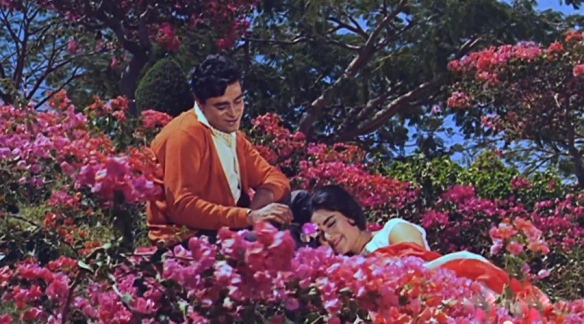
Rajendra Kumar and Vijayantimala romance each other in a sunlit garden in Sangam (1964). For once in his life, Rajendra Kumar’s outfit of choice adds to the ambiance rather than destroys.

One of my favorite moments both musically and cinematically in this song comes at the very end when Lata Mangeshkar picks up the chorus over a beautiful wide tracking shot of the lovebirds walking hand-in-hand in the Elysian forest. This heavenly moment can only be seen and heard in the movie, it was tragically cut from the record version we know so well!
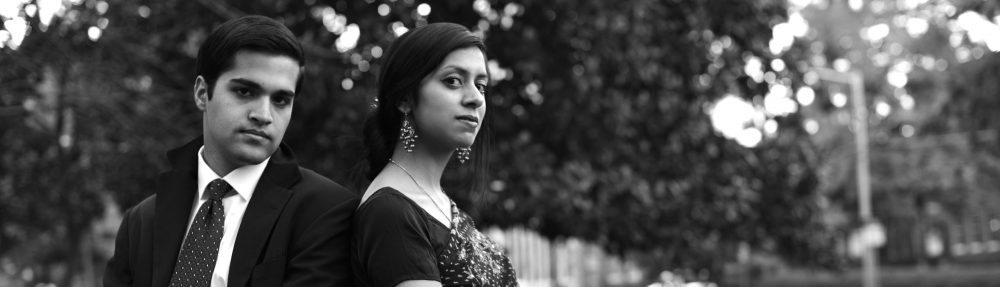
Mrs. 55 wedding

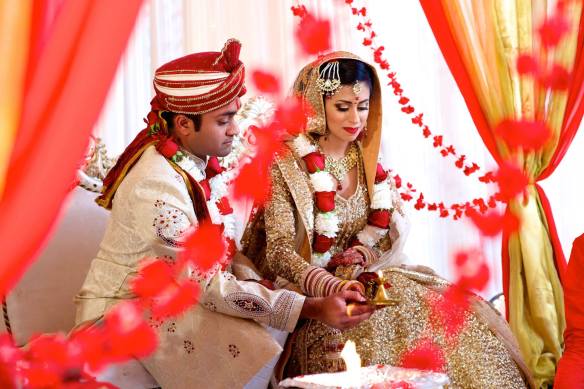
As promised, here is a photograph of Mrs. 55 finally marrying her college sweetheart last December!

Mrs. 55 adab arz

Adab arz hai! This love poem is dedicated to my very romantic new husband and personal Bollywood hero!

Soon after this song, Sundar surprises the couple by returning from war alive! Sundar then marries Radha because his devoutly loyal friend Gopal is unable to tell him his true feelings (like a typical Bollywood bromance, don’t you just love how the woman has basically ZERO say in all this?). Inevitably, of course, the famous love letter is later discovered and Raj Kapoor is heartbroken. See our English translation of the epic self-pitying “Dost Dost Na Raha” for more of the drama that unfolds!

But let us temporarily forget all that on this lovely Valentine’s Day. This beautiful ode was requested by dedicated fan Inderjit Wassi! Thank you for the poetic request!

– Mrs. 55

Thandi Hawa Kali Ghata Lyrics and Translation: Let’s Learn Urdu-Hindi

Madhubala in Mr. and Mrs. 55 (1955)

The epitome of modernity, feisty Madhubala croons poolside in Mr. and Mrs. ’55 (1955).

Today we present the lyrics and English translation of “Thandi Hawa Kali Gata” from our very own namesake Mr. and Mrs. ’55 (1955). The film follows an unlikely young couple, Madhubala and Guru Dutt, who are forced together by circumstance and end up challenging their own social mores, maturing, and finding love to essentially become an ideal match—a figurative “couple of the year.”

People tend to have strong feelings one way or another for this film. The music is hands-down fantastic, but the plot tends to be divisive, depending on how you view Guru Dutt’s stance on female emancipation in the 1950s. I tend to argue that the film is empowering—his narrative is social criticism of the flaws in patriarchal society, as well as an exploration of non-traditional female roles. While Madhubala’s character does indeed discover many virtues of a conventional Indian housewife, her realization that she would prefer marriage to divorce comes with a refreshing sense of maturity and self-discovery that in no way shackles her independence. Unlike many great heroines of the era, in Mr. and Mrs. ’55, Madhubala is feisty and does exactly what she wants, when she wants! I like that about a woman.

Madhubala in Mr. and Mrs. 55 Thandi Hawa

In the coming-of-age classic “Thandi Hawa Kali Ghata,” Madhubala blushes in Mr. and Mrs. 55.

Now let’s take this moment to talk about the ridiculous ribbons and pigtails flying around the set in this song. Don’t be shy, you know precisely what I’m talking about. Mr. and Mrs. 55‘ was not the first film (and certainly not the last) to idealize fully-grown women who did their hair like 5-year old girls. Every actress of Bollywood’s yesteryear from class-act Meena Kumari to joke-a-minute Asha Parekh has played the romantic lead with a hairdo that awkwardly imitates the elementary school kids. Yes, chew on that for a moment. There’s an entire slightly uncomfortable social theory behind the craze. Contrast this lunchbox look to Madhubala’s long flowing locks in the sweet duet “Udhar Tum Haseen Ho” toward the end of the film as she begins to accept her marriage to Guru Dutt. Symbolic, no?

But enough about my beef with pigtails. Sung by Guru Dutt’s own wife Geeta Dutt, there’s plenty to love in this uplifting jingle! Follow along with the video here and enjoy our English translation and lyrics to “Thandi Hawa Kali Ghata” below!

Thandi Hawa Kali Ghata Lyrics and Translation:

ThanDii hawaa, kaalii ghaTaa, aa hii gayii jhoom ke
A cold wind and black clouds have come with ebullience
Pyaar liiye, Dole, ha.Nsii, naache jiiyaa ghoom ke
Carrying love, laughter swayed, and my heart danced in swirls

baiThii thii chhup-chhaap yuu.N hii, dil kii kalii chhum ke mai.N
I was sitting quietly, caressing the flower of my heart
dil ne yeh kyaa baat kahii, rah na sakii sun ke mai.N
What my heart said, I could not stay there to listen
mai.N jo chalii dil ne kahaa aur zaraa jhoom ke
As I left, my heart spoke with even more exuberance
Pyaar liiye, Dole, ha.Nsii, naache jiiyaa ghoom ke
Carrying love, laughter swayed, and my heart danced in swirls

Aaj to mai.N apnii chhabii dekh ke sharam aa gayii
Today I became shy upon seeing my own reflection
Jaane yeh kyaa soch rahii thii ki ha.Nsii aa gayii
I do not know what I was thinking, but I suddenly laughed
LauT gayii zulf mere honTh meraa chhuum ke
My hair flew back and touched my lips
Pyaar liiye, Dole ha.Nsii, naache jiiyaa ghoom ke
Carrying love, laughter swayed, and my heart danced in swirls

dil kaa haar iktaar hilaa, chhiDne lagii raginii
The necklace of my heart struck a chord on the iktaar, and it began teasing out a melody
kajraa bhare nain liye, ban ke chaluu.N kaaminii
With kajra-lined eyes, I became a beautiful woman and set out
Keh do koii aaj ghaTaa barse zaraa dhoom se
Someone tell the clouds to rain thunderously today
Pyaar liiye, Dole, ha.Nsii, naache jiiyaa ghoom ke
Carrying love, laughter swayed, and my heart danced in swirls

ThanDii hawaa, kaalii ghaTaa, aa hii gayii jhoom ke
A cold wind and black clouds have come with ebullience
Pyaar liiye, Dole, ha.Nsii, naache jiiyaa ghoom ke
Carrying love, laughter swayed, and my heart danced in swirls

Glossary:

ThanDii: cold, hawaa: wind; kaalii: dark; ghaTaa: cloud; jhoom: ebullience, exuberance; Dolna: to sway; ha.Nsii: laughter; naachnaa: to dance; jiiyaa: soul, heart; laughter; ghoomnaa: to swirl; chhup-chhaap: absolutely quietly; chhabii: reflection, image; sharam aanaa: to become embarrassed, to become shy; zulf: hair; honTh: lips; haar: necklace; iktaar: a traditional Hindustani one-stringed instrument, raginii: a small song, kajraa: traditional Indian  eyeliner; nain; eyes; kaaminii: a beautiful, desirable woman; koii: someone; barasnaa: to rain; dhoom se: with noise

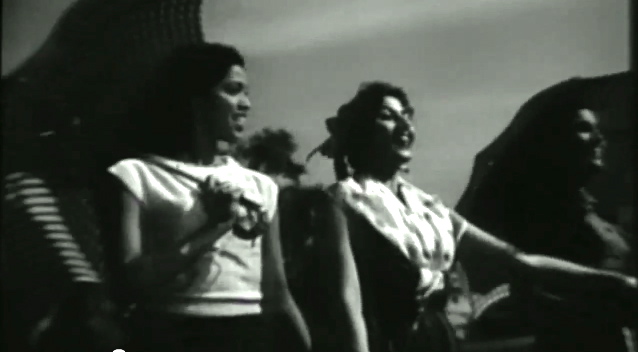
Madhubala and friends in Mr. and Mrs. 55 (1955).

Madhubala and her girlfriends join hands in a chorus of pigtails and parasols in Mr. and Mrs. ’55 (1955).

Don’t you love how this film is just bursting with the tension of modernization? Like many typical “coming-of-age” songs, lyricist Majrooh Sultanpuri employs nature-based allegories to describe a girl’s maturation to womanhood and the development of romantic inclinations. However, the song is unexpectedly filmed at the uber urban hangout of Mahatma Gandhi swimming pool in Bombay’s Shivaji Park! Gotta love those modern girls. Producer-director Nasreen Munni Kabir describes Guru Dutt’s cinematographic decision-making process while filming this song in her must-see documentary “In Search of Guru Dutt“!

This brilliant Geeta Dutt hit was requested by loyal fan Sonia! We know we’ve been taking longer than usual to get around to requests, but with Mr. 55 getting swamped in medical school and me getting down to the wire for wedding planning, we’re doing our best! Stay tuned–we love hearing from our fans!

– Mrs. 55


Chain Se Humko Kabhi Lyrics and Translation: Let’s Learn Urdu-Hindi

Asha Bhonsle and O.P. Nayyar share a joyful moment together. Photo Credit: indianexpress.com

Today, we present the lyrics and English translation to a soul-stirring melody composed by O.P. Nayyar and sung by Asha Bhonsle that has stood the test of time: chain se ham ko kabhiiAlthough this song was supposed to be included in Pran Jaye Par Vachan Na Jaye (1974) directed by S. Ali Raza, it never made the final cut! In spite of its prominent absence from a movie, this memorable composition has been treasured by Hindi film music lovers for years ever since it was released. While the profound beauty of this rare song never fails to earn universal appreciation, many fans may be surprised to learn about the behind-the-scenes drama surrounding the the making and release of chain se ham ko kabhii.

When Asha Bhonsle was 16 years old, she eloped with her elder sister Lata Mangeshkar’s 31-year-old personal secretary Ganpatrao Bhonsle against the wishes of her family. Over the course of an unhappy marriage, the allegedly abusive Ganpatrao grew suspicious of Asha’s faithfulness to their marriage and eventually cast her out of their home in 1960 . Pregnant with her third child, Asha left the Bhonsle household permanently in order to secure a better future for her children. A few years later, Asha and music director O.P. Nayyar began a nine-year romantic relationship in 1963 that quickly became the talk of the tabloids.  Although both Asha and O.P. were married legally to their spouses, they lived together for many years in O.P.’s penthouse flat at the Miramar building in Mumbai. During this period, the duo churned out a series of memorable musical hits that fans of Hindi film music still hold dear to their hearts: diivaanaa huaa baadal from Kashmir Ki Kali (1964), yeh hai reshmii zulfo.n kaa andheraa from Mere Sanam (1965), zaraa haule haule chalo more saajnaa from Sawan Ki Ghata (1966), yehii woh jagah hai from Yeh Raat Phir Na Aayegi (1966), and aao huzuur tum ko from Kismat (1968), among many other gems.

Sadly, this musical power couple encountered a rough patch in their relationship around 1972. One account of this story claims that Asha decided to leave O.P. when she saw him raising a hand and slapping her grown daughter Varsha. Whatever the reason may have been for their break-up, the couple had one last piece of unfinished business to deal with as they separated: the songs they had made together for the film Pran Jaye Par Vachan Na Jaye. Recorded before the couple had decided to part ways, records of these songs had been released several months in advance of the film’s premiere in 1974. Following the tragic break-up, Asha used her clout in the industry to have chain se ham ko kabhii deleted from the movie before it was released in theaters. However, the song had gained such widespread acclaim on its own that it won Asha her sixth Filmfare Award for Best Female Playback Singer in 1975. Since Asha refused to go to the ceremony to receive this award, O.P. Nayyar accepted the trophy on her behalf. It is said that O.P. then tossed the trophy out the window on his car ride home, ending their relationship on a truly sour note.

To this day, Asha refuses to acknowledge O.P. Nayyar publically and does not credit him for her early successes in the playback singing industry. Interestingly, in his old age, O.P. Nayyar overcame the bitterness of the duo’s break-up and admitted that Asha was “the best person I’ve ever met.

Chain Se Humko Kabhi: Lyrics and Translation

chain se ham ko kabhii aap ne jiine na diyaa
You have never let me live in peace.
zahar bhii chaahaa agar, piinaa to piine na diyaa
Yet, even if I asked to die by poison, you would not let me drink it.

chand ke rath me.n raat kii  dulhan jab jab aayegii
When the Night arrives as a bride on the Moon’s chariot,
yaad hamaarii aap ke dil ko taDpaa jaayegii
memories of me will continue to cause you heartache.
pyaar ke jalte zakhmo.n se jo dil me.n ujaalaa hai
The light in your heart emanating from our love’s burning wounds
ab to bicchaD ke aur bhii zyaadaa baDhnevaalaa hai
will continue to shine more brightly now that we are apart.
aap ne jo hai diyaa, vah to kisii ne na diyaa
What you have given to me, no one else has been able to replicate.
zahar bhii chaahaa agar, piinaa to piine na diyaa
Yet, even if I asked to die by poison, you would not let me drink it.

aap kaa gham jo is dil me.n din-raat agar hogaa
To bear your sorrow in my heart all day and night,
soch ke yah dam ghuTataa hai, phir kaise guzar hogaa?
the very thought of this is suffocating. How can I endure it?
kaash na aatii apnii judaayiimaut hii aa jaatii
If only death had come to me instead of this separation,
koii bahaane chain hamaari ruuh to paa jaati
then, under this pretext, my soul could finally rest at peace.
ek pal ha.nsnaa kabhii dil kii lagii ne na diyaa
My heart’s emotions have never let me smile for a moment.
zahar bhii chaahaa agar, piinaa to piine na diyaa
Yet, even if I asked to die by poison, you would not let me drink it.

chain se ham ko kabhii aap ne jiine na diyaa
You have never let me live in peace.

Glossary

chain: peace; zahar: poison; rath: chariot; dulhan: bride; ujaalaa: light; sulagnaa: to smolder; dam ghuTnaa: to suffocate; guzar honaa: to endure, subsist; kaash: if only; judaayii: separation; maut: death; bahaanaa: pretext; ruuh: soul; lagii: emotion, feeling.

In the context of this tumultuous backstory, the lyrics of chain se ham ko kabhii (penned by S.H. Bihari) are aptly fitting as Asha’s final swan song under O.P. Nayyar’s baton. Thank you to our reader Tanushree for requesting a post on this beautiful song and its interesting history–keep those requests coming! Until next time…

-Mr. 55
Pran

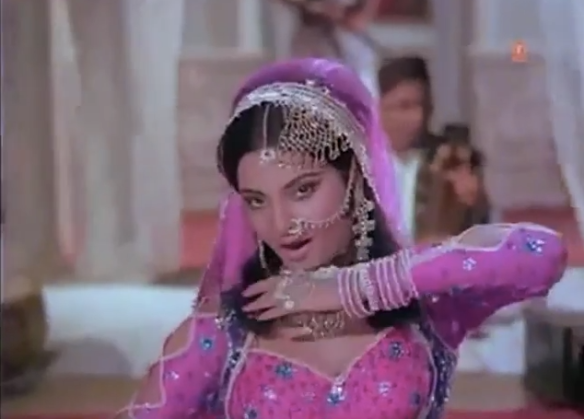
A young Rekha stars in Pran Jaye Par Vachan Na Jaye (1964). Since the song was deleted from the released film, details surrounding the picturization of chain se ham ko kabhii remain a mystery to this day.

Mera Joota Hai Japani Lyrics and Translation: Let’s Learn Urdu-Hindi

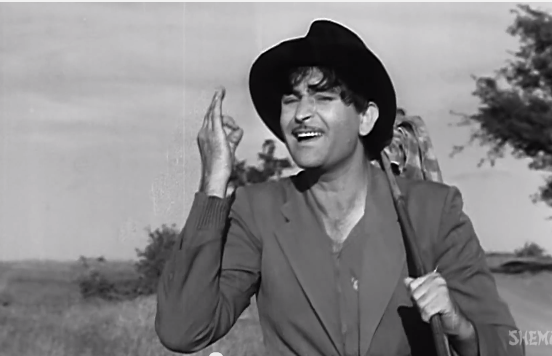
Raj Kapoor Shree 420 Charlie Chaplin

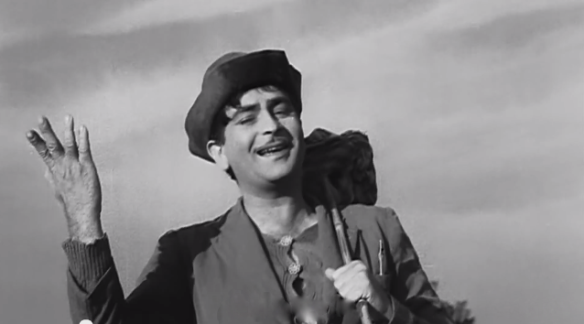
Raj Kapoor in his famous Charlie Chaplin incarnation from hit film Shree 420 (1955)

Today we showcase the lyrics and English translation of “Mera Joota Hai Japani” from Raj Kapoor’s Shree 420 (1955) to mark the occasion of India’s Independence Day! Shree 420 is truly a landmark film in Hindi cinema starring a legendary showman who became known from Bombay to Bulgaria. To understand the film and the ramifications of the enormously popular song of patriotism, “Mera Joota Hai Japani,” we turn to the context of the nation’s not-so-distant past.

When India awakened to independence from British rule in the summer of 1947, the country faced many barriers to united prosperity under Prime Minister Jawaharlal Nehru’s integrated social programs. While the freedom for which it had fought for generations was now realized, the Partition divided the Northern boundary of the nation between Muslims and Hindus, bolstering a mutual fear and hatred that seeped into the many ethnically diverse major cities. There, in turn, a rapid industrialization ideologically distanced the surrounding villagers from the urbanites, and a booming economy further isolated and redefined the gentry and the working class. While the geographic and cultural bars of much of Southern India allowed for a lesser degree of revolution, the Northern states, especially in the metropolises like Bombay where Bollywood blossomed, underwent a dramatic change that was felt at some level by the majority of inhabitants. Some strove to achieve a balance between the traditions of old and the advantages of Westernization, others the romanticism of rural life versus modern city life, and as always, the penniless lower classes wished to close the widening economic gap between themselves and the teeming wealth of the industrialists. In this maze of contradictions and extremes, Nehru tried nobly to guide the nation into forming a unique identity of its own as it moved into the future.

Raj Kapoor phir bhi dil hair hindustani shree 420

Raj Kapoor famously reminds his audience that “Phir bhi dil hai Hindustani” in Shree 420 (1955).

The elaborate family dramas and mythologicals of pre-independence Bollywood, therefore, no longer completely satisfied the country’s cinematic needs. Raj Kapoor was among the major influential directors and actors that emerged in the early years of independence whose work changed the face of Indian film. With the surfacing of a new middle and lower class audience, he sought to restructure the accessibility and impact of Indian cinema. Raj Kapoor (whose self-proclaimed audience was the underdog and downtrodden) responded to the socio-economic tensions of Nehru’s India through highly stylistic proletariat films that glorified the virtuous poor. His Chaplin-esque comedic appeal and playful optimism made him an iconic figure domestically and across the Middle East and Soviet Union. As a director of many of the era’s greatest hits such as the classic comedy, Shree 420, he established in the 1950s what now seems to be the “formulaic” Bollywood film. His plots mingled wholesome entertainment with social tension, dramatic one-liners, catchy show tunes, and the invariable triumph of Indian purity in the poor over the decadent Westernized ways of the rich.

Shree 420 is the story of a young man, Raju, who wanders from the countryside to find opportunity in city society. With an innocent smile and optimism, he strolls down the street famously singing love for his homeland in “Mera Joota Hai Japani.” His humble cheerfulness and patriotic pride captures the spirit of Nehru’s hopes and ideals for the blooming nation of a newly independent India threatened by corruption. 420, the well-known number from which the film derives its title, is the Indian penal code for fraud and dishonesty, and foreshadows Raju’s discovery of the means to survive in “modern” society.

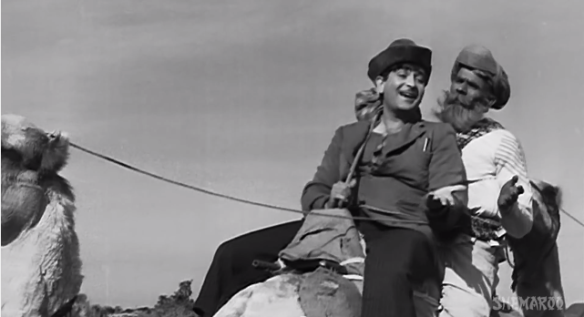
Raj Kapoor mera joota hai japani

Raj Kapoor hops on a camel with an old guy who doesn’t seem to mind in Shree 420 (1955)

Shree 420 was a milestone production under the R.K. Studios banner that was among the first to be produced, directed, and acted in by Raj Kapoor himself. The son of a widely respected and extremely wealthy actor of the previous era, Prithviraj Kapoor, Raj Kapoor was nurtured in the film industry and had little difficulty in starting his own company with a very liberal amount of freedom. Formed in 1946, R.K. Studios went on to create some of the most successful films of Indian cinema. With lyrics by Shailendra and the soulful voice of Mukesh, we hope you enjoy our English translation of the lyrics to one of the thespian’s most beloved solos, “Mera Joota Hai Japani!”

Mera Joota Hai Japani Lyrics and Translation:

Meraa juuta hai Japaanii, yeh patluun Englishtaanii
My shoes are Japanese, these pants are British
Sar pe laal topii Ruusi, phir bhi dil hai Hindustanii
On my head is a red Russian hat, nonetheless my heart is Indian

Nikal paDe hai khulii saDak par, apnaa seenaa taane
I set out upon the wide open road confidently
Manzil kahaa.N, kahaa.N ruknaa hai, uparwaalaa jaane
Where is my destination, where must I stop, only God knows
BaDhte jaaye.N hum sailaanii, jaise ek Dariyaa toofanii
We advance forward relentlessly, as if a hurricane in a river
Sar pe laal topi Ruusi phir bhi dil hai Hindustani
On my head is a red Russian hat, nonetheless my heart is Indian
Mera juuta hai Japaanii…

Uupar-niiche niiche-uupar, leher chale jeevan kii
High to low, low to high, the waves of life flow
Nadaa.N hai jo baiThe kinaare, puuchhe raah watan kii
Those who wait by the shore are naive, ask for the path toward the motherland
Chalna jeevan kii kahaanii, rukna maut kii nishaanii
Going is the story of life while stopping is a sign of death
Sar pe laal topi Ruusi phir bhi dil hai Hindustani
On my head is a red Russian hat, nonetheless my heart is Indian
Mera juuta hai Japaanii…

Ho.Nge raaje rajkanwar ham bigaDe dil shehzaade
I will become the prince of fallen hearts
Ham singhaasan par jaa baithe.N jab jab kare.N iraade.N
I will sit upon a throne whenever I desire
Surat hai jaani-pehchaanii, duniyaa walo.N ko hairanii
My face will become familiar, it will be a surprise to the world
Sar pe laal topi Ruusi phir bhi dil hai Hindustani
On my head is a red Russian hat, nonetheless my heart is Indian
Mera juuta hai Japaanii…

Glossary:

juuta: shoe; Japaanii: Japanese; patluun: pants; Englishtani: British; sar: head; laal: red; topii: hat; Ruusii: Russian; phir bhi: nonetheless; however; dil: heart; Hindustani: Indian; nikal paDnaa: to set out; khulii: open; saDak: road; seenaa taannaa: (literally) to puff out the chest with pride, confidently; manzil: destination; ruknaa: to stop; uparwaalaa: God, he who is above; sailaanii: relentlessly; Dariyaa: river; toofaan: hurricane; uupar: high; niiche: low; leher: wave; jeevan: life; nadaa.N: naive; foolish; baiThnaa: to sit; kinaaraa: shore; raah: path; watan: motherland; country; maut: death; nishaanii: sign, symbol; raajaa: king; rajkanwar: prince; bigaDnaa: to fall; shehzaadaa: prince; singhaasan: throne; iraadaa: desire; surat: face; jaan-pehchaan: familiar; hairaani: surprise

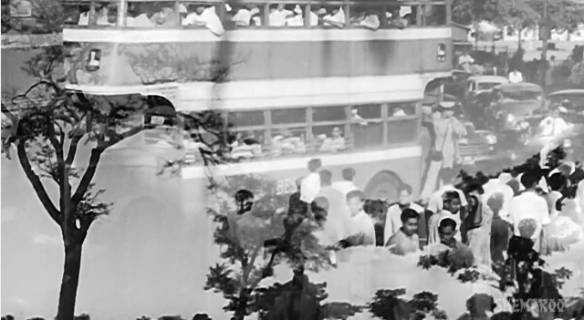
Rural India to city transition

Raj Kapoor elegantly transitions with a cross-fade from rural India to a bustling city at the end of “Mera Joota Hai Japani.”

In the 1960s Raj Kapoor would drop his former image of the lovable proletariat and direct movies that resonated as family dramas of the wealthy, an increasing surrender to commercialism. The socio-political atmosphere of India had changed, and with it, the wants of the people. Movies that emphasized the difficulties of the developing period of the nation, or the unforgiving nature of that society were not the sell-outs they once were. The transition to a new era was over.

– Mrs. 55

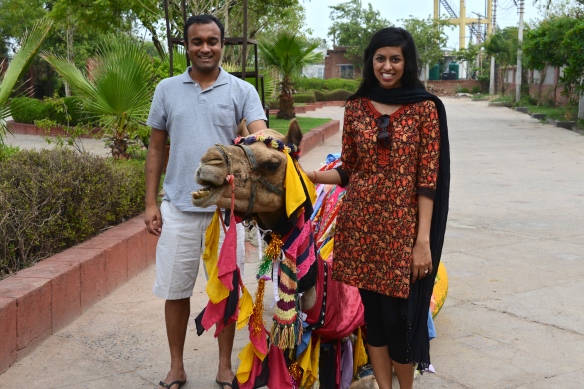
camel

My fiance and I camel-spotting à la Raj Kapoor on our journey from New Delhi to Agra in a recent trip! Phir bhi dil hai Hindustani, as they say…

Yeh Duniya Yeh Mehfil Lyrics and Translation: Let’s Learn Urdu-Hindi

Priya Rajvansh Heer Raanjha

Priya Rajvansh, as Heer, displays her usual limited range of emotion as a beautiful Panjabi maiden in Heer Raanjha (1970).

Today we showcase the full lyrics and English translation to “Yeh Duniya Yeh Mehfil” from Heer Raanjha (1970). Heer Raanjha tells the famous story of two star-crossed lovers, immortalized by the epic poem by Panjabi Sufi Waris Shah (1722-1798) . So handsome it hurts, Rajkumar is a perfect romantic hero as the charming Ranjha of the tale. When he falls for Heer, the daughter of a wealthy Jat family from a neighboring village (played by Priya Rajvansh), jealous relatives scheme to end their courtship. As she is married off against her will to another man, Rajkumar is overcome with devastation.

Like other great poems steeped in the Sufi tradition, Heer Ranjha has multiple layers of interpretation, one of which is man’s eternal quest for God. This is exemplified by the film’s most famous song, “Yeh Duniya Yeh Mehfil” sung by the great Mohammed Rafi. At once a song of lament for the love he has lost as well as an ode to yogic renunciation, “Yeh Duniya Yeh Mehfil” manages to express a yearning for a connection while embracing the search for a higher meaning.

The beautifully-written story of Heer Ranjha is a fundamental part of classical Panjabi literature, a poem my grandparents growing up in pre-partition Panjab were made to read and analyze in school. Waris Shah’s detailed and authentic description of rural Panjabi life around the turn of the 16th century is a pleasure to study today. To convert this leviathan of a poem to film was a daunting challenge met by the great modern Urdu poet, Kaifi Azmi. He wrote the entire script for the 1970 film entirely in verse. Every line gleams with ornamentation, and only Rajkumar with his characteristically mesmerizing dialogue delivery can lend it the stateliness it deserves. One of my favorite verses from the film is below:

Us se kehna ki tum meraa ek khwab ho, jo chamakta hai dil mei.N woh mahataab ho. [Tell her that you are a dream of mine, that you are the moonlight glittering in my heart.]

Us se kehna ki gehuyo.N ke kheto.N ka rang, tilmatii huii titliyo.N kii umang. [Tell her that she is the is the color of wheat fields, that she is the joy of the fluttering butterflies.]

Us se kehna ki jharno.N kaa chanchal shabaab, ghat ki taazgii, aabroo-e-janaab. [Tell her that she is the the playful youth of the waterfalls, the freshness of a mountain pass, and the honour of our elders.]

Us se kehna ki jhoolo.N kii angdaiyaa.N aur uDhte dupatto.N kii shenaiyaa.N. [Tell her that she is the movement of swings and the music of flying dupattas.]

Us se kehna ki chakki ke geeto.N kii aag, ladkhadatii jawaanii, machaltaa suhaag. [Tell her that she is the fire of the song of the mills, the trembling youth, the excitement of a wedding night.]

Us se kehna ki dulhano.N ke kaajal kii pyaas, pehle bauchhaar kii garam aur Thandii miithaas. [Tell her that she is the thirst of a bride’s kajal and the hot and cold sweetness of the first rain.]

Itnii ra.Nginiyo.N ko jab ek jaa kiyaa, Heer kudrat ne tab tujhko paida kiyaa. [When all this colors were made into one, then nature created you, Heer.]

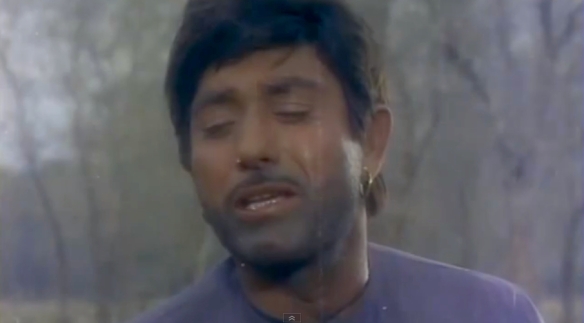
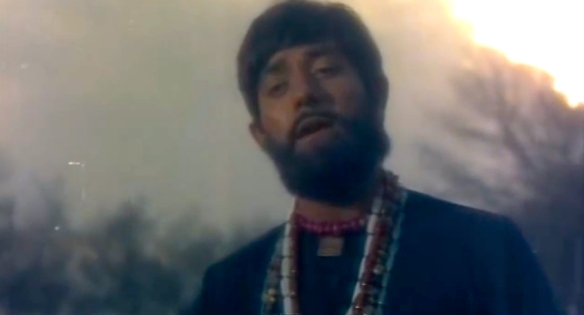
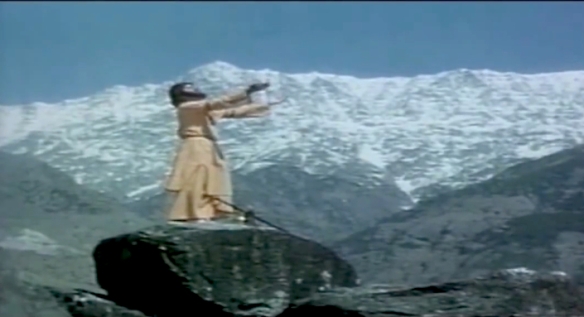
Your heart’s fluttering, right? “Yeh Duniya Yeh Mehfil” also a brilliant example of the classic Bollywood cliche about men’s facial hair. The more manscaping that needs to be done, the more the hero has fallen out of touch with reality. Check it out:

Rajkumar 5 o'clock shadow

At first Ranjha displays an appropriately  manly 5 o’clock shadow. However, his depression takes a nosedive from bad…


Rajkumar lumbarjack beard

…to worse with a full on lumberjack look. This get-up quickly transitions to…


Rajkumar yogi beard

…WHAT THE…where did Ranjha go??!

But before you rush to give your own facial hair a much-needed trim, allow us to share our English translation and lyrics of “Yeh Duniya Yeh Mehfil” below! Follow along with the video and let us know how much you love a good song of self-pity in the comments!

Yeh Duniya Yeh Mehfil Lyrics and Translation:

Yeh duniyaa yeh mehfil mere kaam ki nahii.N
This world and these people are not for me

Kisko sunaaoo.N haal dil-e-beqaraar kaa?
Whom should I tell the state of my restless heart?
Bujhtaa huaa chiraagh hoo.N apne mazaar kaa
I am the extinguished flame of my own mausoleum
Aye kaash bhool jaaoo.N, magar bhooltaa nahii.N
If only I could forget, but I am unable to forget
kis dhoom se uthaa thaa janaazaa bahaar kaa
with what uproar marched the funeral of Spring

Apnaa pataa mile, naa khabar yaar kii mile
I know neither my own whereabouts nor have I heard news from friends
Dushman ko bhii naa aisii sazaa pyaar kii mile
Even enemies do not receive such a punishment for love
Unko khudaa mile hai.N khudaa kii jinhe talaash
Others meet the God for whom they have searched
Mujhko bas ek jhalak mere dildaar kii mile
Let me have just one glance from my beloved

Saharaa mei.N aake bhii, mujhki Thikaanaa na milaa
Even as I enter the wilderness, I found no shelter
Gham ko bhoolaane kaa koii bahaanaa naa milaa
I found no pretense to erase the memory of my sadness
Dil tarase jis mei.N pyaar ko, kyaa samajhoo.N us sansaar ko?
What can I understand about the world in which my heart remains longing for love?
Ek jiitii baazii haar ke, mai.N DhuunDhuu.N bichhaDe yaar ko
Upon losing a winning gamble, I must search for my lost friend

Duur nigaaho.N se aa.Nsuu bahaataa hai.N koii
Far from my gaze, someone is shedding tears
Kaise na jaaoo.N mai.N, mujhko bulaataa hai.N koii
How can I resist going when someone calls to me?
Yaa TuuTe dil ko joD do, yaa saare bandhan toD do
Either let me mend this broken heart or let me break all ties
Aye parbat, rastaa de mujhe! Aye kaanto.N, daaman chhoD do!
Oh mountains, show me the path! Oh thorns, let go of my embrace!

Yeh duniyaa yeh mehfil mere kaam ki nahii.N
This world and these people are not for me

Glossary:

duniyaa: world, society; mehfil: company, gathering of people; haal: state, health; dil: heart; beqaraar: restless; bhujnaa: to extinguish; chiraagh: lamp; mazaar: mausoleum; kaash: if only, would that; bhoolnaa: to forget; dhoom: noise, uproar; janaazaa: funeral; bahaar: Spring; pathaa: whereabouts, address; khabar: news; yaar: friend; dushman: enemy; sazaa: punishment; pyaar: love; khudaa: God; [kisii kii] talaash: in search [of someone]; jhalak: glance; dildaar: beloved; saharaa: wilderness; Thikaanaa: shelter; gham: sadness; [kisi ko] bhoolaanaa: to make [something] forgotten; bahaanaa: excuse, pretense; [kisi ko] tarasnaa: to long [for something], samajhnaa: to understand; sansaar: world; baazi: a hand (ie. in a game of cards or a gamble); haarnaa: to lose; DhuunDhnaa: to search; bichhaDnaa: to be separated; duur: far; nigaahe.N: gaze; aa.Nsuu bahaanaa: to shed tears; bulaanaa: to call; yaa: either, or; TuuTaa: broken; joDnaa: to mend, to bring together; bandhan: tie, knot; toDnaa: to break; parbat: mountain; rastaa: path; kaa.Ntaa: thorn; daaman: embrace; chhoDnaa: to leave, to let go

Rajkumar yogi heer raanjha

Rajkumar goes rogue and renounces the world as a yogi upon learning that his beloved has married another. Epic shots like these earned Jal Mistry the Filmfare Award for Best Cinematography in 1971!

The line “mere kaam ki nahii.N” is particularly difficult to translate. The word “kaam” is in its simplest form translated as “work.” However, the word has numerous subtleties in Hindustani. With this line, Kaifi Azmi is expressing his dissatisfaction with and inability to function in the world and society as he has experienced them.

This song was requested by our fan Raju! Thank you for the brilliant Urdu treat!

– Mrs. 55