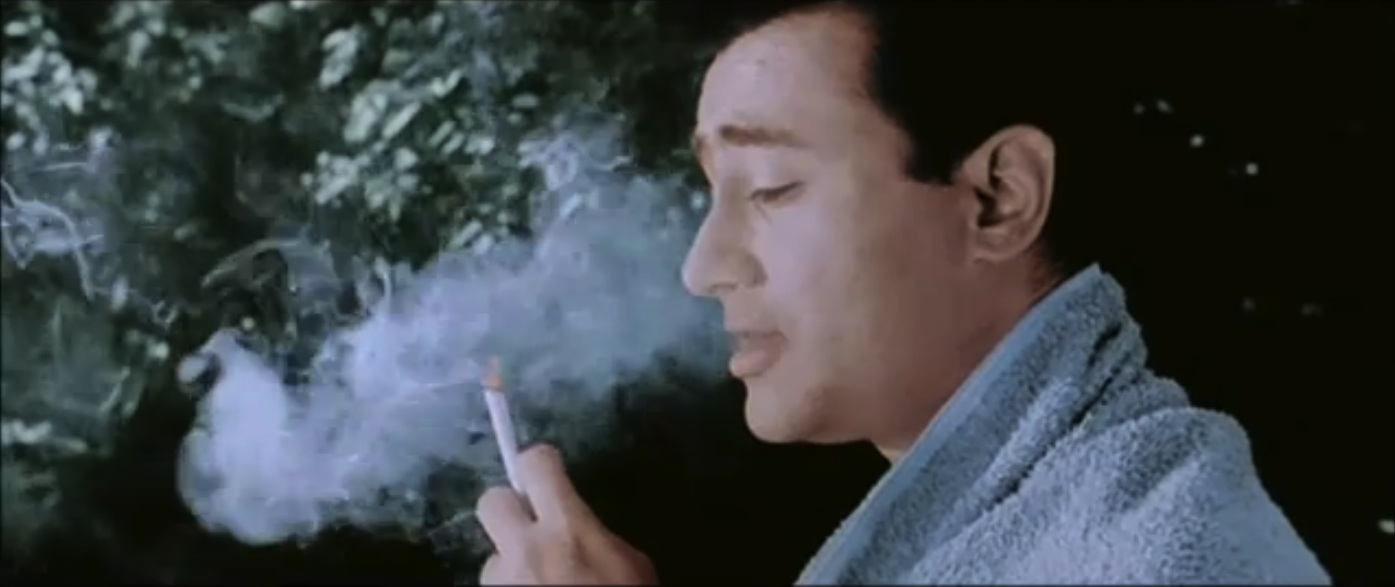
R.I.P Rajesh Khanna: The Death of a Bollywood Superstar

Rajesh Khanna passed away today at the age of 69 after an extended period of illness that began in April. For all fans of old Bollywood films, this news is incredibly saddening. Although many stalwarts came before him, Rajesh Khanna was the first actor to achieve the status of a superstar in Hindi cinema. At the peak of his career, he delivered 15 consecutive hits as a solo lead actor, a feat that no other actor in the industry has matched to this day.

As a tribute to this Bollywood legend, let us take a closer look at those 15 films that Rajesh Khanna starred in at the pinnacle of his career (1969-1971) with the gallery of images below.

With his inimitable charm, unique mannerisms, and dashing good looks, Rajesh Khanna will always be remembered as one of Bollywood’s most beloved heroes. What is your favorite Rajesh Khanna film? Share with us in the comments! My vote goes to Aradhana (1969) — it’s one of the first films I watched that turned me into a fan of old Hindi cinema.

-Mr. 55

Deewana Hua Badal Lyrics and Translation: Let’s Learn Urdu-Hindi

Sharmila Tagore Kashmir ki Kali

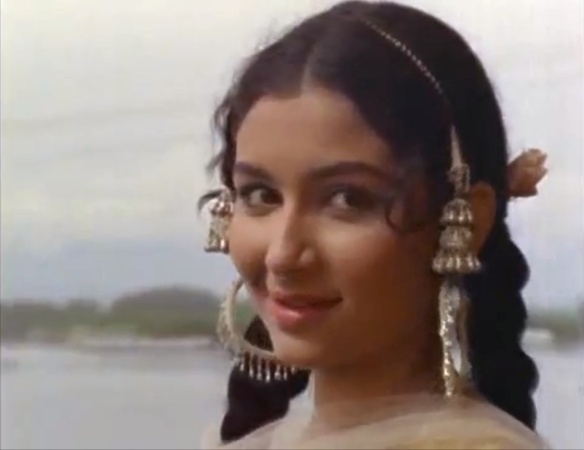
Sharmila Tagore plays a shy Kashmiri village girl in Kashmir ki Kali (1964)

Next we present the full lyrics and English translation to the jewel “Deewana Hua Badal” from Kashmir Ki Kali (1964). A beauty of beauties, “Deewaana Hua Badal” embodies the timeless dream of Kashmiri paradise. This charming duet by Mohammed Rafi and Asha Bhonsle is the highlight of the film Kashmir Ki Kali (1964), starring Shammi Kapoor and Sharmila Tagore. With a gently uplifting melody and traditional orchestration, “Deewana Hua Badal” captures a sense of pure bliss in the surroundings of the beautiful Kashmiri mountainside. Shammi Kapoor follows his lover Sharmila Tagore to the base of the famous Dal Lake where lotus flowers bloom and intricate wooden houseboats line the banks.

For centuries, Indians have been entranced by that heavenly treasure, Kashmir. Mughal emperor Jahangir famously wrote of Kashmir in the 17th century,

Gar firdaus ruhe zameen ast,
Hameen asto, hameen asto, hameen ast.”

“If there is Paradise on this Earth,
Then it is here, it is here, it is here…”

And classic Bollywood was no different. For years, all love dream sequences and the most beautiful of songs were set in Kashmir’s Shalimar gardens. Kashmir Ki Kali is but one of many films set in this paradise from that time period–before internal war and strife drove filmmakers away from Srinagar to the Swiss mountains. Being partly Kashmiri myself, I can attest to the sublimity of the countryside and what the natural beauty means to its people and history. The politics and tragedies that have plagued this gem are completely beyond the scope of this blog, but regarding its impact on Bollywood, Kashmir will remain forever the lover’s ideal.
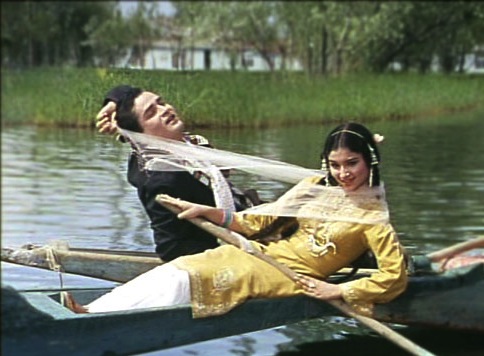
Sharmila Tagore and Shammi Kapoor Kashmir Ki Kali Dal Lake

The famous Dal Lake of Srinagar, Kashmir is the gorgeous backdrop for “Deewana Hua Badal” from Kashmir Ki Kali (1964).

If I’m ever making a list of my favorite Bollywood songs, “Deewana Hua Badal” IS my number one choice. Since I was a little girl, this enchanting song found a special place in my heart. In fact, my own grandparents honeymooned in Srinagar by the famous Dal Lake in the early 1950s! When you listen to the sweetness of this song’s lyrics and melody, then imagine the paradise of vintage Kashmir, it’s easy to fall to in love! Please enjoy our full lyrics and English translation to “Deewana Hua Badal” below!

Deewana Hua Badal Lyrics and Translation: Let’s Learn Urdu-Hindi

Male:
Yeh dekh ke dil jhuumaa
Upon seeing her, my heart swayed
Lii pyaar ne a.NgaDaaii
And love sprang forth
Diiwaanaa huaa baadal
The clouds became mad with love
Saavan kii ghataa chhaaii
The rain clouds of Spring abounded

Aisii to merii taqdiir na thii
My fate was once not as such
Tumsaa jo koii mehboob mile
To have met a lover like you before
Dil aaj khushii se paagal hai
Today my heart is crazy with happiness
Aye jaan-e-wafaa tum khuub mile
Oh my faithful one, we met at the right time
Dil kyuu.N na bane paagal?
Why should my heart not go crazy?
Kyaa tumne adaa paaii!
What style you have!
Yeh dekh ke dil jhuumaa
Upon seeing her, my heart swayed
Lii pyaar ne a.NgaDaaii
And love sprang forth
Diiwaanaa huaa baadal
The clouds became mad with love

Female:
Jab tumse nazar takaraaii sanam
Ever since my gaze struck you
Jazabaat kaa ek tuufaan uThaa
A storm of emotions lifted within me
Tinake kii tarah mai.N Bah nikalii
Like a twig, I was swept away
Sailaab mere roke na rukaa
Despite my effort, I could not stop the flood
Jeevan mei.N machii halchal
There was a stirring in my soul
Aur bajane lagii shahanaaii
And music of the shahanaii began to play
Yeh dekh ke dil jhuumaa
Upon seeing him, my heart swayed
Lii pyaar ne a.NgaDaaii
And love sprang forth

Male
Diiwaanaa huaa baadal
The clouds became mad with love

Hai aaj naye armaano.N se
Today with new desires
Aabaad merii dil kii nagarii
The city of my heart is filled
Baraso.N se khizaa.N kaa mausam thaa
For ages it was the season of Autumn
Viiraan baDi duniyaa thi merii
My world was a barren waste
Haathon mei.N teraa aanchal
Then in my hands came the drape of your saari
Aayaa ki bahaar aayii!
And when it came, the Spring followed!
Yeh dekh ke dil jhuumaa
Upon seeing her, my heart swayed
Lii pyaar ne a.NgaDaaii
And love sprang forth

Female:
Diiwaanaa huaa baadal
The clouds became mad with love
Saavan kii ghataa chhaaii
The rain clouds of Spring abounded
Yeh dekh ke dil jhuumaa
Upon seeing him, my heart swayed
Lii pyaar ne a.NgaDaaii
And love sprang forth

Male:
Diiwaanaa huaa baadal…

Glossary

angaDaaii: a turn, a leap; diiwaanaa: crazy (in love); baadal: cloud, saawan: rain; ghataa: cloud; taqdiir: Fate; mehboob: lover; khushii: happiness; paagal: crazy; jaan-e-wafa: faithful one; nazar takraanaa: to strike a gaze; jazabaat: emotion; tuufaan: storm; tinake: twig; straw; sailaab: flood, deluge; halchal: stirring; shahanaaii: a woodwind instrument traditionally played at Indian weddings; armaan: desire; aabad: filled; nagarii: city; khizaa: Autumn; mausam: atmosphere; viraan: wasted; duniya: world; aanchal: drape of a saari or dupatta; bahar: Spring

A few notes on this translation: The word angaDaaii does not have a simple English translationPlease see our translation of Likhe Jo Khat Tujhe for further discussion of this complex word. Basically, all of those awkward stretching movements Shammi is doing in the beginning are examples of angaDaaii. Furthermore the line “deewana hua baadal…” can be interpreted in two ways! Although we have written “the clouds became mad with love,” this line could easily mean the inverse: that he who is mad with love became a cloud. This alternative meaning could make some sense–he felt so light and happy with love that he lifted up and joined the clouds. I’m not going to get carried overboard though. We will leave it up to you to decide to how interpret these famous opening lines!
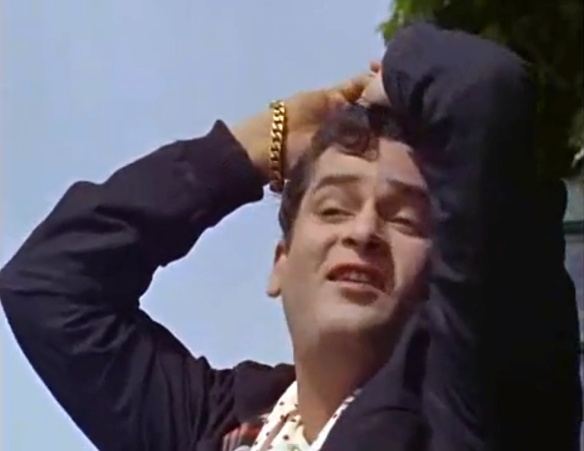
Shammi Kapoor Kashmir ki Kali

Shammi Kapoor blushes and shimmies during the opening of “Deewana Hua Badal” from Kashmir Ki Kali (1964).

Some of you may question the opening performance by Shammi Kapoor in this song. Yes, he’s absurd as he comes tumbling down the stairs, bulging out of his tight clothes. Yes, his lipstick is a tad too red. And yes, you can see the line below his chin where Costumes forgot to blend his pasty white pancake foundation into his neck. But I’ve come to terms with everything Shammi is: a spastic, messy heartthrob. And since in this film, Sharmila Tagore isn’t wearing half of the sweeping cat-eyeliner that would later become her signature, someone had to wear enough make-up for the team!

– Mrs. 55
Justiju Jiski Thi Lyrics and Translation: Let’s Learn Urdu-Hindi

Rekha plays the role of Umrao Jaan with elegance and sophisticated grace.


Muzaffar Ali’s Umrao Jaan (1981) is one of Bollywood’s most  treasured films in the courtesan genre. With Rekha in the starring role, this film narrates the tragic story of Umrao Jaan Ada, a poetess and tawaif from the Urdu novel of the same name written by Mirza Hadi Ruswa. In addition to Rekha’s touching performance of this role, this movie has been immortalized in the history of Hindi cinema for its music. The soundtrack composed by Khayaam and penned by Shahryar is almost exclusively filled with ghazals sung by the evergreen Asha Bhonsle. In a previous post, we discussed and translatedin aa.nkhon kii mastii,” on of this film’s unforgettable ghazals.  Today, on the request of one of our readers (shoutout to Vasuki!),  we will be taking a closer look at another gem from the same soundtrack: “justajuu jiski thii.”

While “in aa.nkhon kii mastii” showcases the playful and proud side of Umrao Jaan, this song takes a different route and depicts the tragedy that Umrao has endured as a fallen woman. The song “justajuu jiskii thii” is found in the film when Umrao is called upon to perform a mujra at a birthday celebration for the son of the begum of Kanpur. In an ironic twist of fate, the begum turns out to be Ram Dei, the girl who was kidnapped and sold at the same time as Umrao when they were both young. Deemed the less attractive of the two, Amiran (who would later become known as Umrao Jaan)  was sold to Khanum’s brothel while Ram Dei was sold as a slave to a wealthy family. As the two women share a moment together recalling the tragedies of their past, Umrao is greeted by a painful surprise: Ram Dei is actually married to Nawab Sultan, the man that Umrao fell in love with during her younger years. In the presence of the couple, Umrao sings “justajuu jiskii thii,” a ghazal whose lyrics beautifully express the tragedy of unfulfilled love.

Rita Rani Kaul, as Ram Dei, listens to Umrao’s heart-wrenching poetry in admiration.

Musically, the tune for this song is probably my favorite among all of the ghazals found in Umrao Jaan. I think it must have been the favorite of music director Khayyam as well–if you listen carefully, you’ll hear snippets of this melody used as background music at various points in the film. In fact, before the proper song starts, Umrao recites a shair for Ram Dei in the same tune: gardish-e-vaqt kaa kitanaa baDaa ahsaan hai aaj/ yah zamii.n chaa.nd se bahtar nazar aatii hame.n.”   The lyrics and tune of this song are remarkably beautiful, but the real star of the show here is Asha Bhonsle.  Asha excels throughout this soundtrack, but I feel that her rendition of this song is particularly outstanding for its emotional depth and maturity.  Asha was 48 years old when she recorded these songs in 1981, but her voice sounds impressive and fresh as ever.  An interesting tidbit about the songs from this film is that Khayyam had Asha sing them at a half-step lower than expected (in the key of C) to create a deeper, fuller sound. Regarding her renditions on this soundtrack, Asha has said:

‘I was skeptical about the results when Khayyam lowered my pitch by half a note. But I have always believed that the composer calls the tune, so I sang just as Khayyam wanted me to do.’

There was nothing to be skeptical about here! The Asha-Khayyam collaboration for the music of Umrao Jaan has been cherished ever since this film was released, and the songs are remembered today  as some of the finest examples of ghazals in Bollywood cinema. Enjoy our translation of “justajuu jiskii thi” with the glossary below, and remember to send in any requests for future posts!

-Mr. 55

Rekha excels at expressing the pain of a fallen woman through her role in Umrao Jaan (1981)

Justiju Jiski Thi: Lyrics and Translation

justajuu jiskii thii usko to na paayaa ham ne 
I did not get whom I desired,
is bahaane se magar dekh lii duniyaa ham ne 
Yet, on this quest, I have seen the entire world. 

tujhko rusvaa na kiyaa khud bhii pashemaan na hue
I did not disgrace you, nor did I bring shame to myself.  
ishq kii rasm ko is tarah nibhaayaa ham ne
In this manner, I fulfilled the vows of our love.  

kab milii thii kahaa.n bichhaDii thii hame.n yaad nahii.n 
I do not remember when we met or where we departed. 
zindagii, tujhko to bas khvaab me.n dekhaa ham ne 
Life, I have only beheld you in my dreams. 

ai adaa, aur sunaaye.n bhii to kyaa haal apanaa? 
What more shall I tell you of my state? 
umr kaa lambaa safar tai kiyaa tanhaa ham ne
I have resigned myself to traveling the long journey of life alone.  

justajuu jiskii thii usko to na paayaa ham ne 
I did not get whom I desired. 

Glossary

justajuu: search, quest; bahaana: excuse, pretext; rusvaa: disgraced; pashemaan: ashamed; rasm: ritual, vow; bichhaDnaa: to separate, depart; adaa: pen name for Umrao Jaan; safar: journey; tai karnaa: to settle; tanhaa: alone.

Farooq Shaikh, as Nawab Sultan, reminisces about his unfulfilled love in Umrao Jaan (1981)

Main Zindagi Ka Saath Nibhata Lyrics and Translation: Let’s Learn Urdu Hindi

Dev Anand Hum Dono Main Zindagi Ka Saath

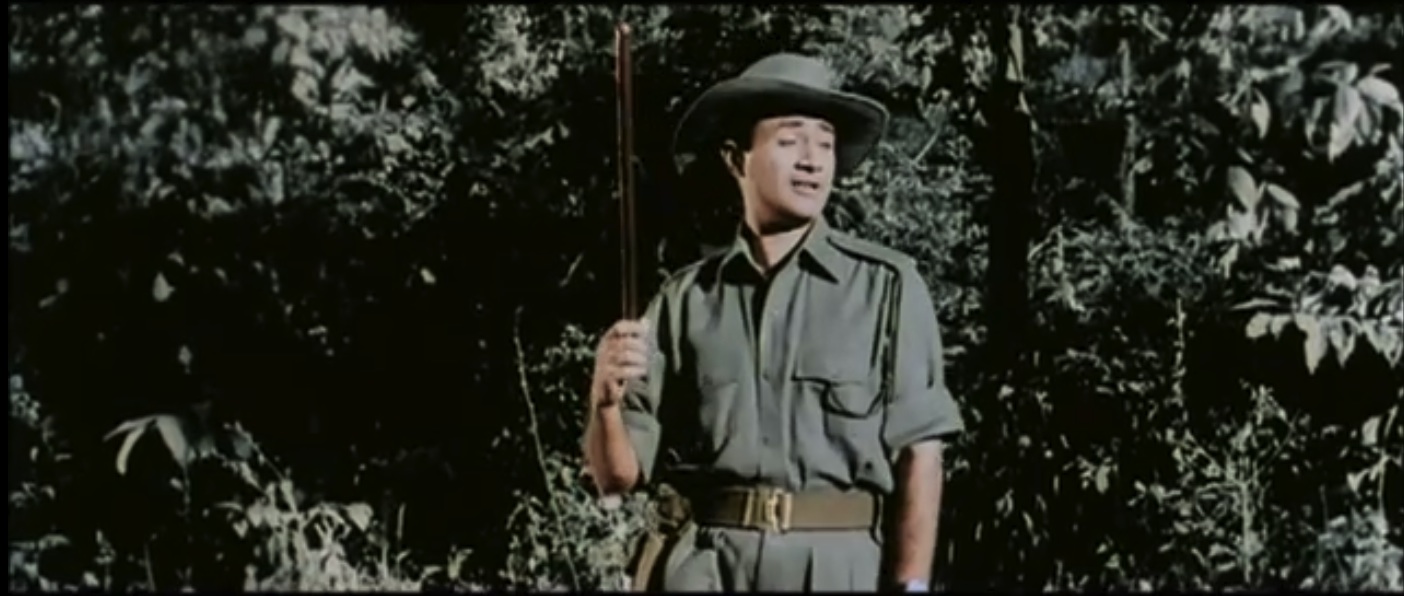
Dev Anand plays a philosophical military officer in Navketan Films’ all-time hit Hum Dono (1961)

We now present the full lyrics and English translation to the evergreen Mohammed Rafi solo, “Main Zindagi Ka Saath Nibhata” from the film Hum Dono (1961). As we know, Hum Dono was released in colour last year by the late film legend Dev Anand, and newly entitled Hum Dono Rangeen. The film joins a string of recently re-colourized classics such as Mughal-e-Azam (1961) and Naya Daur (1957), riding the wave of India’s general excitement to enter previously unexplored technologies in film-making–from animation to digital special effects. The amount of work that goes into a recolourization of a film is amazing–particularly a 3 hour Hindi epic. Imagine hand-painting a single frame from the film: First, you must decide which colours would best match the director’s intention and the styles of the time. Then painstakingly painting the colours onto the frame that follow to exactly match the hue of the one before, making allowances for natural shifts of shadows and lighting as the actors move. When you remember that it takes 24 frames to make 1 second of a film, you can realize the enormity of the job ahead.

Dev Anand Sadhana Hum Dono

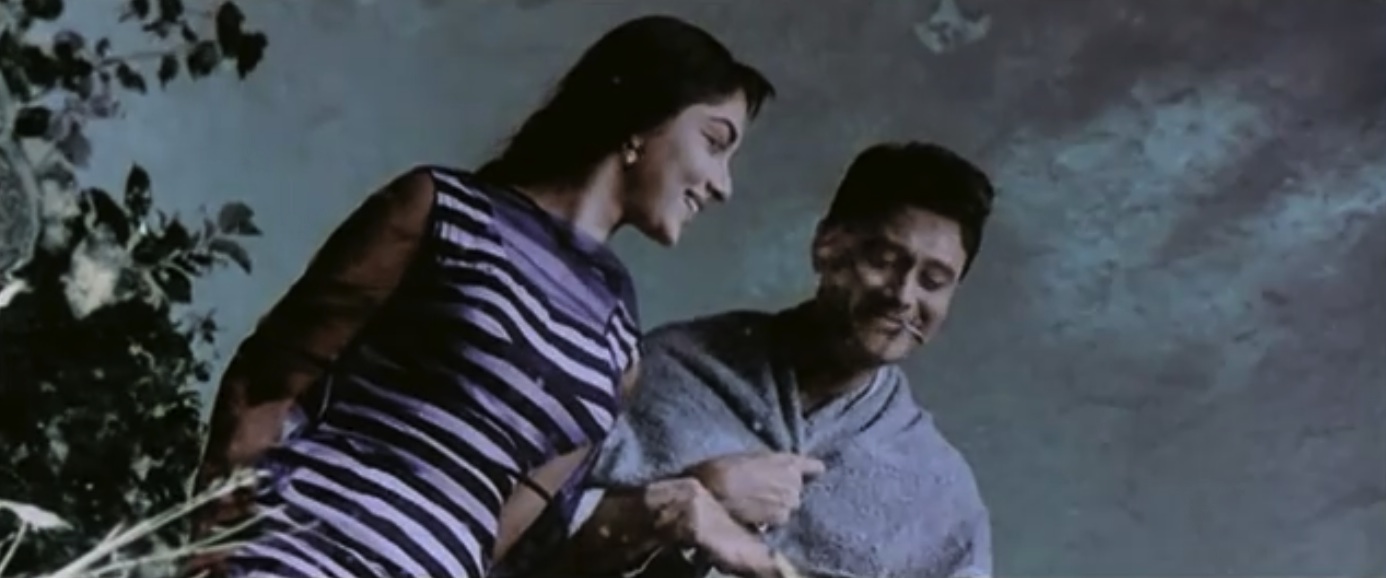
Dev Anand imagines Sadhana appearing next to his reflection in a pool of water.

Additionally, apart from adding a splash of colour, it would seem the new editors also altered the aspect ratio of the film into a widescreen presentation. Throughout some of the songs, you’ll also see Dev Anand had added fancy fades to and from black, which are definitely classy. However, I mourn the loss of the original aspect ratio–because the film is now made for the widescreen, a portion of the frame’s top and bottom have been cut off. A bit of the magic was cut too.

But even without these external alterations, the original beauty of the film has shone for decades. Hum Dono is a war film, but the story is not strictly about war. Dev Anand plays a dual role in the film and faces a moral dilemma when he impersonates the identity of his look-alike after the latter’s presumed death. Every action he makes has spiraling and exciting ethical repercussions. The film is one of the finest Bollywood has ever produced, and like most Dev Anand films, boldly explores difficult social themes and relationships. My only regret is that it’s obviously a twin story that no one bothered to explicitly state in the script. It’s a big gripe of mine about Bollywood twin movies, and for one of the worst examples of it, Haseena Maan Jaayegi, see our previous post on Bekhudi Mein Sanam!

Dev Anand hum Dono Main Zindagi Ka Saath 2

Dev Anand in full military dress from Hum Dono (1961)

But the greatest achievement of Hum Dono is in its music by Jaidev. Every single song in its soundtrack is pure gold, from the Rafi-Asha love duet “Abhi Na Jaao ChoD Kar” to the majestic Lata devotional “Allah Tero Naam.” The sweet melodies of Hum Dono have remained popular today, and amongst them is the sentimental mood-lifter “Main Zindagi Ka Saath Nibhata Chala Gaya.” In it, Dev Anand expresses many of the philosophies that would present in his later films such as Guide (1965). The Vedic-inspired line “gham aur khushi ke farq na mehsuus ho jahaan” allows the hero a carefree outlook that is unusual and refreshing for a jaded military officer. Because of it, this song has retained its popularity over the years. Of interesting note, Hindi movies were not allowed to use authentic Indian Army officer outfits for their costumes. So for anyone familiar with period military wear in India, you’ll notice the epaulette on the shoulder has been adjusted so it is not an exact replicate of what was actually worn!

Check out the youtube link here, and follow along with us below for full lyrics and English translation of “Main Zindagi Ka Saath“!

Main Zindagi Ka Saath Nibhata Lyrics and Translation

Mai.N zindagii ka saath nibhaataa chalaa gayaa
I faithfully followed wherever life took me
Har fikr ko dhuei.N mei.N uDaataa chalaa gayaa
I blew every worry into a mist of smoke

Barbaadiyo.N ka shok manaanaa fizuul tha
It was pointless to grieve about my destruction,
Barbaadiyo.N ka jashn manaataa chalaa gayaa
So I kept making a celebration of my destruction!
Har fikr ko dhuei.N mei.N uDaataa chalaa gayaa
I blew every worry into a mist of smoke

Jo mil gayaa usii ko muqaddar samajh liyaa
Whatever came my way I considered to be my destiny
Jo kho gayaa mei.N usko bhulaataa chalaa gayaa
Whatever was lost to me, I kept putting out of my mind.
Har fikr ko dhuei.N mei.N uDaataa chalaa gayaa
I blew every worry into a mist of smoke

Gham aur khushi mei.N farq na mehsuus ho jahaa.N
That state where happiness and sorrow are indistinguishable
Mai.N dil ko us muqaam pe laataa chalaa gayaa
That realm is where I kept pushing my heart
Har fikr ko dhuei.N mei.N uDaataa chalaa gayaa
I blew every worry into a mist of smoke

Glossary:

zindagii: life; fikr: worry; dhuuei.N; smoke; barbaad: destruction; shok manaanaa: grieve; fizul: pointless; jashn: celebration; muqaddar: destiny, fate; bhulaanaa: to forget gham: sadness; khushi: happiness; farq: difference mehsuus: feeling; muqaam: realm

Dev Anand Hum Dono Main Zindagi Ka Saath

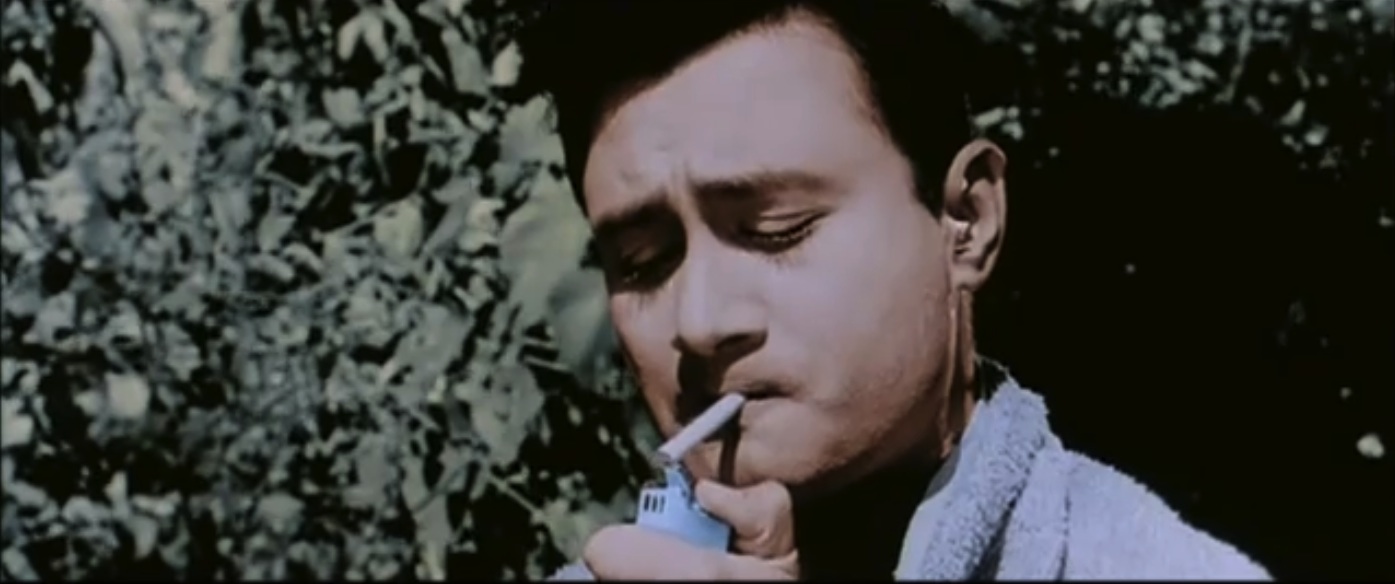
Dev Anand blows all his worries away in a puff of smoke in Hum Dono (1961)

The gentle chiming at the beginning of the song can also be found at the very end of “Abhi Na Jaao ChoD Kar” from the same film. Nice, Jaidev. Nice. This song translation was made by special request from our fan Bhuvesh! We always welcome requests from our readers, so don’t forget to drop us a line!

– Mrs. 55

Jis Gali Mein Tera Ghar Na Ho Balma Lyrics and Translation: Let’s Learn Urdu-Hindi

Rajesh Khanna serenades Asha Parekh in one of Hindi cinema’s most treasured boat songs from Kati Patang (1970)

If you’ve been following the latest news about Bollywood stars (as you should be), you might be aware of the fact that Rajesh Khanna has been hospitalized recently for exhaustion and a stomach infection. In light of this news, I thought I’d share one of my favorite songs picturized on the Bombay superstar and send along our best wishes for a speedy recovery. Below, I’ve provided the lyrics and a translation for “jis galii me.n teraa ghar na ho baalma,” a beautiful number sung by Mukesh in Kati Patang (1970).

Mukesh singing for Rajesh Khanna? Blasphemy, you might say. As we all know, Kishore Kumar was officially the playback voice for India’s beloved ‘Kaka,’ and you might hear a pairing with Mohammed Rafi on occasion. But a Mukesh song picturized on Rajesh Khanna, let alone a popular one, is quite rare indeed.

In spite of the unconventional pairing, this song from Kati Patang is an all-time classic that has been cherished by fans of Hindi cinema over the years. The beauty in the simplicity of Anand Bakshi’s lyrics here is striking. Expressing the the theme of selflessness in love, these lyrics are unique when placed into context of the film. Rajesh Khanna’s character uses this song to profess his love for Asha Parekh, a woman pretending to be a widow after fleeing the altar. At a time when societal norms prevented such women from marrying again, using such romantic lyrics to describe the love between a man and an ostensible widow is a bold move. In his inimitable style, Mukesh gives one of his career’s best performances as he sings these lyrics with sincerity and a tinge of melancholy.  To top it all off, R.D. Burman composes a simple, yet touching melody that does justice to the beauty of these lyrics. Enjoy this poignantly crafted declaration of love with our glossary and translation below!

-Mr. 55

Playing the role of a supposed widow, Asha Parekh wears a white sari throughout most of this film.

Jis Gali Mein Tera Ghar Na Ho Balma: Lyrics and Translation

jis galii me.n teraa ghar na ho baalma
Any  street on which your house does not reside
us galii se hame.n to guzarnaa nahii.n
is not a street that I shall traverse.
jo Dagar tere dvaare pe jaatii na ho
Any path that does not lead to your door
us Dagar pe hame.n paa.nv rakhnaa nahii.n
is not a path on which I shall set foot.

zindagii me.n kaii rangraliyaa.n sahii
In my life, there have been many colorful celebrations.
har taraf muskuratii ye kaliyaa.n sahii
In every direction, there are smiling flowerbuds
khuubsurat bahaaro.n kii galiyaa.n sahi
and many beautiful views of springtime.
jis chaman mei.n tere pag me.n kaa.nTe chubhe.n
Yet, the garden in which thorns pierce your feet 
us chaman se hame.n phuul chunnaa nahii.n
is not a garden from which I shall pick flowers.

haa.n ye rasme, ye qasame.n sabhii toD ke
Yes, after having broken these rituals and vows,
tu chalii aa chunar pyaar kii oDh ke
please come to me, flying your scarf of love in the air.
yaa chalaa jaauu.nga mai.n yah jag chhoD ke
Or else, I shall go away and leave this world.
jis jagah yaad terii sataane lage
The place where your memories begin to torture me
us jagah ek pal bhii Thaharana nahii.n
is not a place where I shall spend a single moment.

jis galii me.n teraa ghar na ho baalma
Any  street on which your house does not reside…

Glossary

galii: street, alley; baalma: beloved; Dagar: path; dvaaraa: door; rangraliyaa.n: colorful celebrations; kaliyaa.n: flower buds; chaman: garden; pag: foot; chubhnaa: to pierce; rasm: ritual, ceremony; qasam: vow; chunar: scarf; jag: world; sataanaa: to torture.

Rajesh Khanna charms the audience with his characteristic smile.

This song was filmed on site at Lake Nainital in Uttarakhand, India.