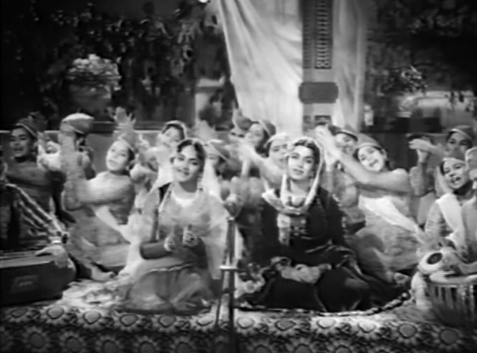
Nigahein Milane Ko Jee Chahta Hai Lyrics and Translation: Let’s Learn Urdu-Hindi

Who wouldn’t want to exchange glances with those eyes?

For today’s post, we showcase the lyrics and English translation of “Nigahen Milane To” from the film Dil Hi To Hai (1963). If I had to name my favorite actress from the Golden Era of Bollywood cinema, I think that I would pick Nutan.

As one of the beloved goddesses of India’s silver screen, Nutan starred in many evergreen films from the 1950s and 1960s, including Paying Guest (1957), Anari (1959), Bandini (1963), and Milan (1967), just to name a few. In my opinion, there’s something special about Nutan’s performances that sets her apart from her peers. She played her roles with a dignified beauty, a restrained grace, and an acute intelligence that was difficult to find in other actresses of the time. Here, I’ve chosen to translate a song from Dil Hi To Hai (1963), a charming Bollywood romance that is enjoyable to watch even though it is one of Nutan’s lesser-known films.

Nutan stars in Dil Hi To Hai as Jamila, the beautiful daughter of a wealthy London-based banker. Here, Raj Kapoor departs from the image established in his previous films by playing a comic double role as Jamila’s love interest Chand and Jamila’s aged music teacher Khan Sahab. While the film features some memorable performances by Nutan and Raj Kapoor, this film is probably even more memorable today for its soundtrack composed by music director Roshan. Two gems from this soundtrack have survived the test of time. The first is the Bhairavi-based classical number “laagaa chunarii me.n daag,” which is regarded as one of the best songs of Manna De’s career. The other gem is Asha Bhonsle’s exquisitely rendered Yaman qawwalinigaahe.n milaane ko jii chahtaa hai,” which I have translated here.

Penned by Sahir Ludhianvi, this qawwali centers around a woman’s desire to exchange glances with her beloved. The romanticization of eyes and sight is a common theme found in Bollywood films, and the poetry in this song is one of this era’s most cherished portrayals of this theme. The song’s charm is enhanced by the use of Urdu vocabulary (e.g. tahumat and tamhiid) and Asha Bhonsle’s immaculate rendition. Don’t you just love the way she owns those octave glides during the sargam passage?

Mrs. 55 and I actually performed this qawwali at Harvard during the annual South Asian cultural show Ghungroo two years ago. One thing that we noticed after listening carefully to these lyrics during rehearsal is that there is some ambiguity in gender. While most of the song appears to be from a female perspective, we thought that lyrics take on a masculine role for the line starting with “jab kabhii mai.ne teraa chaand-saa chahraa dekhaa…” (Whenever my eyes have fallen upon your moon-like face…). In addition to the fact that the moon is traditionally used by males to describe feminine beauty (e.g. Mohammed Rafi’s “yeh chaa.nd-saa roshan chahraa“), Nutan’s gestures and body language become more masculine in nature in this segment of the song. In fact, as she sings these two lines, Nutan begins to walk with a manly gait and and then flirts with a female friend as if she is her male lover. We may have totally made this up in our heads, but it was not uncommon for such gender-bending to occur in Bollywood songs–a full post on this trend will be coming up soon! In any case, please enjoy this timeless qawwali while following along with our translation/glossary provided below, and remember to send us your requests for any other songs that you would like translated.

-Mr. 55

Nutan takes on the masculine role for a few lines in this qawwali

Nigahein Milane Ko Jee Chahta Hai Lyrics and Translation

raaz kii baat hai, mahfil me.n kahe yaa na kahe?
It is a secret matter; shall I share it in this gathering?
bas gayaa hai koii is dil me.n, kahe yaa na kahe?
Someone has begun to reside in my heart; shall I reveal this here?

nigaahe.n milaane ko jii chahtaa hai
I yearn to exchange glances with my beloved. 
dil-o-jaa.n luTaane ko jii chahtaa hai
I yearn to give away my heart and soul to him.  

woh tahumat jise “ishq” kahtii hai duniyaa
The allegation that the world calls “love,”
woh tahumat uThaane ko jii chahtaa hai
I yearn to accept that allegation.  

kisii ke manaane me.n lazzat woh paayi
Although I have experienced the pleasure of being appeased,   
ki phir ruuTh jaane ko jii chahtaa hai
I yearn to once again engage in a lovers’ tiff. 
 
woh jalvaa jo ojhal bhii hai saamne bhii
The splendor that vanishes and reappears in love, 
woh jalvaa churaane ko jii chahta hai
I yearn to steal that splendor.  
 
jis ghaDii merii nigaaho.n ko terii diid huii
The moment when our eyes first met,  
woh ghaDii mere liye aish kii tamhiid huii
That moment served as a prelude to happiness for me.  
jab kabhii mai.ne teraa chaa.nd-saa chahraa dekhaa.
Whenever my eyes have fallen upon your moon-like face, 
Eid ho ya ki na ho mere liye Eid huii
it is as if I am celebrating the holiday of Eid.  

ni re ga, ga re ga ni re ma, ma ga ma ni re ga
ga re ga ni ga re, re ga, ga ma, ma dha ni
sa sa ni ni dha dha pa pa ga re
sa ni dha pa ma ga re,
ni dha pa ma ga re sa ni, re ga 

mulaaqaat
kaa koii paighaam diije
Please send me a message about our next rendez-vous, 
ki chhup-chhup ke aane ko jii chahtaa hai
Because I yearn to visit you secretly, 
aur aake na jaane ko jii chahtaa hai
And upon visiting you, I hope to never leave.  

nigaahe.n milaane ko jii chahtaa hai
I yearn to exchange glances with my beloved. 


Glossary

raaz: secret; mahfil: gathering; nigaahe.n: eyes; dil-o-jaan: heart and soul; tahumat: allegation; manaanaa: to appease; lazzat: pleasure; jalvaa: splendor,charm; ojhal: vanished; diid: sighting, gaze; aish: joy, happiness; tamhiid: prelude, preamble; Eid: Islamic festival celebrating the end of Ramadan; mulaaqaat: meeting, rendez-vous; chhup-chhup ke: secretly; paighaam: message.

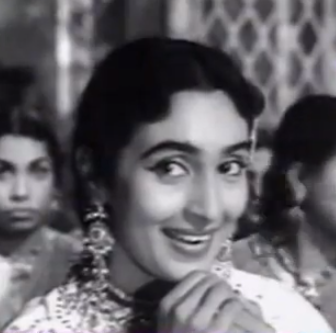
Nutan leads the chorus with an enchanting smile in Dil Hi To Hai (1963)

Sansaar Se Bhaage Phirte Ho Lyrics and Translation: Let’s Learn Urdu-Hindi

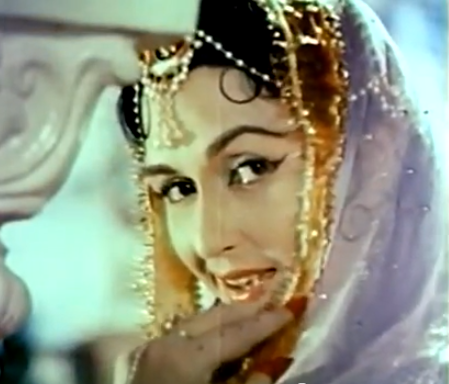
Meena Kumari stars as an enchanting courtesan in Chitralekha (1964)

Sahir Ludhianvi’s lyrical genius as an Urdu poet is widely known, but his poetry in pure Hindi is considerably less prolific. While Sahir churned out gem after gem of Urdu shayari in films such as Taj Mahal and Gumraah, his output in pure Hindi is limited to a handful of films. Sahir’s first foray into the field of Hindi poetry occurred in the soundtrack for Chitralekha (1964), a film directed by Kidar Sharma based on a novel by the same name written by Bhagawati Charan Verma in 1934. The story revolves around the protagonist Chitralekha (played by Meena Kumari), a widowed courtesan who seduces men to their doom with her beauty in the court of King Chandragupta Maurya. Prince Bijgupt (played by Pradeep Kumar) is one of her many admirers, and his lust for Chitralekha prevents him from fulfilling his royal duties. Kumar Giri (played by Ashok Kumar) is a conflicted holy man whose spirituality wavers when faced with the temptation of Chitralekha’s physical charms. Overall, the film questions the philosophical significance of sin and virtue by tracing Chitralekha’s development from being a haughty courtesan to a humble ascetic. Despite this film’s compelling narrative and exploration of uncoventional themes, it failed to achieve success at the box office, especially when compared to its 1941 predecessor (the second highest grossing film of the year!). The mediocre box office performance has been attributed to miscasting of the main characters and a poorly written script.

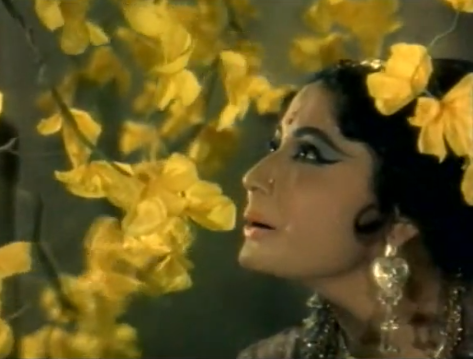
Meena Kumari sings the line “apaman rachetaa kaa hogaa, rachnaa ko agar Thukraaoge” amidst a setting of flowers, which symbolize the natural beauty of creation.

Given the lackluster audience reception at the time of its release, this film is generally remembered today for its soundtrack composed by Roshan and penned by Sahir Ludhianvi. The two songs that are the most well known from this film are the Rafi solo “man re tu kaahe na dhiir dhare” and “sa.nsaar se bhaage phirte ho,” the Lata solo that I’ve chosen to translate today. Based on Raga Yaman Kalyan, this song is a  beautifully crafted statement against spiritual hypocrisy. Through his words, Sahir rejects the conception of sin and virtue established by organized religions in favor of a philosophy of universal hedonism. In context of the film, Chitralekha uses this song to mock Kumar Giri’s ascetism after he patronizes her with a sermon about giving up her sinful lifestyle in order to attain spiritual enlightenment. My favorite part of this song is probably when Chitralekha sings the clever and incisive line: “apaman rachetaa kaa hogaa, rachnaa ko agar Thukraaoge” (It will be an insult to the Creator himself, if you reject the act of creation). This song is full of feisty one-liners like this, so please take a listen to the song and follow along with translation/glossary below if you’d like to hear more. To conclude, I think we can all agree that Sahir does not disappoint here and proves his versatility poet who is equally comfortable writing lyrics in shuddh Hindi as he is in Urdu. Very impressive, indeed–enjoy!

-Mr. 55

Meena Kumari stumbles under the intoxication of wine in the company of her harem.

Sansar Se Bhage Phirte Ho Lyrics and Translation

sa.nsaar se bhaage phirte ho, bhagvaan ko tum kyaa paaoge?
As you flee from society, how will you find God?
is lok ko apnaa na sake, us lok me.n bhii pachataaoge.
You didn’t consider this world as your own, and you will repent it in that world. 

 ye paap hai.n kyaa, ye punya hai.n kyaa? riito.n par dharm kii mohare hai.n
What is sin and what is virtue? Religion uses such traditions as mere facades. 
har yug me.n badalte dharmo.n ko kaise aadarsh banaaoge?
How will you idealize the changing religions of every age?

yeh bhog bhii ek tapsaya hai, tum tyaag ke maare kyaa jaano?
This suffering is also a form of penance; what would you know, you renunciation-stricken fool?
apaman rachetaa kaa hogaa, rachnaa ko agar Thukraaoge.
It will be an insult to the Creator himself, if you reject the act of creation. 

ham kahte hai.n yah jag apnaa hai, tum kahte ho jhuuTha sapna hai.
I claim that this world is mine; however, you consider it a false dream.
ham janam bitaa kar jaaye.nge, tum janam gavaa kar jaaoge.
I will live life to the fullest, but you will waste yours in vain. 

sa.nsaar se bhaage phirte ho, bhagvaan ko tum kyaa paaoge?
As you flee from society, how will you find God?

Glossary 

sa.nsaar: society; bhagvaan: God; pachataanaa: to repent, regret; lok: world; paap: sin; punya: virtue; riit: tradition; dharm: religion; mohara: front, facade; aadarsh banaanaa: to idealize; bhog: suffering;  tapasya: penance; tyaag ke maare: struck with renunciation; apaman: insult; rachetaa: the Creator; rachnaa: to create; Thukraanaa: to reject, disapprove;  jag: world.

Ashok Kumar plays the role of the conflicted holy man Kumar Giri in Chitralekha (1964)

Paaon Choo Lene Do Lyrics and Translation: Let’s Learn Urdu-Hindi

Bina Roy, as Mumtaz Mahal, shys away from Pradeep Kumar in Taj Mahal (1963)

Today we discuss the lyrics and English translation of “paaon choo lene do” from the film Taj Mahal (1963). Lyricist Sahir Ludhianvi and music director Roshan both won Filmfare Awards for their work in Taj Mahal (1963), so it’s not surprising that we’ve decided to discuss a third song from this soundtrack here today (see our previous translations of “jurm-e-ulfat pe” and “khudaa-e-bartar“). “paa.nv chuu lene do” is a duet rendered by Lata Mangeshkar and Mohammed Rafi that was picturized on Bina Roy as Mumtaz Mahal and Pradeep Kumar as Shah Jahan in the film. While “jurm-e-ulfat pe” had some political undertones and “khudaa-e-bartar” was a pacifist statement against war, Sahir’s lyrics in this song from Taj Mahal are purely romantic. The male and female leads flirt back and forth using a savaal-javaab (question-response) structure that focuses on idealizing the heroine’s feet. The female foot has been fetishized in Indian culture and Bollywood cinema over the years, and perhaps the most notable example of this phenomenon occurs in Kamal Amrohi’s magnum opus, Pakeezah: Raaj Kumar is completely smitten after one glance at Meena Kumari’s delicate feet during a train ride.

Krishna decorates Radha’s feet with alta.

What are the origins of the Indian obsession with the foot? Part of this obsession can perhaps be attributed to the importance placed on foot worship in Hindu traditions. For instance, religious imagery in temples and paintings has depicted numerous examples of Krishna painting Radha’s feet or Lakshmi massaging Vishnu’s feet.  Moreover, it is a tradition for women in North India to adorn their feet with a bright red dye called alta during marriages, dances, and religious festivals, like Durga Puja. In fact, during some weddings, brides step into a plate of alta before entering their in-law’s house and leave colored footsteps behind them as they walk. Finally, any child growing up in a Hindu household can attest to the fact that greeting one’s elders by touching their feet is an expected gesture of respect.

Regardless of how you feel about feet, you should definitely take a listen to this duet from Taj Mahal and follow along with our translation/glossary provided below. Indeed, Ludhianvi’s use of language here to highlight the contrast between the hero’s unabashed romantic desires and the heroine’s hesistant modesty is exquisite. As a final note, I just wanted to say that this song was requested by one of our readers Vasuki! We love receiving requests, so please let us know if there is a song you’d like translated, a movie you’d like reviewed, or any other topic you’d like discussed by leaving us a comment here or sending an e-mail to themrandmrs55@gmail.com. Enjoy!

–Mr. 55

The camera fetishizes Bina Roy’s feet in Taj Majal (1963)

Paaon Choo Lene Do Lyrics and Translation

Rafi: paa.nv chhuu lene do, phuulo.n ko inaayat hogii
Please let the flowers touch your feet, it will be favor of kindess to them. 
varnaa ham ko nahii.n, inko bhii shikaayat hogii
Or else, not only I, but they too will protest. 

Lata: aap jo phuul bichhaaye.n unhe.n ham Thukaraaye.n
As I reject the flowers that you have picked for me,
ham ko Dar hai ki yah tauhiin-e-muhabbat hogii
I fear that this will be an insult to love.  

Rafi: dil kii bechain umango.n pe karam faramaao
Please have mercy on the restless yearnings of my heart. 

itnaa ruk ruk ke chalogii to qayaamat hogii
If you walk toward me so hesitatingly, it will be a disaster. 

Lata: sharm roke hai idhar, shauq udhar khii.nche hai
Modesty has held me back here, while desire has drawn me over there.  
kyaa khabar thii kabhii is dil kii yah haalat hogii?
Who knew that my heart would ever be in such a state? 

Rafi: sharm ghairo.n se huaa kartii hai apano.n se nahii.n
One should be modest in the presence of strangers, not with loved ones. 
sharm ham se bhii karogii to musiibat hogii
If you shy away from me, there will be trouble.  

paa.nv chhuu lene do, phuulo.n ko inaayat hogii
Please let the flowers touch your feet, it will be favor of kindess to them.  

Glossary

inaayat: favor; varnaa: or else; shikaayat: complaint; Thukaranaa: to reject; tauhiin-e-muhabbat: insult to love; bechain: restless; umang: hope, yearning; karam faramanaa: to have mercy; ruk ruk ke: hesitatingly; qayaamat: disaster; sharm: modesty; shauq: eagerness, desire; haalat: state, condition; ghair: stranger; musiibat: trouble

Pradeep Kumar as Emperor Shah Jahan in Taj Mahal (1963)

Aage Bhi Jaane Na Tu Lyrics and Translation: Let’s Learn Urdu-Hindi

What a classy soiree!

I just spent three hours of my life watching Waqt (1965) instead of studying for the MCAT.  Therefore today we present the lyrics and English translation of “Aage Bhi Jane Na Tu.” Was it worth it? Totally.

This 1965 film directed by Yash Chopra features an all-star cast (Balraj Sahni, Achla Sachdev, Sadhana, Raaj Kumar, Sunil Dutt, Sharmila Tagore, Shashi Kapoor, Motilal, Rehman, Madan Puri, Leela Chitnis, and Shashikala, among others) along with a compelling storyline that defined the masala genre of Hindi cinema for years to come. The plot tells the story of a family of five who are tragically separated by a natural disaster. Years later, their lives become bizarrely connected through a series of complex entanglements involving romance, misunderstandings, illness, and of course–a murder. I don’t want to ruin the movie by giving away too many details, but its theme can be summarized by the powerful concluding statement made by Balraj Sahni’s character: “waqt hi banata hai aur waqt hi bigaDta hai” (Time creates all, and time destroys all).

Sadhana and Sunil Dutt have a moment in Waqt (1965)

The icing on the cake for this movie is its soundtrack composed by Ravi and penned by Sahir Ludhianvi. One popular song you may know from this film is Manna De’s “ai merii zohraa jabii.n,” but today, I have chosen to translate the soundtrack’s crown jewel: “aage bhii jaane na tu.” Unlike many songs in Bollywood movies that serve as fillers, this song is actually instrumental in advancing the plot. The song is played in the background at a soiree that is attended by many of the film’s major characters. During the course of the song, a lot of important things happen: Sadhana and Sunil Dutt get all romantic together, Rehman orders Raaj Kumar to steal Shashikala’s diamond necklace, Sharmila Tagore seeks Shashi Kapoor’s attention, and Shashi Kapoor is forced to leave the party early to take care of his sick mother. Most importantly, however, Raaj Kumar gets into a fight with a drunk Madan Puri because he makes a pass at Sadhana, and this fight is related to the murder that I eluded to above. I’ll leave it at that for now to keep things suspenseful…

Dashing Raaj Kumar attempts to steal Shashikala’s diamond necklace. Sneaky!

Sahir Ludhianvi is brilliant as always in his poetry, as he transforms a potentially mediocre party song into a beautifully expressed philosophical statement about life. Through his words, he urges listeners to adopt a carpe diem intellectual framework in which decisions should be based on the present instead of relying on the uncertainties of the future and the past. He illustrates that seizing the day is important by saying, “jo bhii hai, bas yahii ek pal hai” (What is here now is only this one moment), and these words are particularly apt for a movie whose title and theme revolve around time. Ravi’s exquisite tune and Asha Bhonsle’s passionate rendition do justice to the depth of Ludhianvi’s words, which all  have contributed to making this gem one of Bollywood’s most treasured songs from the Golden Era.

Shashi Kapoor leaves the party to take care of his ailing mother 😦

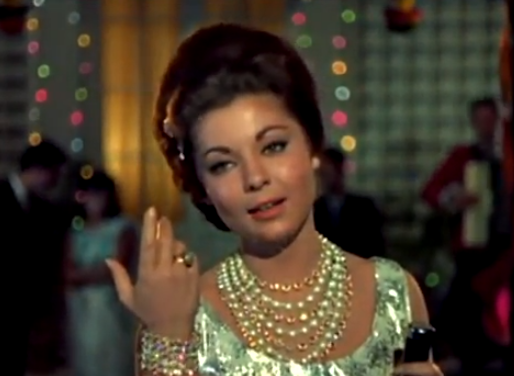
Do you recognize the woman on whom this song is picturized in the film? Her name is Erica Lal, but I couldn’t find much biographical information about her except that she was an American woman who married an Indian living in Mumbai at this time. In any case, she looks stunning on screen during this song and captures the spirit and style of the sophisticated ’60s crooner.

–Mr. 55

Erica Lal is the epitome of the stylish ’60s crooner in Waqt (1965)

Aage Bhi Jaane Na Tu Lyrics and Translation

aage bhii jaane na tu, piichhe bhii jaane na tu
You may not know what lies ahead of you, nor do you know what lies behind you.

jo bhii hai, bas yahii ek pal hai
What is here now is only this one moment.

anjaane saayo.n kaa raaho.n mein Deraa hai
Unknown shadows camp along the paths ahead,

andekhii baaho.n ne ham sab ko ghera hai
While unseen arms have embraced us all.

yeh pal ujaalaa hai, baaqii andhheraa hai
This moment is shining with light; everything else is darkness.

yeh pal gavaana na, yeh pal hii teraa hai
Do not waste this moment, as only this moment is yours.

jiinevaale, soch le yahii vaqt hai kar le purii aarzuu
Think fast, oh living soul: this is the time to fulfill all your desires.

is pal ke jalvo.n ne mahfil sa.nvaarii hai
The passion of this moment has graced this gathering,

is pal kii garmii ne dhaDkan ubhaarii hai
And the warmth of this moment has accelerated our heartbeats.

is pal ke hone se duniyaa hamaarii hai
The world is ours because of this moment’s existence.

yeh pal jo dekho to sadiyo.n pe bhaarii hai
Take a look at this moment, for its grandeur is to be remembered for centuries.

jiinevaale, soch le yahii vaqt hai kar le purii aarzuu
Think fast, oh living soul: this is the time to fulfill all your desires.

is pal ke saaye me.n apnaa Thikaanaa hai
One’s destination can be found in the shadows of this moment.

is pal ke aage hii har shay fasaanaa hai
Ahead of this moment, all objects become stories of fantasy.

kal kis ne dekhaa hai? kal kis ne jaanaa hai?
Who has seen tomorrow? Who has known tomorrow?
is pal se paayegaa jo tujh ko paanaa hai
From this moment, you shall receive all that you are due.

jiinevaale, soch le yahii vaqt hai kar le purii aarzuu
Think fast, oh living soul: this is the time to fulfill all your desires.

aage bhii jaane na tu, piichhe bhii jaane na tu
You may not know what lies ahead of you, nor do you know what lies behind you.

jo bhii hai, bas yahii ek pal hai
What is here now is only this one moment.

Glossary

pal: moment; anjaane: unknown; Deraa: stop, camp; andekhii: unseen; baahe.n: arms; ghernaa: to encircle, embrace; ujaalaa: light; andhheraa: darkness; jiinevaale: living soul;  aarzuu: desire; jalvaa: passion; mahfil: gathering; sa.nvaaranaa: to grace, adorn; ubhaarnaa: to intensify, accelerate; sadii: century; Thikaanaa: destination, address; shay: object;  fasaanaa: tale, story

Raaj Kumar beats up a salacious drunkard to protect Sadhana’s honor. With the right combination of handsome looks, sophisticated personality, and masculine brawn, he is a model example of the classic Bollywood stud.

Yeh Ishq Ishq Hai Lyrics and Translation: Let’s Learn Urdu-Hindi

Bollywood Qawwali Barsaat Ki Raat Shyama Ratna

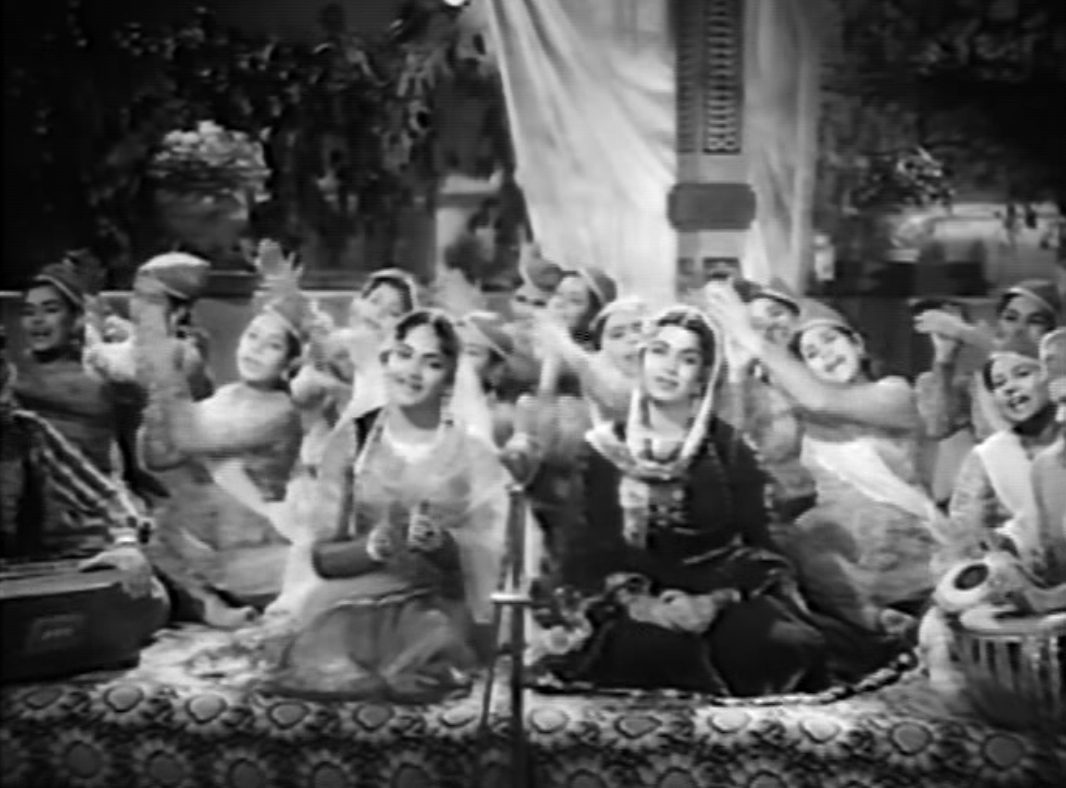
Ratna (left) and Shyama (right) lead the qawwali “Yeh Ishq Ishq Hai” from the hit Bollywood film Barsaat Ki Raat (196)

For our next post, we provide an English translation of “Yeh Ishq Ishq Hai” qawwali (and its prelude “Na to Caravan ki Talaash Hai“) from the all-time classic film Barsaat ki Raat (1960). For anyone familiar with the beautiful lyrics of this Sahir Ludhviani masterpiece, you know that “Yeh Ishq Ishq Hai” is the crowning jewel of the qawwali genre. The ultimate in lyrical poetry, allusions, wit, and transcendent symbolism, “Yeh Ishq Ishq Hai” was no easy task to translate and dissect. Sahir Ludhviani, who also later penned the gems from films like Taj Mahal (1963), wrote an album of love poetry for Barsaat Ki Raat--from “Zindagi Bhar Nahii.N Bhoolegi” to “Mai.N Ne Shaayad Tumhe” to la pièce de résistance, “Yeh Ishq Ishq Hai.”
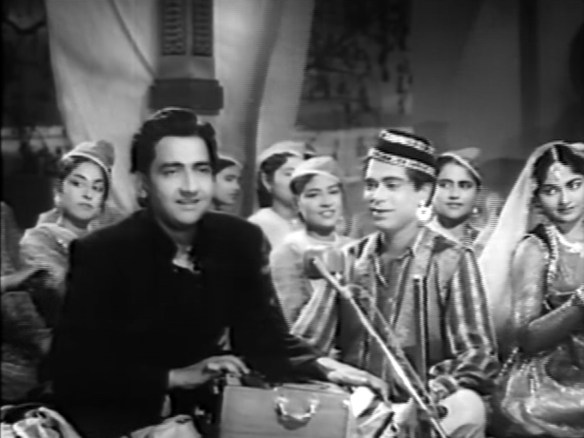
Bharat Bhushan Barsaat Ki Raat qawwali

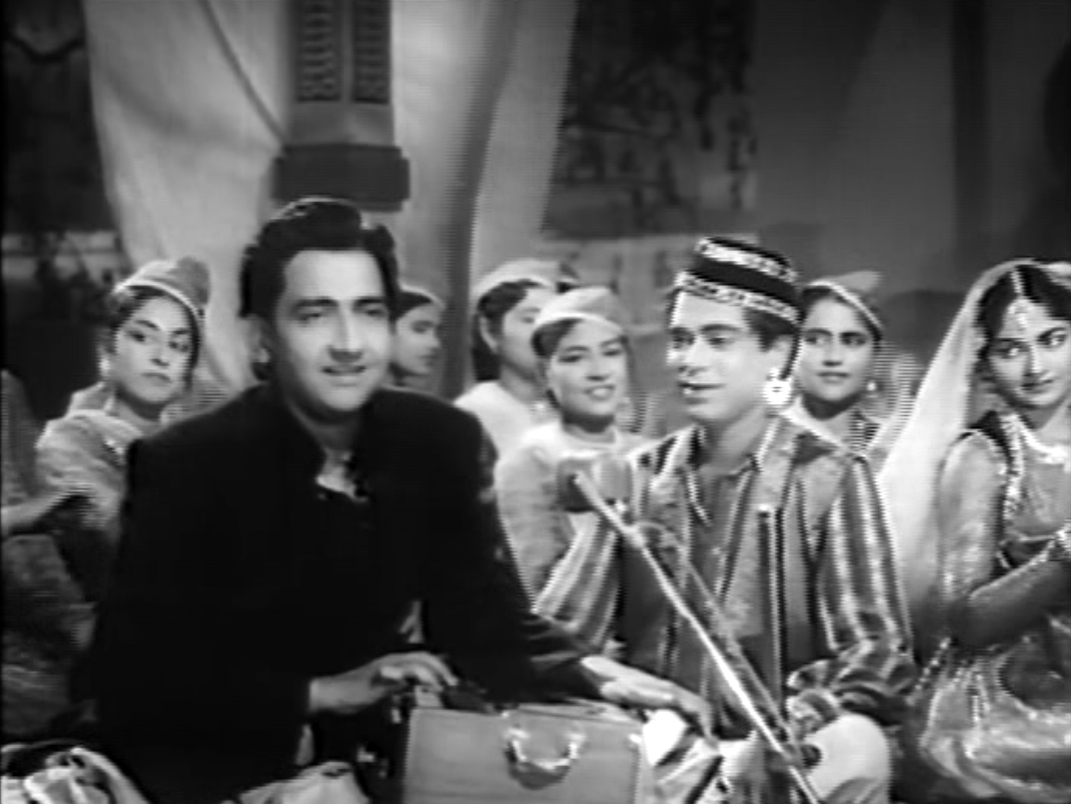
Bharat Bhushan jumps in to save the girls’ qawwali team in “Yeh Ishq Ishq Hai” from Barsaat Ki Raat (1960)

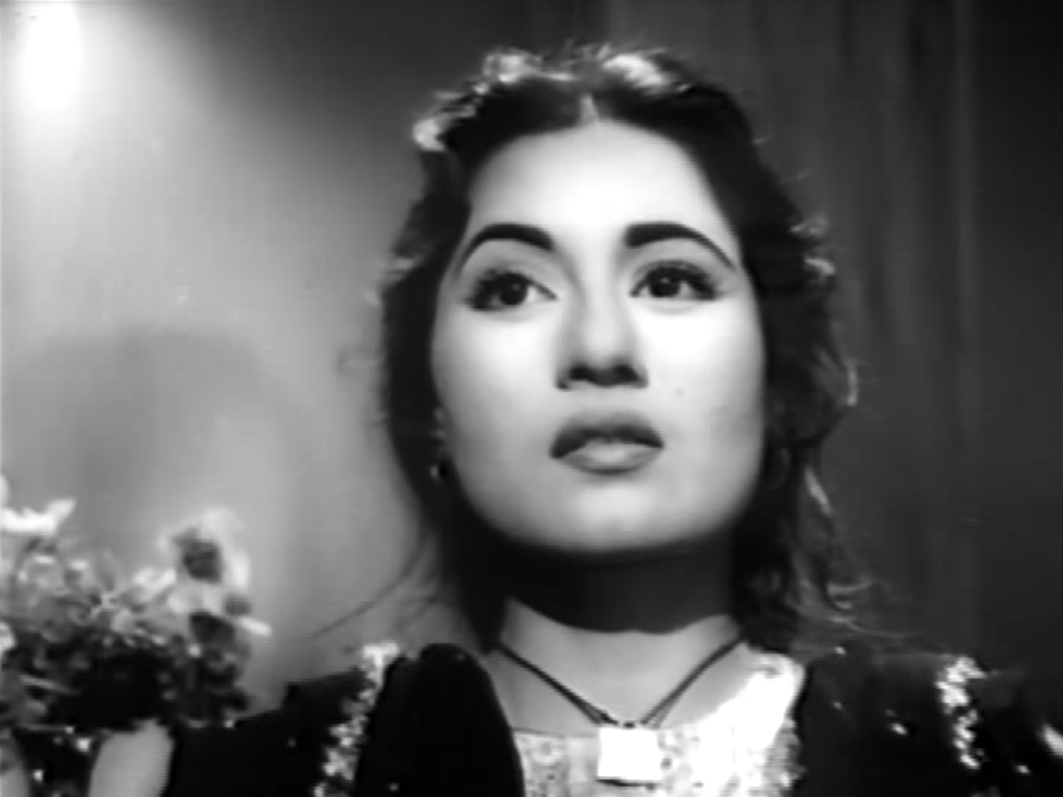
Through this culmination piece of the film’s ongoing qawwali competition, both hero (Bharat Bhushan) and the heroine (Madhubala) are reunited after a long and painful separation. Mohammed Rafi, Asha Bhonsle, and Manna Dey vie to out-do each other in this clever, powerful discussion of the meaning of love, but at the song’s climax Rafi brings the qawwali to a heart-stopping triumphant finish that wins his team the competition. It is a real pleasure to appreciate the many levels on which the qawwali can be understood–from religious, to romantic, to quite literal–after singing “ilaaj koi to maut hai,” Shyama literally falls sick to her deathbed, or as Bharat Bhushan croons, “nikalii Radha saj ke,” Madhubala appears miraculously at the doorway from the prison of her house. Come follow along with our translation of this epic qawwali and it will be clear why “Yeh Ishq Ishq Hai” made Bollywood film history!
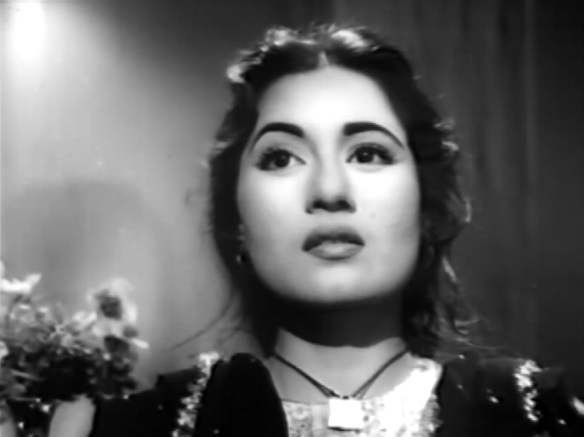
Madhubala Barsaat Ki Raat

Madhubala hears Bharat Bhushan on the radio and decides to find him in Barsaat Ki Raat (1960)

Yeh Ishq Ishq Hai Lyrics and Translation

MALE:

Na to caaravaan ki talaash hai
I am not in search of a caravan
Na to humsafar ki talaash hai
I am not in search of a fellow traveler
Mere shauq-e-khaana kharaab ko teri rehguzar ki talaash hai
That ruined place of my desire searches for the path that leads to you

FEMALE:

Mere naamuraad junoon ka hai ilaaj koi to maut hai
If there is any cure for my unfortunate obsession, then it is death
Jo davaa ke naam pe zehar de
Give me that medicine whose name is poison
Usi chaaraagar ki talaash hai
I am in search of such a healer

Tera ishq hai meri aarzoo,
Your love is my desire
Tera ishq hai meri aabroo,
Your love is my honor
Dil ishq, jism ishq hai, aur jaan ishq hai
My heart is love, my body is love, and my life is love
Imaan ki jo poochho to imaan ishq hai
If you ask for faith, then that is love too
Tera ishq mai.N kaise ChhoD doo.N?
How could I ever leave your love?
Meri umr bhar ki talaash hai
That love is what I have been searching for all my life

MALE:

Yeh ishq ishq hai, ishq ishq, yeh ishq ishq hai, ishq ishq
This is love, this is love, this is love
Jaan-soz ki haalat ko jaan-soz hi samjhegaa
Only one in torment can understand the condition of a fellow sufferer
Mai.N shamaa se kehta hoo.N mehfil se nahii.N kehta
I am speaking to the flame, not to the company gathered here
Kyonki yeh ishq ishq hai, ishq ishq, yeh ishq ishq hai, ishq ishq
For this is love, this is love, this is love

FEMALE:
Sahar tak sab ka hai anjaam jal kar khaak ho jaana
By dawn, everything will burn and be reduced to ashes
Bhari mehfil mei.N koi shamaa yaa parvaana ho jaaye
Everyone in this gathering shall became either flame or moth
Kyo.N ki yeh ishq ishq hai, ishq ishq, yeh ishq ishq hai, ishq ishq
For this is love, this is love, this is love

MALE:

Vehshat-e-dil rasn-o-daar se roki na gayi
Love is not stopped by the madness of the heart or ropes and the gallows
Kisi khanjar, kisi talvaar se roki na gayi
It is not stopped by any dagger, by any sword
Ishq Majnu ki woh aavaz hai jiske aage koi Laila kisi deewaar se roki na gayi,
Love is that voice of Majnu’s which Laila followed and which no barrier could stop
Kyo.N ki yeh ishq ishq hai, ishq ishq, yeh ishq ishq hai, ishq ishq
For this is love, this is love, this is love

Woh hanske agar maa.Nge.N to hum jaan bhi dede.N,
If she laughs and asks, then I would even give my life
Haa.N yeh jaan to kya cheez hai? Imaan bhi dede.N!
Yes, after all what is this life? I would even give up my faith!
Kyo.N ki yeh ishq ishq hai, ishq ishq, yeh ishq ishq hai, ishq ishq
For this is love, this is love, this is love

Naaz-o-andaaz se kehte hai.N ki jeena hoga,
I am told that I must live with my fate gracefully
Zehar bhi dete hai.N to kehte hai.N Ki peena hoga
They give me poison, and say I must drink
Jab mai.N peetaa hoo.N to kehte hai.N ki marta bhi nahii.N,
But when I drink it, then they say I won’t die
Jab mai.N martaa hoo.N to kehte hai.N ki jeenaa hogaa
When I am dying, they say I must live
Yeh ishq ishq hai, ishq ishq, yeh ishq ishq hai, ishq ishq
For this is love, this is love, this is love

Mazhab-e-ishq ki har rasm kaDi hoti hai,
The laws and customs of love are very strict
Har qadam par koi deewaar khaDi hoti hai
At every step, there is a barrier standing
Ishq aazad hai, Hindu Na Musalmaan hai ishq,
Love is free, love is neither Hindu nor Muslim
Aap hii dharm hai aur aap hii imaan hai ishq
Your own duty and your own faith alone is love
Jis se aage nahii.N shekh-o-Brahaman dono.N,
Both Hindu and Muslim religious men cannot surpass this
Us haqeeqat ka garajtaa hua ailaan hai ishq
The reality of that thundering proclamation is love

(FEMALE in Panjabi):

Ishq na puchhe deen dharm nu, ishq na puchhe jaataan
Love does not ask your religion or creed, love does not ask your social class or caste,
Ishq de haatho.N garam lahu vich doobiyaan laakh baraataan ke
Love has drowned thousands of wedding revelers in its fiery blood
Yeh ishq ishq hai, ishq ishq, yeh ishq ishq hai, ishq ishq
This is love, this is love, this is love

MALE:
Raah ulfat ki kaThin hai ise aasaan na samajh
The path of love is dangerous, do not think it easy
Yeh ishq ishq hai, ishq ishq, yeh ishq ishq hai, ishq ishq
This is love, this is love, this is love

FEMALE:
Bahut kaThin hai Dagar panghat ki
The path to the riverside is very dangerous
Ab kya bhar luau.N mai.N Jamuna se matki?
Now how can I fill my jug with water from the banks of the Jamuna River?
Mai.N jo chali jal jamuna bharan ko dekho sakhi ji mai.N jo chali jal jamuna bharan ko
As I was on my way to fill my jug with water from the Jamuna,
Nand kishor mohe roke jhaadon
The young boy of Nanda [Krishna] stopped me
To kya bhar luau.N mai.N Jamuna se matki?
So how can I fill my jug with water from the banks of the Jamuna River?

MALE:
Ab laaj raakho more ghoonghat pat ki
Now protect my honor, this veil of mine
Jab jab Krishn ki bansi baaji,
When Krishna played his flute
Nikali Raadhaa saj ke
Radha emerged, dressed up
Jaan ajaan ka dhyaan bhulaa ke,
Forgetting all she was taught
Lok laaj ko taj ke
She left the honor of society
Haaye ban ban Doli Janak dulaari,
The darling child of King Janak [Sita] swayed into the forest
Pehenke prem ki maalaa
And wore a garland of love
Darshan jal ki pyaasi Meera
Meera thirsty for her a glimpse of her Lord
Pii gayii vishh ka pyaalaa aur phir araj kari
Drank a glass of poison and then pleaded
Ke laaj raakho raakho raakho, laaj raakho dekho dekho,
Protect my honor, protect my honor, protect my honor
Yeh ishq ishq hai, ishq ishq, yeh ishq ishq hai, ishq ishq
This is love, this is love, this is love

Allah rasool ka farmaan ishq hai
The commands of God and Mohammed are love
Yaanii Hadith ishq hai, Quraan ishq hai
The teachings of Mohammed are love, the Quraan is love
Gautam kaa aur Maseehaa kaa armaan ishq hai
The wishes of Bhudda and Christ are love
Yeh kaayanaat jism hai aur jaan ishq hai
This material existence and this life are love
Ishq sarmad, ishq hii mansoor hai
Love is everlasting, love alone is victorious
Ishq Moosa, ishq Koh-e-Toor hai
Love is Moses, love is Mt. Sinai
Khaaq ko but, aur but ko devtaa karta hai ishq
Love turns clay into idols, and idols into Gods
Intahaa yeh hai ke bande ko khuda karta hai ishq
The pinnacle is that love has the power to turn a man into a revered God
Haan.N yeh ishq ishq hai, ishq ishq, yeh ishq ishq hai, ishq ishq
Yes, this is love, this is love, this is love

Glossary:

caravaan: caravan; talaash: search; humsafar: fellow traveler; shauq-e-khaana; desires, hobbies; barbaad: ruined; rehuguzar: pathway; naamuraad: unfortunate; junoon: obsession; ilaaj: cure; maut: death; davaa: medicine; zeher: poison; chaaragar: one who treats you, doctor, healer; aarzuu: desire; aabruu: honor; jism: body; imaan: faith; jaansoz: torment, soul-burning; sahar: the time before dawn; anjaam: conclusion; khaak: ashes; parvaanaa: moth (used allegorically as one blinded by love); vehshat: madness; rasn: rope; daar: gallows; khanjar: dagger; talwar: sword; LailaMajnu: legendary ill-fated lovers; awaaz: voice; deewaar: barrier, wall; cheez: thing; naazoandaaz: pride and style, grace; mazhab: law; kaDi: strict, harsh; qadam: step; azaad: free; dharm: Hindu religious duty; haqeeqat: reality; garajnaa: to thunder; ailaan: proclaimation; deen: Islamic obedience; jaataan: caste; lahu: blood; ulfat: love; kaThin: dangerous; aasaan: easy; Dagar: pathway; maTki: jug, pot; Nand kishor: young Krishna laaj: honor; ghuunghat: veil; bansi: type of flute; dhyaan: meditation; lok: people, society; ban: forest; Dolna: to sway; Janak Dulari: The darling daughter of the mythological King Janak [Sita]; prem: love; maalaa: garland; darshan: glimpse of a deity; pyaasi: thirsty; vish ka pyaalaa: glass of poison; araj: plea; rasool: messenger [of God, Mohammed]; farmaan: commands; hadith: a report of the deeds and the teachings of Muhammed, Gautam: Buddha; Maseehaa: Jesus Christ; kaayanaat: material creation; sarmad: everlasting; mansoor: victorious, Moosaa: Moses; Koh-e-Toor: Mt. Sinai; khaaq: clay; but: idol; devtaa: God; intahaa: pinnacle, culmination

Yes, that glossary was a mouthful. Even as it is, I must warn that many of these words have a far deeper religious meaning to them that cannot be summed up in the one or two words as I have defined them. But no one said the Hindustani language was easy, and this song is just loaded with Arabic-based and Sanskrit-based vocabulary as well as references from both Hindu and Islamic traditions. It’s part of why Urdu-Hindi is such a complex, beautiful and absolutely fascinating language. Let’s take a more in-depth look at some of these lines:

  • “Ishq Majnu ki woh awaaz hai…” according to the Arab legend, similar to Romeo and Juliet, Laila and Majnu (whose nickname means “madly in love”) were two star-crossed lovers from rival families. However, Laila fled from her house to be with the one she loved and it is said that as Majnu was caught and whipped, their love was so strong that Laila screamed and blood appeared to flow from Laila’s skin instead.
  • “Bahut kaThin hai Dagar panghat ki…” is actually a line from the great Amir Khusrau qawwali written during the 13th century. The qawwali refers in one sense to the risks of dishonor faced by Radha as she attempted to fetch water, another sense explores the risks of standing up for religious beliefs (in Khusrau’s case, an allegiance to Sufi saint Nizamuddin Auliya.) The line has now become a sort of idiomatic warning to not underestimate the burden of any difficult task.
  • “Jab jab Krishna ki bansi baaji…” refers to the tales of Hindu folklore of childhood lovers Krishna and Radha, the latter of whom risked familial honor and suffered teasing and torment from her girlfriends in her love for the young Lord.
  • “Janak dulari ban ban Doli…” is a reference to the Ramayan in which Sita, upon learning of her husband Ram’s banishment to the forest, renounced her title as well. Sita, it should be recalled, had a very lavish upbringing as she was the daughter of King Janak, so this was no simple sacrifice to live in the dangerous jungle. But Sita’s love was unparalleled, and although she was not otherwise compelled to accompany Ram to the jungle, did indeed join him out of pure devotion.
  • “Darshan jal ki pyaasi Meera…” refers to the legend of Krishna devotee and Rajput Princess, Meera Bai of the 16th century. Her zealous worship and love of Krishna inspired not only many famous bhajans we know and sing today, but the resentment of her brother-in-law who frowned upon her actions (eg. mingling with the poor, ignoring her husband, etc.) He made several notorious attempts to kill her, including forcing her to drink a glass of poison that Lord Krishna is said to have transformed into nectar and saved her when she pleaded for the Lord to protect her honor.

As you can probably tell, I LOVE this qawwali. I discover new things every time I enjoy it (for example, anyone else notice how the background clappers only start shrugging their shoulders cliched bhangra-style ONLY when Ratna starts singing in Panjabi? Coincidence? I think not!) The song indeed transcends all religious and material loyalties, bringing the audience a dazzling, other-wordly experience. For anyone who’s tired of all the allegories and vocabulary quizzes, here’s the long-awaited behind-the-scenes gossip:

Did you know Bharat Bhushan actually got married in real life to Ratna (who ironically played the only character in the film NOT in love with him!) Surprise, right!? She was his second wife, and some even say that later mild-mannered Bharat Bhushan had had an affair with none other than Meena Kumari. Did the scandals never end in this town?

For more Urdu bliss, check out our post on the beauty of Urdu poetry in Hindi films!

-Mrs. 55
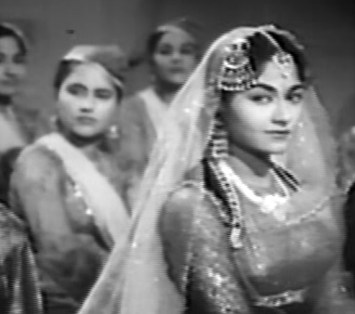
Ratna Barsaat Ki Raat

Ratna, wife of Bharat Bhushan, plays a sassy side-kick in the film Barsaat Ki Raat (1960)