Who Is Minoo Purshottam? Appreciation from a Former Student

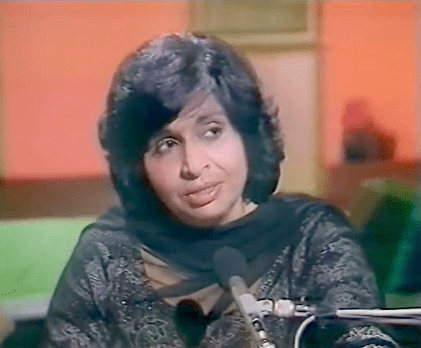
Minoo Purushottam, Bollywood playback singer.

Minoo Purshottam, Bollywood playback singer of the 60s and 70s, performing live for the BBC.

Minoo Purshottam was an acclaimed Bollywood playback singer of the 1960s and 70s. She lived in the era dominated by the famous soprano sisters Lata Mangeshkar and Asha Bhonsle, fighting for the ground they couldn’t cover—and scoring! Continuing our slant of broadcasting the unsung heroes of classic Bollywood, I now introduce you to Minoo Purshottam, yesteryear songstress and incidentally, my former vocal instructor.

I spent much of my childhood in Houston where I had the pleasure of learning music from Minoo-ji in the classical Hindustani style. Before becoming her student, I knew her work well from the soundtracks of great Bollywood films I had grown up with. You may not know her name, but you’ve probably heard her songs. From “Ni Main Yaar Manana Ni” with Lata Mangeshkar from Daag (1973), “Na Na Na Re, Haath Na Lagaana” from Taj Mahal (1963) with Suman Kalyanpur, and “Huzur-e-Wala Jo Ho Ijaazat” from Yeh Raat Phir Na Aayegi (1966), Minoo-ji made an important mark among the musical legends in India.
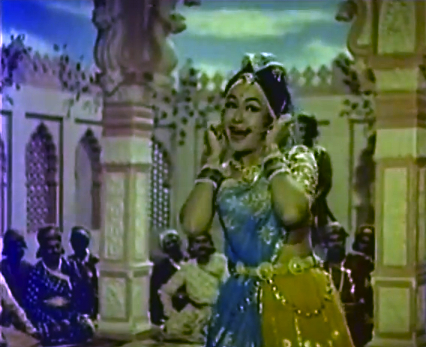
helen na na na haath na taj mahal

Helen dances to Minoo Purshottam’s playful “Na Na Na Haath Na Lagana” in Taj Mahal (1963).

Minoo-ji made her playback debut in Taj Mahal at the age of 16. Legendary music director Roshan took her under his wing, giving her a chance to sing a duet with Suman Kalyanpur. She recalls that she was much shorter than Suman and since in those days singers shared a single microphone during a studio recording (at Mehboob Studios, no less), she had to stand on a platform to make up for the difference!

From the daughter of a farming family in Patiala, she went on to become a singing maestro, working with composers like S.D. Burman, O.P. Nayyar, and Madan Mohan. Although she had a few occasional solos, her most famous work in films is as a partner, not a lead—always a bridesmaid, never a bride. Yet listen to how heroine-esque Minoo-ji’s voice sounds in the playful Jaidev composition “Raat Piya Ke Sang” from the lost film Prem Parbat (1973)! She toured with playback singers like Mohammed Rafi until his passing, yet when it came time to record songs for films, he was matched with Asha Bhonsle or Lata Mangeshkar. Minoo-ji waited for the female-female duets to shine.
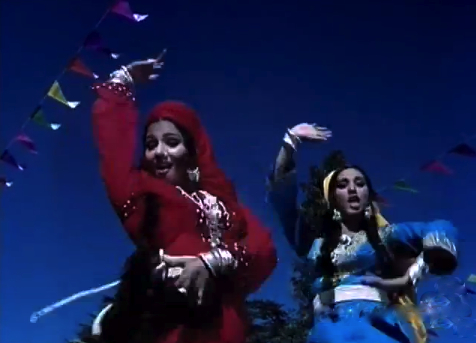
Ni Main Yaar Daag Minoo Purushottam

One of classic Bollywood’s favorite female dance duets, “Ni Main Yaar Manana Ni” features the vocals of Minoo Purshottam from the hit film Daag (1973).

Eventually, Minoo Purushottam turned to non-filmi ghazals where she felt the songs could have more “meaning,” something with a more serious philosophy, and eventually left India and settled in Houston where she started teaching Hindustani vocals. Her depth in the heart-stirring ghazal Zakhm Rahguzaaro.N Ke demonstrates another aspect of her talent that may otherwise have remained hidden behind the glitzy duets of old Bollywood.

I remember her classes used to take place at an auntie’s house in the community. We sat next to each other on a keyboard bench and she played the melody as I tried to keep up with what she was singing.  Minoo-ji was a strict teacher, but full of laughter and great stories—a Panjabi like me. I remember she often performed at local functions where she held her audiences captivated.
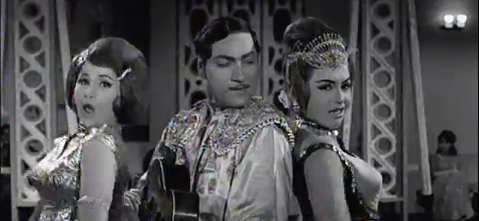
huzur e wala minoo purushottam helen

Asha Bhonsle and Minoo Purushottam join forces for the cabaret number “Huzoor-e wala” in the mystery film Yeh Raat Phir Na Aayegi (1966).

I often regret that I was too young to fully appreciate the magnitude of the legend from whom I was learning. I sometimes wish I could go back and ask her the questions on her life experiences and the inspirations that made her the fascinating artist she became. Yes, she never reached the heights of the playback singers we all associate with that era—but it is precisely because of it that I respect her more, standing her ground in a world notorious for its ruthlessness. Perhaps it was because of her innocence and much younger age that she never felt any rivalry between herself and these stars. Minoo-ji enjoyed collaboration rather than competition. And in Bollywood, that was a rare and beautiful thing.

What is your favorite Minoo Purshottam song? Let us know in the comments! For more unsung heroes of early Bollywood, check out our previous posts on costume designer Mani Rabadi and music composer Anthony Gonsalves!

Minoo Purshottam playback singer

Minoo Purushottam, Bollywood playback singer of the 60s and 70s.

– Mrs. 55

Hum Tere Pyar Mein Lyrics and Translation: Let’s Learn Urdu-Hindi

Meena Kumari expresses ultimate devotion to her husband through song in Dil Ek Mandir (1963).

Today, we provide the lyrics and English translation to a memorable song from C.V. Sridhar’s Dil Ek Mandir (1963): ham tere pyaar me.n .  Starring Meena Kumari, Rajendra Kumar, and Raaj Kumar, Dil Ek Mandir is a Hindi remake of the Tamil film Nenjil Ore Alayam (1962). Dil Ek Mandir was a box-office hit at the time of its release, and it even garnered Raaj Kumar a Filmfare Award for his performance in the film.

When oncologist Rajendra Kumar returns from abroad, he is shocked to learn that his former love Meena Kumari has been married off to another man in a cruel twist of fate. Grief-stricken, he devotes the rest of his life to caring for cancer patients at a nursing home. One day, Meena Kumari brings her husband Raaj Kumar to the nursing home because he has fallen critically ill. When she realizes that Rajendra Kumar will be his doctor, she wants to take her husband elsewhere out of fear that Rajendra Kumar will be unable to offer him unbiased medical care.  As Rajendra Kumar prepares to perform a technically demanding operation to save the life of his former lover’s husband, he is faced with an uncomfortable ethical dilemma: should he save Raaj Kumar’s life by performing the surgery to the best of his abilities or should he use this opportunity to rekindle his love with Meena Kumari after Raaj Kumar’s impending death? Watch the movie to find out if he does the right thing!

Placed into the context of this film, “ham tere pyaar me.n” is picturized on Meena Kumari singing to Raaj Kumar in reaction to his suggestion that she should marry Rajendra Kumar after his death. Staunchly adhering to the pativrata norms that defined ideal female behavior at the time, she rejects this proposal as immoral and absurd. In this song, she expresses ultimate devotion to her husband by declaring that she can only understand the true meaning of love through him. While devotion and commitment are certainly admirable, many would argue that the poetry of this song penned by Hasrat Jaipuri errs on the side of misogyny and anti-feminism. When a male poet makes a female protagonist start singing about loving cages instead of people (“yah pyaar kaa pinjraa man bhaayaa“) or about harboring a wish to die at her husband’s feet (“ab in charano.n me.n dam nikle, bas itnii aur tamanna hai“), you can’t help but think that something’s not quite right.

However, two things are definitely right about this song: Lata Mangeshkar’s angelic rendition and Shankar-Jaikishan’s exquisitely crafted melody. Even if the lyrics are too extreme for your liking, the artistic beauty of this song is still preserved in the way Lata’s voice drips with pathos as she navigates through this delicate tune. Meena Kumari’s on-screen portrayal is suitably melodramatic, and I am especially fond of the way in which the beautiful sitar interludes have been highlighted by including the instrument in the song’s picturization.

Finally, as an aside, some of you may remember that Sonu Nigam sang the mukhDaa of this song on the very first episode of SaReGaMa, the televised singing competition that went on to discover many notable talents such as Shreya Ghosal. This song is certainly an interesting choice to open a show with, and the rendition by a male singer casts a new light upon the discussion of this song’s underlying subtext of misogyny. Enjoy, and share your thoughts with us in the comments! Until next time…

-Mr. 55

Raaj Kumar won a Filmfare Award for Best Supporting Actor for his portrayal of a cancer patient in Dil Ek Mandir (1963)

Hum Tere Pyar Mein: Lyrics and Translation

ham tere pyaar me.n saaraa aalam kho baiThe hai.n, kho baiThe
I have lost the entire world by loving you. 
tum kahte ho ki aise pyaar ko bhuul jaao, bhuul jaao
Yet, you tell me to forget this love.

panchhii se chhuDaa kar uskaa ghar tum apne ghar par le aaye
You took a cage from the birds and brought it to your own house.
yah pyaar kaa pinjraa man bhaayaa, ham jii bhar bhar kar muskaaye
This cage of love pleased me, and I smiled to my heart’s content. 
jab pyaar huaa is pinjre se tum kahne lage aazaad raho
When I fell in love with this cage, you told me to remain free. 
ham kaise bhuulaaye pyaar teraa? tum apnii zubaa.n se yah na kaho
But how can I forget this love? Please don’t tell me this in your own words. 
ab tum saa jahaa.n me.n koii nahii.n hai, ham to tumhaare ho baiThe
No one else like you exists in this world, and I will remain yours forever. 
tum kahte ho ki aise pyaar ko bhuul jaao, bhuul jaao
Yet, you tell me to forget this love.

is tere charan kii dhuul se ham ne apnii jiivan maa.ng bharii
From the dust at your feet, I have marked the parting of my hair.
jab hii to suhaagan kahlaayii, duniyaa kii nazar me.n pyaar banii
When I considered myself a married woman, the world witnessed the creation of love.
tum pyaar kii sundar muurat ho aur pyaar hamaari puujaa hai
You are a beautiful idol of love, and love is my form of worship.
ab in charano.n me.n dam nikle bas itnii aur tamannaa hai
Indeed, I harbor one parting desire: I hope to die at your feet.
ham pyaar ke ganga jal se, balam jii, tan-man apna dho baiThe
My beloved, I have cleansed my body and soul with water from the Ganges of love.
tum kahte ho ki aise pyaar ko bhuul jaao, bhuul jaao
Yet, you tell me to forget this love.

sapno.n kaa darpan dekhaa thaa, sapno.n ka darpan toD diyaa
I saw a mirror of dreams, and then I shattered it.
yah pyaar kaa aa.nchal ham ne to daaman se tumhaare baa.ndh liyaa
I tied the end of this sari of love to the tail of your shirt.
yah aisii gaa.nTh hai ulfat kii, jis ko na koii bhii khol sakaa
This knot of romance is tied so tightly that no one can untie it.
tum aan base jab is dil me.n, dil phir to kahii.n na Dol sakaa
Since you began to reside in my heart, it has been unable to frolic elsewhere.
o pyaar ke saagar, ham terii laharo.n me.n naav Dubo baiThe
Oh, the ocean of love! I have drowned a boat in your waves.
tum kahte ho ki aise pyaar ko bhuul jaao, bhuul jaao
Yet, you tell me to forget this love.

ham tere pyaar me.n saaraa aalam kho baiThe hai.n, kho baiThe
I have lost the entire world by loving you.

Glossary

aalaam: world; chhuDaaanaa: to take, remove; pinjraa: cage; man bhaanaa: to please the mind; jii bhar kar:  wholeheartedly;  aazaad: free; zubaa.n: language, words; jahaa.n: world;  maa.ng bharnaa: to apply vermillion to the parting of a woman’s hair (a Hindu ritual signifying wedded status); suhaagaan: a married individual; kahlaanaa: to call oneself; dam nikalna: to lose one’s breath, to die; tamanna: desire; ganga: the Ganges, a sacred Indian river; tan-man: body and soul; darpan: mirror; aanchal: decorative end of a sari; Dolnaa: to frolic, to swing; daaman: tail of a garment; gaa.nTh: knot; ulfat: love; lahar: wave; naav: boat.

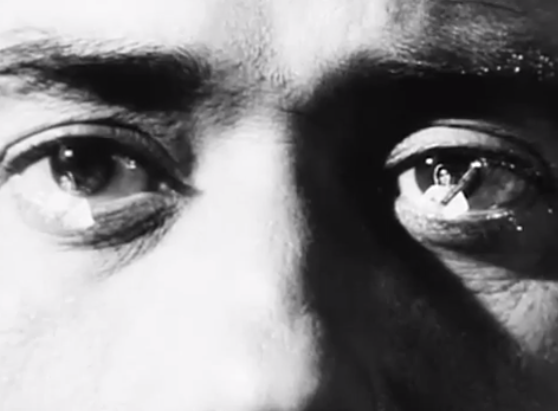
Meena Kumari’s image is reflected upon Raaj Kumar’s pupils in the picturization of this song. How melodramatic!

Zindagi Kaisi Hai Paheli Lyrics and Translation: Let’s Learn Urdu-Hindi

Rajesh Khanna Anand Zindagi Kaisi Hai Paheli

Dangerously attractive Rajesh Khanna proves that real men wear lavender in Anand (1971).

Next we showcase the lyrics and English translation of “Zindagi Kaisi Hai Paheli” from the sentimental mega-hit Anand (1971). Diagnosed with terminal lymphosarcoma of the intestine, Rajesh Khanna is determined to raise the spirits of those around him. With a smile, he explains his philosophy to his bewildered physician, Amitabh Bachhan:

“Babumushai, zindagii badii honii chahiye, lambii nahii.N.” [“Babumushai, life should be big, not long.”]

Brimming with rich symbolism from floating balloons to boatmen in the ocean, “Zindagi Kaisi Hai Paheli” explores the outlook of a man whose journey is approaching its destination. Rajesh Khanna give a tour de force performance as a character at peace with the mysteries of the world.

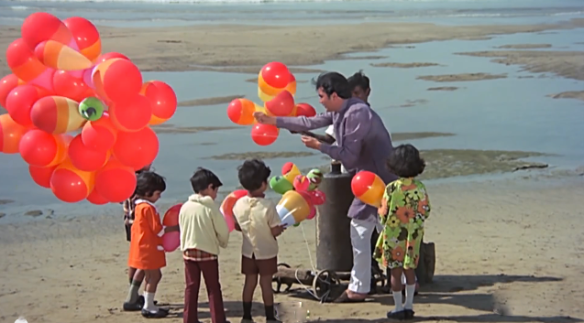
Rajesh Khanna gives out balloons at Juhu Beach

Rajesh Khanna buys out a lucky balloon-wala in “Zindagi Kaisi Hai Paheli” from Anand (1971).

The song begins with a distinctive, uplifting trumpet solo, establishing the tone. While other gorgeous songs of Anand such as “Kahin Door Jab Din” are sung by the gentle Mukesh, Manna Dey was chosen for “Zindagi Kaisi Hai Paheli.” Known better for his masterful Hindustani classical numbers of the 1960s, Manna Dey’s film career began to falter with the rise of Kishore Kumar’s heroic romantic vocals. But his popularity revived in the 70s with Anand when Rajesh Khanna himself asked music director Salil Chaudhary for a chance to lip-sync a Manna Dey song. As Manna Dey recalled in a 2012 interview,

“I loved the way he [Rajesh Khanna] picturised music. The success of a song depends upon how an actor picturises it. He was the number one in picturising songs. I will ever be indebted to him.”

We hope you enjoy the lyrics and English translation of “Zindagi Kaisi Hai Paheli” from Anand (1971). Follow along with the video here while reflecting on film lyricist Yogesh’s philosophical poetry!

Zindagi Kaisi Paheli Lyrics and Translation:

Zindagii kaisii hai pahelii, haaye!
Oh, what a riddle life is!
Kabhii to ha.Nsaaye kabhi yeh rulaaye
Sometimes it makes us laugh, sometimes it makes us cry

Kabhii dekho man nahii.N jaage, peechhe peechhe sapno.N ke bhaage
Sometimes the mind does not awaken, it chases dreams
Ek din sapno.N ka raahii chalaa jaaye sapno.N ke aage, kahaa.N?
One day that traveler of dreams will go beyond the dreams, but where?

Jin hone sajaaye yahaa.N mele sukh dukh sang-sang jhele
Those who bring people together, they experience joy and sorrow together
Wohii chunkar khaamoshii yuu.N chalii jaaye akele, kahaa.N?
Those same people choose silence and depart alone, but where?

Glossary:

zindagii: life; pahelii: riddle, puzzle; haaye: oh, sigh; ha.Nsaanaa: to make [someone] laugh; rulaanaa: to make [someone] cry; man: mind; jaagnaa: to awaken; peechhe: behind; bhaagnaa: to run; ek din: one day; sapnaa: dream; raahii: traveler; aage: ahead, future; melaa sajaanaa: to arrange a fair (literal), to bring people together; sukh: happiness; dukh: sadness; sang-sang: together; jhelnaa: to experience; chunnaa: to choose; khamoshii: silence; akelaa: alone

Juhu Beach Rajesh Khanna Zindagi Kaisi Hai Paheli Anand

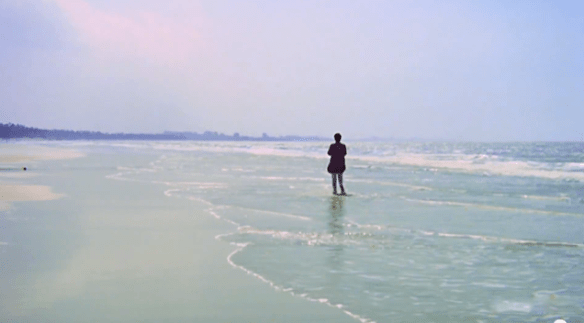
“Zindagi Kaisi Hai Paheli” was famously filmed at suburban Bombay’s Juhu Beach, made even more gorgeous by the delicate silhouette of Rajesh Khanna against the shoreline.

It’s hard to believe we lost a legend like Manna Dey 6 months ago, a little more than a year after losing Rajesh Khanna. The singer was 95 years old. This beautiful tribute to those dream chasers we wish were with us, “Zindagi Kaisi Hai Paheli,” was requested by fan Ajay.

-Mrs. 55

Tere Mere Milan Ki Lyrics and Translation: Let’s Learn Urdu-Hindi

tere mere milan jaya amitabh abhiman

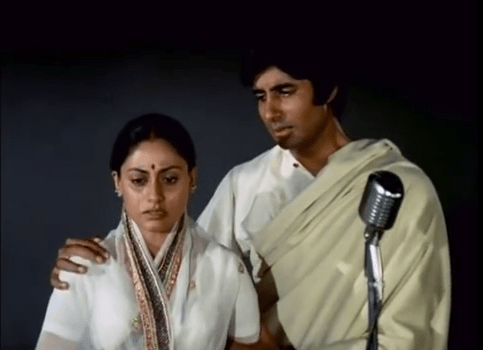
In the famous climax of Abhimaan (1973), Jaya Bhaduri and Amitabh Bachhan reunite on-stage for an emotional rendition of “Tere Mere Milan Ki.”

Today we showcase the lyrics and full English translation of “Tere Mere Milan Ki” from the 1973 hit film Abhimaan. Based loosely on the life of famous playback singer Kishore Kumar and his first wife, Ruma Ghosh, the film centers around a talented newlywed couple whose marriage is threatened by professional jealousy. When high-rolling pop singer Amitabh Bacchan marries innocent country girl Jaya Bhaduri, her newly-discovered musical prowess steals his limelight with alarming disharmony.

The show-stopping number “Tere Mere Milan Ki” is a song of reconciliation in the film’s finale. Flowing with tenderness and hope, the enchanting duet gives Amitabh Bacchan and Jaya Bhaduri another chance to love each other. Is their marriage worth saving? Read more about the film’s story and behind-the-scenes gossip in our earlier review of Abhimaan!

Amitabh Bachan abhiman tere mere milan

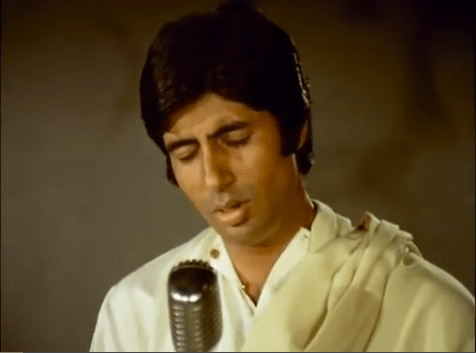
Amitabh Bachhan humbly begins his performance alone and ashamed in Abhimaan (1973).

Rightfully earning S.D. Burman the 1973 Filmfare Award for Best Music Director, “Tere Mere Milan Ki” is a classic example of Rabindra-sangeet in Bollywood. The song dazzles with Majrooh Sultanpuri’s poetic nuances, a metaphorical glimpse into the creation of a family. He describes the lover’s eyes as “chanchal,” which can mean playful, but also implies something that does not remain in one spot, a certain liveliness in spirit. With every “dekho na,” he directs that gaze back toward the night of their union, while she looks toward what lies ahead and the family they will begin together.

Jaya Bahaduri tere mere milan abhiman

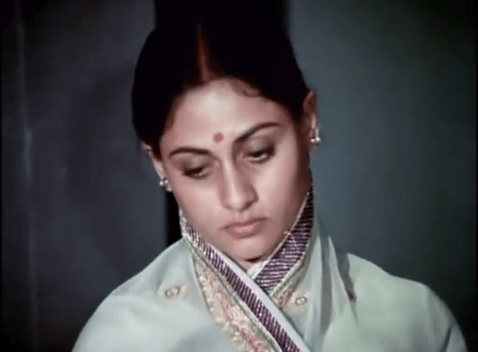
Jaya Bhaduri mourns her miscarried child backstage of her husband’s performance in Abhimaan (1973).

For me, this song has always glowed. Lata Mangeshkar’s voice resonates after the opening stanza like an angel descending from heaven. But it was only after seeing the film that I realized the heroine of the story had recently suffered a miscarriage. Thus the lines “nanhaa sa gul khilegaa a.Nganaa” are more than a hope for the future, but a true reflection of their family’s dream deferred. The entire song changed its meaning for me, and became if possible, even more poignant.

We hope you enjoy our English translation and lyrics to “Tere Mere Milan Ki” from Abhimaan (1973) below! Follow along with the video here.

Tere Mere Milan Ki Yeh Raina Lyrics and Translation:

Male:
Tere mere milan kii yeh rainaa
On the night of your and my union
Nayaa koi gul khilaayegi
A new rose will bloom
Tabhi to chanchal hai tere naina
That is why your eyes are playful
Dekho na! Dekho na, tere mere milan kii yeh rainaa
Look! Look at the night of your and my union

Female:
Nanha sa gul khilegaa a.Nganaa
A small rose will bloom upon our balcony
Suunii baiyaa sajegii, sajnaa
She will decorate my lonely arms, beloved
Male:
Jaise khele chandaa baadal mei.N
Just as the moon plays with the clouds
Khelegaa woh tere aa.Nchal mei.N
She will play in the folds of your saari
Female:
Chandaniyaa gungunaayegi
The rays of the moon will sing
Tabhi to chanchal hai tere naina
That is why your eyes are playful
Dekho na! Dekho na, tere mere milan kii yeh rainaa
Look! Look at the night of your and my union

Male:
Tujhe thaame kaii hatho.N se
I will hold your hand many times
Miluu.Nga madbharii raato.N mei.N
I will meet you many intoxicating nights
Female:
Jagaake aansuunii si dhaDkan
By awakening this unfamiliar heartbeat
Balamwaa, bhar duu.Ngii teraa man
My beloved, I will fill your soul
Male:
Nayii adaa se sataayegii
With a new style you will torment me
Tabhi to chanchal hai tere naina
That is why your eyes are playful
Dekho na! Dekho na, tere mere milan kii yeh rainaa
Look! Look at the night of your and my union

Both:
Nayaa koi gul khilaayegi
A new rose will bloom
Tabhi to chanchal hai tere naina
That is why your eyes are playful
Dekho na! Dekho na, tere mere milan kii yeh rainaa
Look! Look at the night of your and my union

Glossary:

milan: meeting, union; rainaa: night; gul: rose; tabhi: this is why, hence; chanchal: restless, playful; nainaa: eyes; nanhaa: little, tiny; a.Nganaa: balcony; suunii: lonely; baiyaa: arms; sajnaa [verb]: to decorate; sajnaa [noun]: darling, beloved; chandaa: moon; baadal: clouds; aa.Nchal: the end of a saari (pallu) or dupatta; chandan: silver, rays of the moon; gungunaanaa: to hum, to sing; haath thaamnaa: to hold hands; madbharii: filled with intoxication; jagaanaa: to wake up; aansuunii: unfamiliar, unheard; dhaDkan: heartbeat; balamwaa: lover; man: soul, heart; adaa: style; sataanaa: to torment

Amitabh comforts Jaya tere mere milan abhiman

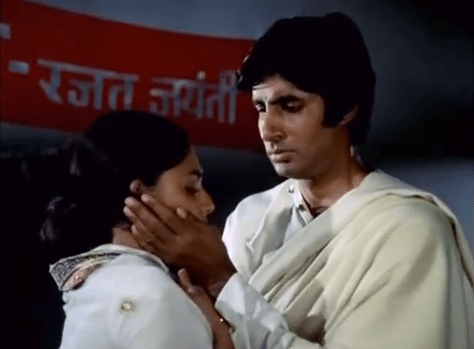
Art mimics life as Amitabh Bachhan comforts Jaya Bhaduri in “Tere Mere Milan Ki” from Abhimaan (1973).

This lovely Lata-Kishore duet was requested by fan Dilip! Thank you for the beautiful request! For more songs from Abhimaan, check out our earlier post on the lovely Rafi-Lata duet “Teri Bindiya Re.”

– Mrs. 55