Yeh Ishq Ishq Hai Lyrics and Translation: Let’s Learn Urdu-Hindi

Bollywood Qawwali Barsaat Ki Raat Shyama Ratna

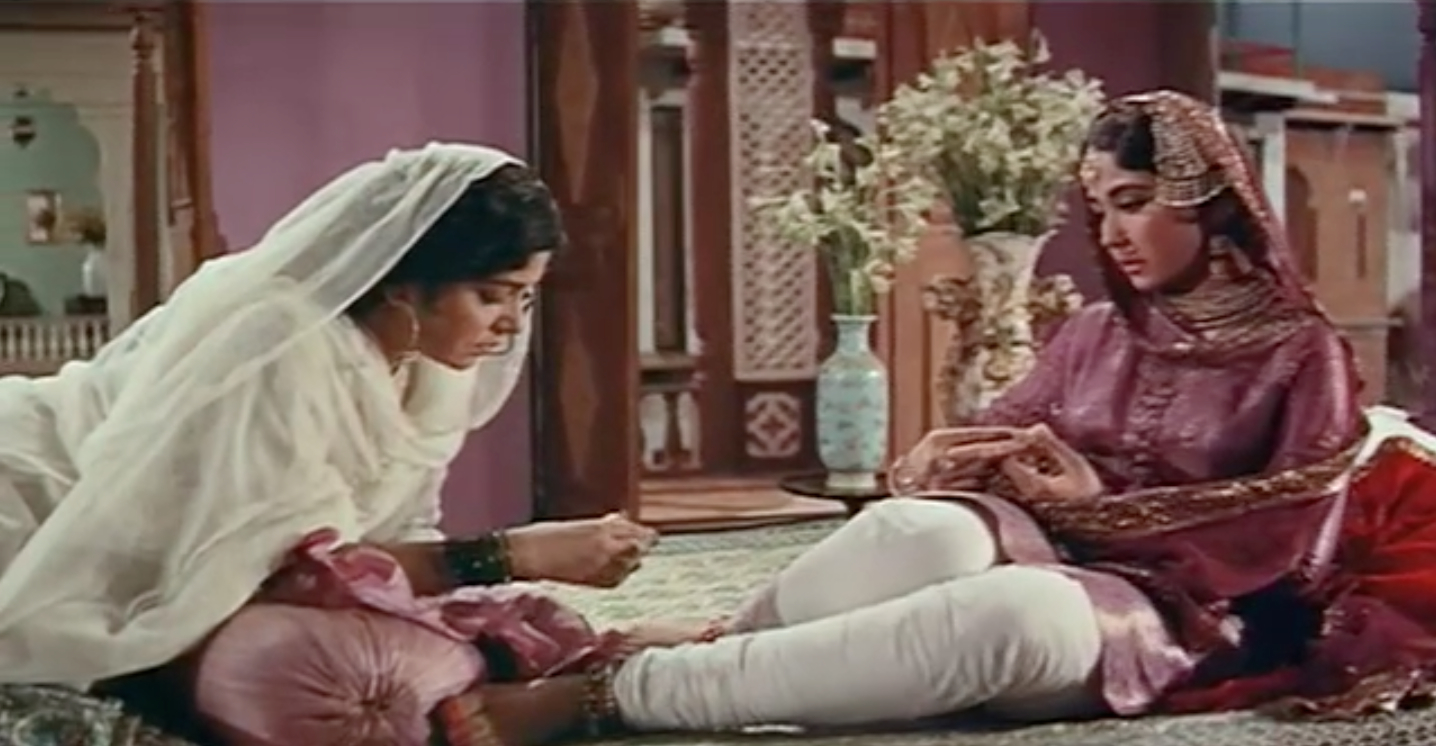
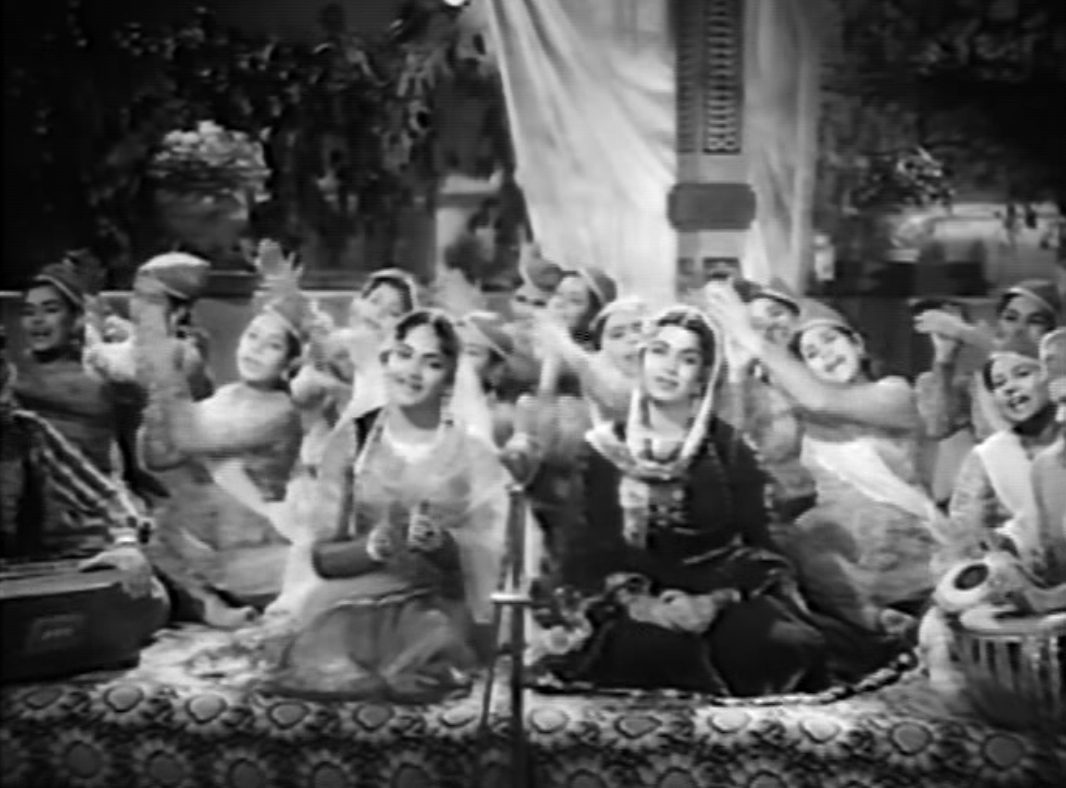
Ratna (left) and Shyama (right) lead the qawwali “Yeh Ishq Ishq Hai” from the hit Bollywood film Barsaat Ki Raat (196)

For our next post, we provide an English translation of “Yeh Ishq Ishq Hai” qawwali (and its prelude “Na to Caravan ki Talaash Hai“) from the all-time classic film Barsaat ki Raat (1960). For anyone familiar with the beautiful lyrics of this Sahir Ludhviani masterpiece, you know that “Yeh Ishq Ishq Hai” is the crowning jewel of the qawwali genre. The ultimate in lyrical poetry, allusions, wit, and transcendent symbolism, “Yeh Ishq Ishq Hai” was no easy task to translate and dissect. Sahir Ludhviani, who also later penned the gems from films like Taj Mahal (1963), wrote an album of love poetry for Barsaat Ki Raat--from “Zindagi Bhar Nahii.N Bhoolegi” to “Mai.N Ne Shaayad Tumhe” to la pièce de résistance, “Yeh Ishq Ishq Hai.”
Bharat Bhushan Barsaat Ki Raat qawwali

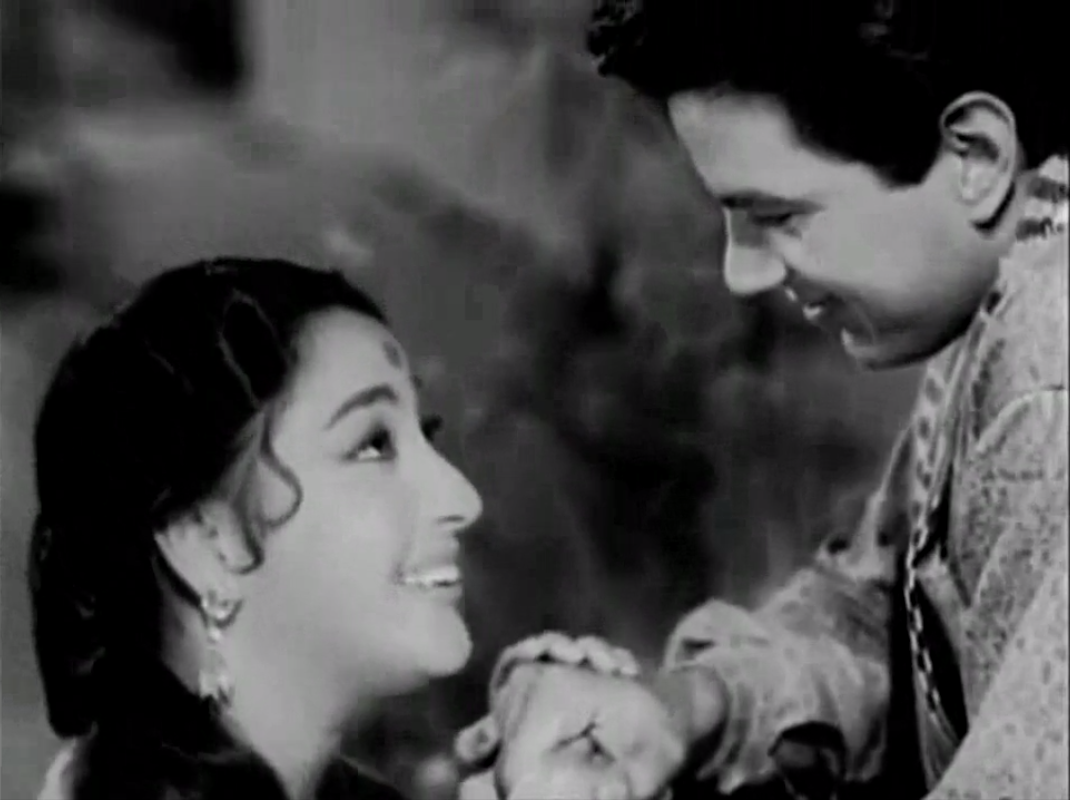
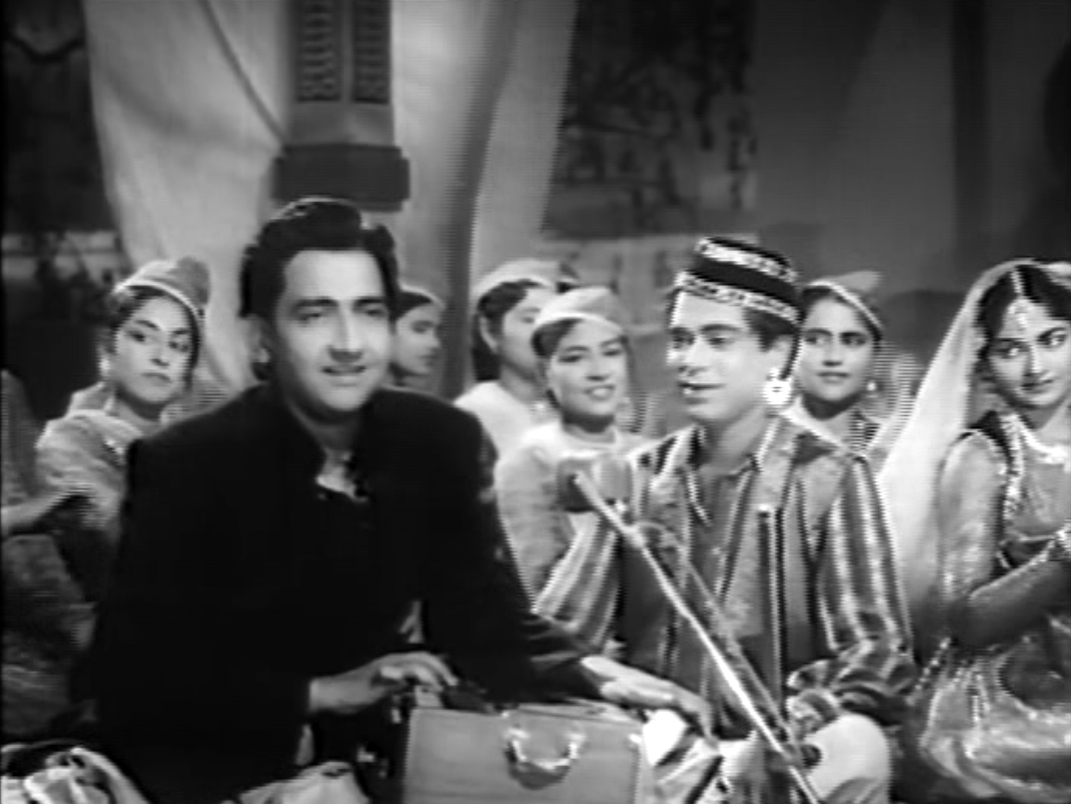
Bharat Bhushan jumps in to save the girls’ qawwali team in “Yeh Ishq Ishq Hai” from Barsaat Ki Raat (1960)

Through this culmination piece of the film’s ongoing qawwali competition, both hero (Bharat Bhushan) and the heroine (Madhubala) are reunited after a long and painful separation. Mohammed Rafi, Asha Bhonsle, and Manna Dey vie to out-do each other in this clever, powerful discussion of the meaning of love, but at the song’s climax Rafi brings the qawwali to a heart-stopping triumphant finish that wins his team the competition. It is a real pleasure to appreciate the many levels on which the qawwali can be understood–from religious, to romantic, to quite literal–after singing “ilaaj koi to maut hai,” Shyama literally falls sick to her deathbed, or as Bharat Bhushan croons, “nikalii Radha saj ke,” Madhubala appears miraculously at the doorway from the prison of her house. Come follow along with our translation of this epic qawwali and it will be clear why “Yeh Ishq Ishq Hai” made Bollywood film history!
Madhubala Barsaat Ki Raat

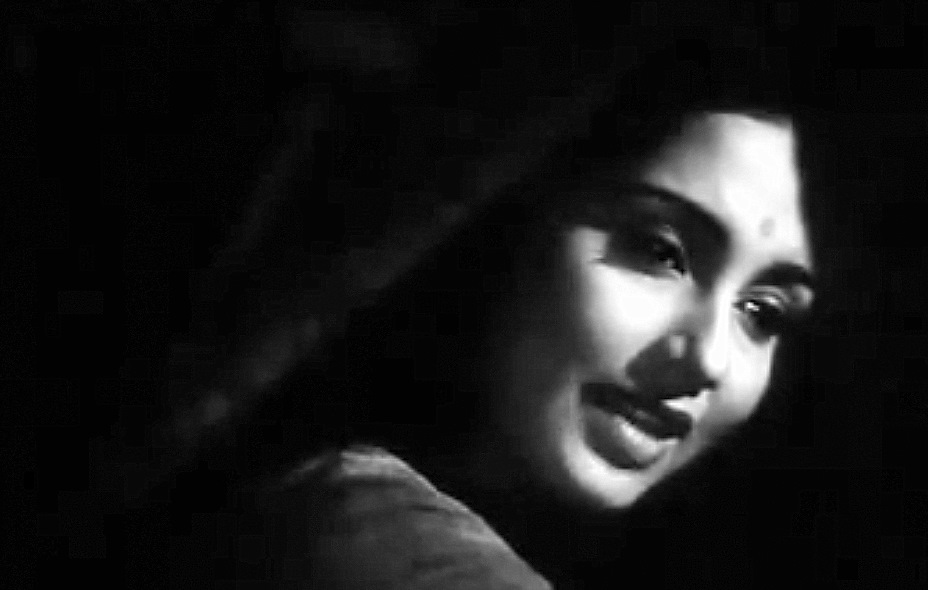
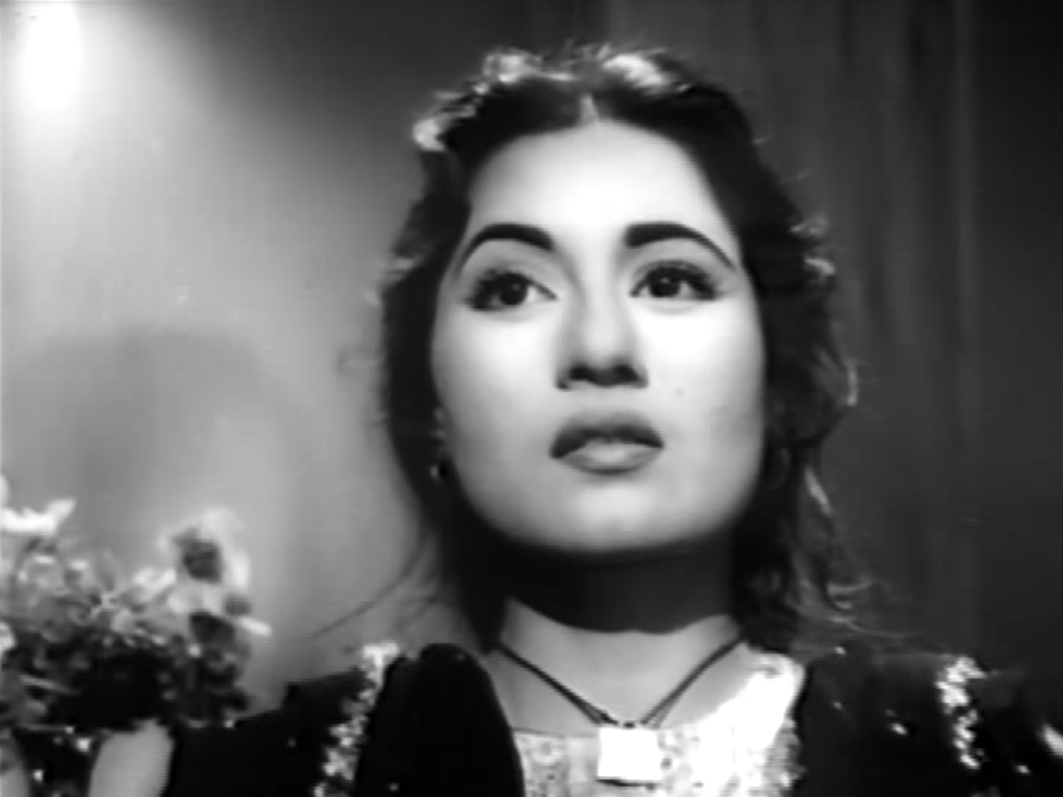
Madhubala hears Bharat Bhushan on the radio and decides to find him in Barsaat Ki Raat (1960)

Yeh Ishq Ishq Hai Lyrics and Translation

MALE:

Na to caaravaan ki talaash hai
I am not in search of a caravan
Na to humsafar ki talaash hai
I am not in search of a fellow traveler
Mere shauq-e-khaana kharaab ko teri rehguzar ki talaash hai
That ruined place of my desire searches for the path that leads to you

FEMALE:

Mere naamuraad junoon ka hai ilaaj koi to maut hai
If there is any cure for my unfortunate obsession, then it is death
Jo davaa ke naam pe zehar de
Give me that medicine whose name is poison
Usi chaaraagar ki talaash hai
I am in search of such a healer

Tera ishq hai meri aarzoo,
Your love is my desire
Tera ishq hai meri aabroo,
Your love is my honor
Dil ishq, jism ishq hai, aur jaan ishq hai
My heart is love, my body is love, and my life is love
Imaan ki jo poochho to imaan ishq hai
If you ask for faith, then that is love too
Tera ishq mai.N kaise ChhoD doo.N?
How could I ever leave your love?
Meri umr bhar ki talaash hai
That love is what I have been searching for all my life

MALE:

Yeh ishq ishq hai, ishq ishq, yeh ishq ishq hai, ishq ishq
This is love, this is love, this is love
Jaan-soz ki haalat ko jaan-soz hi samjhegaa
Only one in torment can understand the condition of a fellow sufferer
Mai.N shamaa se kehta hoo.N mehfil se nahii.N kehta
I am speaking to the flame, not to the company gathered here
Kyonki yeh ishq ishq hai, ishq ishq, yeh ishq ishq hai, ishq ishq
For this is love, this is love, this is love

FEMALE:
Sahar tak sab ka hai anjaam jal kar khaak ho jaana
By dawn, everything will burn and be reduced to ashes
Bhari mehfil mei.N koi shamaa yaa parvaana ho jaaye
Everyone in this gathering shall became either flame or moth
Kyo.N ki yeh ishq ishq hai, ishq ishq, yeh ishq ishq hai, ishq ishq
For this is love, this is love, this is love

MALE:

Vehshat-e-dil rasn-o-daar se roki na gayi
Love is not stopped by the madness of the heart or ropes and the gallows
Kisi khanjar, kisi talvaar se roki na gayi
It is not stopped by any dagger, by any sword
Ishq Majnu ki woh aavaz hai jiske aage koi Laila kisi deewaar se roki na gayi,
Love is that voice of Majnu’s which Laila followed and which no barrier could stop
Kyo.N ki yeh ishq ishq hai, ishq ishq, yeh ishq ishq hai, ishq ishq
For this is love, this is love, this is love

Woh hanske agar maa.Nge.N to hum jaan bhi dede.N,
If she laughs and asks, then I would even give my life
Haa.N yeh jaan to kya cheez hai? Imaan bhi dede.N!
Yes, after all what is this life? I would even give up my faith!
Kyo.N ki yeh ishq ishq hai, ishq ishq, yeh ishq ishq hai, ishq ishq
For this is love, this is love, this is love

Naaz-o-andaaz se kehte hai.N ki jeena hoga,
I am told that I must live with my fate gracefully
Zehar bhi dete hai.N to kehte hai.N Ki peena hoga
They give me poison, and say I must drink
Jab mai.N peetaa hoo.N to kehte hai.N ki marta bhi nahii.N,
But when I drink it, then they say I won’t die
Jab mai.N martaa hoo.N to kehte hai.N ki jeenaa hogaa
When I am dying, they say I must live
Yeh ishq ishq hai, ishq ishq, yeh ishq ishq hai, ishq ishq
For this is love, this is love, this is love

Mazhab-e-ishq ki har rasm kaDi hoti hai,
The laws and customs of love are very strict
Har qadam par koi deewaar khaDi hoti hai
At every step, there is a barrier standing
Ishq aazad hai, Hindu Na Musalmaan hai ishq,
Love is free, love is neither Hindu nor Muslim
Aap hii dharm hai aur aap hii imaan hai ishq
Your own duty and your own faith alone is love
Jis se aage nahii.N shekh-o-Brahaman dono.N,
Both Hindu and Muslim religious men cannot surpass this
Us haqeeqat ka garajtaa hua ailaan hai ishq
The reality of that thundering proclamation is love

(FEMALE in Panjabi):

Ishq na puchhe deen dharm nu, ishq na puchhe jaataan
Love does not ask your religion or creed, love does not ask your social class or caste,
Ishq de haatho.N garam lahu vich doobiyaan laakh baraataan ke
Love has drowned thousands of wedding revelers in its fiery blood
Yeh ishq ishq hai, ishq ishq, yeh ishq ishq hai, ishq ishq
This is love, this is love, this is love

MALE:
Raah ulfat ki kaThin hai ise aasaan na samajh
The path of love is dangerous, do not think it easy
Yeh ishq ishq hai, ishq ishq, yeh ishq ishq hai, ishq ishq
This is love, this is love, this is love

FEMALE:
Bahut kaThin hai Dagar panghat ki
The path to the riverside is very dangerous
Ab kya bhar luau.N mai.N Jamuna se matki?
Now how can I fill my jug with water from the banks of the Jamuna River?
Mai.N jo chali jal jamuna bharan ko dekho sakhi ji mai.N jo chali jal jamuna bharan ko
As I was on my way to fill my jug with water from the Jamuna,
Nand kishor mohe roke jhaadon
The young boy of Nanda [Krishna] stopped me
To kya bhar luau.N mai.N Jamuna se matki?
So how can I fill my jug with water from the banks of the Jamuna River?

MALE:
Ab laaj raakho more ghoonghat pat ki
Now protect my honor, this veil of mine
Jab jab Krishn ki bansi baaji,
When Krishna played his flute
Nikali Raadhaa saj ke
Radha emerged, dressed up
Jaan ajaan ka dhyaan bhulaa ke,
Forgetting all she was taught
Lok laaj ko taj ke
She left the honor of society
Haaye ban ban Doli Janak dulaari,
The darling child of King Janak [Sita] swayed into the forest
Pehenke prem ki maalaa
And wore a garland of love
Darshan jal ki pyaasi Meera
Meera thirsty for her a glimpse of her Lord
Pii gayii vishh ka pyaalaa aur phir araj kari
Drank a glass of poison and then pleaded
Ke laaj raakho raakho raakho, laaj raakho dekho dekho,
Protect my honor, protect my honor, protect my honor
Yeh ishq ishq hai, ishq ishq, yeh ishq ishq hai, ishq ishq
This is love, this is love, this is love

Allah rasool ka farmaan ishq hai
The commands of God and Mohammed are love
Yaanii Hadith ishq hai, Quraan ishq hai
The teachings of Mohammed are love, the Quraan is love
Gautam kaa aur Maseehaa kaa armaan ishq hai
The wishes of Bhudda and Christ are love
Yeh kaayanaat jism hai aur jaan ishq hai
This material existence and this life are love
Ishq sarmad, ishq hii mansoor hai
Love is everlasting, love alone is victorious
Ishq Moosa, ishq Koh-e-Toor hai
Love is Moses, love is Mt. Sinai
Khaaq ko but, aur but ko devtaa karta hai ishq
Love turns clay into idols, and idols into Gods
Intahaa yeh hai ke bande ko khuda karta hai ishq
The pinnacle is that love has the power to turn a man into a revered God
Haan.N yeh ishq ishq hai, ishq ishq, yeh ishq ishq hai, ishq ishq
Yes, this is love, this is love, this is love

Glossary:

caravaan: caravan; talaash: search; humsafar: fellow traveler; shauq-e-khaana; desires, hobbies; barbaad: ruined; rehuguzar: pathway; naamuraad: unfortunate; junoon: obsession; ilaaj: cure; maut: death; davaa: medicine; zeher: poison; chaaragar: one who treats you, doctor, healer; aarzuu: desire; aabruu: honor; jism: body; imaan: faith; jaansoz: torment, soul-burning; sahar: the time before dawn; anjaam: conclusion; khaak: ashes; parvaanaa: moth (used allegorically as one blinded by love); vehshat: madness; rasn: rope; daar: gallows; khanjar: dagger; talwar: sword; LailaMajnu: legendary ill-fated lovers; awaaz: voice; deewaar: barrier, wall; cheez: thing; naazoandaaz: pride and style, grace; mazhab: law; kaDi: strict, harsh; qadam: step; azaad: free; dharm: Hindu religious duty; haqeeqat: reality; garajnaa: to thunder; ailaan: proclaimation; deen: Islamic obedience; jaataan: caste; lahu: blood; ulfat: love; kaThin: dangerous; aasaan: easy; Dagar: pathway; maTki: jug, pot; Nand kishor: young Krishna laaj: honor; ghuunghat: veil; bansi: type of flute; dhyaan: meditation; lok: people, society; ban: forest; Dolna: to sway; Janak Dulari: The darling daughter of the mythological King Janak [Sita]; prem: love; maalaa: garland; darshan: glimpse of a deity; pyaasi: thirsty; vish ka pyaalaa: glass of poison; araj: plea; rasool: messenger [of God, Mohammed]; farmaan: commands; hadith: a report of the deeds and the teachings of Muhammed, Gautam: Buddha; Maseehaa: Jesus Christ; kaayanaat: material creation; sarmad: everlasting; mansoor: victorious, Moosaa: Moses; Koh-e-Toor: Mt. Sinai; khaaq: clay; but: idol; devtaa: God; intahaa: pinnacle, culmination

Yes, that glossary was a mouthful. Even as it is, I must warn that many of these words have a far deeper religious meaning to them that cannot be summed up in the one or two words as I have defined them. But no one said the Hindustani language was easy, and this song is just loaded with Arabic-based and Sanskrit-based vocabulary as well as references from both Hindu and Islamic traditions. It’s part of why Urdu-Hindi is such a complex, beautiful and absolutely fascinating language. Let’s take a more in-depth look at some of these lines:

  • “Ishq Majnu ki woh awaaz hai…” according to the Arab legend, similar to Romeo and Juliet, Laila and Majnu (whose nickname means “madly in love”) were two star-crossed lovers from rival families. However, Laila fled from her house to be with the one she loved and it is said that as Majnu was caught and whipped, their love was so strong that Laila screamed and blood appeared to flow from Laila’s skin instead.
  • “Bahut kaThin hai Dagar panghat ki…” is actually a line from the great Amir Khusrau qawwali written during the 13th century. The qawwali refers in one sense to the risks of dishonor faced by Radha as she attempted to fetch water, another sense explores the risks of standing up for religious beliefs (in Khusrau’s case, an allegiance to Sufi saint Nizamuddin Auliya.) The line has now become a sort of idiomatic warning to not underestimate the burden of any difficult task.
  • “Jab jab Krishna ki bansi baaji…” refers to the tales of Hindu folklore of childhood lovers Krishna and Radha, the latter of whom risked familial honor and suffered teasing and torment from her girlfriends in her love for the young Lord.
  • “Janak dulari ban ban Doli…” is a reference to the Ramayan in which Sita, upon learning of her husband Ram’s banishment to the forest, renounced her title as well. Sita, it should be recalled, had a very lavish upbringing as she was the daughter of King Janak, so this was no simple sacrifice to live in the dangerous jungle. But Sita’s love was unparalleled, and although she was not otherwise compelled to accompany Ram to the jungle, did indeed join him out of pure devotion.
  • “Darshan jal ki pyaasi Meera…” refers to the legend of Krishna devotee and Rajput Princess, Meera Bai of the 16th century. Her zealous worship and love of Krishna inspired not only many famous bhajans we know and sing today, but the resentment of her brother-in-law who frowned upon her actions (eg. mingling with the poor, ignoring her husband, etc.) He made several notorious attempts to kill her, including forcing her to drink a glass of poison that Lord Krishna is said to have transformed into nectar and saved her when she pleaded for the Lord to protect her honor.

As you can probably tell, I LOVE this qawwali. I discover new things every time I enjoy it (for example, anyone else notice how the background clappers only start shrugging their shoulders cliched bhangra-style ONLY when Ratna starts singing in Panjabi? Coincidence? I think not!) The song indeed transcends all religious and material loyalties, bringing the audience a dazzling, other-wordly experience. For anyone who’s tired of all the allegories and vocabulary quizzes, here’s the long-awaited behind-the-scenes gossip:

Did you know Bharat Bhushan actually got married in real life to Ratna (who ironically played the only character in the film NOT in love with him!) Surprise, right!? She was his second wife, and some even say that later mild-mannered Bharat Bhushan had had an affair with none other than Meena Kumari. Did the scandals never end in this town?

For more Urdu bliss, check out our post on the beauty of Urdu poetry in Hindi films!

-Mrs. 55

Ratna Barsaat Ki Raat

Ratna, wife of Bharat Bhushan, plays a sassy side-kick in the film Barsaat Ki Raat (1960)

Aap Ki Nazaron Ne Samjha Lyrics and Translation: Let’s Learn Urdu-Hindi

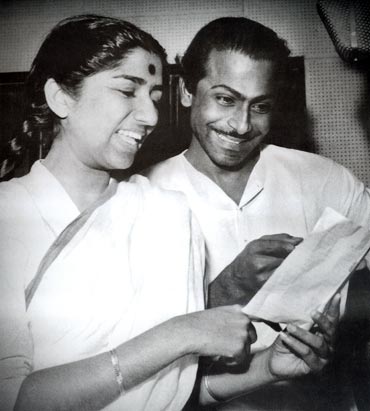
A musical match for the ages: Lata Mangeshkar and Madan Mohan

The collaboration between Lata Mangeshkar and Madan Mohan has produced some of the most cherished songs in the musical history of Hindi cinema. Think of gems such as  “lag jaa gale,” “nainaa barse rimjhim rimjhim,” or “tu jahaa.n jahaa.n chalegaa,” to name a few. Today, I’m going to share the lyrics and translation for a ghazal from Anpadh (1962) that is widely considered to be one of this duo’s finest: “aap kii nazaro.n ne samjhaa.” Penned by Raja Mehndi Ali Khan, the lyrics of this song are an equal match for the beauty of the musical composition and rendering. The beauty of the lyrics, however, is perhaps best appreciated once you can get over the whole slave-master dynamic that is going on as Mala Sinha sings to Dharmendra in the film. Although I admit that it is bizarre to refer to your lover as “banda-parvar” (master, lord), it is important to remember that these lyrics were written for the society of 1960s India: gender norms from that era differ dramtically from those established in modern times. At this time, the ideal Indian woman was expected to be submissive to her husband, and this sentiment is reflected in many songs like this one from the period.

An interesting piece of trivia: after the ghazals from Anpadh were released, it is said that composer Naushad supposedly told Madan Mohan that he would trade all of his own compositions for this one song! Although Madan Mohan rarely got his due from audiences back then, it’s nice to hear that his fellow music directors recognized his talent.

-Mr. 55

P.S. Please, for my sake, go to YouTube and give a thumbs-down to Bally Sagoo’s atrocious remix of this song. I don’t understand how these people sleep at night after they ruin the classics (seriously, how did they just change the taal here from 7-beat rupak to 8-beat kaharvaa?)

Mala Sinha expresses her devotion to the handsome Dharmendra in Anpadh (1962)

Aap Ki Nazaron Ne Samjha Lyrics and Translation

aap kii nazaro.n ne samjhaa pyaar ke qaabil mujhe
Your glances deemed me worthy of love.
dil kii ai dhaDkan Thahar jaa, mil gayii manzil mujhe
Oh stop, my heartbeats, for I have found my destination.

jii hame.n manzuur hai, aap kaa yeh faislaa
Yes, this decision of yours is acceptable to me.
kah rahii hai har nazar, bandaa parvar shukriyaa
My every glance is saying, “Thank you, oh lord!”
ha.nske apnii zindagii me.n, kar liyaa shaamil mujhe
As you brought me into your life with a smile. 

aap kii manzil huu.n mai.n, aur merii manzil aap hai.n
I am your destination, and you are mine.

kyo.n mai.n tuufaa.n se Daruu.n? meraa saahil aap hai.n
Why shall I fear the storm? You are my shore.
koii tuufaa.no.n se kah de, mil gayaa saahil mujhe
Someone tell the storms that I have found my shore.

paD gayii.n dil par mere aap ki parchhaaiiyaa.n
Your shadows have cast upon my heart.
har taraf bajne lagii.n saikDo.n shahnaaiiyaa.n
In every direction, hundreds of shahnaiis are playing in celebration
do jahaa.n kii aaj khushiyaa.n, ho gayii.n haasil mujhe
Today, I have enjoyed the happiness of both worlds.

aap kii nazaro.n ne samjhaa pyaar ke qaabil mujhe
Your glances deemed me worthy of love.

Glossary

nazar: glance; qaabil: worthy; manzil: destination; manzuur: acceptable; faislaa: decision; bandaa parvar: master, lord; haasil: achieved, obtained; saahil: shore; parchhaaiiyaa.n: shadows; saikDo.n: hundreds; shahnaaiiyaa.n: traditional Indian instrument resembling a clarinet (associated with weddings); shaamil: present.

Buried Treasure: Bollywood Songs with Hidden Stanzas

Bollywood record LP

My sweet Bollywood LP record collection.

You know how it is when you grow up listening to a song. Your mom played it on cassettes in the car, your Dad sang it while he worked, and eventually that gem from the 60s sneaks into your personal playlists when you buy an ipod. It’s all fine and dandy until years later, you’re browsing along youtube and BAM! A miracle occurs.

Turns out that song you knew and loved is only AN ABBREVIATED VERSION! The song as it’s played in the film is a whole stanza, a whole musical interlude and a half longer than you ever realized! There are few things on Earth that have the same feeling of win. It give you a rare, blissful tingle all over that can otherwise only be found by watching the wink sequence of a Rajesh Khanna film.

But why, you ask? It’s simple. Unlike now when the film soundtrack hits the iTunes store and you can download your songs one at a time, back in the good old days, marketing had to squeeze an entire soundtrack onto a single LP record (typically about 15-25 minutes per side). And if you planned on selling two hit film soundtracks on the same LP to increase sales, you could forget about musical fidelity. Something had to give.

Rajesh Khanna Farida Jalal Aradhana 3

Rajesh Khanna and Farida Jalal get sassy in the uncut version of “Baaghon Mei.N Bahaar Hai” from Aradhana (1969)

The result? Dozens of priceless compositions were slashed completely, and others had pieces ripped out from their insides to fit the needs of a hungry consumer market. Maybe I’m being melodramatic but I feel really strongly about this. Several hidden classical compositions from even the musical legend Pakeezah got shafted completely. Later as technology improved, recordings were taken from the LP versions and sold as cassettes, CDs, and mP3s. The originals can now often be found only in the films themselves or in the archives.

This is the face that got cut from “Baagho.N Mei.N Bahaar Hai.” Rajesh Khanna stars as an Indian Air Force pilot in Aradhana (1969). Are you sure it wasn’t the Navy though? Because I think I see a DREAM BOAT.

Here is a growing list of songs that over the years I’ve found are secretly much longer than I once thought:

  1. Kahin Dur Jab Din Dhal Jaaye (a whole beautiful poetic stanza is cut from the end)
  2. Piya Tose Naina (the ENTIRE magical 1965 Lata Mangeshkar opening is not in the soundtrack version–BIG travesty)
  3. In Bahaaro.N Mei.N Akelii (a whole stanza)
  4. Baaghon Mei.N Bahaar Hai (Rafi’s great comeback stanza)
  5. Aaj Kal Mei.N Dhal Gayaa (in the film, the male and female version are combined in a fabulous way)
  6. Jhumka Gira Re (a whole extra stanza and some sweet prelude music)
  7. Honton Pe Aisi (one minute of introductory dance music that is a huge game-changer)
  8. Aye Gulbadan (lost a final stanza)
  9. Thare Rahiyo (there’s a great musical a moment in the middle that gets totally cut)
  10. Dekhi Zamaane Ki Yaari (random parts are missing–granted the full thing is like 10 minutes, but it’s so worth it)
  11. Dil Ka Bhanwar Kare Pukar (an entire stanza!)
  12. Dum Maro Dum (maybe this doesn’t get cut per se, but there’s a whole reprise version that gets a huge shaft in the soundtrack!)
  13. Ghar Aayaa Mera Pardesi (all the epic dream sequence music at the end)
  14. Kahin Deep Jale Kahin Dil (missing a bunch of creepy-cool interlude music. Also anyone notice the violins play an octave lower in the film? Weird.)
  15. Khwab Ho Tum Ya (the final stanza)
  16. Koi Nazaraaane Lekar (another whole stanza)
  17. Sau Saal Pehle (a great stanza at the end!)
  18. Tujhe Jeevan Ki Dor Se (missing a culmination stanza)
  19. Tu Jahaa.N Jahaa.N Chalega (how could you cut out Lata in her prime?!)
  20. Tera Phoolo.N Jaise Rang (at least a minute worth of dance music from the end that really sets the mood!)
  21. Pal Bhar Ke Liye Koi (the sassy final stanza that puts everything into perspective!)
  22. Jhoom Jhoom Dhalti Raat (the clutch stanza that has the meaning of “Kohra” explained therefore making it the title song–but you’d never have known!)

Mess with my songs? You just watch yourself.

So you can see, it’s a mix of all-time classics and the more obscure gems. No one is safe. I beg of you to add any more you know of that are missing. Perhaps this compilation can help a fellow sufferer in need see the light!

-Mrs. 55

O Sajna Barkha Bahar Aayi Lyrics and Translation: Let’s Learn Urdu-Hindi

Sadhana wistfully enjoys the rain in "o sajna barkhaa bahaar aayii" from Parakh (1960). Because she plays the role of a village girl here, she was instructed to get rid of the characteristic "fringe" hairstyle seen in her later movies in order to avoid looking too glamorous!

Rain songs have always held a special place in Bollywood cinema. From “pyaar hua iqraar hua” in Shree 420 (1955) to “ghanan ghanan ghir aayii badra” in Lagaan (2001), fans of Hindi cinema have been treated to a number of beautiful gems about the rain over the years. Today, I’ve translated an all-time classic rain song from the film Parakh (1960) directed by Bimal Roy (he won his third Filmfare Award for Best Director for this film!): “o sajna barkhaa bahaar aayii”.   Parakh satirizes Indian democracy using a plot in which the postmaster (Nasir Hussain) of a village mysteriously receives a check for five lakh rupees to be given to an individual who is most well-equipped to benefit the village. When it is decided that an election will be held, influential characters in the village begin campaigning to persuade the village that they are the most deserving candidate to receive the check: namely, the impious postman (Motilal), the pious piest (Kanhaiyya Lal), the creepy rich man (Asit Sen), the greedy doctor (Rashid Khan) , the landlord (Jayant), and the well-respected schoolmaster (Vasant Chowdhury). Meanwhile, the postmaster’s daughter (Sadhana) begins to fall in love with the schoolmaster, and she sings “o sajna” as she pines for him in the rain.

A musically timeless duo: playback singer Lata Mangeshkar and music director Salil Chowdhury

This song is considered to be one of the finest compositions of the music director Salil Chowdhury (who also wrote the story for Parakh). Although Salil Chowdhury did not receive his due during his lifetime, he is undeniably  one of the most talented and revolutionary composers from the Golden Era. His compositions are often remembered for their unusual melodies, rich orchestration, and integration of Western and Indian classical themes. Those of you familiar with Salil Chowdhury’s work in Bollywood may be surprised to know that he also composed songs for a wide variety of Indian languages, including Bengali, Malayalam, Tamil, Kannada, Telegu. Among these languages, Salil’s most prolific work was in his native tongue Bengali–he revolutionized the genre of the Bengali adhunik (modern) song with his musical compositions and self-written lyrics (what a multi-talent!). In fact, as is the case with many of his Hindi songs,  the tune for “o sajna” was released in Bengali first in 1959 as “na jeo na.” This song was one of Lata Mangeshkar’s earliest hits in the Bengali music industry, and Bengalis have cherished the collaboration between Lata and Salil ever since this major musical milestone.

–Mr. 55

P.S: As an extra tidbit of trivia, it has been said that the only non-classical record found in the collection of renowned Hindustani vocalist Ustad Bade Ghulam Ali Khan after his death was an LP of “na jeo na.” What an honor!

O Sajna Barkha Bahar Aayi Lyrics and Translation

o sajnaa barkhaa bahaar aayii
Oh, my beloved, the rain-filled season of spring has arrived.
ras
kii puhaar laayii, a.nkhiyo.n me.n pyaar laayii
It has brought sprinkling droplets of nectar, it has brought love to these eyes.

tum ko pukaare mere man kaa papiiharaa
The cuckoo bird in my heart calls out to you,
miThii miThii aganii me.n jale moraa jiiyaraa
as my heart burns in a sweet fire.

aisii rimjhim me.n, o sajan, pyaase pyaase mere nayan
My eyes long for you, my beloved, in this light shower of rain;
tere hii khvaab me.n kho gaye
they have become lost in a dream of you.

saa.nvalii salonii ghaTaa jab jab chhaayii
When the beautiful dark clouds spread throughout the sky,
a.nkhiyo.n me.n rainaa gayii, nindiyaa na aayii
the night passed in my eyes, and I could not fall asleep.

o sajna barkhaa bahaar aayii
Oh beloved, the rain-filled season of spring has arrived.

Glossary

barkhaa: rain; ras: nectar; puhaar: sprinkles, droplets; papiiharaa: pied-crusted cuckoo bird (associated with the monsoons in Indian mythology); jiyaraa: heart; rimjhim: light rain; saa.nvalii: beautiful; salonii: dark; ghaTaa: clouds; rainaa: night; nindiyaa: sleep.

The Immortal Dialogue of Pakeezah and English Translation

Now we will explore some classic Pakeezah dialogue, quotes and their English translations from the timeless 1971 film. I think it’s pretty clear that we’re obsessed with this movie. We’ve discussed the making of the film and its songs, but let’s take a moment to appreciate Pakeezah’s dialogue for which there is truly no comparison outside of the ode to spoken Urdu poetry that is Mughal-e-Azam (1960).

Aapke paaoo.N dekhe. Bahut haseen hai.N. Inhe zameen par mat utariiyega. Mele ho jaaye.Nge –Aapkaa ek humsafar…”

[“I have seen your feet. They are beautiful. Please do not place them on the ground. They will become dirty. –A fellow traveler…”]

I have to give a caveat: although we have provided a full English translation of these Pakeezah dialogues, I think the true poetry is lost outside of the Urdu language. Written by Kamal Amrohi himself, the exquisite dialogue of Pakeezah transports you to a languid surrealist fantasy. Among other questions, you may ask did people really talk like that? Do men as devastatingly charming as Raajkumar exist in real life? How fake is that blonde wig from the opening scene, seriously?

Although some of these will remain unanswered, let us now look closer at 3 of my favorite gems of Pakeezah dialogue and English translations that will be sure to get your heart rate up.

Ek har raat, teen baje. Ek rail gaadi apni patriyon se utar gayii, aur meri dil se guzarti hai...

[“Every night, when the clock strikes 3, a train leaves its rails and passes through my heart…”]

The first dialogue comes days after Pakeezah has received Rajkumar’s love letter. She is restless and can no longer focus on her work. Pakeezah confesses the reason for her behavior to her friend, who reacts famously against indulging such dreams. It’s a heartbreaking scene made artful by the grace of the Urdu language. Also please look at those sets and tell me there are architects in America who know how to build them.

PAKEEZAH: Bahut dino.N se, mujhe aisaa kuch lagtaa hai jaise mai.N badaltii jaa rahii hoo.N. Jaise mai.N kisi anjaane safar mei.N hoo.N aur kahii.N jaa rahii hoo.N. Sab kuch chuuTa jaa raha hai. Sahib Jaan bhi mujhse chuuT rahe hai.N, aur mai.N Sahib Jaan se duur hoti jaa rahi hoo.N.

[PAKEEZAH: For many days now, I feel as if I am changing. As if I am on an unknown journey and going somewhere. Everything is going away from me. Sahib Jaan is even leaving me, and I am going far from Sahib Jaan.]

SAHELI: Kaun hai yeh?

[SAHELI: Who is he?]

PAKEEZAH: Kaun?

[PAKEEZAH: Who?]

SAHELI: Yehii. Jisse mai.N pooch rahi hoo.N. Bataao!

[SAHELI: Him, whom I am asking about. Tell me!]

PAKEEZAH: Kya bataaoo.N kaun hai? Ek ajiib waaqaaya hai.

[PAKEEZAH: What should I say about who he is? It is a strange tale.]

SAHELI: Kya?

[SAHELI: What?]


PAKEEZAH: Ek har raat. Teen baje. Ek rail gaadi apni patriyon se utar gayii, aur meri dil se guzarti hai. Aur mujhe ek paighaam de jaati hai.

[PAKEEZAH: Every night at three o’ clock, a train leaves its rails and passes through my heart. And it gives me a message.]

SAHELI: Sahib Jaan, yeh paighaam tere liye nahii.N.

[SAHELI: Sahib Jaan, this message is not for you.]

PAKEEZAH: Kyaa? Nahii.N, nahii.N. Yeh mere hii liye hai. Is se mai.N ne apni hi paaoo.N mei.N rakhaa huaa payaa tha.

[PAKEEZAH: What? No, no, this is for me. It had been placed on my feet.]

SAHELI: Haa.N. Lekin us waqt tere paaoo.N mei.N ghungroo bandhe hue nahii.N ho.Nge. Agar ghungroo bandhe hue hote, to yeh kaise koi kahta ki paaoo.N ko zameen par mat rakhna? Maile ho jaaye.Nge? Merii jaan, yeh paighaam to hai. Lekin bhatak gayaa hai.

[SAHELI: Yes. But at that time, you’re feet were not bound by ankle bells. If they had been bound in ankle bells, how could anyone say “do not place your feet on the ground”? “They will become dirty”? My dear, this is certainly a message, but it is misguided.]

Tragic, right? My next favorite scene comes when Pakeezah has inadvertently landed inside Rajkumar’s own tent. She senses him approaching, and pretends to be asleep. Rajkumar bursts in with an appropriate flush of theme music to accompany him.

Rajkumar stares at sleeping Meena Kumari in Pakeezah (1971)

Pakeezah panics and the audience enters into her thoughts as she narrates her feelings in this beautiful moment of love and fear.

Pakeezah is unable to look at the mysterious man she loves in Pakeezah (1971)

“Allah! Woh mere paas khade hai.N. Aur meri jaan nikal jaa rahi hai. Aap yuu.N hii hairaan hairaan mujhe dekhte rehe.Nge. Mai.N taraste taraste, bina aapko ek nazar dekhe, mar jaaoo.Ngii. Aap hi ke samne, aap hi ke bistar par khatam ho jaaoo.Ngii. Zara muu.N phenk lijiye. Mai.N ek saa.Ns leloo.N! Ek chalak aapke dhekh loo.N!”

[“God! He is standing near me. And I feel as if I am dying. You will continue to stare at me in surprise, and I will slowly die without glancing at you even once. Beside you, on your bed itself, I will be finished. Please turn your face away so that I can take a breath! Let me take just a glimpse of you!’]

I can’t get enough of this scene–her words are so poetically expressed, but so vividly capture the anxiety of the moment!

Wondering what all the hype is about? Here are Meena Kumari’s exquisite feet in Pakeezah (1971)

“Afsos ki log duudh se bhi jal jaate…”

[“How unfortunate that people are burned even by mere milk…”]

The last epic dialogue I’ll discuss comes when Rajkumar brings Meena Kumari home for the first time. Do arguments really happen like that? In my house, an argument never devolves into an Urdu poem–but then again, we don’t have those outfits on.

D.K. Sapru plays a very scary Hakim Sahib in Pakeezah (1971)

HAKIM SAAB: Salim, woh kaun hai?

[HAKIM SAAB: Salim, who is this?]

SALIM: Woh ek gumnaam ladki hai.

[SALIM: She is a lost girl.]

HAKIM SAAB: To woh tumhaare saath hai?

[HAKIM SAAB: She is with you?]

SALIM: Jii.

[SALIM: Yes.]

HAKIM SAAB: Yaani?

[HAKIM SAAB: Meaning?]

SALIM: Yeh kaun hai, mai.N bhi nahii.N jaantaa. Yeh ek mazluum ladki ki jo apni aadaash kho chukhi hai. Aur itefaaqan woh meri panaah mei.N aa gayii hai.

[SALIM: Who she is, even I don’t know. She is an oppressed girl who had lost her memory. And by chance, she came into my care.]

HAKIM SAAB: Lekin, tumhaare is bayaan par, kaun yaqeen karegaa?

[HAKIM SAAB: But who will believe this tale of yours?]

Unnaturally handsome Rajkumar stands his ground against his family in Pakeezah (1971)

SALIM: Mujhe iski parva nahii.N

[SALIM: I am not worried about that.]

HAKIM SAAB: Tumhe nahii.N, lekin hame.N iski parva hai. Jo log duudh se jal jaate. Woh chaas bhi phoonk phoonk kar piite.

[HAKIM SAAB: You may not be, but I am. Those people who are burned by milk, drink even the froth with caution.

SALIM: Afsos ki log dhuudh se bhi jal jaate.

[SALIM: How unfortunate that people are burned even by mere milk.] Oh my God, such a good comeback! So poetic, so simple. I die.

HAKIM SAAB: Tum humse bahaz karna chaahte ho? Humse bahaz karne ki zaruurat nahii.N. Aisii ladkii jiskaa koi naam nahii.N, pathaa nahii.N, woh kyuu.N tumhaare saath hai?

[HAKIM SAAB: You want to argue with me? There is no need to argue. A girl with no name, no address, why is she with you?]

SALIM: Isliye ki woh merii panaah mei.N aayii. Aur yeh koi gunaah nahii.N.

[SALIM: Because she came under my care. And that is no crime.]

Meena Kumari grows more and more uncomfortable as she eavesdrops their argument.

HAKIM SAAB: Gunaah to nahii.N. Lekin ismei.N hamaarii badnaami hai.

[HAKIM SAAB: It is not a crime. But I could be dishonored from it.]

SALIM: Jii nahii.N, agar is mei.N koi badnaamii hai, to merii hai.

[SALIM: No, if anyone is dishonored, it is me.]

HAKIM SAAB: Tum kaun ho? Kya humko tumhaara koi rishtaa nahii.N?

[HAKIM SAAB: Who are you? Do you have no relation with me?]

SALIM: Jii hai. Lekin is maumle se aapkaa koi taluk nahii.N.

[SALIM: Yes, I do. But this matter does not concern you.]

HAKIM SAAB: Humaare koi taluk nahii.N?? Agar hamaaraa koi taaluk nahii.N. To phir tum apnii yeh badnaamii hamaare ghar kyuu.N le aaya ho?

[HAKIM SAAB: It does not concern me?? If it does not concern me, then why have you brought this dishonorable girl to my house?]

Rajkumar checks out Pakeezah for some inspiration and proceeds to storm out of the room in a flurry of Urdu poetry.

SALIM: Beshak mujhse ghalati huii. Mai.N bhuul hi gayaa tha. Is ghar ke insaano.N ko har saa.Ns ke baad doosre saa.Ns lene ki ijaazat aapse lenii padhtii hai. Aur aapki aulaad khuda ki banaaii hui zameen par nahii.N chaltii, aapki hatheli par rehti hai.N

[SALIM: Undoubtedly, I have made a mistake. I had forgotten that in his house, after every breath people must ask your permission to take the second. And that your children do not walk on the earth that God made, but live in the palm of your hand.]

Whoa. How do metaphors that awesome just come to you like that? I need to re-evaluate how I insult people. Why do these kinds of situations never happen to me?

As a small note, I just think the one-liner the head aunt says before the song “Chalte Chalte” is pretty sweet. When no one else shows up that night because the rich client has scared them all off, she graciously says to him,

“Log nahiin.N aaye, to na sahii. Sitaaron ki raat se, ek chaandni raat mei.N to kai zyaadaa roshni hoti hai.”

[“Other people did not come, so be it. In a moonlit night there is more radiance than in a night of stars.”]

Wah wah! The movie is teeming with pearls like this!

What is YOUR favorite dialogue from Pakeezah? Let us know in the comments! For more dialogues, check out our post on the beauty of Urdu in classic Bollywood film!

-Mrs. 55