
Asha Bhonsle and O.P. Nayyar share a joyful moment together. Photo Credit: indianexpress.com
Today, we present the lyrics and English translation to a soul-stirring melody composed by O.P. Nayyar and sung by Asha Bhonsle that has stood the test of time: chain se ham ko kabhii. Although this song was supposed to be included in Pran Jaye Par Vachan Na Jaye (1974) directed by S. Ali Raza, it never made the final cut! In spite of its prominent absence from a movie, this memorable composition has been treasured by Hindi film music lovers for years ever since it was released. While the profound beauty of this rare song never fails to earn universal appreciation, many fans may be surprised to learn about the behind-the-scenes drama surrounding the the making and release of chain se ham ko kabhii.
When Asha Bhonsle was 16 years old, she eloped with her elder sister Lata Mangeshkar’s 31-year-old personal secretary Ganpatrao Bhonsle against the wishes of her family. Over the course of an unhappy marriage, the allegedly abusive Ganpatrao grew suspicious of Asha’s faithfulness to their marriage and eventually cast her out of their home in 1960 . Pregnant with her third child, Asha left the Bhonsle household permanently in order to secure a better future for her children. A few years later, Asha and music director O.P. Nayyar began a nine-year romantic relationship in 1963 that quickly became the talk of the tabloids. Although both Asha and O.P. were married legally to their spouses, they lived together for many years in O.P.’s penthouse flat at the Miramar building in Mumbai. During this period, the duo churned out a series of memorable musical hits that fans of Hindi film music still hold dear to their hearts: diivaanaa huaa baadal from Kashmir Ki Kali (1964), yeh hai reshmii zulfo.n kaa andheraa from Mere Sanam (1965), zaraa haule haule chalo more saajnaa from Sawan Ki Ghata (1966), yehii woh jagah hai from Yeh Raat Phir Na Aayegi (1966), and aao huzuur tum ko from Kismat (1968), among many other gems.
Sadly, this musical power couple encountered a rough patch in their relationship around 1972. One account of this story claims that Asha decided to leave O.P. when she saw him raising a hand and slapping her grown daughter Varsha. Whatever the reason may have been for their break-up, the couple had one last piece of unfinished business to deal with as they separated: the songs they had made together for the film Pran Jaye Par Vachan Na Jaye. Recorded before the couple had decided to part ways, records of these songs had been released several months in advance of the film’s premiere in 1974. Following the tragic break-up, Asha used her clout in the industry to have chain se ham ko kabhii deleted from the movie before it was released in theaters. However, the song had gained such widespread acclaim on its own that it won Asha her sixth Filmfare Award for Best Female Playback Singer in 1975. Since Asha refused to go to the ceremony to receive this award, O.P. Nayyar accepted the trophy on her behalf. It is said that O.P. then tossed the trophy out the window on his car ride home, ending their relationship on a truly sour note.
To this day, Asha refuses to acknowledge O.P. Nayyar publically and does not credit him for her early successes in the playback singing industry. Interestingly, in his old age, O.P. Nayyar overcame the bitterness of the duo’s break-up and admitted that Asha was “the best person I’ve ever met.”
Chain Se Humko Kabhi: Lyrics and Translation
chain se ham ko kabhii aap ne jiine na diyaa
You have never let me live in peace.
zahar bhii chaahaa agar, piinaa to piine na diyaa
Yet, even if I asked to die by poison, you would not let me drink it.
chand ke rath me.n raat kii dulhan jab jab aayegii
When the Night arrives as a bride on the Moon’s chariot,
yaad hamaarii aap ke dil ko taDpaa jaayegii
memories of me will continue to cause you heartache.
pyaar ke jalte zakhmo.n se jo dil me.n ujaalaa hai
The light in your heart emanating from our love’s burning wounds
ab to bicchaD ke aur bhii zyaadaa baDhnevaalaa hai
will continue to shine more brightly now that we are apart.
aap ne jo hai diyaa, vah to kisii ne na diyaa
What you have given to me, no one else has been able to replicate.
zahar bhii chaahaa agar, piinaa to piine na diyaa
Yet, even if I asked to die by poison, you would not let me drink it.
aap kaa gham jo is dil me.n din-raat agar hogaa
To bear your sorrow in my heart all day and night,
soch ke yah dam ghuTataa hai, phir kaise guzar hogaa?
the very thought of this is suffocating. How can I endure it?
kaash na aatii apnii judaayii, maut hii aa jaatii
If only death had come to me instead of this separation,
koii bahaane chain hamaari ruuh to paa jaati
then, under this pretext, my soul could finally rest at peace.
ek pal ha.nsnaa kabhii dil kii lagii ne na diyaa
My heart’s emotions have never let me smile for a moment.
zahar bhii chaahaa agar, piinaa to piine na diyaa
Yet, even if I asked to die by poison, you would not let me drink it.
chain se ham ko kabhii aap ne jiine na diyaa
You have never let me live in peace.
Glossary
chain: peace; zahar: poison; rath: chariot; dulhan: bride; ujaalaa: light; sulagnaa: to smolder; dam ghuTnaa: to suffocate; guzar honaa: to endure, subsist; kaash: if only; judaayii: separation; maut: death; bahaanaa: pretext; ruuh: soul; lagii: emotion, feeling.
In the context of this tumultuous backstory, the lyrics of chain se ham ko kabhii (penned by S.H. Bihari) are aptly fitting as Asha’s final swan song under O.P. Nayyar’s baton. Thank you to our reader Tanushree for requesting a post on this beautiful song and its interesting history–keep those requests coming! Until next time…
-Mr. 55
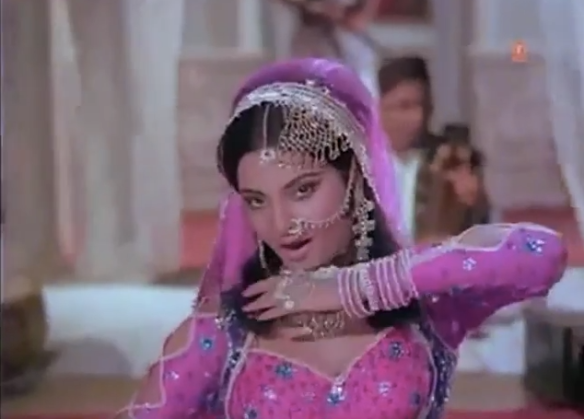
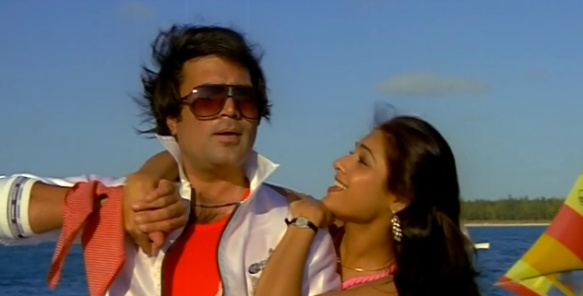
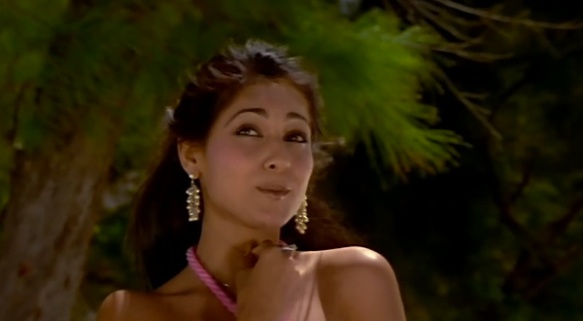
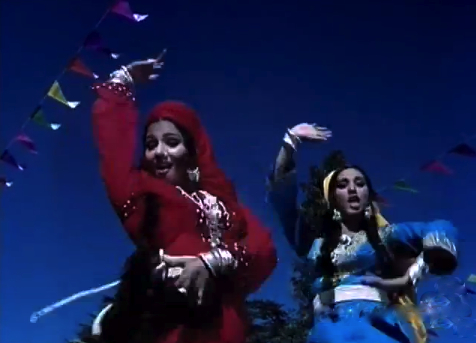
A young Rekha stars in Pran Jaye Par Vachan Na Jaye (1964). Since the song was deleted from the released film, details surrounding the picturization of chain se ham ko kabhii remain a mystery to this day.


 Mr. & Mrs. 55 - Classic Bollywood Revisited!