Aye Meri Zohra Jabeen Lyrics and Translation: Let’s Learn Urdu-Hindi

balraj sahni aye meri zohra jabeen waqt

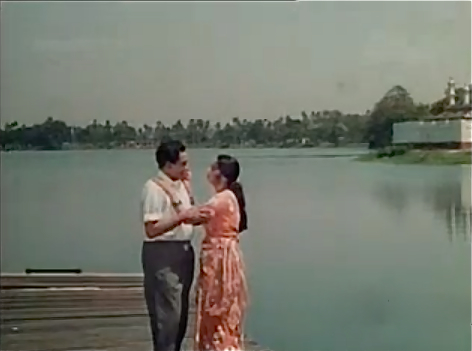
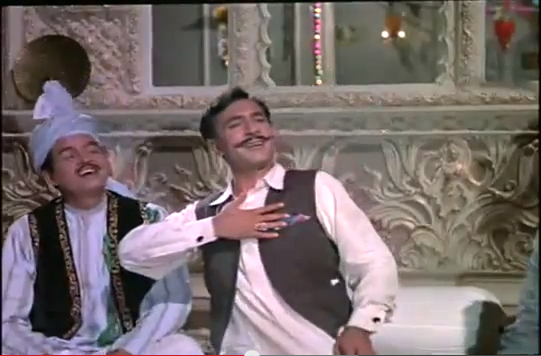
Balraj Sahni plays a wealthy, family-loving merchant whose good fortune takes a disastrous turn in Waqt (1965).

We now present the lyrics and English translation to “Aye Mere Zohra Jabeen” from Waqt (1965). Young at heart Balraj Sahni plays a loving father of three young children who celebrates his business success with pomp and splendor. So overjoyed by where he believes Fate is taking his family, he dedicates a love song to his wife at a party. The film’s hit opening number “Aye Mere Zohra Jabeen” brims with a sense of carpe diem in the lives of a couple whose youth is coming to an end. Achala Sachdev plays the gentle wife fittingly embarrassed by the attention, but clearly loving the compliments. Their picture-perfect world is too wonderful to last–and before the night is over, tragedy strikes that separates the family. And from there unfolds one of the best Hindi masala films of the 60s!

The well-known opening line carries the Urdu vocabulary lover’s favorite, “zohra jabeen.” The meaning of this term has confused many a Hindi film goer over the ages. Actually a combination of two separate words, zohra and jabeen, the term is used loosely to mean “beautiful one,” but the true definition is far more fascinating. Zohra is the Arabic term for the Roman goddess of beauty, Venus, and also the planet easily identifiable as a shining star in the sky. Jabeen translate literally as forehead, a delicate part of the woman’s face to which praise has been given for centuries of Urdu ghazalry. So when addressing your sweetheart as zohra-jabeen, you are implying that her face shines with the beauty of Venus! Pretty flattering, right?
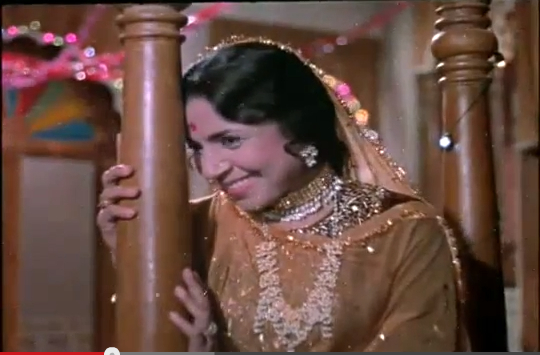
shy achala sachdev aye meri zohra jabeen

With the coyness of a young bride, Achala Sachdev blushes at her husband’s public display of affection in Waqt (1965).

In an interview on Bangalore’s Radio City in 2005, Manna Dey recalls being requested for the number by music director Ravi with surprise:

“When Ravi called me to sing “Aye meri zohra-jabeen” for Waqt, I asked him, ‘Why me? You use only Rafi or Mahendra Kapoor.’ Ravi said it was Balraj Sahni’s personal request that I sing.”

Although Mahendra Kapoor and Rafi do indeed sing the other fabulous songs of the film, none ever became as famous than this Manna Dey chart-buster. Sung at almost any sangeet or wedding, “Aye Meri Zohra Jabeen” endears listeners across generations with excitement and sentimentality. Although often categorized as a qawwali, the song does not quite fit into the genre–despite its best attempts at synchronized group clapping. Check out the video to see class act Balraj Sahni get into character and witness one of the only Bollywood love songs uniquely targeted at couple of any age! Cutie-pie Achala Sachdev would later play Kajol’s grandmother’s in Dilwale Dulhaniya Le Jayenge where the song was memorably revived!

We hope you enjoy the evergreen Sahir Ludhianvi lyrics and our full English translation to “Aye Meri Zohra Jabeen” below:

Aye Meri Zohra Jabeen Lyrics and English Translation:

Aye merii zohra-jabeen
Oh, my beautiful one
Tujhe ma’aluum nahii.N
You are not aware
Tuu abhii tak hai hasii.N
that you are still lovely
Aur mai.N jawaa.n!
and I am still young!
Tujhpe qurbaan merii jaan merii jaan!
I would sacrifice my life for you!

Yeh shokhiyaa.N yeh baa.Nkpan jo tujh mei.N hai kahii.N nahii.N
This coyness, this attractiveness of yours is nowhere else
Dilo.N ko jiitne kaa fan jo tujh me hai kahii.N nahii.N
The art of winning hearts that you possess is nowhere else
Mai.N terii! maii.N terii aankho.N mei.N paa gayaa do jahaa.N!
In your eyes, I have found my heaven and earth!
Aye merii zohra jabeen…

Tuu miiThe bol, jaan-e-man, jo muskuraake bol de
If you speak sweet words to me, my love, and smile
To dhaDakano.N mei.N aaj bhii sharaabii ra.Ng ghol de
Then even today, you infuse my heartbeats with an intoxicating colour
O sanam! O sanam mai.N teraa aashiq-e-jaavedaan!
Oh darling, I am your lover for eternity!
Aye merii zohra jabeen…

Glossary:

zohra-jabeen: beautiful (literally zohra: Venus and jabeen: forehead = beautiful one with the face that glows like Venus); ma’aluum: aware, information; hasii.N: beauty; jawaa.N: youth; qurbaan: sacrifice; jaan: life; shokhiyaa.N: coyness; baa.Nkpan: attractiveness; fan: art; do jahaa.N: two worlds, heaven and earth, realm; miiThaa: sweet; bol: words; jaan-eman: beloved; muskuraanaa: to smile; dhaDkan: heartbeat; sharaabii: intoxicating, drunken; ra.Ng: colour; ghol: mixture, infusion; sanam: beloved; aashiq: lover; jaavedaan: eternal, never-ending
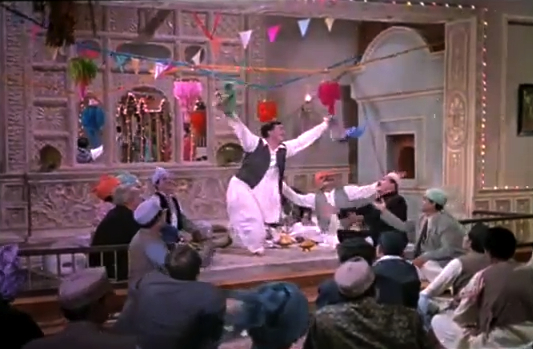
handkerchiefs waqt

When the flirty handkerchiefs come out, there’s really no going back. I think we all have uncles who have pulled this flamboyant dance move at parties, much to their wives’ chagrin.

Aye Meri Zohra Jabeen” is actually based on a musical composition by Afghanistan’s Abdul Ghafoor Breshna (1907-1974), a famous painter, poet, director, and musician who also composed the national anthem for the Republic of Afghanistan just before his death. “Aye Meri Zohra Jabeen” was requested by two fans, Kuldip Babbar and Hema Fonseka! Thanks for the fantastic suggestion, and keep those requests coming!

– Mrs. 55

Abhi Na Jao Chod Kar Lyrics and Translation: Let’s Learn Urdu-Hindi

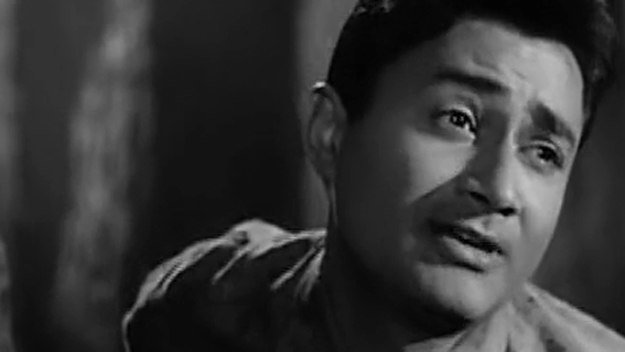
Dev Anand croons to Sadhana in a moonlit forest in Hum Dono (1961).

Dev Anand croons to Sadhana in a moonlit forest in Hum Dono (1961).

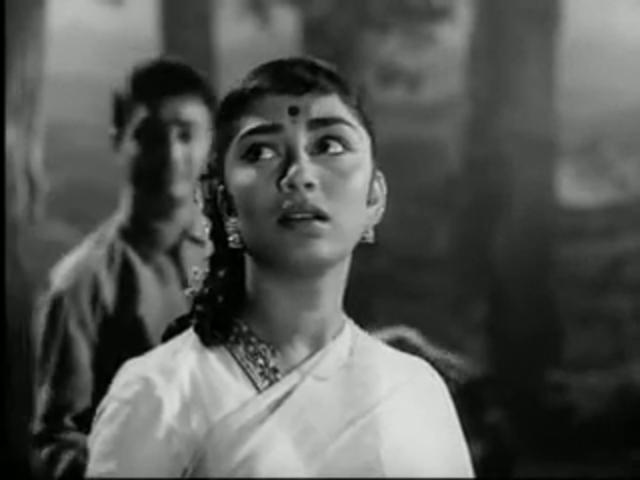
Next we present the enchanting lyrics and English translation to “Abhi Na Jao” from Hum Dono (1961). When I think of a Bollywood tree song, I think of this. This is where the magical tradition of hopping around a hidden forest and coyly shimmying behind the nearest tree to dodge your lover’s advances all began. Delightful Dev Anand and young Sadhana prance about gently in a quiet grove with slick back-and-forth lyrics that keep us grounded. The essence of the song comes down to this: Boy loves girl. Girl shyly expresses a desire to go home. Boy insists girl stays. Girl fears losing face. Boy takes opportunity to corner girl against a tree. You certainly don’t need anyone else to tell you how to think, but consider what it means that modern day Romeo Shah Rukh Khan voted this picturization as the most romantic song of Hindi cinema! “Abhi Na Jao” is eternal and the embodiment of sweetly innocent Bollywood courtship.

I’ve talked before about my feelings for the Hum Dono recolourization. Frankly, it’s cute, but not worth eliminating the original black-and-white stock. By converting the film from academy ratio to widescreen, you lose a great deal of the movie in exchange for some glitzy editing tricks (watch the colorized version here to see what I mean!). The film, its characters, the music, and the plot are so strong, it does not require any remodeling for wider accessibility. This song comes early in the movie, setting a high key tone for the upcoming embroilment.

Dev Anand Abhi Na Jao

Dev Anand looks like a lost sheep as Sadhana coyly sneaks away in “Abhi Na Jao” from Hum Dono (1961).

The signature Dev Anand coiffure is at its puffiest in this song, a welcome reflection of his bursting emotions. So take a seat, grab a snuggle pillow, and enjoy the lyrics and our full English translation to the evergreen duet “Abhi Na Jao Chod Kar” from Hum Dono (1961)!

Abhi Na Jao Chhod Kar Lyrics and Translation

MALE:
Abhi na jaao chhoD kar ki dil abhi bhara nahii.N
Do not go and leave me now, for my heart is not yet filled
Abhi abhi to aayii ho abhi abhi to
You have only just come
Abhi abhi to aayi ho bahaar banke chhaaii ho
You have only just come, you became the Spring as you arrived
Hawaa zaraa mahak to le nazar zara bahak to le
Let the wind spread your fragrance, let your gaze wander
Yeh shaam dhal to le zaraa
Let the night fall a little more
Yeh dil sambhal to le zaraa
Let my heart steady itself
Main thoDi der jii to luu.N nashe ke ghuunT pii to luu.N
Let me live a little longer, let me taste a sip of your intoxication
Nashe ke ghunT pii to luu.N, abhi to kuch kahaa nahii.N
Let me taste a sip of your intoxication, for I have said nothing yet
Abhii to kuch sunaa nahii.N
You have heard nothing yet
Abhii na jaao chod kar ke dil abhi bhara nahii.N
Do not go and leave me now, for my heart is not yet filled

FEMALE:
Sitaare.N jhil milaa uThe
The stars have begun to sparkle
Sitaare.N jhil milaa uThe, chiraag jagmagaa uThe
The stars have begun to sparkle, the lamps have been lit
Bas ab na mujhko Toknaa
Enough, do not scold me now
Bas ab na mujhko Toknaaa, na baDhke raah rokna
Enough, do not scold me now, do not come forward to block my path
Agar mai.N ruk gayii abhii to jaa na paauu.Ngii kabhii
If I stop now, I will never be able to leave
Yehii kahoge tum sadaa ke dil abhii nahii.N bharaa
For you will keep on saying that your heart is not yet filled
Jo khatm ho kisii jagah yeh aisaa silsila nahii.N
This is not the kind of affair that ends easily

MALE:
Abhii nahii.N abhii nahii.N!
Not yet, not yet!

FEMALE:
Nahii.N, nahii.N, nahii.N, nahii.N!
No, no, no, no!

MALE:
Abhi na jaao chod kar ke dil abhi bhara nahii.N
Do not go and leave me now, for my heart is not yet filled

MALE:
Adhuurii aas
Unfulfilled desire
Adhuurii aas chhoDke, adhuurii pyaas chhoD ke
Leaving me with unfulfilled desire, leaving me with unfulfilled thirst
Jo roz yuu.N hii jaaogii to kis tarhaa nibhaaogii
If you go every day like this, then how will you keep your promise?
Ki zindagii kii raah mei.N jawaa.N dilo.N kii chaah mei.N
For in the path of life, in the desire of two young hearts
Kaii maqaam aaye.Nge jo humko aazmaae.Nge
Many challenges will come to test us
Buraa na maano baat kaa, yeh pyaar hai, gilaa nahii.N
Do not be hurt by my words, for they are words of love, not a complaint

FEMALE:
Haa.N, yehii kahoge tum sadaa ki dil abhii bharaa nahii.N!
Yes, but you will keep on saying that your heart is not yet filled!

MALE:
Haa.N, dil abhi bharaa nahii.N
Yes, my heart is not yet filled!

FEMALE:
Nahii.N, nahii.N, nahii.N, nahii.N!
No, no, no, no!

Glossary:

bhara: filled; bahaar: Spring; hawaa: wind; mahak: fragrance; nazar: gaze, bahak: wander; shaam: evening; sambhalnaa: to steady oneself; thoDi der: a little while longer; nashe: intoxication; ghuunT: sip; jhilmilnaa: to sparkle; chiraag: lamp; Toknaa: to scold; raah: path; khatm: finish; jagaah: place; silsilaa: affair; adhuurii: unfulfilled; aas: desire; pyaas: thirst; roz: every day; nibhaanaa: to fulfill [a promise], zindagii: life; jawaa.N: young; chaah: desire, love; maqaam: challenge; aazmaanaa: to test, to try; buraa: hurt; gilaa: complaint

Sadhana Abhi Na Jao Hum Dono

Sadhana worries on a late evening out with her lover in Hum Dono (1961).

Yes, like many a great Hindi song, this one comes with a tragic reprise. A tender Asha Bhonsle solo, “Jahan Mein Aisa Kaun Hai” is a song of steadfast devotion in the face of impending wartime separation. Sadhana beautifully demonstrates her love to be more than a worthy match for the original duet’s playful warning of a perilous future. We have included the full lyrics and translation of Jahan Mein Aisa Kaun Hai as well below for your edification!

Jahan Mein Aisa Kaun Hai Lyrics and Translation:

Dukh aur sukh ke raaste bane hai sab ke vaaste
The paths of sadness and happiness are made for everyone
Jo gham se haar jaaoge to kis tarah nibhaaoge?
If you lose to sadness and leave, then how will you keep your promise?
Khushii mile hame.N ki gham jo hoga baat le.Nge hum
Whether we are met with happiness or sorrow, let us accept it
Mujhe tum aazmaao to zara nazar milaao to
Test me and meet my eyes
Ye jism do sahii magar dilo.N mei.N faaslaa nahii.N
We may have two bodies, but there is no distance between our hearts

Jahaan mei.N aisaa kaun hai ki jisko gham milaa nahii.N?
Is there anyone in the world who has not had sadness?

Tumhaare pyaar kii qasam tumharaa gham hai meraa gham
I swear by your love that your sorrow is my sorrow
Na yuu.N bhujhe bhujhe raho jo dil ki baat hai kaho
Do not fade away like this, tell me what is in your heart
Jo mujhse bhi chhupaaoge to phir kisse bataaoge?
If you hide those words from me, then whom will you tell?
Mai.N koi ghair to nahii.N dilaaoo.N kis tarah yakeen?
I am no stranger, how can I make you believe me?

Ki tum se mai.N judaa nahii.N, mujhse tum judaa nahii.N
For you are not separated from me, and I am not separated from you

Glossary:

dukh: sorrow; sukh: happiness; raastaa: path; [kisii ke] vaaste: for the sake of; haarnaa: to lose; tarah: type, manner; khushii: joy, happiness; aazmaanaa: to test, to try; nazar milaanaa: to make eye contact; jism: body, faaslaa: distance; qasam: swear; chhupaanaa: to hide; ghair: stranger; yakeen: belief

Can’t get enough? Check out our other translations from the same film like “Main Zindagi Ka Saath” and “Allah Tero Naam” for more!

-Mrs. 55

Shammi Kapoor, the Elvis of India: Realities of a Rockstar

Shammi Kapoor Teesri Manzil

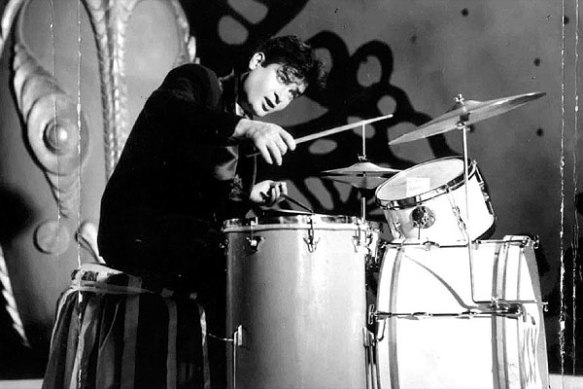
Shammi Kapoor plays a lovable rockstar in Teesri Manzil (1966).

Bollywood actor Shammi Kapoor (1930-2011) was popularly known as the Elvis of India. I just got back from a road trip with my fiancé down to Graceland, home of the original King. Despite jamming out to “That’s All Right Mama” as we toured around, I couldn’t help but think of Bombay film legend Shammi Kapoor and the famous media comparison. I’m a diehard Elvis Presley fan, and my love for his Indian counterpart is no less. But is it even fair to correlate the two?

When I first heard of the comparison of yesteryear Bollywood actor Shammi to American rock-and-roll legend Elvis, I needed a little convincing. All right, I needed a lot of convincing. Nothing short of blasphemy is on the line when you start comparing yourself to the King. I grew up listening to Elvis and had seen Shammi Kapoor films like an Evening in Paris (1967), Brahmachari (1968), Prince (1969) and Andaz (1971). The slightly overweight Bollywood thespian with heavy pancake makeup and tight pants was a far cry from the jailhouse rocking Elvis Presley I knew so well. After all, anyone can wear a pair of tight pants in public, but not everyone should.

So why then do we call Shammi Kapoor the Elvis of India? To begin to answer this, we must go back in time. We return to Shammi Kapoor’s earliest hits films in the days before even the rip-roaring success of Junglee (1961): movies like Tumsa Nahin Dekha (1957) and Dil Deke Dekho (1958). Suddenly, the similarities in appearance are clear. Sure in later colour films Shammi Kapoor didn’t look much like Elvis, but let’s face it, by the time the 70s rolled around, Elvis didn’t look much like Elvis either.

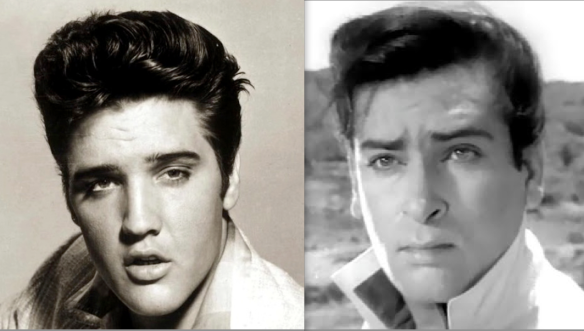
Elvis Presley Shammi Kapoor

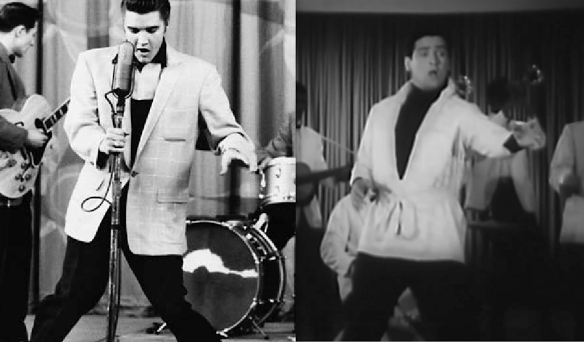
Unintentional twins, Elvis Presley (left) and Shammi Kapoor (right) revolutionized the entertainment industry complete with popped collars and pompadours.

But the comparison of the two entertainment icons goes beyond mere appearance. Elvis brought with him a cultural revolution in the midst of a tumultuous political atmosphere in the U.S. Shammi Kapoor, I would argue, brought that same youthful rebellion to India. Before Shammi Kapoor, no actor had ever so deliberately and daringly sought to appeal to the “modern youth” audience on-screen. Before the Shammi revolution, popular actors like Ashok Kumar, Guru Dutt and even Raj Kapoor appealed to a more traditional, elder protagonist who often encountered a modern society—but did not speak for it. Shammi was different.

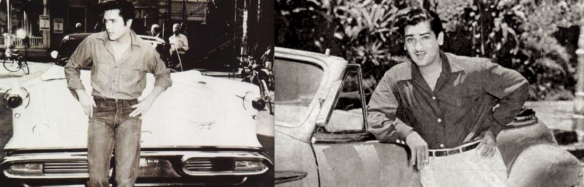
elvis shammi kapoor car

Both Elvis (left) and Shammi (right) pose with their convertibles, hands on hips and one button too many unbuttoned.

With edgy attire, a boyish charm to mask his sharp tongue and a irreverent eye for the ladies, Shammi burst onto the Bombay scene with never-before-seen sex-appeal. He voiced the thoughts and emotions of a new generation who didn’t play by the rules of their fathers—Shammi flirted shamelessly in his movies, played the drums like a rockstar in his songs, and never failed to bring a sleek pompadour ‘do to the set to balance the party happening in his hips. Before Shammi, such actions would have been downright villainous, reserved only for the drunk antagonist of the film who would never win the pure-hearted girl. But Shammi changed the game.

He oozed that James Dean sense of self-confidence so despised by the older generations and so adored by young women everywhere. Watch his peacock strut in “Baar Baar Dekho” from Chinatown (1962), and the way Mohammed Rafi throws in a suave “Tally ho!” into the mix as Shammi coolly slams his guitar. Those signature hip gyrations would have done the King proud!

Elvis Presley Shammi Kapoor

Elvis Presley and Shammi Kapoor strike similar poses in even more similar outfits. Left: Elvis performing “Jailhouse Rock” in 1957. Right: Shammi Kapoor swinging to “Dilruba Meri Neeta” in Dil Deke Dekho (1959).

The heart of the revolution, of course, lay with the music. Elvis combined his Southern gospel routes with African-American rhythm and blues to create a whole new catchy sound that caught the country by storm. It was a wave that Shammi Kapoor brought to Bombay. Through radical compositions that drew upon rock-and-roll themes, sassy lyrics, and Mohammed Rafi’s energetic and versatile vocals, Shammi Kapoor too changed the face Bollywood music, ushering an era of fusion-inspired hits from “Bolo Bolo Kuch To Bolo” to “Aaja Aaja Main Hoon Pyaar Tera.”

As Shammi Kapoor said in a Times of India interview before his death:

“My style was unique, but it would have come to nothing had it not been for such brilliant music directors like O. P. Nayyar and Shankar-Jaikishan. I was this supremely macho guy and within me lay dormant an incredible energy that was screaming for expression. Luckily for me, my directors sensed the potential in me and allowed me to unleash my creativity. I guess I also had this very innocent way of looking at girls that heightened the romance element in my films.”

Graceland Elvis Presley

My visit to Graceland, home of the King of Rock and Roll. Left: Boarding one of Elvis’ private jets named for his daughter Lisa Marie. Right: Giving the King a little help holding up a gold record!

The truth of the matter is, Shammi Kapoor never said he modeled himself off of Elvis and never mentioned him in any interviews. Although their legacies share some similarities, the two men never met nor made any attempt to do so. The parallels that link their names together are those that we their fans imagined as observers. The late Shammi Kapoor did not achieve fame in an era where concert videos of Elvis could be watched or copies of the King’s films reviewed over and over again. Shammi insisted that all his choreography was extempore, straight from his heart. In fact, the only direct Bollywood copy of an Elvis hit was “Marguerita” (1963) picturised as “Kaun Hai Jo Sapnon Mein Aaya” by Rajendra Kumar in 1968.

So ultimately, perhaps it is an injustice to say that Shammi Kapoor imitated Elvis Presley’s style. After all, many men around the world knew how to shake their hips and puff their hair, but how many could bellow “YAHOO!” to the object of their affection and get away with it?

Perhaps it would be better to call Elvis the Shammi Kapoor of America.

– Mrs. 55

Rahe Na Rahe Hum Lyrics and Translation: Let’s Learn Urdu-Hindi

Suchitra Sen Ashok Kumar Mamta

Ashok Kumar and Suchitra Sen star in the beautiful Asit Sen film Mamta (1966).

Today we showcase the lyrics and English translation of the melodious “Rahe Na Rahe Hum” from the film Mamta (1966). This gentle beauty sung by Lata Mangeshkar captures an inspiring philosophy on losing a loved one. An optimistic melody balances the tragic sentiments of its lyrics. While Ashok Kumar must leave Suchitra Sen to study law abroad, he pledges his loyalty to her upon the forthcoming separation and asks her to sing for him before he leaves.

The film Mamta explores the sacrifices Suchitra makes upon becoming a mother and like the thematically-similar blockbuster Aradhana (1969) demonstrates the resilience of a woman wronged by society. Majrooh Sultanpuri wrote the lyrics to Roshan’s superb compositions for Mamta that have kept the film’s legacy alive today. “Rahe Na Rahe Hum” continues to be a favorite with its playful chime opening and nectar-sweet vocals that betray the heartache of the scene.

Suchitra Sen in Mamta

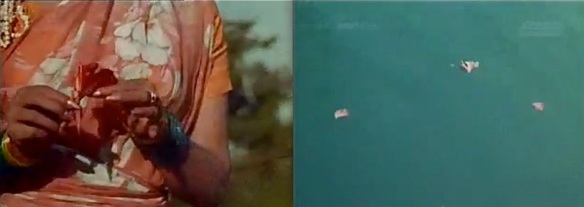
Suchitra Sen tears the petals from a flower on the eve of her separation from Ashok Kumar (right) and tosses the torn petals into the pond (left). The imagery of Suchitra’s identification with a flower recurs throughout the song and film–note how even her saari is decorated with a floral pattern!

“Rahe Na Rahe Hum” captures an appreciation of transience, framed as a neglected yet wonderous consequence of continuity, and highlights the transcendence of attachment to worldly phenomena such as seasons, physical proximity, and even time itself.

The tender line “ashqo.N se bhiigii chandnii mei.N ek sadaa si sunoge chalte chalte” allows simultaneously for mourning and recovery. While Suchitra acknowledges he will miss her, those tears of sadness will not last through the end of his journey that both know he must continue without her. Like the flowers petals that fall away drifting into the pond, Suchitra’s presence is not fettered by a set manifestation. Ultimately “Rahe Na Rahe Hum” is far more than mere words of consolation—it is an ode to love that celebrates the permanence of memory.

Suchitra Sen in Mamta

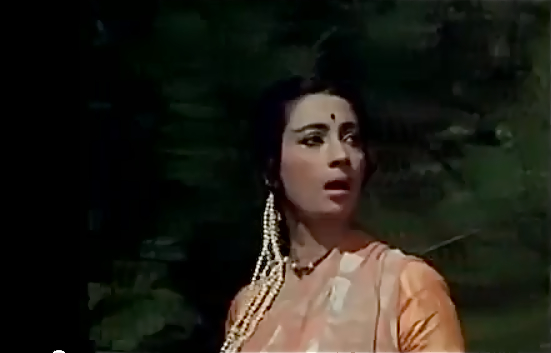
Suchitra Sen sings “Rahe Na Rahe Hum” as a parting gesture to the man she loves in Mamta (1966).

We hope you enjoy the full lyrics and English translation to the beautiful “Rahe Na Rahe Hum” below. Note that the plural pronoun “hum” can be translated as either “we” or “I.” I’ve chosen the singular for poetic purposes, but you can see how this no-doubt deliberate subtlety on the part of Sultanpuri sahib may color the translation slightly differently with each read. Watch the original song here!

Rahe Na Rahe Hum Lyrics and Translation: Let’s Learn Urdu-Hindi

Rahe na rahe hum mahakaa kareN.ge
Whether or not I am here, this fragrance will remain
Banke kali banke sabaa baagh-e-wafaa mei.N
As if a flower, as if a breeze in our devoted garden

Mausum koi ho, is chaman mei.N rang barse rahe.Nge hum khiraamaa
Whatever the weather may be in our garden, I will fill it gracefully with color
Chaahat ki khushbuu yuu.N hii zulfo.N se uDegii khizaa ho ya bahaare.N
The sweet fragrance of our love will still fly from my hair, whether Autumn or Spring
Yuu.N hii jhuumte aur khilte rahe.Nge
I will continue to sway and blossom
Banke kali banke sabaa baagh-e-wafaa mei.N
As if a flower, as if a breeze in our devoted garden
Rahe na rahe hum…
Whether or not I am here…

Khoye hum aise kyaa hai milnaa kyaa bichhaDnaa nahii.N hai yaad humko
I am so deeply lost in love that I no longer know separation from unity
Kooche mei.N dil ke jab se aaye sirf dil ki zameen hai yaad humko
Ever since you entered the lanes of my heart, I can only remember its world of love
Ise sarzameen pe hum to rahe.Nge
In that realm I will remain
Banke kali banke sabaa baagh-e-wafaa mei.N
As if a flower, as if a breeze in our devoted garden
Rahe na rahe hum…
Whether or not I am here…

Jab hum na ho.Nge, jab hamaare khaak pe tum rukoge chalte chalte
When I am gone, when you pause by my ashes as you walk
Ashqo.N se bhiigi chaandnii mei.N ek sadaa si sunoge chalte chalte
In the rainy moonlight that is wet from my tears, you will hear my call as you walk
Wohii pe kahii.N hum tum se mile.Nge
There somewhere, we both will meet again
Banke kali banke sabaa baagh-e-wafaa mei.N
As if a flower, as if a breeze in our devoted garden

Rahe na rahe hum mahakaa kareN.ge
Whether or not I am here, this fragrance will remain
Banke kali banke sabaa baagh-e-wafaa mei.N
As if a flower, as if a breeze in our devoted garden

Glossary:

mahaknaa: [a fragrance] to spread, kali: flower; sabaa: breeze; baagh: garden; wafaa: loyalty, devotedness; mausam: weather, atmosphere; chaman: garden; rang: color; khiraamaa: gracefully; chaahat: love, desire; khushbuu: sweet fragrance; zulf: hair; khizaa: Autumn; bahaar: Spring; jhuumnaa: to sway; khilnaa: to blossom; milnaa: to meet; bichhaDnaa: to separate; kooche: lane; zameen: world; yaad: memory; sarzameen: realm, society; khaak: ashes; ashq: tears; bhiigii: wet, rainy; chaandnii: moonlight, sadaa: call, voice

You may be interested to note that there is a duet version of this gem that is reprised at the end of the film by Mohammed Rafi and Suman Kalyanpur. Yes, it was the days of the famous Rafi-Mangeshkar feud–hence why the duets of the film necessitated recruiting additional singers (also from the same film, the flirtatious hit “In Baharo.N Mei.N Akeli” by Rafi and Asha as well as “Chhupa Lo Yuu.N Dil” featuring Lata and Hemant Kumar).

This song was requested by the one and only “lalten“! Let us know in the comments, does this song make you feel happy or bring tears to your eyes?

– Mrs. 55