Hum Bekhudi Mein Tumko Pukare Lyrics and Translation: Let’s Learn Urdu-Hindi

Dev Anand hum bekhudi kala pani

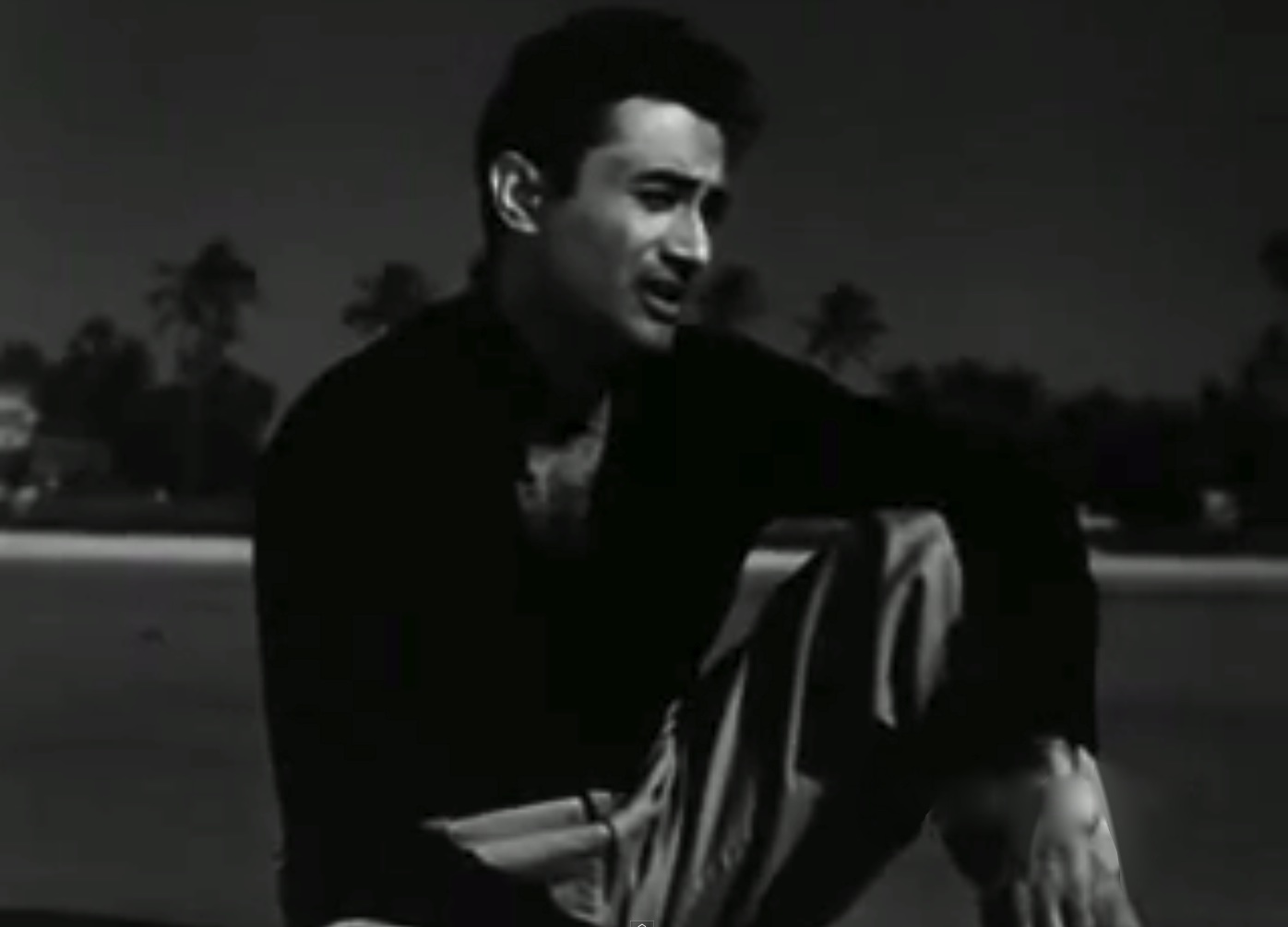
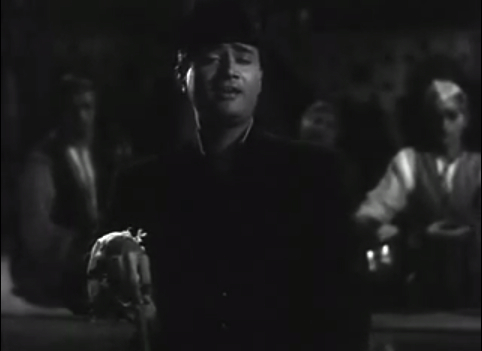
Dev Anand entrances the audience with “Hum Bekhudi Mein” in Kala Pani (1958).

We now present our complete translation to “Hum Bekhudi Mein Tumko Pukare,” one of Mohammed Rafi’s finest solos. The song, and in fact the film Kala Pani (1958), is a considerable break from Dev Anand’s previous work, transforming him from the debonair urbanite to a meditative, black kurta pajama-clad member of the traditional intelligentsia. “Hum Bekhudi Mein” bears the unmistakable hallmark of S.D. Burman’s finest compositions—a hauntingly powerful melody that is so captivating, instrumental ornamentation is close to entirely abandoned. There is something reminiscent of his earlier composition, “Dekhi Zamaane Ki Yaari“–with an emphasis on reflection, the purity of Mohammed Rafi’s voice engulfs the listener in the qawwal-like trance of his yearning, the feeling of entering a dream where time loses its meaning. Indeed, the “bekhudi” or loss of self as described by the singer is precisely what lyricist Majrooh Sultanpuri aims to induce in the listener.
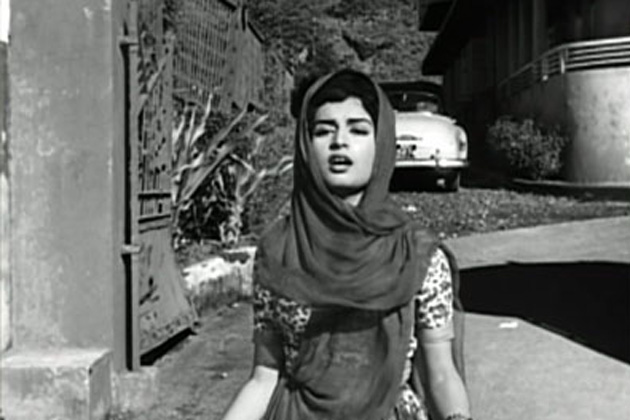
Nalini Jaywant Kala Pani hum bekhudi

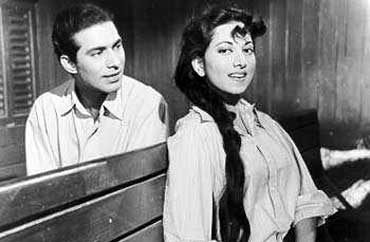
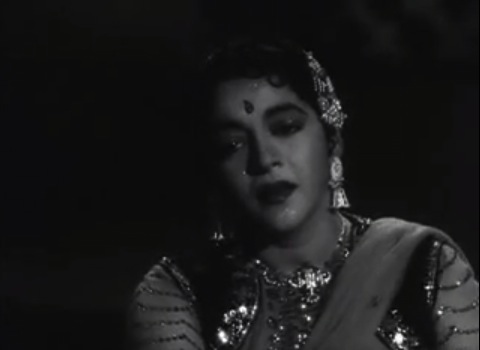
Nalini Jaywant believes she has found love at last in the mysterious stranger with a haunting voice in Kala Pani (1958).

The nuance of the lyrics is an exceptional example of the multi-faceted levels of interpretation of Urdu poetry. Each line returns to the refrain’s lingering “chale gaye”—a verb tense indicating continuity of the hero’s past actions, and his current obsession with reliving them. However, Mohammed Rafi’s very deliberate pause before singing “chale gaye” with each line allows for an additional dimension to the song’s interpretation, as if a forlorn reference to the woman herself who has left him (“woh jo chale gaye”). I love this song for every person that hears it will understand it in a slightly different way. If you can’t get enough of this melody, lovers of trivia will be delighted to discover that S.D. Burman actually recorded the original Bengali version of this song in his own voice, “Ghum Bhulechi Nijhum”!

In the Hindi version, hero Dev Anand elaborates on two forms of intoxication—first, the spell cast by his former lover, and second, alcohol to which he has resigned himself.  In the evocative final line of the song, “Sheeshe mei.N aap ko bhi utaare chale gaye,” the hero reconciles their duality and his escape from reality. With the oblivion granted by alcohol, he regains the very woman who has left him in a state of bekhudi—a philosophical wanderer in fugue-like search of a connection.
Dev Anand kala pani black hat

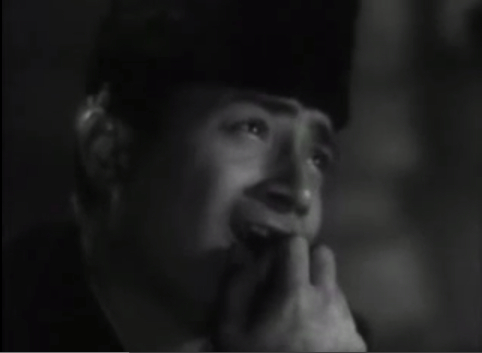
Despite biting his fingernails throughout the song, Dev Anand is simply too attractive to handle in a black kurta and matching traditional hat.

We hope you enjoy our English translation to the lyrics of this beautiful poem “Hum Bekhudi Mein” from Kala Pani (1958). Check out the video in which Dev Anand woos the lovely courtesan Nalini Jaywant with his artistic depth! Did you know that after this song was released, Dev Anand was actually told not to wear black anymore in public because Indian women  would swoon and jump from buildings upon seeing him dressed in that devastatingly attractive shade? I mean…I can see where they’re coming from!

Hum Bekhudi Mein Tumko Pukare Lyrics and Translation:

Hum bekhudii mei.N tum ko pukaare chale gaye
Unaware of my own self, I kept calling to you
Saaghar mei.N zindagii ko utaare chale gaye
And so I kept drowning my life in a glass of wine
Hum…

Dekhaa kiye tumhe hum banke deewaanaa
When I used to see you, I was madly love
Utaraa jo nashaa to hum ne yeh jaana
Once that intoxication wore off, I knew this
Saare woh zindagii ke sahaare chale gaye
That all the support I had in life had gone

Hum bekhudii mei.N tum ko pukaare chale gaye
Unaware of my own self, I kept calling to you

Tum to na kaho hum khud hi se khele
At least do not say that I played this game by myself.
Doobe nahii.N humii yuu.N nashe mei.N akele
For I did not drown in this intoxication alone
Sheeshe mei.N aap ko bhi utaare chale gaye
You were what I kept pouring into my glass

Hum bekhudii mei.N tum ko pukaare chale gaye
Unaware of my own self, I kept calling to you
Saaghar mei.N zindagii ko utaare chale gaye
And so I kept drowning my life in a glass of wine
Hum…

Glossary:

bekhudi: loss of self-awareness; pukaarnaa: to call out; saaghar: wine goblet; zindagii: life; deewaanaa: madly in love; nashaa: intoxication; sahaaraa: support; khud: self; khelnaa: to play; Doobnaa: to drown; akelaa: alone; sheeshaa: glass, mirror

Interestingly, this gently hypnotic song is used to trap Nalini Jaywant into falling in love with Dev Anand and confess her past crimes. Yes, it’s all a pretense–Dev Anand is actually in love with Madhubala, the cheeky journalist who is helping him absolve his wrongfully imprisoned father. Nalini Jaywant played a role in the original crime and must now the price of unrequited love for his son. The film was actually based on A.J. Cronin’s Scottish novel “Beyond This Place” published in 1953. Dev Anand loved Cronin’s work so much, he also later turned one of Cronin’s most famous novels, “The Citadel” into the 1971 Bollywood film Tere Mere Sapne.

– Mrs. 55
Saiyan Dil Mein Aana Re Lyrics and Translation: Let’s Learn Urdu-Hindi

Shamshad Begum Bollywood playback singer

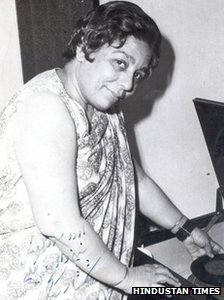
Bollywood playback legend Shamshad Begum (1919-2013)

Last Wednesday, Bollywood lost another of its finest treasures: legendary playback singer Shamshad Begum. The veteran singer was 94 years old. She was well-known for breaking the norms–a maverick with a Brenda Lee-esque penchant for the Western and an irresistible je ne sais quoi that drew hoards of admirers from across the sub-continent. While Lata Mangeshkar and her clones sought to define femininity by delicate, high-pitch vocals Shamshad Begum proved over and over again that a sexy, strong timber could still carry innocence and that women in India could not all be categorized by a single stereotyped voice. Yes, the world needed Shamshad Begum, a woman who never succumbed to expectations and whose daring voice lent itself to some of the greatest works of Bollywood’s Golden Age. We salute you, Shamshad, and the invaluable service you did to the nascent Hindi film industry.

Who can forget her performance with Nigar Sultana as the sultry Bahar in Mughal-e-Azam‘s “Teri Mehfil Mein Qismat“? Few women dared sing a duet with Lata Mangeshkar for fear of inferiority–but that was precisely where the great talents of Shamshad shined their brightest. With a voice unlike anything in Bollywood history, Shamshad dazzled audiences with a deep, edgy flair for which she was famous. There was simply no competition because the voices were incomparable. Shamshad’s other famous duets such as “Leke Pehla Pehla Pyar” with Mohammed Rafi from CID (1956), “Mere Piya Gaye Rangoon” with Chitalkar Ramchandra in Patanga (1949) or “Kajra Mohabbatwala” with Asha Bhonsle in Qismat (1968) to name a few, showcase her unique robust twist on the norm and continue to be remade and popularized today.

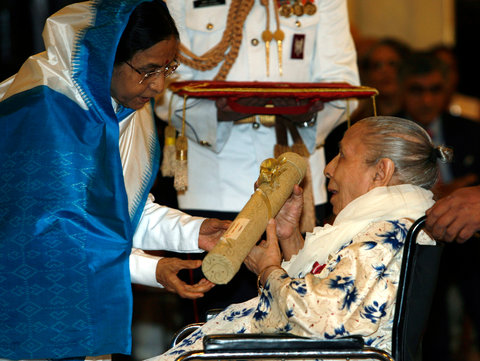
Shamshad Begum receiving the Padma Bhushan for a lifetime of achievements in 200.9

Shamshad Begum receiving the Padma Bhushan for a lifetime of achievements in 2009.

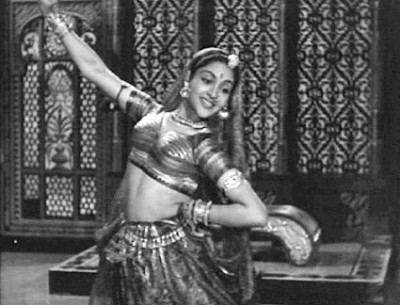
Music director O.P. Nayyar confessed in an interview that when he entered the music industry, he begged Shamshad Begum to sing for his compositions. Her first collaboration with him became absolutely legendary: “Kabhi Aar, Kabhi Paar” from the film Aar Paar (1954). Here at Mr. and Mrs. 55, our favorite of her solo hits is the extraordinarily catchy S.D. Burman composition, “Saiyan Dil Mein Aana Re” from Bahar (1951) in which classical dancer Vijayantimala made her Bollywood debut.

You can tell from themyriad of hand gestures reminiscent of a classical mudra to accompany the emotion of each line (coupled with her impeccable posture), that teenager Vijayantimala was well-trained in Bharatnatyam arts. This theatrical dance form meshes interestingly with the medium of film, at times carrying the over-expression of a silent movie and the spectacle of a living room classical dance performance. Perhaps the best part of this adorably innocent love song (besides, of course, Shamshad’s vocals!) is the clever and hilariously unnecessary drama accompanying the actresses 4 costumes changes in the song!

Vijayantimala in Bahar 1951 Saiyan Dil Mein Ana Re

Young Vijantimala makes her Bollywood film debut singing Shamshad Begum’s “Saiyan Dil Mein Aana Re” in Bahar (1951).

Please enjoy the full lyrics and English translation to this Shamshad Begum hit “Saiyan Dil Mein Aana Re” below and let us know YOUR favorite Shamshad Begum song in the comments!

Saiyan Dil Mein Aana Re Lyrics and Translation:

Saiyaa.N dil mei.N aanaa re
Beloved, come into my heart
Aake phir na jaanaa re
And once you come, never leave
Chham chhamaa chham chham

Raja ban ke aanaa re
Like a king, come to me
Mohe leke jaanaa re
And take me with you when you go
Chham chhamaa chham chham

Chaandnii raat hogii, taaro.N kii baaraat hogii
It will be a moonlit night, the stars will form a wedding procession
Pehle pehle pyaar kii pehlii pehlii baat hogii
The first words of my first love will be spoken
Khushii khushii gaaye.Nge ham geet suhaanaa re
We will joyfully sing a beautiful song

ThoDii thoDii sahal hogii, thoDaa thoDaa pyaar hogaa
Little by little, our love will become easy
Kabhii iqraar hoga, kabhii inkaar hogaa
Sometimes you will agree with me, sometimes you will refuse me
Teraa manaanaa meraa rooTh jaanaa re
But you appease me, my anger will disappear

Tum mere paas hoge, gham baDii duur hogaa
You will be beside me, and all sadness will be far away
Kehtaa hai jiyaa meraa hogaa zuroor hogaa
My heart tells me this will certainly be so
Laanaa re laanaa tashriif laana re
Come, believe in me

Saiyaa.N dil mei.N aanaa re
Beloved, come into my heart
Aake phir na jaanaa re
And once you come, never leave
Chham chhamaa chham chham

Raja ban ke aanaa re
Like a king, come to me
Mohe leke jaanaa re
And take me with you when you go
Chham chhamaa chham chham

Glossary:

saiyaaN: beloved; raajaa: king; chaandnii: moonlight; baaraat: wedding procession; khushii: happiness, joy; geet: song; suhaanaa: beautiful; thoDaa: a little; sahal: easy; iqraar: agreement, acceptance; inkaar: refusal; manaanaa: to appease someone; rooTh: sulk, anger; gham: sadness; duur: far; jiyaa: soul, heart; zuroor: certainly; tashriif laanaa: a respectful way of asking someone to come or to enter (and in doing so, trust their honor with you)

So now you’re asking yourself, why is there no translation given for arguably the best line of the song: “Chham chhamaa chham chham“? There are a few ways to analyze this line–whether she’s referencing the glittering of stars, doing some free-styling by adding an extemporaneous beat to the melody, or getting carried away by the excitement of her own life–I think any real attempt to translate that exceedingly interpretive line formally would be an injustice to the song’s joie de vivre. Let us know your favorite Shamshad Begum moment in the comments!

– Mrs. 55

Teri Bindiya Re Lyrics and Translation: Let’s Learn Urdu-Hindi

Amitabh Bacchan marries a village girl with a golden voice in Abhimaan (1973)

Today, we present the lyrics and English translation of an evergreen duet from Hrishikesh Mukherjee’s Abhimaan (1975): terii bi.ndiyaa re . Starring Amitabh Bacchan and Jaya Bhaduri, Abhimaan narrates the story of an ill-fated love between two singers that eventually approaches it breaking point when a husband’s masculine ego suffers a wound from his wife’s overwhelming professional success.

Given that this film revolves around a playback singing couple, the composition of its soundtrack naturally demanded a music director par excellence. In this case, director Hrishikesh Mukherjee chose veteran composer S.D. Burman to do the job–and what a job he did! Aside from the duet presented here, the Lata solos “nadiyaa kinaare,” “ab to hai tum se,” and “piyaa binaa,” the Kishore solo “miit na milaa re man kaa,” and the Lata-Kishore duet “tere mere milan kii yah rainaa” are still cherished by fans today. S.D. Burman’s compositions in this film won him his last Filmfare Award for Best Music Director before his death in 1975.

The duet terii bindiyaa re is sung by Lata Mangeshkar and Mohammed Rafi at a point in the film where Amitabh Bacchan introduces his newly wedded wife Jaya Bhaduri at their wedding reception. In response to a request, they sing this duet for the guests at their party. Here, Majrooh Sultanpuri’s lyrics describe the allure of a woman’s ornaments, specifically her bi.ndiyaa (beauty spot), jhumkaa (earring), and ka.nganaa (bangle).  Voiced by Lata Mangeshkar on playback, Jaya Bhaduri offers an on-screen performance that illustrates a wife’s admiration and respect for her husband. Since this song takes place before Amitabh Bacchan’s tragic descent into insecurity, he is able to reciprocate with affection and warmth.  However, after this performance, a classical musician (played by David) in the audience recognizes that Jaya is the technically superior singer and expresses concern about the couple’s future…watch the film to see how the drama unfolds!

Those of you who are more musically inclined may have noticed that this song is based in rupak taal, a 7-beat rhythmic cycle that was used far less frequently by Bollywood composers than kaharva taal (8 beats) or dadra taal  (6 beats). Interestingly, S.D. Burman has also used this unconventional rhythmic pattern skillfully in the film’s other popular duet tere mere milan kii yah rainaa

What are some of your other favorite Hindi songs that describe female ornaments? Feel free to share with us in the comments! Until next time…

– Mr. 55

Jaya Bacchan gives a Filmfare Award-winning performance as a humble and talented singer whose success in the music industry ultimately hurts her husband’s ego.

Teri Bindiya Re: Lyrics and Translation

terii bi.ndiyaa re, re aay haay!
Your beauty spot, oh!
sajan, bi.ndiyaa le legii terii ni.ndiyaa
Oh beloved, my beauty spot will steal away your sleep.
re aay haay! terii bindiyaa re
Oh, your beauty spot!

tere maathe lage hai.n yuu.n jaise chandaa taaraa
It clings to your forehead like a star to the moon.
jiyaa me.n chamke kabhii kabhii to, jaise koii a.ngaaraa
It shines in my heart from time to time, as if it were a glowing ember.
tere maathe lage hai.n yuu.n
It clings to your forehead.
sajan, nindiyaa le legii, le legii, le legii merii bi.ndiyaa
Beloved, my beauty spot will steal away your sleep.
re aay haay! teraa jhumkaa re
Oh, your earring!
chain lene na degaa sajan tum kaa
It will not let you be at peace, beloved.
re aay haay! meraa jhumkaa re
Oh, my earring!

meraa gahnaa balam tuu, tose saj ke Doluu.n
You are my jewelry, beloved.  Adorning myself with you, I will dance.
bhaTakte hai.n tere hii nainaa, mai.n to kuchh na boluu.n
Your eyes wander, yet I say nothing at all.
meraa gahnaa balam tuu
You are my jewelry, beloved.
to phir yah kyaa bole hai, bole hai, bole hai teraa ka.nganaa?
Then, what is it that your bangle says?
re aay haay! meraa kanganaa re
Oh, my bangle!
bole re ab to chhuuTe na teraa a.nganaa
It says that it will not leave your courtyard.
re aay haay! teraa ka.nganaa re
Oh, your bangle!

tuu aayii hai sajaniyaa, jab se merii ban ke
Beloved, since you came to me and became mine,
Thuumak-Thuumak chale hai tu, merii nas-nas khanke
your strutting has made me feel a jitter in my veins.
tuu aayii hai sajaniyaa
Beloved, since you came to me.
sajan, ab to chhuuTe na, chhuuTe na, chhuuTe na, teraa anganaa
Beloved, it will not leave your courtyard.
re aay haay! teraa ka.nganaa re
Oh, your bangle!
sajan, ab to chuuTe na teraa a.nganaa
Beloved, it will not leave your courtyard.
re aay haay! teraa a.nganaa re
Oh, your courtyard!

*Female lines in red are sung by Lata Mangeshkar. Male lines in green are sung by Mohammed Rafi. 

Glossary

bindiyaa: beauty spot; nindiyaa: sleep; jiyaa: heart; chamkaanaa: to shine, glow; angaaraa: ember; jhumkaa: earring; sajan: beloved; gahnaa: jewelry; balam: beloved; tose: from you, an archaic form of ‘tujhse‘; sajnaa: to adorn; Dolnaa: to swing, dance; bhaTaknaa: to wander; nainaa: eye; kanganaa: bangle; chhuTnaa: to leave, forsake; a.nganaa: courtyard; sajaniyaa: beloved; Thumak-Thumak chalnaa: to strutter; nas-nas: veins; khanaknaa: to jitter.

In her first major non-vamp role, Bindu plays the ‘other woman’  as  a rich socialite who fawns over Amitabh Bacchan in Abhimaan (1973).

Jayen To Jayen Kahan Lyrics and Translation: Let’s Learn Urdu-Hindi

Dev Anand Taxi Driver

Dev Anand stares at the lonely beach in “Jayen To Jayen Kahan” from Taxi Driver (1954).

Next we present the full lyrics and English translation of “Jayen To Jayen Kahan” from Taxi Driver (1954). It’s one of yesteryear star Talat Mehmood’s most beloved solo hits. For anyone in the crowd who is unfamiliar with Talat, I’m truly saddened for your sake, but actually not entirely surprised. He’s one of the great unsung heroes of Bollywood who’s place in musical history was undermined with the rise and domination of Mohammed Rafi and Mukesh by the 60s. At least Hemant Kumar wrote his own film compositions and could conveniently cast himself as singer! But Talat was classy. While largely remembered for his legendary mark in ghazal-dom, Talat actually gave Shammi Kapoor his first hits in the 50s before Mohammed Rafi entered the scene. Yes, Talat was edged out of the business like a budding flower before Autumn. And did I mention he was so incredibly good-looking for a playback singer that he also acted in several films?

Dapper Talat Mehmood sings and acts with Suraiya in Waris (1954). Hottie, right?!

I could go on and on about my love for Talat and his velvety smooth voice, but let’s stay focused. Like later Dev Anand hit CID (1956), Taxi Driver is a really wonderful glimpse at chaotic and quaint 1950s Bombay city life. Told through the creative eyes of Chetan Anand (director and Dev Anand’s brother), the film is forever locked in its own charmingly antiquated society and street life of a bygone era. Most importantly, behind-the-scenes, Dev Anand was falling in love with his sensuous on-screen partner, Kalpana Kartik who would become his wife! It’s one of the few times you’ll see the two together (check out Baazi (1951) or Nau Do Gyarah (1957) for more!) and the juiciness of it all makes the film fun for the whole family. As Kalpana (AKA Mona Anand) later recalled:

I still remember our midnight marriage on the sets of “Taxi Driver” in 1954. Dev was a shy, youthful person, very co-operative and sensitive. We passed six decades together amid a lot of thick and thin. Whenever I heard rumours that he would desert me, I laughed my heart out. I knew that nomadic Dev would always be mine.

Cute, right? The hit philosophical song of the film “Jayen To Jayen Kahan” is sung first by Talat and later by Lata in the reprise–adding a touch of melodrama to the action. It’s beautifully picturized–the Talat version feels like an early Ozu film and carries a heavy weight with it. The careful cinematography allows time to pass slowly in a way that removes the viewer from the material world of the film and completely engulfs them in the philosophical queries of the song. Lyrics are, of course, by the great Sahir Ludhianvi. It’s a must-see for fans of early cinema!

Kalpana Karthik Taxi Driver

Gorgeous Kalpana Karthik and wife of Dev Anand, sings with Grace Kelly style in Taxi Driver (1954).

So without further ado, enjoy the lyrics and English translation to “Jayen To Jayen Kahan“! We’ve got you the male and female versions below (click here for the Talat version video!).

Jayen To Jayen Kahan Lyrics and Translation:

Male:

Jaaye.N to jaaye.N kahaa.N?
If I must go, where could I go?
Samjhegaa kaun yahaa.N dard bhare dil ki zubaa.N?
Who here will understand the words of a heart full of pain?

Mayuusiio.N kaa majamaa hai.N jee mei.N
A crowd of disappointments resides in my soul
Kya reh gayaa hai is zindagi mei.n
What is left for me in this life?
Ruuh mei.N gham, dil mei.N dhuuaa.N
In my soul is sadness, in my heart is smoke

Unka bhi gham hai, apna bhi gham hai
She has her sorrows, I have my own
Ab dil ke bachne kii ummiid kam hai
Now there is little hope of saving my heart
Ek kashTii, sau tuufaa.N
For it is like a single boat against a hundred storms

Jaaye.N to jaaye.N kahaa.N?
If I must go, where could I go?
Samjhegaa kaun yahaa.N dard bhare dil ki zubaa.N?
Who here will understand the words of a heart full of pain?

Female:

Jaaye.N to jaaye.N kahaa.N?
If I must go, where could I go?
Samjhegaa kaun yahaa.N dard bhare dil ki zubaa.N?
Who here will understand the words of a heart full of pain?

O jaanewaale daaman chhuDaake
Oh traveler who is leaving my embrace
mushkil hai jeenaa tujhko bhuulaake
Forgetting you and continuing to live is difficult
Is se to hai maut aasaan
Even death is easier than this

Seene.N mei.N shole, saa.Nso.N mei.N aahe.N
In my chest are embers, in my breaths are sighs
Is zindagii se kaise nibhaaye
What is there for me to fulfill in this life?
Har jazabaat hai viiraan
My every emotion is empty

Jaaye.N to jaaye.N kahaa.N?
If I must go, where could I go?
Samjhegaa kaun yahaa.N dard bhare dil ki zubaa.N?
Who here will understand the words of a heart full of pain?

Glossary:

dard: pain; zubaa.N: words, language; mayuusii: disappointment; majamaa: crowd; ruuh: soul; gham: sadness; dhhuuaa.N: smoke; ummiid: hope; kashTii: boat; tuufaa.N: storm; mushkil: difficult; maut: death; ahsaan: easy; seenaa: chest; shole: embers; saans: breath; aah: sigh; jazabaat: emotion; viraan: empty, wasted

I think the most important question here is, who sang it better: Lata or Talat? At the risk of being strangled by Mr. 55, I think it’s pretty clear the answer is Talat. It’s one of the few songs that just was not written for Lata–it sounds a little strained coming from her, if I dare say so. Talat, meanwhile, sounds like an effortless dream as always. A Talat Mehmood hit was requested by reader Suman! Send us a message if you’ve got a request too!

An adorable early rare photograph of Dev Anand with his wife Kalpana Kartik.

An adorable early rare photograph of Dev Anand with his wife Kalpana Kartik.

-Mrs. 55

Jaane Woh Kaise Log Lyrics and Translation: Let’s Learn Urdu-Hindi

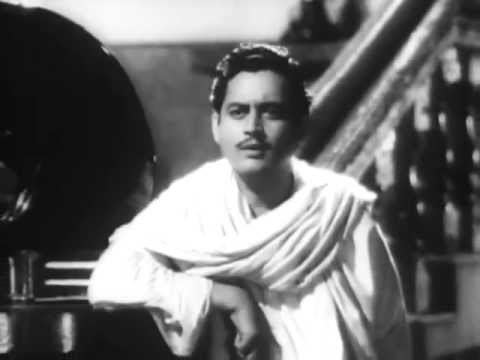
Guru Dutt evokes classic Christ-like imagery in his depiction of Vijay the struggling poet in Pyaasa (1957).

We now present the lyrics and full English translation to one of my all-time favorite Guru Dutt songs “Jaane Woh Kaise” from Pyaasa (1957). I think my undying love for Guru Dutt is pretty evident at this point, but in case you need some convincing to get over the bold Clark Gable ‘stache, start here. Pyaasa is no ordinary film. When released to roaring accolades in 1957, Pyaasa broke precedent upon precedent in both impact and style. Notice how every song in this film seems to flow naturally as a consequence of the plot, as if the lyrics of the songs were a poetic continuation of the spoken dialogue? It was a technique pioneered by Guru Dutt that was later emulated by every great director in Bollywood. And the film hit some hard topics. I discuss more of the political stance of the film and the fascinating struggle Guru Dutt faced behind-the-scenes earlier, but now let us look instead to the classic “Jaane Woh Kaise” hit from the immortal pen of Sahir Ludhviani. It’s a mixture of everything right in the world: Guru Dutt as actor, Hemant Kumar with vocals, S.D. Burman composing, and Sahir in the back with the words of wisdom. This Hemant Kumar gem is truly the industry standard for awkward dinner party songs–even copied in modern times by Mira Nair in her film Vanity Fair (2004)!

Guru Dutt is employed as a dinner party waiter for his rich boss, Rehman, where he is confronted by the reality of his former lover, Mala Sinha, having abandoned him for wealth by marrying none other than the man currently employing him. The injustice of it all gets to him, and by chance, he’s a poet at heart who does what any other tragic poet would do in the situation: drop everything and throw a pity party.

Mala Sinha plays a cold-hearted social climber in Pyaasa (1957).

I love the cinematography in this song–Guru Dutt and his brilliant Director of Photography V.K. Murthy were known for their overblown yet graceful dolly-ins (watch the camera fly in “Waqt Ne Kiya“!), and so too in this song, the camera acts as a silent messenger of emotional turmoil, extracting a beautifully devastating toll on each of the key players in the room. And Guru Dutt holds his ground with arms outstretched as if crucified–a soft-spoken martyr against a background of bookshelves in which his own spoken words will later be immortalized and massacred. Again, you really need to see the film to appreciate the poetic genius of Guru Dutt film-making.

So enough talk, onto the lyrics and English translation of “Jaane Woh Kaise” from Pyaasa (1957)! Check out the picturization on youtube and let us know what you think in the comments!

Jaane Woh Kaise Log Lyrics and Translation

Jaane woh kaise log the jinke pyaar ko pyaar mila
I wonder what kind of people find their love reciprocated
Humne to jab kaliyaa.N maangii kaa.NTo.N kaa haar milaa
Whenever I asked for flowers, I received a garland of thorns

Khushiyo.N kii manzil DhoonDii to gham kii gard milii
I searched for a destination of joy, but I found a circle of sadness
Chaahat ke naghme chaahe to aahe.N sard milii
I desired tales of love, but I received only the coldness of sighs
Dil kii bojh ko duunaa kar gayaa, jo ghamkhwaar milaa
The burdens of my heart only doubled if I met someone meant to relieve my sorrow

BichhaD gayaa har saathii dekar pal do pal kaa saath
Every companion gave me a few moments of company, and left
Kisko fursat hai jo thaame diiwaano.N kaa haath
After all, who has the free time to hold a crazy man’s hand?
Humko apnaa saayaa tak aksar bezaar milaa
Even my own shadow is often weary of me

Isko hii jiina kehte hai.N to yuu.N hii jii le.Nge
If this is what they called life, then I will live like this
Uff na kare.Nge, lab sii lenge, aa.Nsuu pii lenge
I will not sigh, I will seal my lips, and swallow my tears
Gham se ab ghabraana kaisaa, gham sau baar milaa
After all, how can I be concerned by sadness? I have met sadness a hundred times

Humne to jab kaliyaa.N maangii.N kaaTo.N kaa haar milaa
When I asked for flowers, I found a garland of thorns
Jaane woh kaise log the jinke pyaar ko pyaar mila
I wonder what kind of people find their love reciprocated

Glossary:

kali: flower; kaanTaa: thorn; haar: garland; manzil: destination; gham: sadness; gard: circle; chaahat: love, desire; naghma: tale; aah: sigh; sard: chilly, cold; bhoj: burden; duunaa karna: to double; ghamkhwaar: a remover of sadness (note: the w is silent, as in khwaab); bichhaD jaanaa: to become separated; saathi: companion; fursat: free time; haath thaamnaa: to hold hands; saayaa: shadow; bezaar: fed up, weary; lab: lips; aa.Nsuu: tears; gham: sadness: ghabraanaa: to become anxious, concerned

Singing his heart out, Guru Dutt transforms Rehman’s classy dinner gathering into a awkwardly personal pity party in Pyaasa (1957).

Guru Dutt revives the martyr-style mis-en-scene in the reprise of “Yeh Duniya Agar Mil Bhi Jaaye” at the famous finale of the film! The scene has got to be one of the all-time greatest of Hindi cinematic history. For this and about a million other reasons, Pyaasa is absolutely mandatory classic Bollywood viewing!

-Mrs. 55