The Bollywood Bromance: Songs of Manly Love

There are few things cuter than a wholesome die-hard Indian bromance. In the past decade, the term “bromance” has become popularized by the American media and by high-grossing summer flicks that explore its comedic aspects—but its roots can be traced back to Hollywood first academy award for best picture Wings (1927). This silent heart-wrenching World War I love-fest between two men inspired dozens of commercial hits down the road from Butch Cassidy and the Sundance Kid (1969) to Top Gun (1986). Say what you want about those films, however, Bollywood was unarguably where this concept blossomed to its colorful fullest.

Perhaps it’s cultural—I can remember visiting Simla when I was younger and seeing teenage boys holding hands as they walked down the street. It was just considered a normal expression of friendship. Things have changed plenty since my childhood, but regardless, the marketability of the bromance genre may also likely stem from what had (and has) been for a long time a male-dominated industry–from directors to screenwriters all the way down to the lowly production assistants. In fact, in the early pre-talkie years of Indian cinema, women were not even allowed to act in films, much less attend viewings. Y-chromosome melodrama sells, and sells big. The bonds of manly love have been a glorified subject of Bollywood expression since time immemorial and has inspired some of the best movies you’ll ever watch.

In this post, we’ll explore our top 5 “bromantic” songs of yesteryear films long before the days of Dostana (2008) and even Qurbani (1980). From declaring eternal devotion to sobbing over betrayal, each one has a special place in our hearts and cinematic history.

Amitabh Bachhan and Dharmendra sing out their love in Sholay (1975)

Yeh Dosti (Sholay 1975):

This song is the crowning jewel of Bollywood bromance. Set at the beginning of an all-time megahit, this song showcases two men (Amitabh Bachhan and Dharmendra) riding a single motorcycle and singing their love for each other. Chest-hair is just blowing in the wind as their friendship is put to the test at the film’s climax. Overdone slightly, but a timeless tear-jerker!

Raj Kapoor pours his heart into his sad song of betrayed trust in Sangam (1964)

Dost Dost Na Raha (Sangam 1964):

Talk about tragedy. Raj Kapoor flies to war and saves his country, only to return and discover that his wife Vijayantimala is really in love with his own best friend Rajendra Kumar. This song of betrayal and lost friendship played morosely on the living room piano makes everyone in the room awkward. Please note that low-cut v-neck top. No, I’m not referring to Vijayantimala.

Rajesh Khanna and Amitabh Bachhan being adorable in Namak Haraam (1978)

Diye Jalte Hai.N (Namak Haraam 1973):

A Rajesh Khanna classic. Although best friends, Rajesh Khanna and Amitabh Bachhan come from two very different socio-economic statuses, ultimately leading to a huge public morally-charged battle of principles. Rajesh Khanna plays the good guy as usual, and his on-screen chemistry with Bachhan evokes the joy audiences loved in Anand! Did I mention the obligatory and visible fluffy chest hair?

Facing starvation and homelessness, two boys find friendship in Dosti (1964)

Chahoonga Mai.N Tujhe (Dosti 1964):

This film was unique in that it is entirely about two teenage boys (neither of whom were big stars then) and the sacrifices they make for each other. Did I mention the hero is blind and homeless? It makes it more endearing. This beautiful Mohammed Rafi song of tragedy is when the hero realizes his best friend is better off without him, and decides to get out of his way forever. These are kids, guys. It’s really, really cute.

Pran works to get a smile out of Amitabh Bachhan in Zanjeer (1973). This is a must-see–Pran is just such a beast in this movie.

Yaari Hai Imaan Mera (Zanjeer 1973):

Oh, Pran, you are a legend. This famous song celebrates the friendship between an Indian (Amitabh Bacchan) and an Afghani patthan (the inimitable Pran). He embodies this character so skillfully—look at how he twirls and gives that sly shake of the head, you’d think he had grown up in a mountainous outskirt of Kabul. See, Bollywood knows how to cross political boundaries too!

An extremely honorable mention goes to “Anhoni Ko Honi” from Amar Akbar Anthony (1979). Does it really count as a bromance if they’re actually supposed to be brothers?

Amitabh Bacchan, Vinod Khanna, and Rishi Kapoor are three brothers on a mission in Amar Akbar Anthony (1979)

Share with us your thoughts and additions to our list!

-Mrs. 55
Woh Hanske Mile Humse Lyrics and Translation: Let’s Learn Urdu-Hindi

Although Asha Bhonsle is perhaps most well-known for her seductive and playful songs (see our translation of “raat akelii hai” here), she was a truly versatile artist who had an excellent command over a range of styles and emotions. When she is in a serious mood, Asha can really tug at your heartstrings with her sad singing. Think “ab ke baras bhej bhaiyya ko babul” from Bandini (1963), “yeh kyaa jagah hai dosto” from Umrao Jaan (1981), or “meraa kuch saamaan” from Ijaazat (1987).  Here, I’ve translated a short yet painfully beautiful Asha solo from Baharein Phir Bhi Aayengi (1966) called woh hanske mile humse.”

Baharein Phir Bhi Aayengi was released posthumuously under Guru Dutt’s film banner after Guru Dutt’s demise in 1964. The film was not even complete half-way before Guru Dutt’s death, so the film was shot again with a new director Shahid Lateef and new hero Dharmendra. Although the movie itself lacks the magic found in older Guru Dutt films, O.P. Nayyar’s soundtrack for the movie is still remembered today, most notably the Rafi number “aap ke hasiin rukh pe aaj nayaa nur hai.”

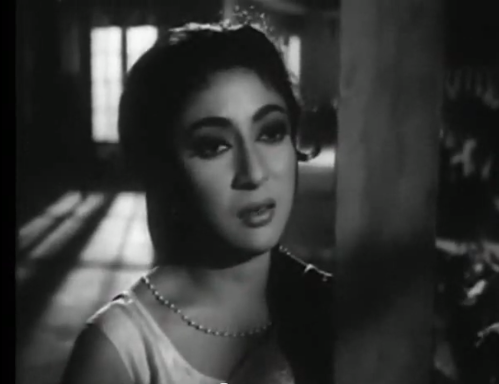
Mala Sinha in a melancholic mood in Baharen Phir Bhi Aayengi (1966)

The movie’s plot focuses on a love triangle: handsome young news reporter Jitendra (played by Dharmendra) falls in love with the bubbly Sunita (played by Tanuja) while Sunita’s older sister and head of the newspaper Amita (played by Mala Sinha) eventually becomes smitten by Jitendra. Before Amita decides to reveal her feelings to him, she finds out that Jitendra is actually in love with  Sunita. Although she is devastated by this news, she decides to back away for the sake of her sister’s happiness.  Here’s where the song I’ve translated comes in. Backed by Asha’s painstricken vocals and S.H Bihari’s simply crafted lyrics, Amita laments how she misinterpreted Jitendra’s actions to think that he was in love with her when that was not the case (“bekaar hii ulfat kaa izhaar samajh baiThe”). Sigh…

I think this song will strike a chord with those of you who have suffered through a romantic misunderstanding–it certainly did with me.

-Mr. 55

Woh Hanske Mile Humse Lyrics and Translation

woh ha.nske mile ham se, ham pyaar samajh baiThe
He smiled at me when we met, so I thought that he loved me.
bekaar hii ulfat kaa izhaar samajh baiThe
I interpreted it, in vain, as a declaration of love.

aisii to na thii qismat apnaa bhii koii hotaa
It was not in my fate to call someone my own.
kyo.n khud ko muhabbat kaa haqdaar samajh baiThe?
Why did I consider myself entitled to his love? 

roye.n to bhalaa kaise, khole.n to zabaa.n kyo.n kar?
How shall I cry, why should I speak?

Darte hai.n ki jaane kyaa sansaar samajh baiThe.
I fear what society has perceived of this. 

woh ha.nske mile ham se, ham pyaar samajh baiThe
He smiled at me when we met, so I thought that he loved me. 

Glossary

bekaar: useless, in vain; ulfat: love; izhaar: declaration; qismat: fate, destiny; haqdaar: entitled; zabaa.n kholna: to speak; sansaar: society 

The Best Qawwalis of Bollywood Films

Rishi Kapoor Amar Akbar Anthony Bollywood Qawwali

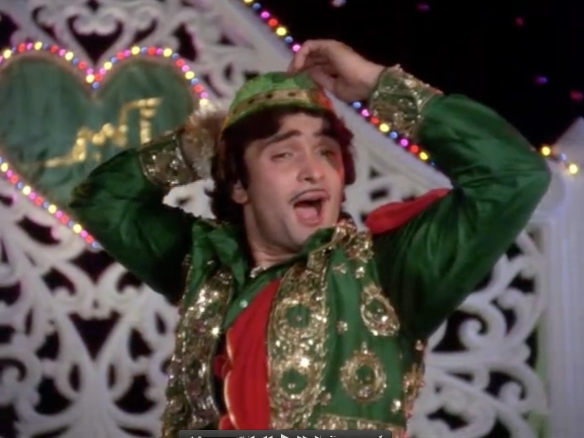
Rishi Kapoor charms his audience singing the famous qawwali “Pardah Hai Pardah” from Amar Akbar Anthony (1979).

The qawwali from films has a hallowed place in the history of the Hindi music industry. A mystic tradition more than 700 hundred years old, the qawwali gained prominence in Bollywood initially through 1950s Muslim social dramas and grew so much in popularity that its influences became mainstream–even continuing to live on today. We present our list below of the best qawwalis of Bollywood films.

But let us first define what precisely is a qawwali? The great Indian poet Amir Khusrau (d. 1326) is considered the founding father of the qawwali genre, having composed songs for the first time in this style to celebrate the death of his spiritual guide Nizamuddin Aulia. The qawwali is the authentic Sufi spiritual song that transports the mystic toward union with God. For centuries, Sufi communities in the Indian subcontinent have sustained this musical tradition in the mahfil-e-sama, or assembly for listening. The qawwali was a religious experience for both listener and performer: as the listener hopes for a spiritual experience of intensity and immediacy to transcend his or her conscious striving, the trained performer seeks to present in song a vast treasure of poetry that articulate and evoke a mystical experience for the audience.

Madhubala impresses the Mughal prince in the classic qawwali “Teri Mehfil Mei.N Qismat” from Mughal-e-Azam (1960)

The qawwali performance usually begins after the evening and may last all night until the morning prayers. The word qawwali means “words” worthy of remembrance, and as such the qawwali traditionally has a devotional aspect in praise of God. Even most “secular” qawwalis found in popular Bollywood movement can be read in this way, although superficially the lyrics have another literal meaning. The harmonium has replaced what was traditionally a sitar as musical accompaniment, but equally important are the tabla and the signature qawwali cyclic hand clapping that increase in speed during the performance. The tarz or tune of the qawwali is normally identified by the first line of the text, which is often a part of the refrain couplet. Although the qawwal was traditionally male, both men and women have enjoyed and excelled at performing the modern qawwali.

Rishi Kapoor dazzles his audience as a popular qawwal in the 1979 blockbuster Amar Akbar Anthony.

Unlike in Hindustani classical music, while taal and raagaa usage is the same, the qawwali places a greater emphasis on the poetic text and the delivery of its message than on musical ornamentation. In many of its vast incarnations within Bollywood, the qawwali became synonymous with a musical debate, a verbal battle (often between the sexes) to outwit the other side on topics that usually boil down to love or the pain of love. That kind of screen chemistry, as you can imagine, is prime Bollywood flirting territory just waiting to be sung.

Let’s take a look at how this genre evolved in mainstream Bollywood into one of the most beloved musical genres of the industry. Here are some highlights:

Humen To Loot LiyaAl Hilal (1958):

One of the first qawwalis to hit the silver screen, no list is complete without this retro low-budget gem. The music is really quite simple, but extremely catchy.

Yeh Ishq Ishq HaiBarsaat Ki Raat (1960):

This qawwali is an Urdu-lover’s paradise. Filled with complex words and allusions you’ll never use in real life, “Yeh Ishq Ishq Hai” set the stage for classy performance duels between men and women that is still considered the greatest Bollywood qawwali for its poetry (see our post for a full English translation!)

Sharma Ke Yeh Kyo.NChaudhvin Ka Chand (1960):

A fun twist on the traditional qawwali, two women sing (Asha Bhonsle and Shamshad Begum) with the latter taking the masculine side and the former taking the feminine.

Teri Mehfil Mei.N QismatMughal-e-Azam (1960):

Oh, does it get any better than this? Every moment of Mughal-e-Azam is a poetic dream and this briliant qawwali is no less. Shamshad Begum battles Lata Mangeshkar for the Prince’s approval of their take on love, each lyric outwitting the last. See our translation with glossary for more!

Nigahe.N Milane KoDil Hi To Hai (1963):

Asha Bhonsle’s greatest contribution to this genre, this qawwali has some beautiful Urdu and probably the most thrilling sargams you’ll find in any of her songs. See our translation with glossary here!

Tumhe Husn Dekhe – Jab Se Tumhe Dekha Hai (1963):

OK, so sure, this qawwali is not particularly memorable for its musical ingenuity (you may or may not cringe the entire way), but how often are you going to behold Shammi and Shashi Kapoor on screen at the same time?! This fascinating qawwali is worth a watch if only for its star value! Kudos to Geeta Bali for holding her own!

Mehengai Maar GayiRoti Kapada Aur Makaan (1974):

This qawwali has a unique flavor–taken from one of Manoj Kumar’s popular Indian propoganda films, the lyrics carry an interesting social message outside the realms of romantic love.

Pardah Hai PardahAmar Akbar Anthony (1979):

A Mohammed Rafi gem, this qawwali ranks among the best of the best. After watching Rishi Kapoor’s enthusiastic performance, you’d believe he was born to be a qawwal. The song is a must-see for anyone interested in the genre.

And just to throw in the contemporary, here’s a picture of me performing the qawwali at last year’s Harvard Ghungroo!

At a Harvard Ghungroo performance of Asha Bhonsle’s “Nigaahe.N Milane Ko.”

-Mrs. 55

Likhe Jo Khat Tujhe Lyrics and Translation: Let’s Learn Urdu-Hindi

Likhe jo Khat Tujhe Shashi Kapoor

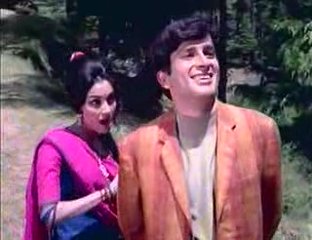
Shashi Kapoor and Asha Parekh star in Kanyadaan (1968)

For our next song, we translate the lyrics of my all-time favorite Mohammed Rafi song, Likhe Jo Khat Tujhe. The lyrics and translation of Likhe Jo Khat Tujhe have no frills, no super complicated Urdu, just verse straight from the heart. The metaphors of the lyrics have a simple beauty to them and the handsome voice of Mohammed Rafi brings them to sublimity. Although the film Kanyadan (1968) glorifies the social oppression of women and child marriages (highly objectionable and not worth the three hours I lost watching it), this song epitomizes what classic Bollywood love is all about. Boy falls for girl. Girl has an extremely cute colorful native outfit on and hides coyly behind local trees. Boy attempts to win over girl by serenading her. Girl and boy do not kiss, but you know by the way the camera pans around the flora that it’s on their minds. Likhe Jo Khat Tujhe is a blissfully adorable reminder of all things magical that Bollywood romance once meant: the charming poetry of innocent love. Can that ever get old?

Handsome shashi kapoor smile .png

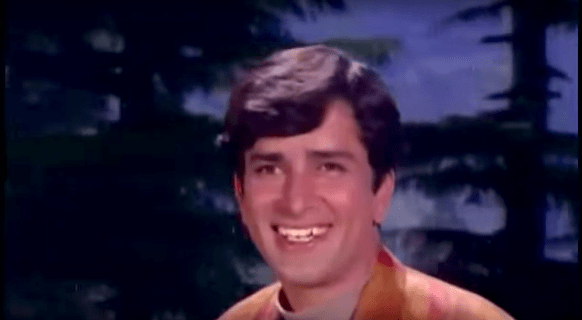
Shashi Kapoor flashes his famous smile, somehow made even more handsome by the crooked teeth.

Also note the clever use of Shashi Kapoor’s sleek convertible as the object around which the actors flirt and evade each other. As if we weren’t already convinced of how cool it was to be modern in the 60s…

Likhe Jo Khat Tujhe Lyrics and Translation:

Likhe jo khat tujhe woh teri yaad mei.N
Those letters that I wrote to you
Hazaaro.N rang ke nazaare ban gaye
Became a wondrous sight of a thousand colors
Sa.Nveraa jab huaa to phool ban gaye,
When morning came, they became flowers
Jo raat aayi to sitaare ban gaye
When night fell, they became stars
Likhe jo khat tujhe…

Koyi naghma kahii.N goonjaa kahaa dil ne yeh tu aayii
A melody resonated somewhere as my heart sensed your presence
Kahin chatki kali koyi main yeh samjha, tu sharmaayi
Somewhere a flower blossomed and it appeared as if you had blushed
Koi khushboo kahii.N bikhrii lagaa yeh zulf lehraayi
A fragrance filled the air and it seemed to me your hair had billowed

Fiza rangeen, adaa rangeen, yeh ithlaana, yeh sharmaana
The ambiance is colourful, your style is colourful, you sometimes swagger, you are sometimes demure
Yeh angaDaaii, yeh tanhaayii yeh tarsa kar, chale jaana
This preparedness, this isolation, this way you torture me, then walk away
Bana de ga nahii.N kisko jawaa.N jadoo yeh deewaanaa?
Who would not go crazy with your youthful magic?
Likhe jo khat tujhe…

Jahaa.N tu hai, vahaa.N main hoo.N, mere dil ki tu dhaDhkan hai
Wherever you are, I am there. You are my heartbeat
Musaafir mai.N tu manzil hai, main pyaasaa hoo.N tu saawan hai
I am a traveler, you are my destination. I am thirsty, you are the monsoon
Meri duniya yeh nazare.N hai.N, meri jannat yeh daaman hai
My world is held by the way you look at me, my paradise lies in your embrace
Likhe jo khat tujhe…

Glossary:

khat: letter; yaad: memory; sa.Nveraa: morning; khushboo: fragrance; zulf: hair; rangeen: colorful; tanhaayii: loneliness; jadoo: magic; musaafir: traveler; pyaasaa: thirsty; jannat: paradise

For all the Urdu-Hindi grammar junkies, you’ll notice that we’ve written the word “naghma” with an “h” although it’s often seen written without. This because the word naghma in Urdu is actually spelled with a ghain, not a regular “g” (in Hindi, the “ga” would have a dot below to indicate this). Ghain makes the “g” a more gutteral, difficult sound to pronounce, but if you’re trying to impress your friends at your next Bollywood Night, be sure to enunciate this clearly. Other words like kaaghaz (paper), baagh (garden), maghruur (proud) and ghalat (mistake) also contained frequently overlooked ghains.

-Mrs. 55