Dum Maro Dum Lyrics and Translation: Let’s Learn Urdu-Hindi

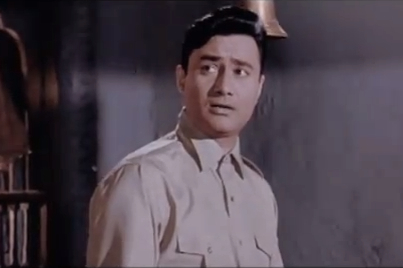
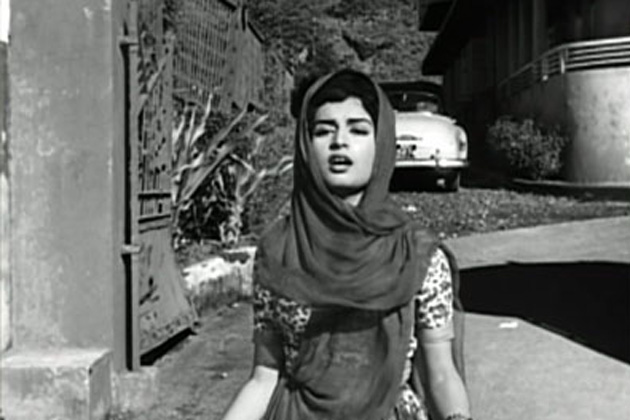
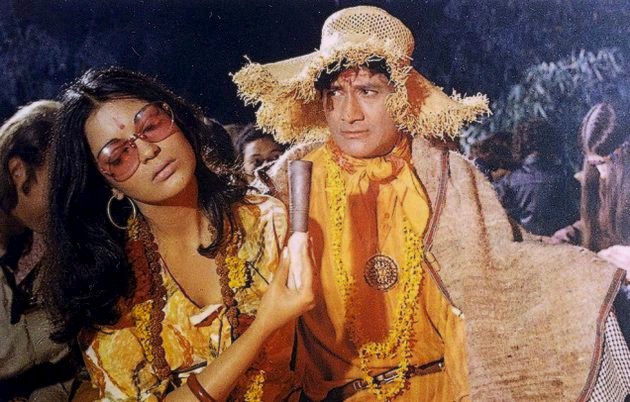
Zeenat Aman Dev Anand Dum Maro Dum

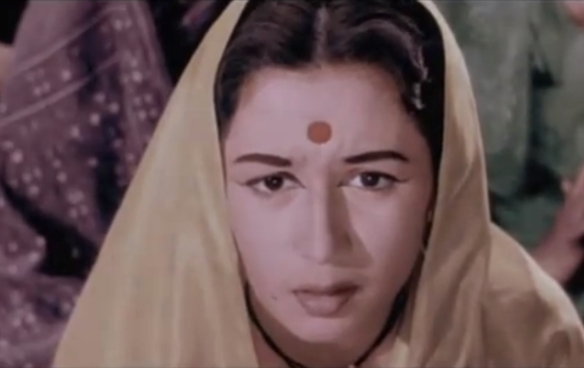
Zeenat Aman becomes shamelessly intoxicated in front of her brother Dev Anand in Hare Rama Hare Krishna (1971). More importantly, can someone please burn that hideous floppy straw hat?

Our next lyrics and English translation is the epitome of youthful rebellion and psychadelic glamour: “Dum Maro Dum” from Dev Anand’s 1971 Hare Rama Hare Krishna. The translation could not have come at a more appropriate time–as many of you know, as of 2 weeks ago, medical marijuana is now legalized in Massachusetts. So to all the Harvard seniors getting ready to graduate in a few months, this song is for you! When people think of Asha Bhonsle at her craziest, “Dum Maro Dum” is often the song that comes immediately to mind. It’s seductive, eccentric, and exhibits her full range from those bizarre, unexpected high notes to the fabulous embodiment of character as only Asha knew how. It’s one of incomparable music director R.D. Burman’s greatest works for the ground he broke–putting illicit drugs and societal defiance to the forefront in a youth-targeted song that was so instantly catchy no one could brush it off. Let’s face it, with this song, Zeenat may represent everything we don’t want in our loved ones, but God, does she make it look appealing.
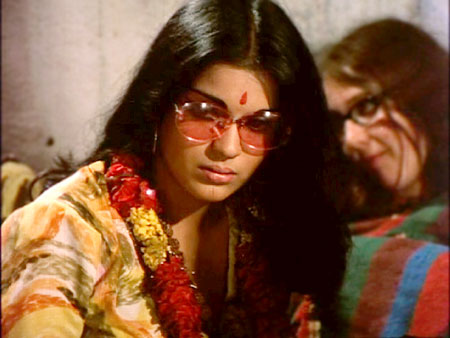
Zeenat Aman Hare Rama Hare Krishna

Gorgeous Zeenat Aman sports a pair of show-stopping 70s shades as a drug addict in Hare Rama Hare Krishna (1971).

Shot in one of Dev Anand’s favorite locations, Kathmandu (remember Jewel Thief, anyone?), Hare Rama Hare Krishna is a politically-driven film against the subversive hippie culture that our hero believes to be distorting the true message of the Hindu ideals it pretends to preach. Dev Anand hunts down his long-lost sister in such a hippie camp and tries to extricate her with tragic results. The film delivers a powerful message without feeling like Manoj Kumar-eqsue patriotic propaganda. I really applaud Dev Anand for making such a bold film that critiques a subject so ignored by his contemporaries and so popular among the masses who bought into it–with a delightfully satirical name like Hare Rama Hare Krishna, the film was a risk and it paid off.

So enjoy our English translation and lyrics to “Dum Maro Dum” below! Follow along with the video and let us know your thoughts on this controversial smash hit in the comments! You know how Zeenat starts the song with a little “Hush!” just before the music starts? I can’t exactly explain why, but I always feel really awkward when I hear it.

Dum Maro Dum Lyrics and Translation

Dam maaro dam miT jaaye gham
Take another hit, all your worries will disappear
Bolo subah shaam hare krishna hare raam
From morning until night sing, “Hare Krishna Hare Ram!”

Duniyaa ne hum ko diyaa kyaa?
What has the world given us?
Duniyaa se hum ne liyaa kyaa?
What have we taken from the world?
Hum sab kii parwaa kare.N kyo.N?
Why should we worry about anyone?
Sab ne humaaraa kiyaa kyaa?
What has anyone does for us?
Dam maaro dam miT jaaye gham…

Chaahe jiye.Nge, mare.Nge
Whether we want to live or to die
Hum na kisii se Dare.Nge
We won’t be afraid of anyone
hum ko na roke zamaanaa
The world won’t be able to stop us
Jo chaahe.Nge hum kare.Nge
For we will do what we want

Dam maaro dam miT jaaye gham
Take another hit, all your worries will disappear
Bolo subah shaam hare krishna hare raam
From morning until night sing, “Hare Krishna Hare Ram!”

Glossary:

dam maarnaa: to take a hit [of marijuana]; miT jaanaa: to disappear; gham: sadness, worries; subah shaam: from morning to night; Hare Krishna Hare Raam: a chant of the Hare Krishna sect popularized by the hippie culture in the 60s and 70s; duniyaa: society, the world; parwaa: worry; zamaanaa: the world
Zeenat Aman Dum Maro Dum

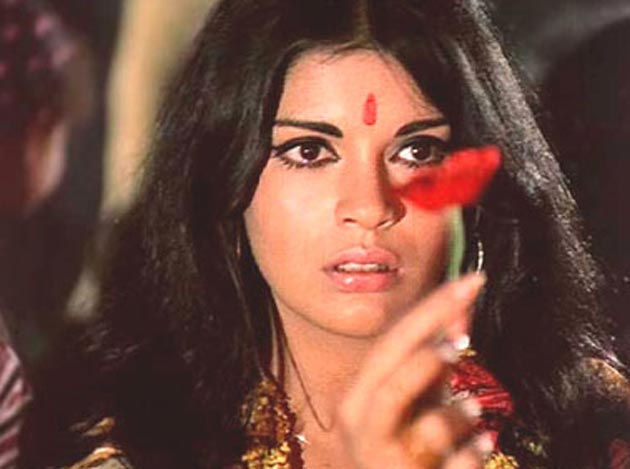
Zeenat Aman suddenly remembers her idyllic drug-free childhood with an emotional outburst of regret in Hare Rama Hare Krishna (1971).

For the sake of completeness, I feel compelled to include a translation of Dev Anand’s great comeback to the moral disorder he witnesses among the Hare Krishnas: “Dekho O Diwaano.” “Dekh O Diwano” and indeed the film Hare Rama Hare Krishna, is not a direct attack on the actual Hare Krishna movement, but rather the hippie culture that traveled with it in the 60 and 70s–and by blending the two, confused and disheartened many a contemporary conservative Hindu. Dev Anand makes some brilliant comparisons through example in this song–by drawing upon classic Hindu literature such as the Ramayan story of Lord Ram’s banishment to the forest (“Ram ne ha.Ns kar sab sukh tyaage“) and Krishna’s explanation to Arjun of the meaning of karma in the timeless battlefield of the Mahabharat (“Krishna ne karm ki riit sikhaayi“), Dev Anand makes a clear distinction between lip service and actual belief.

Dekho O Deewano Lyrics and Translation:

Dekho O deewano, tum yeh kaam na karo
Look, Oh crazy people, do not behave like this
Raam kaa naam badnaam na karo
Do not bring dishonor to the name of Ram

Raam ko samjho, Krishna ko jaano
Understand Ram, know Krishna well
Nee.Nd se jaago, O mastaano
Wake up from this sleep, Oh intoxicated ones
Jeet lo man ko paDh kar Geeta
Win back your mind by studying the Geeta
Man hii haaraa, to kyaa jeetaa?
For once you’ve lost your mind, what is there to win?

Hare Krishna, Hare Ram
Jeevan ko nashe ka tum ghulaam na karo
Do not make your life a servant to intoxications
Raam kaa naam badnaam na karo
Do not bring dishonor to the name of Ram

Raam ne ha.Ns kar sab sukh tyaage
With a smile, Ram renounced all his joys
Tum sab dukh se Dar ke bhaage
But you are scared and run away from every grief
Krishna ne karm kii riit sikhaaii
Krishna taught us the tradition of righteous action
Tum ne farz se aa.Nkh churaayii
But you avoid your duties

Hare Krishna, Hare Ram
Jeevan naam hai kaam kaa aaraam na karo
The meaning of life is work, do not rest
Raam kaa naam badnaam na karo
Do not bring dishonor to the name of Ram

Glossary:

badnaam: dishonored; tyaagnaa: to renounce; nee.Nd: sleep; Geeta: the Bhagavad Gita, a religious text within the epic poem the Mahabharat; jeevan: life; nashe: intoxications; ghulaam: servant; riit: culture, tradition; farz: duty; aa.Nkh churaanaa: to avoid; aaraam karna: to rest

While Zeenat Aman and her fellow groupies waste their minds and lives to drugs in the name of Lords Ram and Krishna, Dev Anand reminds the audience of the wrong of even inaction as discussed in the Gita. Classical Hindu dharmic responsibility is not passive, but active and tempered–with no stake in the outcome whether happiness or sadness. It is an ancient theme that you may recall Dev Anand explored years earlier in his 1965 legend Guide. Sadly, Zeenat Aman eventually succumbs to her addiction, and in the end the story returns briefly to the heart of many a great film: a tale of a broken family reunited.

These themes can certainly be pretty volatile subjects, and it’s not our intention to spark a political or religious debate on this forum. So we shall end with a grammar lesson instead: do you know why the “deewaano” and “mastaano” are used instead of simply “deewaane” or “mastaane”? The vocative as used here is a special case! The nasalization “o.N” used in the oblique (eg. “dosto.N ke saath”) is not to be confused with the vocative “o” (eg. “suniye, dosto”) used to address a group directly! People commonly make this sloppy Urdu mistake–so rise above the masses!

But don’t go that high, if you know what I mean. Have fun, Massachusetts.

-Mrs. 55
Allah Tero Naam Lyrics and Translation: Let’s Learn Urdu-Hindi

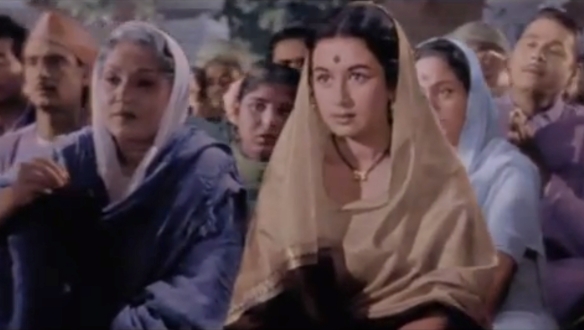
Nanda prays for her husband in the army in Hum Dono (1961).

Nanda prays for her husband in the army in Hum Dono (1961).

Happy New Year’s to all our readers! What an incredible year it’s been for us to write this blog and to have enjoyed discovering so many fellow fans of classic Bollywood cinema! I grew up in a Hindu Punjabi family, and in my house, we always celebrate the New Year’s with a havan the morning of January 1st with friends in the community. There’s something calming and cozy about these annual gatherings–we keep it casual where I’m from while taking a break to reflect on the year behind on us and what lies ahead. In the spirit of auspicious beginnings, we shall present the lyrics and full English translation to one of Bollywood’s greatest bhajansAllah Tero Naam” from Hum Dono (1961). Rendered impeccably by Lata Mangeshkar, “Allah Tero Naam” soars with bi-partisan Hindu-Muslim appeal in a humble call to God for wisdom and strength. The iconic number is one of Lata’s personal favorite Jaidev compositions!

nanda allah tero naam 3

Nanda sings the gentle bhajan “Allah Tero Naam” in Hum Dono (1961) as a special expression of bipartisan devotion in Hindi films.

For me, Hum Dono (1961) is one of the finest films of Dev Anand’s illustrious career: it glows with a constantly-twisting plot and a golden soundtrack that places the film among the legends of cinematic history. Dev Anand was well-known for pushing the envelope of societal norms as a director, and the troubling predicaments his characters find themselves in always astound–whether falling in love with a woman who thinks he’s her brother (Bombay Ka Babu), conducting whirlwind affairs with three women at once (Teen Devian) or romancing another man’s wife who believes he’s her real husband (Hum Dono). The plots are scintillating and the acting invariably superb. Furthermore, did I mention Hum Dono a quasi-twin movie too? Couple that with a war-time theme and you can readily imagine the opportunities for confusion of epic Bollywood proportions. See our earlier translation of “Main Zindagi Ka Saath” from the same film!

The Lata Mangeshkar solo is one of the film’s many high points, arriving midway through the film as Nanda prays for her husband’s safe return from the war. The time period was arguably when Lata’s voice was at her most angelic, and the graceful, gentle maneuvers of this song will leave you breathless for more!

Perhaps one of the greatest aspects to “Allah Tero Naam” is the Hindu-Muslim crossover lyrics. Reminiscent of “Ishwar Allah Tero Naam” later rendered by Mohammed Rafi in Nayaa Raastaa (1970), this bhajan encompasses an important and unique aspect of Indian spirituality–the transcendence of religious barriers (which holds a particular intrigue in a war-time themed filmed!) You guessed it, the lyrics are penned by that sensitive soul Sahir Ludhiviani, who’s feelings against war and it’s horrors are a theme in many later works (“Khuda-e-bartar,” anyone?). So whether you adore this song for the lyrics, the rendition, or just for Nanda’s emotive eye-batting, we hope you enjoy the lyrics and our English translation to “Allah Tero Naam” and wish you a happy New Year!

Allah Tero Naam Lyrics and Translation:

Allah tero naam, Ishwar tero naam
Your name is Allah, your name is Ishwar
Sab ko sanmatii de, Bhagwan
Bless everyone with equanimity, God

Maango.N kaa sindoor na chhuuTe
Do not let the sindoor disappear from the part of our hair [Let us not be widowed]
Maa.N bahano.N kii aas na TuuTe
Do not shatter the hopes of mothers and sisters
Deha binaa, Daataa
Without a body, Lord…
Deha binaa bhaTake na praan
Let the soul not wander without a body

O saare jag ke rakhwaale
O keeper of the whole world
Nirbal ko bal denewaale
The giver of strength to the weak
Balwaano.N ko
To the strong…
Balwaano.N ko de de gyaan
Bestow wisdom to the strong

Glossary:

Allah: God [Muslim]; Ishwar: God [Hindu]; sanmatii: equanimity, advise; maaNg: the parting line in a woman’s hair; sindoor: red powder worn in a woman’s hair part to signify marriage; maa.N: mother; bahan: sister; aas: hope; TuuTnaa: to break, to shatter; deha: body; Daataa: Lord; bhataknaa: to wander; praan: soul, life; rakhwaalaa: the keeper; nirbal: weak; bal: strength; balwaan: one who is strong, a warrior; denewaalaa: the giver; gyaan: wisdom, knowledge

dev anand hum dono allah tero naam

Dashing as always Dev Anand is torn from his family and caught in a moral dilemma in Hum Dono (1961).

Ever wondered why some songs use the term “tero” instead of “teraa” such as in this devotional? It’s a grammatical exception in the Hindustani language that you’ll only find in a direct address to God! It’s always nice to start a new year with linguistic trivia. Here at Mr. and Mrs. 55, our New Year’s resolution is to blog more often–we’re almost nearing our 100th post!

– Mrs. 55

Jayen To Jayen Kahan Lyrics and Translation: Let’s Learn Urdu-Hindi

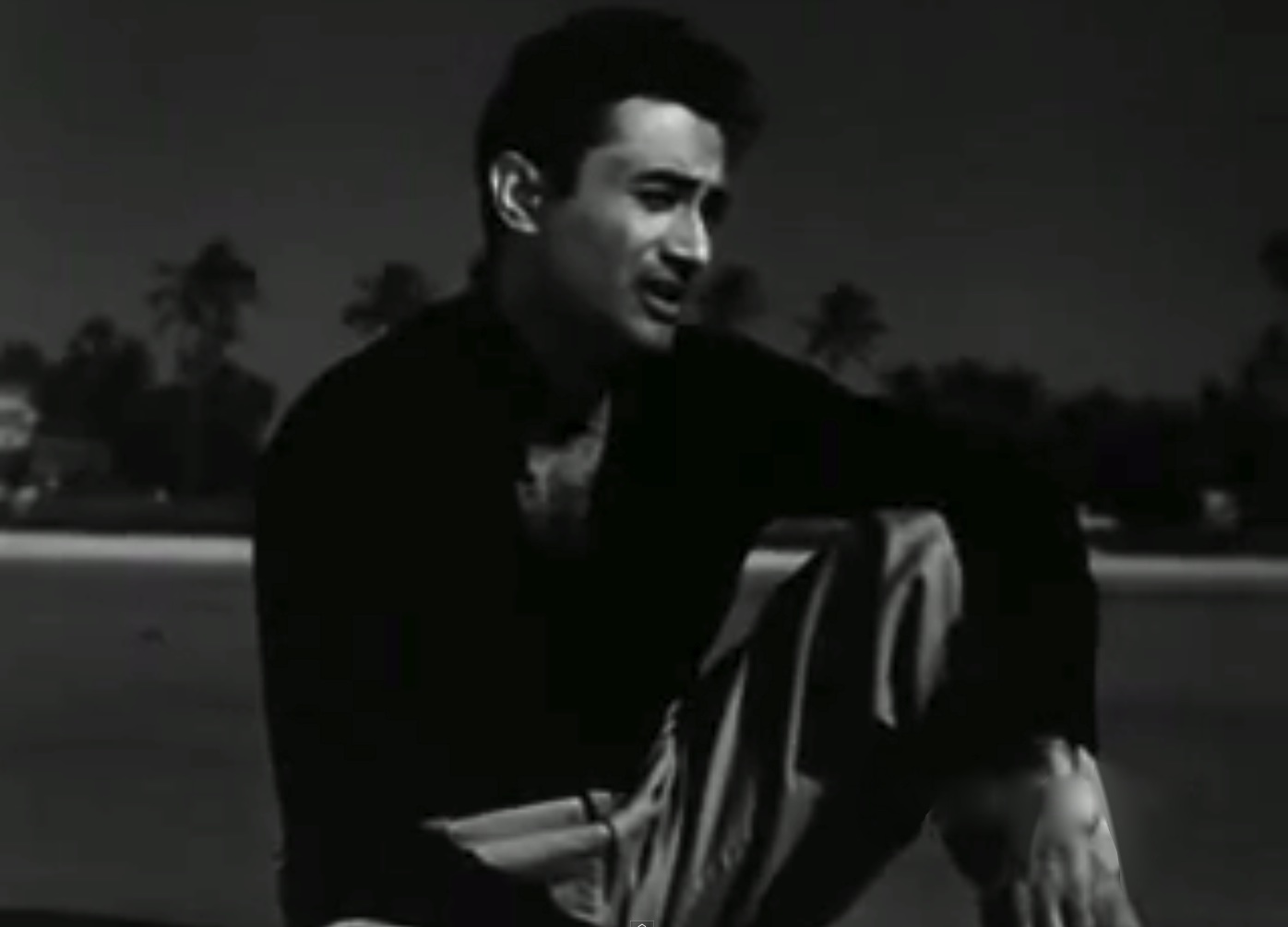
Dev Anand Taxi Driver

Dev Anand stares at the lonely beach in “Jayen To Jayen Kahan” from Taxi Driver (1954).

Next we present the full lyrics and English translation of “Jayen To Jayen Kahan” from Taxi Driver (1954). It’s one of yesteryear star Talat Mehmood’s most beloved solo hits. For anyone in the crowd who is unfamiliar with Talat, I’m truly saddened for your sake, but actually not entirely surprised. He’s one of the great unsung heroes of Bollywood who’s place in musical history was undermined with the rise and domination of Mohammed Rafi and Mukesh by the 60s. At least Hemant Kumar wrote his own film compositions and could conveniently cast himself as singer! But Talat was classy. While largely remembered for his legendary mark in ghazal-dom, Talat actually gave Shammi Kapoor his first hits in the 50s before Mohammed Rafi entered the scene. Yes, Talat was edged out of the business like a budding flower before Autumn. And did I mention he was so incredibly good-looking for a playback singer that he also acted in several films?

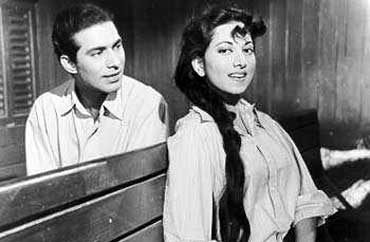
Dapper Talat Mehmood sings and acts with Suraiya in Waris (1954). Hottie, right?!

I could go on and on about my love for Talat and his velvety smooth voice, but let’s stay focused. Like later Dev Anand hit CID (1956), Taxi Driver is a really wonderful glimpse at chaotic and quaint 1950s Bombay city life. Told through the creative eyes of Chetan Anand (director and Dev Anand’s brother), the film is forever locked in its own charmingly antiquated society and street life of a bygone era. Most importantly, behind-the-scenes, Dev Anand was falling in love with his sensuous on-screen partner, Kalpana Kartik who would become his wife! It’s one of the few times you’ll see the two together (check out Baazi (1951) or Nau Do Gyarah (1957) for more!) and the juiciness of it all makes the film fun for the whole family. As Kalpana (AKA Mona Anand) later recalled:

I still remember our midnight marriage on the sets of “Taxi Driver” in 1954. Dev was a shy, youthful person, very co-operative and sensitive. We passed six decades together amid a lot of thick and thin. Whenever I heard rumours that he would desert me, I laughed my heart out. I knew that nomadic Dev would always be mine.

Cute, right? The hit philosophical song of the film “Jayen To Jayen Kahan” is sung first by Talat and later by Lata in the reprise–adding a touch of melodrama to the action. It’s beautifully picturized–the Talat version feels like an early Ozu film and carries a heavy weight with it. The careful cinematography allows time to pass slowly in a way that removes the viewer from the material world of the film and completely engulfs them in the philosophical queries of the song. Lyrics are, of course, by the great Sahir Ludhianvi. It’s a must-see for fans of early cinema!

Kalpana Karthik Taxi Driver

Gorgeous Kalpana Karthik and wife of Dev Anand, sings with Grace Kelly style in Taxi Driver (1954).

So without further ado, enjoy the lyrics and English translation to “Jayen To Jayen Kahan“! We’ve got you the male and female versions below (click here for the Talat version video!).

Jayen To Jayen Kahan Lyrics and Translation:

Male:

Jaaye.N to jaaye.N kahaa.N?
If I must go, where could I go?
Samjhegaa kaun yahaa.N dard bhare dil ki zubaa.N?
Who here will understand the words of a heart full of pain?

Mayuusiio.N kaa majamaa hai.N jee mei.N
A crowd of disappointments resides in my soul
Kya reh gayaa hai is zindagi mei.n
What is left for me in this life?
Ruuh mei.N gham, dil mei.N dhuuaa.N
In my soul is sadness, in my heart is smoke

Unka bhi gham hai, apna bhi gham hai
She has her sorrows, I have my own
Ab dil ke bachne kii ummiid kam hai
Now there is little hope of saving my heart
Ek kashTii, sau tuufaa.N
For it is like a single boat against a hundred storms

Jaaye.N to jaaye.N kahaa.N?
If I must go, where could I go?
Samjhegaa kaun yahaa.N dard bhare dil ki zubaa.N?
Who here will understand the words of a heart full of pain?

Female:

Jaaye.N to jaaye.N kahaa.N?
If I must go, where could I go?
Samjhegaa kaun yahaa.N dard bhare dil ki zubaa.N?
Who here will understand the words of a heart full of pain?

O jaanewaale daaman chhuDaake
Oh traveler who is leaving my embrace
mushkil hai jeenaa tujhko bhuulaake
Forgetting you and continuing to live is difficult
Is se to hai maut aasaan
Even death is easier than this

Seene.N mei.N shole, saa.Nso.N mei.N aahe.N
In my chest are embers, in my breaths are sighs
Is zindagii se kaise nibhaaye
What is there for me to fulfill in this life?
Har jazabaat hai viiraan
My every emotion is empty

Jaaye.N to jaaye.N kahaa.N?
If I must go, where could I go?
Samjhegaa kaun yahaa.N dard bhare dil ki zubaa.N?
Who here will understand the words of a heart full of pain?

Glossary:

dard: pain; zubaa.N: words, language; mayuusii: disappointment; majamaa: crowd; ruuh: soul; gham: sadness; dhhuuaa.N: smoke; ummiid: hope; kashTii: boat; tuufaa.N: storm; mushkil: difficult; maut: death; ahsaan: easy; seenaa: chest; shole: embers; saans: breath; aah: sigh; jazabaat: emotion; viraan: empty, wasted

I think the most important question here is, who sang it better: Lata or Talat? At the risk of being strangled by Mr. 55, I think it’s pretty clear the answer is Talat. It’s one of the few songs that just was not written for Lata–it sounds a little strained coming from her, if I dare say so. Talat, meanwhile, sounds like an effortless dream as always. A Talat Mehmood hit was requested by reader Suman! Send us a message if you’ve got a request too!

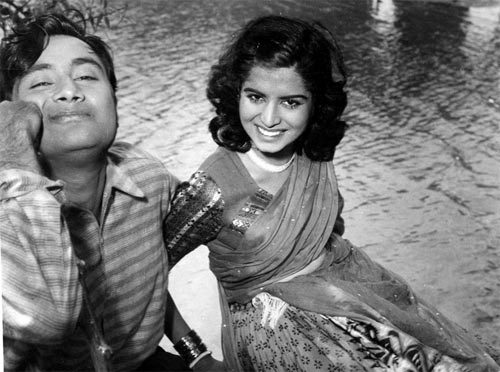
An adorable early rare photograph of Dev Anand with his wife Kalpana Kartik.

An adorable early rare photograph of Dev Anand with his wife Kalpana Kartik.

-Mrs. 55

Hai Apna Dil To Awaara Lyrics and Translation: Let’s Learn Urdu-Hindi

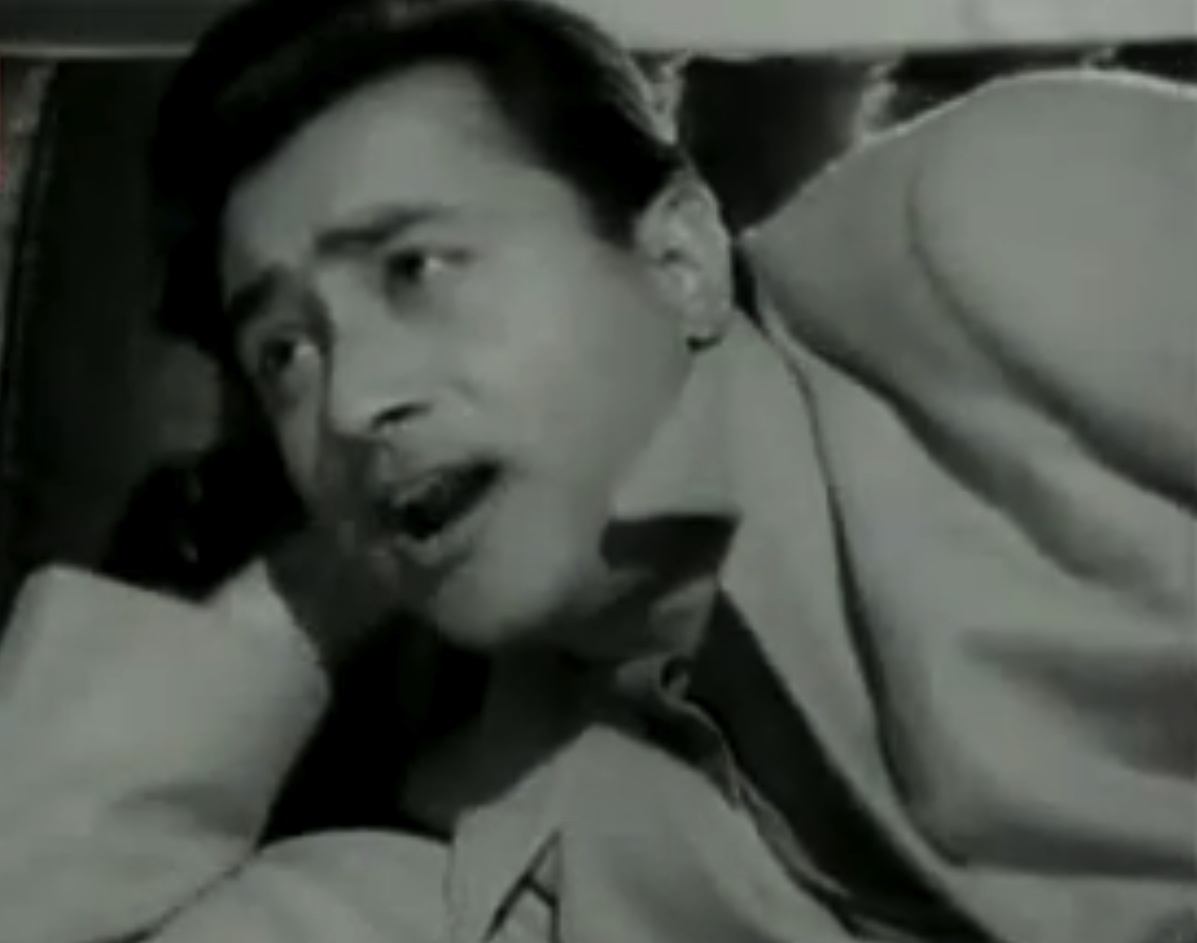
Dev Anand croons “Hai Apna Dil To Awara” aboard a moving train in Solva Saal (1958).

You gotta love this song. Hemant Kumar, whose forte is usually deep soulful melodies, outshines everyone in this catchy classic. Dev Anand stars with the lovely Waheeda Rehman in 1958 quasi-noir Solva Saal, mostly memorable for this all-time hit “Hai Apna Dil To Awara” picturized on a train. What is it about Dev Anand and trains? “Jab Pyaar Kisi Se Hota Hai” is also sung on a moving train to a sulky heroine, although by that point, Dev had perfected the look and ventured outside the train’s window! But that’s another story.

Directed by the legendary Raj Khosla, the shining moments of Solva Saal are clearly the fruits of a brilliant collaboration. While somewhat obscure, the film delivers a high-paced plot with enough twists to keep you glued, but enough groans to make you want to immediately watch a more redeeming Dev-Waheeda film soon after (I strongly recommend Guide).

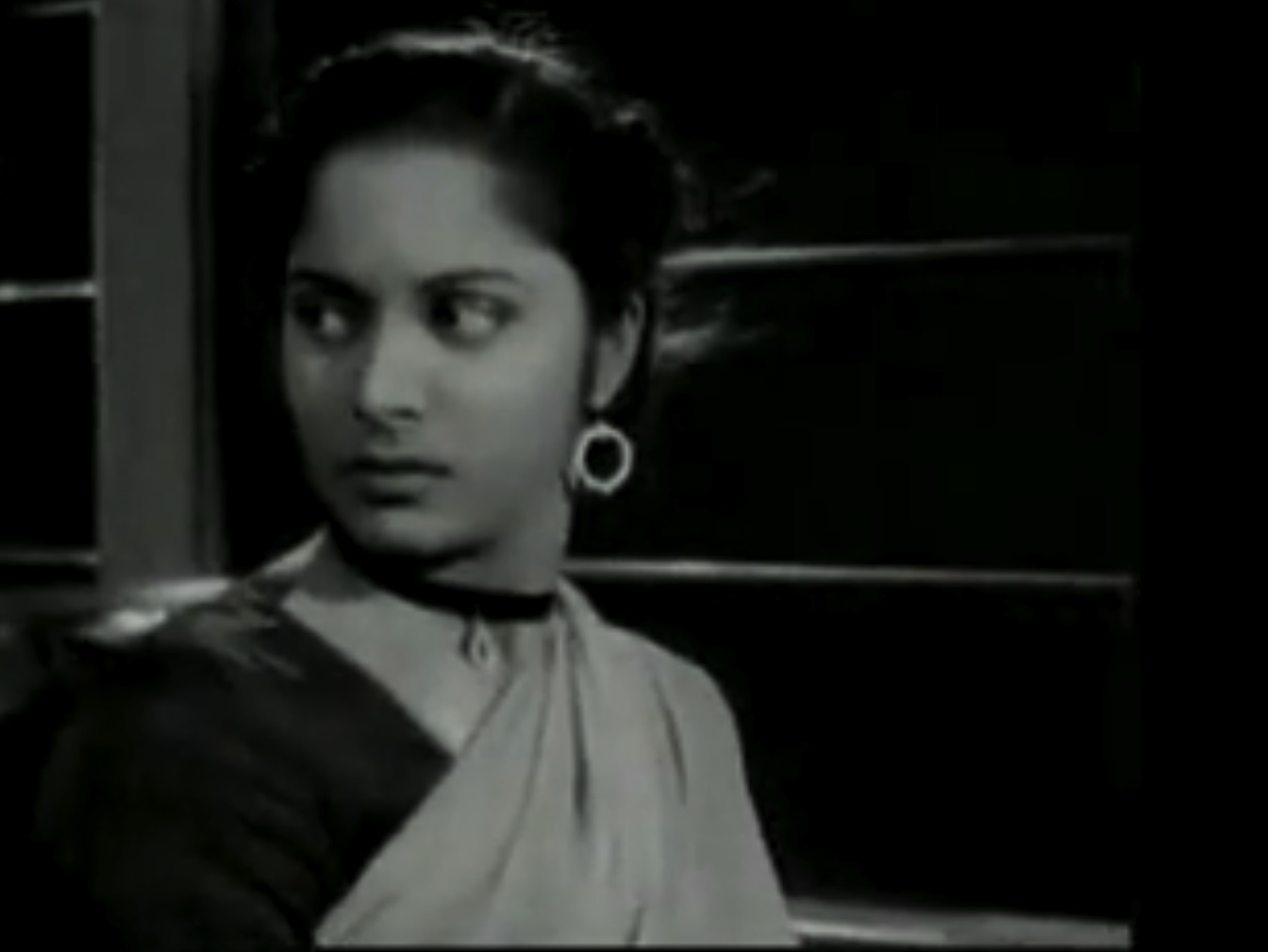
Drop-dead beautiful Waheeda Rehman plays a risk-taking jilted lover in Solva Saal (1958). Seriously, Waheeda. Stop being so gorgeous!!

The lyrics of this song, penned by Urdu maestro Majrooh Sultanpuri, are just plain and simple fun. In it, the hero personifies his own heart, speaking as if it were another being with a mind and will separate from his own. It’s so clear that Waheeda is having trouble keeping her mind on the awkward guy next to her she’s supposed to be eloping with!

For anyone more in the mood for melodrama, there’s also a “sad” version of this song just before the hero and heroine sort out their differences and live happily ever after. Until then, follow along with the youtube song of the happier classic, and enjoy our lyrics and translation to “Hai Apna Dil To Awara below!


Hai Apna Dil To Awara Lyrics and Translation

Hai apnaa dil to aawaaraa
My heart is a vagabond
Na jaane kis pe aayegaa
I wonder to whom he will take a liking

Haseeno.N ne bulaayaa, gale se bhii lagaayaa
Many beautiful women called me, they even embraced me
Bahut samjhayaa, yahii.N na samajhaa
They tried hard to explain, but my heart did not understand
Bahut bholaa hai bechaaraa
The poor thing is way too innocent
Na jaane kis pe aayegaa
I wonder to whom he will take a liking

Ajab hai diiwaanaa, na ghar na Thiikaanaa
My heart is a strange madman, he has no house and no abode
Zameen se begaanaa, falak se judaa
He has no roots with the Earth, he is distanced from Heaven
Yeh ek tuutaa huaa taaraa
He is a shooting star
Na jaane kis pe aayegaa
I wonder upon whom he will fall

Zamaanaa dekhaa saaraa, hai sab kaa sahaaraa
I have seen this whole world, I have everyone’s support
Yeh dil hii humaaraa, huaa na kisii kaa
Only this heart of mine never gave himself to anyone
Safar mei.N hai yeh banjaaraa
He is a gypsy on a journey
Na jaane kis pe aayegaa
I wonder to whom he will take a liking

Hua jo kabhii raazii, to milaa nahii.N qaazii
If he ever agreed to someone, no pandit could be found
Jahaa.N pe lagii baazii, wohii.N pe haaraa
Wherever he has taken a gamble, he lost
Zamaane bhar kaa naakaaraa
He is rejected by the whole world
Na jaane kis pe aayegaa
I wonder to whom he will take a liking

Glossary:

awaaraa: vagabond; bhola: innocent, pure; bechaaraa: poor thing; ajab: odd; diiwaanaa: madman (from love), ghar: house, Thikaanaa: abode, shelter; zameen: Earth; begaanaa: distanced, estranged; falak: sky, Heaven; tuutaa hua taaraa: a fallen star; sahaaraa: support; safar: journey; banjaaaraa: gypsy, nomads of North Indian origin; raazi: agreement, qaazi: a judge who in Islamic faith can legalize a marriage as witness; baazi: a gamble, a round of cards, haaraa: lose; naakaaraa: rejected

A brief note on the word “vagabond.” The somewhat arcane term is inevitably used across many sources to translate the Hindi word aawaara dating back to Raj Kapoor’s breakthrough film of the same name-so for posterity’s sake, I have translated it similarly. Still, I have never held that the word does justice to what aawaaraa is. Just to clarify, someone who is an aawaaraa is not necessarily a vagrant with all the connotations that come with the English usage—i.e. homeless, unemployed, etc. Aawaaraa, especially as it is commonly used poetically in Hindi films, is someone carefree, independently wandering and unwilling to be tied down. It’s a subtle, but pretty important distinction. I’m glad we’re all on the same page on this.

Waheeda Rehman pretends to be annoyed by Dev Anand’s playful song. Don’t be a such a party-pooper!

More importantly, does anyone else question the slightly awkward cheering and whoops that occur to punctuate this otherwise straightforward song? Listen carefully right during the interlude music just before the last stanza. I mean, can you imagine being a chamcha in S.D. Burman’s brainstorming session when someone decided this was a great idea? And furthermore, I don’t think that the voice is Hemant’s or Dev Anand’s doing the whooping. That means some random chamcha had to come in to the recording studio, put on the headphones, stand in front of an isolated mic, and make these wild sounds that S.D. Burman mixed lovingly into the track.

CHAMCHA: How was that, Boss?

BURMAN: Almost, almost. Right there, where it sounds like you’re having an esophageal hernia. Give me a little more of that kind of enthusiasm.

CHAMCHA: [whoops brains out]

BURMAN: Brilliant! That is precisely the touch that this composition needed. Aloo tikkis are on me tonight!

The whole thing just strikes me as trippy. Of course, we know R.D. Burman took those spastic noises to new heights in the decades following, so I guess we now know where it came from!

– Mrs. 55

Pal Bhar Ke Liye Koi Lyrics and Translation: Let’s Learn Urdu-Hindi

Dev Anand gazes longingly at Hema Malini through the kitsch 1970s windows of her living room in Johnny Mera Naam.

Next we present the lyrics and full English translation to “Pal Bhar Ke Liye Koi,” a timelessly catchy Dev Anand jingle from the 1970 blockbuster Johnny Mera Naam. The film became the highest grossing film of Bollywood in the 1970s, and the soundtrack rose with it to glory bringing hits like this playful Kishore solo, the duet “O Mere Raja,” and Lata’s “O Babul Pyaare.” Johnny Mera Naam is an action-thriller-mystery with a splash of glamour by the gorgeous Hema Malini and a touch of class from Pran. Those were the golden days when the name “Johnny” in Bollywood implied the height of suavity, second perhaps only to the villainous sophistication of “Robert!” While the film’s storyline does not quite match up to the genius and spectacle of his earlier films of a similar genre like Jewel Thief (1967), Johnny Mera Naam delivers good clean fun for the whole family.

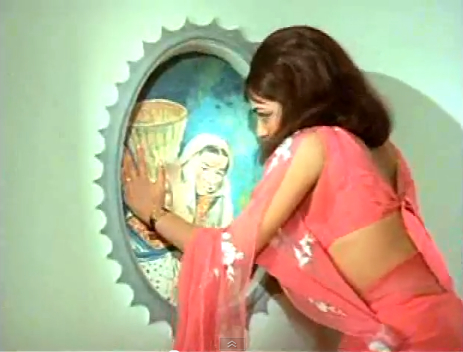
“Pal Bhar Ke Liye Koi” is one of the all-time cutest songs picturized on screen. Besides the fact that Hema Malini probably wears a saari better than any actress of yesteryear, I love the set design. Hema Malini has to literally shut every single window and blind in the house to keep Dev Anand from singing to her from outside, and the designer was forced to get really creative! I love the painting that’s actually a hidden window and the the strangle holed wall that Dev Anand uses as handcuff props. It’s adorable how he tries to woo her throughout the song, begging her to just pretend to love him–and then the clever zinger of an ending where he throws it back in her face! It’s also one of the last Dev Anand films where I feel like he is still pulling off acting the hero and flirting with younger women. As much as we love him, we wish he had not acted in too many films past this…but that’s another story.

Hema Malini cleverly disguises a window with a traditional oil painting in the wacky fun house of the Johnny Mera Naam (1970) sets.

Below enjoy our English translation of this ever-popular Kishore Kumar song. Did you know that this song was even featured at the end of a Simpsons episode in 2006 entitled, “Kiss Kiss Bangalore”? You’re killing me, people.

Pal Bhar Ke Liye Koi Lyrics and Translation

Pal bhar ke liye koii hume.N pyaar kar le
Let somebody give me momentary love
JhuTa hii sahii
Even if it is false
Do din ke liye koii iqraar kar le
Somebody say yes for a couple of days
JhuTa hii sahii
Even if it is false
Pal bhar ke liye koii hume.N pyaar kar le
Let somebody give me momentary love
JhuTa hii sahii
Even if it is false

Hum ne bahut tujhko chhup chhupke dekhaa
I have often viewed you secretively
Dil pe khiichii hai tere kaajal kii rekhaa
The darkness of your eyeliner is etched on my heart
Kajal kii rekhaa banii Lakshman kii rekhaa
That line has become a line of control now
Ram mei.N kyuu.N tuu ne Raavan ko dekhaa?
Why did you mistake Ram for Raavan?
KhaDe khiDkii pe jogii, swiikar kar le
At your window stands a Yogi, accept him
JhuTa hii sahii
Even if your acceptance is a lie
Pal bhar ke liye koii hume.N pyaar kar le
Let somebody give me momentary love
JhuTa hii sahii
Even if it is false

Hiire se jaDe tere nain baDe
Your big eyes were embedded with diamonds,
Jis din se laDe tere Dar pe paDe
The day our eyes made contact, I was floored,
Sun sun kar terii “nahii.N nahii.N”
Listening to your constant no’s,
Jaa.N apnii nikal jaaye.N na kahii.N
My life may slip away
Zaraa haa.N keh de, merii jaa.N, keh de
Just say yes, my love, say it
Merii jaa.N keh de, zaraa haa.N keh de
Call me “my love,” just say yes
Jab rain paDe ,nahii.N chain paDe
When night falls I have no peace
Nahii.N chain paDe jab rain paDe
I have no peace when night falls

Maanaa tu saare hasiino.N se hasii.N hai
I agree you are the prettiest of the pretty
Apnii bhii surat burii to nahii.N hai
But my face isn’t too bad either
Kabhii tu bhii humaaraa diidaar kar le
Why don’t you sometimes take a look at me?
JhuTaa hii sahii
Even if you are faking
Pal bhar ke liye koii hume.N pyaar kar le
Let somebody give me momentary love
JhuTa hii sahii
Even if it is false

Pal bhar ke pyaar pe nisaar saare jeevan
For a moment of your love, I would sacrifice my entire life
Hum woh nahii.N jo choD de teraa daaman
I am not someone who would leave your embrace
Apne honto.N kii ha.Nsii hum tujhko de.Nge
I will give you the laughter from my lips
Aa.Nsoo tere apni aa.Nkho.N mei.N le.Nge
And I will take the tears from your eyes
Tuu humaari wafaa kaa ek baar kar le
Believe in me just once
JhuTa hii sahii
Even if I’m just lying!

Pal bhar ke liye koii hume.N pyaar kar le
Let somebody give me momentary love
JhuTa hii sahii
Even if it is false

Glossary

jhuuTaa: untrue; iqraar: acceptance; chhup chhupke: secretively; kaajal: eyeliner; Lakshman ki rekha: the circle of protection and control drawn by Lakshman for Sita in the Ramayana; Raavan: the villain of the Ramayana into whose hands Sita temporarily fell (until Raam saved the day once more); khiDkii: window; jogii: yogi; swiikar karna: to accept; hiire: diamonds nain: eyes; Dar: doorstep; jaa.N: life; rain: night; chain: peace of mind; maanaa: agree; hasiino.N se hasii.N: the most beautiful of the beautiful; suurat: face; diidaar: glimpse; nisaar: sacrifice; damaan: embrace; ho.Nto.N: lips; ha.Nsii: laughter; aa.Nsuu: tears; wafaa: faith, belief

Note that I’ve translated “JhuuTaa hii sahii” in many slightly different ways throughout the song’s translation, to match the meaning in each stanzas particular context. But he’s basically always just saying if it’s a lie, that works too.

Hema Malini stops lying to herself and joyfully sings along to Dev Anand’s catchy “Pal Bhar Ke Liye” from Johnny Mera Naam (1970).

My favorite line from the song is from the final antra is: “Pal bhar ke pyaar pe nisaar saaraa jeevan.” Nisaar is such a fabulous Urdu vocabulary word that works so poetically right here before the word saaraa. Unfortunately, this stanza is often missing from most recordings that people have of the song (see our post on songs with hidden stanzas for more!) And without this final stanza in which initially Kishore’s voice becomes the most sweet and sincere of the whole film, you miss the whole surprise ending where Dev Anand shows that he can be just as sassy! Such a shame.

This song request came from one of our absolute favorite readers Bhuvesh! Always, if you have a request for a translation or post, be sure to send us a message!

-Mrs. 55