Bollywood’s Beloved Sopranos: Lata and Asha’s Highest Notes

I feel like we’ve all been in this situation at some point: one of your favorite aunties steps up to the microphone at the annual Diwali function, and you have a sinking fear in your heart that she’s going to embarass herself by butchering another Lata classsic on stage. As she struggles through the sky-high notes of the antara, you cringe and ask yourself why you’re here again, subjecting yourself to this torture…

Well, it turns out it’s not entirely her fault. The reality of the situation is that Bollywood songs from the Golden Era tend to be pitched at extremely high scales for the average female singer. Unless a woman is a veritable soprano like Lata Mangeshkar or Asha Bhonsle, it is going to be quite a challenge for them to sing many of the classic songs from this period in their original keys. The high-pitched soprano female voice has become a hallmark of Hindi film music, and I’d like to explore this phenomenon in greater detail with this post.

Two sisters who changed playback singing forever: Lata Mangeshkar and Asha Bhonsle.

Why are Bollywood songs for females from the Golden Era pitched at astronomically high scales? I don’t know for sure, but I definitely have a few ideas that could explain this trend. First, the high-pitched female voice is consistent with the image of the ideal Indian woman that was prevalent during the 1950s and 60s. The soprano register suggests innocence and purity, which enhanced the traditionally feminine perceptions of heroines advanced by film directors of the time. Lata Mangeshkar  is the ultimate example of this phenomenon; her voice, with its ethereal purity, has been considered the traditional female voice of India for decades. However, this explanation is less pertinent to Lata’s younger sister Asha Bhonsle. The voice of Asha, who was widely known for her experimentation with non-traditional genres such as the cabaret, is not a national emblem of purity in the same way as her elder sister’s. For this reason, an alternative explanation is needed to describe the popularity of the soprano female voice in Bollywood, and I would venture to say that this alternative explanation is rooted in musical origins. Before the arrival of the Mangeshkars onto the filmi musical scene, female singing in Hindi films was dominated by artists with heavy, nasal voices, such as Suraiyya and Shamshad Begum. Once music directors had the opportunity to work with the Mangeshkars, things changed forever: the nasalized heavy female voices were out and the delicate soprano voices were here to stay. After Lata and Asha became established as playback singers, I would argue that  music directors of the time pushed the boundaries of their compositions in terms of range to test and showcase the virtuosity of these two exceptional talents.

Before we take a listen to some of Lata and Asha’s highest highs throughout Bollywood’s musical history, explaining a little bit of musical nitty-gritty is necessary to fully appreciate the gist of what’s going on here. From my experiences with transcribing and performing many songs from this era, I would estimate that the vast majority (perhaps 90%?) of songs composed for Lata and Asha max out at F5 or F#5 (two F/F#’s above middle C on the piano) as their highest note. Therefore, in the brief list  of high notes that I’ve compiled below, I’ve only chosen to include those rare songs that surpass the typical upper limit of  F#5. Songs for both singers are listed in order of ascending pitch of the composition’s highest note.

Keyboard labeled with note names and frequencies. C4 is taken as middle C. The high notes listed here range from G5 to C6.

Lata Mangeshkar: Selected High Notes

 jhuumta mausam mast mahiinaa (Ujala, 1959):  In this Lata-Manna duet composed by Shankar-Jakishan, Lata nails a G5 (taar komal ga in the key of E) when she repeats the “yalla yalla” line in the taar saptak (high octave) at the end.

ajii ruuThkar ab kahaa.n jaayiega?  (Aarzoo, 1965): Shankar-Jaikishan is once again the culprit here: listen as Lata reaches an Ab5 (taar shuddh ma in the key of Eb) in the antara of this gem picturized on Sadhana from Aarzoo. Regarding the high pitch of this song, Lata has said:

“I remember “ajii ruuThkar ab kahaa.n jaayiegaa” in Aarzoo (1965). What a high pitch that was! My ears reddened when I sang it. But I stubbornly sang at that impossible scale, refusing to admit defeat to any range. I would get very angry and sing at any range without complaining. Composers would take full advantage of my silence and keep raising the scale. In fact, I used to have arguments with Jaikishan. I would ask him, “kyaa baat hai, aap merii pariksha le rahe hai.n? mai.ne aap kaa kyaa bigaDaa hai jo aap meraa kaan laal kar rahe hai.n? (What’s the matter? Why are you testing me? What have I done that you should trouble me so much to redden my ears?)’

jiyaa o jiyaa kuch bol do (Jab Pyar Kisi Se Hota Hai, 1961): The tandem effect described below with “ahsaan teraa hogaa mujh par” is also observed here. Lata gives it her all as she reaches a Ab5 (taar komal ni in the key of Bb) in the antara of the female tandem version of the fun Rafi classic from Jab Pyar Kisi Se Hota Hai.

rasik balmaa (Chori Chori, 1957):  This Raga Shuddh Kalyan-based Shankar-Jakishan composition is one of my all-time favorites! Lata hits a G#5 (taar shuddh ga in the key of E) when she sings the antara.
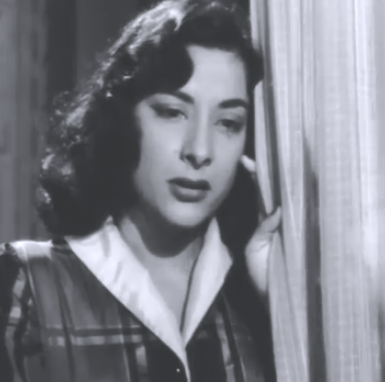
Nargis in a melancholic mood as she sings “rasik balma” from Chori Chori (1957)

ahsaan teraa hogaa mujh par (Junglee, 1961):  The Rafi version of this number is an all-time classic. Although the Lata version is less popular, it is still beautiful in its own right and brings up an interesting point about scales in tandem songs from this era. In almost all cases that I can think of, music directors made the female singer of a tandem song sing her versions in the same key as the male verion. Because men tend to be more comfortable in the higher register of their voices than women, this practice often put the female playback singer at a disadvantage when it came to hitting the highest notes of the composition. But who else would be up for the challenge of adjusting to the “male scale,”  if not Lata Mangeshkar? She hits a G#5 (taar shuddh ga in the key of Ein the antara of this evergreen Shankar-Jakishan composition based in raga Yaman. Regarding the difficulties of singing tandem songs, Lata has remarked:

Actually, “ahsaan teraa hogaa mujh par” was only meant to be sung by Rafi. But the film’s hero, Shammi Kapoor, suddenly decided that the heroine should sing it as well. It was picturised with Rafi’s voice on Saira Banu and later dubbed by me. So I had to sing it in the same sur as Rafi. The same was done with “jiyaa o jiyaa kuch bol do.

tere baadalo.n kii khair (Champakali, 1957): This Bhairavi-based composition composed by Hemant Kumar and picturized on Suchitra Sen is not as well-known as the rest of the songs on this list, but it’s worth mentioning for the A5 (taar ma in the key of E) that Lata hits  at its conclusion.

ahaa rimjhim ke yeh pyaare pyaare geet  (Usne Kaha Tha, 1960):  Salil Chowdhury was known for his incorporation of ideas of Western classical music into his Indian compositions. As an example, he has Lata sing an operatic-style counterpoint passage here in which she reaches an Bb5 (atitaar sa in the key of Bb) against Talat’s rendering of the mukhda at the end of this composition. Subtle, but exquisite!

aa ab laut chale.n (Jis Des Mein Ganga Behti Hai, 1960): Shankar-Jaikishan score another point here with this patriotic composition from Jis Des Mein Ganga Behti Hai. Mukesh and Lata both sing this song, but it is not structured as a prototypical romantic duet. Mukesh takes the main lines while Lata provides a few supporting lines and interesting background vocals, including the virtuosic glide in which she nails an Bb5 (taar pa in the key of Eb) with finesse.

aaja bha.nvar/jhananana jhan baaje paayalia (Rani Roopmati, 1957): Both of these drut bandishes based in Raga Brindavani Sarang and composed by S.N. Tripathi from Rani Roopmati are truly virtuosic by Bollywood standards. Lata sounds so impressive when she nails the Bb5 (taar pa in the key of Bb) at the end of both “aaja bha.nvar” and “jhananana jhan.” In addition to showing off her range, Lata also showcases her classical training and vocal dexterity as she navigates through a host of intricate taans in both songs. I have to say Lata’s virtuosity leaves Rafi in the dust in the duet here (sorry, Mrs. 55!).
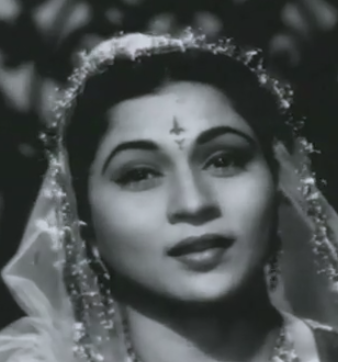
Nimmi sings “aaja bhan.var” in Rani Roopmati (1957)


ham ramchandra kii chandrakala me.n bhii
 
(Sampoorna Ramayana,
1961): The Mangeshkar sisters team up here to sing a duet from Sampoorna Ramayana composed by Vasant Desai. It’s somewhat interesting to note that the song here is actually picturized on two pre-pubescent boys, who are receiving playback from female singers. At the end of the song, there is a dramatic ascent in the melody until both sisters climax at a powerful  Bb5 (taar pa in the key of Eb).

ai dil kahaa.n terii manzil
 (Maya, 1961): Salil Chowdhury makes another contribution to our list with this composition rendered by Dwijen Mukherjee (a noted Bengali singer with a voice similar to Hemant Kumar’s) and Lata. Like “aa ab laut chale.n,” this duet is not structured traditionally; rather, Dwijen sings the main lines and Lata provides background support. Lata sounds heavenly as she hits a Bb5 (taar shuddh dha in the key of Db) in one of Salil’s signature opera-inspired vocal passages.

woh ek nigaah kyaa milii 
(Half-Ticket, 1962): To the best of my knowledge, Salil Chowdhury wins the contest for having recorded Lata’s voice at its highest pitch in the history of Bollywood cinema with this composition.  In this duet with Kishore Kumar picturized on Helen, Lata manages to hit  the elusive soprano C6 (taar shuddh dha in the key of Eb) in the second staccato sequence of the interlude played between stanzas. Her voice is so high here that it blends in naturally with the instrumental piccolo parts.  Nailing a staccato passage in the soprano register like this is incredibly impressive for a vocalist trained in the Indian tradition (in which the emphasis is not placed on vocalizing at the extremes of one’s range)–brava, Lata, brava!

Asha Bhonsle: Selected High Notes

sakhii rii sun bole papiihaa us paar (Miss Mary, 1957): You get the opportunity to hear some some sibling rivalry in this Hemant Kumar composition loosely based on Raga Tilang from Miss Mary! Lata (on Meena Kumari) and Asha (on some rando actress I can’t recognize) duke it out at the end with some intricate taans, but Asha actually takes the more complex passages and touches an Ab5 (taar shuddh ma in the key of Eb)in her last taan here. For those keeping score, Lata also hits the same note in her taan right before.
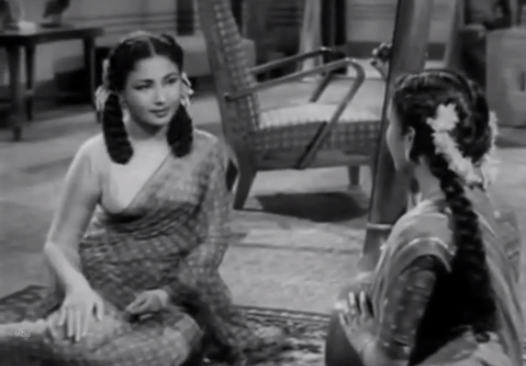
Meena Kumari in a rare non-tragic role in Miss Mary (1957)

dil na kahii.n lagaanaa (Ghunghat, 1960): I hadn’t heard this Ravi composition picturized on Helen before doing research for this post, but it’s quite special. The song is divided into several differents segments with lyrics in four different languages: Hindi, Tamil, Bengali (a cover of Geeta Dutt’s classic “tumi je amar“), and Punjabi. During in an alaap in the final Punjabi segment, Asha manages to hit an A5 (taar shuudh re in the key of G).

tarun aahe ratra ajunii (Non-Film):  This composition by Hridaynath Mangeshkar is a Marathi bhavgeet, so I guess it technically doesn’t belong on the list. Even though I don’t understand the Marathi lyrics, this is one of my favorite Asha songs because the tune and rendition are simply sublime. Here, the line “bagh tula pusatos aahe” begins on Bb3 and climbs up to A5 (taar shuddh ni in the key of Bb) with the ornament Asha sings on the words “gaar vaaraa.” In the span of one musical line, Asha covers nearly two octaves of vocal range–wow!

suunii suunii saa.ns kii sitaar par (Lal Patthar, 1971): This Shankar-Jakishan composition picturized on Rakhee from Lal Patthar is a beautiful example of the use of Raga Jayjayvanti in filmi music. In a passage towards the end of the song (beginning at 3:13), Asha touches a Bb5 (taar komal ga in the key of G). She also finishes the song off with some powerful taans. For comparison, see Shankar-Jakishan’s Jayjayvanti beauty from Seema sung by Lata (note the exquisite taankari at the end!): manmohana baDe jhuuThe

daiyaa mai.n kahaa.n aa pha.nsii (Caravan, 1971): This song from Caravan is probably remembered more for Asha Parekh’s crazy dance moves than its musical underpinnings, but this song is composed in a manner that is rather unique for Bollywood music. Most songs in Bollywood are sung at a fixed tonic (sa), but R.D. Burman experiments with a musical technique all too familiar to those who listen to 90s Western pop: the key change. He goes wild here by changing the tonic of the song by half-steps multiple times, and Asha hits a Bb5 during a transition at the very end.
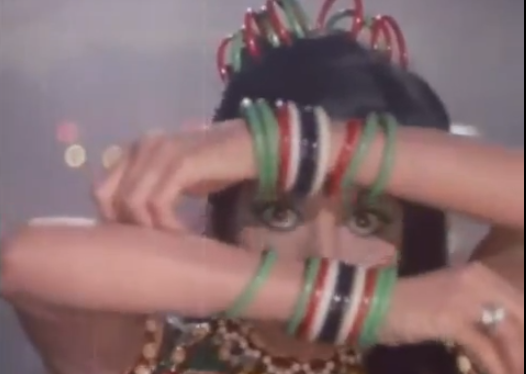
Asha Parekh hides herself on stage during the performance of “daiyaa mai.n kahaa.na aa pha.nsii” in Caravan (1971)

aa dekhe.n zaraa (Rocky, 1981): Despite my aversion to Bollywood music from the 80s, I still decided to include this song on the list for the Bb5 (taar pa in the key of Eb) that Asha manages to yell out at around 2:20.

nadii naa re na jaao shyaam (Mujhe Jeene Do, 1963): In the alaap of this Jaidev composition picturized on Waheeda Rahman, Asha nails a G#5 and briefly touches a B5 (taar pa in the key of E) before descending to pitches that are more comfortable for the average mortal.

tu mi piaci cara (Bewaqoof, 1960):  This cute S.D. Burman composition sung by Asha and Kishore features an opening line in Italian. Maybe it was the Italian lyrics that inspired S.D. Burman to have Asha sing some background operatic passages in addition to her normal lines. During one of these passages before the second-last antara, Asha hits a B5 (taar ma in the key of F#).

jo mai.n hotaa ek TuuTaa taaraa (Chhupa Rustam, 1973): This composition by S.D. Burman rendered by Asha and Kishore features some more opera-like passages at its conclusion. Asha is impressively comfortable as she nails a B5 (ati-taar sa in the key of B)  several times in a row as counterpoint against Kishore’s rendering of the mukhda!

o merii jaa.n maine kahaa (The Train, 1970): You wouldn’t expect this fun item number composed by R.D. Burman and picturized on Helen from The Train to be particularly virtuosic in terms of vocals, but Asha actually hits the a B5 (ati-taar sa in the key of B) in the song’s opening line with her leap on the word “kahaa.” For those of you listening very carefully, it’s important to keep in mind that the film version appears to be transposed a half-step higher than the album version of this song.

If you’ve managed to pay attention so far and take a listen to some of these songs, you may have noticed some interesting trends when comparing the high notes rendered by our two beloved Bollywood divas. After taking a look at the years I’ve listed next to each song, you’ll notice that all of Lata’s highest notes on this list span a range of nine years from 1956 to 1965, while Asha’s highest notes range over 24 years (!) from 1957 to 1981. The broad range of years in which Asha hit her high notes might provide evidence to those who support the notion that Asha’s voice aged better than Lata’s over the decades. But there is one caveat: the manner in which these two divas produce their high notes is distinct and may play a role in mediating this trend. If you listen carefully, you can hear that Lata always employs her “chest voice” to belt out the notes of a composition, even at the highest registers. On the other hand, Asha often employs her “head voice,” the more commonly used technique by female singers to access high notes. Head voice has a softer, gentler sound because it resonates around the nasal cavity instead of the chest during vocal production. This technique of singing is traditionally forbidden in the Indian classical tradition, so purists might consider some of Asha’s highest highs as “cheating”–head voice is sometimes even referred to as naqlii avaaz (fake voice). I’m not so much of a purist that I would discredit Asha for using her head voice in these compositions, but I will venture to say that, if asked to do so, she would not be able to hit the notes of the high soprano register in her later years using her chest voice as gracefully as Lata did during her peak.

Another interesting trend to note is how different music directors composed differently to suit the individual styles of  Lata or Asha. Although all the music directors on this list have worked extensively with both sisters, the music directors who asked Lata to sing at her highest range are not the same as the music directors who asked the same of Asha. Shankar-Jaikishan and Salil Chowdhury, by far, contribute to Lata’s highest record pitches whereas R.D. Burman and S.D. Burman seem to have saved their highest notes for Asha. Just some food for thought.

R.D. Burman teaches Asha Bhonle during a rehearsal session.

Please let us know if you find any more examples of Lata and Asha’s highest highs that are not on this list! I have attempted to find the best examples, but given the vast repertoire of Bollywood film music, I may have naturally missed out on some that are worth mentioning. Also, if you enjoyed this post, let us know in the comments and I’ll try to do some similar-themed posts in the future–perhaps next, we can take a listen to Lata and Asha’s lowest recorded notes or a an analysis of the Bollywood tenor’s highest highs? The possibilities are endless!

-Mr. 55
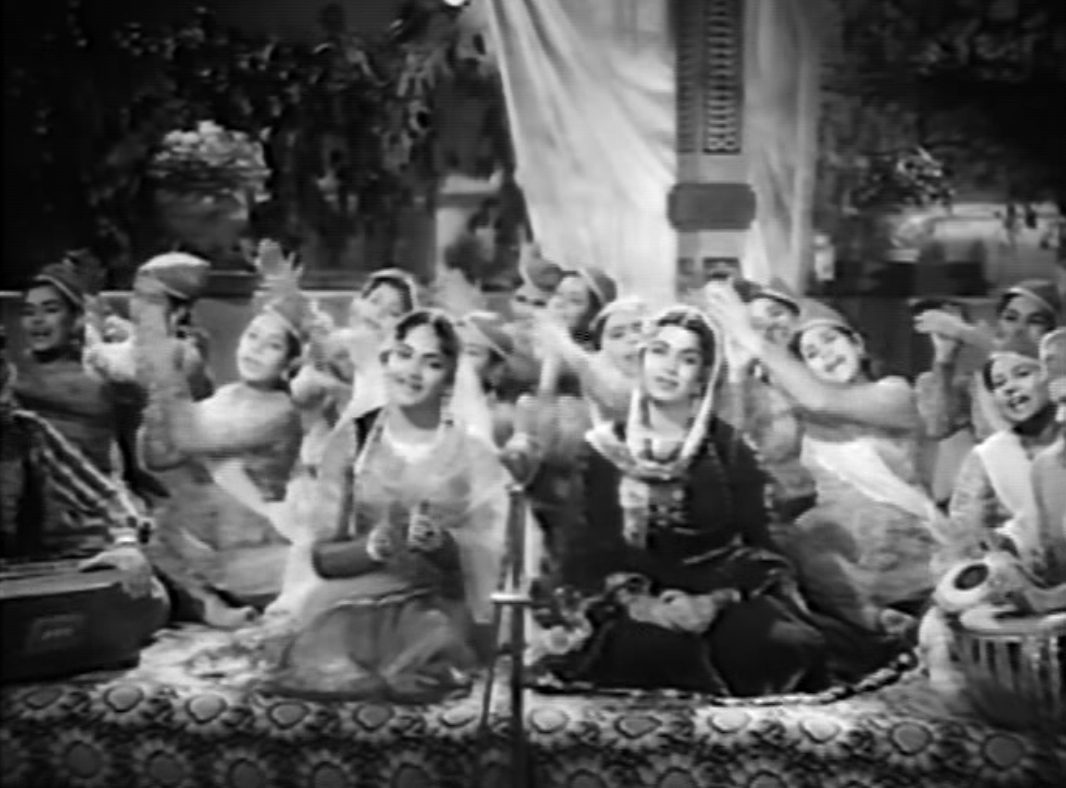
Yeh Ishq Ishq Hai Lyrics and Translation: Let’s Learn Urdu-Hindi

Bollywood Qawwali Barsaat Ki Raat Shyama Ratna

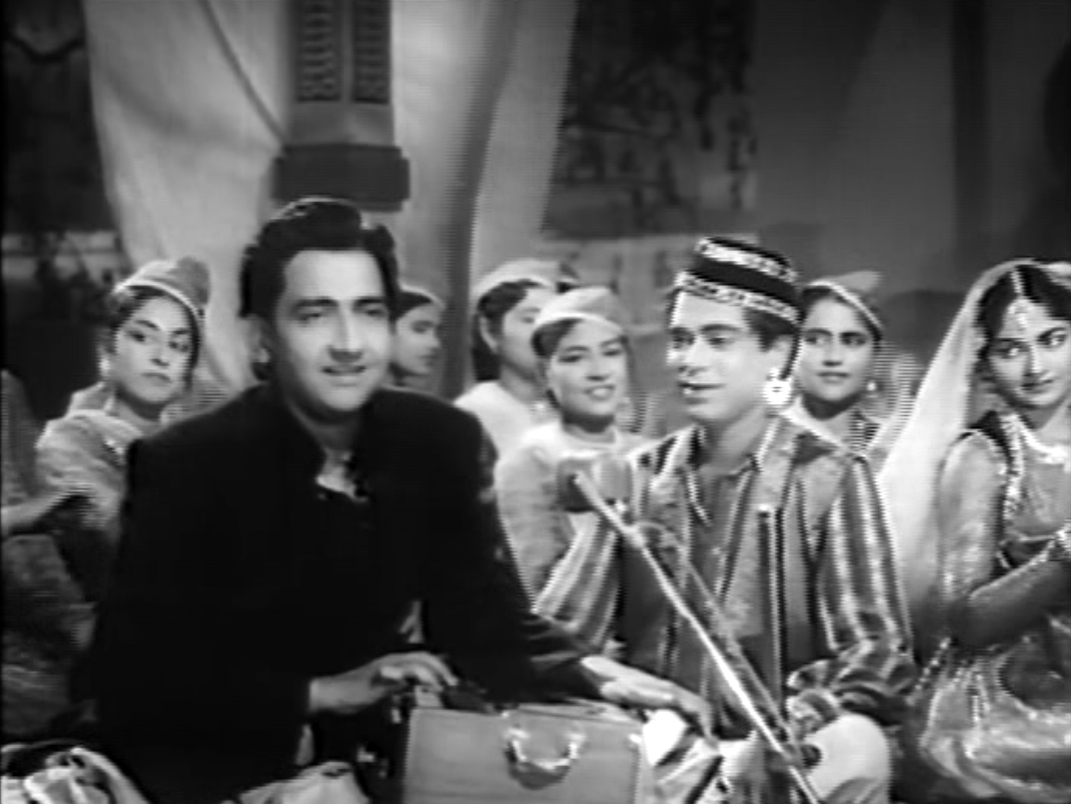
Ratna (left) and Shyama (right) lead the qawwali “Yeh Ishq Ishq Hai” from the hit Bollywood film Barsaat Ki Raat (196)

For our next post, we provide an English translation of “Yeh Ishq Ishq Hai” qawwali (and its prelude “Na to Caravan ki Talaash Hai“) from the all-time classic film Barsaat ki Raat (1960). For anyone familiar with the beautiful lyrics of this Sahir Ludhviani masterpiece, you know that “Yeh Ishq Ishq Hai” is the crowning jewel of the qawwali genre. The ultimate in lyrical poetry, allusions, wit, and transcendent symbolism, “Yeh Ishq Ishq Hai” was no easy task to translate and dissect. Sahir Ludhviani, who also later penned the gems from films like Taj Mahal (1963), wrote an album of love poetry for Barsaat Ki Raat--from “Zindagi Bhar Nahii.N Bhoolegi” to “Mai.N Ne Shaayad Tumhe” to la pièce de résistance, “Yeh Ishq Ishq Hai.”

Bharat Bhushan Barsaat Ki Raat qawwali

Bharat Bhushan jumps in to save the girls’ qawwali team in “Yeh Ishq Ishq Hai” from Barsaat Ki Raat (1960)

Through this culmination piece of the film’s ongoing qawwali competition, both hero (Bharat Bhushan) and the heroine (Madhubala) are reunited after a long and painful separation. Mohammed Rafi, Asha Bhonsle, and Manna Dey vie to out-do each other in this clever, powerful discussion of the meaning of love, but at the song’s climax Rafi brings the qawwali to a heart-stopping triumphant finish that wins his team the competition. It is a real pleasure to appreciate the many levels on which the qawwali can be understood–from religious, to romantic, to quite literal–after singing “ilaaj koi to maut hai,” Shyama literally falls sick to her deathbed, or as Bharat Bhushan croons, “nikalii Radha saj ke,” Madhubala appears miraculously at the doorway from the prison of her house. Come follow along with our translation of this epic qawwali and it will be clear why “Yeh Ishq Ishq Hai” made Bollywood film history!

Madhubala Barsaat Ki Raat

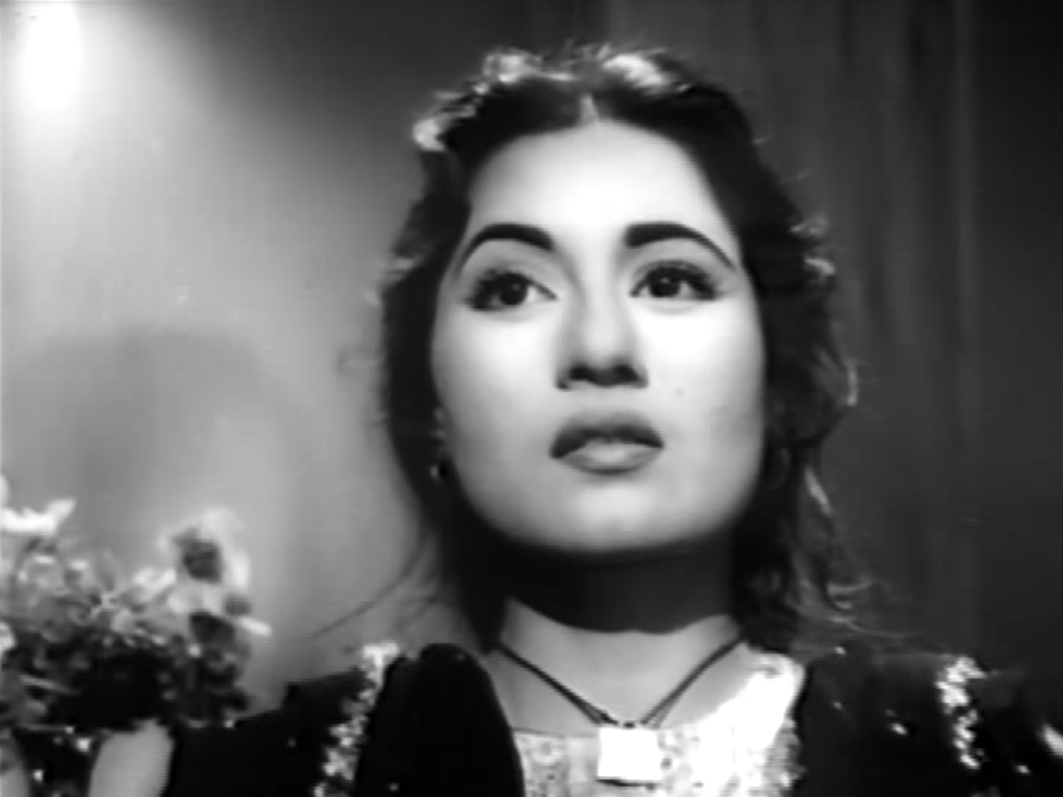
Madhubala hears Bharat Bhushan on the radio and decides to find him in Barsaat Ki Raat (1960)

Yeh Ishq Ishq Hai Lyrics and Translation

MALE:

Na to caaravaan ki talaash hai
I am not in search of a caravan
Na to humsafar ki talaash hai
I am not in search of a fellow traveler
Mere shauq-e-khaana kharaab ko teri rehguzar ki talaash hai
That ruined place of my desire searches for the path that leads to you

FEMALE:

Mere naamuraad junoon ka hai ilaaj koi to maut hai
If there is any cure for my unfortunate obsession, then it is death
Jo davaa ke naam pe zehar de
Give me that medicine whose name is poison
Usi chaaraagar ki talaash hai
I am in search of such a healer

Tera ishq hai meri aarzoo,
Your love is my desire
Tera ishq hai meri aabroo,
Your love is my honor
Dil ishq, jism ishq hai, aur jaan ishq hai
My heart is love, my body is love, and my life is love
Imaan ki jo poochho to imaan ishq hai
If you ask for faith, then that is love too
Tera ishq mai.N kaise ChhoD doo.N?
How could I ever leave your love?
Meri umr bhar ki talaash hai
That love is what I have been searching for all my life

MALE:

Yeh ishq ishq hai, ishq ishq, yeh ishq ishq hai, ishq ishq
This is love, this is love, this is love
Jaan-soz ki haalat ko jaan-soz hi samjhegaa
Only one in torment can understand the condition of a fellow sufferer
Mai.N shamaa se kehta hoo.N mehfil se nahii.N kehta
I am speaking to the flame, not to the company gathered here
Kyonki yeh ishq ishq hai, ishq ishq, yeh ishq ishq hai, ishq ishq
For this is love, this is love, this is love

FEMALE:
Sahar tak sab ka hai anjaam jal kar khaak ho jaana
By dawn, everything will burn and be reduced to ashes
Bhari mehfil mei.N koi shamaa yaa parvaana ho jaaye
Everyone in this gathering shall became either flame or moth
Kyo.N ki yeh ishq ishq hai, ishq ishq, yeh ishq ishq hai, ishq ishq
For this is love, this is love, this is love

MALE:

Vehshat-e-dil rasn-o-daar se roki na gayi
Love is not stopped by the madness of the heart or ropes and the gallows
Kisi khanjar, kisi talvaar se roki na gayi
It is not stopped by any dagger, by any sword
Ishq Majnu ki woh aavaz hai jiske aage koi Laila kisi deewaar se roki na gayi,
Love is that voice of Majnu’s which Laila followed and which no barrier could stop
Kyo.N ki yeh ishq ishq hai, ishq ishq, yeh ishq ishq hai, ishq ishq
For this is love, this is love, this is love

Woh hanske agar maa.Nge.N to hum jaan bhi dede.N,
If she laughs and asks, then I would even give my life
Haa.N yeh jaan to kya cheez hai? Imaan bhi dede.N!
Yes, after all what is this life? I would even give up my faith!
Kyo.N ki yeh ishq ishq hai, ishq ishq, yeh ishq ishq hai, ishq ishq
For this is love, this is love, this is love

Naaz-o-andaaz se kehte hai.N ki jeena hoga,
I am told that I must live with my fate gracefully
Zehar bhi dete hai.N to kehte hai.N Ki peena hoga
They give me poison, and say I must drink
Jab mai.N peetaa hoo.N to kehte hai.N ki marta bhi nahii.N,
But when I drink it, then they say I won’t die
Jab mai.N martaa hoo.N to kehte hai.N ki jeenaa hogaa
When I am dying, they say I must live
Yeh ishq ishq hai, ishq ishq, yeh ishq ishq hai, ishq ishq
For this is love, this is love, this is love

Mazhab-e-ishq ki har rasm kaDi hoti hai,
The laws and customs of love are very strict
Har qadam par koi deewaar khaDi hoti hai
At every step, there is a barrier standing
Ishq aazad hai, Hindu Na Musalmaan hai ishq,
Love is free, love is neither Hindu nor Muslim
Aap hii dharm hai aur aap hii imaan hai ishq
Your own duty and your own faith alone is love
Jis se aage nahii.N shekh-o-Brahaman dono.N,
Both Hindu and Muslim religious men cannot surpass this
Us haqeeqat ka garajtaa hua ailaan hai ishq
The reality of that thundering proclamation is love

(FEMALE in Panjabi):

Ishq na puchhe deen dharm nu, ishq na puchhe jaataan
Love does not ask your religion or creed, love does not ask your social class or caste,
Ishq de haatho.N garam lahu vich doobiyaan laakh baraataan ke
Love has drowned thousands of wedding revelers in its fiery blood
Yeh ishq ishq hai, ishq ishq, yeh ishq ishq hai, ishq ishq
This is love, this is love, this is love

MALE:
Raah ulfat ki kaThin hai ise aasaan na samajh
The path of love is dangerous, do not think it easy
Yeh ishq ishq hai, ishq ishq, yeh ishq ishq hai, ishq ishq
This is love, this is love, this is love

FEMALE:
Bahut kaThin hai Dagar panghat ki
The path to the riverside is very dangerous
Ab kya bhar luau.N mai.N Jamuna se matki?
Now how can I fill my jug with water from the banks of the Jamuna River?
Mai.N jo chali jal jamuna bharan ko dekho sakhi ji mai.N jo chali jal jamuna bharan ko
As I was on my way to fill my jug with water from the Jamuna,
Nand kishor mohe roke jhaadon
The young boy of Nanda [Krishna] stopped me
To kya bhar luau.N mai.N Jamuna se matki?
So how can I fill my jug with water from the banks of the Jamuna River?

MALE:
Ab laaj raakho more ghoonghat pat ki
Now protect my honor, this veil of mine
Jab jab Krishn ki bansi baaji,
When Krishna played his flute
Nikali Raadhaa saj ke
Radha emerged, dressed up
Jaan ajaan ka dhyaan bhulaa ke,
Forgetting all she was taught
Lok laaj ko taj ke
She left the honor of society
Haaye ban ban Doli Janak dulaari,
The darling child of King Janak [Sita] swayed into the forest
Pehenke prem ki maalaa
And wore a garland of love
Darshan jal ki pyaasi Meera
Meera thirsty for her a glimpse of her Lord
Pii gayii vishh ka pyaalaa aur phir araj kari
Drank a glass of poison and then pleaded
Ke laaj raakho raakho raakho, laaj raakho dekho dekho,
Protect my honor, protect my honor, protect my honor
Yeh ishq ishq hai, ishq ishq, yeh ishq ishq hai, ishq ishq
This is love, this is love, this is love

Allah rasool ka farmaan ishq hai
The commands of God and Mohammed are love
Yaanii Hadith ishq hai, Quraan ishq hai
The teachings of Mohammed are love, the Quraan is love
Gautam kaa aur Maseehaa kaa armaan ishq hai
The wishes of Bhudda and Christ are love
Yeh kaayanaat jism hai aur jaan ishq hai
This material existence and this life are love
Ishq sarmad, ishq hii mansoor hai
Love is everlasting, love alone is victorious
Ishq Moosa, ishq Koh-e-Toor hai
Love is Moses, love is Mt. Sinai
Khaaq ko but, aur but ko devtaa karta hai ishq
Love turns clay into idols, and idols into Gods
Intahaa yeh hai ke bande ko khuda karta hai ishq
The pinnacle is that love has the power to turn a man into a revered God
Haan.N yeh ishq ishq hai, ishq ishq, yeh ishq ishq hai, ishq ishq
Yes, this is love, this is love, this is love

Glossary:

caravaan: caravan; talaash: search; humsafar: fellow traveler; shauq-e-khaana; desires, hobbies; barbaad: ruined; rehuguzar: pathway; naamuraad: unfortunate; junoon: obsession; ilaaj: cure; maut: death; davaa: medicine; zeher: poison; chaaragar: one who treats you, doctor, healer; aarzuu: desire; aabruu: honor; jism: body; imaan: faith; jaansoz: torment, soul-burning; sahar: the time before dawn; anjaam: conclusion; khaak: ashes; parvaanaa: moth (used allegorically as one blinded by love); vehshat: madness; rasn: rope; daar: gallows; khanjar: dagger; talwar: sword; LailaMajnu: legendary ill-fated lovers; awaaz: voice; deewaar: barrier, wall; cheez: thing; naazoandaaz: pride and style, grace; mazhab: law; kaDi: strict, harsh; qadam: step; azaad: free; dharm: Hindu religious duty; haqeeqat: reality; garajnaa: to thunder; ailaan: proclaimation; deen: Islamic obedience; jaataan: caste; lahu: blood; ulfat: love; kaThin: dangerous; aasaan: easy; Dagar: pathway; maTki: jug, pot; Nand kishor: young Krishna laaj: honor; ghuunghat: veil; bansi: type of flute; dhyaan: meditation; lok: people, society; ban: forest; Dolna: to sway; Janak Dulari: The darling daughter of the mythological King Janak [Sita]; prem: love; maalaa: garland; darshan: glimpse of a deity; pyaasi: thirsty; vish ka pyaalaa: glass of poison; araj: plea; rasool: messenger [of God, Mohammed]; farmaan: commands; hadith: a report of the deeds and the teachings of Muhammed, Gautam: Buddha; Maseehaa: Jesus Christ; kaayanaat: material creation; sarmad: everlasting; mansoor: victorious, Moosaa: Moses; Koh-e-Toor: Mt. Sinai; khaaq: clay; but: idol; devtaa: God; intahaa: pinnacle, culmination

Yes, that glossary was a mouthful. Even as it is, I must warn that many of these words have a far deeper religious meaning to them that cannot be summed up in the one or two words as I have defined them. But no one said the Hindustani language was easy, and this song is just loaded with Arabic-based and Sanskrit-based vocabulary as well as references from both Hindu and Islamic traditions. It’s part of why Urdu-Hindi is such a complex, beautiful and absolutely fascinating language. Let’s take a more in-depth look at some of these lines:

  • “Ishq Majnu ki woh awaaz hai…” according to the Arab legend, similar to Romeo and Juliet, Laila and Majnu (whose nickname means “madly in love”) were two star-crossed lovers from rival families. However, Laila fled from her house to be with the one she loved and it is said that as Majnu was caught and whipped, their love was so strong that Laila screamed and blood appeared to flow from Laila’s skin instead.
  • “Bahut kaThin hai Dagar panghat ki…” is actually a line from the great Amir Khusrau qawwali written during the 13th century. The qawwali refers in one sense to the risks of dishonor faced by Radha as she attempted to fetch water, another sense explores the risks of standing up for religious beliefs (in Khusrau’s case, an allegiance to Sufi saint Nizamuddin Auliya.) The line has now become a sort of idiomatic warning to not underestimate the burden of any difficult task.
  • “Jab jab Krishna ki bansi baaji…” refers to the tales of Hindu folklore of childhood lovers Krishna and Radha, the latter of whom risked familial honor and suffered teasing and torment from her girlfriends in her love for the young Lord.
  • “Janak dulari ban ban Doli…” is a reference to the Ramayan in which Sita, upon learning of her husband Ram’s banishment to the forest, renounced her title as well. Sita, it should be recalled, had a very lavish upbringing as she was the daughter of King Janak, so this was no simple sacrifice to live in the dangerous jungle. But Sita’s love was unparalleled, and although she was not otherwise compelled to accompany Ram to the jungle, did indeed join him out of pure devotion.
  • “Darshan jal ki pyaasi Meera…” refers to the legend of Krishna devotee and Rajput Princess, Meera Bai of the 16th century. Her zealous worship and love of Krishna inspired not only many famous bhajans we know and sing today, but the resentment of her brother-in-law who frowned upon her actions (eg. mingling with the poor, ignoring her husband, etc.) He made several notorious attempts to kill her, including forcing her to drink a glass of poison that Lord Krishna is said to have transformed into nectar and saved her when she pleaded for the Lord to protect her honor.

As you can probably tell, I LOVE this qawwali. I discover new things every time I enjoy it (for example, anyone else notice how the background clappers only start shrugging their shoulders cliched bhangra-style ONLY when Ratna starts singing in Panjabi? Coincidence? I think not!) The song indeed transcends all religious and material loyalties, bringing the audience a dazzling, other-wordly experience. For anyone who’s tired of all the allegories and vocabulary quizzes, here’s the long-awaited behind-the-scenes gossip:

Did you know Bharat Bhushan actually got married in real life to Ratna (who ironically played the only character in the film NOT in love with him!) Surprise, right!? She was his second wife, and some even say that later mild-mannered Bharat Bhushan had had an affair with none other than Meena Kumari. Did the scandals never end in this town?

For more Urdu bliss, check out our post on the beauty of Urdu poetry in Hindi films!

-Mrs. 55

Ratna Barsaat Ki Raat

Ratna, wife of Bharat Bhushan, plays a sassy side-kick in the film Barsaat Ki Raat (1960)

Woh Hanske Mile Humse Lyrics and Translation: Let’s Learn Urdu-Hindi

Although Asha Bhonsle is perhaps most well-known for her seductive and playful songs (see our translation of “raat akelii hai” here), she was a truly versatile artist who had an excellent command over a range of styles and emotions. When she is in a serious mood, Asha can really tug at your heartstrings with her sad singing. Think “ab ke baras bhej bhaiyya ko babul” from Bandini (1963), “yeh kyaa jagah hai dosto” from Umrao Jaan (1981), or “meraa kuch saamaan” from Ijaazat (1987).  Here, I’ve translated a short yet painfully beautiful Asha solo from Baharein Phir Bhi Aayengi (1966) called woh hanske mile humse.”

Baharein Phir Bhi Aayengi was released posthumuously under Guru Dutt’s film banner after Guru Dutt’s demise in 1964. The film was not even complete half-way before Guru Dutt’s death, so the film was shot again with a new director Shahid Lateef and new hero Dharmendra. Although the movie itself lacks the magic found in older Guru Dutt films, O.P. Nayyar’s soundtrack for the movie is still remembered today, most notably the Rafi number “aap ke hasiin rukh pe aaj nayaa nur hai.”

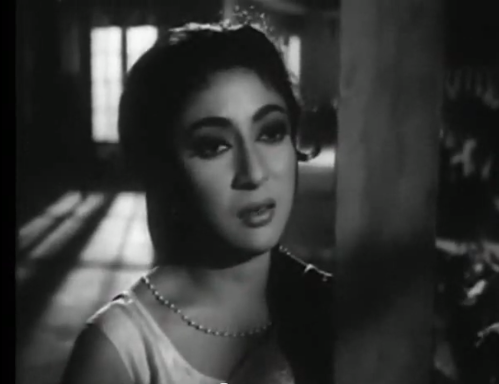
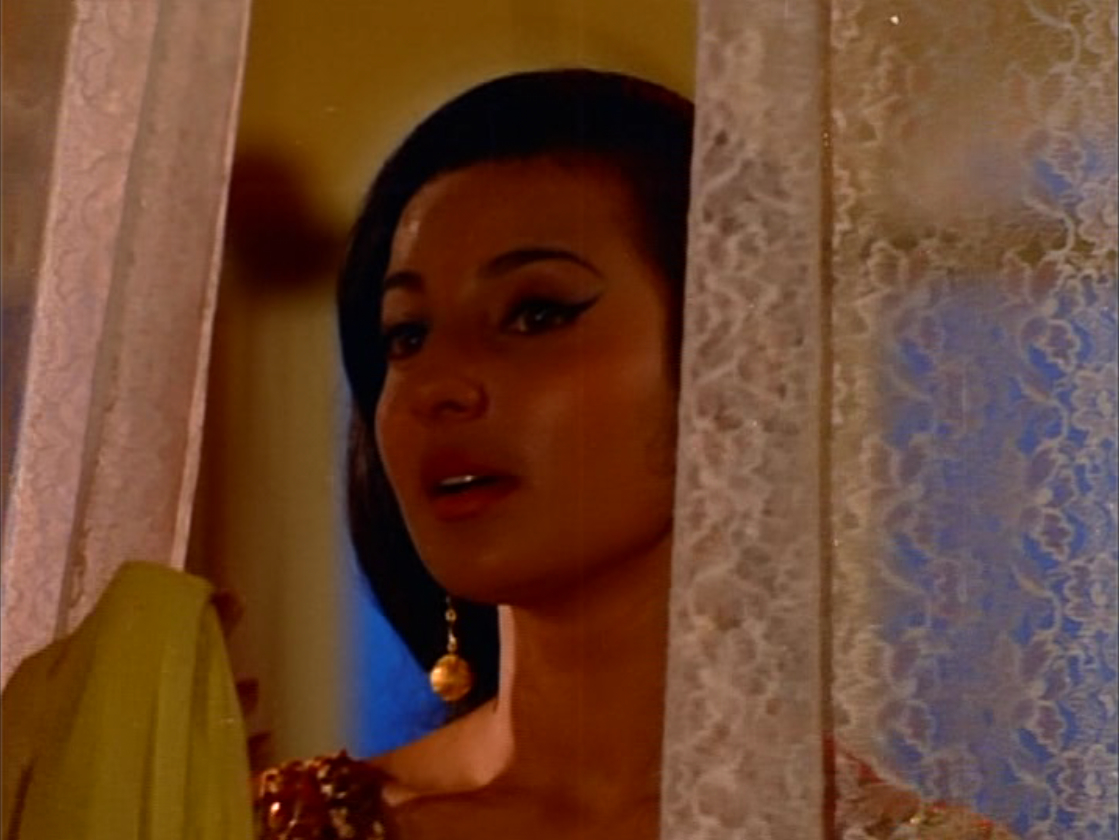
Mala Sinha in a melancholic mood in Baharen Phir Bhi Aayengi (1966)

The movie’s plot focuses on a love triangle: handsome young news reporter Jitendra (played by Dharmendra) falls in love with the bubbly Sunita (played by Tanuja) while Sunita’s older sister and head of the newspaper Amita (played by Mala Sinha) eventually becomes smitten by Jitendra. Before Amita decides to reveal her feelings to him, she finds out that Jitendra is actually in love with  Sunita. Although she is devastated by this news, she decides to back away for the sake of her sister’s happiness.  Here’s where the song I’ve translated comes in. Backed by Asha’s painstricken vocals and S.H Bihari’s simply crafted lyrics, Amita laments how she misinterpreted Jitendra’s actions to think that he was in love with her when that was not the case (“bekaar hii ulfat kaa izhaar samajh baiThe”). Sigh…

I think this song will strike a chord with those of you who have suffered through a romantic misunderstanding–it certainly did with me.

-Mr. 55

Woh Hanske Mile Humse Lyrics and Translation

woh ha.nske mile ham se, ham pyaar samajh baiThe
He smiled at me when we met, so I thought that he loved me.
bekaar hii ulfat kaa izhaar samajh baiThe
I interpreted it, in vain, as a declaration of love.

aisii to na thii qismat apnaa bhii koii hotaa
It was not in my fate to call someone my own.
kyo.n khud ko muhabbat kaa haqdaar samajh baiThe?
Why did I consider myself entitled to his love? 

roye.n to bhalaa kaise, khole.n to zabaa.n kyo.n kar?
How shall I cry, why should I speak?

Darte hai.n ki jaane kyaa sansaar samajh baiThe.
I fear what society has perceived of this. 

woh ha.nske mile ham se, ham pyaar samajh baiThe
He smiled at me when we met, so I thought that he loved me. 

Glossary

bekaar: useless, in vain; ulfat: love; izhaar: declaration; qismat: fate, destiny; haqdaar: entitled; zabaa.n kholna: to speak; sansaar: society 

​Raat Akeli Hai Lyrics and Translation: Let’s Learn Urdu-Hindi

Now we will take a look at the lyrics and English translation of the seductive number “Raat Akeli Hai.” When it came to vamp songs, cabaret numbers, and being the voice any kind of seductress, Asha Bhonsle was the Queen. And yes, while this usually amounted on screen to Helen shaking her stuff in a skin-tight showgirl costume, Asha lent her versatile voice to many other actresses called upon for the vamp sequence, from Sadhana to Parveen Babi. One of her best is the Tanuja hit “Raat Akeli Hai” from Dev Anand’s hit Jewel Thief (1967) and we will now present the song’s full lyrics and translation. Asha Bhonsle gives an amazing performance–magnificently hitting both the highest of highs and hiding a sultry laugh beneath the lows. In the movie, Tanuja plays a fire-cracker “modern girl” (discussed more in our earlier post on Jewel Thief!) whose bold lines she uses to pick up Dev Anand would make anyone blush from awkwardness.

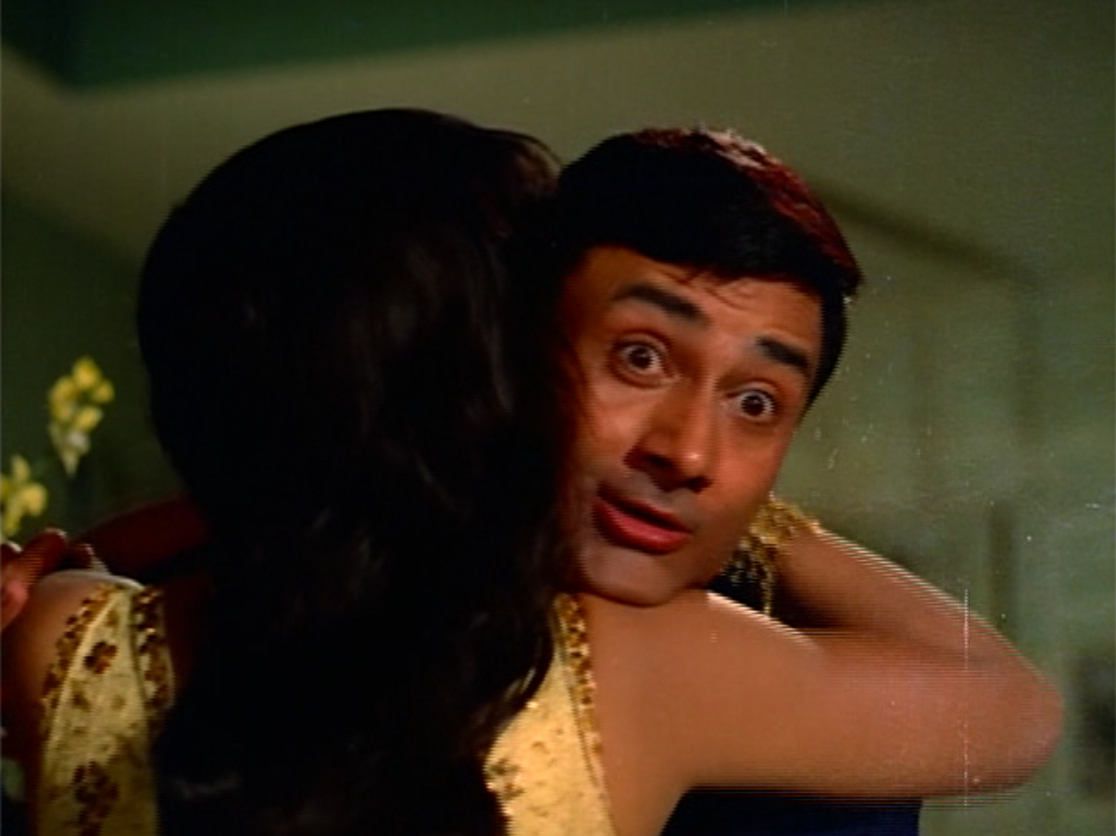
Even dapper Dev Anand is overwhelmed by Tanuja’s advances in Jewel Thief (1967).

In this song, however, her craziness works, and Tanuja is completely adorable. Bursting at the seams from her tight-fitting white dress, she seduces the hero by reaching into the living room’s classy mini-fridge and pulling out two coca-colas. Yes, it’s the 70s living at its finest. Who needs cocktails when you’re this smooth?

Tanuja shakes everything she has in a hip-hugging white dress from the seduction sequence of Jewel Thief (1967).

Enjoy our English translation of the tempting lyrics to “Raat Akeli Hai” below!

Raat Akeli Hai Lyrics and Translation:

Raat akelii hai, bujh gaye diye
The night is lonely, and the lights have gone out
Aake mere paas, kaano.N mei.N mere
Come close to me, and in my ears
Jo bhii chaahe kahiye, jo bhii chaahe kahiye
Tell me whatever you desire

Tum aaj mere liye ruk jaao, rut bhii hai fursat bhii hai
Today, stop a while for me, the atmosphere is right and we are at leisure
Tumhii na ho na sahii, mujhe tumse muhabbat hai
You may not feel the same, but I love you
Muhabbat kii ijaazat hai, to chhup kyuu.N rahiye
I have permitted you to love me, so why remain quiet?
Jo bhii chaahe kahiye, raat
Tell me whatever it is that you desire

Savaal banii huii dabii dabii uljhan siino.N mei.N
The confusion buried in my heart has surfaced as this question
Javaab denaa thaa, to Duube ho phasiino.N mei.N
You were supposed to give an answer, but you became drenched in sweat
Thaanii hai do hasiino.n me.n, to chup kyuu.N rahiye
When there is a resolve between two beautiful people, then why remain quiet?
Jo bhii chaahe kahiye
Tell me whatever it is that you want
Raat akeli hai…

Glossary:

akelii: lonely; kaan: ear; rut: atmosphere, season; fursat: leisure time; ijaazat: permission; chhup: silent; savaal: question; siin: chest; javaab: answer; Duubna: to become drenched, to drown; phasiinaa: sweat; thanii: resolve, commitment

Tanuja coyly wraps herself in a curtain in “Raat Akeli Hai” from Jewel Thief (1967)

Wondering what that glass-shattering note is Asha hits over and over again in this song? It sounds fancy, but it’s really just a high F.  Our girl Asha can go higher–more on this in our post on Lata and Asha’s highest notes!

-Mrs. 55

The Best Qawwalis of Bollywood Films

Rishi Kapoor Amar Akbar Anthony Bollywood Qawwali

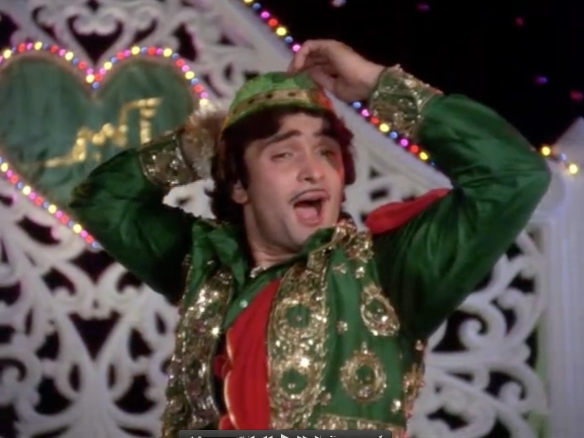
Rishi Kapoor charms his audience singing the famous qawwali “Pardah Hai Pardah” from Amar Akbar Anthony (1979).

The qawwali from films has a hallowed place in the history of the Hindi music industry. A mystic tradition more than 700 hundred years old, the qawwali gained prominence in Bollywood initially through 1950s Muslim social dramas and grew so much in popularity that its influences became mainstream–even continuing to live on today. We present our list below of the best qawwalis of Bollywood films.

But let us first define what precisely is a qawwali? The great Indian poet Amir Khusrau (d. 1326) is considered the founding father of the qawwali genre, having composed songs for the first time in this style to celebrate the death of his spiritual guide Nizamuddin Aulia. The qawwali is the authentic Sufi spiritual song that transports the mystic toward union with God. For centuries, Sufi communities in the Indian subcontinent have sustained this musical tradition in the mahfil-e-sama, or assembly for listening. The qawwali was a religious experience for both listener and performer: as the listener hopes for a spiritual experience of intensity and immediacy to transcend his or her conscious striving, the trained performer seeks to present in song a vast treasure of poetry that articulate and evoke a mystical experience for the audience.

Madhubala impresses the Mughal prince in the classic qawwali “Teri Mehfil Mei.N Qismat” from Mughal-e-Azam (1960)

The qawwali performance usually begins after the evening and may last all night until the morning prayers. The word qawwali means “words” worthy of remembrance, and as such the qawwali traditionally has a devotional aspect in praise of God. Even most “secular” qawwalis found in popular Bollywood movement can be read in this way, although superficially the lyrics have another literal meaning. The harmonium has replaced what was traditionally a sitar as musical accompaniment, but equally important are the tabla and the signature qawwali cyclic hand clapping that increase in speed during the performance. The tarz or tune of the qawwali is normally identified by the first line of the text, which is often a part of the refrain couplet. Although the qawwal was traditionally male, both men and women have enjoyed and excelled at performing the modern qawwali.

Rishi Kapoor dazzles his audience as a popular qawwal in the 1979 blockbuster Amar Akbar Anthony.

Unlike in Hindustani classical music, while taal and raagaa usage is the same, the qawwali places a greater emphasis on the poetic text and the delivery of its message than on musical ornamentation. In many of its vast incarnations within Bollywood, the qawwali became synonymous with a musical debate, a verbal battle (often between the sexes) to outwit the other side on topics that usually boil down to love or the pain of love. That kind of screen chemistry, as you can imagine, is prime Bollywood flirting territory just waiting to be sung.

Let’s take a look at how this genre evolved in mainstream Bollywood into one of the most beloved musical genres of the industry. Here are some highlights:

Humen To Loot LiyaAl Hilal (1958):

One of the first qawwalis to hit the silver screen, no list is complete without this retro low-budget gem. The music is really quite simple, but extremely catchy.

Yeh Ishq Ishq HaiBarsaat Ki Raat (1960):

This qawwali is an Urdu-lover’s paradise. Filled with complex words and allusions you’ll never use in real life, “Yeh Ishq Ishq Hai” set the stage for classy performance duels between men and women that is still considered the greatest Bollywood qawwali for its poetry (see our post for a full English translation!)

Sharma Ke Yeh Kyo.NChaudhvin Ka Chand (1960):

A fun twist on the traditional qawwali, two women sing (Asha Bhonsle and Shamshad Begum) with the latter taking the masculine side and the former taking the feminine.

Teri Mehfil Mei.N QismatMughal-e-Azam (1960):

Oh, does it get any better than this? Every moment of Mughal-e-Azam is a poetic dream and this briliant qawwali is no less. Shamshad Begum battles Lata Mangeshkar for the Prince’s approval of their take on love, each lyric outwitting the last. See our translation with glossary for more!

Nigahe.N Milane KoDil Hi To Hai (1963):

Asha Bhonsle’s greatest contribution to this genre, this qawwali has some beautiful Urdu and probably the most thrilling sargams you’ll find in any of her songs. See our translation with glossary here!

Tumhe Husn Dekhe – Jab Se Tumhe Dekha Hai (1963):

OK, so sure, this qawwali is not particularly memorable for its musical ingenuity (you may or may not cringe the entire way), but how often are you going to behold Shammi and Shashi Kapoor on screen at the same time?! This fascinating qawwali is worth a watch if only for its star value! Kudos to Geeta Bali for holding her own!

Mehengai Maar GayiRoti Kapada Aur Makaan (1974):

This qawwali has a unique flavor–taken from one of Manoj Kumar’s popular Indian propoganda films, the lyrics carry an interesting social message outside the realms of romantic love.

Pardah Hai PardahAmar Akbar Anthony (1979):

A Mohammed Rafi gem, this qawwali ranks among the best of the best. After watching Rishi Kapoor’s enthusiastic performance, you’d believe he was born to be a qawwal. The song is a must-see for anyone interested in the genre.

And just to throw in the contemporary, here’s a picture of me performing the qawwali at last year’s Harvard Ghungroo!

At a Harvard Ghungroo performance of Asha Bhonsle’s “Nigaahe.N Milane Ko.”

-Mrs. 55