O Sajna Barkha Bahar Aayi Lyrics and Translation: Let’s Learn Urdu-Hindi

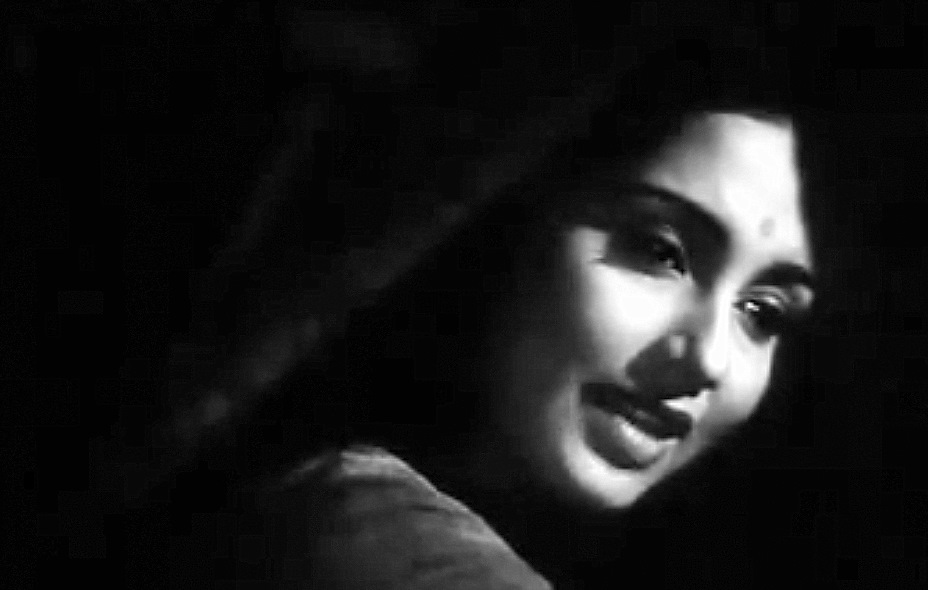
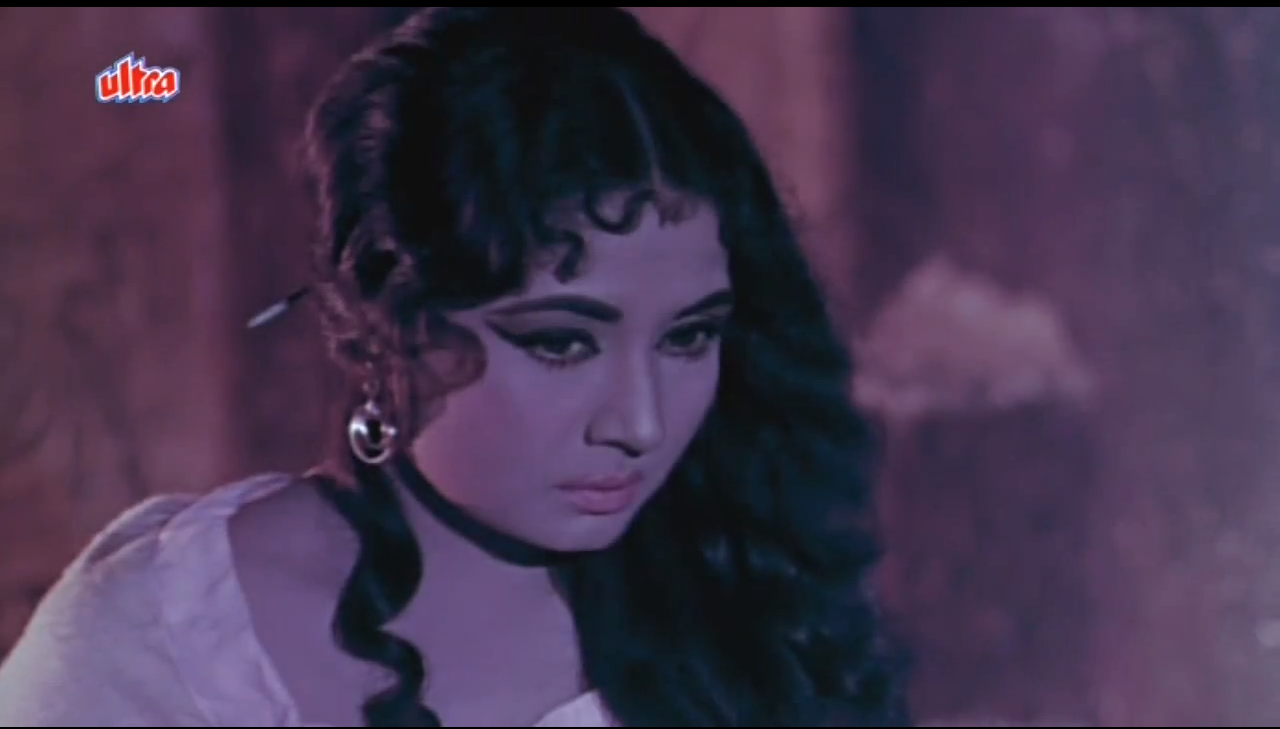
Sadhana wistfully enjoys the rain in "o sajna barkhaa bahaar aayii" from Parakh (1960). Because she plays the role of a village girl here, she was instructed to get rid of the characteristic "fringe" hairstyle seen in her later movies in order to avoid looking too glamorous!

Rain songs have always held a special place in Bollywood cinema. From “pyaar hua iqraar hua” in Shree 420 (1955) to “ghanan ghanan ghir aayii badra” in Lagaan (2001), fans of Hindi cinema have been treated to a number of beautiful gems about the rain over the years. Today, I’ve translated an all-time classic rain song from the film Parakh (1960) directed by Bimal Roy (he won his third Filmfare Award for Best Director for this film!): “o sajna barkhaa bahaar aayii”.   Parakh satirizes Indian democracy using a plot in which the postmaster (Nasir Hussain) of a village mysteriously receives a check for five lakh rupees to be given to an individual who is most well-equipped to benefit the village. When it is decided that an election will be held, influential characters in the village begin campaigning to persuade the village that they are the most deserving candidate to receive the check: namely, the impious postman (Motilal), the pious piest (Kanhaiyya Lal), the creepy rich man (Asit Sen), the greedy doctor (Rashid Khan) , the landlord (Jayant), and the well-respected schoolmaster (Vasant Chowdhury). Meanwhile, the postmaster’s daughter (Sadhana) begins to fall in love with the schoolmaster, and she sings “o sajna” as she pines for him in the rain.

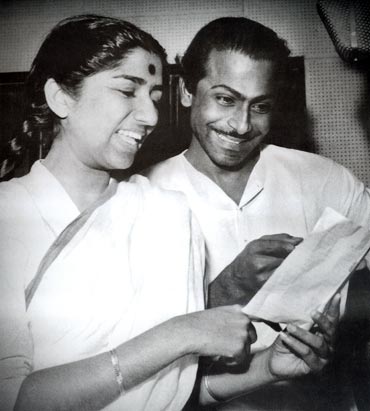
A musically timeless duo: playback singer Lata Mangeshkar and music director Salil Chowdhury

This song is considered to be one of the finest compositions of the music director Salil Chowdhury (who also wrote the story for Parakh). Although Salil Chowdhury did not receive his due during his lifetime, he is undeniably  one of the most talented and revolutionary composers from the Golden Era. His compositions are often remembered for their unusual melodies, rich orchestration, and integration of Western and Indian classical themes. Those of you familiar with Salil Chowdhury’s work in Bollywood may be surprised to know that he also composed songs for a wide variety of Indian languages, including Bengali, Malayalam, Tamil, Kannada, Telegu. Among these languages, Salil’s most prolific work was in his native tongue Bengali–he revolutionized the genre of the Bengali adhunik (modern) song with his musical compositions and self-written lyrics (what a multi-talent!). In fact, as is the case with many of his Hindi songs,  the tune for “o sajna” was released in Bengali first in 1959 as “na jeo na.” This song was one of Lata Mangeshkar’s earliest hits in the Bengali music industry, and Bengalis have cherished the collaboration between Lata and Salil ever since this major musical milestone.

–Mr. 55

P.S: As an extra tidbit of trivia, it has been said that the only non-classical record found in the collection of renowned Hindustani vocalist Ustad Bade Ghulam Ali Khan after his death was an LP of “na jeo na.” What an honor!

O Sajna Barkha Bahar Aayi Lyrics and Translation

o sajnaa barkhaa bahaar aayii
Oh, my beloved, the rain-filled season of spring has arrived.
ras
kii puhaar laayii, a.nkhiyo.n me.n pyaar laayii
It has brought sprinkling droplets of nectar, it has brought love to these eyes.

tum ko pukaare mere man kaa papiiharaa
The cuckoo bird in my heart calls out to you,
miThii miThii aganii me.n jale moraa jiiyaraa
as my heart burns in a sweet fire.

aisii rimjhim me.n, o sajan, pyaase pyaase mere nayan
My eyes long for you, my beloved, in this light shower of rain;
tere hii khvaab me.n kho gaye
they have become lost in a dream of you.

saa.nvalii salonii ghaTaa jab jab chhaayii
When the beautiful dark clouds spread throughout the sky,
a.nkhiyo.n me.n rainaa gayii, nindiyaa na aayii
the night passed in my eyes, and I could not fall asleep.

o sajna barkhaa bahaar aayii
Oh beloved, the rain-filled season of spring has arrived.

Glossary

barkhaa: rain; ras: nectar; puhaar: sprinkles, droplets; papiiharaa: pied-crusted cuckoo bird (associated with the monsoons in Indian mythology); jiyaraa: heart; rimjhim: light rain; saa.nvalii: beautiful; salonii: dark; ghaTaa: clouds; rainaa: night; nindiyaa: sleep.

The Immortal Dialogue of Pakeezah and English Translation

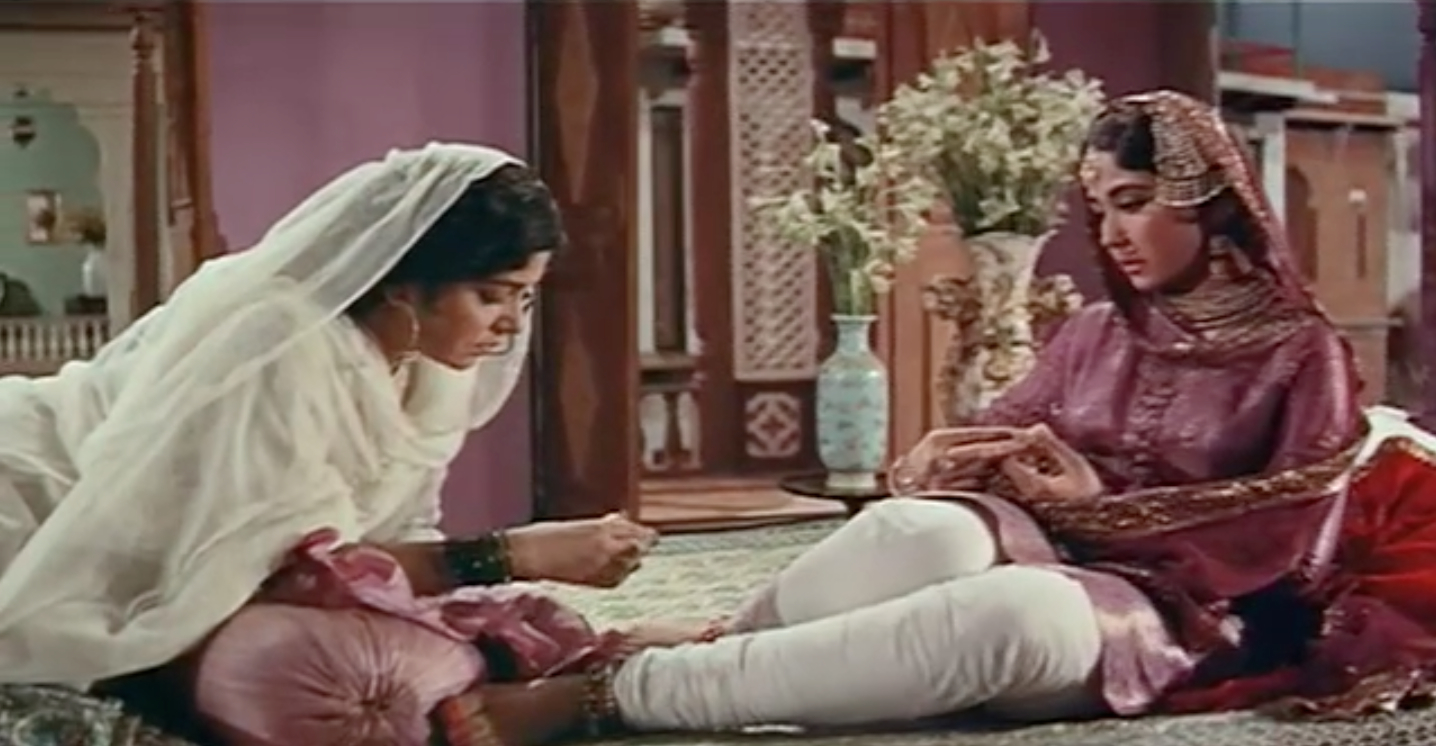
Now we will explore some classic Pakeezah dialogue, quotes and their English translations from the timeless 1971 film. I think it’s pretty clear that we’re obsessed with this movie. We’ve discussed the making of the film and its songs, but let’s take a moment to appreciate Pakeezah’s dialogue for which there is truly no comparison outside of the ode to spoken Urdu poetry that is Mughal-e-Azam (1960).

Aapke paaoo.N dekhe. Bahut haseen hai.N. Inhe zameen par mat utariiyega. Mele ho jaaye.Nge –Aapkaa ek humsafar…”

[“I have seen your feet. They are beautiful. Please do not place them on the ground. They will become dirty. –A fellow traveler…”]

I have to give a caveat: although we have provided a full English translation of these Pakeezah dialogues, I think the true poetry is lost outside of the Urdu language. Written by Kamal Amrohi himself, the exquisite dialogue of Pakeezah transports you to a languid surrealist fantasy. Among other questions, you may ask did people really talk like that? Do men as devastatingly charming as Raajkumar exist in real life? How fake is that blonde wig from the opening scene, seriously?

Although some of these will remain unanswered, let us now look closer at 3 of my favorite gems of Pakeezah dialogue and English translations that will be sure to get your heart rate up.

Ek har raat, teen baje. Ek rail gaadi apni patriyon se utar gayii, aur meri dil se guzarti hai...

[“Every night, when the clock strikes 3, a train leaves its rails and passes through my heart…”]

The first dialogue comes days after Pakeezah has received Rajkumar’s love letter. She is restless and can no longer focus on her work. Pakeezah confesses the reason for her behavior to her friend, who reacts famously against indulging such dreams. It’s a heartbreaking scene made artful by the grace of the Urdu language. Also please look at those sets and tell me there are architects in America who know how to build them.

PAKEEZAH: Bahut dino.N se, mujhe aisaa kuch lagtaa hai jaise mai.N badaltii jaa rahii hoo.N. Jaise mai.N kisi anjaane safar mei.N hoo.N aur kahii.N jaa rahii hoo.N. Sab kuch chuuTa jaa raha hai. Sahib Jaan bhi mujhse chuuT rahe hai.N, aur mai.N Sahib Jaan se duur hoti jaa rahi hoo.N.

[PAKEEZAH: For many days now, I feel as if I am changing. As if I am on an unknown journey and going somewhere. Everything is going away from me. Sahib Jaan is even leaving me, and I am going far from Sahib Jaan.]

SAHELI: Kaun hai yeh?

[SAHELI: Who is he?]

PAKEEZAH: Kaun?

[PAKEEZAH: Who?]

SAHELI: Yehii. Jisse mai.N pooch rahi hoo.N. Bataao!

[SAHELI: Him, whom I am asking about. Tell me!]

PAKEEZAH: Kya bataaoo.N kaun hai? Ek ajiib waaqaaya hai.

[PAKEEZAH: What should I say about who he is? It is a strange tale.]

SAHELI: Kya?

[SAHELI: What?]


PAKEEZAH: Ek har raat. Teen baje. Ek rail gaadi apni patriyon se utar gayii, aur meri dil se guzarti hai. Aur mujhe ek paighaam de jaati hai.

[PAKEEZAH: Every night at three o’ clock, a train leaves its rails and passes through my heart. And it gives me a message.]

SAHELI: Sahib Jaan, yeh paighaam tere liye nahii.N.

[SAHELI: Sahib Jaan, this message is not for you.]

PAKEEZAH: Kyaa? Nahii.N, nahii.N. Yeh mere hii liye hai. Is se mai.N ne apni hi paaoo.N mei.N rakhaa huaa payaa tha.

[PAKEEZAH: What? No, no, this is for me. It had been placed on my feet.]

SAHELI: Haa.N. Lekin us waqt tere paaoo.N mei.N ghungroo bandhe hue nahii.N ho.Nge. Agar ghungroo bandhe hue hote, to yeh kaise koi kahta ki paaoo.N ko zameen par mat rakhna? Maile ho jaaye.Nge? Merii jaan, yeh paighaam to hai. Lekin bhatak gayaa hai.

[SAHELI: Yes. But at that time, you’re feet were not bound by ankle bells. If they had been bound in ankle bells, how could anyone say “do not place your feet on the ground”? “They will become dirty”? My dear, this is certainly a message, but it is misguided.]

Tragic, right? My next favorite scene comes when Pakeezah has inadvertently landed inside Rajkumar’s own tent. She senses him approaching, and pretends to be asleep. Rajkumar bursts in with an appropriate flush of theme music to accompany him.

Rajkumar stares at sleeping Meena Kumari in Pakeezah (1971)

Pakeezah panics and the audience enters into her thoughts as she narrates her feelings in this beautiful moment of love and fear.

Pakeezah is unable to look at the mysterious man she loves in Pakeezah (1971)

“Allah! Woh mere paas khade hai.N. Aur meri jaan nikal jaa rahi hai. Aap yuu.N hii hairaan hairaan mujhe dekhte rehe.Nge. Mai.N taraste taraste, bina aapko ek nazar dekhe, mar jaaoo.Ngii. Aap hi ke samne, aap hi ke bistar par khatam ho jaaoo.Ngii. Zara muu.N phenk lijiye. Mai.N ek saa.Ns leloo.N! Ek chalak aapke dhekh loo.N!”

[“God! He is standing near me. And I feel as if I am dying. You will continue to stare at me in surprise, and I will slowly die without glancing at you even once. Beside you, on your bed itself, I will be finished. Please turn your face away so that I can take a breath! Let me take just a glimpse of you!’]

I can’t get enough of this scene–her words are so poetically expressed, but so vividly capture the anxiety of the moment!

Wondering what all the hype is about? Here are Meena Kumari’s exquisite feet in Pakeezah (1971)

“Afsos ki log duudh se bhi jal jaate…”

[“How unfortunate that people are burned even by mere milk…”]

The last epic dialogue I’ll discuss comes when Rajkumar brings Meena Kumari home for the first time. Do arguments really happen like that? In my house, an argument never devolves into an Urdu poem–but then again, we don’t have those outfits on.

D.K. Sapru plays a very scary Hakim Sahib in Pakeezah (1971)

HAKIM SAAB: Salim, woh kaun hai?

[HAKIM SAAB: Salim, who is this?]

SALIM: Woh ek gumnaam ladki hai.

[SALIM: She is a lost girl.]

HAKIM SAAB: To woh tumhaare saath hai?

[HAKIM SAAB: She is with you?]

SALIM: Jii.

[SALIM: Yes.]

HAKIM SAAB: Yaani?

[HAKIM SAAB: Meaning?]

SALIM: Yeh kaun hai, mai.N bhi nahii.N jaantaa. Yeh ek mazluum ladki ki jo apni aadaash kho chukhi hai. Aur itefaaqan woh meri panaah mei.N aa gayii hai.

[SALIM: Who she is, even I don’t know. She is an oppressed girl who had lost her memory. And by chance, she came into my care.]

HAKIM SAAB: Lekin, tumhaare is bayaan par, kaun yaqeen karegaa?

[HAKIM SAAB: But who will believe this tale of yours?]

Unnaturally handsome Rajkumar stands his ground against his family in Pakeezah (1971)

SALIM: Mujhe iski parva nahii.N

[SALIM: I am not worried about that.]

HAKIM SAAB: Tumhe nahii.N, lekin hame.N iski parva hai. Jo log duudh se jal jaate. Woh chaas bhi phoonk phoonk kar piite.

[HAKIM SAAB: You may not be, but I am. Those people who are burned by milk, drink even the froth with caution.

SALIM: Afsos ki log dhuudh se bhi jal jaate.

[SALIM: How unfortunate that people are burned even by mere milk.] Oh my God, such a good comeback! So poetic, so simple. I die.

HAKIM SAAB: Tum humse bahaz karna chaahte ho? Humse bahaz karne ki zaruurat nahii.N. Aisii ladkii jiskaa koi naam nahii.N, pathaa nahii.N, woh kyuu.N tumhaare saath hai?

[HAKIM SAAB: You want to argue with me? There is no need to argue. A girl with no name, no address, why is she with you?]

SALIM: Isliye ki woh merii panaah mei.N aayii. Aur yeh koi gunaah nahii.N.

[SALIM: Because she came under my care. And that is no crime.]

Meena Kumari grows more and more uncomfortable as she eavesdrops their argument.

HAKIM SAAB: Gunaah to nahii.N. Lekin ismei.N hamaarii badnaami hai.

[HAKIM SAAB: It is not a crime. But I could be dishonored from it.]

SALIM: Jii nahii.N, agar is mei.N koi badnaamii hai, to merii hai.

[SALIM: No, if anyone is dishonored, it is me.]

HAKIM SAAB: Tum kaun ho? Kya humko tumhaara koi rishtaa nahii.N?

[HAKIM SAAB: Who are you? Do you have no relation with me?]

SALIM: Jii hai. Lekin is maumle se aapkaa koi taluk nahii.N.

[SALIM: Yes, I do. But this matter does not concern you.]

HAKIM SAAB: Humaare koi taluk nahii.N?? Agar hamaaraa koi taaluk nahii.N. To phir tum apnii yeh badnaamii hamaare ghar kyuu.N le aaya ho?

[HAKIM SAAB: It does not concern me?? If it does not concern me, then why have you brought this dishonorable girl to my house?]

Rajkumar checks out Pakeezah for some inspiration and proceeds to storm out of the room in a flurry of Urdu poetry.

SALIM: Beshak mujhse ghalati huii. Mai.N bhuul hi gayaa tha. Is ghar ke insaano.N ko har saa.Ns ke baad doosre saa.Ns lene ki ijaazat aapse lenii padhtii hai. Aur aapki aulaad khuda ki banaaii hui zameen par nahii.N chaltii, aapki hatheli par rehti hai.N

[SALIM: Undoubtedly, I have made a mistake. I had forgotten that in his house, after every breath people must ask your permission to take the second. And that your children do not walk on the earth that God made, but live in the palm of your hand.]

Whoa. How do metaphors that awesome just come to you like that? I need to re-evaluate how I insult people. Why do these kinds of situations never happen to me?

As a small note, I just think the one-liner the head aunt says before the song “Chalte Chalte” is pretty sweet. When no one else shows up that night because the rich client has scared them all off, she graciously says to him,

“Log nahiin.N aaye, to na sahii. Sitaaron ki raat se, ek chaandni raat mei.N to kai zyaadaa roshni hoti hai.”

[“Other people did not come, so be it. In a moonlit night there is more radiance than in a night of stars.”]

Wah wah! The movie is teeming with pearls like this!

What is YOUR favorite dialogue from Pakeezah? Let us know in the comments! For more dialogues, check out our post on the beauty of Urdu in classic Bollywood film!

-Mrs. 55
Dil Jo Na Keh Saka Lyrics and Translation: Let’s Learn Urdu-Hindi

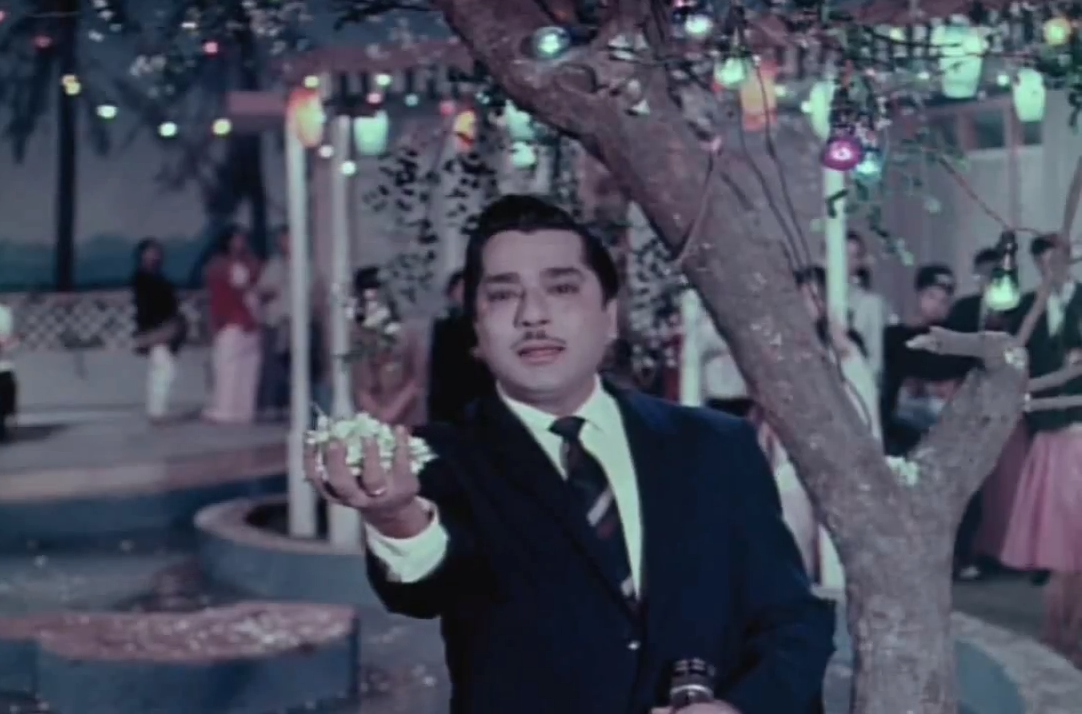
A vengeful Pradeep Kumar taunts Meena Kumari at her engagement party in Bheegi Raat (1965)

Bheegi Raat (1965) stars Ashok Kumar, Meena Kumari, and Pradeep Kumar in a classic Bollywood love triangle story full of messy drama and heartache. The film is not particularly memorable for its plot, but the soundtrack composed by Roshan and penned by Majrooh Sultanpuri contains a beautiful Raga Yaman-based gem that is still remembered today: “dil jo na keh saka.” Here, I’ve provided the lyrics and translation for both the female version (sung by Lata Mangeshkar) and the male version (sung by Mohammed Rafi) found in the film. The lyrics for the female version are standard Bollywood fare, but the male version is surprisingly vengeful and caustic. Hearing these lyrics in context of the film makes more sense: a jealous Pradeep Kumar taunts Meena Kumari using this song at a party celebrating her engagement to Ashok Kumar during the film’s conclusion. Even still, some of these lyrics are pretty wild. For example, he implores Meena’s character to drink blood from the heart (!) (piyo chaahe khuun-e-dil ho, ki piite pilaate hi…). The bitter sentiments found in these lyrics really drive home a theme expressed in Hindi films from this era that we’re all forced to grapple with at some point — love really hurts sometimes, doesn’t it?

–Mr. 55

P.S. Obviously, the Rafi version of this song is more popular than the Lata version, but I really think Lata holds her ground in this case with the tandem rendition. Her version has a segment of humming during the introduction that isn’t found in the Rafi version, which has always sounded absolutely heavenly to me.

Dil Jo Na Keh Saka Lyrics and Translation:


[Male]

dil jo na kah sakaa, vohii raaz-e-dil kahne kii raat aayii
The  night has come to uncover that secret which my heart could not reveal. 

naghmaa saa koii jaag uThaa badan me.n
A melody has awakened in my soul,
jhankaar kii sii thharthharii hai tan me.n
and a tinkling sensation quivered throughout my body.
mubaarak tumhe.n kisii kii laraztii sii baaho.n me.n rahne kii raat aayii
Congratulations to you, for the night has come to spend in someone else’s quivering arms. 

taubaa! yeh kis ne anjuman sajaa ke
Oh! Who has organized this gathering
tukDe kiye hai.n gunchaa-e-vafaa ke?
and destroyed the flowerbud of love?
uchhaalo gulo.n ke tukDe ki rangii.n fizaao.n me.n rehne kii raat aayii
Toss up the pieces of those flowers, for the night has come to spend in this colorful atmosphere.

chaliye mubaarak jashn dosti kaa,
Felications on this celebration of friendship;

daaman to thaamaa aap ne kisii kaa
you have accepted someone else’s embrace. 

hame.n to khushii yahii.n hai, tumhe.n bhi kisii ko apnaa kahne kii raat aayii
I am pleased, as the night has come for you to call someone else your own.

saaghar uThaao, dil kaa kis ko gham hai?
Raise your wine glass; who sulks for the heart?
aaj dil kii qiimat jaam se bhi kam hai
Today, the value of a heart is worth less than that of wine.  

piiyo chaahe khuun-e-dil ho ki piite pilaate hii rahne kii raat aayii
Drink the blood of the heart if you so desire, for the night of endless drinking has come. 

dil jo na kah sakaa, vohii raaz-e-dil kehne kii raat aayii
The night has come to uncover that secret which my heart could not reveal.


[Female]

dil jo na kah sakaa, vohii raaz-e-dil kahne kii raat aayi
The night has come to uncover that secret which my heart could not reveal. 

naghmaa saa koii jaag uThaa badan me.n
A melody has awakened in my soul,
jhankaar kii sii thharthharii hai tan me.n
and a tinkling sensation quivered throughout my body. 

pyaar kii inhii.n dhaDaktii fizaao.n me.n rahne kii raat aayii
The night has come to spend in this pulsating ambience of love.  

ab tak dabii thii ek mauj-e-armaa.n
Until now, a wave of desire was suppressed within me.
lab tak jo aayii ban gayii hai tuufaa.n
When it reached my lips, it became a storm.
baat pyaar ki bahakti nigaaho.n se kahne kii raat aayii
The night has come to speak about love to those wandering eyes. 

guzare na yah shab, khol duu.n ye zulfe.n
As the night passses slowly, I shall let down my hair.
tum ko chhupaa luu.n muund ke ye palake.n
And I will hide you by shutting these eyelids. 
beqaraar sii laraztii sii chhaa.nvo.n me.n rahne ki raat aayii
The night has come to spend in these restless and quivering shadows. 

dil jo na kah sakaa, vohii raaz-e-dil kahne kii raat aayi
The  night has come to uncover that secret which my heart could not reveal.

Meena Kumari looking beautiful (and sad) as usual in Bheegi Raat (1965).

Glossary:

raaz-e-dil: secret of the heart; naghmaa: melody, song; thharthharaanaa: to quiver;  jhankaar: tinkle; laraztii: trembling; baaho.n: arms; tauba: oh!; anjuman: gathering; tukDe karna: to crush, destroy; gunchaa-e-vafaa: flowerbud of love; uchhaalna: to throw, toss up; gul: flowerfizaa: atmosphere, ambience; jashn: celebration; daaman thhaamnaa: to accept an embrace; saaghar: wine glass; qiimat: price, value; jaam: wine; khuun-e-dil: blood of heart; dabnaa: to suppress; mauj-e-armaa.n: wave of desire; bahakna: to wander; shab: night; muundna: to shut; palake.n: eyelids; beqaraar: restless

Jani O Jani Lyrics and Translation: Let’s Learn Urdu-Hindi

Next we will discuss the lyrics and translation of the nostalgic Kishore Kumar song “Jani O Jani.” However, this post is going to be a little different since something a little different happened to me this month. My wonderful boyfriend of 2 years proposed to me! We met when he was recruited by a friend to be an extra in the 1950s Bollywood film tribute I was shooting for my thesis at Harvard. The deal was essentially sealed when I realized he had heard more than half the songs on my 60s Mohammed Rafi playlist. Two years later, he planned a surprise engagement proposal straight from a Bollywood dream sequence! I was reminded immensely of an old Kishore Kumar gem, “Jaani O Jaani” from Raja Jani (1972). There is something both nostalgic and hopeful about this song that I love.

Raja Jani (1972) is actually an incredibly fun film–basically the 70s Bollywood version of the American feature-length cartoon Anastasia (1997). It’s colorful, upbeat, and filled with exciting drama at its predictable best. The story is written by the highly-talented Nabendu Ghosh, who also wrote more somber-toned philosophical works like Bandini (1963) and Teesri Kasam (1967).

We don’t often translate Kishore Kumar songs on this site because of my obsession with Mohammed Rafi and Mr. 55’s obsession with Lata (surprise surprise—Mr. 55 and I are just friends!). But this song is special. It’s picturized on Dharmendra driving through the Delhi streets and evokes that sense of travel and beginning a journey found in many of Kishore other great hits (eg. “Musafir Hoo.N Yaaro.N”, “O Maaji Re”, etc.). Very appropriate for the occasion of starting a new life together (oh, give me a break).

Dharmendra and Hema Malini exchange uber cute glances in Raja Jani (1972)

Lyrics and Translation:

Jani O jani
Darling, oh darling
Jaldi se aaja miljaa ke biit jaaye yeh jawaanii
Come meet me quickly because our youth slips away

Bigda naseeba banne ke liye
To correct my misguided fate
Ek ishaaraa tere kaafi hai
Just one signal from you is enough
Aashiq ke jiine marne ke liye
To make the choice between life and death for a lover
Itna sahaara tera kafi hai
That is all the support that is needed
Tujh pe lutadoonga mitadoonga mai.N yeh zindagaani
For you, I would throw away and wipe out this life of mine
Jaani O jaani jaani O jaani
Darling, oh darling

Aankhon mei.N teri tasveer liye
Carrying your picture in my eyes
DhuunDh raha hoo.N tujhe raste mei.N
I search for you along the way
Teri galii mei.N teraa diiwaanaa
In your street, that man who is crazy in love with you
Bech rahaa hai dil saste mei.N
Is selling his heart to you cheaply
Karle yeh sauda leja deja raani dil ki nishani
Accept this bargain and let us exchange, my queen, tokens of our hearts
Jaani O jaani
Darling, oh darling

Glossary:

jaani: darling, sweetheart; jaldi se: quickly; jawaani: youth; naseeba: fate; ishaaraa: signal; aashiq: lover; sahaaraa: support; zindagaani: life; tasveer: picture; sauda: bargain, exchange

I know, I know, this is obnoxious, but I really had to put a picture of my engagement ring here. Is the teal box in the background a subtle enough clue that it’s from Tiffany’s?! Was the complimentary teal background over-doing it?

Why yes, it’s a flawless Tiffany solitaire engagement ring.

OK, OK, I’m done now.

-Mrs. 55

The Bollywood Bromance: Songs of Manly Love

There are few things cuter than a wholesome die-hard Indian bromance. In the past decade, the term “bromance” has become popularized by the American media and by high-grossing summer flicks that explore its comedic aspects—but its roots can be traced back to Hollywood first academy award for best picture Wings (1927). This silent heart-wrenching World War I love-fest between two men inspired dozens of commercial hits down the road from Butch Cassidy and the Sundance Kid (1969) to Top Gun (1986). Say what you want about those films, however, Bollywood was unarguably where this concept blossomed to its colorful fullest.

Perhaps it’s cultural—I can remember visiting Simla when I was younger and seeing teenage boys holding hands as they walked down the street. It was just considered a normal expression of friendship. Things have changed plenty since my childhood, but regardless, the marketability of the bromance genre may also likely stem from what had (and has) been for a long time a male-dominated industry–from directors to screenwriters all the way down to the lowly production assistants. In fact, in the early pre-talkie years of Indian cinema, women were not even allowed to act in films, much less attend viewings. Y-chromosome melodrama sells, and sells big. The bonds of manly love have been a glorified subject of Bollywood expression since time immemorial and has inspired some of the best movies you’ll ever watch.

In this post, we’ll explore our top 5 “bromantic” songs of yesteryear films long before the days of Dostana (2008) and even Qurbani (1980). From declaring eternal devotion to sobbing over betrayal, each one has a special place in our hearts and cinematic history.

Amitabh Bachhan and Dharmendra sing out their love in Sholay (1975)

Yeh Dosti (Sholay 1975):

This song is the crowning jewel of Bollywood bromance. Set at the beginning of an all-time megahit, this song showcases two men (Amitabh Bachhan and Dharmendra) riding a single motorcycle and singing their love for each other. Chest-hair is just blowing in the wind as their friendship is put to the test at the film’s climax. Overdone slightly, but a timeless tear-jerker!

Raj Kapoor pours his heart into his sad song of betrayed trust in Sangam (1964)

Dost Dost Na Raha (Sangam 1964):

Talk about tragedy. Raj Kapoor flies to war and saves his country, only to return and discover that his wife Vijayantimala is really in love with his own best friend Rajendra Kumar. This song of betrayal and lost friendship played morosely on the living room piano makes everyone in the room awkward. Please note that low-cut v-neck top. No, I’m not referring to Vijayantimala.

Rajesh Khanna and Amitabh Bachhan being adorable in Namak Haraam (1978)

Diye Jalte Hai.N (Namak Haraam 1973):

A Rajesh Khanna classic. Although best friends, Rajesh Khanna and Amitabh Bachhan come from two very different socio-economic statuses, ultimately leading to a huge public morally-charged battle of principles. Rajesh Khanna plays the good guy as usual, and his on-screen chemistry with Bachhan evokes the joy audiences loved in Anand! Did I mention the obligatory and visible fluffy chest hair?

Facing starvation and homelessness, two boys find friendship in Dosti (1964)

Chahoonga Mai.N Tujhe (Dosti 1964):

This film was unique in that it is entirely about two teenage boys (neither of whom were big stars then) and the sacrifices they make for each other. Did I mention the hero is blind and homeless? It makes it more endearing. This beautiful Mohammed Rafi song of tragedy is when the hero realizes his best friend is better off without him, and decides to get out of his way forever. These are kids, guys. It’s really, really cute.

Pran works to get a smile out of Amitabh Bachhan in Zanjeer (1973). This is a must-see–Pran is just such a beast in this movie.

Yaari Hai Imaan Mera (Zanjeer 1973):

Oh, Pran, you are a legend. This famous song celebrates the friendship between an Indian (Amitabh Bacchan) and an Afghani patthan (the inimitable Pran). He embodies this character so skillfully—look at how he twirls and gives that sly shake of the head, you’d think he had grown up in a mountainous outskirt of Kabul. See, Bollywood knows how to cross political boundaries too!

An extremely honorable mention goes to “Anhoni Ko Honi” from Amar Akbar Anthony (1979). Does it really count as a bromance if they’re actually supposed to be brothers?

Amitabh Bacchan, Vinod Khanna, and Rishi Kapoor are three brothers on a mission in Amar Akbar Anthony (1979)

Share with us your thoughts and additions to our list!

-Mrs. 55