Yeh Raat Yeh Chandni Phir Kahan Lyrics and Translation: Let’s Learn Urdu Hindi

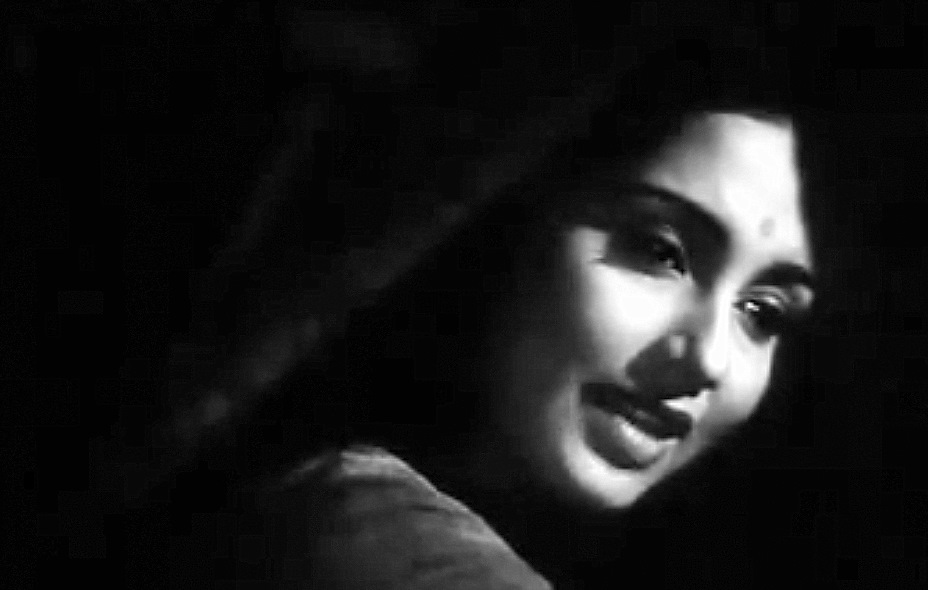
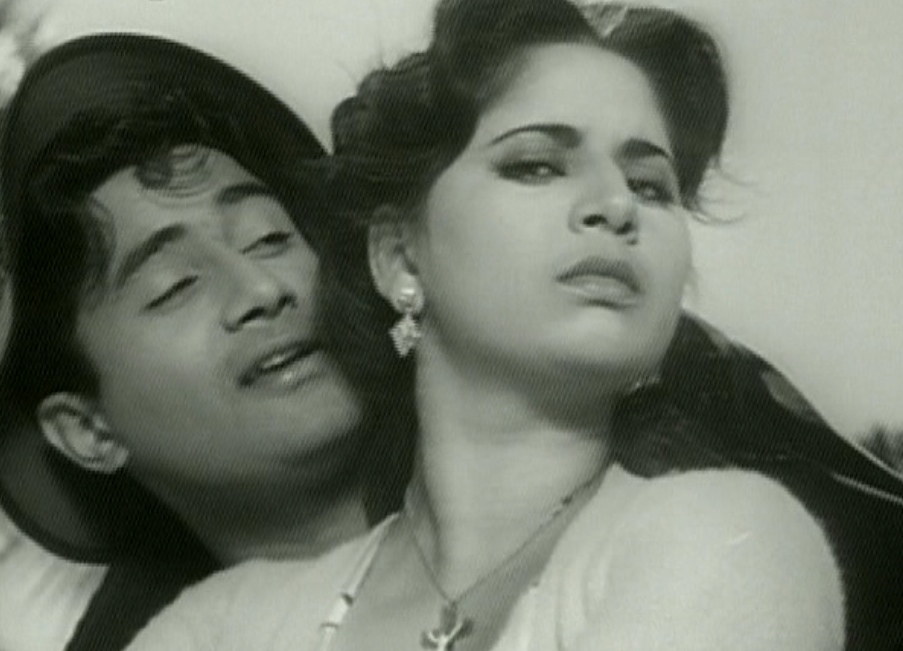
Dev Anand attempts to win over Geeta Bali under the guise of love in Jaal (1952).

We now will present the full lyrics and English translation to the haunting beauty “Yeh Raat Yeh Chandni” from the film Jaal (1952). Starring hit duo Dev Anand and Geeta Bali (who had wowed audiences together in Baazi the year before), Jaal was auteur Guru Dutt’s second film. Unlike Baazi, which mimicked film noirs of the West, Jaal looked outside the crowded cities to the gentle coast of Goa for inspiration. This film is truly one-of-a-kind, exploring life in the Portuguese fishing colony and the interwoven religious themes of forgiveness and love in the unfolding affair between two Christians, Tony (Dev Anand) and Maria (Geeta Bali). Note: Jaal was released before West Side Story hit Broadway, so the names of the lead characters are just a coincidence!

Dev Anand plays a Bombay gold thief who has escaped to Goa and who falls in love with the spunky village belle, Geeta Bali. Their love is tested by society, the law, and ultimately a vow before God that leads Tony to atone for his past and Maria to remain faithful until his sentence is fulfilled. Like most Guru Dutt films, the plot brings something new to the table. Watch out for some wild swing dancing, Johnny Walker making repeated attempts at Arabic, and a generous handful of “amens” throughout the film!
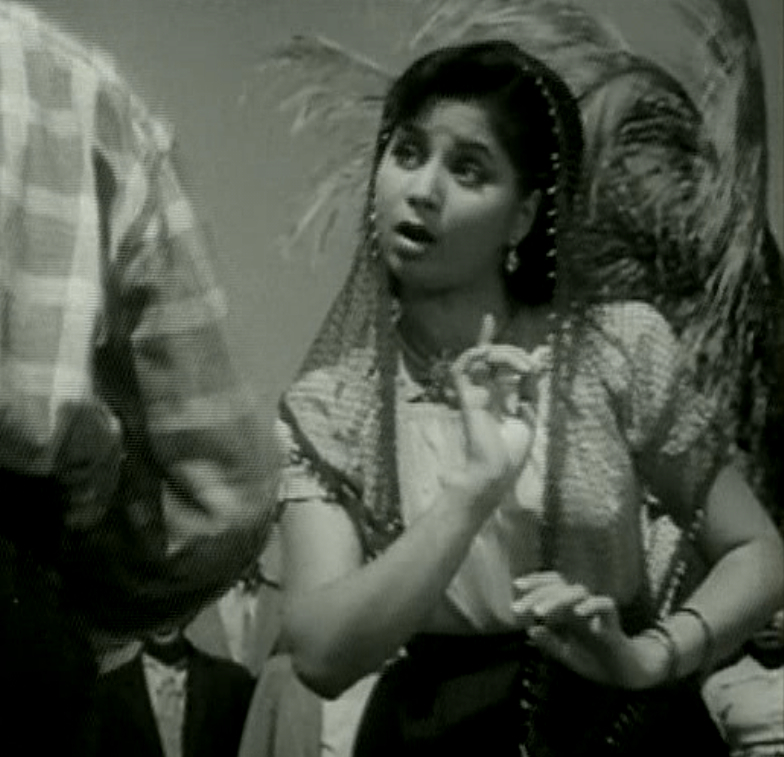
Spunky and fabulous, Geeta Bali leads a Goan dance in Jaal (1952)

The song “Yeh Raat Yeh Chandni” comes in two versions–the tragic Lata Mangeshkar duet, and the initial lilting Hemant Kumar solo. We will translate both to get a fuller understand of the role this song plays in the film, starting with the duet. This version occurs late in the film after Geeta’s friends and family discover Dev Anand’s true past and forcibly remove her from him. However, she is now in love despite his background and sings this tearful song of pining.
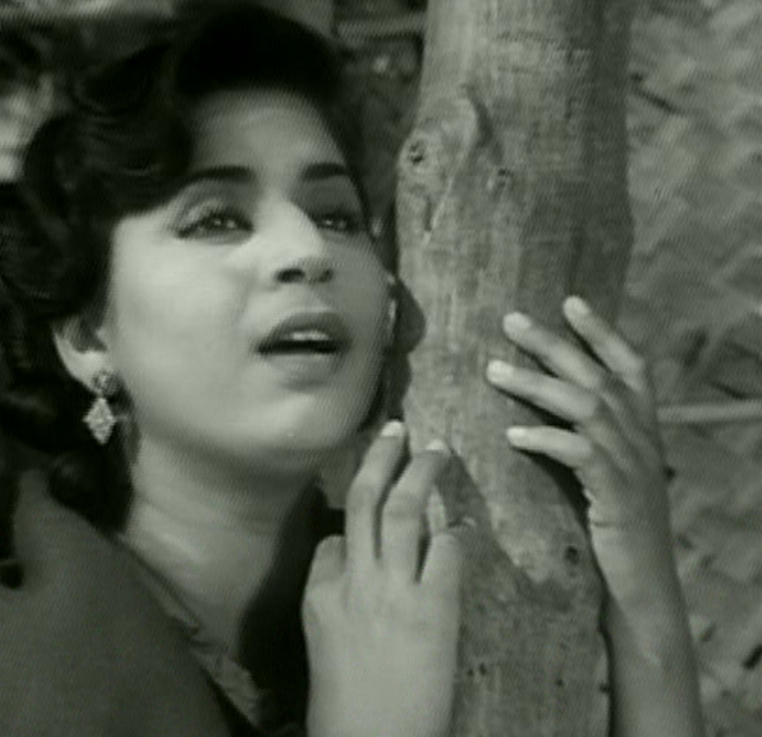
Geeta Bali declares her unwavering love for a wanted criminal in Jaal (1952).

Enjoy our English translation and full lyrics of “Yeh Raat Yeh Chandni” and it’s counterpart “Sun Ja Dil Ki Dastan” below!

Yeh Raat Yeh Chandni Phir Kahan Lyrics and Translation

Duet (Lata Mangeshkar & Hemant Kumar):

Yeh raat yeh chaandni phir kahaa.N
Where will we find this night and this moonlight again?
Sunjaa dil ki daastan
Listen now to the story of my heart

Chaandni raaten pyar ki baaten kho gayi jaane kahaa.N
Where have the moonlit nights and words of love become lost?
Yeh raat yeh chandni phir kahaa.N
Where will we find this night and this moonlight again?
Sunjaa dil ki daastan
Listen now to the story of my heart

Aati hain sada teri TuuTe hue taaro.N se
I sense your presence from the falling stars
AahaT terii suntii hoo.N khaamosh nazaaron se
I hear your footsteps with hushed glances
Bheegii hawa uudi ghaTa kheti hai.N teri kahanii
The moist winds, the soaring clouds speak of your story
Tere liye bechain hain sholo.N mei.N lipti jawaanii
My youth is ablaze in restlessness for you
Seene mei.N balkha raha hai.N dhuaa
The smoke engulfs my chest
Sunjaa dil ki daastan
Listen to the story of my heart

Chandni raaten pyar ki baaten kho gayi jaane kahaa.N
Where have the moonlit nights and words of love become lost?

Leheron ki labon par hai.N khoye hue afsaane
On the lips of the waves lie forgotten fables
Gulzaar umiidon ke sab ho gaye viraane
All the rose gardens of hope have become barren.
Tera pataa paaoo.N kahaa.N? Soone hai.N saare Thikaane
Where can I find where you are? All abodes are deserted
Jaane kahaa.N gum ho gaye jaake ho agle zamaane
I do not know where you have disappeared to in the other world
Barbaad hai.N aarzoo ka jahaa.N
The world of desire has been destroyed
Sunjaa dil ki daastan
Listen now to the story of my heart

Glossary:

raat: night; chaandni: moonlight; TuuTa taaraa: shooting star; aahaT: footsteps; khaamosh: silence, hushed; bheegi: wet; kahaanii: story; bechain: without peace, restless; sholaa: spark, fire: jawaanii: youth; seenaa: heart; chest; dhuaa: smoke; leher: wave; lab: lip; afsaanaa: fable, story; gulzaar: rose garden; umiid: hope; viiraane: wasted, desolate; pataa: whereabouts, address; soonaa: empty, lonely; Thikaanaa: shelter, abode; gumnaa: to become lost; aglaa: next; zamaanaa: world; barbaad: destroyed; aarzoo: desire; jahaa.N: world, place

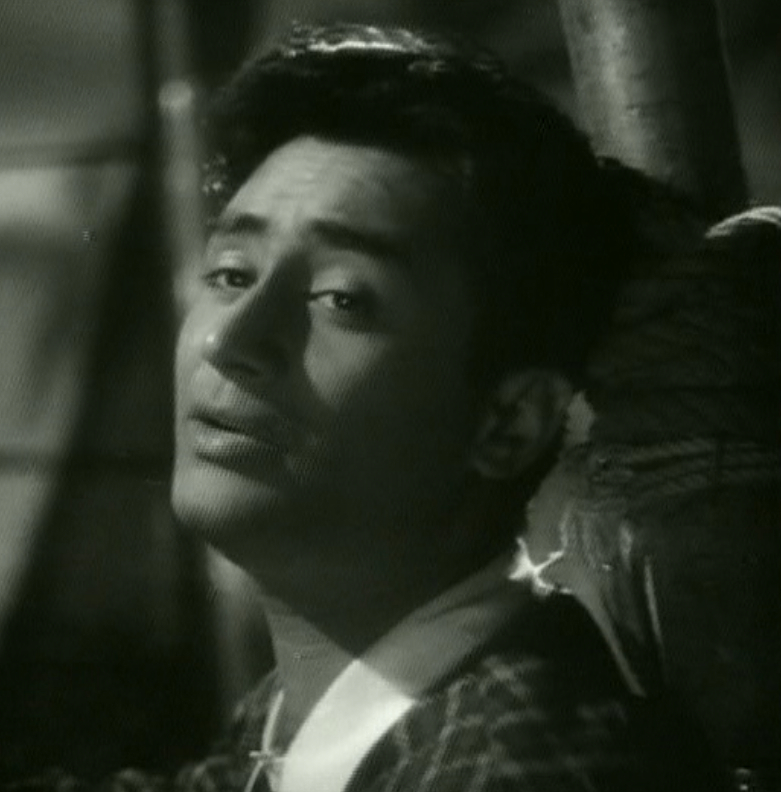
But before this sad reprise, Dev Anand can be found singing the romantic solo version from his beach side abode. Hemant Kumar’s voice is absolutely magical in this song–he has the perfect blend of richness and allure. At this time in the film, Dev Anand is trying to cinch the deal with his romance and claims he knows that Geeat Bali will come to his hut when she hears this song. His version of “Yeh Raat Yeh Chaandni” has a uniquely tropical Goa flair, but it maintains an exciting sense of urgency in both the lyrics and style. As you can guess, Geeta comes running.
Dev Anand Jaal

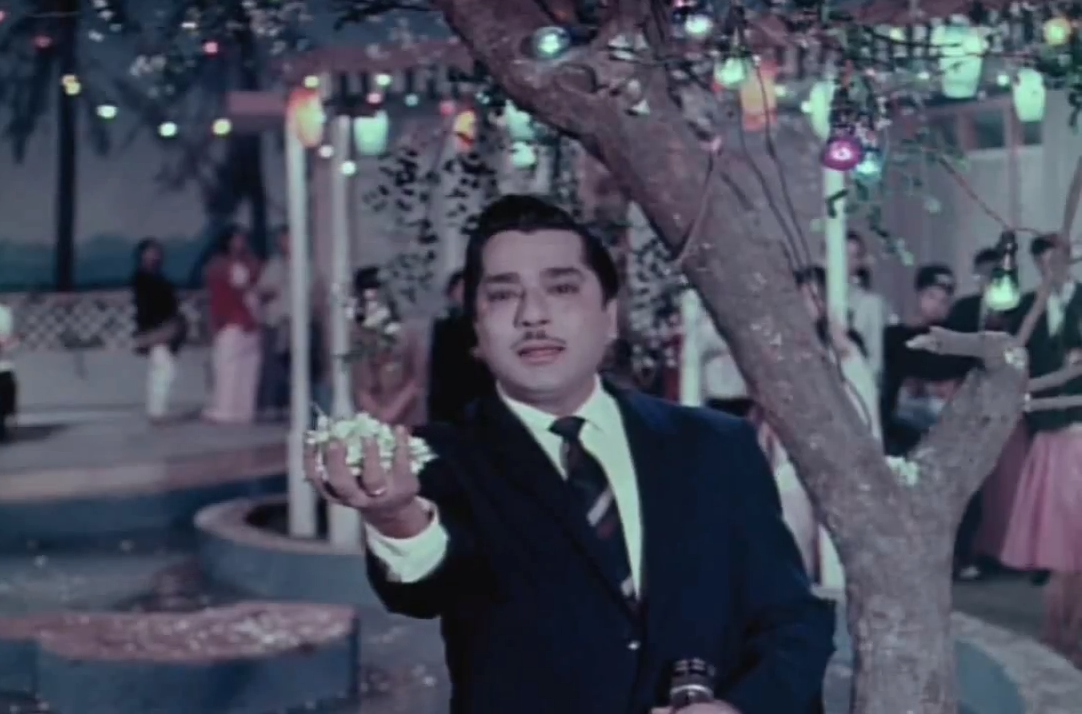
Dev Anand calls to Geeta Bali in the moonlight in Jaal (1952).

Yeh Raat Yeh Chandni Phir Kahan Lyrics and Translation

Male Solo (Hemant Kumar):

Yeh raat yeh chaandnii phir kahaa.N
Where will we find this night and this moonlight again?
Sun ja dil ki daastan
Listen now to the story of my heart

Hey peDo.N ki shaakho.N pe
On the branches of the trees
PeDo.N ki shaakho.N pe soyii soyii chaandnii, peDo.N ki shaakho.N pe…
On the branches of the trees the moonlight slumbers
Tere khayaalo.N mei.N khoyii khoyii chaandnii
In thoughts of you, the moonlight wanders
Aur thoDi der mei.N thak ke laut jaayegii
And soon it will become tired of waiting and return
Raat yeh bahaar ki phir kabhii na aayegii
This night of spring will never come back
Do ek pal aur hai yeh samaa
We have but a few moments left of this atmosphere
Sun ja dil ki daastan
Listen now to the story of my heart

Hey lehero.N ke honTho.N pe
Oh, on the lips of the waves
Lehro.N ke hontho.N pe dhiima dhiima raag hai, lehro.N ke hontho.N pe
On the lips of the waves is a soft melody
Bhiigii hawaao.N mei.N thanDii thanDii aag hai
In the moist wind is a cool fire
Is hasee.N aag mei.N tuu bhii jalke dekhle
In this beautiful fire, you should see what it feels like to burn
Zindagii ke geet ki dhun badal ke dekhle
See what it feels like to change the tune of life’s song
Khulne de ab dhaDkano.N ki zubaan
Free the voice of our heartbeats
Sun ja dil ki daastan
Listen now to the story of my heart

Hey jaatii bahaare hai.N
Oh, the Spring is receding
Jaatii bahaare hai.N uThti jawaaniiyaa, jaatii bahaare hai.N
The Spring is receding, our youth is rising
Taaron ke chaao.N mei.N pehle kahaaniiyaa
In the shadows of the stars lie our stories
Ek baar chal diye gar tujhe pukaarke
If it leaves after calling to you,
Lautkar na aaye.Nge kaafile bahaar ke
The caravans of Spring will not return
Aaja abhi zindagii hai jawaan
Come, life is still young
Sun ja dil ki daastan
Listen to the story of my heart

Glossary:

raat: night; chaandnii: moonlight; peD: tree; shaakh: branch; khayaal: thought; thoDii der mei.N: in a short while, soon; thak hona: to become tired; laut jaanaa: to go back; bahaar: spring; samaa: atmosphere; leher: waves; honT: lip; dhiima: softly; bheega: moist, rainy: ThanDaa: cool; aag: fire; hasee.N: beautiful; dhun: tune; dhaDkan: heartbeat; zubaan: words, language; jawaanii: youth; chhaaye: shadow; kaafile: caravans

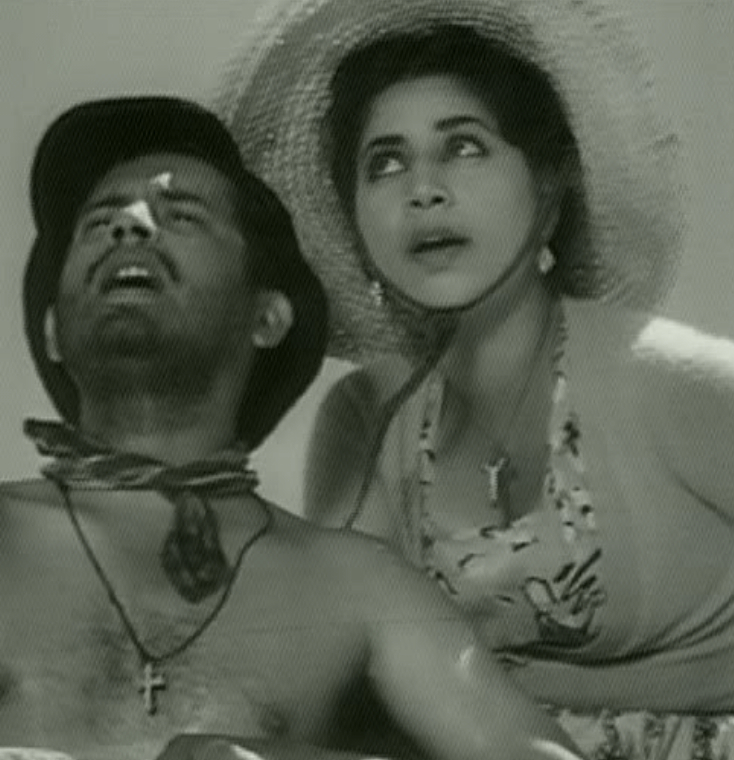
Did you know that it was in this movie that Guru Dutt first hired cinematographer V. K. Murthy? V.K. Murthy would continue to work as Guru Dutt’s D.P. (Director of Photography) for all of his following films. In fact, between Guru Dutt and V.K. Murthy grew such trust and friendship, that Murthy eventually encouraged Dutt to start acting in his owns films, including the haunting classics Kaaghaz Ke Phool and Pyaasa. In this film, Guru Dutt actually makes his first cameo–as a shirtless fisherman no less! Ladies, please calm down.

– Mrs. 55
Shirtless Guru Dutt

Guru Dutt makes a brief film debut in Jaal (1952) as a rugged and shirtless fisherman.

Teri Mehfil Mein Qismat Aazmaakar Lyrics and Translation: Let’s Learn Urdu-Hindi

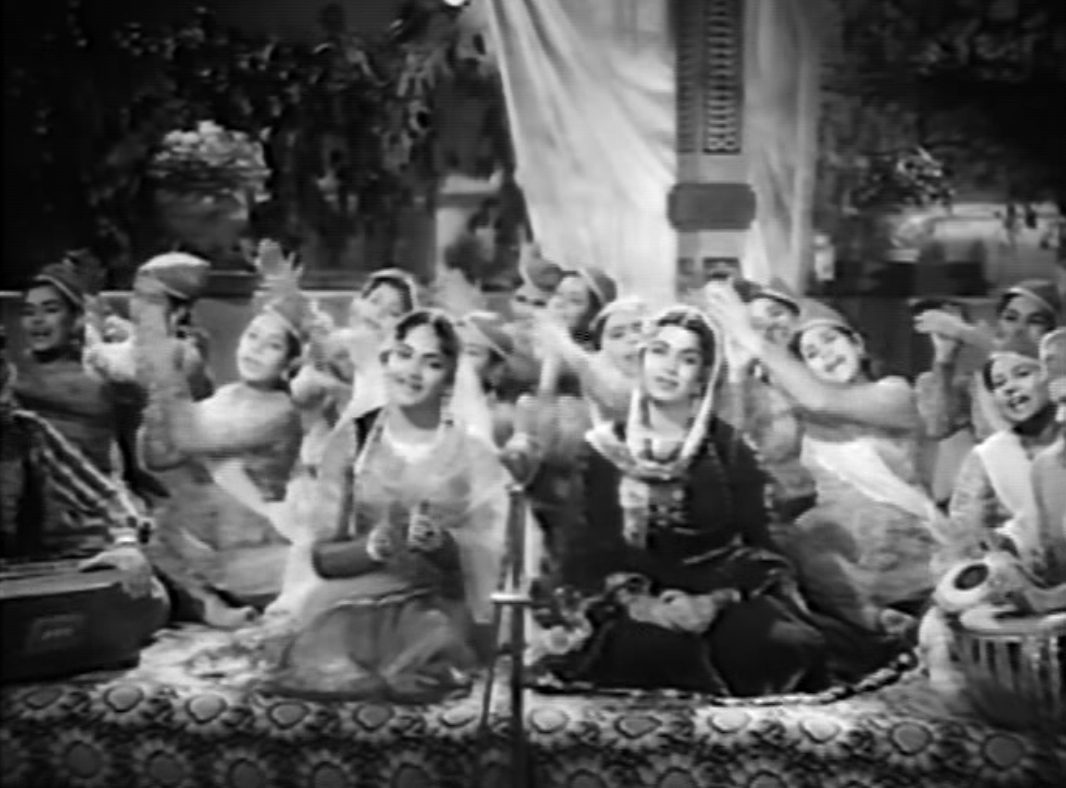
The mehfil for the qawwali looks particularly vibrant in the recolored version of Mughal-e-Azam (1960)

Directed by K. Asif, Mughal-e-Azam (1962) is one of the most cherished films in the history of Bollywood cinema. Although several films have been made around the same premise, Mughal-e-Azam is by far the most well-known depiction of the forbidden love story between Prince Salim and courtesan Anarkali.  We could write (and probably will) at least ten different posts to describe all the things we love about this movie: the intricate Urdu dialogue, the beautiful soundtrack composed by Naushad, the elaborate costumes and set design, the heartwrenching plot, and so on. Here, I’d like to  share the lyrics and translation for one of many gems found in this film’s soundtrack: terii mahfil me.n qismat aazmaakar.

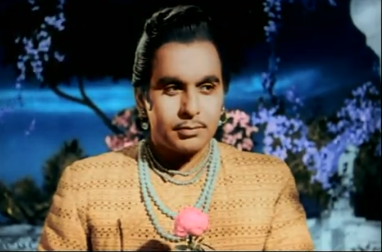
This qawwali is set between Anarkali (played by Madhubala) and her chief rival Bahar (played by Nigar Sultana) as a musical debate on the nature of love. As both women fight for his affections, Prince Salim (played by Dilip Kumar) watches the performance and is supposed to give a rose to the winner of the debate at its conclusion.The back-and-forth debate style of these lyrics is quite a rare find in Bollywood cinema, and it is even rarer to encounter such lyrics (penned by Shakeel Badayuni!) as a female-female duet. Despite being a female-female duet, there is still a subtle division of gender roles if you pay close attention to the song. From her costume, mannerisms, and lines, it could be argued that Bahar is taking on the more masculine role in this qawwali. In fact, her singing part is rendered by the more masculine of the two voices:  Shamshad Begum.

Although the lyrics of this qawwali can be interpreted as universal statements about love, there are a couple of interesting things to point out here with the context of the film’s plot in mind. For example, Bahar introduces a pun on her name when she sings “bahaare.n aaj paigham-e-muhabbat leke aayii. hai.n” (the spring has brought a message of love). Moreover, Bahar snarkily calls attention to the secret love affair between Salim and Anarkali when she claims, “kisii din yeh tamasahaa muskuraakar ham bhii dekhe.nge” (we shall smile one day and watch this spectacle). Aware that her affair with Salim is unacceptable by society’s standards, Anarkali admits that love can be hard when she sings, “muhabbat hamne maanaa zindagi barbaad kartii hai” (we admit that love can destroy one’s life”). She then posits, however, that suffering for the sake of love is worth it because lovers can leave a lasting legacy on the world after they die: “yeh kyaa kam hai ki mar jaane pe duniyaa yaad kartii hai?” Even though she’s being a little dramatic with her lines here, it’s hard not to be rooting for Anarkali over Bahar.

Salim, played by Dilip Kumar, judges the musical debate between Anarkali and Bahar.

At the end of the qawwali, Salim actually declares Bahar the winner of the debate by giving her the rose. This isn’t really a genuine victory because we know that even though Bahar wins the rose, Anarkali has already won Salim’s heart. Also, who could really lose when you have Madhubala and Lata Mangeshkar on your team at their peak of their careers? Come on, Salim, keep it real.

-Mr. 55

Teri Mehfil Mein Qismat Aazmaakar Lyrics and Translation:

Shamshad: terii mahfil me.n qismat aazamaakar ham bhii dekhe.nge
In the gathering of your court, we will test our fate. 
ghaDii bhar ko tere nazdiik aakar ham bhii dekhe.nge
We shall come close to you fleetingly and watch this spectacle. 
ajii haa.n ham bhii dekhe.nge
Yes, we shall watch this spectacle.  

Bahar, played by Nigar Sultana, being sassy as she sings a classic qawwali in Mughal-e-Azam (1960)

Lata: terii mahfil me.n qismat aazamaakar ham bhii dekhe.nge
In the gathering of your court, we will test our fate. 
tere qadamo.n pe sar apanaa jhukaa kar ham bhii dekhe.nge
We shall bow our heads at your feet and watch this spectacle 

ajii haa.n ham bhi dekhe.nge
Yes, we shall watch this spectacle.  

Madhubala charms all of us with her beautiful smile in Mughal-e-Azam (1960).

Shamshad: bahaare.n aaj paighaam-e-muhabbat leke aayii hai.n
The spring has brought a message of love.
baDii muddat me.n ummiido.n kii kaliyaa.n muskuraayii hai.n
The flowerbuds of hope have smiled  after  a long time. 

gham-e-dil se zaraa daaman bachaakar ham bhii dekhe.nge
We shall protect ourselves from heartache and watch this spectacle.
ajii haa.n ham bhii dekhe.nge
Yes, we shall watch this spectacle.   

 Lata: agar dil gham se khaalii ho to jiine kaa mazaa kyaa hai?
If the heart is empty of pain, then what pleasure can one find in living?
na ho khuun-e-jigar to ashq piine kaa mazaa kyaa hai?
If the heart does not bleed, then what pleasure can one find  in swallowing tears? 

muhabbat me.n zaraa aa.nsuu bahaakar ham bhii dekhe.nge
We shall shed a few tears in love and watch this spectacle. 
ajii haa.n ham bhii dekhe.nge
Yes, we shall watch this spectacle.  

Shamshad: muhabbat karnevaalo.n kaa hai bas itnaa hii afasaanaa
Such is the story of lovers: 
taDapnaa chupke chupke aahe.n bharnaa ghuT ke mar jaanaa
They quietly suffer; their eyes fill with tears; they  suffocate and die. 
kisii din yeh tamaashaa muskuraakar ham bhii dekhe.nge
We shall smile one day and watch this spectacle.  

ajii haa.n ham bhii dekhe.nge
Yes, we shall watch this spectacle.   

Lata: muhabbat hamne maanaa zindagii barbaad kartii hai
We admit that love can destroy one’s life.  
yeh kyaa kam hai ki mar jaane pe duniyaa yaad kartii hai?
But, is it unworthy if the the world remembers lovers after they die? 
kisii ke ishq me.n duniyaa luTaakar ham bhii dekhe.nge
We shall sacrifice the world for someone’s love and watch this spectacle. 
ajii haa.n ham bhii dekhe.nge
Yes, we shall watch this spectacle.  

terii mahfil me.n qismat aazamaakar ham bhi dekhe.nge
In the gathering of your court, we will test our fate. 

Glossary

qismat: fate;  aazamaanaa: to test; ghaDii bhar ko: fleetingly; nazdiik: close; qadam: feet; paighaam-e-muhabbat: message of love; baDii muddat me.n: after a long time; ummiid: hope; daaman bachaanaa: to protect; khuun-e-jigar: blood of the heart; ashq piinaa: to swallow tears; aa.nsuu bahaanaa: to shed tears; afasanaa: story; aahe.n: eyes; ghuTnaa: to suffocate; tamaaashaa: spectacle; barbaad: destroyed; luTaanaa: to sacrifice.

Yeh Ishq Ishq Hai Lyrics and Translation: Let’s Learn Urdu-Hindi

Bollywood Qawwali Barsaat Ki Raat Shyama Ratna

Ratna (left) and Shyama (right) lead the qawwali “Yeh Ishq Ishq Hai” from the hit Bollywood film Barsaat Ki Raat (196)

For our next post, we provide an English translation of “Yeh Ishq Ishq Hai” qawwali (and its prelude “Na to Caravan ki Talaash Hai“) from the all-time classic film Barsaat ki Raat (1960). For anyone familiar with the beautiful lyrics of this Sahir Ludhviani masterpiece, you know that “Yeh Ishq Ishq Hai” is the crowning jewel of the qawwali genre. The ultimate in lyrical poetry, allusions, wit, and transcendent symbolism, “Yeh Ishq Ishq Hai” was no easy task to translate and dissect. Sahir Ludhviani, who also later penned the gems from films like Taj Mahal (1963), wrote an album of love poetry for Barsaat Ki Raat--from “Zindagi Bhar Nahii.N Bhoolegi” to “Mai.N Ne Shaayad Tumhe” to la pièce de résistance, “Yeh Ishq Ishq Hai.”

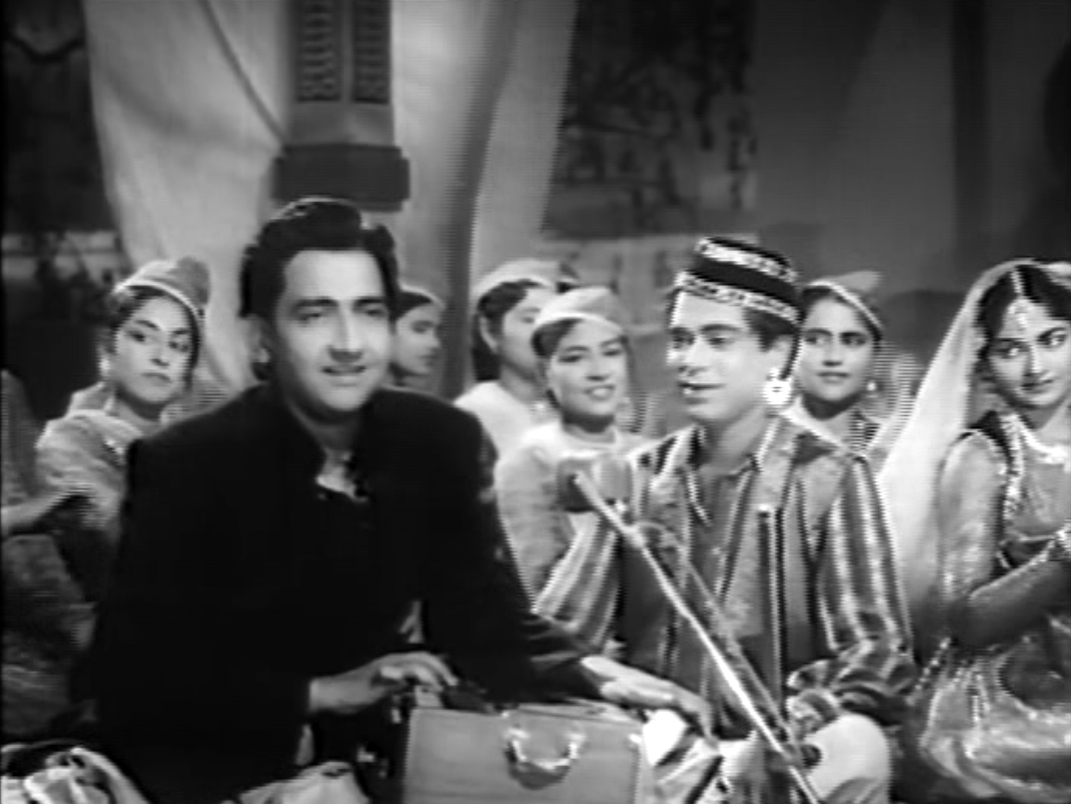
Bharat Bhushan Barsaat Ki Raat qawwali

Bharat Bhushan jumps in to save the girls’ qawwali team in “Yeh Ishq Ishq Hai” from Barsaat Ki Raat (1960)

Through this culmination piece of the film’s ongoing qawwali competition, both hero (Bharat Bhushan) and the heroine (Madhubala) are reunited after a long and painful separation. Mohammed Rafi, Asha Bhonsle, and Manna Dey vie to out-do each other in this clever, powerful discussion of the meaning of love, but at the song’s climax Rafi brings the qawwali to a heart-stopping triumphant finish that wins his team the competition. It is a real pleasure to appreciate the many levels on which the qawwali can be understood–from religious, to romantic, to quite literal–after singing “ilaaj koi to maut hai,” Shyama literally falls sick to her deathbed, or as Bharat Bhushan croons, “nikalii Radha saj ke,” Madhubala appears miraculously at the doorway from the prison of her house. Come follow along with our translation of this epic qawwali and it will be clear why “Yeh Ishq Ishq Hai” made Bollywood film history!

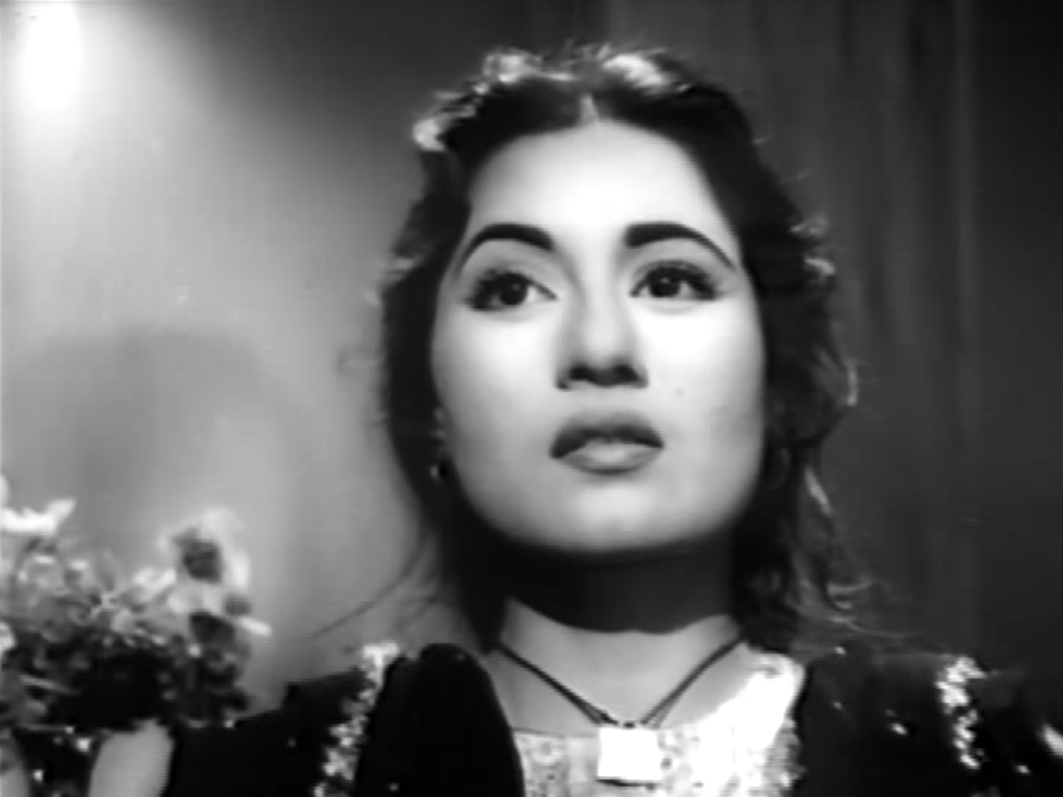
Madhubala Barsaat Ki Raat

Madhubala hears Bharat Bhushan on the radio and decides to find him in Barsaat Ki Raat (1960)

Yeh Ishq Ishq Hai Lyrics and Translation

MALE:

Na to caaravaan ki talaash hai
I am not in search of a caravan
Na to humsafar ki talaash hai
I am not in search of a fellow traveler
Mere shauq-e-khaana kharaab ko teri rehguzar ki talaash hai
That ruined place of my desire searches for the path that leads to you

FEMALE:

Mere naamuraad junoon ka hai ilaaj koi to maut hai
If there is any cure for my unfortunate obsession, then it is death
Jo davaa ke naam pe zehar de
Give me that medicine whose name is poison
Usi chaaraagar ki talaash hai
I am in search of such a healer

Tera ishq hai meri aarzoo,
Your love is my desire
Tera ishq hai meri aabroo,
Your love is my honor
Dil ishq, jism ishq hai, aur jaan ishq hai
My heart is love, my body is love, and my life is love
Imaan ki jo poochho to imaan ishq hai
If you ask for faith, then that is love too
Tera ishq mai.N kaise ChhoD doo.N?
How could I ever leave your love?
Meri umr bhar ki talaash hai
That love is what I have been searching for all my life

MALE:

Yeh ishq ishq hai, ishq ishq, yeh ishq ishq hai, ishq ishq
This is love, this is love, this is love
Jaan-soz ki haalat ko jaan-soz hi samjhegaa
Only one in torment can understand the condition of a fellow sufferer
Mai.N shamaa se kehta hoo.N mehfil se nahii.N kehta
I am speaking to the flame, not to the company gathered here
Kyonki yeh ishq ishq hai, ishq ishq, yeh ishq ishq hai, ishq ishq
For this is love, this is love, this is love

FEMALE:
Sahar tak sab ka hai anjaam jal kar khaak ho jaana
By dawn, everything will burn and be reduced to ashes
Bhari mehfil mei.N koi shamaa yaa parvaana ho jaaye
Everyone in this gathering shall became either flame or moth
Kyo.N ki yeh ishq ishq hai, ishq ishq, yeh ishq ishq hai, ishq ishq
For this is love, this is love, this is love

MALE:

Vehshat-e-dil rasn-o-daar se roki na gayi
Love is not stopped by the madness of the heart or ropes and the gallows
Kisi khanjar, kisi talvaar se roki na gayi
It is not stopped by any dagger, by any sword
Ishq Majnu ki woh aavaz hai jiske aage koi Laila kisi deewaar se roki na gayi,
Love is that voice of Majnu’s which Laila followed and which no barrier could stop
Kyo.N ki yeh ishq ishq hai, ishq ishq, yeh ishq ishq hai, ishq ishq
For this is love, this is love, this is love

Woh hanske agar maa.Nge.N to hum jaan bhi dede.N,
If she laughs and asks, then I would even give my life
Haa.N yeh jaan to kya cheez hai? Imaan bhi dede.N!
Yes, after all what is this life? I would even give up my faith!
Kyo.N ki yeh ishq ishq hai, ishq ishq, yeh ishq ishq hai, ishq ishq
For this is love, this is love, this is love

Naaz-o-andaaz se kehte hai.N ki jeena hoga,
I am told that I must live with my fate gracefully
Zehar bhi dete hai.N to kehte hai.N Ki peena hoga
They give me poison, and say I must drink
Jab mai.N peetaa hoo.N to kehte hai.N ki marta bhi nahii.N,
But when I drink it, then they say I won’t die
Jab mai.N martaa hoo.N to kehte hai.N ki jeenaa hogaa
When I am dying, they say I must live
Yeh ishq ishq hai, ishq ishq, yeh ishq ishq hai, ishq ishq
For this is love, this is love, this is love

Mazhab-e-ishq ki har rasm kaDi hoti hai,
The laws and customs of love are very strict
Har qadam par koi deewaar khaDi hoti hai
At every step, there is a barrier standing
Ishq aazad hai, Hindu Na Musalmaan hai ishq,
Love is free, love is neither Hindu nor Muslim
Aap hii dharm hai aur aap hii imaan hai ishq
Your own duty and your own faith alone is love
Jis se aage nahii.N shekh-o-Brahaman dono.N,
Both Hindu and Muslim religious men cannot surpass this
Us haqeeqat ka garajtaa hua ailaan hai ishq
The reality of that thundering proclamation is love

(FEMALE in Panjabi):

Ishq na puchhe deen dharm nu, ishq na puchhe jaataan
Love does not ask your religion or creed, love does not ask your social class or caste,
Ishq de haatho.N garam lahu vich doobiyaan laakh baraataan ke
Love has drowned thousands of wedding revelers in its fiery blood
Yeh ishq ishq hai, ishq ishq, yeh ishq ishq hai, ishq ishq
This is love, this is love, this is love

MALE:
Raah ulfat ki kaThin hai ise aasaan na samajh
The path of love is dangerous, do not think it easy
Yeh ishq ishq hai, ishq ishq, yeh ishq ishq hai, ishq ishq
This is love, this is love, this is love

FEMALE:
Bahut kaThin hai Dagar panghat ki
The path to the riverside is very dangerous
Ab kya bhar luau.N mai.N Jamuna se matki?
Now how can I fill my jug with water from the banks of the Jamuna River?
Mai.N jo chali jal jamuna bharan ko dekho sakhi ji mai.N jo chali jal jamuna bharan ko
As I was on my way to fill my jug with water from the Jamuna,
Nand kishor mohe roke jhaadon
The young boy of Nanda [Krishna] stopped me
To kya bhar luau.N mai.N Jamuna se matki?
So how can I fill my jug with water from the banks of the Jamuna River?

MALE:
Ab laaj raakho more ghoonghat pat ki
Now protect my honor, this veil of mine
Jab jab Krishn ki bansi baaji,
When Krishna played his flute
Nikali Raadhaa saj ke
Radha emerged, dressed up
Jaan ajaan ka dhyaan bhulaa ke,
Forgetting all she was taught
Lok laaj ko taj ke
She left the honor of society
Haaye ban ban Doli Janak dulaari,
The darling child of King Janak [Sita] swayed into the forest
Pehenke prem ki maalaa
And wore a garland of love
Darshan jal ki pyaasi Meera
Meera thirsty for her a glimpse of her Lord
Pii gayii vishh ka pyaalaa aur phir araj kari
Drank a glass of poison and then pleaded
Ke laaj raakho raakho raakho, laaj raakho dekho dekho,
Protect my honor, protect my honor, protect my honor
Yeh ishq ishq hai, ishq ishq, yeh ishq ishq hai, ishq ishq
This is love, this is love, this is love

Allah rasool ka farmaan ishq hai
The commands of God and Mohammed are love
Yaanii Hadith ishq hai, Quraan ishq hai
The teachings of Mohammed are love, the Quraan is love
Gautam kaa aur Maseehaa kaa armaan ishq hai
The wishes of Bhudda and Christ are love
Yeh kaayanaat jism hai aur jaan ishq hai
This material existence and this life are love
Ishq sarmad, ishq hii mansoor hai
Love is everlasting, love alone is victorious
Ishq Moosa, ishq Koh-e-Toor hai
Love is Moses, love is Mt. Sinai
Khaaq ko but, aur but ko devtaa karta hai ishq
Love turns clay into idols, and idols into Gods
Intahaa yeh hai ke bande ko khuda karta hai ishq
The pinnacle is that love has the power to turn a man into a revered God
Haan.N yeh ishq ishq hai, ishq ishq, yeh ishq ishq hai, ishq ishq
Yes, this is love, this is love, this is love

Glossary:

caravaan: caravan; talaash: search; humsafar: fellow traveler; shauq-e-khaana; desires, hobbies; barbaad: ruined; rehuguzar: pathway; naamuraad: unfortunate; junoon: obsession; ilaaj: cure; maut: death; davaa: medicine; zeher: poison; chaaragar: one who treats you, doctor, healer; aarzuu: desire; aabruu: honor; jism: body; imaan: faith; jaansoz: torment, soul-burning; sahar: the time before dawn; anjaam: conclusion; khaak: ashes; parvaanaa: moth (used allegorically as one blinded by love); vehshat: madness; rasn: rope; daar: gallows; khanjar: dagger; talwar: sword; LailaMajnu: legendary ill-fated lovers; awaaz: voice; deewaar: barrier, wall; cheez: thing; naazoandaaz: pride and style, grace; mazhab: law; kaDi: strict, harsh; qadam: step; azaad: free; dharm: Hindu religious duty; haqeeqat: reality; garajnaa: to thunder; ailaan: proclaimation; deen: Islamic obedience; jaataan: caste; lahu: blood; ulfat: love; kaThin: dangerous; aasaan: easy; Dagar: pathway; maTki: jug, pot; Nand kishor: young Krishna laaj: honor; ghuunghat: veil; bansi: type of flute; dhyaan: meditation; lok: people, society; ban: forest; Dolna: to sway; Janak Dulari: The darling daughter of the mythological King Janak [Sita]; prem: love; maalaa: garland; darshan: glimpse of a deity; pyaasi: thirsty; vish ka pyaalaa: glass of poison; araj: plea; rasool: messenger [of God, Mohammed]; farmaan: commands; hadith: a report of the deeds and the teachings of Muhammed, Gautam: Buddha; Maseehaa: Jesus Christ; kaayanaat: material creation; sarmad: everlasting; mansoor: victorious, Moosaa: Moses; Koh-e-Toor: Mt. Sinai; khaaq: clay; but: idol; devtaa: God; intahaa: pinnacle, culmination

Yes, that glossary was a mouthful. Even as it is, I must warn that many of these words have a far deeper religious meaning to them that cannot be summed up in the one or two words as I have defined them. But no one said the Hindustani language was easy, and this song is just loaded with Arabic-based and Sanskrit-based vocabulary as well as references from both Hindu and Islamic traditions. It’s part of why Urdu-Hindi is such a complex, beautiful and absolutely fascinating language. Let’s take a more in-depth look at some of these lines:

  • “Ishq Majnu ki woh awaaz hai…” according to the Arab legend, similar to Romeo and Juliet, Laila and Majnu (whose nickname means “madly in love”) were two star-crossed lovers from rival families. However, Laila fled from her house to be with the one she loved and it is said that as Majnu was caught and whipped, their love was so strong that Laila screamed and blood appeared to flow from Laila’s skin instead.
  • “Bahut kaThin hai Dagar panghat ki…” is actually a line from the great Amir Khusrau qawwali written during the 13th century. The qawwali refers in one sense to the risks of dishonor faced by Radha as she attempted to fetch water, another sense explores the risks of standing up for religious beliefs (in Khusrau’s case, an allegiance to Sufi saint Nizamuddin Auliya.) The line has now become a sort of idiomatic warning to not underestimate the burden of any difficult task.
  • “Jab jab Krishna ki bansi baaji…” refers to the tales of Hindu folklore of childhood lovers Krishna and Radha, the latter of whom risked familial honor and suffered teasing and torment from her girlfriends in her love for the young Lord.
  • “Janak dulari ban ban Doli…” is a reference to the Ramayan in which Sita, upon learning of her husband Ram’s banishment to the forest, renounced her title as well. Sita, it should be recalled, had a very lavish upbringing as she was the daughter of King Janak, so this was no simple sacrifice to live in the dangerous jungle. But Sita’s love was unparalleled, and although she was not otherwise compelled to accompany Ram to the jungle, did indeed join him out of pure devotion.
  • “Darshan jal ki pyaasi Meera…” refers to the legend of Krishna devotee and Rajput Princess, Meera Bai of the 16th century. Her zealous worship and love of Krishna inspired not only many famous bhajans we know and sing today, but the resentment of her brother-in-law who frowned upon her actions (eg. mingling with the poor, ignoring her husband, etc.) He made several notorious attempts to kill her, including forcing her to drink a glass of poison that Lord Krishna is said to have transformed into nectar and saved her when she pleaded for the Lord to protect her honor.

As you can probably tell, I LOVE this qawwali. I discover new things every time I enjoy it (for example, anyone else notice how the background clappers only start shrugging their shoulders cliched bhangra-style ONLY when Ratna starts singing in Panjabi? Coincidence? I think not!) The song indeed transcends all religious and material loyalties, bringing the audience a dazzling, other-wordly experience. For anyone who’s tired of all the allegories and vocabulary quizzes, here’s the long-awaited behind-the-scenes gossip:

Did you know Bharat Bhushan actually got married in real life to Ratna (who ironically played the only character in the film NOT in love with him!) Surprise, right!? She was his second wife, and some even say that later mild-mannered Bharat Bhushan had had an affair with none other than Meena Kumari. Did the scandals never end in this town?

For more Urdu bliss, check out our post on the beauty of Urdu poetry in Hindi films!

-Mrs. 55

Ratna Barsaat Ki Raat

Ratna, wife of Bharat Bhushan, plays a sassy side-kick in the film Barsaat Ki Raat (1960)

O Sajna Barkha Bahar Aayi Lyrics and Translation: Let’s Learn Urdu-Hindi

Sadhana wistfully enjoys the rain in "o sajna barkhaa bahaar aayii" from Parakh (1960). Because she plays the role of a village girl here, she was instructed to get rid of the characteristic "fringe" hairstyle seen in her later movies in order to avoid looking too glamorous!

Rain songs have always held a special place in Bollywood cinema. From “pyaar hua iqraar hua” in Shree 420 (1955) to “ghanan ghanan ghir aayii badra” in Lagaan (2001), fans of Hindi cinema have been treated to a number of beautiful gems about the rain over the years. Today, I’ve translated an all-time classic rain song from the film Parakh (1960) directed by Bimal Roy (he won his third Filmfare Award for Best Director for this film!): “o sajna barkhaa bahaar aayii”.   Parakh satirizes Indian democracy using a plot in which the postmaster (Nasir Hussain) of a village mysteriously receives a check for five lakh rupees to be given to an individual who is most well-equipped to benefit the village. When it is decided that an election will be held, influential characters in the village begin campaigning to persuade the village that they are the most deserving candidate to receive the check: namely, the impious postman (Motilal), the pious piest (Kanhaiyya Lal), the creepy rich man (Asit Sen), the greedy doctor (Rashid Khan) , the landlord (Jayant), and the well-respected schoolmaster (Vasant Chowdhury). Meanwhile, the postmaster’s daughter (Sadhana) begins to fall in love with the schoolmaster, and she sings “o sajna” as she pines for him in the rain.

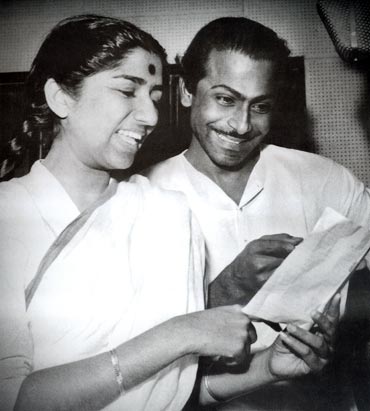
A musically timeless duo: playback singer Lata Mangeshkar and music director Salil Chowdhury

This song is considered to be one of the finest compositions of the music director Salil Chowdhury (who also wrote the story for Parakh). Although Salil Chowdhury did not receive his due during his lifetime, he is undeniably  one of the most talented and revolutionary composers from the Golden Era. His compositions are often remembered for their unusual melodies, rich orchestration, and integration of Western and Indian classical themes. Those of you familiar with Salil Chowdhury’s work in Bollywood may be surprised to know that he also composed songs for a wide variety of Indian languages, including Bengali, Malayalam, Tamil, Kannada, Telegu. Among these languages, Salil’s most prolific work was in his native tongue Bengali–he revolutionized the genre of the Bengali adhunik (modern) song with his musical compositions and self-written lyrics (what a multi-talent!). In fact, as is the case with many of his Hindi songs,  the tune for “o sajna” was released in Bengali first in 1959 as “na jeo na.” This song was one of Lata Mangeshkar’s earliest hits in the Bengali music industry, and Bengalis have cherished the collaboration between Lata and Salil ever since this major musical milestone.

–Mr. 55

P.S: As an extra tidbit of trivia, it has been said that the only non-classical record found in the collection of renowned Hindustani vocalist Ustad Bade Ghulam Ali Khan after his death was an LP of “na jeo na.” What an honor!

O Sajna Barkha Bahar Aayi Lyrics and Translation

o sajnaa barkhaa bahaar aayii
Oh, my beloved, the rain-filled season of spring has arrived.
ras
kii puhaar laayii, a.nkhiyo.n me.n pyaar laayii
It has brought sprinkling droplets of nectar, it has brought love to these eyes.

tum ko pukaare mere man kaa papiiharaa
The cuckoo bird in my heart calls out to you,
miThii miThii aganii me.n jale moraa jiiyaraa
as my heart burns in a sweet fire.

aisii rimjhim me.n, o sajan, pyaase pyaase mere nayan
My eyes long for you, my beloved, in this light shower of rain;
tere hii khvaab me.n kho gaye
they have become lost in a dream of you.

saa.nvalii salonii ghaTaa jab jab chhaayii
When the beautiful dark clouds spread throughout the sky,
a.nkhiyo.n me.n rainaa gayii, nindiyaa na aayii
the night passed in my eyes, and I could not fall asleep.

o sajna barkhaa bahaar aayii
Oh beloved, the rain-filled season of spring has arrived.

Glossary

barkhaa: rain; ras: nectar; puhaar: sprinkles, droplets; papiiharaa: pied-crusted cuckoo bird (associated with the monsoons in Indian mythology); jiyaraa: heart; rimjhim: light rain; saa.nvalii: beautiful; salonii: dark; ghaTaa: clouds; rainaa: night; nindiyaa: sleep.

Dil Jo Na Keh Saka Lyrics and Translation: Let’s Learn Urdu-Hindi

A vengeful Pradeep Kumar taunts Meena Kumari at her engagement party in Bheegi Raat (1965)

Bheegi Raat (1965) stars Ashok Kumar, Meena Kumari, and Pradeep Kumar in a classic Bollywood love triangle story full of messy drama and heartache. The film is not particularly memorable for its plot, but the soundtrack composed by Roshan and penned by Majrooh Sultanpuri contains a beautiful Raga Yaman-based gem that is still remembered today: “dil jo na keh saka.” Here, I’ve provided the lyrics and translation for both the female version (sung by Lata Mangeshkar) and the male version (sung by Mohammed Rafi) found in the film. The lyrics for the female version are standard Bollywood fare, but the male version is surprisingly vengeful and caustic. Hearing these lyrics in context of the film makes more sense: a jealous Pradeep Kumar taunts Meena Kumari using this song at a party celebrating her engagement to Ashok Kumar during the film’s conclusion. Even still, some of these lyrics are pretty wild. For example, he implores Meena’s character to drink blood from the heart (!) (piyo chaahe khuun-e-dil ho, ki piite pilaate hi…). The bitter sentiments found in these lyrics really drive home a theme expressed in Hindi films from this era that we’re all forced to grapple with at some point — love really hurts sometimes, doesn’t it?

–Mr. 55

P.S. Obviously, the Rafi version of this song is more popular than the Lata version, but I really think Lata holds her ground in this case with the tandem rendition. Her version has a segment of humming during the introduction that isn’t found in the Rafi version, which has always sounded absolutely heavenly to me.

Dil Jo Na Keh Saka Lyrics and Translation:


[Male]

dil jo na kah sakaa, vohii raaz-e-dil kahne kii raat aayii
The  night has come to uncover that secret which my heart could not reveal. 

naghmaa saa koii jaag uThaa badan me.n
A melody has awakened in my soul,
jhankaar kii sii thharthharii hai tan me.n
and a tinkling sensation quivered throughout my body.
mubaarak tumhe.n kisii kii laraztii sii baaho.n me.n rahne kii raat aayii
Congratulations to you, for the night has come to spend in someone else’s quivering arms. 

taubaa! yeh kis ne anjuman sajaa ke
Oh! Who has organized this gathering
tukDe kiye hai.n gunchaa-e-vafaa ke?
and destroyed the flowerbud of love?
uchhaalo gulo.n ke tukDe ki rangii.n fizaao.n me.n rehne kii raat aayii
Toss up the pieces of those flowers, for the night has come to spend in this colorful atmosphere.

chaliye mubaarak jashn dosti kaa,
Felications on this celebration of friendship;

daaman to thaamaa aap ne kisii kaa
you have accepted someone else’s embrace. 

hame.n to khushii yahii.n hai, tumhe.n bhi kisii ko apnaa kahne kii raat aayii
I am pleased, as the night has come for you to call someone else your own.

saaghar uThaao, dil kaa kis ko gham hai?
Raise your wine glass; who sulks for the heart?
aaj dil kii qiimat jaam se bhi kam hai
Today, the value of a heart is worth less than that of wine.  

piiyo chaahe khuun-e-dil ho ki piite pilaate hii rahne kii raat aayii
Drink the blood of the heart if you so desire, for the night of endless drinking has come. 

dil jo na kah sakaa, vohii raaz-e-dil kehne kii raat aayii
The night has come to uncover that secret which my heart could not reveal.


[Female]

dil jo na kah sakaa, vohii raaz-e-dil kahne kii raat aayi
The night has come to uncover that secret which my heart could not reveal. 

naghmaa saa koii jaag uThaa badan me.n
A melody has awakened in my soul,
jhankaar kii sii thharthharii hai tan me.n
and a tinkling sensation quivered throughout my body. 

pyaar kii inhii.n dhaDaktii fizaao.n me.n rahne kii raat aayii
The night has come to spend in this pulsating ambience of love.  

ab tak dabii thii ek mauj-e-armaa.n
Until now, a wave of desire was suppressed within me.
lab tak jo aayii ban gayii hai tuufaa.n
When it reached my lips, it became a storm.
baat pyaar ki bahakti nigaaho.n se kahne kii raat aayii
The night has come to speak about love to those wandering eyes. 

guzare na yah shab, khol duu.n ye zulfe.n
As the night passses slowly, I shall let down my hair.
tum ko chhupaa luu.n muund ke ye palake.n
And I will hide you by shutting these eyelids. 
beqaraar sii laraztii sii chhaa.nvo.n me.n rahne ki raat aayii
The night has come to spend in these restless and quivering shadows. 

dil jo na kah sakaa, vohii raaz-e-dil kahne kii raat aayi
The  night has come to uncover that secret which my heart could not reveal.

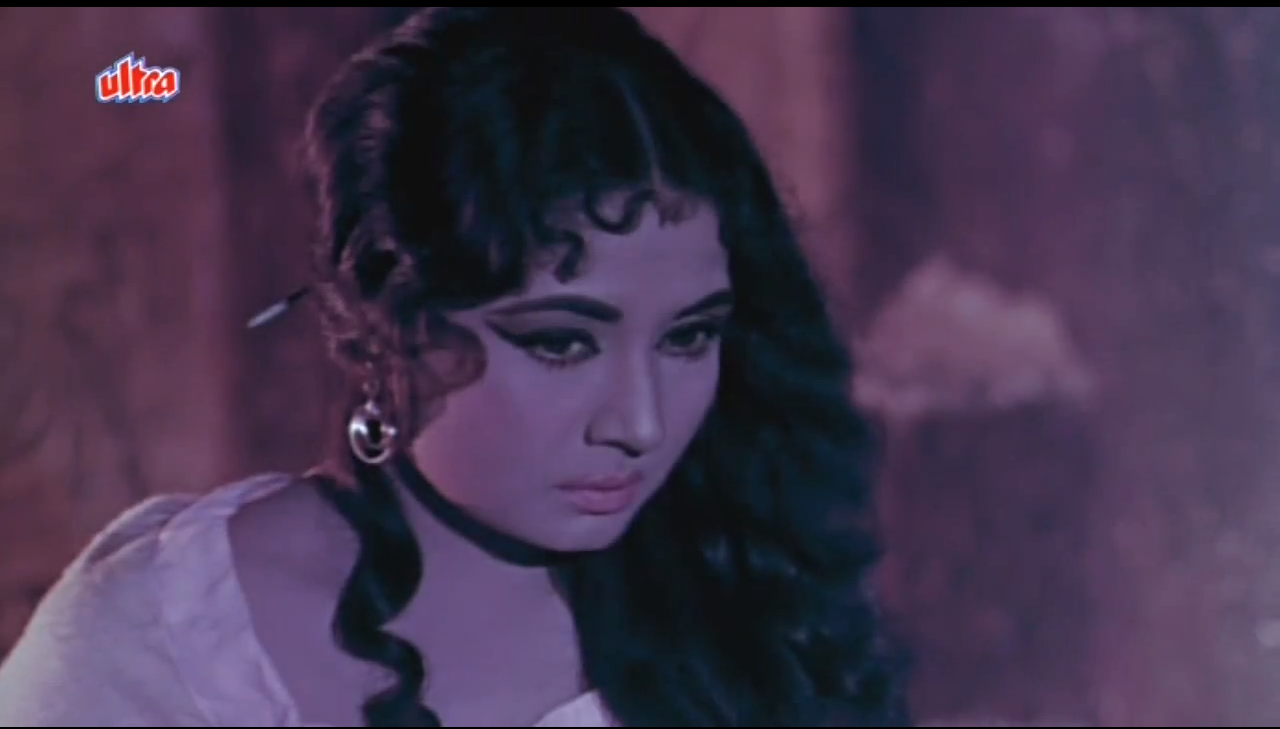
Meena Kumari looking beautiful (and sad) as usual in Bheegi Raat (1965).

Glossary:

raaz-e-dil: secret of the heart; naghmaa: melody, song; thharthharaanaa: to quiver;  jhankaar: tinkle; laraztii: trembling; baaho.n: arms; tauba: oh!; anjuman: gathering; tukDe karna: to crush, destroy; gunchaa-e-vafaa: flowerbud of love; uchhaalna: to throw, toss up; gul: flowerfizaa: atmosphere, ambience; jashn: celebration; daaman thhaamnaa: to accept an embrace; saaghar: wine glass; qiimat: price, value; jaam: wine; khuun-e-dil: blood of heart; dabnaa: to suppress; mauj-e-armaa.n: wave of desire; bahakna: to wander; shab: night; muundna: to shut; palake.n: eyelids; beqaraar: restless