Jab Dil Hi Toot Gaya Lyrics and Translation: Let’s Learn Urdu-Hindi

KL Saigal in Shahjehan 1946

Pre-independance Indian actor and singer, K.L. Saigal plays a Mughal-era lover in in Shahjehan (1946).

Our next lyrics and English translation is of the ageless song “Jab Dil Hi Toot Gaya” from Shahjehan (1946). Known widely as early playback singer K.L. Saigal’s swansong, “Jab Dil Hi Toot Gaya” is a song close to my heart and family. K.L. Saigal was my great-great uncle through my Kashmiri Nani who grew up in Jammu near Saigal sahib‘s birthplace. It’s a song that defined a generation, and one that sadly, many of my generation have never known. The great K.L. Saigal’s voice was the voice of my grandparents–the voice of men and women who can remember a time before India gained independence, before the partition destroyed Punjab, and before Bollywood was redefined as a spectacle of the mass ornament. He was a superstar before there was Mohammed Rafi and before the rise of Lata Mangeshkar. For he lived and died in an era that did not know the glitter of Eastmancolor or the dazzle of expensive special effects. K.L. Saigal was an artist when poetry reigned supreme.

KL Saigal Devdas 1935

K.L. Saigal and co-star Jamuna by the riverbanks in the 1935 Hindi epic Devdas.

Like Al Jolson in America, K.L. Saigal revolutionized music in the 1930s and 1940s in the early days of “talkies” when the concept of a “playback singer” had not been born. He acted in his own films–including the famous 1935 Devdas that has been since remade by countless Bollywood thespians. You may not know his work, but you know his legacy. He left a profound stylistic impact on the great singers of the Golden era that would follow (think Mukesh’s “Dil Jalta Hai” from Pehli Nazar to understand how hard these artists sought to emulate Saigal sahib)! Perhaps you recall the song playing in background of Dilwale Dulhania Le Jayenge (1995) as Simran’s father returned home–it was none other than K.L. Saigal’s “Gham Diye Mushtaqil,” meant to represent the traditions of an backward generation–but in my opinion that sells it unfairly short. K.L. Saigal’s masterpieces may seem old-fashioned now, but they were the hallmark of those who fought for civil rights and equality, who dreamed of romance and greater things than the dull lives they were trapped in, and who believed in a future better than their own. Perhaps his audience is not so different from today’s. Me, when I hear “Jab Dil Hi Toot Gaya“, I am always reminded of my grandparents who used to sing this song at the most unexpected moments–for in its words are not just the roots of Bollywood as we know it, but of our own traditions.

KL Saigal

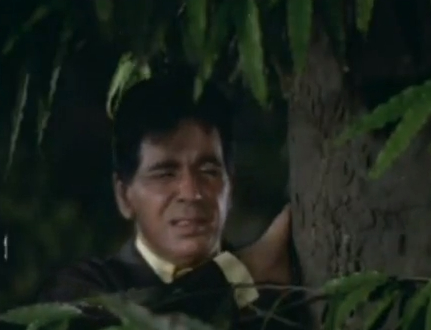
K.L. Saigal (1904-1947) passed away at the age of 43 after years of struggling with alcoholism. Someone tell me he doesn’t look straight from a German Expressionist film here–look at those piercing eyes!

I hope I can convince you to open your mind to the world of Hindi cinema before the Golden Age–at least this once! I think Saigal sahib‘s depth will surprise you–and perhaps you’ll recognize in the soulful lyrics of Majrooh Sultanpuri the many reincarnations of a similar theme that followed. In Shahjehan (1946), K.L Saigal plays a rejected lover involved in a complicated royal coup that ultimately ends in both a happy marriage for him and the construction of the Taj Mahal for eternity. Intriguing, no? Our lyrics and English translation to “Jab Dil Hi Toot Gaya” are below. Follow along with the video, and do let us know your thoughts on this old school number in the comments!

Jab Dil Hi Toot Gaya Lyrics and Translation:

Jab dil hii TuuT gayaa
When my heart is broken
Ham jii ke kyaa kare.Nge?
What can I do by living?

Ulfat ka diyaa hamne is dil mei.N jalaayaa thaa
I lit the flame of love in my heart
Umiid ke phoolo.N se is ghar ko sajaayaa thaa
I decorated this house with the flowers of hope
Ek bhedii looT gaayaa
And one of my own stole everything
Ham jii ke kyaa kare.Nge?
What can I do by living?
Jab dil hii TuuT gayaa
When my heart is broken

Maaluum na thaa intii mushkil hai.N merii raahe.N
I was not aware that my paths would prove so difficult
Armaan ke bahe aa.Nsuu, hasrat ne bhari aahe.N
I shed tears of desire, unfulfilled wishes filled my sighs
Har saathii chhuuT gayaa
Every companion abandoned me
Ham jii ke kyaa kare.Nge?
What can I do by living?
Jab dil hii TuuT gayaa
When my heart is broken

Glossary:

ulfat: love; diyaa: flame, candle; umiid: hope; phool: flower; bhedi: an insider, one of your own; maalum: awareness; mushkil: difficult; armaan: desire; aa.Nsuu: tears; hasrat: unfulfilled wish; aah: sigh; saathii: companion

Did you know that at the age of 13, a young Mohammed Rafi actually met K.L. Saigal? According to a new biography, Rafi sahib got the chance to meet his idol at a K.L. Saigal concert in Lahore in which young Rafi spontaneously performed a Punjabi solo to the accolades of the crowd. K.L. Saigal was so impressed with the boy’s talent, he patted him on the head and declared he would be a great singer one day!

-Mrs. 55
Tum Pukar Lo Lyrics and Translation: Let’s Learn Urdu-Hindi

Waheeda Rehman Tum Pukar Lo

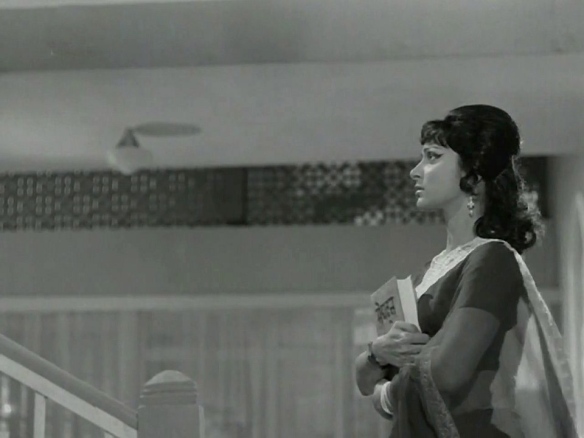
Waheeda Rehman hesitates at the bottom of a staircase leading to the man she loves in Khamoshi (1968).

For our next post we present the full lyrics and translation to the hauntingly beautiful “Tum Pukar Lo” from Khamoshi (1968). This song easily makes my list of most powerful and stirring picturizations from Bollywood. The stark black-and-white imagery highlights the emptiness of space, of shadows, and symbolic barriers. Most of all, the graceful shots that linger longer than action alone permits serve to create a new environment–a world of waiting where time slows down and the confines of the hospital become both escapist and imprisoning. I loved and still love the opening dolly shot so much that I attempted to recreate it in my final film project junior year of Harvard. The shot is transformative–literally taking the audience from behind bars to the free world, and Waheeda from the restraint of her conscience to the new life that beckons her above the staircase. A gentle wind miraculously flows down from Dharmendra’s balcony, through the barren corridor, down the grand stairs, and ultimately through Waheeda’s saari palluu giving rise to a simple, evocative image of a woman drawn by a force greater than any danger: love.

Waheeda Rehman Tum Pukar Lo Khamoshi

I LOVE the classic “frame-within-a-frame” of the mis-en-scene. Not how the lighting in this sequence informs the trajectory of the characters–recall that prior to Waheeda’s discouragement, the welcoming light source came from the balcony (now shrouded in obscurity), indicating a change in both destination and mindset.

I’ve broken down the dolly shot into 3 parts with my storyboard sketches to give you a full picture of how a shot like this is pulled off. The timing and fluidity of the dolly movement (and the pull focus) must be perfectly coordinated with the pace of the actresses walk as the camera additionally swivels on its own axis tracking her ascent up the stairs. I can only say after having attempting to do this shot myself, that it’s a headache but the effect is absolutely wonderful. Ultimately, Khamoshi is a film about identity and the silence caused by its loss through love. The misappropriated gazes in the film that lead characters in and out of a world of insanity is moving and tragic–and the audience too becomes implicit in that beautiful slippage of reality through Kamal Bose’s stunning cinematography, which won him the Filmfare award in 1968! Like Khamoshi’s characters, the camera lingers in each constructedly bereft space, longing for something more.

TumPukarLo1

The shot begins to the side of the staircase, a literal behind-bars view of Waheeda’s ascent.

tumpukarlo2

The camera swivels midway through the dolly pull at a low-angle as the rails of the staircase form a figurative cage around the actress.

The dolly track at last ends at the base of the staircase, holding the shot after Waheeda leaves the stairs, underscoring the incredible emptiness of the space she inhabits.

The dolly track at last ends at the base of the staircase, holding the shot after Waheeda leaves the stairs, underscoring the incredible emptiness of the rigid space she inhabits–and her escape from it.

You won’t see much of Dharmendra, the mystery man and asylum inpatient, who sings this song. Instead you see only his outline against the balcony of their confinement. And of course, anything else would be imperfect–while this, this unfulfilled gaze of love, is precisely the poetic complement to the yearning expressed in Gulzar’s heartfelt lyrics. This song may be my favorite Hemant Kumar solo with a melody that hangs in the air long after the song is finished. Whether or not it beats Rajesh Khanna lip-syncing “Woh Shaam Kuch Ajeeb Thi” from the same film is up to you to decide!

tum-pukar-lo-03 Dharmendra

Dharmendra passes sleepless nights thinking of the beautiful woman he lost in Khamoshi (1968).

Without further ado, see for yourself why this song has become immortal. Follow along with the video here, and we hope you enjoy the lyrics and full English translation to “Tum Pukar Lo” below!

Tum Pukar Lo Lyrics and Translation:

Tum pukaar lo
Call out to me
Tumhaaraa intezaar hai
I am waiting for you
Tum pukar lo
Call out to me
Khwaab chun rahe hai.N raat beqaraar hai
I am sifting through dreams while the night remains restless
Tumhaaraa intezaar hai
I am waiting for you
Tum pukaar lo
Call out to me

HonTh se liye hue dil ki baat hum
The words in my heart have escaped from my lips
Jaagte rahe.nge aur kitne raat hum?
How many more nights will I remain awake like this?
Mukhtasar si baat hai: tumse pyaar hai
The matter is simple: I love you

Tumhaaraa intezaar hai
I am waiting for you
Tum pukaar lo
Call out to me

Dil bahal to jaayegaa is khayaal se
My heart will be content with this thought
Haal mil gaya tumhaaraa apne haal se
That my well-being becomes yours
Raat yeh qaraar ki beqaraar hai
This restful night remains restless

Tumhaaraa intezaar hai
I am waiting for you
Tum pukaar lo
Call out to me

Glossary:

pukaarnaa: to call; intezaar karna: to wait; khvaab: dream; beqaraar: restless; honTh: lips; mukhtasar: brief, short; bahal: content; khayaal: thought; haal: well-being, state; qaraar: restful, quiet

My favorite line of this song is by far “Mukhtasar si baat hai, tum se pyaar hai!” So romantic and God, how I love an understatedly accurate pronunciation of the Urdu khe! However, I’m afraid this is one of those cases in which no matter how you translate it, the beauty of the line is just lost in the bluntness of English.

Mrs. 55

Neela Aasman So Gaya Lyrics and Translation: Let’s Learn Urdu-Hindi

AR

Amitabh Bacchan plays a writer who falls for Rekha’s timeless beauty in Silsila (1981)

Directed and produced by Yash Chopra, Silsila (1981) sparked controversy even before it was released. Rumors regarding the film’s casting spread throughout the industry, as its portrayal of a love triangle between Amitabh Bacchan, his wife Jaya Bacchan, and his alleged mistress Rekha was said to mimic reality. Today, we present the lyrics and English translation of a classic romantic ballad from Silsilaniilaa aasmaa.n so gayaa.

This film depicts a passionate romance between Amit (played by Amitabh Bacchan) and Chandni (played by Rekha) that cannot culminate in marriage due to unfortunate circumstances. After his brother (played by Shashi Kapoor) is killed in the Indo-Pakistani War of 1971, Amit marries his brother’s pregnant fiancee in order to save her honor. Unable to pursue her love with Amit, Chandni marries Dr. Anand (played by Sanjeev Kumar). When Amit and Shobha are involved in a car accident (that causes Shobha to lose her baby), they are hospitalized and treated by Dr. Anand. Chandni sees Amit in the hospital, and this encounter triggers memories of their past love. Amit and Chandni give into their temptations and begin to rekindle their romance through clandestine meetings. The plot thickens when an evening rendezvous goes sour: Amit and Chandni must go to the police station after hitting a pedestrian while driving, and officer assigned to their case turns out to be Shobha’s cousin. How long can Amit and Chandni keep their adultery a secret? Will Amit and Chandni leave their spouses to be together? Silsila is worth a viewing to find out!

Although Silsila is not the first Bollywood film to depict extra-marital love, it is ground-breaking in its concrete portrayal of the consummation of adultery.  Indeed, this film compelled Indian audiences to think about extra-marital affairs and whether they can be cinematically romanticized in a way that appeals to the masses. Silsila offers some justification for the relationship between Amit and Chandni because they were a couple before Amit sacrificed his love to uphold his duty to his brother. However, the film portrays the tumultous decline of their extra-marital romance, eventually depicting Amit and Chandni as disloyal adulterers instead of righteous lovers. The uncomfortable subject matter is presumably the reason why this film failed to be a box office success. Regarding the audience’s reaction to Silsila, Yash Chopra has said:

 “The film had inherent tensions because of the casting coup. If I was confident of the project, it was because all the three artistes had individually assured me that there would be no problems at their end. And they kept their word. It was a film on extra-marital relationships and call it moral and societal pressures, but at the last minute, I developed cold-feet and thought that maybe the hero should come home to his wife. The original ended differently. When and why I changed the ending I don’t know, but I did so because I felt that the audience wasn’t ready. But the audience didn’t accept what we gave them either.”

Although audiences may not have reacted positively to its thematic content, the film has left a legacy of controversy that is still remembered today. The release of Silsila marked the end of the alleged affair between Rekha and Amitabh, but those associated with the Bollywood industry still discuss their love story more than 25 years later. At public events such as award functions, the media is unforgiving in keeping a close eye on how Amitabh, Jaya, and Rekha interact with each other!

Aside from its controversy, this film is also remembered for a number of special debuts. In Silsila, Yash Chopra introduced Shiv (santoor maestro Pt. Shivkumar Sharma) and Hari (flute maestro Pt. Hariprasad Chaurasia) for the first time as composers of Hindi film music. Moreover, Javed Akhtar penned his first lyrics for a Hindi film in Silsila. The soundtrack for Silsila has a number of popular hits such as dekhaa ek khvaab and rang barse, but “niilaa aasmaa.n so gayaa is especially noteworthy for its use of Amitabh Bacchan as a playback singer. Amitabh showcases his versatility as a performer by doing his own singing, which defied the conventions that had been established in the industry for years. Although he lacks the refinement of musical training, Mr. Bacchan can certainly hold a tune in his version of this ballad. A little bit past her prime, Lata Mangeshkar also offers a melancholic interpretation of the same song picturized on Rekha. Listen to both as you follow along with our translations, and let us know which version you prefer in the comments! Until next time…

-Mr. 55
AR

The first version of niilaa aasmaa.n showcases the passionate on-screen chemistry shared by Rekha and Amitabh Bacchan in Silsila (1981)

Neela Aasman So Gaya: Lyrics and Translation (Male)

niilaa aasmaa.n so gayaa
The blue sky has fallen into slumber.

os barse.n, raat bhiige, ho.nTh thharraaye.n
Dew falls, the night becomes drenched, and my lips quiver.
dhaDkane.n kuchh kahnaa chaahe.n, kah nahii.n paaye.n
Although my heartbeats desire to say something, they are unable to.
havaa kaa geet maddham hai
The breeze sings softly,
samay kii chaal bhii kam hai
while the time passes slowly.

merii baaho.n me.n sharmaate lajaate aise tum aaye
You came into my arms, shying away in embarassment, 
ki jaise baadalo.n me.n chaa.nd dhiire dhiire aa jaaye
like the Moon cautiously slipping into the clouds.
yah tanhaayii, yah mai.n aur tum
This solitude, you, and me. 
zamii.n bhii ho gayii gumsum
Even the Earth has fallen silent.

niilaa aasmaa.n so gayaa
The blue sky has fallen into slumber.

R

Rekha wallows in sorrow during the second version of niilaa aasmaa.n after Amitabh tells her that they cannot marry each other in Silsila (1981).

Neela Aasman So Gaya: Lyrics and Translation (Female)

niilaa aasmaa.n so gayaa
The blue sky has fallen into slumber. 

aa.nsuuo.n me.n chaa.nd Duubaa, raat murjhaayii
In my tears, the Moon has set and the night has withered. 
zindagii me.n duur tak phailii hai tanhaayii
Solitude has spread far into my life. 
jo guzre ham pe vah kam hai
What has happened to me thus far is a small beginning,
tumhaare gham kaa mausam hai
for I have just entered the season of sorrow for you.

yaad kii vaadii me.n guu.nje biite afsaane
Tales of the past resonate in the valley of memories. 
hamsafar jo kal the ab Thahare ve begaane
Yesterday’s companion is now a stranger. 
muhabbat aaj pyaasii hai
My love remains unquenched today.
baDii gahrii udaasii hai
I am overcome by a very deep sorrow.

niilaa aasmaa.n so gayaa
The blue sky has fallen into slumber.

Glossary

niilaa: blue; aasmaa.n: sky; os: dew; bhiignaa: to become drenched; tharraanaa: to quiver; dhaDkan: heartbeat; havaa: wind, breeze; maddham: dim, soft; samay: time; chaal: movement, passing; sharmaanaa: to shy away; lajaanaa: to be embarrassed; baadal: cloud; dhiire dhiire: cautiously; tanhaayii: solitude; gumsum: silent; murjhaanaa: to wither; phailnaa: to spread; yaad: memories; vaadii: valley; guu.njnaa: to resonate; afsaanaa: tale, story; hamsafar: companion: begaanaa: stranger; pyaasii: unquenched; gahraa: deep; udaasii: sorrow.

AJ

Amitabh Bacchan sacrifices his love for Rekha to marry his late brother’s pregnant fiance Jaya Bacchan in Silsila (1981).


Na Tu Zameen Ke Liye Lyrics and Translation: Let’s Learn Urdu-Hindi

Dilip Kumar Na Tu Zameen Ke Liye 5

Dilip Kumar is horrified to learn of his wife Bindu’s betrayal in Dastan (1972).

We now present the lyrics and English translation to the emotional Sahir Ludhianvi ghazalNa Tu Zameen Ke Liye” from Dastan (1972). Sung by Mohammed Rafi as the hero Dilip Kumar reels from the shock of discovering an affair between his wife Bindu and best friend Prem Chopra, “Na Tu Zameen Ke Liye” is a sympathetic voice in a world of disloyalty.

The true magic of the song comes from the lyrics from the pen of Sahir Ludhianvi–but you may be surprised to learn that this song is not entirely original! With the ghazal “Na Tu Zameen Ke Liye” Ludhianvi draws from the beautiful Sir Muhammed Iqbal (1877-1938) poem of the same name and contains the portending line:

Maqaam-e parvarish-e aah wa naalaa hai yeh chaman. Na sair-e gul ke liye hai, na aashiyaan ke liye.” [This garden is a place for you to sigh and see visions. It is neither for taking a leisurely stroll nor building a home.”]

Similarly, Ludhianvi’s lyrics warns the hero of the dangers lurking beneath the surface of circumstances too good to be true. “Na Tu Zameen Ke Liye” is a gleaming lotus of poetry that is well-worth the wait of an otherwise rather lackluster film. Thematically, the song is reminiscent of Ludhianvi’s earlier tragic poem, “Chalo Ek Baar Phir Se,” which carries the heavy burden of deception. Thrown from that garden of love into a world of disorder, “Na Tu Zameen Ke Liye” seeks clarity in an hazy, unforgiving world.

Dilip Kumar Na Tu Zameen Ke Liye 3

With tears and heartbreak, Dilip Kumar realizes his marriage is a sham in Dastan (1972). But I mean, your wife was played by Bindu…anyone could’ve seen that coming a mile away…

Check out the video of Dilip Kumar’s despair and follow along with our English translation of Sahir Ludhianvi’s gem “Na Tu Zameen Ke Liye” below!

Na Tu Zameen Ke Liye Lyrics and Translation:

Na tuu zameen ke liye hai na aasmaan ke liye
You belong to neither the earth nor the sky
Teraa wajuud hai ab sirf dastaan ke liye
Your existence belongs to legend alone

PalaTke suu-e chaman dekhne se kya hogaa?
What can be gained by looking back toward the garden of love?
Woh shaakh hii na rahii jo thii aashiyaa.N ke liye
For that branch no longer exists, which once belonged to your nest
Na tuu zameen ke liye hai na aasmaan ke liye
You belong to neither the earth nor the sky

Garaz-parast jahaa.N mei.N, wafaa talaash na kar
In this self-centered world, do not search for faithfulness
Yeh shaii banii thii kisii duusre jahaa.N ke liye
For such a thing was designed for a world other than our own
Teraa wajuud hai ab sirf dastaan ke liye
Your existence belongs to legend alone

Na tuu zameen ke liye hai na aasmaan ke liye
You belong to neither the earth nor the sky

Glossary:

zameen: earth; aasmaan: sky; waajuud: existence; sirf: only dastaan: story, legend; palaTnaa: to turn around; soo-e chaman: direction of the garden–a reference to Amir Khusrau ghazal 248 describing an idyllic garden of young lovers; shaakh: branch; aashiaa.N: dream house, nest; garaz-parast: self-centered, selfish; jahaa.N: world; wafaa: faithfulness, loyalty; talaash: search; shaaii: thing, object

Getting teary-eyed? Calm down, there’s a happy ending to this dastaan. Sharmila Tagore adroitly steps in as the patient lover who soothes a haggard Dilip Kumar’s broken heart. Frankly, could any man ask for more?!

Sharmila Tagore Dastaan

Sharmila Tagore selflessly hides her undying love for hero Dilip Kumar in Dastaan (1972).

This Sahir Ludhianvi ghazal was requested by loyal fan muskaan! Hope you enjoyed and keep those requests coming!

Mrs. 55

Tum Gagan Ke Chandrama Ho Lyrics and Translation: Let’s Learn Urdu-Hindi

Sati Savitri

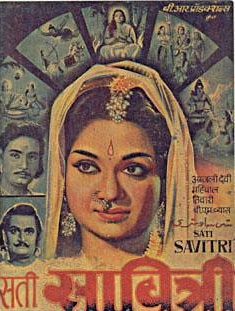
Sati Savitri (1964) portrays a Hindu myth about a wife’s unconditional devotion to her husband.

Today, we present the lyrics and English translation to a beautiful duet from Sati Savitri (1964): tum gagan ke cha.ndramaa ho. Directed by Shantilal Soni, Sati Savitri is a forgotten film in the Hindu devotional genre that narrates the love story of Savitri (played by Anjali Devi) and Satyavan (Mahipal). Savitri is celebrated in Hindu mythology as the ideal pativrata wife whose dedication to her husband allowed her to bring her husband back from Yama, the God of Death.

While the film itself has been forgotten, Laxmikant-Pyarelaal’s soundtrack for this movie is full of exquisite compositions that are still remembered today. Laxmikant and Pyarelaal had worked as assistants to the South Indian composer P. Adinarayana Rao on the music for Suvarna Sundari (1957). As the producer of Sati Savitri, P. Adinarayana Rao hired Laxmikant-Pyarelaal to compose the music for this film. In reverence of their former mentor, Laxmikant-Pyarelaal composed a classical soundtrack with several raga-based melodies. Aside from the lovely duet presented here, two stellar Lata solos from this film come to mind: jiivan Dor tumhii sang bandhii based in Yaman Kalyan and kabhii to miloge jiivan saathii based in Kalavati. 

The duet tum gagan ke cha.ndramaa ho is also rendered by Lata Mangeshkar and Manna De in raga Yaman Kalyan. In my opinion, no other playback singer renders Yaman Kalyan as gracefully as Lata does. Her prowess with this raga is matched here by Manna De, whose classical training set him apart from many of his male peers in the industry.

Apart from the beautiful melody and rendition, the lyrics of this duet are memorable for their use of chaste Hindi. Given the devotional Hindu story presented in this film, the use of Urdu poetry here would have seemed incongruous. Instead, lyricist Bharat Vyas has written a series of metaphors in pure Hindi where both Savitri and Satyavan use self-deprecating comparisons to describe themselves while using elevating comparisons to describe the other. In the mukhDaa, Savitri claims that she is the dust of the Earth whereas Satyavan is the Moon in the sky (tum gagan ke cha.ndramaa ho, mai.n dharaa kii dhuul huu.n). In response, Satyavan claims that he is merely the priest when Savitri is the prayer; he is thirst when Savitri is the nectar (tum ho puujaa mai.n pujaarii, tum sudhaa mai.n pyaas huu.n). This song certainly contains beautiful metaphors all around, but it is interesting to note that the poet decided to give the most self-deprecating line to the heroine: tum ho kaayaa mai.n huu.n chhayaa, tum kshamaa mai.n bhuul huu.n (You are the body, I am the shadow; you are forgiveness, I am the sin). Why are we not surprised?

You might have noticed that images from the film are missing from this post. Normally, when Mrs. 55 or I translate a song, we try to include images from the movie’s picturization of the song to go along with our entries. I tried searching for a long time, but I was unable to find any images or video clips of Sati Savitri on the internet (except for the film poster displayed above). If any of our readers have more information to share about this rare and forgotten film, we would love to hear about it! Until next time…

-Mr. 55

Tum Gagan Ke Chandrama Ho: Lyrics and Translation

tum gagan ke cha.ndramaa ho, mai.n dharaa kii dhuul huu.n
You are the Moon of the sky, while I am the dust of the Earth.
tum praNay ke devtaa ho, mai.n samarpit phuul huu.n
You are the God of love, while I am a devoted flower.
tum ho puujaa mai.n pujaarii, tum sudhaa mai.n pyaas huu.n
You are the prayer, I am the priest; you are nectar, I am thirst.

tum mahaasaagar kii siimaa, mai.n kinaare kii lahar
You are the boundary of the ocean, while I am a wave by the shore.
tum mahaasangiit ke svar, mai.n adhuurii saa.ns bhar
You are the notes of a profound melody, while I am an incomplete breath.
tum ho kaayaa mai.n huu.n chhayaa, tum kshamaa mai.n bhuul huu.n
You are the body, I am the shadow; you are forgiveness, I am the sin.

tum ushaa kii laalimaa ho, bhor kaa sinduur ho
You are the redness of daybreak, the vermillion of dawn.
mere praaNo.n kii ho gunjan, mere man kii mayuur ho
You are the humming of my spirit, the peacock of my mind. 
tum ho puujaa mai.n pujaarii, tum sudhaa mai.n pyaas huu.n
You are the prayer, I am the priest; you are nectar, I am thirst.

tum gagan ke chandramaa ho, mai.n dharaa kii dhuul huu.n
You are the Moon of the sky, while I am the dust of the Earth.

*Female lines in red are sung by Lata Mangeshkar. Male lines in green are sung by Manna De. 

Glossary

gagan: sky; cha.ndramaa: Moon; dharaa: Earth; praNay: love; devta: god; samarpit: devoted; pujaarii: priest; sudhaa: nectar; mahaasaagar: ocean; siimaa: boundary, border; kinaaraa: shore; lahar: wave; svar: musical note; adhuurii: incomplete; kaayaa: body; kshamaa: forgiveness; bhuul: sin, mistake; ushaa: daybreak, dawn; sinduur: vermillion; praaN: spirit; gunjan: humming; mayuur: peacock.

Goan composer Anthony Gonsalves conducts Lata Mangeshkar and Manna De on stage in Bombay (1958). Laxmikant and Pyarelaal are seated toward the right.