Aye Mere Watan Ke Logo Lyrics and Translation: Let’s Learn Urdu-Hindi

A rare photograph depicting Lata Mangeshkar’s performance of “ai mere vatan ke logo” at the Ramlila Maidan in New Delhi on Republic Day,1963

On behalf of Mrs. 55 and me, I’d like to wish all of our readers a happy Indian Independence Day! In celebration of this holiday, we have provided the lyrics and translation for an all-time patriotic classic: ai mere vatan ke logo. Although this song is not technically a Bollywood song, all of the artists involved in its production are legends of the Hindi film industry: composer C. Ramachandra, poet Kavi Pradeep, and of course, singer Lata Mangeshkar. Kavi Pradeep was inspired to write the lyrics of this poem after being moved by the losses India suffered during the Sino-Indian War of 1962. His tribute to the Indian soldiers who fought in the war has become immortalized in this touching anthem, which is remembered today as one of the finest Hindi songs in the patriotic genre.

Even a song like this, however, was not immune to the drama of the Bollywood industry. It has been reported by journalist Raju Bharatan that C.Ramachandra originally composed this song as a duet between Lata and her younger sister Asha Bhonsle. Allegedly, Lata managed to coax her sister out of the situation using questionable tactics and went on to record the song as a solo because she wanted it for herself. If this story is not merely Bollywood gossip, I certainly don’t condone the lack of sisterly love–but I can say that you’d be hard-pressed to find anyone who thinks Lata didn’t do complete justice to this gem.

Kavi Pradeep (left), Lata Mangeshkar (center), C. Ramachandra (right)

In fact, a popular story has been recounted over the years about how Prime Minister Pandit Jawaharlal Nehru was moved to tears when Lata debuted this number at the Ramlila Maidan in New Delhi just two months after the war ended.  Lata narrates this incident in her own words:

Following the Chinese attack on India in 1962, Pradeep ji wrote this song and I sang it for the first time in Delhi on Republic Day on 26th January, 1963. C. Ramchandra conducted the few musicians who were performing on stage with me. That year, many stars and music directors from Bombay were in Delhi, including Dilip Kumar, Raj Kapoor, Naushad Ali, Shankar-Jaikishan and Madan Mohan. Once I finished singing, I sat down behind the stage and asked for a coffee.

Mehboob Sahib came rushing to me and said: ‘Lata! Where is Lata? Panditji is calling you.’ I followed him outside and when Pandit ji saw me, he stood up. Indira ji and many leading politicians were there too.

Mehboob Sahib introduced me saying: ‘This is Lata Mangeshkar.’ He said: ‘beTii, tum ne aaj mujhe rulaa diyaa’ [Child, you have brought tears to my eyes today].

Given the occasion, we hope that you’ll take a moment to listen to this evergreen patriotic anthem and commemorate the brave heroes who have fought to protect the freedom of our beloved motherland over the years. Jai Hind!

–Mr. 55

Aye Mere Watan Ke Logo: Lyrics and Translation

ai mere vatan ke logo, tum khuub lagaa lo naaraa
Oh, my fellow citizens! Chant slogans in praise of our country.
yah shubhdin hai ham sab kaa, laharaa lo tiiranga pyaaraa
This is an auspicious day for us all,  so fly our beloved tri-color flag.
par mat bhuulo siimaa par viiro.n ne hai praan ga.nvaaye
Yet, do not forget that brave soldiers have lost their lives on our borders.
kuchh yaad unhe.n bhii kar lo, jo laut ke ghar na aaye
Remember those who have not returned home.

ai mere vatan ke logo, zaraa aa.nkh me.n bhar lo paani
Oh, my fellow citizens! Shed a few tears.
jo shahiid hue hai.n unkii, zaraa yaad karo qurbaanii
Remember the sacrifice of those martyrs.
tum bhuul na jaao unko, is liye suno yah kahaanii
Listen to this story so that you do not forget them.
jo shahiid hue hai.n unkii, zaraa yaad karo qurbaani
Remember the sacrifice of those martyrs.

jab ghaayal huaa himaalay, khatre me.n paDii aazaadii
When the great Himalayas were wounded and our freedom was in danger,
jab tak thii saa.ns laDe ve, phir apnii laash bichha dii
They fought until their last breath and then laid their corpses to the ground.
sangiin pe dhar kar maatha, so gaye amar baliidaanii
Resting their heads on bayonets, these immortal martyrs fell into an eternal sleep.
jo shahiid hue hai.n unkii, zaraa yaad karo qurbaanii
Remember the sacrifice of those martyrs. 

jab desh me.n thii diivaalii, ve khel rahe the holii
When our country celebrated Diwali, they were playing Holi on the battlefield.
jab ham baiThe the gharo.n me.n, ve jhel rahe the golii
As we sat comfortably in our homes, they were firing bullets.
the dhanya javaan ve apane, thii dhanya vah unkii javaanii
Blessed were those soldiers, and blessed was their youth.
jo shahiid hue hai.n unkii, zaraa yaad karo qurbaanii
Remember the sacrifice of those martyrs.

koii sikh koii jaaT maraaThaa, koii gurkhaa koii madaraasii
Some were Sikh, Jaat, or Marathi; some were Gurkha or Madrasi.
sarhad par marnevaala har viir thaa bhaaratvaasii
But each man who died on the border was an Indian,
jo khuun giraa parvat par, wah khuun thaa hindustaanii
And the blood that stained the mountainside was Indian blood.
jo shahiid hue hai.n unkii, zaraa yaad karo qurbaanii
Remember the sacrifice of those martyrs. 

thii khuun se lathpath kaayaa, phir bhii banduuk uThaa ke
Although their bodies were soaked in blood, they still raised their guns.
das das ko ek ne maaraa, phir gir gaye hosh ga.nvaa ke
Each man shot tens of enemy soldiers and then fell unconscious to the ground.

jab ant samay aayaa to kah gaye ki ab marte hai.n
When the final moment came, they said: “Now we shall die.
khush rahnaa desh ke pyaaro, ab ham to safar karte hai.n
My beloved countrymen, stay happy. We now begin our final journey to the afterlife.”
kyaa log the ve diivaane, kyaa log the ve abhiimaanii
They displayed such passion and dignity.
jo shahiid hue hai.n unkii, zaraa yaad karo qurbaani
Remember the sacrifice of those martyrs.

tum bhuul na jaao unko, is liye kahii yah kahaanii
This story has been recounted so that you do not forget them.
jo shahiid hue hai.n unkii, zaraa yaad karo qurbaani
Remember the sacrifice of those martyrs.

jai hind, jai hind kii senaa
jai hind, jai hind, jai hind!
Victory to India and its armed forces!

Glossary

vatan: motherland; naaraa: slogan; shubhdin: auspicious day; tiirangaa: tri-color; siimaa: boundary; viir: brave; praan: life; shahiid: martyr; qurbanii: sacrifice; ghaayal: wounded; khatre me.n: in danger; aazaadii: freedom; laash: corpse; bichhanaa: to lay; sangiin: bayonet; amar: immortal; balidaanii: martyr; golii jhelnaa: to fire a bullet; dhanya: blessed; sarhad: border; khuun: blood; lathpath: soaked; kaayaa: body; hosh: senses, conscious; abhimaanii: dignified; senaa: army.
Chingari Koi Bhadke Lyrics and Translation: Let’s Learn Urdu-Hindi

Rajesh Khanna Sharmila Tagore Amar Prem

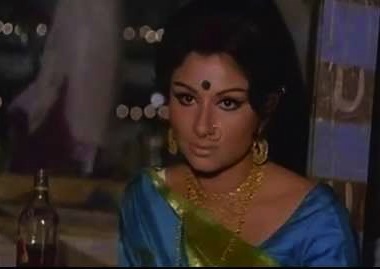
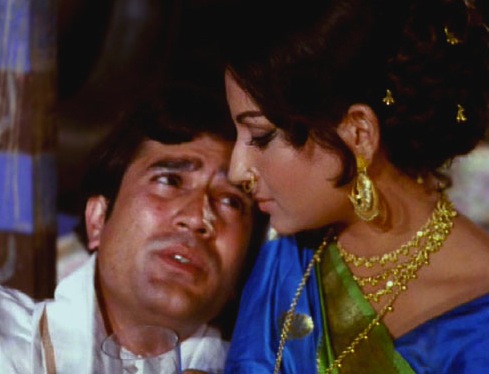
Aided heavily by hard liquor, Rajesh Khanna slips into philosophical discourse gazing at the beautiful Sharmila Tagore in Amar Prem (1972).

Our next English translation, the beautiful lyrics of “Chingari Koi Bhadke,” comes from the eternal love story Amar Prem (1972). Anand Bakshi outdoes himself with these philosophical, thought-provoking lyrics on the nature of life and the inevitability of Fate. Like other masterpieces songs of the sharaab genre in Bollywood, “Chingari Koi Bhadke” glorifies the opportunity to escape societal boundaries through alcohol.

Sung by Rajesh Khanna favorite, Kishore Kumar, “Chingari Koi Bhadke” has some of the greatest lines written in Bollywood music: “Madiira jo pyaas lagaaye, use kaun bhujaaye?” echoes the lines of the great 1935 Hindi poem by Harivanshrai Bachhan, “Madhushala”:

Kya mai.N madhushala ke andhar? Ya mere andhar madhushala?”

Indeed, the theme of an inner thirst can be found in Indian art from time immemorial–whether from spiritual seekers rejecting worldly materialism, or from thwarted lovers searching for a way out.

Amar Prem tells the story of a man trapped in a loveless marriage (Rajesh Khanna) who falls for the golden-hearted brothel songstress, Sharmila Tagore. Although both realize the world will never accept the purity of their love for one another, they remain faithful to their shared ideal of “amar prem” even as they are forced apart. Rajesh Khanna and Sharmila Tagore eventually grow older, not knowing what became of the other, but in separate ways undergo a spiritual transformation sparked by the love they shared. This immortal song, like others in the film by versatile maestro R.D. Burman (eg. “Kuch To Log Kahenge” and “Yeh Kya Hua”) is both a critique on an unforgiving society and a resignation to the laws of Nature. Intoxication itself, the profundity of these lyrics take several passes to completely envelop you, so go slowly and enjoy the full lyrics and our English translation of “Chingari Koi Bhadke” below!

Rajesh Khanna Amar Prem

Rajesh Khanna plays a good-hearted alcoholic trapped by the fetters of societal propriety in Amar Prem (1972).

Chingari Koi Bhadke Lyrics and Translation:

Chingaari koii bhadke
If someone lights a spark
To saawan use bujhaaye
Then the rains will put it out
Saawan jo agan lagaaye, use kaun bhujaaye?
But if the rains start a fire, who will put it out?

PatajhaD jo baagh mei.n ujaaDe
If a garden is destroyed in the Autumn
Woh baagh bahaar khilaaye
It will bloom again in the Spring
Jo baagh bahaar mei.N ujade, use kaun khilaaye?
But who can revive the garden that is destroyed in Spring?

Hum se mat poochho kaise
Do not ask me how
mandir TooTaa sapno.N kaa
The temple of my dreams shattered
Logo.N kii baat nahii.N hai
This is not a matter for everyone to discuss
Yeh qissa hai.N apno.N kaa
This tale is only for my own circle

Koi dushman thhais lagaaye
If an enemy strikes you a blow
To miit jiyaa bahalaaye
Then your beloved will nurse you
Manmiit jo ghaav lagaaye, use kaun mitaaye?
But who can nurse the wounds your beloved strikes?

Na jaane kya ho jaataa
I do not know what happens
Jaane hum kyaa kar jaate
I do not know what would happen
Peete hai.N to zindaa hai.N
If I drink, then I live
Na peete, to mar jaate
If I do not drink, then I die

Duniyaa jo pyaasaa rakhe
If the world is thirsty
To madiiraa pyaas bujhaaye
Then wine can slake that thirst
Madiiraa jo pyaas lagaaye, use kaun bujhaaye?
But who can slake the thirst caused by wine?

Maanaa toofaan ke aage
I agree that before a storm
Nahii.N chaltaa zor kisii kaa
No one can use force
Maujo.N ka dosh naii.N hai
Yet this is not the fault of the waves
Yeh dosh hai aur kisi kaa
It is the fault of someone else

Majhadaar mei.N naiyaa Doobe
If a boat starts to rock midstream
To maajhi par lagaaye
The boatman can lead it to shore
Maajhi jo naaw Dooboye, use kaun bachaaye?
But if the riverman drowns the boat, who can save it?

Chingaari koii bhadke
If someone lights a spark
To saawan use bujhaaye
Then the rains will put it out
Saawan jo agan lagaaye, use kaun bhujaaye?
But if the rains start a fire, who will put it out?

Glossary:

chingari: spark;  agan: fire; patajhaD: Autumn; baagh: garden; bahaar: Spring; mandir: temple; qissa: story, tale; dushman: enemy; thhais: blow; ghaav: wound; zindaa: alive; pyaasaa: thirsty; madhiira: spirits; toofaan: storm; zor: force, dosh: fault; majhdaar: midstream; Doobnaa: to drown; maajhi: boatman; naaw: small boat

Sharmila Tagore Amar Prem

Oh, Sharmila! Is there any commentary anyone can really give you for your divinely majestic presence in this film??!

No, Sir, they sure don’t make songs like they used to. I love the elegance and seeming simplicity of the picturization for this song. No big ruffles or fireworks–just a beautiful traditional instrumentation for background and a metaphorical boat ride filled with meaningful glances and serious faces. Could a song this classy even exist today?

-Mrs. 55

Mausam Hai Aashiqana Lyrics and Translation: Let’s Learn Urdu Hindi

Meena Kumari Pakeezah 4

Meena Kumari pines for an unseen admirer in “Mausam Hai Ashiqana” from Pakeezah (1971).

We revive our popular Pakeezah series and bring you the lyrics and English translation to “Mausam Hai Ashiqana” from Pakeezah (1971) in honor of Meena Kumari’s 80th birthday today! This beautiful melody rendered, of course, by none other than Lata Mangeshkar carries the sense of gently waking up from a dream. Indeed, “Mausam Hai Ashiqana” is sung just as Meena Kumari discovers the abode of her secret admirer–and is filled with joy and hope for the future. The song is one of Pakeezah‘s finest (what does that even mean though, when EVERY song from Pakeezah is a crown jewel?!), and focuses heavily on scenic imagery and the landscape. Perhaps this too is because of Meena Kumari’s growing sickness as filming of Pakeezah became more and more delayed (see our post on behind-the-scenes drama!)

Pakeezah Meena Kumari 3

Meena Kumari passes the long hours daydreaming of her beloved in Pakeezah (1971).

The sounds of birds chirping are even woven into the opening of the musical track with a shot of silhouetted birds flying across the sunrise: a symbol of Pakeezah’s new freedom. The whole effect is feel-good and tender–especially coming after the traumatic elephant attack of the previous scene. Unlike the other semi-classical Lata solos in the film, “Mausam Hai Ashiqana” is pure filmi bliss outside the mujra setting. At last, Pakeezah is able to express a sincere and true anticipation for her beloved’s arrival–sentiments that Pakeezah had before only pretended to feel when dancing before an audience. Queen of her own realm, Pakeezah eagerly explores the new landscape for once without the fetters of a cruel society. Find the lyrics and translation to “Mausam Hai Ashiqana” below and follow along on youtube!

Mausam Hai Aashiqana Lyrics and Translation: Let’s Learn Urdu Hindi

Mausam hai aashiqaanaa
The season is amorous
Aye dil kahii.N se unko aise mei.N DhoonD laanaa
Oh my heart, find him somewhere and bring him to me

Kehna ki ruth jawaan hai
Tell him that the atmosphere is youthful
Aur hum taras rahe hai.N
And that I am pining for him
Kaali ghaTaa ke saaye
The shadows of dark clouds
Phir humko Das rahe hai.N
Are once more attacking me
Dar hai na maar Daale
I am afraid they will kill me
Saawan ka kya Thikaanaa?
What shelter can there be from the rains?

Suraj kahii.N bhii jaaye
The sun may go anywhere
Tum par na dhuup aaye
But let sunlight not fall upon you
Tumko pukaarte hai.N in gesuuo.N ke saaye
The shade of my tresses calls out to you
Aa jaao, mai.N bana doo.N palkon kaa shaamiyaanaa
Come, I will make a tent for you from my eyelids

Phirte hai.N hum akele
I wander about alone
Baaho.N mei.N koi lele
Let someone take me in their arms
Aakhir koii kahaa.N tak tanhaaiiyo.N se khele?
After all, for how long can one play with loneliness?
Din ho gaye hai.N zaalim
The days have become cruel
Raate.N hai.N qaatilaanaa
The nights are murderous

Yeh raat yeh khamoshii
This night, this silence
Yeh khwaab se nazaare
These visions from my dreams
Jugnuu hai.N ya zameen par utre hue hai.N taare?
Are these fireflies or stars that have fallen to Earth?

Bekhwaab merii aankhe.N
My eyes are without dreams
Madhosh hai zamaanaa
But the world seems intoxicated

Mausam hai aashiqaanaa
The season is amorous
Aye dil kahii.N se unko aise mei.N DhoonD laanaa
Oh my heart, find him somewhere and bring him to me

Glossary:

mausam: season; aashiqaanaa: amorous; ruth: atmosphere; jawaan: youthful, young; taras rehna: to be pining; ghaTaa: cloud; saayaa: shadow; Dar: fear; maar Daalnaa: to kill; saawan: rains; Thikaana: shelter; suraj: sun; dhuup: sunlight; gesuu: tresses of hair; shaamiyaanaa: tent; tanhaaii: loneliness; zaalim: cruel; qaatilaanaa: murderous; khamoshii: silence; khwaab: dream; jugnuu: firefly; madhosh: intoxicated

Pakeezah Meena Kumari 1

Waiting for Rajkumar to return home, Meena Kumari sings a song of longing in Pakeezah (1971).

Can we also talk about how Meena Kumari is seen to be wearing an oversized khaki button down during bits of this song, as in, she is wearing his shirt! I never put that together before. Oh, it’s the little things! For more translations from the musical epic that is Pakeezah, check out our English translation of Chalte Chalte!

-Mrs. 55

Kuch Dil Ne Kaha Lyrics and Translation: Let’s Learn Urdu-Hindi

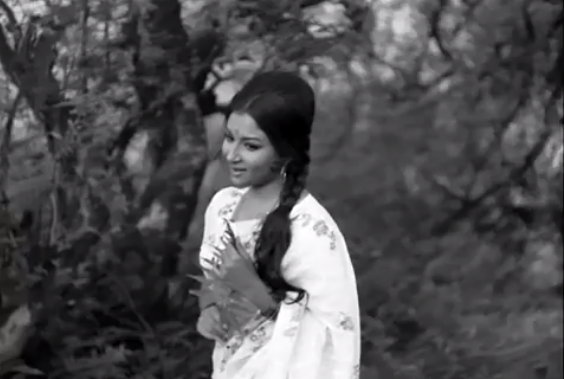
Sharmila Tagore shines in her restrained portrayal of Uma in Anupama (1966)

Our next translation comes from Hrishikesh Mukherji’s Anupama (1966), a poignantly crafted film that narrates the story of a father who blames his daughter for his wife’s death during childbirth.  On the request of one of our readers Himadree, we have provided the lyrics and English translation for the song “kuchh dil ne kahaa” from this film below.

Sharmila Tagore plays the role of Uma, a reticient young woman who has maintained a painful and difficult relationship with her wealthy father (played by Tarun Bose) from a young age. Because Uma’s mother died in childbirth, Uma’s father harbors feelings of resentment that prevent him from fully loving his daughter as she grows up. Uma also assumes culpability for her mother’s death, and her self-repression becomes a coping mechanism to deal with her own guilt and her father’s anger toward her.

When Uma meets the handsome and sensitive writer Ashok (played by Dharmendra), her life seems to to take a turn for the better. Yet, as the two fall in love, it becomes apparent that Uma’s  troubles have not vanished completely: her father has already arranged her marriage with another man and will never not approve of a relationship with a man of Ashok’s social status. Hrishikesh Mukherji uses this situation to provide realistic and eloquent commentary on the complex interplay between love and class in Indian society. In this context, Kaifi Azmi’s lyrics in “kuchh dil ne kahaa” truly come alive. The lyrics express the conflict that characterizes Uma’s state of mind as she faces the most challenging decision of her life: should she pursue her romance with Ashok or should she push him away to appease her father? The essence of this dilemma is captured beautifully in many lines of this song. Although her heart has become restless with love for Ashok, Uma contemplates that it may be best  to suppress these desires: “letaa hai dil angaDaaiiyaa.n, is dil ko samjhaaye koii.”  Moreover, in spite of her outer appearances, Uma’s inner turmoil is a real and painful obstacle in her life (“dil kii tasallii ke liye jhuuThii chamak jhuuThaa nikhaarjiivan to suunaa hii rahaa, sab samjhe aayii hai bahaar”).

In addition to its unique lyrics, this song is a musical masterpiece that has been cherished by Hindi film lovers over the years (though it didn’t receive its due at the time of the film’s release!). Hemant Kumar crafts a serene melody in Raga Bhimpalasi that accentuates the melancholic beauty found in both the lyrics and the natural landscape where this song is picturized. Lata Mangeshkar, as usual, is par excellence here as she emotes softly with some beautifully restrained vocals. As an interesting tidbit, you may have noticed that Lata sings this melody at a lower pitch than is expected for a Bollywood soprano. When Lata repeats the line “aisii bhii baate.n hotii hai.n” in the mukhda, she hits an A3 (komal ni in the key of B), one of the lower notes of her range recorded during this period. Enjoy our translation of this under-appreciated gem below and continue to send us your requests and other messages–we love to hear from you all!

-Mr. 55

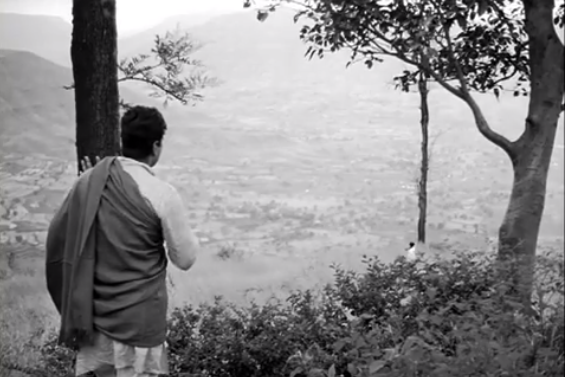
This song was filmed in Mahabaleshwar, a scenic hill station found in the state of Maharashtra. What a stunning landscape!

Kuch Dil Ne Kaha: Lyrics and Translation

kuchh dil ne kahaa, kuchh bhii nahii.n
My heart said something; yet, it was nothing at all.
kuchh dil ne sunaa, kuchh bhii nahii.n
My heart heard something; yet, it was nothing at all.
aisii bhii baate.n hotii hai.n
Such things happen in life.

letaa hai dil angaDaaiiyaa.n, is dil ko samajhaaye koii
My heart has become restless in anticipation of him; may someone please make it stop.
armaan na aa.nkhe.n khol de.n, rusvaa na ho jaaye koii
I hope that my desires do not cause my eyes to open and bring about disgrace,
palko.n kii ThanDii sej par sapno.n ki pariyaa.n sotii hai.n
For the dream-fairies remain asleep on the cool bed of my eyelids.
aisii bhii baate.n hotii hai.n
Such things happen in life.

dil kii tasallii ke liye jhuuThii chamak jhuuThaa nikhaar
For my heart’s satisification, I have adorned myself in this false glitter and shine.
jiivan to suunaa hii rahaa, sab samajhe aayii hai bahaar
Though it remains empty, everyone assumes that spring has arrived in my life.
kaliiyo.n se koii puuchtaa, hastii hai.n yaa ve rotii hai.n
Yet, no one has bothered to ask the flowerbuds whether they are smiling or crying.
aisii bhii baate.n hotii hai.n
Such things happen in life.

kuchh dil ne kahaa, kuchh bhii nahii.n
My heart said something; yet, it was nothing at all.

Glossary

angaDaaiiyaa.n: preparation, anticipation; armaan: hope, desire; rusvaa: disgrace; palko.n: eyelids; sej: bed; pariyaa.n: faires; tasallii: satisfaction, relief; chamak: glitter; nikhaar: glow, shine; bahaar: spring.

Sharmila Tagore rocks the classic beehive hairstyle that would later become her trademark.

The ever-handsome Dharmendra plays the role of a sensitive writer in Anupama (1966)

The 15 Best Bollywood Rain Songs: Evolution of a Classic Genre

Rajesh Khanna and Rakhee Rain Song Bollywood

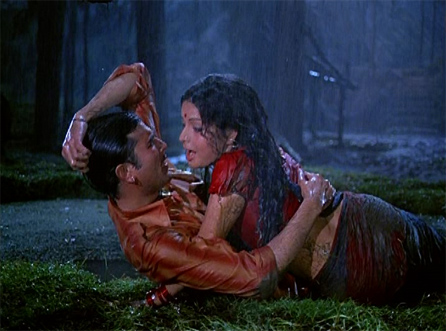
Rajesh Khanna and Rakhee express their sizzling love in the rain in Shehzada (1972).

It’s monsoon season again in India and, naturally, love is sparkling in the air. At last we present our list of the best rain songs from classic Bollywood! We all adore these moments–the iconic cuddling beneath an umbrella, the splashing around in a wet garden, or of course, Zeenat Aman in a drenched saari. It seems now that singing in the rain is the epitome of Bollywood romance, and a marvelous way to introduce a new song. But this phenomena did not occur overnight, and indeed, the meaning of rain itself in a film has shifted over the years with shifting cultural expectations. Let’s take a look at rain songs in Bollywood over the years!

Shree 420 Raj Kapoor Nargis Pyar Hua Iqrar Hua Rain Song Bollywood

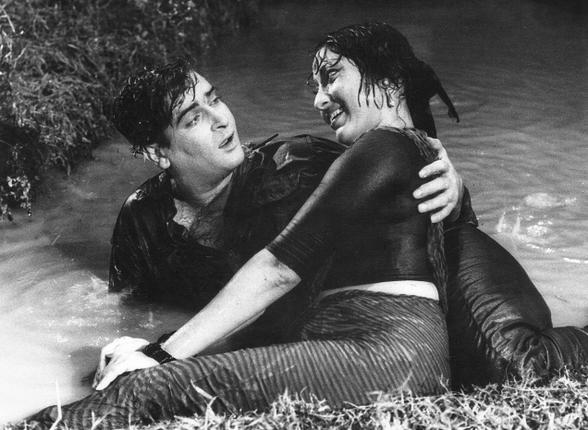
Raj Kapoor and Nargis huddle close together beneath an umbrella in Shree 420 (1955).

We being in the earlier days of cinematic magic. As India awoke to freedom and liberty in the 1950s, so too did the country rapidly begin to shift gears away from pure agriculture and toward industrialization. Many of the best rain songs from that era embody a sense of wonder in urban environments and, matching the film censorship boards, an innocent just-got-struck-by love. In these songs, rain seems to act as that enchantment in the air–that driving force bringing a loved one into contact or sight. Rain too acted as that shimmering veil of restraint that both parties hesitate to cross. “Ek Ladki Bheegi Bhaagi Si” from Chalti Ka Naam Gaadi (1958) is one of the most beloved rain songs of that era!

Raj Kapoor Dum Dum Diga Diga Chhalia

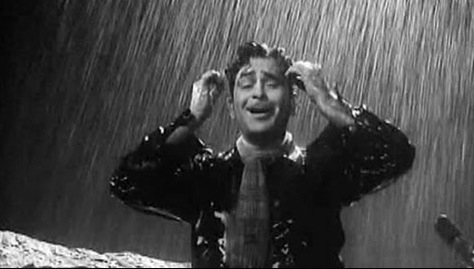
Raj Kapoor prances about the city streets singing “Dum Dum Diga Diga” from Chhalia (1960).

With the advent of the 60s, came a new meaning of being caught in a rainstorm. No longer was rain an innocent effector of love at first sight, but rather a clever and well-understood pretext for full out passion. To clarify, by passion, I mean, symbolic wet dancing that means much more than actual physical contact. The Bollywood rain songs of the 60s exude a sense of joy, independence and confidence. The onset of a rainstorm had an understood implication for overt displays of affection that both parties are eager to demonstrate. Say hello to bouffant hairdos, tight and wet salwar qameezes, and men doing some very special attempts at a courtship dance.

Shammi Kapoor Dil Tera Deewana Hai Sanam Mala Sinha

Shammi Kapoor and Mala Sinha get drenched in Dil Tera Deewana Hai Sanam (1960)

Gone were the days of “Do Bigha Zameen” style agricultural celebration! While the setting of the village recurred, rain ceased to be a blessing for economic survival–instead, it brought the blessing of love between newly liberated men and woman of a new age. Check out our translation of “O Sajna Barkha Bahar” from Parakh (1960) and listen how music directors cleverly incorporated native Indian instruments into creating the sounds and moods of rain. Indeed, the trickling melodies of sitar have graced the introductions of many a great rain sequence–even famously with Ravi Shankar’s solo for Satyajit Rai’s Aparajito!

Asha Parekh Aaya Saawan Jhoom Ke

Dressed as a village belle, Asha Parekh delights in the first rain of the season in “Aaya Sawan Jhoom Ke” (1969).

At last the 70s arrived, and the Bollywood rain song explored new territory. Yes, Zeenat Aman in a wet white saari is crossing some obvious lines and certainly deserves a mention on this list, but the rain song did not merely degenerate into a male fantasy. Instead, as the political atmosphere changed, the rain song adopted a meaning to suit its people. With government dissatisfaction in the air, rain songs were (while maintaining something of a romantic undertone), also a means of escape and hope.

Jeetendra Haye Re Haye Humjoli

Jeetendra and Leena Chandavarkar exhibit some of the strangest and wildest dance moves to date in the famous rain love song of Humjoli (1970)

Did you know in the early days of cinema, rain scenes were not actually filmed in the rain? Because of the nature of unforgiving black-and-white film stock, even heavy pounding natural rain does not appear clearly in the camera–much less the gentle puhaare of many a romantic Bollywood setting. As such, the production staff needed to literally dump buckets of water or spray dozens of hoses above the set for “rain” to actually appear so on screen! So the next time you watch these songs, just imagine the total chaos going on outside the frame among the frantic, water-pouring production assistants!

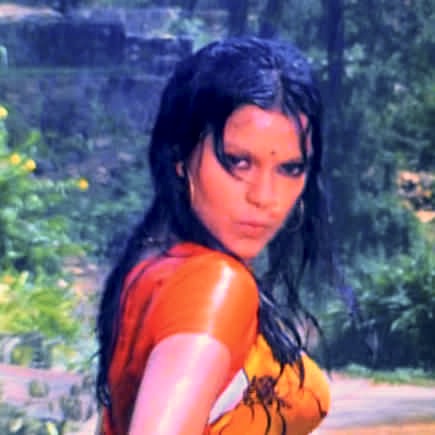
Zeenat Aman sets the rain on fire in “Haye Haye Yeh Majboori” from Shor (1972).

But enough talk. Now that you know the history, here is our list in chronological order of Bollywood’s greatest rain songs! These all-time classic give an entirely new meaning to “Singin’ in the Rain!”

The Best Rain Songs of Classic Bollywood

  1. Pyar Hua Iqrar Hua (Shree 420 – 1955)
  2. Yeh Raat Bheegi Bheegi (Chori Chori – 1956)
  3. Ek Ladki Bheegi Bhagi Si (Chalti Ka Naam Gaadi – 1958)
  4. Dil Tera Deewana Hai Sanam (Dil Tera Deewana – 1960)
  5. Dum Dum Diga Diga (Chhalia -1960)
  6. O Sajna Barkha Bahar Aayi (Parakh -1960)
  7. Rim Jhim Ke Tarane (Kala Bazaar – 1960)
  8. Zindagi Bhar Nahin Bhoolegi (Barsaat Ki Raat – 1960)
  9. Chhup Gaye Saade Nazare (Do Raaste – 1969)
  10. Aaya Saawan Jhoom Ke (Aaya Saawan Jhoom Ke – 1969)
  11. Ang Lag Ja Balma (Mera Naam Joker – 1970)
  12. Haye Re Haye (Humjoli – 1970)
  13. Bheegi Bheegi Raaton Mein (Ajnabi – 1972)
  14. Paani Re Paani (Shor – 1972)
  15. Haye Haye Yeh Majboori (Roti Kapada Aur Makaan – 1974)
Rajesh Khanna Zeenat Aman Bheegi Bheegi Raaton Mein

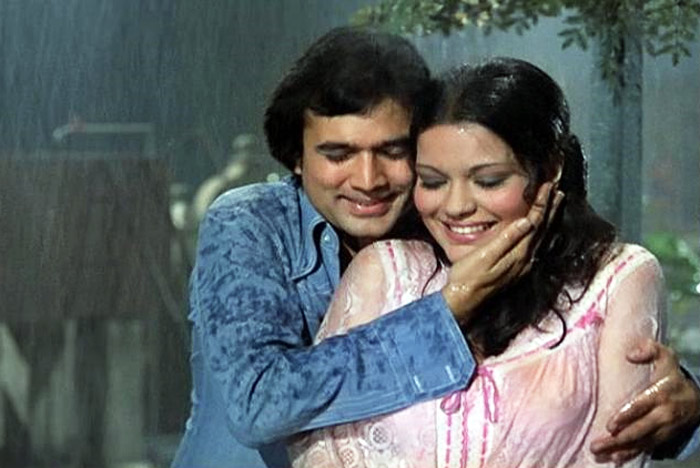
Rajesh Khanna cuddles Zeenat Aman to keep warm in the spicy rain song “Bheegi Bheegi Raaton Mein” in Ajnabi (1974).

And there you have it, the 15 best classic Bollywood rain songs over the ages! What are YOUR favorite rain songs from classic Bollywood–and tell us how they’ve influenced your own love stories!

– Mrs. 55