Who Is Mani Rabadi?

Gallery

This gallery contains 32 photos.

You’ve probably never heard of Mani Rabadi, but I’ll bet you’ve seen her work before. A behind-the-scenes legend, Mani Rabadi was a fashion designer to the stars. This woman was the final word in costume design for Bollywood films of … Continue reading

Lata Goes Cabaret!

A true fan of old Bollywood movies is all too familiar with the wonderfully awkward genre of songs known as cabaret numbers. Don’t even pretend like you don’t know what I’m talking about. Here at Mr. and Mrs. 55, we don’t judge our readers based on their taste – even if this includes a love for uncomfortably suggestive lyrics, flamboyant dance moves, and scantily clad B-grade actresses. Despite my initial aversion to these types of songs, I have learned to appreciate cabaret numbers for their showiness and sheer entertainment value.

Helen sizzles in her portrayal of "aa-jaan-e-jaa.n" on screen in Inteqaam (1969)

In terms of vocals, the queen of cabaret numbers in those days was the ever-versatile Asha Bhonsle. Asha’s voice was perfect for this type of song; she had the right combination of seduction, silkiness, and charm to execute cabaret songs with finesse.  In fact, Asha’s skill in performing cabaret numbers (think piiyaa tuu ab to aajaa from Caravaan and yeh meraa dil from Don) is one way in which she carved a niche for herself in the industry to emerge from the shadows of elder sister Lata Mangeshkar. However, although Asha was the dominating force when it came to the cabaret genre, you may be surprised to know that Lata also sung her fair share of vamp songs in films. Generally known for her conservative and purist reputation, Lata’s take on this genre is markedly different from her sister’s style: she avoids Asha’s over-the-top histrionics in favor of a more quiet (yet effective) seductive appeal. Let’s take a look at the following examples to see how Lata fares when she goes cabaret:

  1. aa jaan-e-jaa.n, aa meraa yeh husn jawaa.n.  This song from Inteqaam (1969) is perhaps the most well-known example of Lata singing cabaret, and she really nails the execution here by slowly and subtly seducing the listener with her enchanting vocals. Although Lata had an understanding with most music directors that she would not agree to sing cabarets, Laxmikant-Pyarelaal assured her that this song would not be problematic because it was composed with her style and artistic vision in mind. We’re grateful that Lata compromised here because, in my book, this song is one of the finest examples of cabaret singing in Hindi cinema.
  2. mehfil soyii, aisaa koii hogaa kahaa.n. Although this is the second lesser-known cabaret number by Lata in Inteqaam, it’s almost as good as the first. Like aa jaan-e-jaa.n, Lata’s silky vocals and understated seduction make this a cabaret to remember. The little stacatto “oh” that Lata adds to each antara is absolutely precious.
  3. is duniyaa me.n jiinaa ho, to sun lo merii baat. This song from Gumnaam (discussed earlier by Mrs. 55 here) might not qualify as a cabaret using a strict definition, but it’s certainly worth mentioning because it is one of Lata’s best songs picturized on Helen. In an otherwise grim and suspenseful thriller, this song composed by Shankar-Jaikishan provides some interesting contrast with its light-hearted, frothy spirit. The second line of this song’s mukhda has always confused me: “gham chhoD ke manaao rang-relii, man lo jo kahe kitty kelly.” Helen’s character is probably referring to herself in the third-person, but where the heck did this “Kitty Kelly” nickname come from?
  4.  jiinevaale jhuum ke mastaanaa ho ke jii. Penned by Sahir Ludhianvi and composed by Chitragupta, this rare number sung by Lata in Vaasna (1968) has a different feel to it from the typical cabarets we know and love. While its lyrics and music aren’t quite as sultry as the other cabarets here, this song is worth a listen as a strong example of music directors from this time period experimenting with Western fusion. I especially enjoyed the lilting interludes composed by Chitragupta, who was a music director from the Golden Age known for his stylish orchestration.
  5. mera naam rita christina. Though Helen was the undisputed diva of the vamp genre, there are the occasional instances where cabarets were picturized on other actresses. Saira Banu, looking stunning as ever in a red dress, seduces Biswajeet (watch him pretend like he doesn’t love it) with this fun number from April Fool (1964). I won’t say that this is one of Lata’s best renditions, but this song composed by Shankar-Jaikishan was immensely popular when it was released — so much so that it was banned by the Vividh Bharati radio station for being “culturally inappropriate.”

    Saira Banu in "mera naam rita christina" from April Fool (1964)

  6. aur mera naam hai jamiilaa. Before Laxmikant-Pyarelaal had composed the songs in Inteqaam that shot Lata to cabaret super-stardom, they wrote this song for her a couple years earlier in Night in London (1967). Supposedly, Laxmikant-Pyarelaal had traveled to London to become inspired by the locale while writing the music for this film. I’d say they did an excellent job of capturing the right spirit: Lata shines here with a cabaret that is tailored to suit her style. Even if you hate the song, be sure to watch the video for this one because I know you don’t want to miss out on Helen dancing scandalously while she’s surrounded by a gaggle of shirtless men.

After taking a listen to these examples, do you think Lata had what it took to pull off the cabaret genre? We want to hear your thoughts in the comments! Also, don’t forget to follow us on Twitter @themrandmrs55.

–Mr. 55

Losing Yourself in Jewel Thief

Dev Anand and Vijayantimala dance for their lives in Jewel Thief (1967)

I recently went on a Dev Anand binge after hearing the news of his passing last month. This man was an absolute auteur—his films were always ahead of his time. Among my favorite of his films is the 1967 kitsch classic Jewel Thief–an addictive crime thriller centered around the identity of a mysterious jewel thief who wreaks havoc across the nation. I kid you not, I watched this film 4 times in just as many weeks (not recommended).

The first time you watch the film, you might feel overwhelmed by the clash of colours and intentions in the costume and set design, by the flashy effects, and thrilling soundtrack. You ask yourself superficial questions that don’t have real answers–like why on earth is Helen dressed like a chicken? Who seriously keeps a fridge in their living room? And how did Vijayantimala fit into these outfits?

Helen shimmers proudly in a chicken suit at a bar.

The second time, you can appreciate the rich music direction—from Lata’s lilting swan song in Rulaake Gaye Sapna Mera, to let’s not forget one of Asha’s greatest moments as a seductress in Raat Akeli Hai. Perhaps the greatest strength of Jewel Thief is its evergreen soundtrack—and the exciting dance number Honton Pe Aisi Baat. As you watch this song, you’re almost tempted to believe that Vijayantimala really did dance for Pope Pius XII himself at the Vatican when she was discovered at five years old (true story).

By the third time you see the film, you start to wonder why you’re still doing this instead of studying for exams next week.

But on the fourth pass, it dawns on you that beneath the glitzy exterior, 60s kitsch and melodrama, Dev Anand actually made an extremely sophisticated emulation of the greatest Hitchcock thrillers. The theme of double identities runs rampant in many of Hitchcock’s films—and Jewel Thief take this idea of an average man unwittingly mistaken for a look-alike to a new level. Like Mr. Kaplan of North By Northwest, our hero Vinay is so doggedly mistaken for a mystery man he has never heard of, that he joins the hunt to track down his doppelganger himself. The idea of doubles is cleverly underscored in the film’s mis-en-scene–through mirrors, camera angles, and editing. Dev Anand invites the viewer into a flashy glamorous world of deceit and intrigue–and soon, the reader is forced in the best Hitchcockian style to doubt the credibility of the film’s own hero–after all, has Vinay in turn been tricking the audience all along?

Perhaps then it is not surprising that Jewel Thief carries a deeper message underneath all of Asha Bhonsle’s high notes and crazy strobe lighting. Tanuja, who plays the likeable “modern” girl (and makes some awkwardly forward passes for the 60s), coincidentally only dresses in traditional saris after deciding to stand up for what’s right. And like India herself toying with the colorful lures of a Western way of life, Vinay loses and rediscovers his own identity, fighting to uncover the truth behind a glittering facade.

Do we really look that similar…? Hideous clash of plaids aside, though?

Bottom line? You need to see Jewel Thief. Forget the political commentary, forget the sublime soundtrack–just go for watching Helen in a chicken costume.

-Mrs. 55

The Strange World of Gumnaam: Agatha Christie meets Bollywood

Helen and Pran forget their worries in Gumnaam (1967)

There’s been some buzz lately about the Italian Heineken “The Date” commercial featuring the music from Mohammed Rafi’s “Jaan Pehchaan Ho.” The commercial is fairly trippy, and sadly cuts out all of the actual singing, leaving only the musical introduction, interludes, and awkwardly enough, strange high-pitched male laughter. I’ve got two comments to make about this:

1. If you’re gonna take a Rafi song, why is the setting of this commercial East Asian instead of Indian? C’mon now, people.

2. More fundamentally, how on earth did the ad agency responsible for this come across this song and convince everyone involved of its advertising magic? Either a. someone had heard it used over the title sequence for the movie Ghost World, or b. someone knew it in its original form and had the guts, craziness, and pride to show it publicly. I can only hope it came from a fellow Rafi fanatic who is willing to boost the cause at any price to personal dignity. If it had been me who had a chance to bring glory to the Rafi name, I might’ve chosen the slightly more melodic/catchy “Badan Pe Sitare” or “Nain Milaakar“, which both seem to fall in the same category of hep cat club song. But that’s just me.

Let’s take a closer look the film, Gumnaam (1965) from where this song actually came. For all the Agatha Christie fans out there (and I’ve read all her books–no seriously, ALL of them), you may have been let down thinking that the best filmic interpretation of And Then There Were None was an obscure 80s Russian adaptation that has not been properly subtitled. Well, it’s your lucky day! Say hello to Gumnaam, a kitschy, melodramatic, and thoroughly enjoyable Bollywood adaptation of the Agatha Christie classic.

The film actually follows the basic outline of the plot pretty closely, adding in some extras for spice including the fantastically diverse soundtrack, an absolutely ridiculous dream sequence, and a mysterious ghostly element rendered by Lata’s vocals with the theme, “Gumnaam Hai Koi.”

As an aside, did you know “Gumnaam Hai Koi” is actually Lata’s cover version of the theme song to the 1963 American film Charade starring Cary Grant and Audrey Hepburn? Life is full of surprises.

The cast of Gumnaam is also a great mix of favorites–Manoj Kumar, Nanda, Pran, Mehmood as Butler, and none other than Helen in an actually fairly significant acting role. Sure, she’s got her usual crazy dance numbers (not to be missed!), but overall, if you have an open mind and three spare hours of your life that you know you will never get back, this film is pure deliciousness. And for all the Christie fans, the brilliant twist of the original novel takes on YET another twist in the climax of this film, so don’t think you know what’s coming!
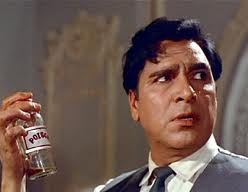
Poison??! What a total surprise!

-Mrs. 55