Chaudavin Ka Chand Ho Lyrics and Translation: Let’s Learn Urdu-Hindi

GD

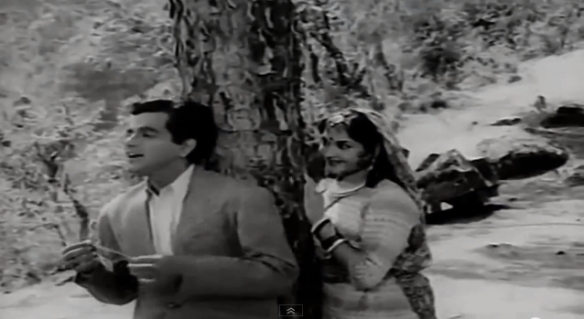
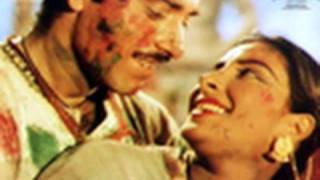
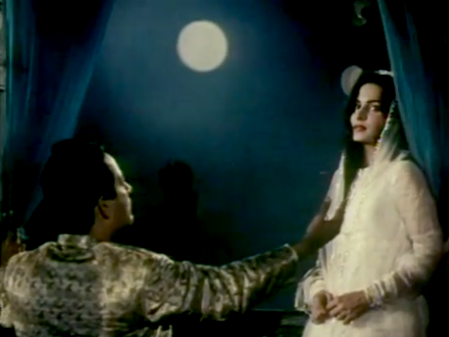
Guru Dutt compares the beauty of his beloved Waheeda Rehman to the full moon of the night sky in Chaudavin Ka Chand (1960).

Today, we present the lyrics and English translation to the title track from Mohammed Sadiq’s Chaudavin Ka Chand (1960).  After Kaaghaz Ke Phool (1959) proved to be a box office disaster, Chaudavin Ka Chand salvaged Guru Dutt’s production studio by garnering  widespread commercial success at the time of its release. Reflecting on the failure of Kaaghaz Ke Phool and the success of Chaudavin Ka Chand, Guru Dutt said,

 “Life me.n, yaar, kyaa hai? Do hii to chiize.n hai.n: –kamiyaabii aur failure. There is nothing in between.”

Although the success of Chaudavin Ka Chand as a comeback film for Guru Dutt Productions can be attributed to number of factors, one of the most important is the film’s outstanding musical score. Composed by Ravi and penned by Shakeel Badayuni, this soundtrack is full of memorable gems like the sassy Asha-Shamshad qawwali sharmaa ke ye kyo.n sab pardaanashii.n and the pain-filled badle badle mere sarkaar (Lata Mangeshkar’s only foray into singing for Guru Dutt Films!).

Among these gems, the film’s title track chaudavii.n ka chaa.nd ho steals the show as one of the most beautiful expressions of love in Hindi film music. Tuned to Raga Pahadi, Shakeel Badayuni’s Filmfare Award winning Urdu poetry abounds with metaphors to describe the film’s heroine Waheeda Rehman. Reminiscent of Shakespeare’s Sonnet No. 18 (“Shall I compare thee to a summer’s day?”), the the poet employs natural imagery to characterize his beloved’s beauty through references to the full moon (chaudavii.n kaa chaa.nd), the sun (aftaab), a lotus (ka.nval), wine (sharaab), and more. Ultimately, the poet concludes that his beloved is so beautiful that her beauty is beyond comparison to any object (jo bhii ho tum khudaa kii qasam laajavaab ho).

No discussion about chaudavii.n ka chaa.nd ho can be complete without giving credit to Mohammed Rafi for his magical rendition. Here, Rafi offers a technically brilliant performance but it is the warmth, passion, and soul in his voice that renders this song a timeless masterpiece. About fifteen years following his Bollywood debut, Rafi received his first well-deserved Filmfare Award for this song in 1961.

Did you know that the Censor Board objected to chaudavii.n kaa chaa.nd ho when Guru Dutt re-released a version of the song shot in color? As the color version was being filmed, Waheeda Rehman’s eyes became irritated from the heat of the high-powered lights used during the shoot. Upon seeing the red color of the heroine’s eyes, the Censor Board claimed that the colored picturization of the song contained suggestive and lustful implications inappropriate for audiences. What a bizarre and unfair objection placed on such an innocently romantic song! Don’t let it stop your from enjoying this classic gem along with our lyrics and translation below. Until next time…

-Mr. 55
WR

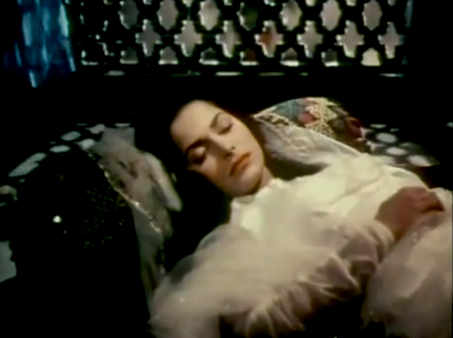
Sleeping in a white dress, Waheeda Rehman’s angelic beauty shines in Chaudavin Ka Chand (1960).

Chaudavin Ka Chand Ho: Lyrics and Translation

chaudavii.n kaa chaa.nd ho yaa aftaab ho?
Are you the full moon of the night or the sun of the day? 
jo bhii ho tum khudaa kii qasam laajavaab ho

Whatever you are, I swear by the Lord that you are incomparable.

zulfe.n hai.n jaise kaandho.n pe baadal jhuke hue
Your tresses are like dark clouds sloping down your shoulders.
aa.nkhe.n hai.n jaise mai ke pyaale bhare hue
Your beautiful eyes are like wine-filled goblets.
mastii hai jis me.n pyaar kii tum vah sharaab ho
You are the wine that abounds with the intoxication of love.

chaharaa hai jaise jhiil me.n ha.nstaa huaa ka.nval
Is your face like a smiling lotus in the brook,
yaa zindagii ke saaz pe chheDii huii ghazal?
or like an ode tuned to the music of life?
jaan-e-bahaar tum kisii shaayar kaa khvaab ho
My beloved, you are a poet’s dream.

ho.nTho.n pe kheltii hai.n tabassum kii bijliyaa.n
The current of your bright smile runs through your beautiful lips.
sajde tumhaarii raah me.n kartii hai kahkashaa.n
Even galaxies lay prostrate with reverence in your path.
duniyaa-e-husn-o-ishq kaa tum hii shabaab ho
 Only your youthful splendor shines in this world of love and beauty.

chaudavii.n kaa chaa.nd ho yaa aftaab ho?
Are you the full moon of the night or the sun of the day?

Glossary

chaudavii.n kaa chaa.nd: moon of the fourteenth night, full moon; aftaab: sun; laajavaab: incomparable; kaandhaa: shoulder; mai: wine; pyaalaa: goblet; mastii: intoxication; sharaab: wine, alcohol; jhiil: brook; ka.nval: lotus; saaz: musical instrument; ghazal: song, ode; jaan-e-bahaar: beloved; shaayar: poet; khvaab: dream; tabassum: smile; bijlii: current; sajde karnaa: to lay prostrate; kahkashaa.n: galaxy; duniyaa-e-husn-o-ishq: world of love and beauty; shabaab: youth.
GD

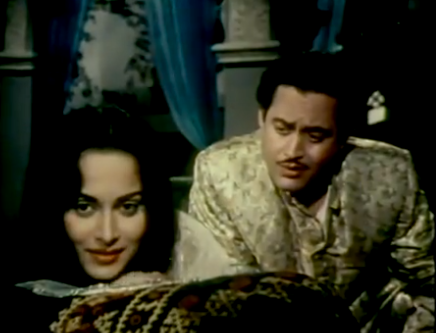
Guru Dutt and Waheeda Rehman’s on-screen chemistry in Chaudavin Ka Chand (1960) reflected their passionate off-screen affair.
A Beginner’s Guide to Bollywood Tree Courtship: The Best Tree Songs of Classic Films

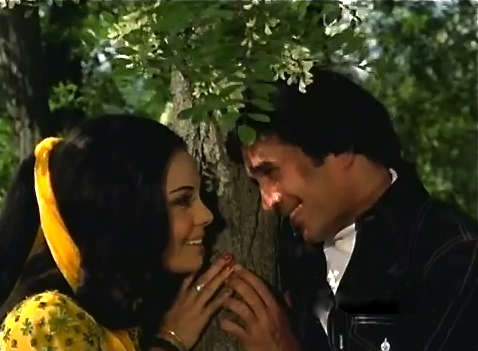
Rajesh Khanna tree Mumtaz Aap Ki Qasam

Rajesh Khanna and Mumtaz engage in a playful treeside encounter in Aap Ki Kasam (1974).

A tree is the ideal wingman. It’s an insider trick Bollywood heroes and heroines learned early on that rarely fails to end in matrimonial bliss. Many of the best songs of Bollywood occur in a forest, taking full advantage of that lovable prop whose stability is matched only by its generosity. In honor of Van Mahotsav, the annual Indian tree-planting festival taking place this week, we too would like to honor the cultural importance of the all-mighty tree in the greatest reflection of our society: film. Why a tree? Newcomers to classic Bollywood may ask with due naivite. The archetypal significance of entering the forest–delving deep into the mysteries of the mind and soul–do have some place in the escapism of romantic fantasy, but the logic of singing and dancing around a tree is actually quite simple.

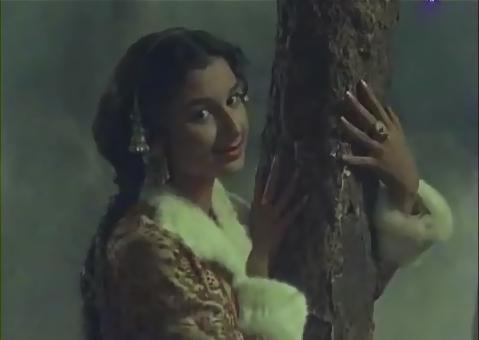
sharmila tagore kashmir ki kali

Sharmila Tagore hugs a tree for emotional stability in Kashmir Ki Kali (1964).

In most romantic-dramas of the Golden Age, emotions are just brimming over with adorable intensity. With a tree as a wingman, you can simultaneously practice your moves with a literal tree hug while catching your breath from a potentially close encounter with the real object of your desire. See, the tree doesn’t judge. The tree doesn’t ask for a return favor next Friday. The tree is neutral ground–a seemingly innocent bystander in the forest of love to which both parties have full claim. Sometimes the woman peeks behind the tree, sometimes the man. As a friendly chaperone, the tree legitimizes everyone’s behavior in that bashful innocence of bygone romance. Yes, censorship laws may prevent you from making real moves on your loved one, but they won’t stop you from snuggling a tree.

Dilip Kumar Vijayantimala dil tadap tadap ke tree

Although Vijayantimala tightly embraces a forgiving tree trunk, it’s clear who she really wants to be hugging in Madhumati (1958).

Bollywood has been perfecting the tree ritual since time immemorial. It’s a cinematic institution, particularly for the benefits of discreet pans to the sunlit treetops or a calming mountainside when a love scene threatens to quickly advance from G to PG. We even emulated basic tree positioning in a photograph on our “About Us” page!

Enjoy our list of classic Bollywood’s best tree songs below. Study them thoroughly and know your part well before embarking on your next trip to the forest. While this list could honestly go on forever, we’ve chosen our top 15 tree songs based on creativity of tree choreography. Which of YOUR favorite tree numbers would you add? Share your thoughts in the comments!

1. Dekho Kasam Se (Tumsa Nahin Dekha 1957)

2. Dil Tadap Tadap (Madhumati 1958)

3. Deewana Mastana Hua Dil (Bombai Ka Babu 1960)

4. Do Sitaron Ka Zameen (Kohinoor 1960)

5. Abhi Na Jao Chod Kar (Hum Dono 1961)

6. Isharon Isharon Mein (Kashmir Ki Kali 1964)

7. Jaiye Aap Kahan Jaayenge (Mere Sanam 1965)

8. Baharon Phool Barsao (Suraj 1966)

9. In Baharon Mei.N Akeli (Mamta 1966)

10. Likhe Jo Khat Tujhe (Kanyadaan 1968)

11. Bekhudi Mein Sanam (Haseena Maan Jayegi 1968)

12. Jaane Jaan DhoonDta (Jawani Diwani 1972)

13. Suno Kaho Suna (Aap Ki Kasam 1974)

14. Is Mod Se Jaate Hain (Aandhi 1975)

15. Tune O Rangile (Kudrat 1981)

Shammi Kapoor Dekh Kasam Se

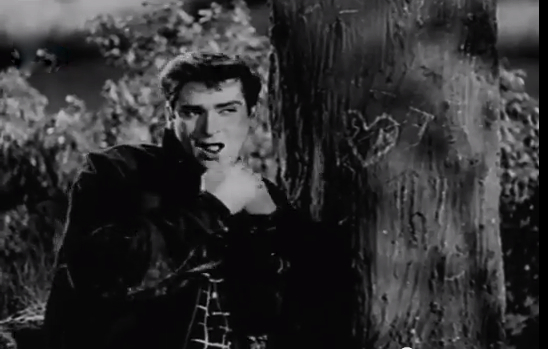
Shammi Kapoor coyly assesses the romantic situation from the comfort of his engraved tree in Tumsa Nahin Dekha (1957).

Feeling like a pro already? Perhaps you’re ready for the big time: spitting game around a tree in the rain! Check out our compilation of Bollywood’s best monsoon songs, and you’ll be walking down the aisle in no time.

-Mrs. 55

The Best Holi Songs of Classic Bollywood Movies

Hema Malini Sholay holi

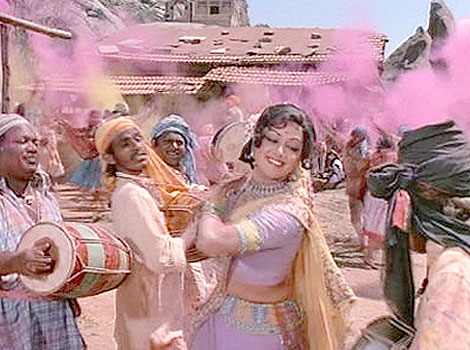
Hema Malini dances with joyful abandon in Sholay’s famous holi number “Holi Ke Din.”

The festival of Holi is among Bollywood’s favorite celebrations–an occasion at last as colorful as the country of its origin. Indeed Holi, a Hindu spring festival, is commonly known as the Festival of Colors. It is both a religious celebration signifying the triumph of Good over Evil, as well as a cultural one commemorating the onset of a new Spring season. It is marked by the throwing of colorful powders, the lighting of bonfires, and the strengthening of bonds between all individuals in colorful merriment. Its spirited catchphrase “Buraa na maano, Holi hai!” (Don’t bear any ill-feelings, it’s Holi!”) speaks to the underlying theme of the day – the burning of negative forces or ill-will, a sort of spiritual purging. The smearing of colors represents the deconstructing of identities and the breaking of social barriers, as all rejoice and participate together, regardless of social class. At the very least, it is a day to settle old scores and move on. Indeed, everyone is welcome and everyone is pardoned for his or her revelry. Thus, we mortals celebrate Holi today with fun and games, colors and powder, and Bollywood takes this grand opportunity to ignite romance.

Rajesh Khanna asha parekh holi

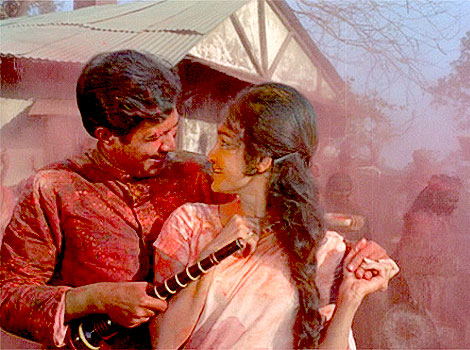
Rajesh Khanna woos Asha Parekh with color at the Holi celebration of Kati Patang (1970).

There’s something inherent to the playful tag-style nature of Holi that lends itself so conveniently to flirtation and a male-female dichotomy. We discussed the appalling lack of Diwali-associated songs in classic Bollywood previously, and hazarded the guess that the festival is far less conducive to overt flirtation and bumping dance grooves like Holi invariably is. Whether wooing the mourning lover into a literal rainbow of joy or painting your sweetheart with a visible mark of your flirtatious overtures, Holi delivers the goods for Bollywood every time.

Mother India holi

Even the old school epic Mother India takes a drama break for the holi festivities!

Below is our list of the 10 greatest Holi songs of classic Bollywood cinema. Happy Holi to all our readers–and if you’re stuck in a huge snowstorm like we are, here’s hoping Holi will usher in the Spring at last!

1. Rang barse (Silsila 1981)

The ultimate old school Holi hit, this song will force anyone to get in the mood and join the festivities! Say what you want about Amitabh and Rekha’s clandestine affair, this dance number will get you on board in no time!

2. Aaj na chodenge (Kati Patang 1970)

This song is easily my favorite Bollywood holi song! Besides the fact that I grew up on the Kati Patang soundtrack, does it get much better than Rajesh Khanna-Asha Parekh shy seduction? Lata and Kishore are delightful, but don’t get me started on the bizarre chorus act that chops up the number like barbarians on holiday.

3. Holi Aayi Re Kanhaayi (Mother India 1957)

Oh, there’s no school like the old school! Bring it back Nargis-style with this classic song from Mother India that just overflows with romance and sass! The only thing better than a Holi song is a Holi village dance-off.

4. Tan rang lo ji (Kohinoor 1960)

While this royal gem may be shot in black-and-white, you can practically see the colors flying in this fantastic Mohammed Rafi-Dilip Kumar celebration that invites the entire kingdom for a Holi song-and-dance sequence!

5. Holi Ke Din (Sholay 1975)

Retro flirting Queen Hema Malini proves to Dharmendra that she’s more than just a loud mouth in Sholay–her moves and dancing steal the show in this colorful song!

6. Are Ja Re Hat Natkhat (Navrang 1959)

Classical dancer Sandhya wows the audience with this traditional stage performance, alternating as both the male and female character complete with ghungroo! Asha Bhonsle’s Hindustani vocals balance out Mahendra Kapoor’s mainstream sway in a Holi number that is well-known even today for its stunning classical choreography.

7. Piya Tose Naina (Guide 1965)

Looking for something a little classier? Go no further than this Waheeda Rehman semi-classical piece from the great philosophical Guide. Watch her prance around with so much joie de vivre, you’ll ignore how gaudy the stage is decorated and your feelings for high-pitched female choruses of the 1960s.

8. Nadiya Se Dariya (Namak Haram 1973)

This song is just plain cute. While not a roaring shoulder-shaking dance off like some of these others, the song is playful and full of shy passion for Rajesh Khanna, which we always approve of.

9. Baghi Re Bhagi Brij Bala (Rajput 1982)

I think this hidden jewel is under-appreciated by historians. While something of a repeat of previous Hema Malini-Dharmendra magic, Vinod Khanna holds his own in this fast-paced duet that once again brings an entire kingdom to the palace to party Holi-style!

10. Kaikhe Paan Banaraswala (Don 1978)

OK, so this isn’t technically a Holi song per se, but it’s arguably the unofficial anthem! There’s something about a traditional, rich beat coupled with Kishore’s absolutely unabashed vocals that set the tone of a celebration and throwing inhibitions to the wind!

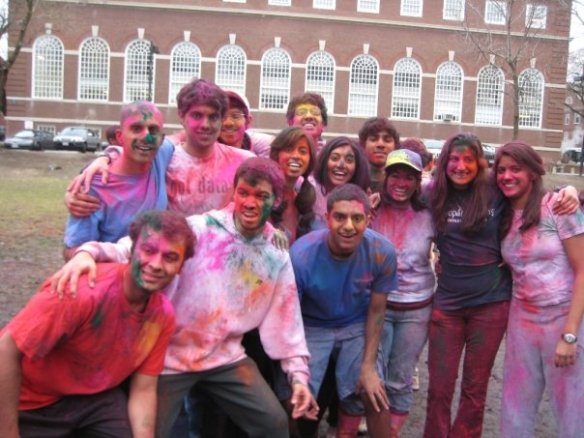
While Holi was born in India, it’s popularity was carried across the diaspora and is celebrated around the world each year with full force! The picture below is from my freshman year at Harvard where Holi was played on the Mac quad! Can you spot me in the pigtails with the orange-yellow face?

n31939_34049799_4730

– Mrs. 55

Five Anti-Feminist Bollywood Songs That Will Make You Cringe

Nutan Khandan 1965

Nutan literally worships the ground beneath her husband’s feet in Khandan (1965).

There is a careful line to be drawn in classic Bollywood cinema between love for a man and all-out worship. The songs below represent that unfortunate relic of Bollywood songs that transformed the excitement and bliss of romantic love into something plain unhealthy. We all know the genre I refer to. The trouble is, the songs are so good on a purely artistic level that we can’t help but keep playing them over and over again. Most of them were smash hits at the time of their release and continue to keep a significant slice of Indian audiences captivated, despite shifting social norms.

It’s easy to oversimplify this phenomena by saying, “it’s cultural” or “that was the way of thinking back then.” Yes, in India as in many countries, many women were raised to believe their ultimate role was in service to their husband and the framework for sexuality revolutionized worldwide in the 60s and 70s. But you can’t let it go at that for any similar explanation undermines the contradictory evidence within Indian history and the inherent wrong of this mindset. I don’t care if you lived in the 17th century or were born yesterday, we can’t raise our daughters like this. India is a country famous for electing the first female Prime Minister, for revering the strength and wisdom of its many awe-inspiring female gods, and where women become IT specialists and make salaries equivalent to their male counterparts. But there’s an uglier side too, and hopefully today we all feel a collective awkwardness when reminded of it in that great reflection of culture: film.

You’ll notice that all the songs on our cringe-tastic list are Lata Mangeshkar (half of them Nutan) hits, and it’s no surprise. Of course, it would be the heroine, not the bad modern girl left with an Asha side number, that would sing the song of self-flagellistic devotion. It’s a bad sign that some of these lines were thought to be representative of the “ideal” woman or wife–have we really improved anything by turning women into half-naked screens sirens instead? You decide.

Nutan just loves doing household chores and singing about her god-like husband in Saudagar (1973).

Personally, I have a violent reaction hearing some of these words come out of these actresses. Have a gander yourself and listen carefully to so-called Indian love of the 1950s and 1960s. Can you make it to the bottom of this list without squirming?

1. Tumhi Mere Mandir (Khandan 1965)

Cringe-worthy line: “Tumhi mere mandir, tumhi mere pujaa, tumhi devta ho.” (“You alone are my temple, you alone are my prayer, you alone are my God.”)

Gurrl, please stop it. This is seriously not healthy. Husbands should not take the place of God in your day-t0-day logic. How are you even functioning right now?

2. Aap Ki Nazaro.n Ne Samjha (Anpadh 1962)

Cringe-worthy lines: “Aap ki nazaro.n ne samjha pyaar ke qaabil mujhe…Keh rahi hai har nazar, banda parwar shukriya.” (“Your glances deemed me worthy of your love…every glance of mine says ‘Thank you, Lord.'”)

AAAAAAAAAAH. I’m in so much pain right now. So you’re telling me, you’re grateful that your husband “deemed you worthy” of his love? Help me. Check out our full translation if you’re in the mood for punishment!

3. Tera Mera Saath Rahe (Saudagar 1973)

Cringe-worthy line:”Tu kabhi mere khuda, mujhse bezaar na ho.” (May you never become angry with me, my revered God!)

Although this film is actually really good and takes some unexpected twists that make you love Nutan, I can’t deal with her in this song. She frolics around doing the chores with a pep in her step, just wishing and hoping that her GOD, oh wait, sorry, that man you married, will never be angry at her.

4. Hum Tere Pyaar Mei.N (Dil Ek Mandir 1963)

Cringe-worthy line: “Is tere charan kii dhuul se ham ne apnii jiivan maa.ng bharii…Ab in charano.n me.n dam nikle bas itnii aur tamannaa hai.” (“I put sindoor on my forehead from the dust at your feet…now I have but one more wish, which is to die at your feet.”)

OMG, calm down, girlfriend. You are legit scaring me. I don’t care if you’re being figurative, go take a cold shower and re-evaluate yourself!!! Our English translation of this monster is here.

5. Dheere Dheere Machal (Anupama 1966)

Cringe-worthy line: “Mujhko karne de! Karne de! Solah sringar! Koi aataa hai!” (Oh let me, let me, let me adorn myself and put on full-make up! He is coming!”)

OK I get it, we all try to look good for our man, but it’s the sheer frenzied desperation here that bothers me. Do you think your man gets that crazy to straighten his tie and brush his hair when he hears your painted toenails pattering on the ground in approach??

So how’d you do? Survived? Well done! Sorry about my rant, I just prefer a little equality in a relationship. For a rebuttal (and there are plenty to choose from), be sure to read our post on Mukesh’s “Koi Jab Tumhara Hriday” just in case you were afraid it was only women who knew how to grovel. Did we miss any cringe-worthy gems that always rankle your bones? Let us know in the comments!
-Mrs. 55

Jhumka Gira Re Lyrics and Translation: Let’s Learn Urdu-Hindi

Sadhana flirts with a percussionist as she dances in the street in Mera Saaya (1966)

Our next translation comes from Raj Khosla’s evergreen thriller Mera Saaya (1967) starring Sadhana and Sunil Dutt. A memorable film with an even more memorable soundtrack composed by Madan Mohan and penned by Raja Mehndi Ali Khan! The two Lata solos “tuu jahaa.n jahaa.n chalegaa” and “naino.n me.n badraa chhaaye” get all the critical acclaim, but can you guess which song has achieved the most popularity among fans over the years?

That’s right! It’s “jhumkaa giraa re” sung by Asha Bhosle, our favorite queen of nakhra. Although she has been known to be prone to excess, Asha sings this folk-inspired number with just the right amount of sassy charm to get everyone excited without overdoing it. The text of this song reads like a story in which the female protagonist describes a common motif found in Hindustani poetry: a woman’s ornaments, and specifically her earrings in this case. For other songs in a similar vein, listen to “milaa hai kisii kaa jhumkaa” from Parakh (1960),  “terii bindiyaa re” from Abhimaan (1973), “dhuu.nDo dhuu.nDo re sajna, more kaan kaa baalaa” from Ganga Jamuna (1961), and another song with the same title as this number sung by Shamshad Begum in Dekhoji (1947).  Moreover, Mera Saaya is a remake of the Marathi film Pathlag (1964), so there is a similar scene with an accompanying song that shares a resemblance with “jhumkaa giraa re.”

Even a folk number can’t stop Sadhana from showing off her characteristic fringe!

The city of Bareilly gets referenced occasionally in various Bollywood songs (especially in relation to jhumkaas!), so I was interested in learning more about its historical and cultural background. Bareilly is a prominent city situated in Uttar Pradesh, and according to Wikipedia:

“Bareilly is famous for its zari work (a type of fabric decoration), dari (a common type of carpet use in most of the Indian houses), jhumkaa (an intricate type of earrings), and surmaa (eyeliner).”

A montage of sights and attractions in Bareilly, India.

Who knew? After taking in our small cultural lesson for the day, make sure you listen to this classic fok dance gem and follow along with our glossary/translation below. You might expect a light-hearted song like this to be very easy to understand, but there is definitely some interesting vocabulary to be learned here! Enjoy!

-Mr. 55

P.S: Don’t you just love it when the random male interrupts with the “phir kyaa huaa?” each time? It’s my favorite part!

Jhumka Gira Re: Lyrics and Translation

jhumkaa giraa re barelii ke bazaar me.n
My earring fell in a market in Bareilly.
jhumkaa giraa, jhumkaa giraa, jhumkaa giraa
My earring fell, my earring fell, my earring fell.
haay, haay, haay!
Oh, oh, oh!

saiyaa.n aaye nai.n jhukaaye ghar me.n chorii-chorii
My beloved came into the house furtively with a lowered gaze.
bole “jhumkaa mai.n pahnaa duu.n, aaja baa.nkii chhorii
He said: “Come, dear, let me help you put on your earrings.”
mai.n bolii “naa naa naa baabaa, naa kar joraajorii
I said “No, no, no, dear. Please don’t be so aggressive.”
laakh chhuDaayaa, saiyaa.n ne kalaiyaa naahi.n chhoDii
I tried to release myself several times, but my beloved did not let go my wrist.
haay! kalaiyaa nahii.n chhoDii
Oh! He did not let go of my wrist.
[Male: phir kyaa huaa? ]
Then, what happened?
phir? phir jhumkaa giraa re ham dono.n kii Takraar me.n
Then? Then, my earring fell during our ensuing quarrel.
jhumkaa giraa re
My earring fell. 

ghar kii chhat pe mai.n khaDii, galii me.n dilbar jaanii
I stood on my house’s rooftop terrace while my beloved stood in the alley below.
ha.nske bole “niiche aa, ab niiche aa diivaanii
He smiled and said: “Come down, oh crazy one,
yaa anguuThii phe.nk apnii yaa chhallaa de nishaanii”
or throw me your ring as a sign of our love.”
ghar ki chhat pe khaDe-khaDe mai.n huii sharam se paanii
Standing on the roof, I became filled with shame.
mai.n huii sharam se paanii
I became filled with shame.
[Male: phir kyaa huaa?]
Then, what happened?
daiyaa! phir jhumkaa giraa re ham dono.n ke is pyaar me.n
Oh lord! Then, my earring fell in the midst of our love. 
jhumkaa gira re
My earring fell.

bagiyaa me.n balmaa ne merii laT uljhii suljhaayii
In the garden, my beloved tied and unraveled my braids.
thaamke aa.nchal bole “gorii, tu mere man bhaayii
Holding the end of my sari, he said: “Fair one, you have pleased my mind.”
aa.nkh jhukaake kuchh naa bolii, dhiire se muskaayii
With a lowered gaze, I said nothing; I smiled quietly.
saiyaa.n ne jab chheDaa mujh ko ho gauii haathaapaayii
When my beloved teased me, a scuffle ensued.
haay! ho gayii haathaapayii
Oh! A scuffle ensued.
[Male: phir kyaa huaa?]
Then, what happened?
phir jhumkaa giraa re, mai.n kyaa boluu.n bekaar me.n?
Then, my earring fell.  What shall I say in vain? 
jhumkaa giraa re
My earring fell.

jhumkaa giraa re barelii ke bazaar me.n
My earring fell in a market in Bareilly.
jhumkaa giraa, jhumkaa giraa, jhumkaa giraa
My earring fell, my earring fell, my earring fell.
haay, haay, haay!
Oh, oh, oh!

Glossary

jhumkaa: earring; Bareilly: a city in Uttar Pradesh, India; saiyaa.n: beloved; nain jhukaanaa: to lower one’s gaze; chorii-chorii: quietly, furtively; pahnaa denaa: to help someone wear; baa.nkii chhorii: dear; joraajorii: aggression; chhuDaanaa: to release, disengage; kalaiyaa: wrist; Takraar: quarrel; chhat: rooftop; galii: alley; dilbar jaanii: beloved; anguuThii: ring; chhalla: ring;  nishaanii: sign; sharam se paanii honaa: to become filled with shame; daiyaa: oh lord, an exclamation; bagiyaa: garden; balmaa: beloved; laT uljhaana: to tie braids of hair; laT suljhaanaa: to unravel braids of hair; thaamnaa: to hold, embrace; gorii: fair girl; man bhaanaa: to please the mind; dhiire se: quietly, slowly; chheDnaa: to tease; haathaapaayii: scuffle; bekaar me.n: in vain.
  

An audience of male creepers can’t help but stare at Sadhana’s moves in Mera Saaya (1966)