Tu Jahan Jahan Chalega Lyrics and Translation: Let’s Learn Urdu-Hindi

Reposting a translation from Mera Saaya (1966) in tribute of actress Sadhana Shivdasani who passed away today at the age of 74. Her legacy of style, grace, and beauty lives on through many of the unforgettable songs filmed on her during Bollywood’s Golden Era.

mrandmrs55's avatarMr. & Mrs. 55 - Classic Bollywood Revisited!

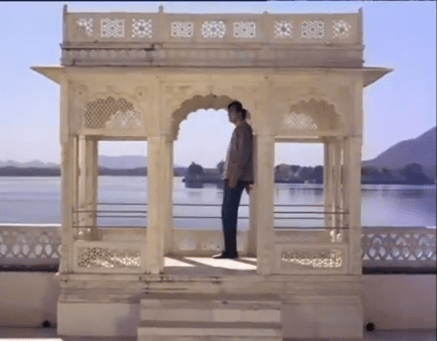
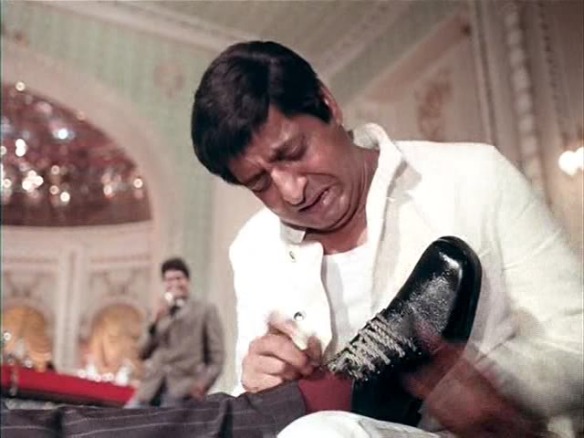
SD Against the stunning backdrop of the Lake Palace in Udaipur, Sunil Dutt mourns the loss of  his deceased wife in Mera Saaya (1966)

Today, we present the lyrics and English translation to the title track from Raj Khosla’s Mera Saaya (1966): tuu jahaa.n jahaa.n chalegaa. This timeless classic is embedded within the hearts of Hindi film music fans as an ode to love and its ability to provide strength and support during the most trying of circumstances.  

Unlike many songs from this era, tuu jahaa.n jahaa.n chalegaa is not used exclusively as a playback song in Mera Saaya. One version of this song plays in the background while a tormented Sunil Dutt sulks in confusion after an accused dacoit resembling his deceased wife (double role played by Sadhana) claims to be his wife weeks after her death. As he trudges around the beautiful Lake Palace

View original post 826 more words

Everything I Need to Know About Life, I Learned From Amar, Akbar, Anthony (1977)

Everything I need to know about life I learned from Amar, Akbar, Anthony (1977).

We at Mr. and Mrs. 55 – Classic Bollywood Revisited! are getting tired of some of the recent unhinged political rhetoric being thrown around. Sometimes we have to take a moment to realize that not everyone was lucky enough to learn important life lessons as we were from classic Bollywood films.

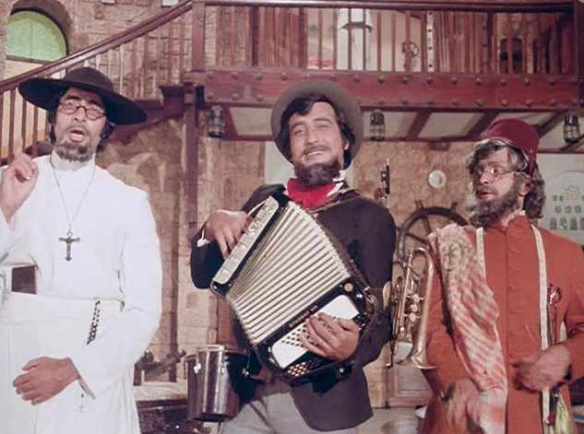
Amar Akbar, Anthony (1977) is one of India’s most beloved masala films, telling the story of three brothers who are separated in childhood and eventually united after one is raised a Hindu, one a Muslim, and one a Christian. Let’s take a moment to reflect on what Vinod Khanna, Rishi Kapoor, and Amitabh Bachhan’s title characters would have to say about recent events.

3 Life Lessons From Amar, Akbar, Anthony (1977):

1. We CAN all live in harmony.

Amar akbar anthony

Plurality makes us better. Families, communities, and countries are enriched because we embrace and learn from our differences.

2. A family that sings and dances together, stays together.

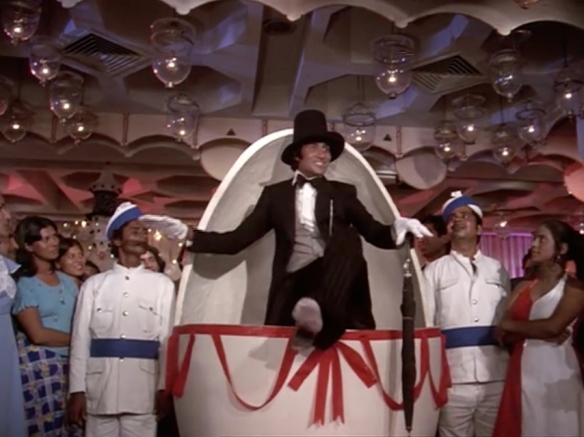
anthony gonsalves egg

On a related note, always, always have a giant Easter egg handy. Just trust me.

3. Karma is a b****.

Pran Amar Akbar Anthony

A really huge b****. If you insult a man when he’s down, you’re going to be that man soon. And everyone, even your kids, will hate you. Until, of course, you repent and join them in a group chorus (see rule #2).

Pass this along to friends, shady pharmaceutical executives, and bombastic political wannabes who don’t quite get it. And if your childhood was completely empty, you can now watch Amar, Akbar, Anthony online and subtitled here!

Your welcome.

– Mrs. 55

Awaaz Deke Humen Tum Bulaao Lyrics and Translation: Let’s Learn Urdu-Hindi

Shammi Kapoor awaaz deke professor

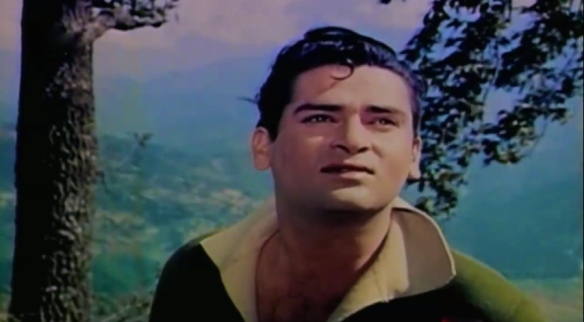
Collar fully popped with emotion, Shammi Kapoor hears his lover’s voice echo to him through the mountains in “Awaz Deke” from Professor (1962).

Today we present the haunting duet “Awaaz Deke” from the crowd-pleasing dramedy Professor (1962), starring Shammi Kapoor, Kalpana Mohan, and Lalita Pawar. There is a charm to this film, enhanced by the scenic woods of Darjeeling, that surmounts its kitsch basis and the sprinklings of Tuntun as comic relief. Shammi Kapoor plays a young educated man in desperate search of a job as a teacher when his mother is diagnosed with the dreaded…wait for it…tuberculosis! [cue: sad violin solo and unnecessarily exuberant coughing spell]. You were expecting lymphosarcoma of the intestine, no? In order to pay for her treatment at a sanitorium, Shammi accepts a post as a professor to four orphaned children living with their domineering aunt. However, because the aunt (played in her usual court martial fashion by Lalita Pawar) mistrusts men and specifically requested a professor older than 50, Shammi cleverly dons a goatee and spectacles and attempts to pass as an elderly scholar. The comedy of errors that ensues forms the basis of a delightful, albeit sometimes face-palm-inducing, two and a half hours of singing and prancing around the picturesque Darjeeling countryside.

“Awaaz Deke” is among my favorite Lata-Rafi pairings, boasting a soul-stirring melody that rises above the rest of the film. I remember when I was younger hearing this song before ever seeing the movie, and being struck by the song’s unusual saxophone theme. I love the juxtaposition of the traditional Indian percussion that gives the song its sense of urgency with the beauty of the jazz staple, played in a way I had never experienced a saxophone before: haunting and pure. Composed by Shankar-Jaikishen in one of their favorites ragas, Shivaranjani, “Awaaz Deke” is a diamond of the Professor album that won the 1963 Filmfare Award for best music direction. That stunning high F5 that Lata nails in the antra, while not her highest note on record, will make you wonder how there can exist people in the world who have never known the majesty of Hindi film music.

Kalpana Mohan awaaz deke professor

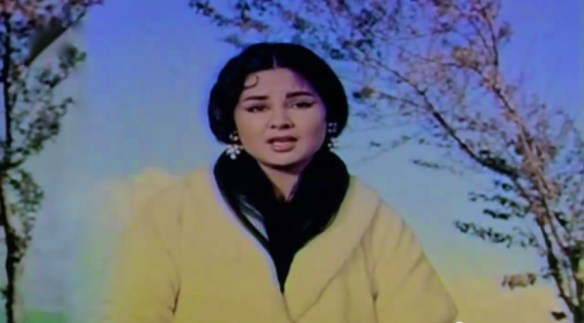
Kalpana Mohan searches for her estranged lover in a cute fur coat “Awaz Deke” from Professor (1962).

As pleasant a face as our leading lady possesses, director Lekh Tandon had harsh words for Kalpana Mohan when filming his directorial debut Professor. Because of her inexperience before a camera, he was forced to shoot multiple takes before achieving the performance he wanted–a costly endeavor in the days before digital film! A Kashmiri native, Kalpana was trained in Kathak dancing before she received her first break in Bollywood as the playful heroine of Professor. She virtually disappeared from the film industry following her marriage shortly after her successful role in Teen Devian (1965), and died tragically of cancer almost 3 years ago. She is remembered today by fans for the mesmerizing twinkle in her eyes you can see in all her films.

We hope you enjoy the English translation and lyrics to “Awaz Deke” below. This would be a perfect song to burst into the next time you and your significant other are having a lover’s tiff, right? I can think of no better way to break the tension. You can follow along with the video on youtube here!

Awaaz Deke Hamen Tum Bulaao Lyrics and Translation:

LATA: aawaaz deke hame.N tum bulaao
Lend me your voice and call out to me
Mohabbat mei.N itnaa na hamko sataao
Do not torture me so much in our love

LATA: Abhii to merii zindagii hai pareshaa.N
Now my life is filled with worry
Kahii.N mar ke ho khaak bhii na pareshaa.N
If I die somewhere, may my ashes be not so distraught
Diye kii tarah se na hamko jalaao
Do not light me on fire like a candle
Mohabbat mei.N itnaa na hamko sataao
Do not torture me so much in our love

RAFI: aawaaz deke hame.N tum bulaao
Lend me your voice and call out to me
Mohabbat mei.N itnaa na hamko sataao
Do not torture me so much in our love

RAFI: Mai.n saa.Nso.N ke har taar mei.N chhup rahaa huu.N
I am hidden in every chord of your breath
Mai.N dhaDkan ke har raag mei.N bas rahaa huu.N
I inhabit every melody of your heartbeat
Zaraa dil kii jaanib nigaahe.N jhukaao
Just lower your gaze toward your heart
Mohabbat mei.N itnaa na hamko sataao
Do not torture me so much in our love

LATA: na ho.nge agar ham to rote rahoge
If I was not here, then you would cry forever
Sadaa dil kaa daaman bhigote rahoge
You would forever drench the fabric of your heart
Jo tum par miTaa ho use na miTaao
Do not destroy the person who is already destroyed for you
Mohabbat mei.N itnaa na hamko sataao
Do not torture me so much in our love

RAFI: aawaaz deke hame.N tum bulaao
Lend me your voice and call out to me
Mohabbat mei.N itnaa na hamko sataao
Do not torture me this much in our love

Glossary:

awaaz: voice; [kisi ko] bulaanaa: to call out [to someone]; mohabbat: love; sataanaa: to torture; abhii: now; zindagii: life; pareshaa.N: worried, distraught; kahii.N: somewhere; marnaa: to die; khaak: ashes; diyaa: candle; [kisi] ki tarah se: in the manner [of something], like [something]; jalaanaa: to light on fire; saa.Ns: breath; taar: chord, string (of an instrument); chhup: silent, hidden; dhaDkan: heartbeat; raag: melody (in Hindustani classical music, a strict set of notes upon which a melody is based); basnaa: to settle, to inhabit; zaraa: a little; dil: heart; [kisii kii] jaanib: toward [something]; nigaahe.N: gaze; jhuknaa: to bow, to lower; ronaa: to cry; sadaa: always, forever; damaan: the end of a saari or skirt; bhigonaa: to drench; miTnaa: to disappear: miTaanaa: to erase, to make disappear

As a side note, this song is another great and tragic example of how the legacy of Hindi film music has been distorted by the constraints of the LP–you probably have been listening to an abbreviated version that removes the first line repetition of each stanza! It’s a small detail, but critical if you’re as obsessed with soaking in every drop of this masterpiece as I am. Two other great songs from this film, “Aye Gulbadan” and “Khuli Palak Mein,” suffered the loss of an entire stanza each when facing the LP cutting board! I can’t even handle this travesty.

Shammi Kapoor Professor outfit glasses hat

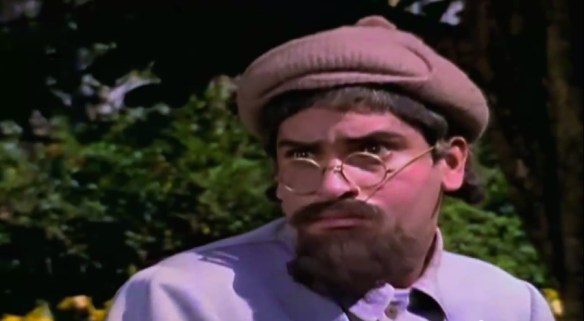
Shammi Kapoor pretends to be an elderly professor complete with round spectacles and a dubious goatee in Professor (1962).

This translation was requested by fan Jayawanth Bharadwaj! Thanks for reading and giving us a chance to translate such a beautiful duet!

– Mrs. 55

Naina Barse Rimjhim Rimjhim Lyrics and Translation: Let’s Learn Urdu-Hindi

Sadhana

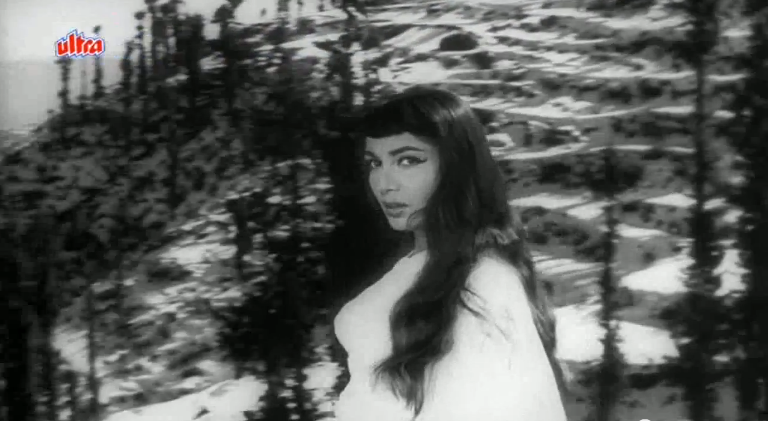
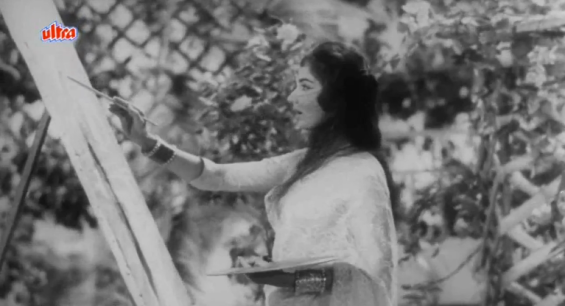
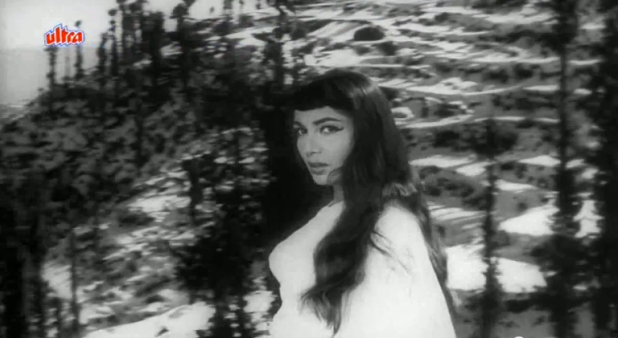
Sadhana excels in her role as the mysterious femme fatale of Woh Kaun Thi? (1964)

Happy Halloween to our readers! What better way to celebrate with a classic ghost song featuring Lata Mangeshkar’s spooky vocals, Sadhana’s haunting beauty, and Madan Mohan’s soul-stirring composition? In the spirit of Halloween, we are sharing the lyrics and English translation to nainaa barse rimjhim rimjhim from Raj Khosla’s suspense thriller Woh Kaun Thi? (1964).

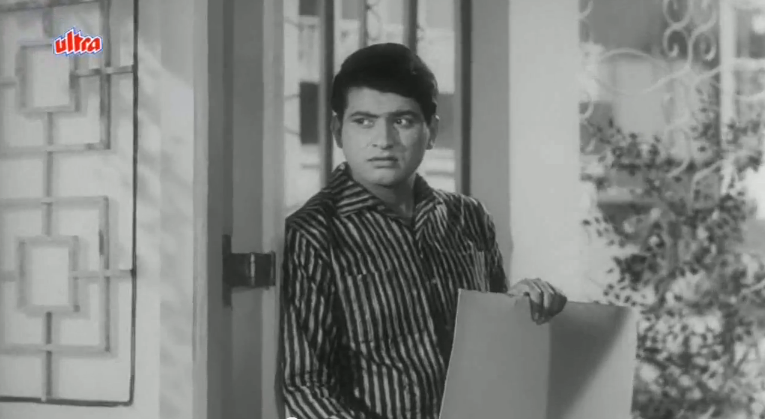
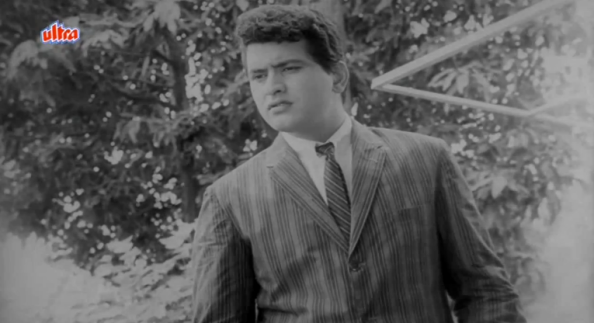
In a previous post, we have discussed how Woh Kaun Thi? is the quintessential example of film noir being adapted for vintage Hindi cinema.  In this film, Dr. Anand (Manoj Kumar) encounters a mysterious woman (Sadhana) on a stormy night and offers to give her a ride in his car. After she makes a strange request to be dropped off at a local cemetery, he hears this woman sing the first part of nainaa barse – a song that continues to haunt him at various points throughout the film. Later in the movie, Dr. Anand is called to see a patient in an old mansion that is rumored to be haunted. When he arrives at this mansion, the patient has already died and she appears to be the same woman that he encountered on the stormy night. In an even more strange turn of events, Dr. Anand’s fiancee is murdered suddenly by a cyanide injection. To alleviate his grief and loneliness, Dr. Anand is set up by his mother to his marry a new woman named Sandhya. Much to his surprise, Dr. Anand finds on his wedding night that his new wife looks exactly like the supposedly dead woman he gave a ride to in the film’s opening scene! Like Dr. Anand, the audience is left confused as they grapple with the film’s eponymous question: Woh kaun thi? Who was she?

Throughout her career, Lata Mangeshkar earned a reputation for her haunting renditions of ghost songs in films. Some of her most influential and beautiful hits are used as ghost songs in their respective movies: aayegaa aanevaalaa from Mahal (1949), tuu jahaa.n jahaa.n chalegaa from Mera Saaya (1966), kahii.n diip jale kahii.n dil from Bees Saal Baad (1962), and gumnaam hai koii from Gumnaam (1965). In an interview for her 80th birthday, the melody queen humorously remarks about her career: mai.n ne sab se zyaadaa gaanaa gaaye hai.n bhuuto.n ke (I have sung the most songs for ghosts!).

An interesting and apt anecdote: when this song was being filmed in Kufri (near Shimla), Lata had not yet had the opportunity to record the song in the studio. Much to the surprise of the crowd that had gathered to watch the filming, actress Sadhana shot her scenes by lip-syncing to a version of this song rendered by music director Madan Mohan himself – perhaps a bit creepy but also a rare treat!

Did you know that Woh Kaun Thi? was inspired by a British play called The Woman In White (1859) written by Wilkie Collins? Raj Khosla’s mentor Guru Dutt had attempted to create a film based on the same story a few years earlier in 1959. He abandoned this project entitled Raaz in which he was supposed to play the male lead while Waheeda Rehman played the female lead. Interestingly, this film was supposed to have been R.D. Burman’s debut as a solo music director.

-Mr. 55
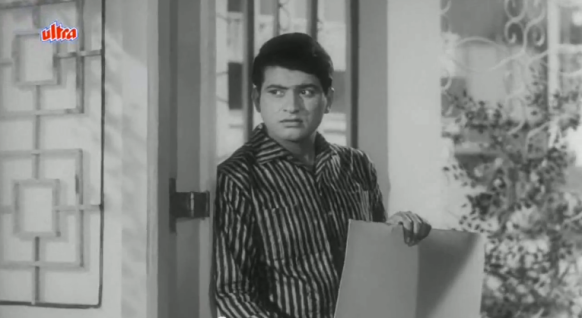
MK

Manoj Kumar plays a confused doctor who is recurrently haunted by a mysterious woman and her song in Woh Kaun Thi? (1964)

Naina Barse Rimjhim Rimjhim (Version 1): Lyrics and Translation

nainaa barse rimjhim rimjhim
My eyes shed tears, drop by drop,
piyaa tore aavan kii aas
in hopes of your return, my beloved.
nainaa barse, barse, barse
My eyes shed tears.
yeh laakho.n gham, yeh tanhaayii
Thousands of sorrows and this solitiude
muhabbat kii yeh rusvaayii
are all part of love’s disgrace. 
kaTii aisii kaii raate.n
I have spent several such nights
na tum aaye na maut aayii
where neither you came to me, nor my death. 
yeh bi.ndiyaa kaa taaraa
The star of my beauty spot
jaise ho a.ngaaraa
burns brightly like an ember.
mahandii mere haatho.n kii udaas
Even the henna on my hands is sullen.

nainaa barse rimjhim rimjhim
My eyes shed tears, drop by drop,
piyaa tore aavan kii aas
in hopes of your return, my beloved.
nainaa barse, barse, barse
My eyes shed tears.
MK

Manoj Kumar’s restrained and understated performance falls short in comparison to Sadhana’s dynamic portrayal of the leading character in Woh Kaun Thi? (1964).  

Naina Barse Rimjhim Rimjhim (Version 2): Lyrics and Translation

nainaa barse rimjhim rimjhim
My eyes shed tears, drop by drop,
piyaa tore aavan kii aas
in hopes of your return, my beloved. 
nainaa barse, barse, barse
My eyes shed tears.

adhuuraa huu.n mai.n afsaanaa
I am an incomplete story. 
jo yaad aauu.n chale aanaa
When you remember me, come back to me. 
meraa jo haal hai tujh bin
The state that I am in without you, 
voh aa kar dekhte jaanaa
come to me and see it for yourself. 
bhiigii bhiigii palke.n
My eyelashes are moist, 
chham-chham aa.nsuu chhalke.n
as my tears drip, sounding like the jingle of an anklet.  
khoyii khoyii aa.nkhe.n hai.n udaas
My eyes are lost and sullen.

nainaa barse rimjhim rimjhim
My eyes shed tears, drop by drop,
piyaa tore aavan kii aas
in hopes of your return, my beloved. 
nainaa barse, barse, barse
My eyes shed tears.

Sadhana

Sadhana’s dashing beauty shines against the backdrop of Shimla in the Himalayas in Woh Kaun Thi? (1964)

Naina Barse Rimjhim Rimjhim (Version 3): Lyrics and Translation

nainaa barse rimjhim rimjhim
My eyes shed tears, drop by drop,
piyaa tore aavan kii aas
in hopes of your return, my beloved.
nainaa barse, barse, barse
My eyes shed tears.

voh din merii nigaaho.n me.n
Those days remain in my eyes. 
voh yaade.n merii aaho.n me.n
Those memories remain in my sighs. 
yeh dil ab tak bhaTaktaa hai
This heart still wanders
terii ulfat kii raaho.n me.n
along the paths of your love. 
suunii suunii raahe.n, sahmii sahmii baahe.n
Along those empty paths, with my nervous arms, 
aan.kho.n me.n hai barso.n kii pyaas
my eyes carry a thirst unslaked for years.

nazar tujh bin machaltii hai
My sight wavers without you. 
muhabbat haath maltii hai
My love repents in desperation. 
chalaa aa mere parvaane
Please come to me, my moth. 
vafaa kii shamaa jaltii hai
The candle of faithfulness still burns brightly. 
o mere hamraahii, phirtii huu.n ghabraayii
Oh, my soulmate! I wander about afraid. 
jahaa.n bhii hai, aa jaa mere paas
Wherever you are, please come to me.

nainaa barse rimjhim rimjhim
My eyes shed tears, drop by drop,
piyaa tore aavan kii aas
in hopes of your return, my beloved. 
nainaa barse, barse, barse
My eyes shed tears.

Glossary

nainaa: eyes; barasnaa: to rain; rimjhim: onomatopoeia for the dripping noise of rain; aavan: return, arrival; aas: hope; adhuuraa: incomplete; afsaanaa: story; haal: state, condition; palak: eyelid, eyelash; chham-chham: onomatopoeia for the jingling noise of an anklet; chhalaknaa: to drip; udaas: sullen, gloomy; tanhaayii: solitude; rusvaayii: disgrace; maut: death; bi.ndiyaa: beauty spot; angaaraa: cinder, ember; mahandii: henna, nigaah: eyes; aah: sigh; sahmaa: nervous; baras: year; pyaas: thirst; nazar: glance, sight; machalnaa: to waver; haath malnaa: to repent; parvaanaa: moth; vafaa: faithfulness; shamaa: candle; hamraahii: soulmate, companion; phirnaa: to wander about; ghabraayaa: afraid.
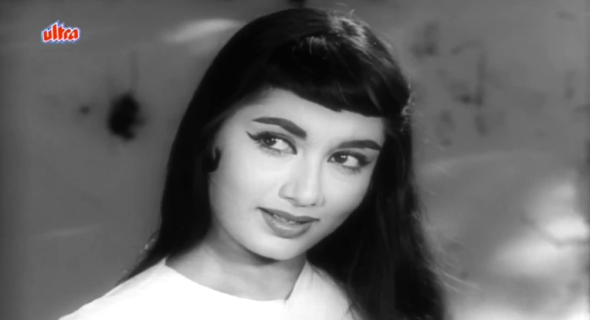
Sadhana

     Those eyes! 

Interview with Bollywood Playback Singer Minoo Purushottam: A Mr. & Mrs. 55 Exclusive!

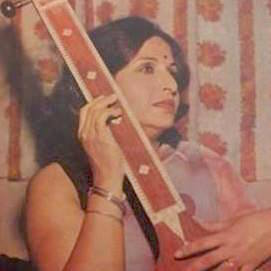
Minoo Purushottam tanpura

Minoo Purushottam, renowned Hindi film playback singer. Photo: Personal collection of Minoo Purushottam.

Last year, we published a popular post on the career of one of our favorite yesterday playback singers, Minoo Purushottam. In one of those great twists of fate taken straight from a 60s masala flick, shortly afterwards, we received an email from Minoo-ji’s son who re-connected Mrs. 55 with her Hindi classical voice teacher, Minoo-ji herself, from years before! Minoo-ji was gracious enough to grant Mr. and Mrs. 55 – Classic Bollywood Revisited! an exclusive interview about her career. After spending many years in Houston since leaving Bombay, Minoo-ji has now settled into her new home in Illinois near her son where she continues to teach new students and perform at concerts. We are honored to share with you a transcript of our delightful conversation with her that includes reminiscing about her early schooldays when she was first recognized as a musical prodigy, that time Mukesh blew his 16th take during a recording session, and what advice she has for aspiring singers!

MRS. 55: Could you tell us a little bit more about your early music training?

MINOO: I grew up in Bombay. There were music classes in school. A South Indian teacher used to come and teach us the ragas. At that time, I was chosen to lead the school prayers. That was a great time for me, I was not thinking then that I would become a singer when I was at school. I wanted to become a schoolteacher actually. I had very simple ambitions. When suddenly I realized I was a singer, I started seriously practicing, four hours every day, every day, every day. This was because I had to prepare for my exams: 25 ragas for the sangeet visharad in the first year. It was very difficult. But I always loved to teach, and I still love it. Everybody now thinks they can sing without practice. I think karaoke messed things up that way. If you know the Bhagavad Gita, Krishna said we have 4 Vedas, and there is a Samaveda based on music. The whole universe is singing if you carefully listen to it. All the sounds are like singing. It affects one a lot.

MR. 55: Who was your favorite duet partner in the past?

MINOO: All these singers are great humans. I was working all my life with Mohammed Rafi. At that time I was very young and toured with Asha Bhonsle too. But after the great singers were gone, I was not interested in staying in Bombay. With whom should I sing? I was feeling sad. But still I love to work, I love to sing. Even now I practice every day.

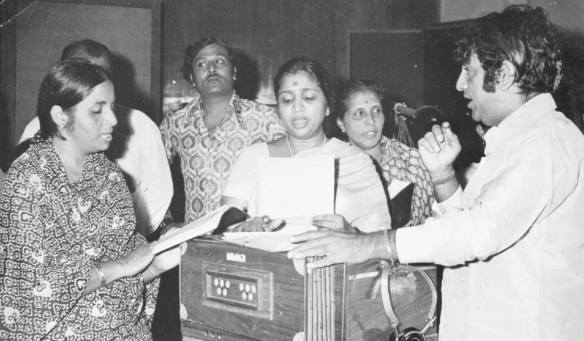
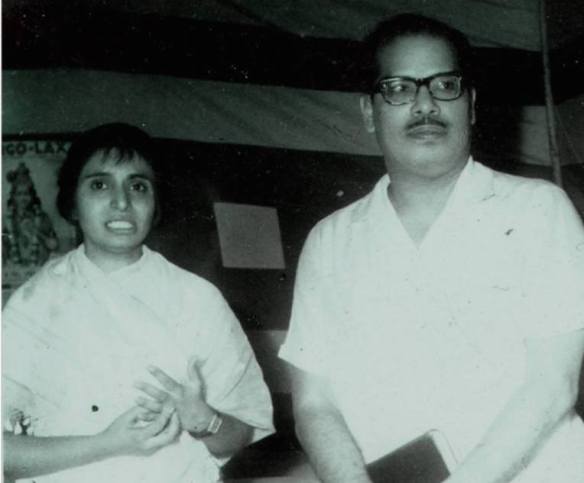
Minoo Purushottam and Asha Bhonsle rehearsing

Playback singers Minoo Purushottam and Asha Bhonsle rehearsing together in a recording studio. Photo: Personal collection of Minoo Purushottam.

MRS. 55: Some singers have commented on the difficult of breaking into the industry when it was dominated by a few select singers. How did you overcome that?

MINOO: I didn’t have any difficulty. It seemed that everybody loved me so much, they wanted to give me a chance. I was doing my job well. All the music directors were very happy with me when I was working with them. I never said that, “I want this, I want that.” I never made demands, so I was very easy to work with. At that time music was so great. The stories in the films were so good. You can see those films 100 times. From my childhood, I saw the film Mahal. It’s a very old movie. I can see that film over and over. I love all those songs. I can see it 1000 times. But my time was after that, mostly colour movies.

MR. 55: You worked with many great music directors. What lessons did they teach you?

MINOO: I was working a lot with Madan Mohan. He was my teacher, teaching me ghazals and pronunciation and accent of ghazals. Jaidev was also my teacher.

MRS. 55: I remember when I took lessons from you, you talked fondly about the actors you worked with, especially Sanjeev Kumar.

MINOO: You know, Sanjeev Kumar’s sister is in Houston and used to come to meet me. We were very good friends. But things change a lot. Madhumati was very good friend of mine as well.

Minoo Purushottam and Manna Dey

Bollywood playback singers Minoo Purushottam and Manna Dey. Photo: Personal collection of Minoo Purushottam.

MR. 55: Are there any new artists that you enjoy?

MINOO: I have a habit of listening to old songs from singers like Talat Mehmood. It’s hard to change that. But some students do want to learn new songs, and then I help them. We should be open-minded, it’s a part of the job.

MRS. 55: What is your favorite film song that you sang?

MINOO: I love all of them. You put so much time and effort into each one. You have to concentrate very hard, you can’t play around with it. One should be very serious. Nowadays they can break the song down in pieces to record just the pieces, and then put them together. But in those days, you and all the musicians had to sing it perfectly all the way through. If you make a mistake, you’d be rejected. One day I was sitting for the recording and Mukesh-ji was making so many mistakes! He was on his 16th take and he said, “If I don’t get it right this time, I’m going to forget this song.” I think my voice has changed with age, and it suits bhajans and ghazals now. And anyway, who would compose film music now the way S.D. Burman and C. Ramchandra did? This time people just want to make money, not make real music.

MRS. 55: Is there anything you’d like to tell your fans?

MINOO: If you really want to sing, you must learn something. Find a teacher. But I can tell you, it’s hard to find time to devote just to music. But you must do it.

– Mr. and Mrs. 55

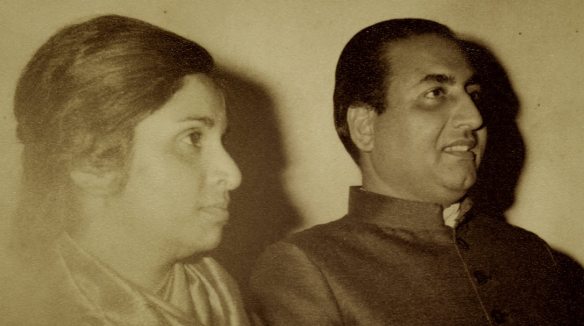
Minoo Purushottam and Mohammed Rafi

Playback singers Minoo Purushottam and Mohammed Rafi often toured together in the 60s and 70s. Photo: Personal collection of Minoo Purushottam.