Khudaa-E-Bartar Lyrics and Translation: Let’s Learn Urdu-Hindi


Our blog probably seems like one huge Sahir Ludhianvi love-fest by now, but I couldn’t help myself from posting and translating this beauty from Taj Mahal (1963). This song is from the same movie as “jurm-e-ulfat pe,” which I translated here a little while ago. While “jurm-e-ulfat pe” tackles the theme of forbidden love, the lesser-known “khudaa-e-bartar” discusses something that doesn’t get much coverage in the world of Bollywood: war. By posing a series of questions, Ludhianvi uses universal and timeless words here to express the futility of war. While the song directly pertains to the Mughal battles depicted in the film, I’ll go out on a limb and say that the pacifism expressed in these lyrics is also Ludhianvi’s response to India’s losses in the Sino-Indian War, which had ended only a year before this film was released.

In addition to its unique thematic content, this song stands out for its nuanced use of language. Such elevated Urdu is truly a rare treat in Hindi cinema. Seriously, when was the last time you heard a song with the words like hidaayat, kibr-o-ghuruur, or fatah-o-zafar? Perhaps my favorite thing about this song is its use of izaafat, a grammatical construct borrowed from Persian where two nouns or a noun and adjective are linked together with the vowel -e- or -o-. When the -e- vowel is used between two nouns, it can generally be translated as “of.” When the -o- vowel is used, it is translated as “and.” This song makes extensive use of izaafat, as evident in compound phrases like rasm-e-jang-o-jadaal (rules of war and disputes) and jashn-e-tiir-o-tafang (celebration of arrows and rifles). Super fancy, no?

Since almost every other word here is a vocab word, you’ll have to take a close look at the glossary below while you follow along with the song. But I guarantee that you’ll learn some new Urdu if you do–enjoy and let us know your thoughts about this song in the comments!

–Mr. 55

P.S. For the classical music enthusiasts out there, this composition is also remarkable for being one of the finest examples of Raga Miyan ki Todi used in a film song.

Lyrics:
khudaa-e-bartar terii zamii.n par zamii.n kii khaatir, yeh jang kyo.n hai?
har ek fatah-o-zafar ke daaman pe khuun-e-insaa.n kaa rang kyo.n hai?

zamii.n bhii terii, hai.n ham bhii tere. yeh milkiiyat kaa savaal kyaa hai?
yeh qatl-o-khuu.n ka rivaaj kyo.n hai? yeh rasm-e-jang-o-jadaal kyaa hai?
jinhe.n talab hai jahaan bhar kii, unhii.n kaa dil itnaa tang kyo.n hai?

ghariib maao.n shariif bahno.n ko aman-o-izzat kii zindagii de
jinhe.n ataa kii hai tuu ne taaqat, unhe.n hidaayat kii roshnii de
saro.n me.n kibr-o-ghuruur kyo.n hai? dilo.n ke shiishe pe zang kyo.n hai?

qazaa ke raste pe jaanevaalo.n ko bach ke aane ki raah denaa
dilo.n ke gulshan ujaD na jaaye.n, muhabbato.n ko panaah denaa
jahaa.n me.n jashn-e-vafaa ke badle, yeh jashn-e-tiir-o-tafang kyo.n hai?

khudaa-e-bartar terii zamii.n par zamii.n kii khaatir, yeh jang kyo.n hai?

Glossary:
khudaa-e-bartar
: superior Lord; zamii.n: land, world; jang: war; fatah-o-zafar: victories and triumphs; daaman: foothills; khuun-e-insaa.n: human blood; milkiiyat: ownership; qatl-e-khuu.n: murders and blood; rivaaj: tradition; rasm-e-jang-o-jadaal: rules of war and disuptes; talab: need, desire; jahaan: world; tang: troubled; ghariib: poor; shariif: noble; aman-o-izzat: peace and respect; ataa karna: to bless; taaqat: strength, courage; hidaayat: guidance; roshnii: light; kibr-o-ghuruur: pride and arrogance; shiishaa: mirror; qazaa: death; bach ke aanaa: to escape; gulshan: garden; ujaD jaana: to be uprooted; panaah: shelter; jashn-e-vafaa: celebration of love; jashn-e-tiir-o-tafang: celebration of arrows and rifles

Rough Translation:
O superior Lord, why is there this war over land in your world? Why does human blood stain the foothills of every victory and triumph?

This land is yours, and we are yours. Then, what is this question of ownership and possession? What are these traditions of bloody murder? What are these rules of wars and disputes? Those who have a desire to rule the world, why are their hearts so troubled?

Give poor mothers and noble sisters a life of peace and respect. Give those whom you have blessed with strength and courage a light of guidance. Why are minds filled with pride and arrogance? Why are the mirrors of people’s hearts blemished by rust?

Give those who are headed on the road to death a way to escape. May the garden of hearts not be uprooted as you provide shelter to love. In this world, instead of a celebration of love, why is there a celebration of arrows and rifles?

O superior Lord, why is there war over land in your world?


Lata Goes Cabaret!

A true fan of old Bollywood movies is all too familiar with the wonderfully awkward genre of songs known as cabaret numbers. Don’t even pretend like you don’t know what I’m talking about. Here at Mr. and Mrs. 55, we don’t judge our readers based on their taste – even if this includes a love for uncomfortably suggestive lyrics, flamboyant dance moves, and scantily clad B-grade actresses. Despite my initial aversion to these types of songs, I have learned to appreciate cabaret numbers for their showiness and sheer entertainment value.

Helen sizzles in her portrayal of "aa-jaan-e-jaa.n" on screen in Inteqaam (1969)

In terms of vocals, the queen of cabaret numbers in those days was the ever-versatile Asha Bhonsle. Asha’s voice was perfect for this type of song; she had the right combination of seduction, silkiness, and charm to execute cabaret songs with finesse.  In fact, Asha’s skill in performing cabaret numbers (think piiyaa tuu ab to aajaa from Caravaan and yeh meraa dil from Don) is one way in which she carved a niche for herself in the industry to emerge from the shadows of elder sister Lata Mangeshkar. However, although Asha was the dominating force when it came to the cabaret genre, you may be surprised to know that Lata also sung her fair share of vamp songs in films. Generally known for her conservative and purist reputation, Lata’s take on this genre is markedly different from her sister’s style: she avoids Asha’s over-the-top histrionics in favor of a more quiet (yet effective) seductive appeal. Let’s take a look at the following examples to see how Lata fares when she goes cabaret:

  1. aa jaan-e-jaa.n, aa meraa yeh husn jawaa.n.  This song from Inteqaam (1969) is perhaps the most well-known example of Lata singing cabaret, and she really nails the execution here by slowly and subtly seducing the listener with her enchanting vocals. Although Lata had an understanding with most music directors that she would not agree to sing cabarets, Laxmikant-Pyarelaal assured her that this song would not be problematic because it was composed with her style and artistic vision in mind. We’re grateful that Lata compromised here because, in my book, this song is one of the finest examples of cabaret singing in Hindi cinema.
  2. mehfil soyii, aisaa koii hogaa kahaa.n. Although this is the second lesser-known cabaret number by Lata in Inteqaam, it’s almost as good as the first. Like aa jaan-e-jaa.n, Lata’s silky vocals and understated seduction make this a cabaret to remember. The little stacatto “oh” that Lata adds to each antara is absolutely precious.
  3. is duniyaa me.n jiinaa ho, to sun lo merii baat. This song from Gumnaam (discussed earlier by Mrs. 55 here) might not qualify as a cabaret using a strict definition, but it’s certainly worth mentioning because it is one of Lata’s best songs picturized on Helen. In an otherwise grim and suspenseful thriller, this song composed by Shankar-Jaikishan provides some interesting contrast with its light-hearted, frothy spirit. The second line of this song’s mukhda has always confused me: “gham chhoD ke manaao rang-relii, man lo jo kahe kitty kelly.” Helen’s character is probably referring to herself in the third-person, but where the heck did this “Kitty Kelly” nickname come from?
  4.  jiinevaale jhuum ke mastaanaa ho ke jii. Penned by Sahir Ludhianvi and composed by Chitragupta, this rare number sung by Lata in Vaasna (1968) has a different feel to it from the typical cabarets we know and love. While its lyrics and music aren’t quite as sultry as the other cabarets here, this song is worth a listen as a strong example of music directors from this time period experimenting with Western fusion. I especially enjoyed the lilting interludes composed by Chitragupta, who was a music director from the Golden Age known for his stylish orchestration.
  5. mera naam rita christina. Though Helen was the undisputed diva of the vamp genre, there are the occasional instances where cabarets were picturized on other actresses. Saira Banu, looking stunning as ever in a red dress, seduces Biswajeet (watch him pretend like he doesn’t love it) with this fun number from April Fool (1964). I won’t say that this is one of Lata’s best renditions, but this song composed by Shankar-Jaikishan was immensely popular when it was released — so much so that it was banned by the Vividh Bharati radio station for being “culturally inappropriate.”

    Saira Banu in "mera naam rita christina" from April Fool (1964)

  6. aur mera naam hai jamiilaa. Before Laxmikant-Pyarelaal had composed the songs in Inteqaam that shot Lata to cabaret super-stardom, they wrote this song for her a couple years earlier in Night in London (1967). Supposedly, Laxmikant-Pyarelaal had traveled to London to become inspired by the locale while writing the music for this film. I’d say they did an excellent job of capturing the right spirit: Lata shines here with a cabaret that is tailored to suit her style. Even if you hate the song, be sure to watch the video for this one because I know you don’t want to miss out on Helen dancing scandalously while she’s surrounded by a gaggle of shirtless men.

After taking a listen to these examples, do you think Lata had what it took to pull off the cabaret genre? We want to hear your thoughts in the comments! Also, don’t forget to follow us on Twitter @themrandmrs55.

–Mr. 55

Jurm-E-Ulfat Pe Lyrics and Translation: Let’s Learn Urdu-Hindi

This gem penned by Sahir Ludhianvi in Taj Mahal (1963) is probably one of our favorite picks for an old film song that makes the makes the best use of Urdu lyrics. This classic movie narrates the love story between Shah Jahan and Mumtaz Mahal. Ludhianvi’s heart-wrenching lyrics combined with Roshan’s beautiful music (a nuanced use of Raga Gaud Malhar!), Lata’s magical voice, and Bina Rai’s graceful portrayal of Mumtaz Mahal on screen make this song a truly memorable masterpiece.

All the couplets in this song are beautifully constructed, but one of the lines in this song is particularly intriguing. In the fourth couplet, Ludhianvi writes: “takht kyaa chiiz hai aur laal-o-javaahar kya hai?” As a whole, this couplet expresses the sentiment that love is so powerful that it transcends wealth, royalty, and even divinity. However, Ludhianvi’s use of the specific word laal-o-javaahar (red jewels, rubies) to symbolize wealth is interesting because it appears to be a reference to Javaahar Laal Nehru, who happened to be Prime Minister of India at the time that this song was written. Nehru was certainly seated on the “takht” of India in 1963, but what is Ludhianvi’s purpose in referencing him in this line of the song?

Although we can’t know for sure, here’s what we think. Because Ludhianvi is known to use his lyrics as a medium for criticism and political satire, it is likely that he is criticizing Nehru for his role in starting the Sino-Indian War of 1962. Nehru’s stubbornness and refusal to negotiate escalated tensions between India and China, ultimately leading to a war that cost thousands of human lives on both sides. (As a side note, the patriotic classic “aye mere vatan ke logo.n” was written to commemorate the soldiers who lost their lives in this war). Here, I would venture to say that Ludhianvi is using the reference to suggest that lovers are prepared to suffer losses greater than those incurred by Nehru in the war.

If you haven’t heard this song yet, you’re totally missing out–take a listen and pay close attention to the glossary below to learn some new and difficult Urdu vocabulary!

–Mr. 55

Lyrics:
jurm-e-ulfat
pe hame.n log sazaa dete hai.n

kaise naadaan hai.n, sholo.n ko havaa dete hai.n

hamse diivaane kahii.n tark-e-vafaa karte hai.n
jaan jaaye ki rahe, baat nibhaa dete hai.n

aap daulat ke taraazuu me.n dilo.n ko tole.n
ham muhabbat se muhabbat ka silaa dete hai.n

takht kya chiiz hai aur laal-o-javaahar kya hai?
ishqvaale to khudaayii bhii luuTaa dete hai.n

hamne dil de bhii diyaa, aur ahad-e-vafaa le bhii liyaa.
aap ab shauq se de le.n jo sazaa dete hai.n

jurm-e-ulfat pe hame.n log sazaa dete hai.n

Glossary
jurm-e-ulfat: offenses in love; sazaa: punishment; naadaan: naive; sholaa: flame; tark-e-vafaa: end of love; jaan: life; nibhaa dena: to fulfill; daulat: wealth; taraazuu: scales; silaah denaa: to respond; takht: throne; laal-o-javaahar: red jewels, rubies; ishqvaale: lovers; khudaayii: godliness, divinity; luuTaa denaa: to sacrifice; ahad-e-vafaa: vow of loyalty; shauq se: with pleasure

Rough Translation
People punish me for the offenses I have committed in love
How naive they must be, for they are only adding air to a burning flame.

Elsewhere, people crazier than I put an end to their love.
Whether I live or die, I will remain faithful to my word.

You may weigh hearts on scales of wealth,
But I respond to love with love.

What is the value of thrones and rubies?
Lovers can sacrifice even divinity.

I have already given my heart and taken a vow of loyalty.
Now, with pleasure, you may deliver my punishment.

People punish me for the offenses I have committed in love.

Chalo Ek Baar Phir Se Lyrics and Translation: Let’s Learn Urdu-Hindi

SD

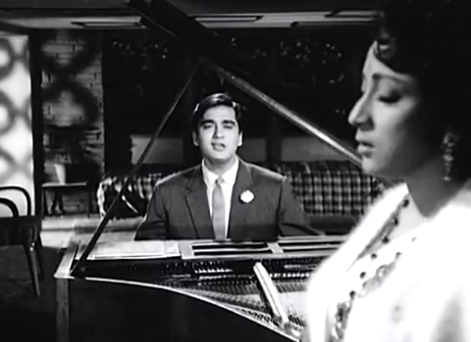
Sunil Dutt sings about the pain of heartbreak at the piano in Gumraah (1963)

In my opinion, I think one of the best parts about being a fan of old Hindi music is that it gives you a fun opportunity to brush up on your Urdu-Hindi language skills. From time to time, Mrs. 55 and I have decided that we will share some of our favorite song lyrics here and provide a glossary and translation so that everyone can follow along!

Our first song is “chalo ek baar phir se,” which is an absolute gem from the 1963 film Gumraah directed by B.R. Chopra. Arguably the best song of his career, this composition was rendered by Mahendra Kapoor, an excellent singer who ultimately carved a niche for himself in the industry after emerging from his initial fame as a Mohammed Rafi clone. The real star here, though, is Sahir Ludhianvi, who was truly one of the most gifted poets that has ever written for Hindi cinema. Known for his cynicism and disillusionment with society, Sahir Ludhianvi wrote lyrics that reflect a great deal of emotional complexity and maturity. In contrast to his contemporaries, Ludhianvi chose to remain unhindered by the constraints set by the prototypical Bollywood love song; many of his songs are refreshing to hear for their expression of biting political satire, heartfelt grief, or outspoken anger.

Sahir Ludhianvi, poet (1921-1980)

In “chalo ek baar phir se” Ludhianvi writes about a situation in which unfortunate societal circumstances prevent two lovers from fulfilling their romantic desires and building a life together. Supposedly, Ludhianvi was inspired to write this song when he encountered an ex-lover of his at a party with her new husband. The encounter must have been incredibly painful for him because these lyrics are devoid of the typical romanticizations of pyar and muhabbat that are often found in songs from this period. Instead of praising love as an ideal, the protagonist of the song suggests that he and his lover should return to becoming strangers because the emotional separation will make it easier for both of them to heal from their pain. The last stanza of the song is especially powerful: the protagonist posits that it is counter-productive to invest energy into doomed romantic relationships when they have become a burden. Ludhianvi’s words here suggest that it is sometimes in everyone’s best interests to put an early end to the love stories that simply cannot have happy conclusions. His eloquence and nuanced use of language to express the pain of unfulfilled love is sublime, and this type of  poetic talent is sorely missed in the Bollywood industry today.  For those of you who haven’t heard this song yet, it’s definitely worth a listen. If you follow along with the glossary below, I’m sure you’ll learn a couple new words that will impress ALL your Urdu-speaking friends (yes, all 2 of them).

SD

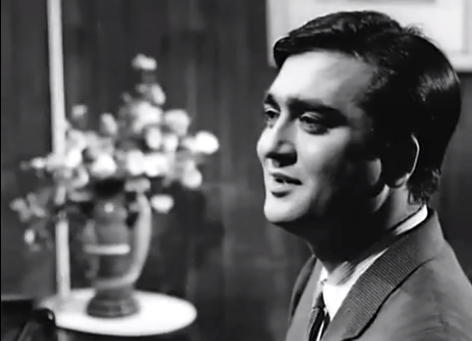
Sunil Dutt masks his internal anguish with a coy smile in Gumraah (1963)

Chalo Ek Baar Phir Se Lyrics and Translation:

chalo ek baar phir se, ajnabii ban jaaye.n ham dono.n
Come, let us become strangers once again.

na mai.n tumse koii ummiid rakhuu.n dilnavaazii kii
I shall no longer maintain hopes of compassion from you
na tum merii taraf dekho ghalat andaaz nazaro.n se
Nor shall you gaze at me with your deceptive glances. 
na mere dil ki dhaDkan laDkhaDaaye merii baato.n me.n
My heart shall no longer tremble when I speak, 
na zaahir ho tumhaari kashm-kash ka raaz nazaro.n se
Nor shall your glances reveal the secret of your torment.

tumhe.n bhii koii uljhan roktii hai pesh-qadmii se
Complications prevent you from advancing further,
mujhe bhii log kahte hai.n ki yeh jalve paraaye hai.n
I too am told that I wear disguises. 
mere hamraah bhi rusvaayiaa.n hai.n mere maazii kii
The disgraces of my past are now my companions,
tumhaare saath bhii guzrii huii raato.n ke saaye hai.n
while the shadows of bygone nights are with you too.

taarruf rog ho jaaye to usko bhuulnaa bahtar
Should knowing one another become a disease, then it is best to forget it. 
taalluq
bojh ban jaaye to usko toDnaa achhaa
Should a relationship become a burden, then it is best to end it. 
voh afsaana jise anjaam tak laanaa na ho mumkin
For that tale which cannot culminate in a conclusion,
use ek khuubsuurat moD de kar chhoDna achhaa
it is best to give it a beautiful turn and leave it be.

chalo ek baar phir se, ajnabii ban jaaye.n ham dono.n
Come, let us become strangers once again. 

Glossary:

ajnabii: stranger; ummiid: hope; dilnavaazii: compassion; ghalat andaaz nazar: deceptive glance; laDkhaDaanaa: to tremble; zaahir: noticeable; kashm-kash: torment, struggle; uljhan: complication; pesh-qadmii karna: to advance; paraayaa jalva: disguise; hamraah: companion; rusvaa: disgrace; maazii: the past; taarruf: mutual acquaintance, knowledge of one another; rog: disease, afflication; taalluq: relationship; afsaanaa: tale; anjaam: conclusion; mumkin: possible; khuubsuurat: beautiful; moD; turn. 

SD

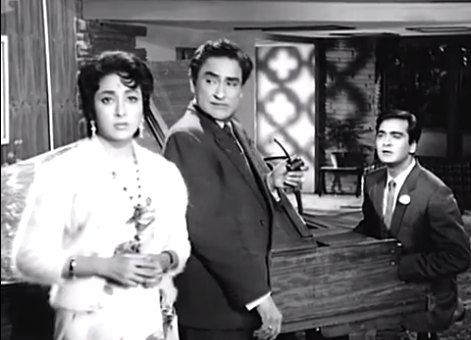
The expressions on the faces of Sunil Dutt, Mala Sinha, and Ashok Kumar  reflect the pervading tension of this situation from Gumraah (1963).