The Bollywood Horse and Buggy Song

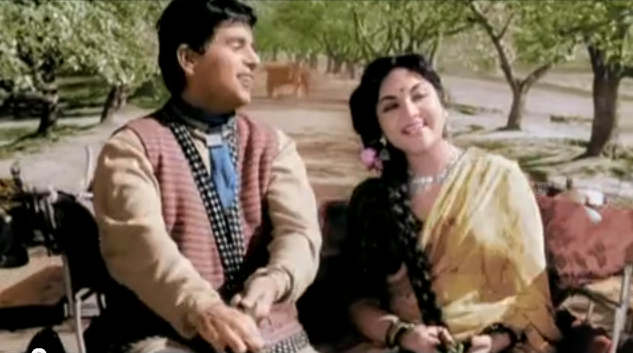
Dilip Kumar and Vijayantimala take a cue from their horse in Naya Daur (1957)

You know what I’m talking about. Guy and girl are falling in love. The setting: indistinct country road. A trotting horse (hay load optional) comes into view. Guy holds the reigns, a gentle clip-clop sets the beat like a metronome, and at last someone can’t resist and bursts into love song. Yes, nothing evokes the pastoral innocence of Bollywood’s rural ideal like a good horse and buggy sequence.

I’ve come up with a list of my top 5 horse and buggy songs. No matter how terrible you’re your day was, these’ll always put you in the mood. Sure, the economy is a mess, and yes, studying/work/dieting is rough. But isn’t it comforting to know that at least there will always be an appropriate forum to burst into song freely with a built-in beat? Just find a horse, grab a partner, and say hello to some fresh village air.

1. Mang Ke Saath Tumhaara (Naya Daur, 1957)

-The epitome of the horse and buggy genre. If this song doesn’t just make you want to join your nearest agrarian values movement, then you are made of steel. Dilip Kumar and Vijayantimala’s dynamic is so cute in this song, you overcome your gag reflex and find yourself basking in the bliss of better, bygone days. This film was recently recoloured following the latest trend, and the whole soundtrack is magic.

2. Haule Haule Chalo More Sajna (Saawan Ki Ghata, 1966)

-I absolutely love this song. It gets my spirits up every time. I think part of it is my love of Sharmila Tagore’s teasing persistence, while Manoj Kumar only pretends he isn’t loving it. This is also a beautiful example of one of the few melodious Asha Bhonsle songs that I honestly think no one else could have sung better (as in, Lata). Her voice is just a joy to listen to as she completely hits the mood of this playful winner.

3. Yun To Hamne Laakh Haseen Dekhe Hain (Tumsa Nahin Dekha, 1957)

-Oh Mohammed Rafi, can you do no wrong? The lyrics are adorable and this time, it’s the heroine playing hard to get. But don’t lie to yourself, girl–these are the days before Shammi Kapoor discovered jalebi, and he’s looking pretty fly with that Elvis ‘do. Asha comes back around later in the film for a brief female version of this song, but it’s a classic case of the ladies getting the shaft and having to sing too high because of the standard set by the male version (more on this issue to come). Until then, enjoy a slim Shammi treat to soothe all your pains.

4. Piya Piya Piya Mora Jiya Pukare (Baap Re Baap, 1955)

-Another incredibly cute duet/cheese-fest—this time brought to you by Chand Usmani and Kishore Kumar (who also acts!) The film itself is completely forgettable, but this Asha-Kishore duet is a fun benchmark for the genre. Please don’t miss their fellow travelers on car, who clearly all wish this had been a chorus song.

5. Aye Neele Gagan Ke Tale (Humraaz, 1967)

-Ok, I admit, this song doesn’t fit the classic definition of horse and buggy song. But hey, watching Raajkumar ride up on a horse like the prince of anyone’s dreams (and the subsequent quasi-dream sequence in the Darjeeling countryside) certainly deserves mention somewhere. And that rich voice of Mahendra Kapoor that gives a perfect song a little something-something? Yes, please.

An extremely honorable mention goes to “Aye Nargis-e Mastana” from Arzoo (1965) starring Sadhana and Rajendra Kumar. She’s definitely riding a horse the entire song, but Rajendra Kumar’s awkwardness brings the cute factor back down to Earth.

-Mrs. 55

Losing Yourself in Jewel Thief

Dev Anand and Vijayantimala dance for their lives in Jewel Thief (1967)

I recently went on a Dev Anand binge after hearing the news of his passing last month. This man was an absolute auteur—his films were always ahead of his time. Among my favorite of his films is the 1967 kitsch classic Jewel Thief–an addictive crime thriller centered around the identity of a mysterious jewel thief who wreaks havoc across the nation. I kid you not, I watched this film 4 times in just as many weeks (not recommended).

The first time you watch the film, you might feel overwhelmed by the clash of colours and intentions in the costume and set design, by the flashy effects, and thrilling soundtrack. You ask yourself superficial questions that don’t have real answers–like why on earth is Helen dressed like a chicken? Who seriously keeps a fridge in their living room? And how did Vijayantimala fit into these outfits?

Helen shimmers proudly in a chicken suit at a bar.

The second time, you can appreciate the rich music direction—from Lata’s lilting swan song in Rulaake Gaye Sapna Mera, to let’s not forget one of Asha’s greatest moments as a seductress in Raat Akeli Hai. Perhaps the greatest strength of Jewel Thief is its evergreen soundtrack—and the exciting dance number Honton Pe Aisi Baat. As you watch this song, you’re almost tempted to believe that Vijayantimala really did dance for Pope Pius XII himself at the Vatican when she was discovered at five years old (true story).

By the third time you see the film, you start to wonder why you’re still doing this instead of studying for exams next week.

But on the fourth pass, it dawns on you that beneath the glitzy exterior, 60s kitsch and melodrama, Dev Anand actually made an extremely sophisticated emulation of the greatest Hitchcock thrillers. The theme of double identities runs rampant in many of Hitchcock’s films—and Jewel Thief take this idea of an average man unwittingly mistaken for a look-alike to a new level. Like Mr. Kaplan of North By Northwest, our hero Vinay is so doggedly mistaken for a mystery man he has never heard of, that he joins the hunt to track down his doppelganger himself. The idea of doubles is cleverly underscored in the film’s mis-en-scene–through mirrors, camera angles, and editing. Dev Anand invites the viewer into a flashy glamorous world of deceit and intrigue–and soon, the reader is forced in the best Hitchcockian style to doubt the credibility of the film’s own hero–after all, has Vinay in turn been tricking the audience all along?

Perhaps then it is not surprising that Jewel Thief carries a deeper message underneath all of Asha Bhonsle’s high notes and crazy strobe lighting. Tanuja, who plays the likeable “modern” girl (and makes some awkwardly forward passes for the 60s), coincidentally only dresses in traditional saris after deciding to stand up for what’s right. And like India herself toying with the colorful lures of a Western way of life, Vinay loses and rediscovers his own identity, fighting to uncover the truth behind a glittering facade.

Do we really look that similar…? Hideous clash of plaids aside, though?

Bottom line? You need to see Jewel Thief. Forget the political commentary, forget the sublime soundtrack–just go for watching Helen in a chicken costume.

-Mrs. 55

Kahin Door Jab Din Dhal Jaaye Lyrics and Translation: Let’s Learn Urdu-Hindi

The next song in our series will be the lyrics and English translation of the sentimental “Kahin Door Jab Din Dhal Jaaye” from the film Anand (1971). Starring power duo Amitabh Bachhan and Rajesh Khanna, Anand tells the story of how one hardened doctor’s outlook is changed by the optimism and infectious laughter of his terminally ill patient, Anand. Dr. Banerjee faces an enormous dilemma when Anand becomes not merely another patient, but a true and close friend. Through Anand, he is inspired once more to fight desperately for the lives of his patients and must come to terms with when at last to let to go of circumstances beyond his control. The film explores the complex medical ethics of urging and struggling for life instead of palliative care when death is inevitable, as well as the difficulties in transcending the professional comforts of a normal doctor-patient relationship. While bubbly, laugh-a-minute Anand is at times over the top, his character remains always endearing.

Rajesh Khanna plays a vivacious cancer patient in Anand (1971)

“Kahin Door Jab Din” comes as one of the rare moments in the film when Anand displays a softer, introspective side to his character. The translation and lyrics of the song is deeply moving–a dying man watches the sunset, reflecting with a kind of loving wistfulness on his unfulfilled dreams. The beauty of these lyrics in the context of the film evokes a sense of what Japanese art has called mono na aware–a sensitivity to ephemera, a gentle sadness for the transience of things even as they occur (in this case, his own life). It should be noted, that although I have translated some lines as referring to a woman–I think this song can be read in many different ways. The lyrics may speak to the woman Anand once loved who is no longer with him, but the womanly embodiment of his longing may be also symbolic of all unknown experiences of life that Anand will miss, for like the setting sun, his life is slowly ebbing away. To me, “Kahin Door Jab Din” is beautiful, restrained, and one of the finest examples of Rajesh Khanna’s ability to move an audience without the crutches of his famous winking and dancing.

P.S. Some of you may be interested to discover the original Bengali version of this song sung by Hemant Kumar here!

Kahin Door Jab Din Lyrics and Translation:

kahii.N duur jab din Dhal jaaye
Somewhere far away when the day dulls
saa.Njh kii dulhan badan churaaye chhupke se aaye
The dusk sneaks up, shyly like a bride
mere khayaalo.N ke aa.Ngan mei.N
In the courtyard of my imagination
koii sapno.N ke diip jalaaye, diip jalaaye
Someone lights up the lamp of my dreams

kabhii yuu.N hii, jab huii, bojhal saa.Nse.N
Sometimes when my breathing becomes burdensome for no reason
bhar aayii baiThe baiThe, jab yuu.N hii aa.Nkhe.N
When my eyes well up just sitting around
tabhii machal ke, pyaar se chal ke
Then with a loving flutter
chhue koii mujhe par nazar na aaye, nazar na aaye
Someone touches me, but I cannot see her

kahii.N to yeh, dil kabhii, mil nahii.N paate
Somewhere these hearts are unable to come together
kahii.N se nikal aaye, janamo.N ke naate
But somewhere a connection emerges that transcends many lifetimes
ghanii thii uljhan, bairii apnaa man
The problem was deep and my own heart turned against me
apnaa hii hoke sahe dard paraaye, dard paraaye
By belonging to me, yet bearing the pain of another

dil jaane, mere saare, bhed yeh gahare
My heart knows all my deep secrets
ho gaye kaise mere, sapane sunahare
How my dreams became golden
yeh mere sapne, yahii.N to hai.N apne
These are my dreams, these alone belong to me
mujh se judaa na ho.Nge inke yeh saaye, inke yeh saaye
Even their shadows cannot be separated from me

kahii.N duur jab din Dhal jaaye
Somewhere far away when the day dulls
saa.Njh kii dulhan badan churaaye chhupke se aaye
The dusk sneaks up, shyly like a bride

Glossary:

saanjh: evening; aangan: courtyard; bhojal: burdensome; machal: flutter; janamo.n ke naate: connection of many lifetimes; uljhan: problem; paraaye: another person (stranger); bhed: secret; sunahare: golden; saaye: shadow

-Mrs. 55

Making the Cut in Pakeezah: Behind-the-scenes of one of Bollywood’s most elaborate musicals

The ethereal Meena Kumari in Pakeezah (1971)

Few films have more behind-the-scenes gossip and excitement than Pakeezah (1971). If you know anything about classic Hindi film songs, you’ve probably heard some part of the Pakeezah soundtrack from director Kamal Amrohi’s 1971 legend. The film stars tragedy queen Meena Kumari as Pakeezah and gorgeous, gravely-voiced Raajkumar in a story of unforgiving traditional values that collide with the forbidden love of a pure-hearted courtesan. In an ironic twist, Pakeezah is revealed at the climax to be the hero’s long lost cousin, thus at last sanctioning their marriage (the ethical complexities of this kicker are a whole different issue.) But the movie itself is pure cinematic magic–Kamal Amrohi was notorious for his artistry and attention to detail. Pakeezah’s breath-taking production design, Ghulam Muhammed’s haunting semi-classical thumris, and the effortless poetry of the film’s dialogue is like entering one long, opium-induced dream.

But what was happening beneath the surface? A whole lot of drama.

Director Kamal Amrohi married Meena Kumari when she was 19 years old in 1952. They began filming Pakeezah within a few years–in fact, the song Inhi Logon Ne (raga Yaman) was filmed and edited before Amrohi switched to coloured film stock. The 1956 black-and-white version of the song was never used, but many of the shots are extremely similar to the final version. Notice how different young Lata’s voice sounds in this song compared to parts of the soundtrack recorded years later. Even more interestingly, Inhi Logon Ne was originally taken from the film Himmat (1941) in a version sung by none other than Shamshad Begum!

My favorite non-Lata song from the film is, Nazariyan Ki Maari, sung by 1930s playback singer Rajkumari Dubey. During production, when Naushad spotted Rajkumari singing in his chorus to make ends meet (and this is a woman who had been first female playback singer of India!), he reportedly caused an uproar and gave his former collaborator her own solo. This is why we love Naushad.

Pakeezah took over 14 years to complete, mainly because of the famously tumultuous relationship between Kamal and Meena (and her eventual alcoholism). Rumor has it that Meena was such a hot mess during the filming of Chalo Dildar Chalo, Amrohi cut her out and reworked the shot list so that her face is actually never seen in the song. Her condition became so bad that during the filming of the grueling emotional mujraa “Teer-e Nazar,” Meena Kumari collapsed. A body double, none other than filmi vamp Padma Khanna, was recruited to replace her! Meena Kumari personally trained her for the scene, and the song was filmed with the majority of the dancing done with an opaque chunni hiding Padma’s face! I would’ve killed to be a yes-man on that set and drink in all the gossip.

A very convenient camera angle…

Speaking of which, did you know the beautiful Mohammed Rafi-Lata Mangeshkar duet, Chalo Dildar Chalo (raga Pahadi), was actually also recorded as a female solo? Intended for use as a dancing number, the fascinating solo version was cut from both the film and record releases, although in my opinion, coupling the theme of romantic freedom in the lyrics with the close-up imagery of a ghungroo-bound Pakeezah could have been beautiful filmic irony. But it just didn’t make the cut.

And you know what else got cut from this film? I mean, literally, cut off. Turns out Meena Kumari was actually missing her left pinky from an accident that occurred around the time of her marriage! For a film that is so heavily focused on music and dancing, you can imagine that structuring every tiny shot and dance move to hide the left hand was tricky–but if you watch the film closely, Amrohi does a meticulous job of making sure her left hand stays hidden. And Meena Kumari’s right hand works such graceful magic, I dare you to find a prettier dancer with all 10 fingers.

For more information on the classic film, check out our page dedicated to the immortal dialogue from Pakeezah and the songs from Pakeezah!

– Mrs. 55

Chalo Ek Baar Phir Se Lyrics and Translation: Let’s Learn Urdu-Hindi

SD

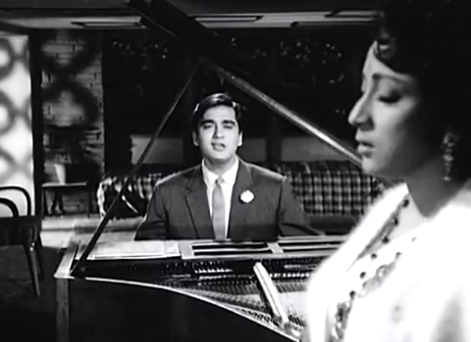
Sunil Dutt sings about the pain of heartbreak at the piano in Gumraah (1963)

In my opinion, I think one of the best parts about being a fan of old Hindi music is that it gives you a fun opportunity to brush up on your Urdu-Hindi language skills. From time to time, Mrs. 55 and I have decided that we will share some of our favorite song lyrics here and provide a glossary and translation so that everyone can follow along!

Our first song is “chalo ek baar phir se,” which is an absolute gem from the 1963 film Gumraah directed by B.R. Chopra. Arguably the best song of his career, this composition was rendered by Mahendra Kapoor, an excellent singer who ultimately carved a niche for himself in the industry after emerging from his initial fame as a Mohammed Rafi clone. The real star here, though, is Sahir Ludhianvi, who was truly one of the most gifted poets that has ever written for Hindi cinema. Known for his cynicism and disillusionment with society, Sahir Ludhianvi wrote lyrics that reflect a great deal of emotional complexity and maturity. In contrast to his contemporaries, Ludhianvi chose to remain unhindered by the constraints set by the prototypical Bollywood love song; many of his songs are refreshing to hear for their expression of biting political satire, heartfelt grief, or outspoken anger.

Sahir Ludhianvi, poet (1921-1980)

In “chalo ek baar phir se” Ludhianvi writes about a situation in which unfortunate societal circumstances prevent two lovers from fulfilling their romantic desires and building a life together. Supposedly, Ludhianvi was inspired to write this song when he encountered an ex-lover of his at a party with her new husband. The encounter must have been incredibly painful for him because these lyrics are devoid of the typical romanticizations of pyar and muhabbat that are often found in songs from this period. Instead of praising love as an ideal, the protagonist of the song suggests that he and his lover should return to becoming strangers because the emotional separation will make it easier for both of them to heal from their pain. The last stanza of the song is especially powerful: the protagonist posits that it is counter-productive to invest energy into doomed romantic relationships when they have become a burden. Ludhianvi’s words here suggest that it is sometimes in everyone’s best interests to put an early end to the love stories that simply cannot have happy conclusions. His eloquence and nuanced use of language to express the pain of unfulfilled love is sublime, and this type of  poetic talent is sorely missed in the Bollywood industry today.  For those of you who haven’t heard this song yet, it’s definitely worth a listen. If you follow along with the glossary below, I’m sure you’ll learn a couple new words that will impress ALL your Urdu-speaking friends (yes, all 2 of them).

SD

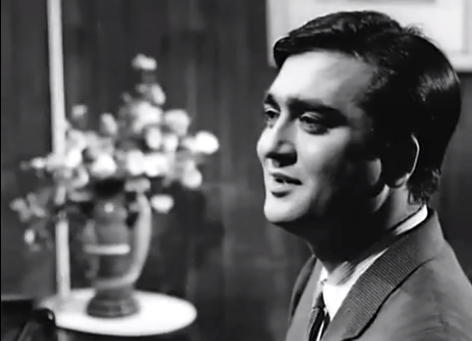
Sunil Dutt masks his internal anguish with a coy smile in Gumraah (1963)

Chalo Ek Baar Phir Se Lyrics and Translation:

chalo ek baar phir se, ajnabii ban jaaye.n ham dono.n
Come, let us become strangers once again.

na mai.n tumse koii ummiid rakhuu.n dilnavaazii kii
I shall no longer maintain hopes of compassion from you
na tum merii taraf dekho ghalat andaaz nazaro.n se
Nor shall you gaze at me with your deceptive glances. 
na mere dil ki dhaDkan laDkhaDaaye merii baato.n me.n
My heart shall no longer tremble when I speak, 
na zaahir ho tumhaari kashm-kash ka raaz nazaro.n se
Nor shall your glances reveal the secret of your torment.

tumhe.n bhii koii uljhan roktii hai pesh-qadmii se
Complications prevent you from advancing further,
mujhe bhii log kahte hai.n ki yeh jalve paraaye hai.n
I too am told that I wear disguises. 
mere hamraah bhi rusvaayiaa.n hai.n mere maazii kii
The disgraces of my past are now my companions,
tumhaare saath bhii guzrii huii raato.n ke saaye hai.n
while the shadows of bygone nights are with you too.

taarruf rog ho jaaye to usko bhuulnaa bahtar
Should knowing one another become a disease, then it is best to forget it. 
taalluq
bojh ban jaaye to usko toDnaa achhaa
Should a relationship become a burden, then it is best to end it. 
voh afsaana jise anjaam tak laanaa na ho mumkin
For that tale which cannot culminate in a conclusion,
use ek khuubsuurat moD de kar chhoDna achhaa
it is best to give it a beautiful turn and leave it be.

chalo ek baar phir se, ajnabii ban jaaye.n ham dono.n
Come, let us become strangers once again. 

Glossary:

ajnabii: stranger; ummiid: hope; dilnavaazii: compassion; ghalat andaaz nazar: deceptive glance; laDkhaDaanaa: to tremble; zaahir: noticeable; kashm-kash: torment, struggle; uljhan: complication; pesh-qadmii karna: to advance; paraayaa jalva: disguise; hamraah: companion; rusvaa: disgrace; maazii: the past; taarruf: mutual acquaintance, knowledge of one another; rog: disease, afflication; taalluq: relationship; afsaanaa: tale; anjaam: conclusion; mumkin: possible; khuubsuurat: beautiful; moD; turn. 

SD

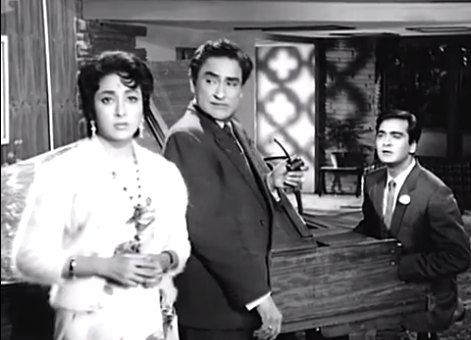
The expressions on the faces of Sunil Dutt, Mala Sinha, and Ashok Kumar  reflect the pervading tension of this situation from Gumraah (1963).