You know you’ve tried it. In the 1970s, few Indian men hitting the discotheques hadn’t. The moves of Rajesh Khanna were so powerful, so devastating that the BBC actually made a documentary on his lifestyle entitled “Bombay Superstar” to introduce him to the West. Rajesh Khanna’s signature wink was and remains the final word in Bollywood seduction. If executed correctly, the wink has a 100% success rate. You can see the wink in almost any of Rajesh Khanna songs, including the evergreen Yeh Shaam Mastani from Kati Patang (1970). For everyone who’s still having trouble, I’ve broken down how to pull off this infallible move in 5 easy-to-master steps.
Step 1: Eyes on the prize. Make full, deliberate eye-contact with the chosen target. Make sure she sees you and can sense something’s approaching. Notice the arched brow and the pursed lips–Rajesh Khanna knows how to concentrate when it counts.
Rajesh Khanna locks gazes with Asha Parekh, and both parties mentally prepare themselves for the upcoming wink.
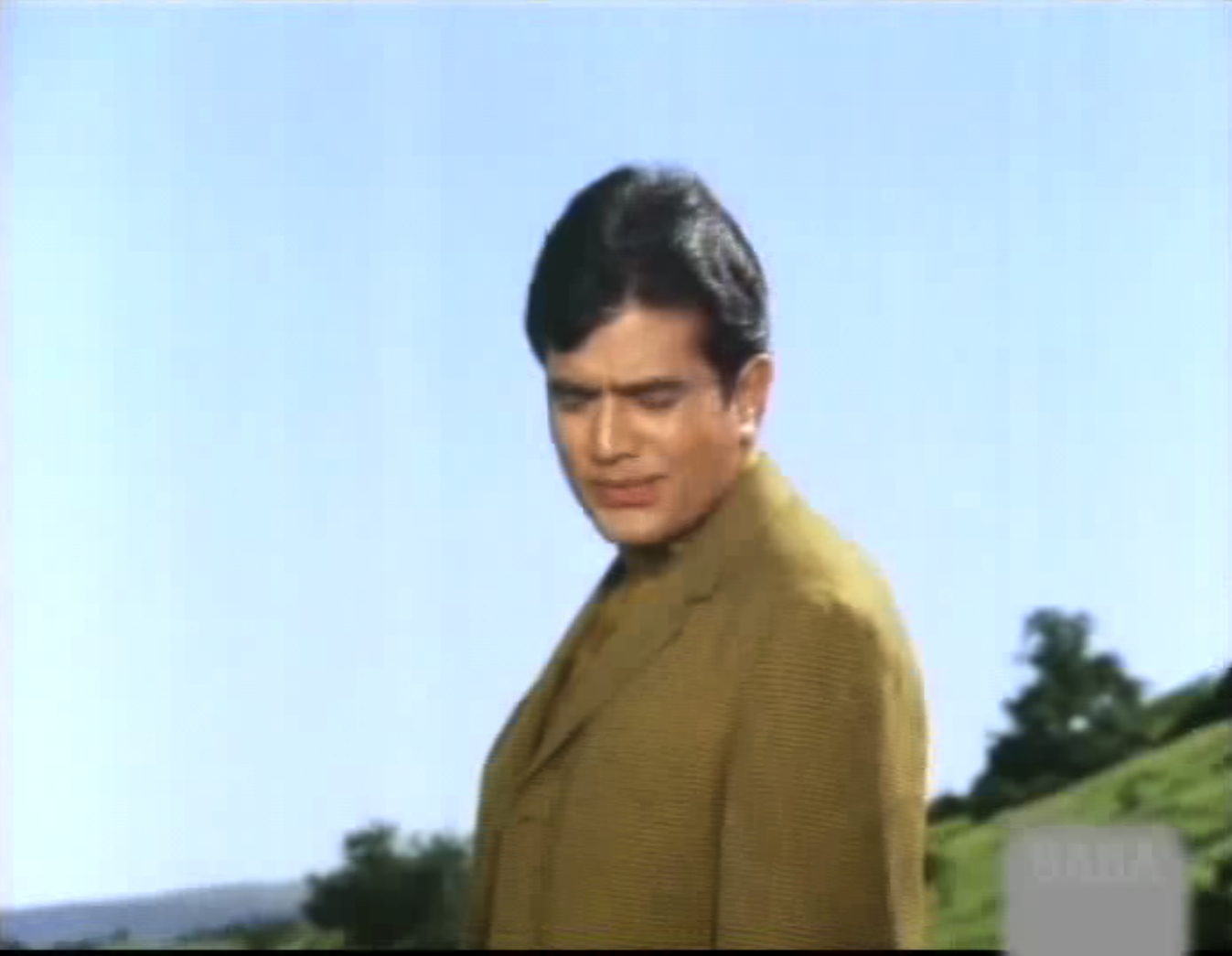
Step 2: Shut your eyelids. The key here is simultaneously tilting your head posterolaterally with the chin leading the way. This takes some very dedicated practice and coordination, so please don’t attempt this in public before you’ve put in the time. Subtle, right? Rajesh Khanna was as talented as he was beautiful.
In the devastating second step of his all-purpose wink, Rajesh Khanna coyly tilts his head and bats his eyelids. A palpable shudder is felt across the mountainside.
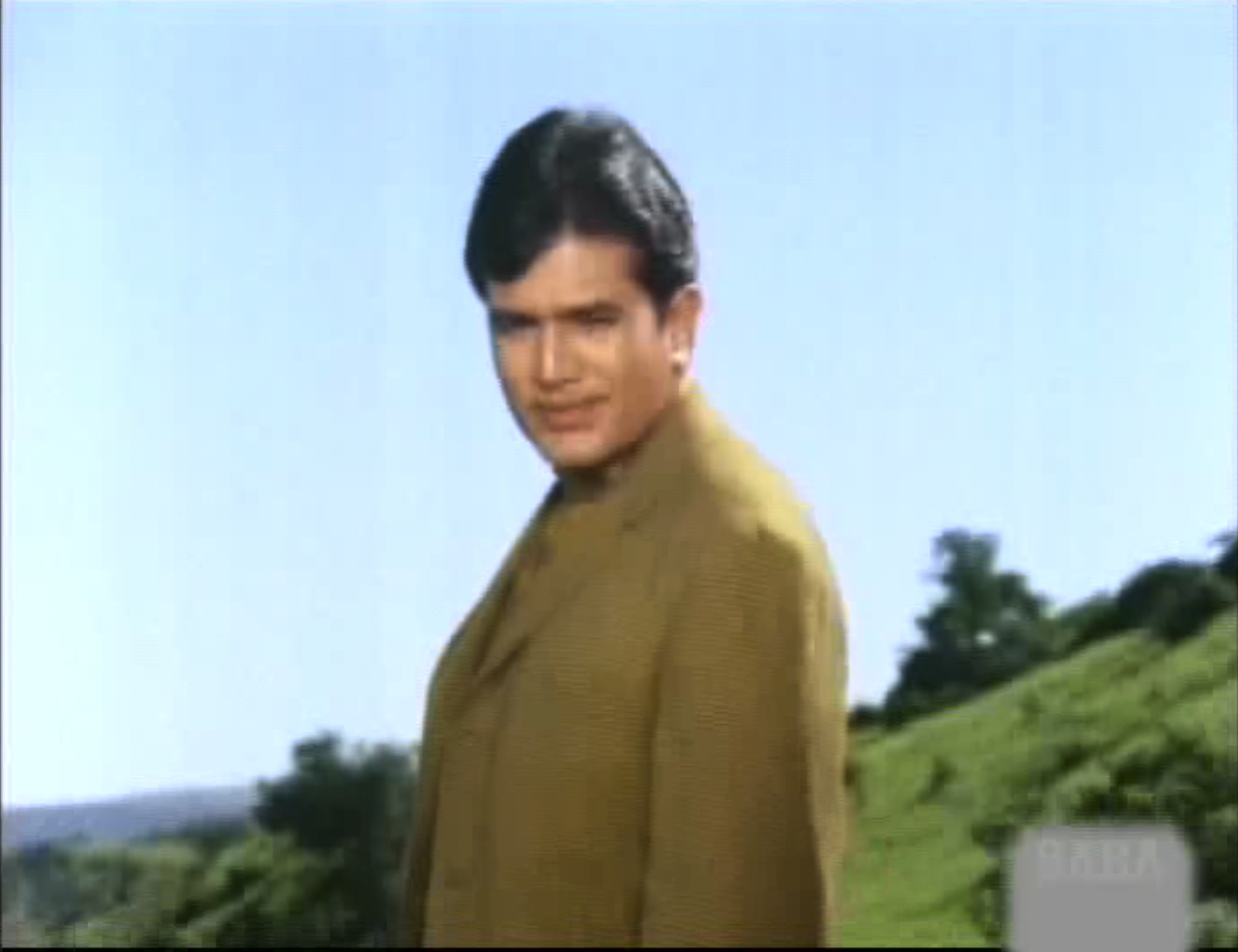
Step 3: Act natural. Return immediately to starting position, maintaining eye contact with a sly smile as if what just occurred was normal. You’ll have plenty of time to gauge audience response after.
Rajesh Khanna smiles slyly. He knows the wink just happened. He also knows you know the wink just happened. But the song isn’t done yet, and neither is he.
Step 4: Finish the song. Above all, keep singing. You gotta finish what you started. The violins are still playing and Kishore Kumar’s only on the first antra so hold that gameface until the last note.
Rajesh Khanna resists the urge to assess his wink’s immediate success and instead brings the song to a steady finish, thus heightening the wink’s effect.
Step 5: Watch and weep. This should not really qualify as a step. Observe the target’s resulting awe and proceed to take the win by a. proposing to her, b. holding her hand or c. reprising the film’s theme song.
Asha Parekh is moved literally to tears by the awesome power of Rajesh Khanna’s wink. Another one bites the dust.
That’s it folks–5 simple steps to becoming a Bombay Superstar. No Rajesh Khanna song is really complete with out it! For your viewing pleasure and further studies, check out Rajesh Khanna’s “Yeh Jo Chilman Hai” from Mehboob Ki Mehndi (1971). Then find some hair gel, a colorful ascot, and get winking.
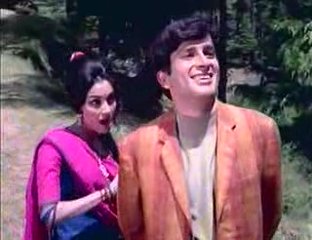
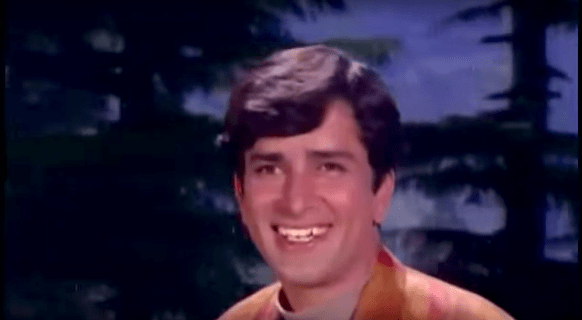
Shashi Kapoor and Asha Parekh star in Kanyadaan (1968)
For our next song, we translate the lyrics of my all-time favorite Mohammed Rafi song, Likhe Jo Khat Tujhe. The lyrics and translation of Likhe Jo Khat Tujhe have no frills, no super complicated Urdu, just verse straight from the heart. The metaphors of the lyrics have a simple beauty to them and the handsome voice of Mohammed Rafi brings them to sublimity. Although the film Kanyadan (1968) glorifies the social oppression of women and child marriages (highly objectionable and not worth the three hours I lost watching it), this song epitomizes what classic Bollywood love is all about. Boy falls for girl. Girl has an extremely cute colorful native outfit on and hides coyly behind local trees. Boy attempts to win over girl by serenading her. Girl and boy do not kiss, but you know by the way the camera pans around the flora that it’s on their minds. Likhe Jo Khat Tujhe is a blissfully adorable reminder of all things magical that Bollywood romance once meant: the charming poetry of innocent love. Can that ever get old?
Shashi Kapoor flashes his famous smile, somehow made even more handsome by the crooked teeth.
Also note the clever use of Shashi Kapoor’s sleek convertible as the object around which the actors flirt and evade each other. As if we weren’t already convinced of how cool it was to be modern in the 60s…
Likhe Jo Khat Tujhe Lyrics and Translation:
Likhe jo khat tujhe woh teri yaad mei.N
Those letters that I wrote to you Hazaaro.N rang ke nazaare ban gaye
Became a wondrous sight of a thousand colors Sa.Nveraa jab huaa to phool ban gaye,
When morning came, they became flowers Jo raat aayi to sitaare ban gaye
When night fell, they became stars Likhe jo khat tujhe…
Koyi naghma kahii.N goonjaa kahaa dil ne yeh tu aayii
A melody resonated somewhere as my heart sensed your presence Kahin chatki kali koyi main yeh samjha, tu sharmaayi
Somewhere a flower blossomed and it appeared as if you had blushed Koi khushboo kahii.N bikhrii lagaa yeh zulf lehraayi
A fragrance filled the air and it seemed to me your hair had billowed
Fiza rangeen, adaa rangeen, yeh ithlaana, yeh sharmaana
The ambiance is colourful, your style is colourful, you sometimes swagger, you are sometimes demure Yeh angaDaaii, yeh tanhaayii yeh tarsa kar, chale jaana
This preparedness, this isolation, this way you torture me, then walk away Bana de ga nahii.N kisko jawaa.N jadoo yeh deewaanaa?
Who would not go crazy with your youthful magic? Likhe jo khat tujhe…
Jahaa.N tu hai, vahaa.N main hoo.N, mere dil ki tu dhaDhkan hai
Wherever you are, I am there. You are my heartbeat Musaafir mai.N tu manzil hai, main pyaasaa hoo.N tu saawan hai
I am a traveler, you are my destination. I am thirsty, you are the monsoon Meri duniya yeh nazare.N hai.N, meri jannat yeh daaman hai
My world is held by the way you look at me, my paradise lies in your embrace Likhe jo khat tujhe…
For all the Urdu-Hindi grammar junkies, you’ll notice that we’ve written the word “naghma” with an “h” although it’s often seen written without. This because the word naghma in Urdu is actually spelled with a ghain, not a regular “g” (in Hindi, the “ga” would have a dot below to indicate this). Ghain makes the “g” a more gutteral, difficult sound to pronounce, but if you’re trying to impress your friends at your next Bollywood Night, be sure to enunciate this clearly. Other words like kaaghaz (paper), baagh (garden), maghruur (proud) and ghalat (mistake) also contained frequently overlooked ghains.
Muslim social dramas have always been one of my favorite genres of old Bollywood films. It is truly difficult to beat the classiness and sophistication that exudes from films such as Mere Huzoor (1968), Chaudhvin ka Chand (1961), or Bahu Begum (1967). The combination of beautiful costumes, intricate use of Urdu, and riveting drama makes watching these movies a truly memorable experience. Here, I’m going to a share with you what is considered to be one of the most romantic songs in the history of Hindi cinema: the title song from Mere Mehboob (1963), a film that embodies the essence of Lucknowi splendor as one of the best-known examples of the Muslim social.
In this film, student poet Anwar (played by Rajendra Kumar) writes this nazm after catching a brief glimpse of the aptly named Husna (played by Sadhana). One look at Husna’s eyes through her burkha is enough to make Anwar’s heart melt, and he is convinced by his friend to sing this piece at the university’s Urdu poetry competition (seriously, why do these not happen anymore?). Smitten by this handsome poet, Husna instantly feels a connection to Anwar but is too shy to make a move. I’ll save a full review of this movie for a later post, but I can tell you that this 3.5-hour film has the right mix of over-the-top melodrama, ironic plot twists, and beautifully constructed songs.
Composed by Naushad, penned by Shakeel Badayuni, and rendered by Mohammed Rafi, this song is a true classic that should be familiar to all the hopeless romantics out there who are obsessed with Hindi cinema like us. One of the most striking things about Mere Mehboob is the formality of the courtship between Husna and Anwar, and the lyrics of this song reflect the conventions (e.g. the practice of purdah) that were followed by lovers when pursuing one another in those days. It might just be the old-fashioned side of me, but anyone who can dedicate a poem like this to me is a total keeper in my book. So, the next time you’re around your favorite crush, why not try quoting a few lines from this gem? You never know what could happen…
-Mr. 55
P.S. The movie also contains a female version of this song rendered by Lata Mangeshkar. I am the self-proclaimed president of the Lata fan club, but even I must concede here that the Rafi version is unbeatable. What do you guys think? Let us know in the comments
Sadhana startles Rajendra Kumar by reciting his poem on the other side of the screen in this classic scene from Mere Mehboob (1963).
Lyrics:
mere mahbuub tujhe, merii muhabbat ki qasam phir mujhe nargisii aa.nkho.n kaa sahaaraa de de meraa khoyaa huaa rangiinnazaaraa de de mere mahbuub tujhe.
ai mere khvaab kii taabiir, merii jaan-e-ghazal zindagii merii tujhe yaad kiye jaatii hai raat din mujhko sataataa hai tasavvur tera dil ki dhaDkan tujhe avaaz diye jaatii hai aa mujhe apnii sadaao.n ka sahaaraa de de [meraa khoyaa huaa rangiin nazaaraa de de mere mahbuub tujhe]
bhuul saktii nahii.n aa.nkhe.n voh suhaanaamanzar jab teraa husn mere ishq se Takraayaa thhaa aur phir raah me.n bikhre thhe hazaro.n naghme mai.n voh naghme terii avaaz ko de aayaa thhaa saaz-e-dil ko unhii.n giito.n kaa sahaaraa de de [meraa khoyaa huaa rangiin nazaaraa de de mere mahbuub tujhe]
yaad hai mujhko merii umr ki pahlii voh ghaDii terii aa.nkho.n se koii jaam piiyaa thhaa mai.ne merii rag-rag me.n koii barq-si leheraayii thhii jab tere marmarii haathho.n ko chhuu.naa thhaa mai.ne aa mujhe phir unhii.n haatho.n kaa sahaaraa de de [meraa khoyaa huaa rangiin nazaaraa de de mere mahbuub tujhe]
mai.ne ek baar terii ek jhalak dekhii hai merii hasrat hai ki mai.n phir tera diidaarkaruu.n tere saaye ko samajh kar mai.n hasii.n taaj mahal chaa.ndni raat me.n nazaro.n se tujhe pyaar karuu.n apnii mahkii huii zulfo.n kaa sahaaraa de de [meraa khoyaa huaa rangiin nazaaraa de de mere mahbuub tujhe]
DhuunDhtaa huu.n tujhe har raah me.n har mahfil me.n thhak gaye hai.n merii majbuurtamanna ke qadam aaj kaa din hai merii ummiid kaa aakhrii din kal na jaane mai.n kahaa.n aur tu kahaa.n ho sanam do ghaDii apnii nigaaho.n kaa sahaaraa de de [meraa khoyaa huaa rangiin nazaaraa de de mere mahbuub tujhe]
saamne aake zaraa pardaa uThaa de rukh se ek yahii.n mera ilaaj-e-gham-e-tanhaayii hai terii furqat ne pareshaan kiyaa hai mujhko ab to mil jaa ki merii jaan pe ban aayii hai dil ko bhuulii huii yaado.n kaa sahaaraa de de [meraa khoyaa huaa rangiin nazaaraa de de mere mahbuub tujhe]
Glossary: mahbuub: beloved; muhabbat: love ; qasam: vow; nargisii: daffodil; sahaaraa: support; rangiin: colorful; nazaaraa: sight, vision; khvaab: dream taabiir: interpretation, meaning; jaan-e-ghazal: soul of poetry; sataanaa: to pester; tasavvur: imagination, thought; sadaa: voice, call; suhaanaa: pleasant; manzar: sight, vision; husn: beauty; Takraanaa: to collide; bikhre: scattered; naghmaa: song; saaz-e-dil: the instruments of the heart; ghaDii: moment; jaam piinaa: to drink wine; rag-rag: veins; barq: electricity; marmarii: soft, delicate; chhuunaa: to touch; jhalak: a glimpse; hasrat: desire; diidaar karna: to catch a glmpse ; mahkii huii: fragrant; mahfil: a gathering/evening of poetry, music, or dance; thhak jaanaa: to become weary; majbuur: helpless; tamanna: desire; qadam: footsteps; ummiid: hope; nigaahe.n: eyes; pardaa: veil; rukh: face; ilaaj-e-gham-e-tanhaayii: cure for the sorrow of solitude; furqat: separation; pareshaan: anxious, concerned
Rough Translation:
My beloved, in the name of my love,
Please, once again, lend me the support of your daffodil-like eyes,
And please return the colorful vision that I have lost.
You are the meaning of my dreams and the soul of my poetry.
My existence continues to remember you,
And thoughts of you pester me day and night
Please come and lend me the support of your voice.
And please return the colorful vision that I have lost.
My eyes are unable to forget that beautiful sight
When your beauty collided with my love,
And scattered on the path remained a thousand melodies
That I had gifted to your voice.
Please lend me the support of those songs to the instruments in my heart
And please return the colorful vision that I have lost.
I remember the first moments of my life
When I had drunk some wine from your eyes.
A flash of lightning surged through my veins,
As I brushed upon your velvet-like hands.
Please come and lend me the support of those hands,
And please return the colorful vision that I have lost.
I have caught a glimpse of you just once,
But my desire is to behold the sight of you once again.
Mistaking your shadow for the beautiful Taj Mahal,
I have been making love to you on moonlit nights with my glances.
Please lend me the support of your fragrant tresses,
And please return the colorful vision that I have lost.
I seek you in every path and in every gathering,
As the feet of my helpless desires have become weary.
Oh beloved, who knows where you and I will be tomorrow?
Please lend me the support of your eyes for a few moments today,
And please return the colorful vision that I have lost.
Please come in front of me and lift the veil hiding your face,
This is the only solution for the sorrow of my solitude.
Being separated from you has made me anxious,
Now come meet me because this separation is threatening my existence.
Please lend the support of forgotten memories to my heart,
And please return the colorful vision that I have lost.
You’ve probably never heard of Mani Rabadi, but I’ll bet you’ve seen her work before. A behind-the-scenes legend, Mani Rabadi was a fashion designer to the stars. This woman was the final word in costume design for Bollywood films of … Continue reading →
Guru Dutt reflects on his life as a once-great Bollywood director in the semi-autobiographical epic Kaagaz Ke Phool (1957).
The lyrics and English translation of Dekhi Zamane Ki Yaariare among the most beautiful you can find. The very soul of Guru Dutt can be found in the lyrics of Dekhi Zamaane Ki Yaari. The song is the heart of his masterpiece Kaagaz ke Phool (1957), and I contend contains themostpassionate poetry you will ever find in a Bollywood song. Mohammed Rafi brings legendary Urdu poet Kaifi Azmi’s lyrics to an unheard of, feverish of climax that evokes a tragedy much deeper and more painful than any normal loss. Indeed, Kaagaz ke Phool tells a story of a different kind, and not one often explored: the slow destruction of an unfulfilled artist. I have already discussed some of the autobiographical parallels in this film in my translation of Waqt Ne Kiya, and will now present the actual story alongside the lyrics. It is one of the most haunting and powerful songs of that era.
Dekhi Zamaane ki Yaari reprises at different chapters in the film. The first starts in the opening as Guru Dutt plays an aged, dying film director who has returned to his old studio set before dawn. He sits up in the rafts and looks down on the empty world of show business below him. The song begins.
Dekhi Zamane Ki Yaari Lyrics and Translation:
Dekhi zamaane ki yaari
I have seen what goes for friendship in this world Bichhade sabhee, bichhade sabhi baari baari
Everyone disperses, one by one they all leave Kya le ke mile.N ab duniya se? Aa.Nsuu ke siva kuch paas nahii.N
What will I take with me now to greet this world? Besides tears I have nothing Ya phuul hi phuul the daaman mei.N, ya kaanto.N ki bhi aas nahii.N
I was either embraced by flowers, or other times did not even aspire to thorns Matlab ki duniya hai saari
The whole world is selfish Bichhade sabhee, bichhade sabhi baari baari
Everyone disperses, one by one they all leave
The old man flashes back to younger days, when he was at the height of his career as a studio Bollywood director. The flashback transitions through a watery image of a lotus flower and a series of dutch-angled shots of eager fans. The high chorus interlude of the music inspires a sense of the divine, but when coupled with the teetering shots of the silent mob, also foreshadows something unnatural.
Guru Dutt smokes contemplatively on a balcony as fans await him below in Kaagaz Ke Phool (1957).
Waqt hai maherabaan, aarzuu hai javaan
During generous times, desires are young Fikr kal ki karen, itni fursat kahaa.N
There is no leisure to worry about tomorrow Daur yeh chaltaa rahe, ranguchaltaa rahe
Let this cycle continue, these colors keep splashing Roop ko badalta rahe, jaam badalata rahe
Let the attractions keep changing, the intoxicants keep changing
Fans crowd Guru Dutt for signatures on empty pieces of paper that embody the theme of his film.
And here Guru Dutt masterfully transitions, for this is a story that is more than merely a tragic fall from societal grace. He shows us a character who has always felt alone–both when the world stood with him and when it abandoned him, searching for meaning in the dazzling lights of his own studio. It’s the kind of tragedy that doesn’t scream and doesn’t cause a colorful sensation. It’s one that softly and slowly erodes the soul–a desperate hunt for a human connection.
Guru Dutt comes home to a perpetually empty house in Kaagaz Ke Phool (1957)
Raat bhar mahamaan hai.N bahaare.N yahaa.N
Here, Spring is our guest the entire night Raat gar dhal gayi, phir ye khushiyaa.N kahaa.N
But if the night ends, where do these joys go? Pal bhar ki khushiyaa.N hai.N saari
All of these joys are only momentary Badhane lagi beqaraari, badhane lagi beqaraari
And then restlessness begins to grow, restlessness begins to grow
Falling down a spiraling slope, he finds love at last and loses not only her, but his chance at happiness with his daughter, his friends, a wife, and his work. No producer will hire him, no actors will work with him. Everything these people once said and did for him was false. He returns years later to his old studio and sees Waheeda Rehman, the woman he loved and runs away in horror. Mohammed Rafi cries out with a violent passion in this segment–a ferocious plea to society and a desperate call to the suffering of his being. It is here that the meaning of “kaagaz ke phool” is explained–that dangerous unfeeling world of pretense. As the song comes to an end, Rafi gently sings the line, “Yeh khel hai kab se jaaari…” [“This game has been played so long…”] In his voice is the awful beauty of true resignation. You feel how tired this man is.
Utterly defeated, Guru Dutt looks back for a final time at the woman he loved and the world that once belonged to him in Kaagaz Ke Phool (1957).
Ud jaa! Ud jaa pyaase bha.Nvare! Ras na milega khaaro.N mei.N
Fly away thirsty bumblebee! You will not find nectar in these thorny shrubs Kaaghaz ke phuul jahaa.N khilte hai.N, baiTh na un gulzaaro.N mei.N
Do not sit in those gardens where flowers of paper bloom Naadan tamanna reti mei.N, ummiid ki kashti khaiti hai
In the sands of innocent desire, the boat of hope struggles to stay afloat Ek haath se deti hai duniyaa, sau haatho.N se le leti hai
What the world gives with one hand, it takes away with one hundred Yeh khel hai kab se jaari…
This game has been played for so long… Bichhade sabhee, bichhade sabhi baari baari
Everyone disperses, one by one they all pull away
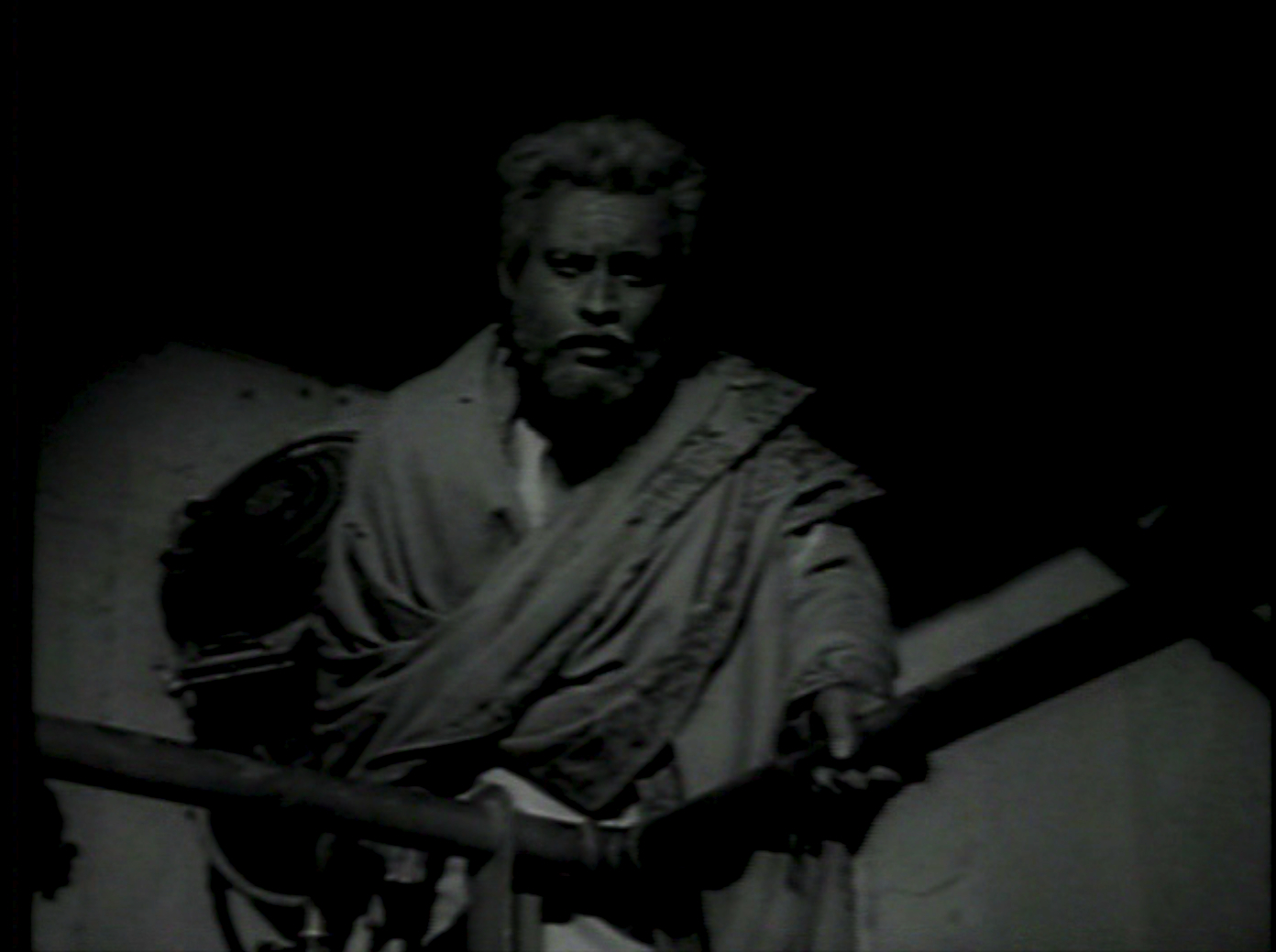
Returning to the director’s chair, Guru Dutt bids farewell to society in Kaagaz Ke Phool (1957)
Then the flashback ends. He is an old man again hiding in the alcoves of his former studio. With careful decision, he sits down once more in the director’s chair in the center of the set.
Dekhi zamaane ki yaari
I have seen what goes for friendship in this world Bichhade sabhee, bichhade sabhi baari baari
Everyone disperses, one by one they all leave
Light floods the empty set. Dawn has broke and the crew enters to find an old unfamiliar man who has died sitting in the director’s seat. The producer yells for his body to be removed so shooting can begin. And the cycle continues.
Kaagaz Ke Phool (1957) finishes over the blurred image of studio lights.







 Mr. & Mrs. 55 - Classic Bollywood Revisited!