Dost Dost Na Raha Lyrics and Translation: Let’s Learn Urdu-Hindi

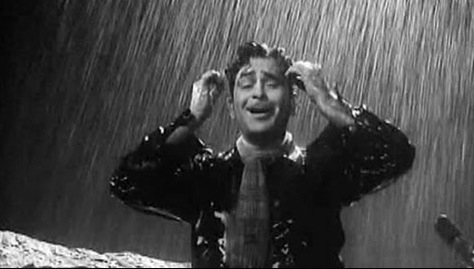
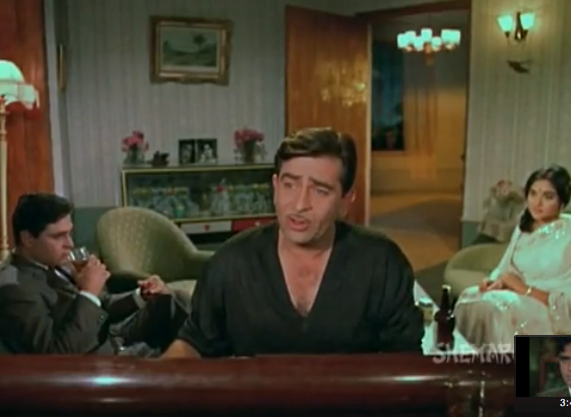
Raj Kapoor sings about betrayal in love and friendship at the piano in Sangam (1965)

Our next translation comes from Sangam (1965), a film starring Raj Kapoor as Sundar, Vijayntimala as Radha, and Rajendra Kumar as Gopal in a classic love triangle story gone wrong. The plot of Sangam is somewhat complex, but it can be boiled down to a few key points:

  • From a young age, Sundar has been attracted to his childhood friend Radha. However, Radha only has eyes for another friend Gopal and persistently rejects Sundar’s advances.  In secret, Gopal reciprocates Radha’s feelings for him.
  • To prove his worthiness as a man and impress Radha, Sundar enlists in the Indian Air Force. Before his departure, Sundar asks Gopal to make sure no man comes in between him and Radha while he is gone.
  • One day, Gopal and Radha receive the terrible news that Sundar is presumed dead after a plane crash. Although they are deeply saddened, this news means that Gopal and Radha can pursue their feelings for each other with a clear conscience. During their courtship, Gopal writes an unsigned love letter to Radha that will become important later in the story.
  • Much to Gopal and Radha’s surprise, Sundar returns happy and healthy from the Air Force–the rumors of his death were inaccurate. The self-sacrificing Gopal keeps his word and steps out of the picture so that Sundar can woo Radha.
  • Eventually, Radha and Sundar get married. It is difficult for Radha to reject Sundar now because his heroic accomplishments in the Air Force have elevated his status to that of a worthy suitor. The newly wedded couple have an extravagant European honeymoon.
  • After their return, the couple enjoy marital bliss. Yet, their happiness is short-lived: Sundar finds the unsigned love letter and assumes that Radha has been an unfaithful wife (although she has stopped all relations with Gopal post-marriage).
  • In the days that follow, Sundar becomes insane with jealousy and makes Radha’s life miserable with constant threats and aggression. Radha flees to Gopal’s house for refuge without knowing that Sundar will end up doing the same thing.
  • The three characters now have a dramatic confrontation where Gopal admits that he is the author of  the unsigned love letter. Tensions flare, and to avoid giving too much away, I’ll just say that the movie ends with a tragic death….

Placed into the context of this film,  Sundar pours his heart out by singing “dost dost na rahaa” after discovering the unsigned love letter that Radha has hidden from him.  With heart-wrenching lyrics penned by Shailendra and a touching melody based on Raga Bhairavi composed by Shankar-Jaikishan, this song is Bollywood’s quintessential anthem for those who have been betrayed in love or friendship. Mukesh’s pathos-laden voice is perfectly suited to express the pain that Sundar must feel after he comes to believe that his two closest companions in life have been unfaithful to him. The intensity of emotion is heightened by this song’s picturization: the camera captures close-up shots of facial expressions when Sundar sings the antara addressed to Gopal followed by the one addressed to Radha.  From watching this scene, it seems like you can cut the tension in the air with a knife! Although no one should ever have to endure being spurned like this in real life, we hope that the lyrics and English translation provided below will allow you to acquire a greater appreciation for one of Hindi cinema’s finest expressions of angst and betrayal that is still a fan-favorite today.

-Mr. 55

Vijayantimala quietly endures Raj Kapoor’s misguided accusations of infidelity in Sangam (1965)

Dost Dost Na Raha: Lyrics and Translation

dost dost na rahaa, pyaar na pyaar rahaa
My friend no longer remains a friend; my love no longer remains love.
zindagii, hame.n teraa aitbaar na rahaa 
Life, I have lost my faith in you.

amaanate.n mai.n pyaar kii gayaa thaa jisko sau.np kar
The one to whom I entrusted my belongings of love,
vah, mere dost, tum hii the, tum hii to the 
My friend, you were him. Only you.
jo zindagii kii raah me.n bane the mere hamsafar 
The one who had become my fellow traveler in the journey of life,
vah mere dost tum hii the, tum hii to the 
My friend, you were him. Only you.
saare bhed khul gaye, raazdaar na rahaa 
All my secrets are now exposed, the secret-bearer no longer remains.
zindagii, hame.n teraa aitbaar na rahaa
Life, I have lost my faith in you.

gale lagii saham saham, bhare gale se boltii
The one who embraced me fearfully while speaking in a somber voice,
vah tum na thii.n to kaun thaa? tum hii to thii.n
If she wasn’t you, then who was she? It was only you. 
safar ke vaqt me.n palak pe motiyo.n ko toltii 
The one who shed tears of pearls at the parting hour,
vah tum na thii.n to kaun thaa? tum hii to thii.n 
If she wasn’t you, then who was she? It was only you. 
nashe kii raat Dhal gayii, ab khumaar na rahaa
The night of intoxication is over, the inebriation no longer remains.
zindagii, hame.n teraa aitbaar na rahaa
Life, I have lost my faith in you.

vafaa kaa leke naam jo dhaDak rahe the har ghaDii
The one who beat each moment in the name of faithfulness
vah, mere nek nek dil, tum hii to ho
My good heart, you are it.
jo muskuraake rah gaye zahar kii jab suii gaDii
The one who continued to smile when pierced with a needle of poison
vah, mere nek nek dil, tum hii to ho
My good heart, you are it.
ab kisii kaa, mere dil, intazaar na rahaa
Now, my heart, I am not waiting for anyone.
zindagii, hame.n teraa aitbaar na rahaa
Life, I have lost my faith in you.

dost dost na rahaa, pyaar na pyaar rahaa
My friend no longer remains a friend; my love no longer remains love.

Glossary

aitbaar: trust, faith; amaanat: property, belongings; sau.npnaa: to entrust, hand over; hamsafar: traveler, companion; bhed: secret; raazdaar: secret-bearer; gale lagnaa: to embrace; saham: fearfully; bharaa galaa: somber voice; palak: eyelid; motiyaa.n: pearls; tolnaa: to weigh; nashaa: intoxication; khumaar: inebriation; vafaa: faithfulness; dhaDaknaa: to beat; nek: good, worthy; zahar: poison, suii: needle; gaDnaa: to pierce, thrust in; intazaar: wait.

Rajendra Kumar, with a distressed and guilty expression, listens to Raj Kapoor’s allegations of disloyalty during this song from Sangam (1965).

How to Play the Awkward Miffed Lover

It happens to everyone at some point. We all hate this situation. You land the girl of your dreams, you take her to a fancy dinner party, and just when everything is going your way, her ex-lover crashes the scene. With the heavenly voice of a playback singer, the new contender bursts into dramatic song, calling out his passion with your girl in front of EVERYONE.

Plus, the more the song goes on, the more you realize you’re trapped–any interruption would only backfire. And on top of it, your girl is getting embarrassingly emotional.

So what to do? It’s clear everyone in the audience is just cheering for those two to reunite, leaving YOU with the ugly villain label. The rules of the game prevent you from simply cutting the song off short—you have no option but to helplessly be made a fool. It’s such an unfair tactic, and heroes of Bollywood films LOVE to use it.

In times like these, we reflect on the inspiring behavior of greater men. They too were placed in these compromising and uncomfortable situations. Each one had their own style, their own method of handling the filmi fire life dealt them.

As I see it, you have five main options to choose from. Let us examine their protocols below.

The Vinod Khanna: Get Angry

During the beautiful love ode “Koi Nazarana Lekar” from Aan Milo Sajna (1970), Vinod Khanna shoots daggers from his eyes at the shameless flirt Rajesh Khanna.

Option 1. Get angry. It’s bad enough that you showed up to this event in a lime green tuxedo. Complete the look and let your face turn pea green with envy. Who cares who judges you? Be a party-pooper and scowl your way through the song, sucking the joy out of everyone else’s fun.

The Rehman: Blush

Ugh. Nothing worse than having your own crimes turned into public poetry. Although it’s a black-and-white film, you can see Rehman turn a hot pink during Guru Dutt’s classic lament “Jaane Woh Kaise” from Pyaasa (1957).

Option 2. Blush. You’re guilty and there’s no hiding it. Don’t make eye contact with anyone! Instead, mentally review the cquestionable ethical decisions you took along the path that led you to this debacle. You will realize what a jerk you’ve been, and although you have to stay the course, colour will rise to your cheeks.

The Raj Kapoor: Play it off as a joke

Always a goofball, Raj Kapoor attempts valiantly to make light of the humiliating situation wrought by Dilip Kumar singing “Jhoom Jhoom Ke” from Andaz (1949).

Option 3. Play it off as a joke. You’re at a dinner party, after all and this is no time to aggravate the situation. Keep that bow-tie straight and act casual. With enough non-chalance, maybe the party-goers will think it’s only a bit of fun among friends?

The Rishi Kapoor: Give up

Horror and resignation overwhelm Rishi Kapoor’s face during Tariq’s performance of “Kya Hua Tera Wada” from Hum Kisise Kam Nahin (1979)

Option 4. Give up. Just give up. How could you have not known of this beautiful subverted love story earlier? This is entirely your fault. You’re overwhelmed with moral guilt and regret–do the righteous thing and withdraw your nomination from the ballet entirely. In this way, you can quickly drop the villain label and return to your proper place as hero!

The Pran: Enjoy the show

Pran doesn’t ruffle a feather during Shammi Kapoor’s heartfelt and passionate “Dil Ke Jharoke” from Brahmachari (1968). But hey, when you’re as devastatingly sophisticated as Pran, you wouldn’t have time for these amateurs either.

Option 5. Enjoy the show. After all, who’s worried? This other guy has nothing on you, you suave gift to womankind.  Keep the entertainment coming! Oh, I’m sorry, honey, are you crying? Here, take my silk handkerchief. You might need it.

So the next time you hear the tinkerings of a tragic song start on the piano behind you, don’t panic. There is a way out! Just pick an approach from the textbook of Hindi films. If classic Bollywood has taught us anything about these moments, it’s that they can and will happen all the time. Tell us whose approach YOU prefer!

-Mrs. 55

The 15 Best Bollywood Rain Songs: Evolution of a Classic Genre

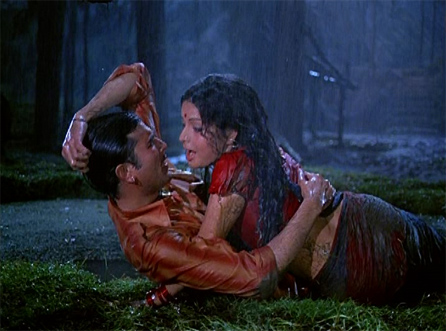
Rajesh Khanna and Rakhee Rain Song Bollywood

Rajesh Khanna and Rakhee express their sizzling love in the rain in Shehzada (1972).

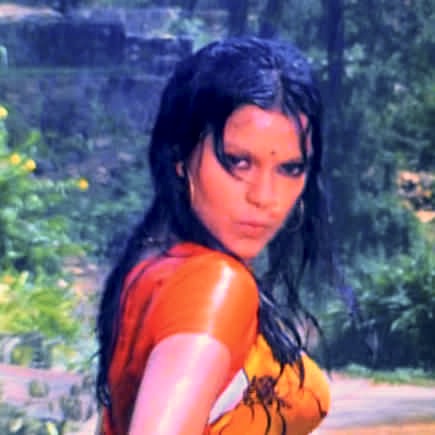
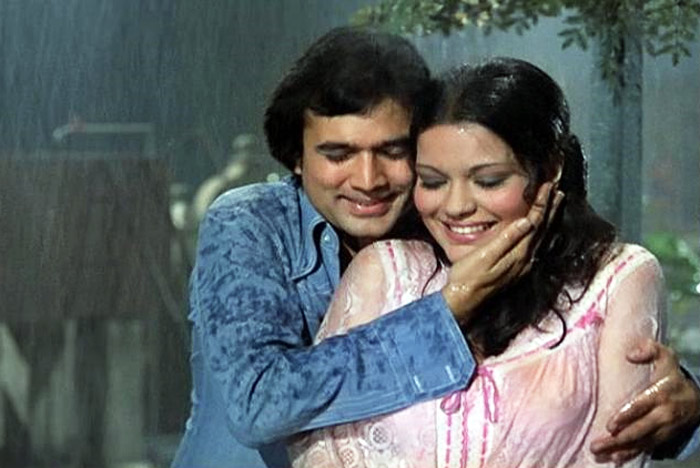
It’s monsoon season again in India and, naturally, love is sparkling in the air. At last we present our list of the best rain songs from classic Bollywood! We all adore these moments–the iconic cuddling beneath an umbrella, the splashing around in a wet garden, or of course, Zeenat Aman in a drenched saari. It seems now that singing in the rain is the epitome of Bollywood romance, and a marvelous way to introduce a new song. But this phenomena did not occur overnight, and indeed, the meaning of rain itself in a film has shifted over the years with shifting cultural expectations. Let’s take a look at rain songs in Bollywood over the years!

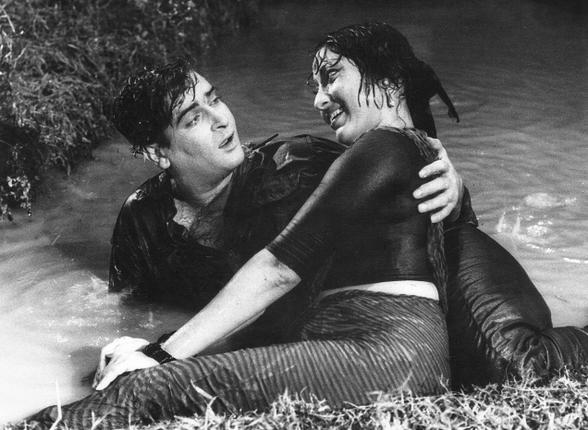
Shree 420 Raj Kapoor Nargis Pyar Hua Iqrar Hua Rain Song Bollywood

Raj Kapoor and Nargis huddle close together beneath an umbrella in Shree 420 (1955).

We being in the earlier days of cinematic magic. As India awoke to freedom and liberty in the 1950s, so too did the country rapidly begin to shift gears away from pure agriculture and toward industrialization. Many of the best rain songs from that era embody a sense of wonder in urban environments and, matching the film censorship boards, an innocent just-got-struck-by love. In these songs, rain seems to act as that enchantment in the air–that driving force bringing a loved one into contact or sight. Rain too acted as that shimmering veil of restraint that both parties hesitate to cross. “Ek Ladki Bheegi Bhaagi Si” from Chalti Ka Naam Gaadi (1958) is one of the most beloved rain songs of that era!

Raj Kapoor Dum Dum Diga Diga Chhalia

Raj Kapoor prances about the city streets singing “Dum Dum Diga Diga” from Chhalia (1960).

With the advent of the 60s, came a new meaning of being caught in a rainstorm. No longer was rain an innocent effector of love at first sight, but rather a clever and well-understood pretext for full out passion. To clarify, by passion, I mean, symbolic wet dancing that means much more than actual physical contact. The Bollywood rain songs of the 60s exude a sense of joy, independence and confidence. The onset of a rainstorm had an understood implication for overt displays of affection that both parties are eager to demonstrate. Say hello to bouffant hairdos, tight and wet salwar qameezes, and men doing some very special attempts at a courtship dance.

Shammi Kapoor Dil Tera Deewana Hai Sanam Mala Sinha

Shammi Kapoor and Mala Sinha get drenched in Dil Tera Deewana Hai Sanam (1960)

Gone were the days of “Do Bigha Zameen” style agricultural celebration! While the setting of the village recurred, rain ceased to be a blessing for economic survival–instead, it brought the blessing of love between newly liberated men and woman of a new age. Check out our translation of “O Sajna Barkha Bahar” from Parakh (1960) and listen how music directors cleverly incorporated native Indian instruments into creating the sounds and moods of rain. Indeed, the trickling melodies of sitar have graced the introductions of many a great rain sequence–even famously with Ravi Shankar’s solo for Satyajit Rai’s Aparajito!

Asha Parekh Aaya Saawan Jhoom Ke

Dressed as a village belle, Asha Parekh delights in the first rain of the season in “Aaya Sawan Jhoom Ke” (1969).

At last the 70s arrived, and the Bollywood rain song explored new territory. Yes, Zeenat Aman in a wet white saari is crossing some obvious lines and certainly deserves a mention on this list, but the rain song did not merely degenerate into a male fantasy. Instead, as the political atmosphere changed, the rain song adopted a meaning to suit its people. With government dissatisfaction in the air, rain songs were (while maintaining something of a romantic undertone), also a means of escape and hope.

Jeetendra Haye Re Haye Humjoli

Jeetendra and Leena Chandavarkar exhibit some of the strangest and wildest dance moves to date in the famous rain love song of Humjoli (1970)

Did you know in the early days of cinema, rain scenes were not actually filmed in the rain? Because of the nature of unforgiving black-and-white film stock, even heavy pounding natural rain does not appear clearly in the camera–much less the gentle puhaare of many a romantic Bollywood setting. As such, the production staff needed to literally dump buckets of water or spray dozens of hoses above the set for “rain” to actually appear so on screen! So the next time you watch these songs, just imagine the total chaos going on outside the frame among the frantic, water-pouring production assistants!

Zeenat Aman sets the rain on fire in “Haye Haye Yeh Majboori” from Shor (1972).

But enough talk. Now that you know the history, here is our list in chronological order of Bollywood’s greatest rain songs! These all-time classic give an entirely new meaning to “Singin’ in the Rain!”

The Best Rain Songs of Classic Bollywood

  1. Pyar Hua Iqrar Hua (Shree 420 – 1955)
  2. Yeh Raat Bheegi Bheegi (Chori Chori – 1956)
  3. Ek Ladki Bheegi Bhagi Si (Chalti Ka Naam Gaadi – 1958)
  4. Dil Tera Deewana Hai Sanam (Dil Tera Deewana – 1960)
  5. Dum Dum Diga Diga (Chhalia -1960)
  6. O Sajna Barkha Bahar Aayi (Parakh -1960)
  7. Rim Jhim Ke Tarane (Kala Bazaar – 1960)
  8. Zindagi Bhar Nahin Bhoolegi (Barsaat Ki Raat – 1960)
  9. Chhup Gaye Saade Nazare (Do Raaste – 1969)
  10. Aaya Saawan Jhoom Ke (Aaya Saawan Jhoom Ke – 1969)
  11. Ang Lag Ja Balma (Mera Naam Joker – 1970)
  12. Haye Re Haye (Humjoli – 1970)
  13. Bheegi Bheegi Raaton Mein (Ajnabi – 1972)
  14. Paani Re Paani (Shor – 1972)
  15. Haye Haye Yeh Majboori (Roti Kapada Aur Makaan – 1974)
Rajesh Khanna Zeenat Aman Bheegi Bheegi Raaton Mein

Rajesh Khanna cuddles Zeenat Aman to keep warm in the spicy rain song “Bheegi Bheegi Raaton Mein” in Ajnabi (1974).

And there you have it, the 15 best classic Bollywood rain songs over the ages! What are YOUR favorite rain songs from classic Bollywood–and tell us how they’ve influenced your own love stories!

– Mrs. 55

The Tragedy and Triumphs of Do Bigha Zameen

Do Bigha Zameen 2

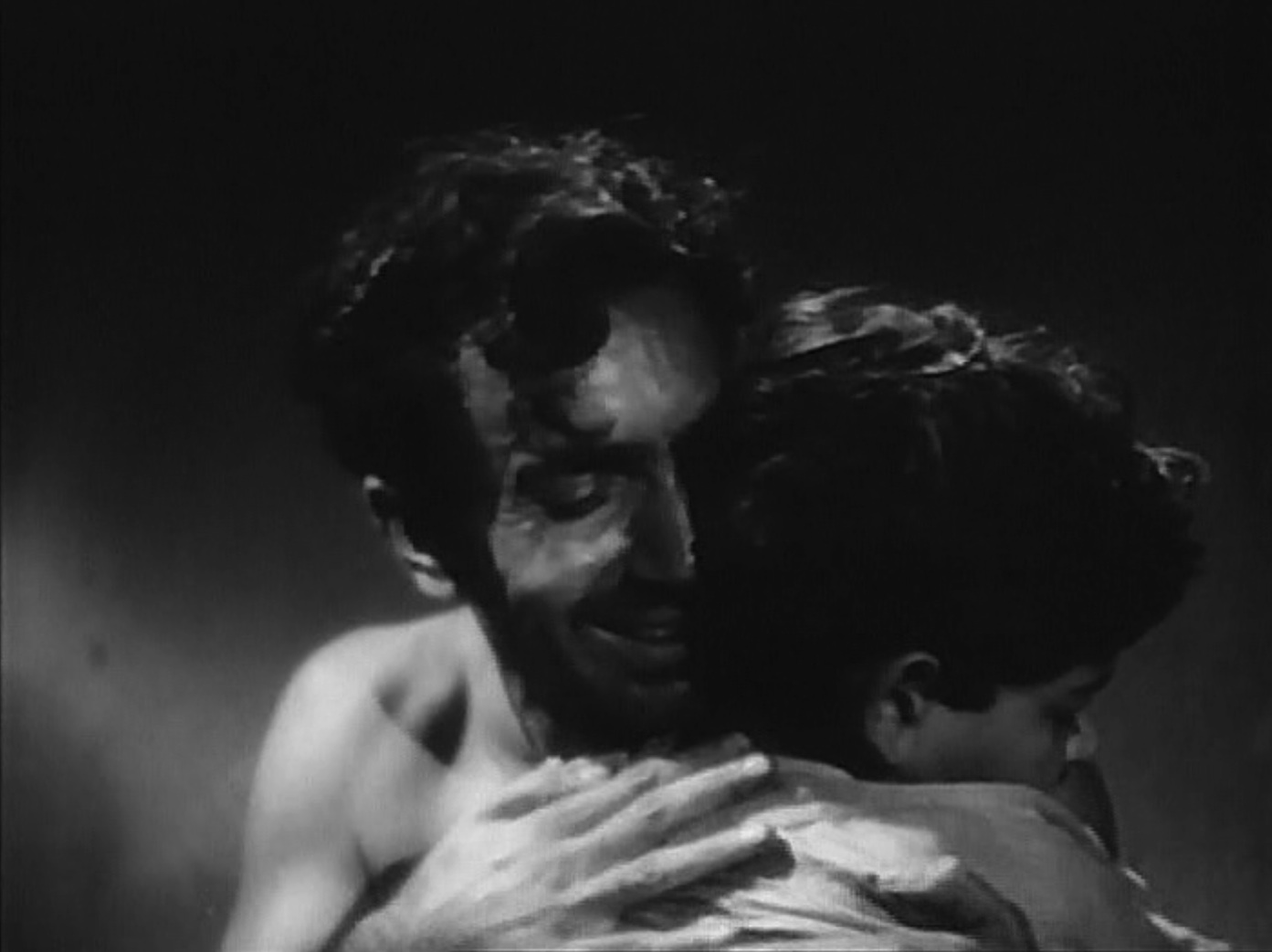
Balraj Sahni embraces his son in despair after a violent misunderstanding in the urban nightmare of Do Bigha Zameen (1954).

In the 1954, the year of the first Indian Filmfare awards, the film that took home the glory of both best picture and best director was about to become more than just a national treasure. Do Bigha Zameen, the latest directorial offering of a relatively minor Bengali newcomer, told a story that was not familiar in the tinsel-lined halls of Bombay filmdom. Without a glamorous period backdrop, without elaborate dream sequences, and without clearly enunciated moral take-home points, Do Bigha Zameen cannot be readily categorized with contemporary village epics such Mother India (1957) nor socially-conscience critiques like Shree 420 (1955) and Pyaasa (1957). With such a new vision of Indian cinema, stylistically and socially, Do Bigha Zameen hit a broader audience, becoming the first Indian film to win the Prix Internationale at the 1954 Cannes Film Festival.

But what is all this hype about? What makes Do Bigha Zameen so radical and why does everyone always bring it up in discussions of must-see Bollywood films? The film is directed by Bimal Roy, a prominent member of the post-colonialist Bengali intelligentsia, who was directly influenced by another radical film movement sweeping Europe: Italian Neorealism. Like other great Bengali directors of his day, ie. Rhitwik Ghatak and Satyajit Ray, Bimal Roy was fascinated by the work of Italian pioneer Vittorio de Sica and his masterpiece Ladri Di Biciclette (1948). The film is the defining work of Italian neorealism, marked by a deliberate attention to the “everyday,” the feeling of an invisible, unhurried camera whose shots and mis-en-scene are carefully constructed, but have the naturalness of a documentary. The Italian neorealist movement glorified without ornamentation the lives and suffering of “ordinary” citizens. It gave importance to the unimportant and evoked sympathy without the crutches of melodrama.

Do Bigha Zameen 1Balraj Sahnia Nirupa Roy

Nirupa Roy and Balraj Sahni flirt with each other beneath a shady tree in Do Bigha Zameen (1954).

Now I’ll argue that among the Indian film influenced by the neorealist movement, Satyajit Ray’s Apu Trilogy is perhaps the truest to the legacy set by Ladri di Biciclette. To fully appreciate that unique style of film-making, you must see Ray’s Aparajito. Do Bigha Zameen blends the line between neorealism and commercial–similar perhaps to the films of Guru Dutt, but without the poetic grandeur. Starring the classiest of men, Balraj Sahni and Nirupa Roy (yes! she did play the heroine before becoming a stock mother-figure actress in the 70s!), Do Bigha Zameen, tells of the hard work, misfortune, and desperate measures taken by a family who is cheated of their land by a greedy mill owner. The film follows the father and son’s trip to Calcutta from their idyllic village to earn enough money to pay their debts–only to discover the harsh realities of urban poverty instead.

Like Ladri di Biciclette, the film also explores the evolving relationship between a father and son, of how the dynamic changes when a child grows up quickly and a mutual level of forgiveness that comes with a more mature relationship. With scenarios by Hrishikesh Mukherjee (who also did the screenplay for gems like Anand!), it’s clear that “realism” is given a healthy splash of Bollywood exaggeration. When the going gets rough for this family, it just spirals into greater and greater tragedy–the loss of property, becoming victims of robbery, illness, and a car crash. A heavy-handed background score encourages the audience to evoke sympathy and fear, as well as a handful of painful histrionics rendered by the cutesy child actor. But all in all, the real triumph of this film is in the conclusion.

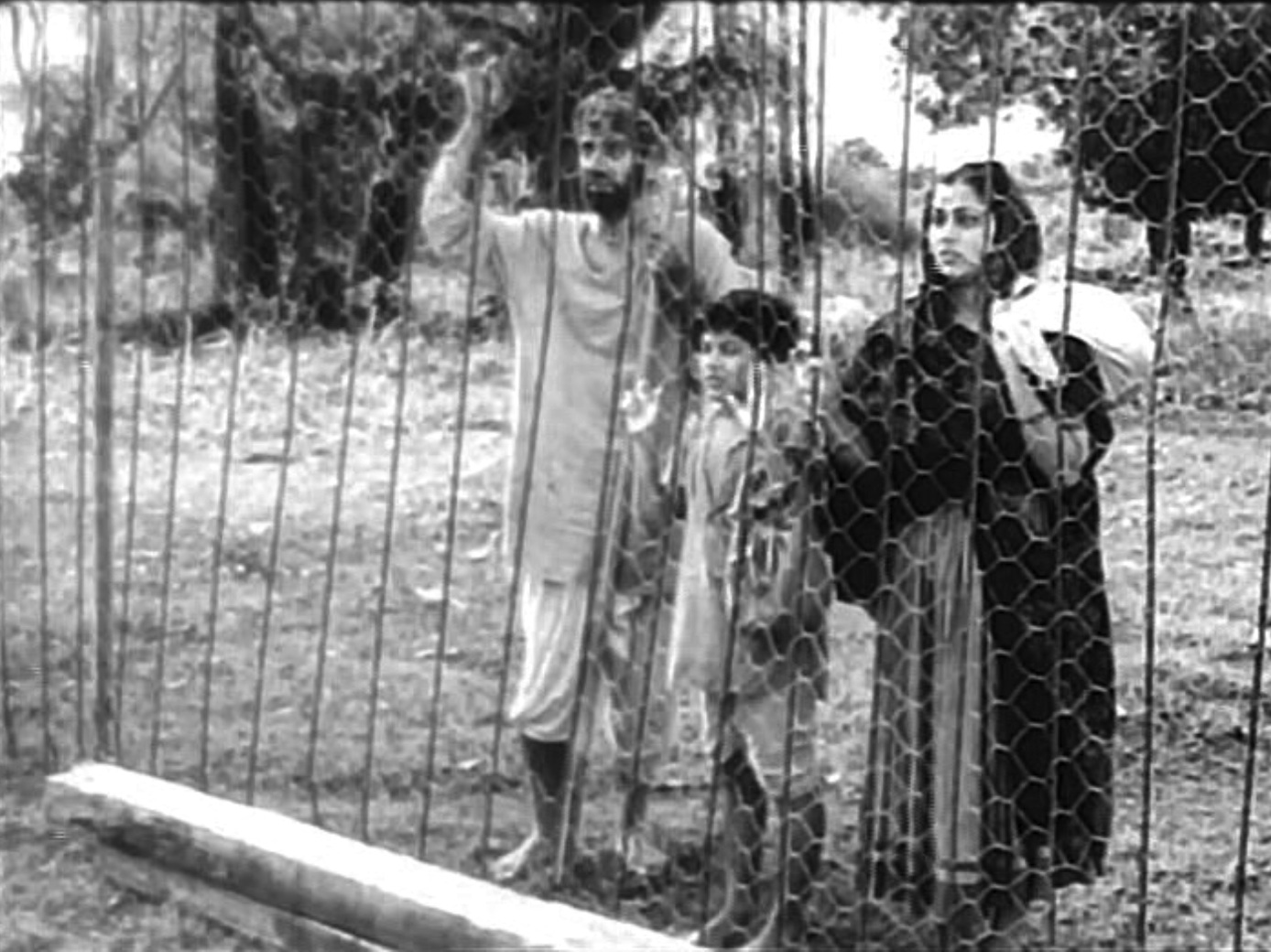
The impoverished family watches the destruction of their ancestral land behind a closed gate in Do Bigha Zameen (1954).

At the end of Do Bigha Zameen, there is no real outcome. Like with Satyajit Ray’s Aparajito, it ends with a single shot of the family, moving on into the distance. The journey we as an audience have witnessed is but a chapter in their lives that we know will be marked in the future with similarly unresolved troubles. But it also carries a kind of hope with it, not that all will be right in the world, but a hope that men and women like these are survivors and will find a way to persevere, even if that does not mean coming out on top. It is what sets this film apart from the Raj Kapoors of the world. And that is, I think, the message that hit home with millions of Indian viewers in the dissatisfied liberated world.

The film takes its name from a Rabindranath Tagore poem “Dui Bigha Jomi.” In the original poem, a poor farmer begs his landlord to not make him sell his ancestral plot of land. But the cruel landlord insists, while the farmer famously begs (as in the film adaptation) that the land is like his mother–and how could anyone sell their own mother? Do Bigha Zameen, however small, carries the price of a man’s honor, and for the poor farmer, this cannot be bought by mere money.

Meena Kumari plays a doting mother in a special appearance for the Lata Mangeshkar song, “Aaja Re Nindiya Tu Aa” in Do Bigha Zameen (1954).

Also of note, a young Meena Kumari plays a minor role as a benevolent landlady who agrees to to help the family with their debts (before further disaster strikes, rendering her offer useless). She had been on set of Roy’s earlier film, Parineeta (1953), when she heard of the production and loved it so much, she begged to participate. Of particular and slightly disturbing note is the facial hair on her upper lip that the costume and make up department didn’t do something more about. You think it blends in because you can’t really see it in person, but it shows up on black-and-white film stock like a dark shadowy menace. Gets ‘em every time.

– Mrs. 55

Nigahein Milane Ko Jee Chahta Hai Lyrics and Translation: Let’s Learn Urdu-Hindi

Who wouldn’t want to exchange glances with those eyes?

For today’s post, we showcase the lyrics and English translation of “Nigahen Milane To” from the film Dil Hi To Hai (1963). If I had to name my favorite actress from the Golden Era of Bollywood cinema, I think that I would pick Nutan.

As one of the beloved goddesses of India’s silver screen, Nutan starred in many evergreen films from the 1950s and 1960s, including Paying Guest (1957), Anari (1959), Bandini (1963), and Milan (1967), just to name a few. In my opinion, there’s something special about Nutan’s performances that sets her apart from her peers. She played her roles with a dignified beauty, a restrained grace, and an acute intelligence that was difficult to find in other actresses of the time. Here, I’ve chosen to translate a song from Dil Hi To Hai (1963), a charming Bollywood romance that is enjoyable to watch even though it is one of Nutan’s lesser-known films.

Nutan stars in Dil Hi To Hai as Jamila, the beautiful daughter of a wealthy London-based banker. Here, Raj Kapoor departs from the image established in his previous films by playing a comic double role as Jamila’s love interest Chand and Jamila’s aged music teacher Khan Sahab. While the film features some memorable performances by Nutan and Raj Kapoor, this film is probably even more memorable today for its soundtrack composed by music director Roshan. Two gems from this soundtrack have survived the test of time. The first is the Bhairavi-based classical number “laagaa chunarii me.n daag,” which is regarded as one of the best songs of Manna De’s career. The other gem is Asha Bhonsle’s exquisitely rendered Yaman qawwalinigaahe.n milaane ko jii chahtaa hai,” which I have translated here.

Penned by Sahir Ludhianvi, this qawwali centers around a woman’s desire to exchange glances with her beloved. The romanticization of eyes and sight is a common theme found in Bollywood films, and the poetry in this song is one of this era’s most cherished portrayals of this theme. The song’s charm is enhanced by the use of Urdu vocabulary (e.g. tahumat and tamhiid) and Asha Bhonsle’s immaculate rendition. Don’t you just love the way she owns those octave glides during the sargam passage?

Mrs. 55 and I actually performed this qawwali at Harvard during the annual South Asian cultural show Ghungroo two years ago. One thing that we noticed after listening carefully to these lyrics during rehearsal is that there is some ambiguity in gender. While most of the song appears to be from a female perspective, we thought that lyrics take on a masculine role for the line starting with “jab kabhii mai.ne teraa chaand-saa chahraa dekhaa…” (Whenever my eyes have fallen upon your moon-like face…). In addition to the fact that the moon is traditionally used by males to describe feminine beauty (e.g. Mohammed Rafi’s “yeh chaa.nd-saa roshan chahraa“), Nutan’s gestures and body language become more masculine in nature in this segment of the song. In fact, as she sings these two lines, Nutan begins to walk with a manly gait and and then flirts with a female friend as if she is her male lover. We may have totally made this up in our heads, but it was not uncommon for such gender-bending to occur in Bollywood songs–a full post on this trend will be coming up soon! In any case, please enjoy this timeless qawwali while following along with our translation/glossary provided below, and remember to send us your requests for any other songs that you would like translated.

-Mr. 55

Nutan takes on the masculine role for a few lines in this qawwali

Nigahein Milane Ko Jee Chahta Hai Lyrics and Translation

raaz kii baat hai, mahfil me.n kahe yaa na kahe?
It is a secret matter; shall I share it in this gathering?
bas gayaa hai koii is dil me.n, kahe yaa na kahe?
Someone has begun to reside in my heart; shall I reveal this here?

nigaahe.n milaane ko jii chahtaa hai
I yearn to exchange glances with my beloved. 
dil-o-jaa.n luTaane ko jii chahtaa hai
I yearn to give away my heart and soul to him.  

woh tahumat jise “ishq” kahtii hai duniyaa
The allegation that the world calls “love,”
woh tahumat uThaane ko jii chahtaa hai
I yearn to accept that allegation.  

kisii ke manaane me.n lazzat woh paayi
Although I have experienced the pleasure of being appeased,   
ki phir ruuTh jaane ko jii chahtaa hai
I yearn to once again engage in a lovers’ tiff. 
 
woh jalvaa jo ojhal bhii hai saamne bhii
The splendor that vanishes and reappears in love, 
woh jalvaa churaane ko jii chahta hai
I yearn to steal that splendor.  
 
jis ghaDii merii nigaaho.n ko terii diid huii
The moment when our eyes first met,  
woh ghaDii mere liye aish kii tamhiid huii
That moment served as a prelude to happiness for me.  
jab kabhii mai.ne teraa chaa.nd-saa chahraa dekhaa.
Whenever my eyes have fallen upon your moon-like face, 
Eid ho ya ki na ho mere liye Eid huii
it is as if I am celebrating the holiday of Eid.  

ni re ga, ga re ga ni re ma, ma ga ma ni re ga
ga re ga ni ga re, re ga, ga ma, ma dha ni
sa sa ni ni dha dha pa pa ga re
sa ni dha pa ma ga re,
ni dha pa ma ga re sa ni, re ga 

mulaaqaat
kaa koii paighaam diije
Please send me a message about our next rendez-vous, 
ki chhup-chhup ke aane ko jii chahtaa hai
Because I yearn to visit you secretly, 
aur aake na jaane ko jii chahtaa hai
And upon visiting you, I hope to never leave.  

nigaahe.n milaane ko jii chahtaa hai
I yearn to exchange glances with my beloved. 


Glossary

raaz: secret; mahfil: gathering; nigaahe.n: eyes; dil-o-jaan: heart and soul; tahumat: allegation; manaanaa: to appease; lazzat: pleasure; jalvaa: splendor,charm; ojhal: vanished; diid: sighting, gaze; aish: joy, happiness; tamhiid: prelude, preamble; Eid: Islamic festival celebrating the end of Ramadan; mulaaqaat: meeting, rendez-vous; chhup-chhup ke: secretly; paighaam: message.

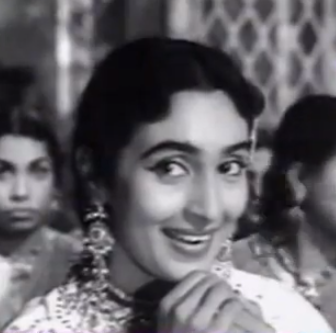
Nutan leads the chorus with an enchanting smile in Dil Hi To Hai (1963)