Jhumka Gira Re Lyrics and Translation: Let’s Learn Urdu-Hindi

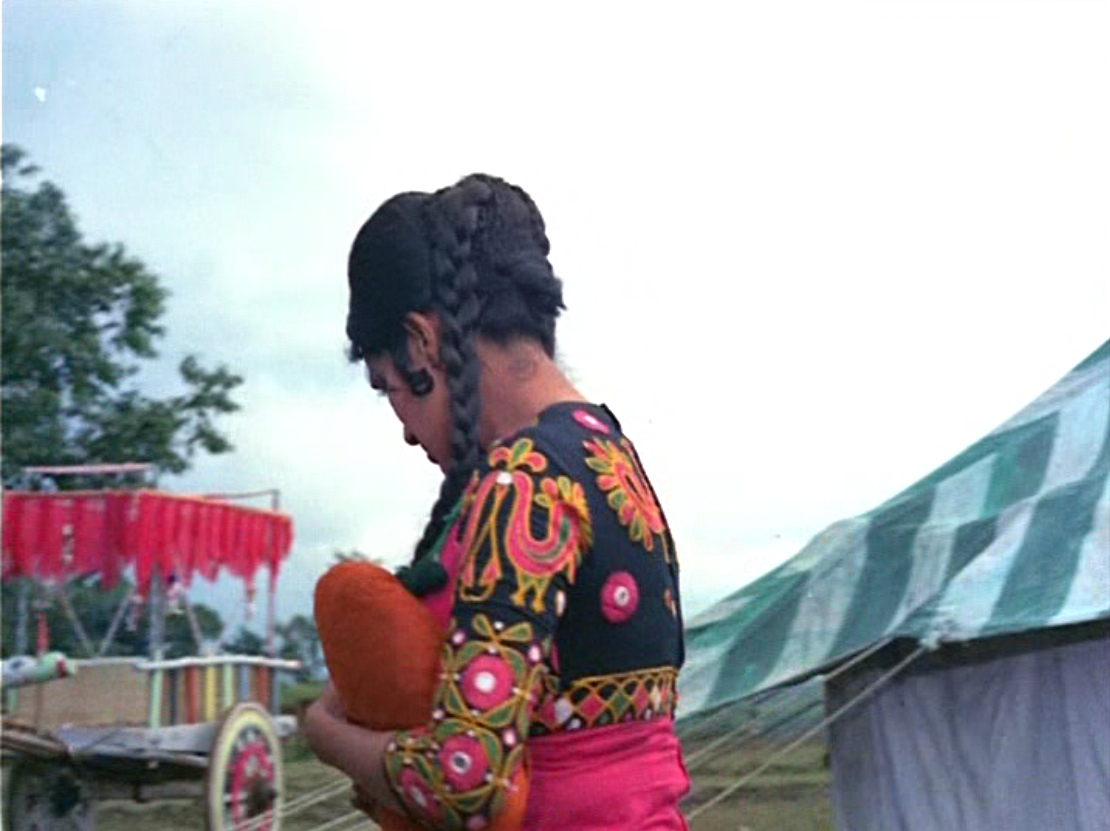
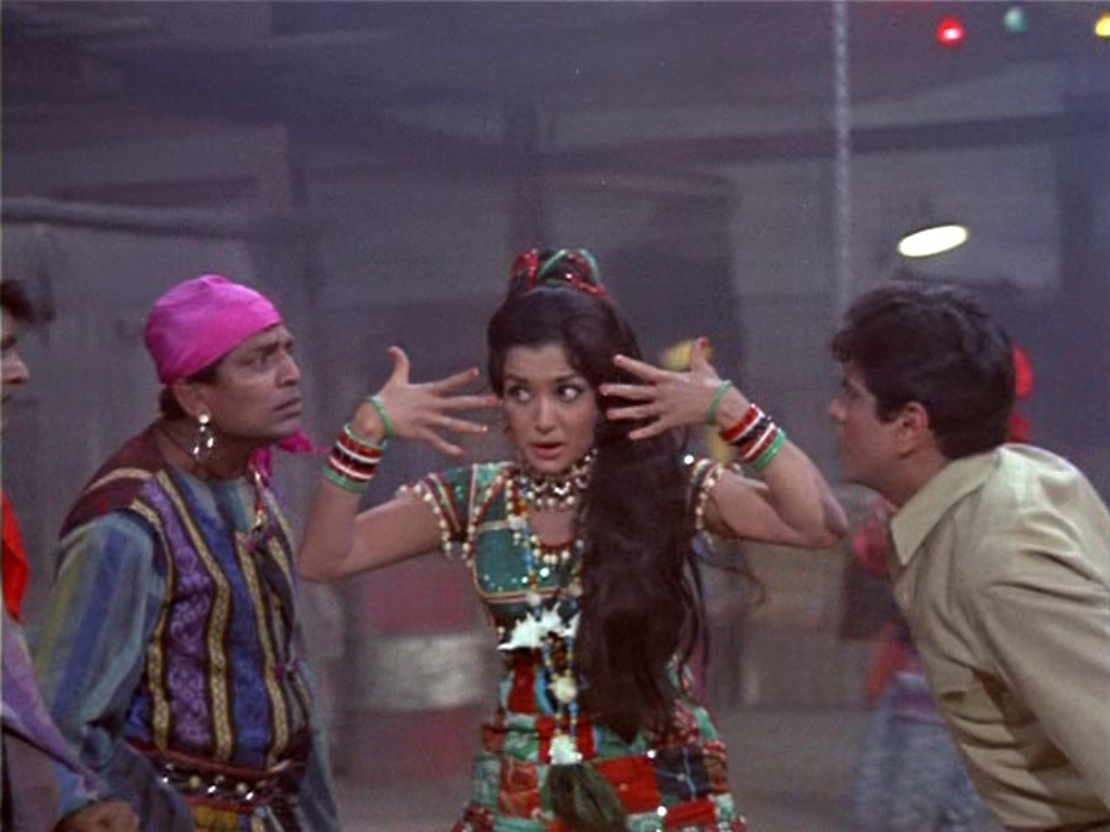
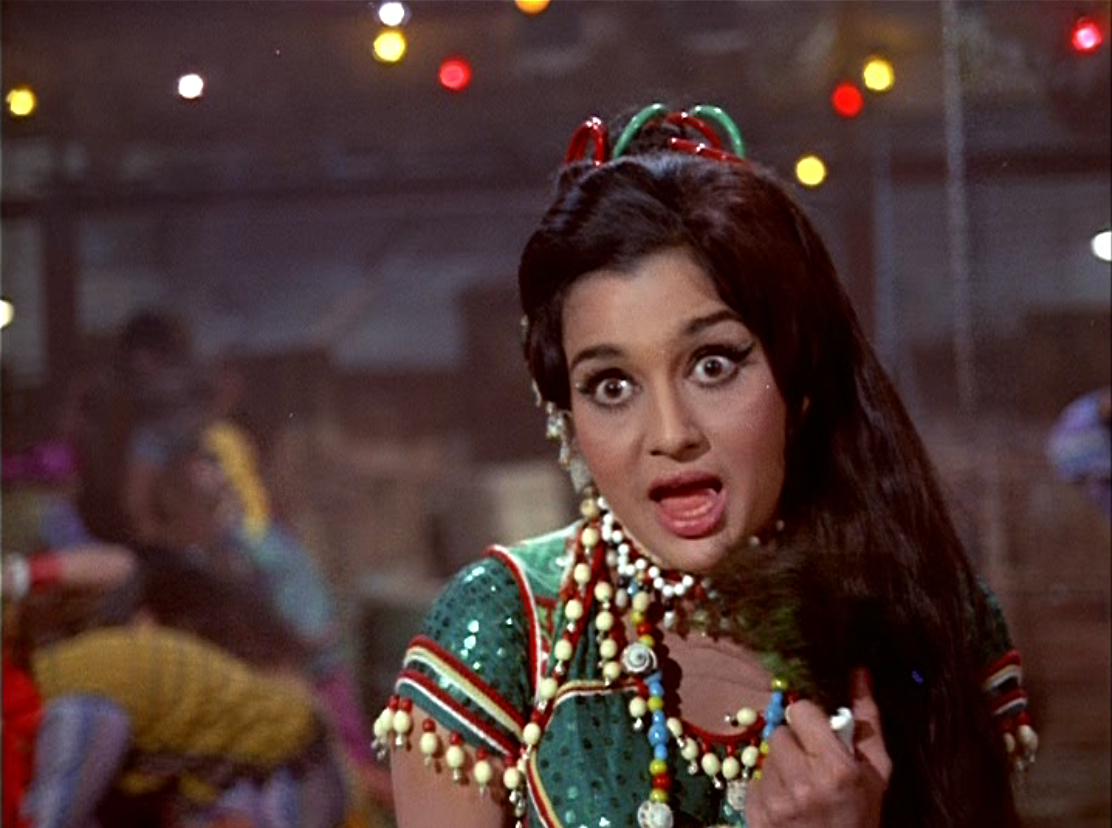
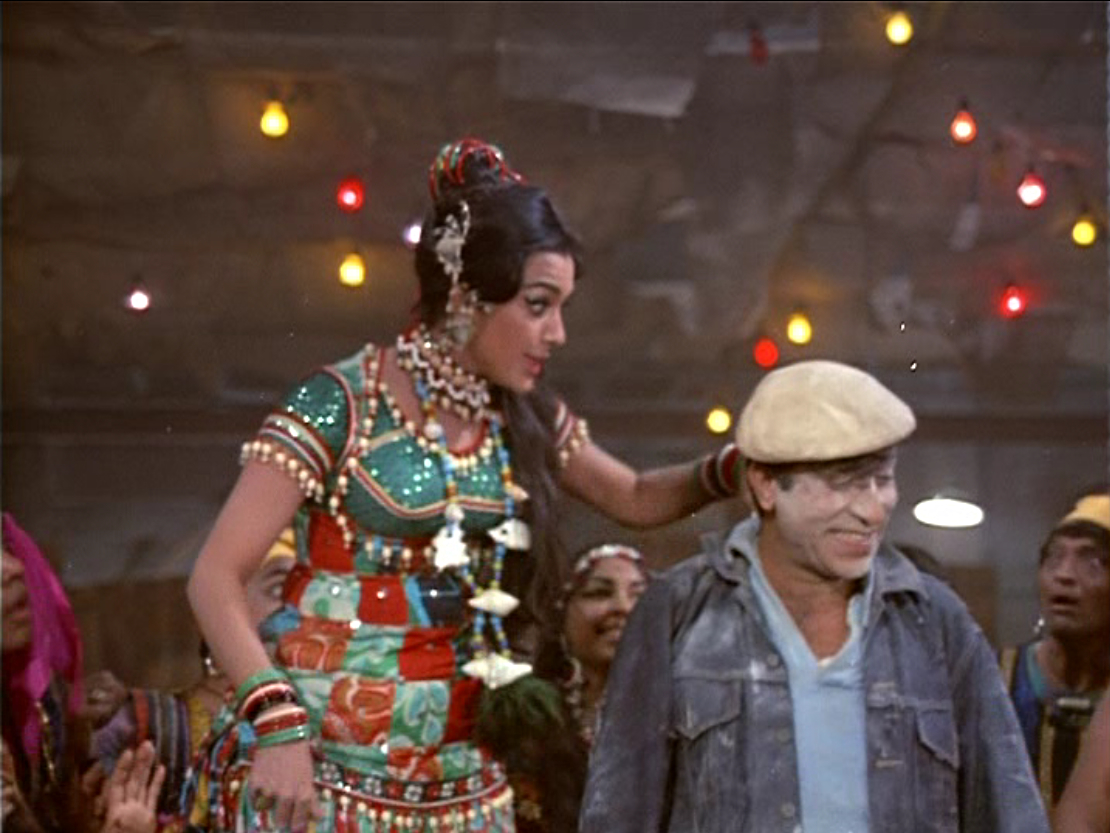
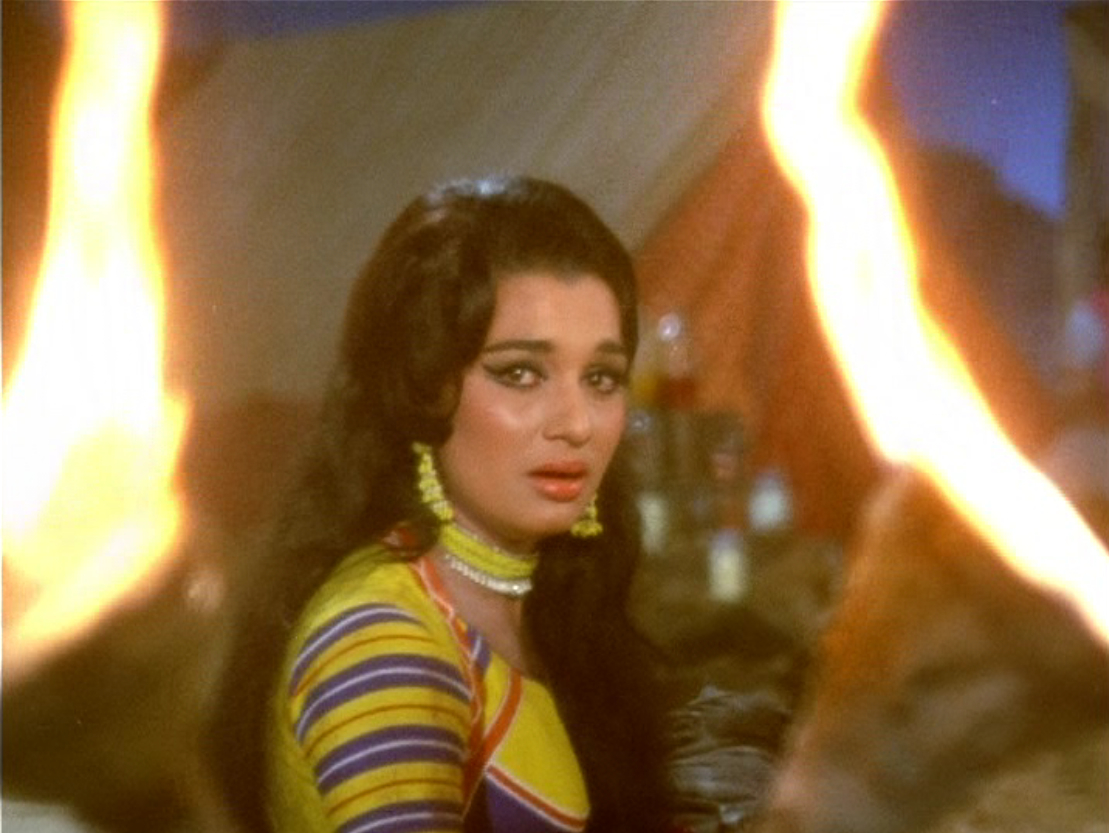
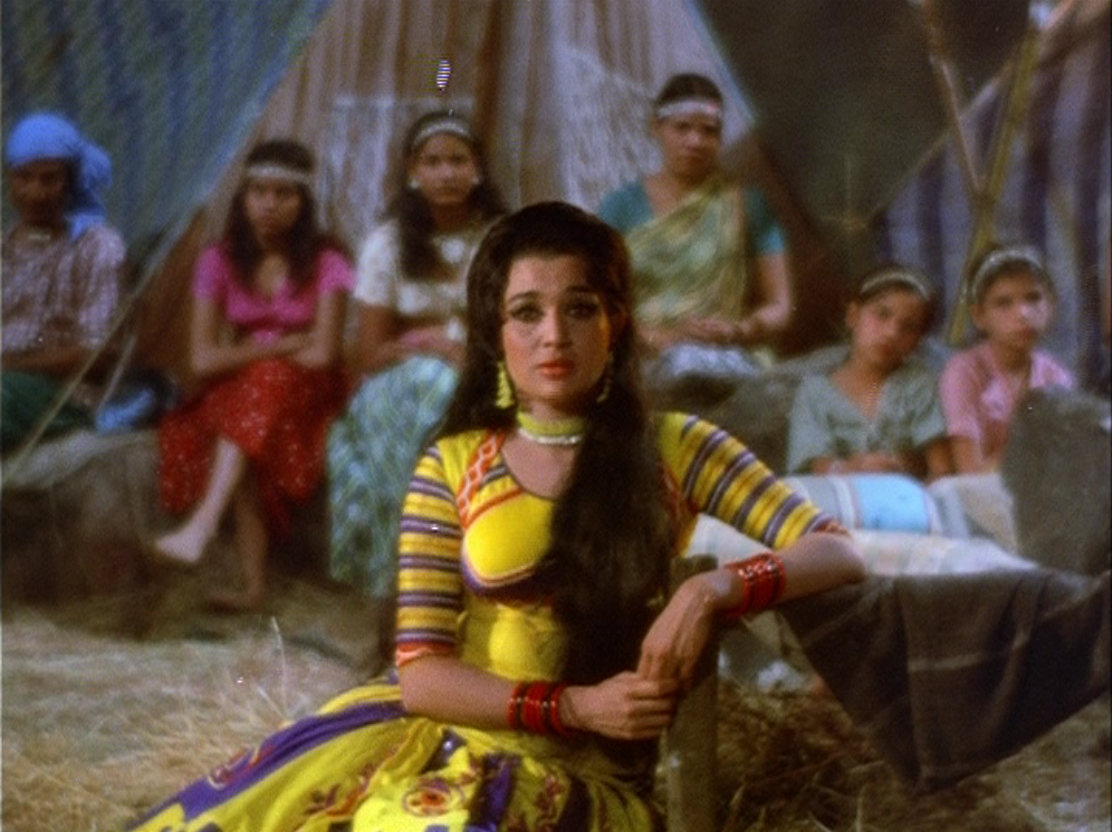
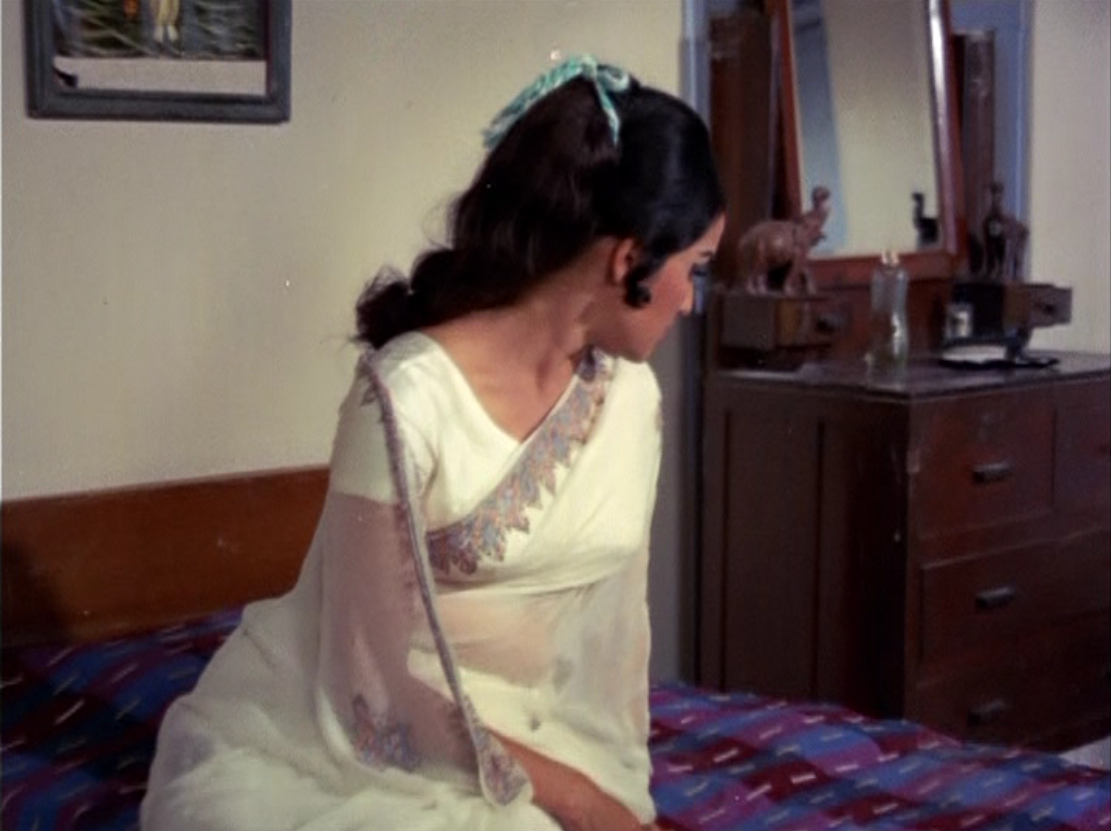
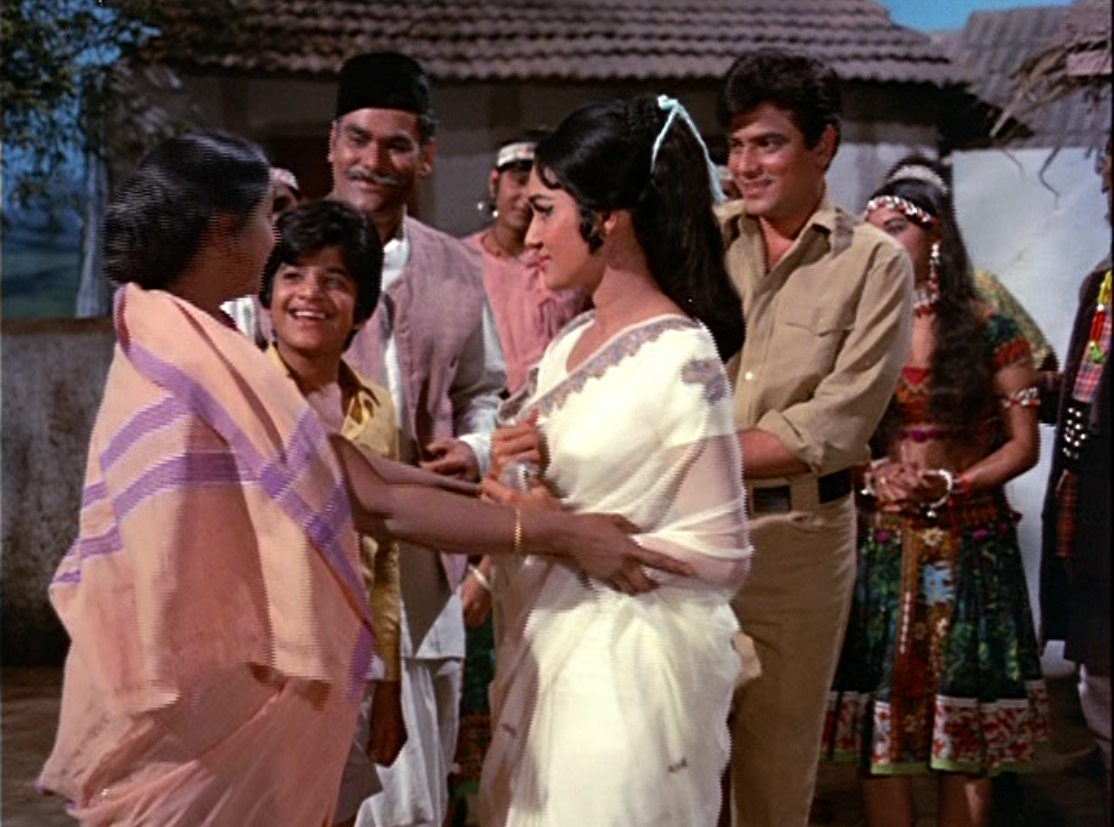
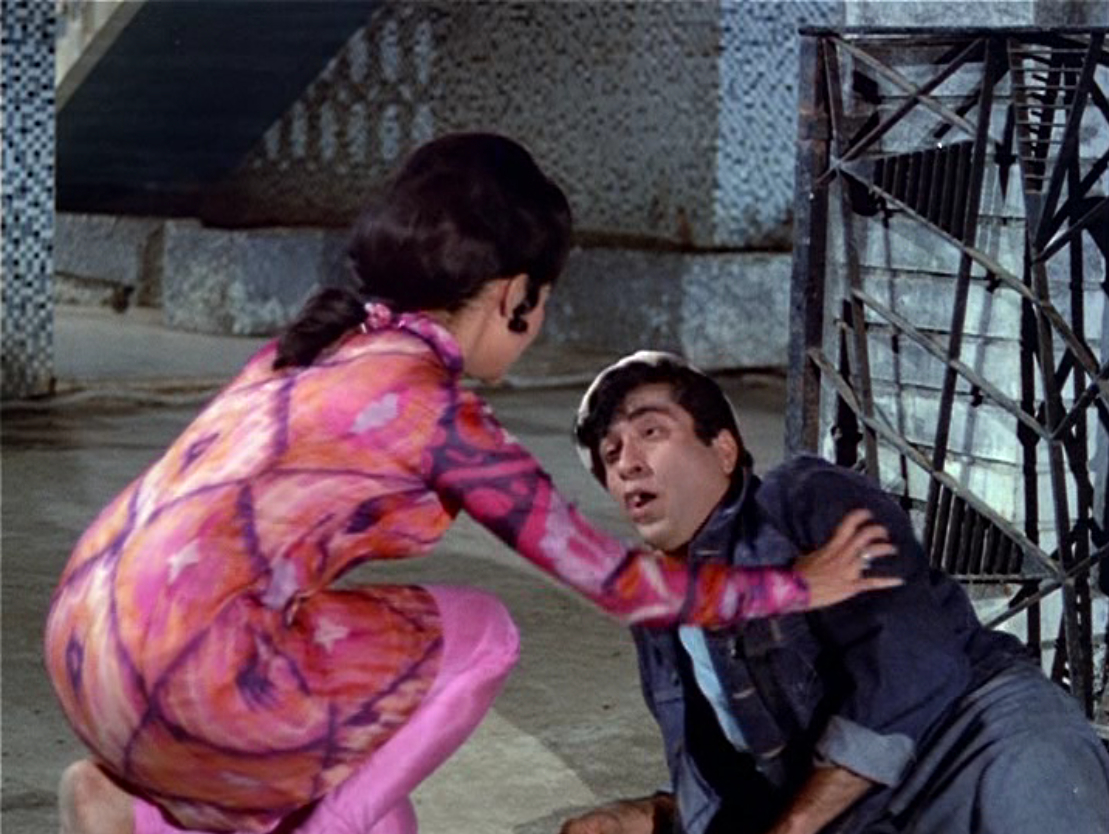
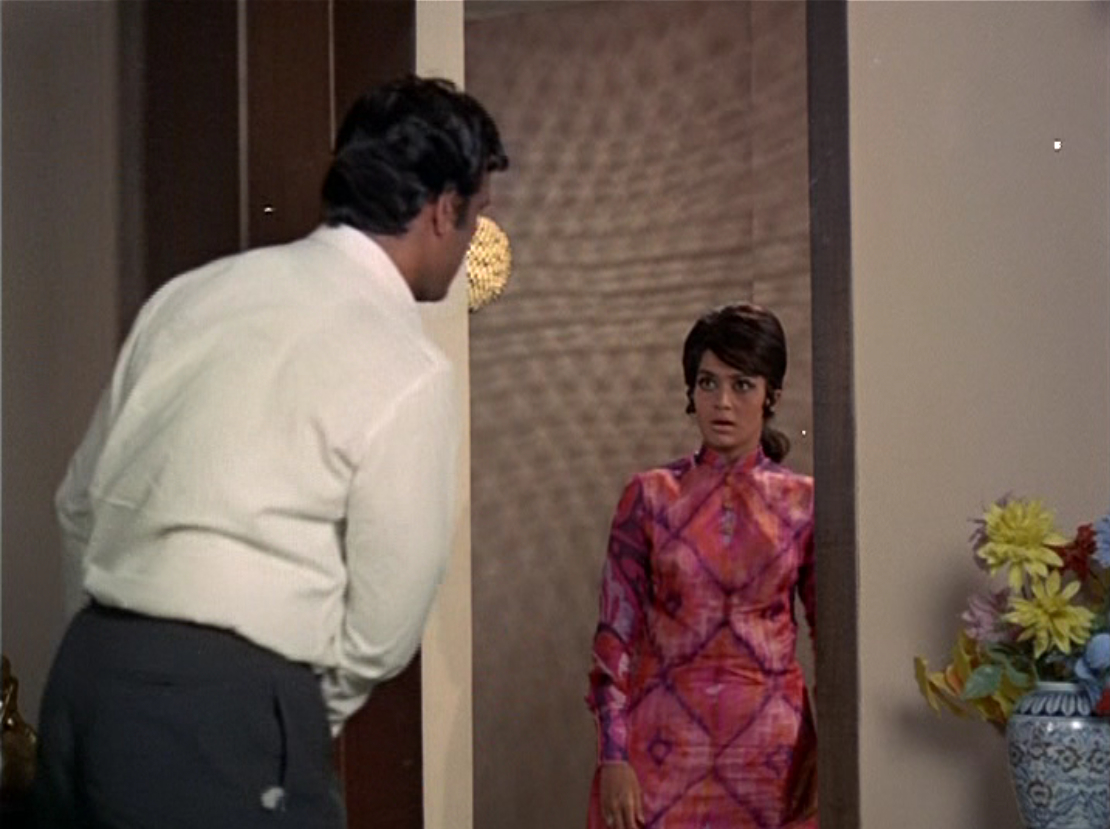
Sadhana flirts with a percussionist as she dances in the street in Mera Saaya (1966)

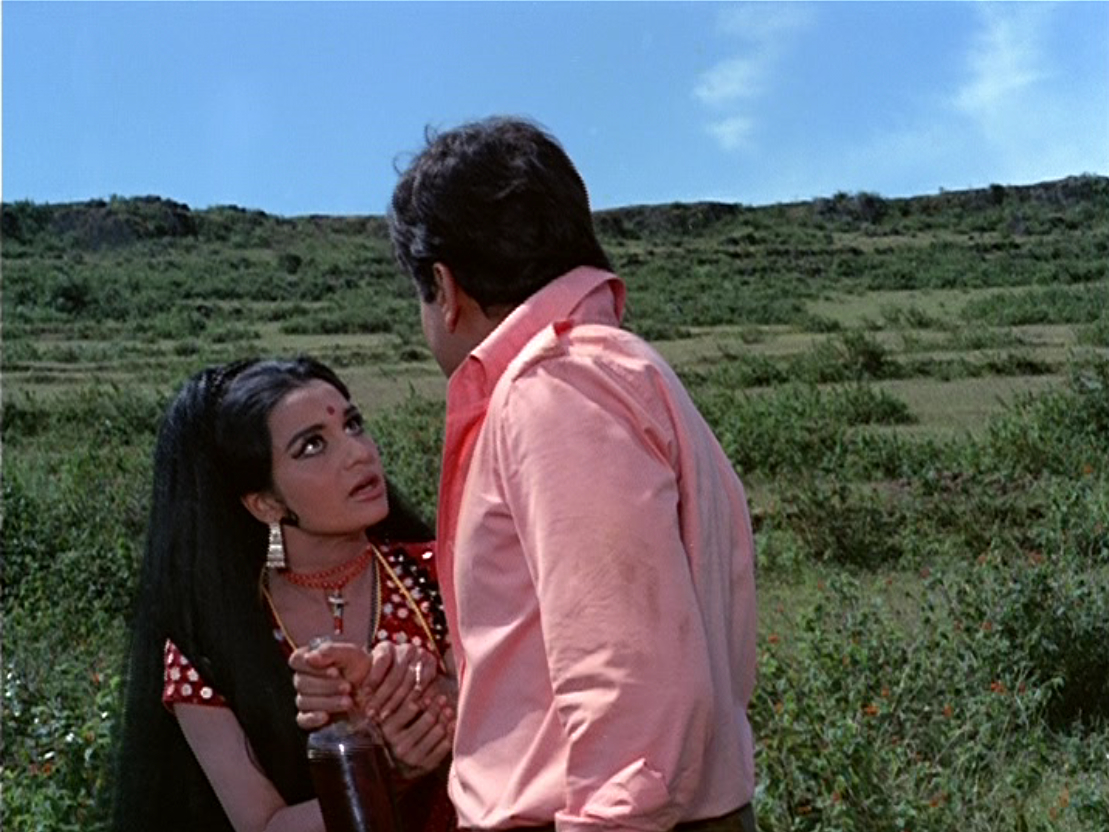
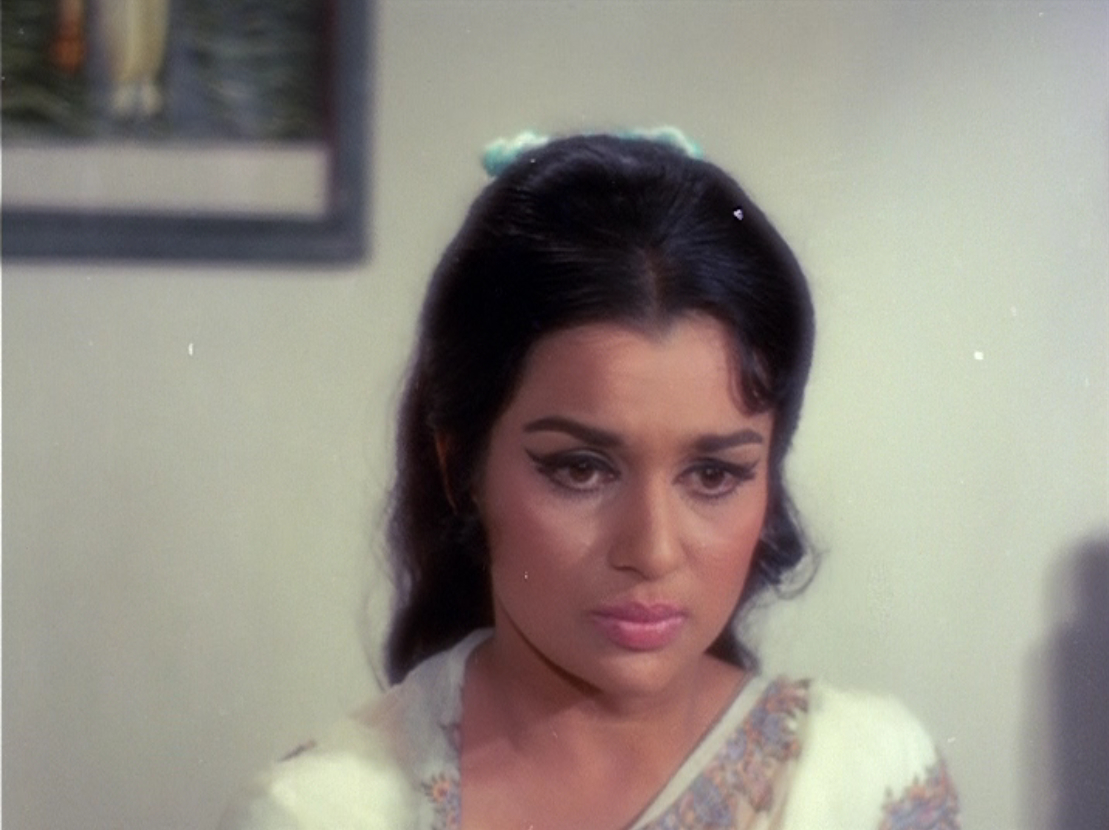
Our next translation comes from Raj Khosla’s evergreen thriller Mera Saaya (1967) starring Sadhana and Sunil Dutt. A memorable film with an even more memorable soundtrack composed by Madan Mohan and penned by Raja Mehndi Ali Khan! The two Lata solos “tuu jahaa.n jahaa.n chalegaa” and “naino.n me.n badraa chhaaye” get all the critical acclaim, but can you guess which song has achieved the most popularity among fans over the years?

That’s right! It’s “jhumkaa giraa re” sung by Asha Bhosle, our favorite queen of nakhra. Although she has been known to be prone to excess, Asha sings this folk-inspired number with just the right amount of sassy charm to get everyone excited without overdoing it. The text of this song reads like a story in which the female protagonist describes a common motif found in Hindustani poetry: a woman’s ornaments, and specifically her earrings in this case. For other songs in a similar vein, listen to “milaa hai kisii kaa jhumkaa” from Parakh (1960),  “terii bindiyaa re” from Abhimaan (1973), “dhuu.nDo dhuu.nDo re sajna, more kaan kaa baalaa” from Ganga Jamuna (1961), and another song with the same title as this number sung by Shamshad Begum in Dekhoji (1947).  Moreover, Mera Saaya is a remake of the Marathi film Pathlag (1964), so there is a similar scene with an accompanying song that shares a resemblance with “jhumkaa giraa re.”

Even a folk number can’t stop Sadhana from showing off her characteristic fringe!

The city of Bareilly gets referenced occasionally in various Bollywood songs (especially in relation to jhumkaas!), so I was interested in learning more about its historical and cultural background. Bareilly is a prominent city situated in Uttar Pradesh, and according to Wikipedia:

“Bareilly is famous for its zari work (a type of fabric decoration), dari (a common type of carpet use in most of the Indian houses), jhumkaa (an intricate type of earrings), and surmaa (eyeliner).”

A montage of sights and attractions in Bareilly, India.

Who knew? After taking in our small cultural lesson for the day, make sure you listen to this classic fok dance gem and follow along with our glossary/translation below. You might expect a light-hearted song like this to be very easy to understand, but there is definitely some interesting vocabulary to be learned here! Enjoy!

-Mr. 55

P.S: Don’t you just love it when the random male interrupts with the “phir kyaa huaa?” each time? It’s my favorite part!

Jhumka Gira Re: Lyrics and Translation

jhumkaa giraa re barelii ke bazaar me.n
My earring fell in a market in Bareilly.
jhumkaa giraa, jhumkaa giraa, jhumkaa giraa
My earring fell, my earring fell, my earring fell.
haay, haay, haay!
Oh, oh, oh!

saiyaa.n aaye nai.n jhukaaye ghar me.n chorii-chorii
My beloved came into the house furtively with a lowered gaze.
bole “jhumkaa mai.n pahnaa duu.n, aaja baa.nkii chhorii
He said: “Come, dear, let me help you put on your earrings.”
mai.n bolii “naa naa naa baabaa, naa kar joraajorii
I said “No, no, no, dear. Please don’t be so aggressive.”
laakh chhuDaayaa, saiyaa.n ne kalaiyaa naahi.n chhoDii
I tried to release myself several times, but my beloved did not let go my wrist.
haay! kalaiyaa nahii.n chhoDii
Oh! He did not let go of my wrist.
[Male: phir kyaa huaa? ]
Then, what happened?
phir? phir jhumkaa giraa re ham dono.n kii Takraar me.n
Then? Then, my earring fell during our ensuing quarrel.
jhumkaa giraa re
My earring fell. 

ghar kii chhat pe mai.n khaDii, galii me.n dilbar jaanii
I stood on my house’s rooftop terrace while my beloved stood in the alley below.
ha.nske bole “niiche aa, ab niiche aa diivaanii
He smiled and said: “Come down, oh crazy one,
yaa anguuThii phe.nk apnii yaa chhallaa de nishaanii”
or throw me your ring as a sign of our love.”
ghar ki chhat pe khaDe-khaDe mai.n huii sharam se paanii
Standing on the roof, I became filled with shame.
mai.n huii sharam se paanii
I became filled with shame.
[Male: phir kyaa huaa?]
Then, what happened?
daiyaa! phir jhumkaa giraa re ham dono.n ke is pyaar me.n
Oh lord! Then, my earring fell in the midst of our love. 
jhumkaa gira re
My earring fell.

bagiyaa me.n balmaa ne merii laT uljhii suljhaayii
In the garden, my beloved tied and unraveled my braids.
thaamke aa.nchal bole “gorii, tu mere man bhaayii
Holding the end of my sari, he said: “Fair one, you have pleased my mind.”
aa.nkh jhukaake kuchh naa bolii, dhiire se muskaayii
With a lowered gaze, I said nothing; I smiled quietly.
saiyaa.n ne jab chheDaa mujh ko ho gauii haathaapaayii
When my beloved teased me, a scuffle ensued.
haay! ho gayii haathaapayii
Oh! A scuffle ensued.
[Male: phir kyaa huaa?]
Then, what happened?
phir jhumkaa giraa re, mai.n kyaa boluu.n bekaar me.n?
Then, my earring fell.  What shall I say in vain? 
jhumkaa giraa re
My earring fell.

jhumkaa giraa re barelii ke bazaar me.n
My earring fell in a market in Bareilly.
jhumkaa giraa, jhumkaa giraa, jhumkaa giraa
My earring fell, my earring fell, my earring fell.
haay, haay, haay!
Oh, oh, oh!

Glossary

jhumkaa: earring; Bareilly: a city in Uttar Pradesh, India; saiyaa.n: beloved; nain jhukaanaa: to lower one’s gaze; chorii-chorii: quietly, furtively; pahnaa denaa: to help someone wear; baa.nkii chhorii: dear; joraajorii: aggression; chhuDaanaa: to release, disengage; kalaiyaa: wrist; Takraar: quarrel; chhat: rooftop; galii: alley; dilbar jaanii: beloved; anguuThii: ring; chhalla: ring;  nishaanii: sign; sharam se paanii honaa: to become filled with shame; daiyaa: oh lord, an exclamation; bagiyaa: garden; balmaa: beloved; laT uljhaana: to tie braids of hair; laT suljhaanaa: to unravel braids of hair; thaamnaa: to hold, embrace; gorii: fair girl; man bhaanaa: to please the mind; dhiire se: quietly, slowly; chheDnaa: to tease; haathaapaayii: scuffle; bekaar me.n: in vain.
  

An audience of male creepers can’t help but stare at Sadhana’s moves in Mera Saaya (1966)

Retro Bollywood Hairstyles from Caravan (1971): Wigs, Teasing, and More Wigs

Asha Parekh sports long side-parted bangs with a girlish ribbon and a bouffant wig in the exciting opening chase scene of Caravan (1971). And please don’t ignore the matching orange lipstick!

In India in the 60s and early 70s, Hindi film heroines were notorious for sporting heavy wig pieces day-to-day that added volume, glamour, and pizazz. Hairdos in India from that time period sought to create works of art atop a woman’s head, from simple teased crown, to elaborate braiding with ornaments, jewelry, and soaring heights. The key was to wear enormous wigs and lots of them (and yes, those wigs are made of REAL hair!)

Big hair was by no means a strictly Indian phenomena. Starting as early back in history as the famous wigs of Marie Antoinette, puffy bouffant styles were sported not just in films, but by First Lady Jackie Kennedy in the 60s and took the musical South by storm when Dolly Parton learned how to tease (a word for the back-combing technique used to bulk up layers of hair). But I’d say, Audrey Hepburn in Breakfast at Tiffany’s  (1961) aside, Indian women like Sharmila Tagore and Asha Parekh were the ones to bring it to new levels.

The overall effect when done correctly can be extremely elegant and beautiful–at some point or another, we’ve all tried to emulate big hair in the hopes of looking fabulous. But, of course as you’ll see, there are always those special moments when wigs go wild and the ‘do takes on an alternate life of its own.

Check out our gallery of fabulous retro Bollywood hairdos sported by Asha Parekh in the 1971 film Caravan (yes, it’s 1971, but the styles are super 60s!). This film is notable for many reasons, from a delightfully ridiculous plot to a magical soundtrack enhanced by Helen’s insane dance moves. But every time I watch it, I am way too distracted by Asha Parekh’s latest ‘do to care for anything else. Haute couture meets gypsy allure, good intentions meet near-lethal doses of hairspray. After all, the higher the hair, the closer to God.

Who is it?? Why, it’s little bo peep. She wants her ribbon back.

Asha’s fabulous ‘do in the opening scene of Caravan has tight long curls, a side-tied white ribbon, and of course, a 4-inch high wig.

Asha goes gypsy! Note the most important touch of all: the little ringlet of hair by her cheek that probably was once a delicate sideburn.

Hair parted in the center is getting slightly more 70s than 60s, but thank goodness you threw in that 3-inch poof, Asha. Otherwise, I don’t think the look had enough crazy going on.

What a pleasant little surprise! The back of the ‘do is as wild as the front! What was the stylist really going for with this ruffled little back-bun? Historians may never know.

Bring on the ribbons! And the back-up dancers.

Oh, just kidding–those aren’t ribbons after all! They are bangles arranged like a pillbox hat at the crown of the coiffe! You can never be too creative with accessories, can you?

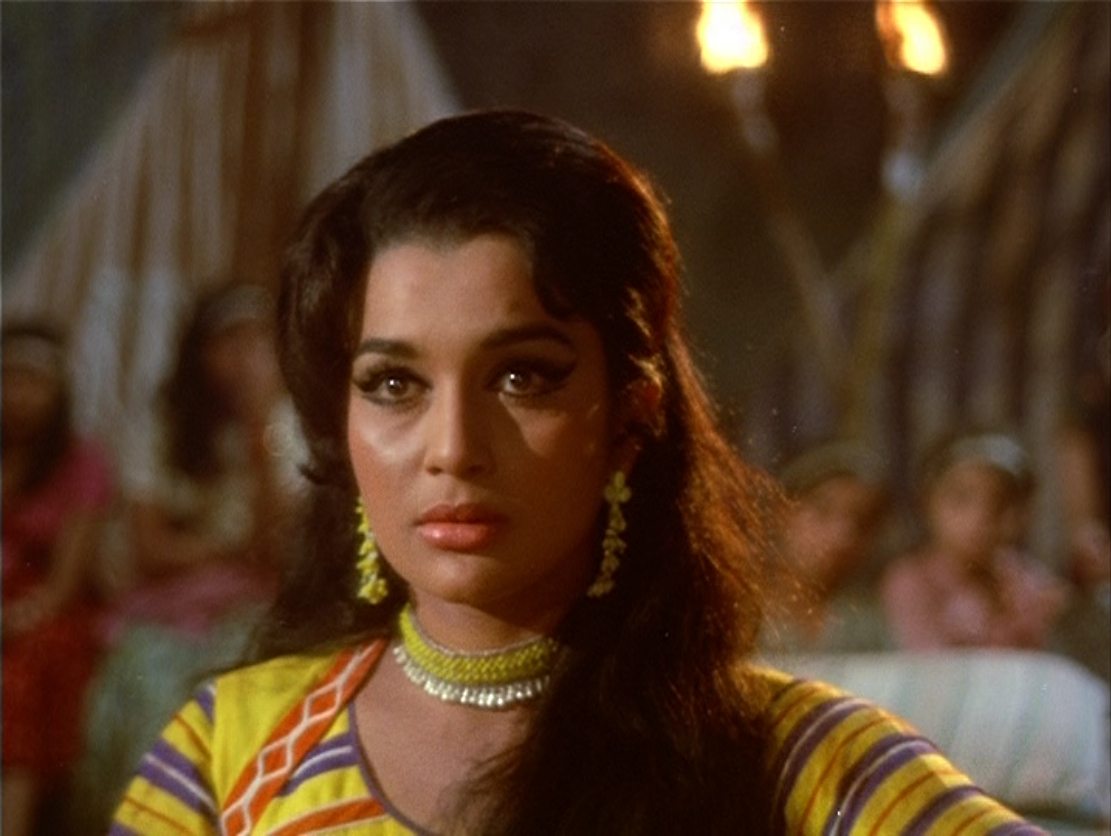
I like the “au natural” look of the long sweeps of locks hanging to one side. And look how Asha made the “jhumar” a day-to-day fashion accessory long before it became vogue!

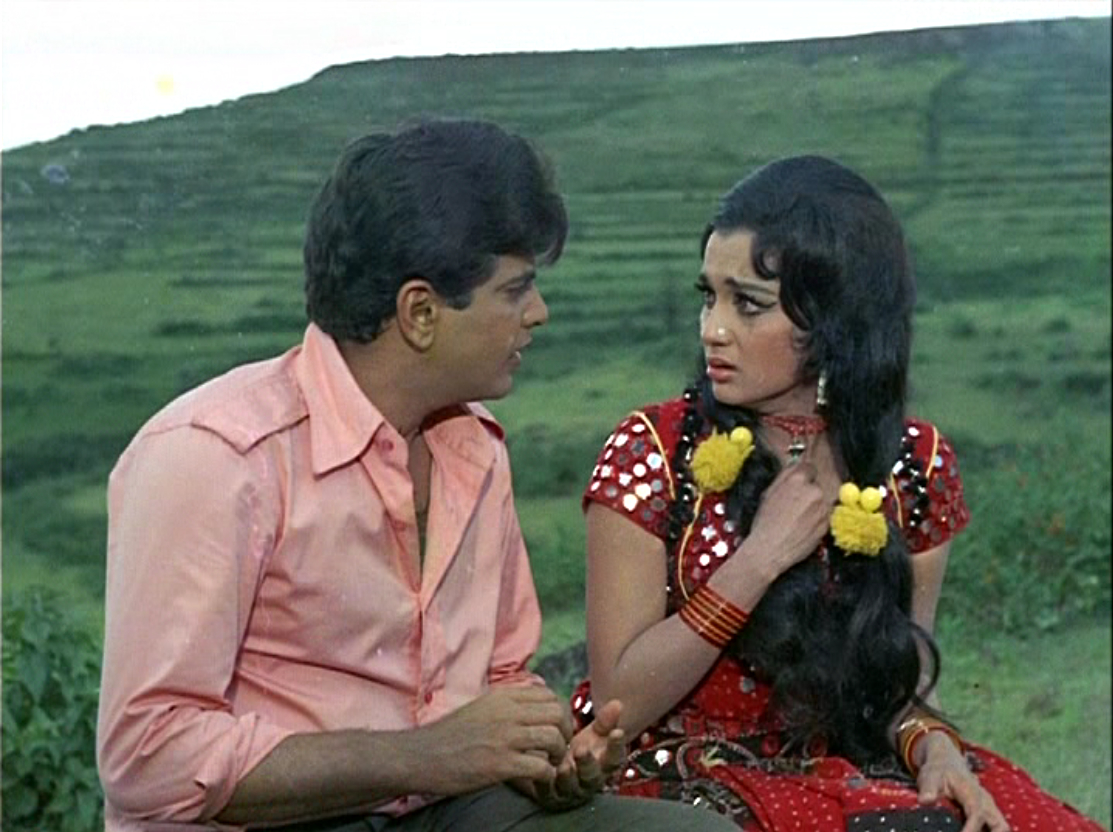
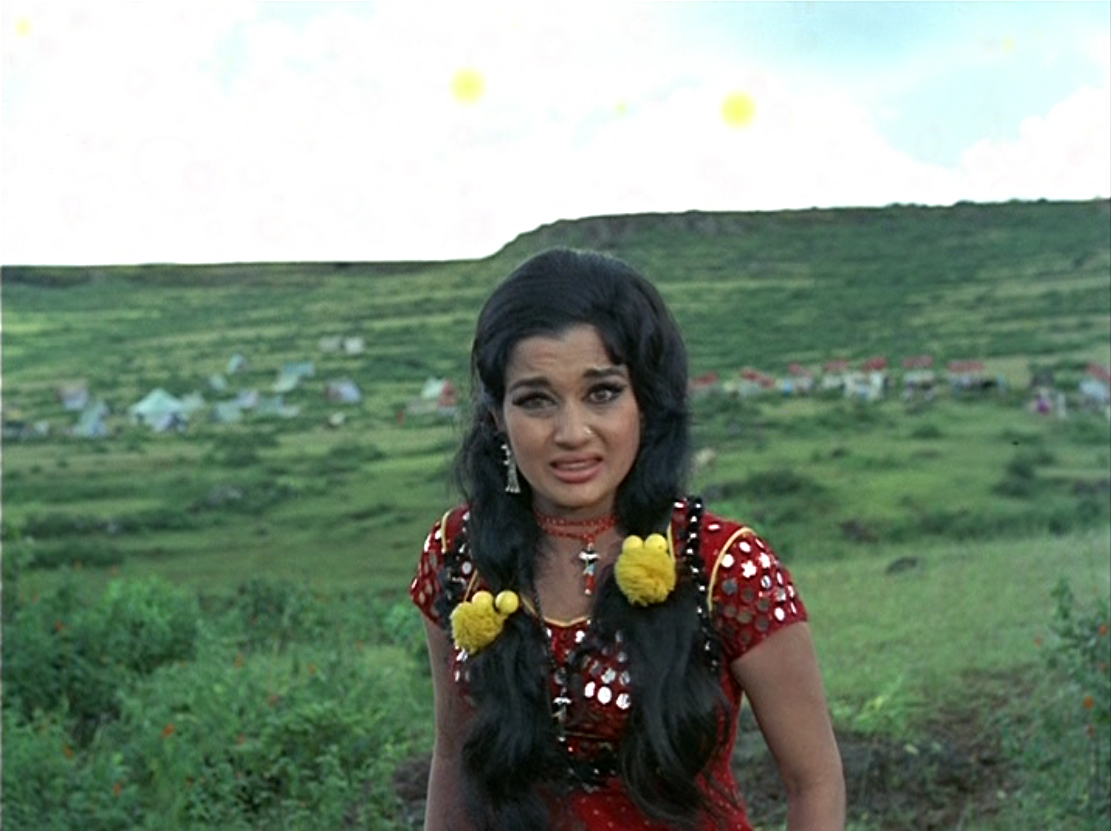
Drooping pigtails with bright yellow flower ties for a much-needed pop of colour.

Great hair aside…I think the most striking aspect of this photo is that Asha is about to have a conniption on-screen.

I love the side-parted pigtail village look. Who cares if you’re pushing 40 years old?!

I could do without the brushed back bangs in the center, while leaving an awkward patch of bangs to the side. But perhaps it’s all part of how distressed she’s supposed to be?

Again with the awkward patch of bangs! I far prefer some Sadhana-fringe.

You get a good sense of the volume of hair involved in the making of this ‘do in this shot.

The forehead to wig-height ratio is borderline criminal.

Asha Parekh in Caravan 48

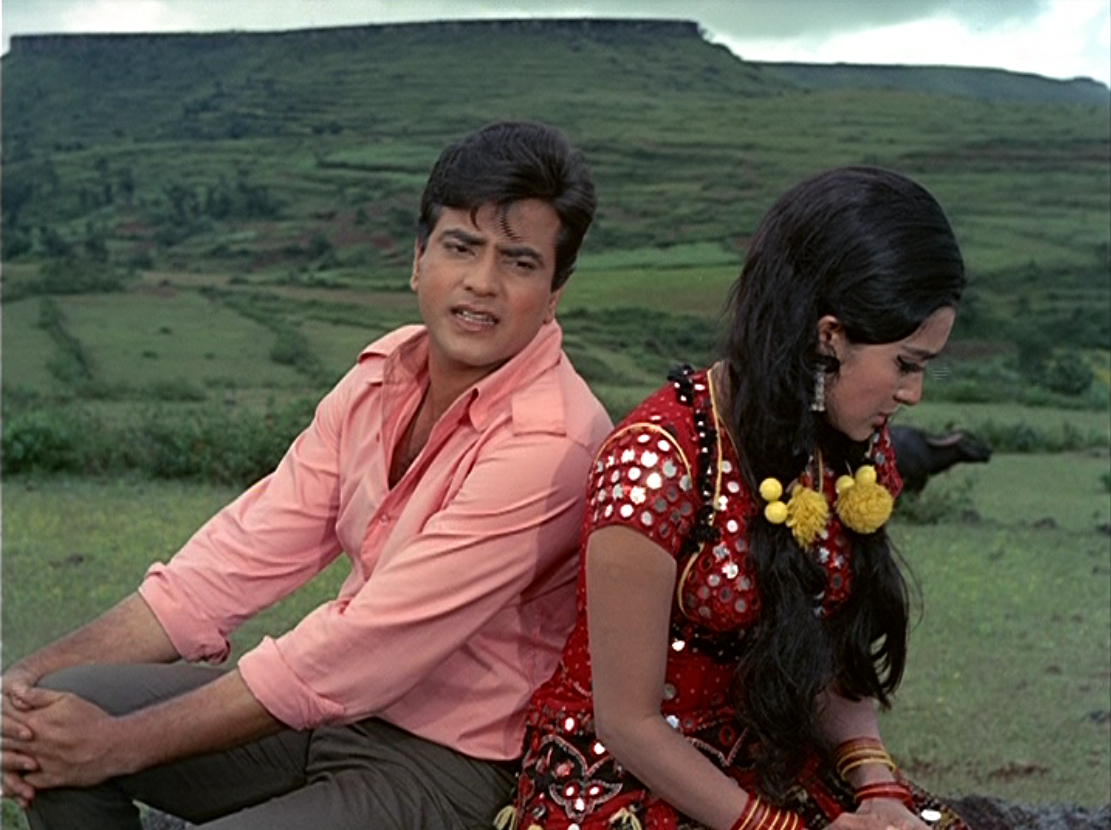
Classic example of a ‘do taking on it’s own life. It’s like she’s attacking Jeetendra, and her hair is attacking her. The hair wins, of course.

Asha Parekh in Caravan 49

The glamour shot is nice–especially since you can’t see all the little people jumping off the top of her ‘do to commit suicide.

Asha Parekh in Caravan 50

Back to a simple, conservative ribbon with moderate heights. That’s more like it!

Oh, and a little curl too? Sign me up!!

Asha Parekh in Caravan 51a

Love how far back the ribbon is pushed–less of a headband, more an accessory to make room for the beehive.

Asha Parekh in Caravan 52

I don’t know how I feel about pony-tails this short and this puffy.

Asha Parekh in Caravan 54

Very Audrey Hepburn from the front. We’ll take it.

Asha Parekh in Caravan 56

These bangs are classic from this era–the angled part, the bouffant! If only it had been a French twist in the back instead of an incomplete pony.

Now after seeing this gallery, you must be under the mistaken impression that Asha Parekh does nothing but make painfully melodramatic faces in throughout the film. You wouldn’t be entirely wrong, but just know that in addition to that, she dances occasionally too. Asha Parekh’s hairstyles are so mesmerizing in this film, that you shouldn’t really be looking for much artistic depth.

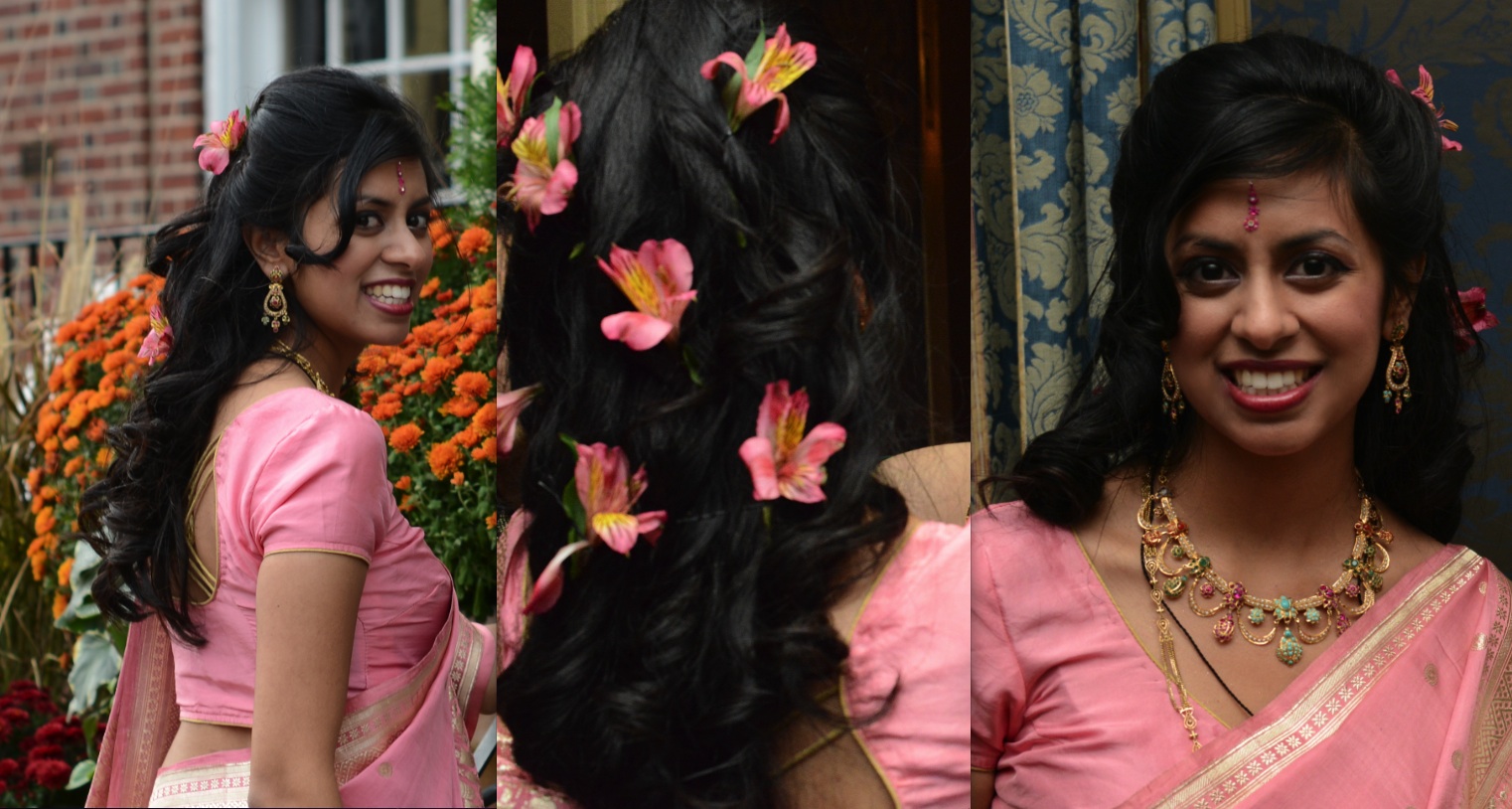
Now why, you may be asking, am I so invested in retro Bollywood hairdos? I’ve been planning my look for my fiance and my official engagement party and needed some 70s inspiration! I’m probably one of the few brides-to-be these days that are still all about the vintage Bollywood look–from sweeping cat-eyeliner to hair that reaches the ceiling. I went through dozens of old school films to perfect the ‘do I wanted. Here’s the final product!

My attempt at Asha Parekh fabulousness with a retro Bollywood hair do!

It’s a classy mixture of Asha’s best looks in Caravan, complete with flowers! Now although I did not use wigs, my tricks were to use LOTS and LOTS of hairspray, back-combing like my life depended on it, and a puffy headband underneath the bump to give some structural support to the ‘do.

For more galleries of costumes from the great films of the 60s and 70s, check out our earlier post on famed Bollywood costume designer Mani Rabadi!

-Mrs. 55

Pal Pal Dil Ke Paas Lyrics and Translation: Let’s Learn Urdu-Hindi

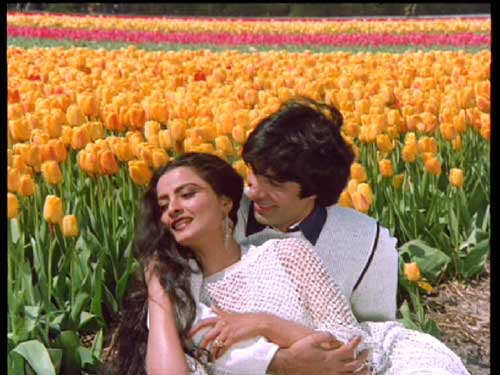
Rakhee daydreams about the ever-handsome Dharmendra in Blackmail (1973)

Blackmail (1973) is considered to be one of Vijay Anand’s most romantic directorial ventures. Starring Dharmendra and Rakhee, this film has all the ingredients to make a great Bollywood film: bogus science,  outrageous costumes, and of course, a memorable soundtrack. This album’s shining jewel is none other than “pal pal dil ke paas,” a beautiful expression of love that is remembered today for Kishore Kumar’s romantic and sensitive rendition.

To understand this song in context of the film, let’s take a look at a brief synopsis of the plot. Kailash (played by Dharmendra) is in charge of operating a power plant that provides electricity to homes across India. His quirky uncle Dr. Khurana (played by Madan Puri) is a scientist that is researching novel approaches to generating electricity via solar sources–how innovative for the 1970s! A local man named Mr. Mehta is unhappy about these advances because solar-powered energy is likely to put an end to his battery business. His business partner Jeevan (played by Shatrugan Sinha) is aware of Dr. Khurana’s research because he is a dear friend of Kailash.

Jeevan is set to marry Asha (played by Rakhee), Mr. Mehta’s daughter, but things change once Kailash unknowingly confesses his love for Asha to him. Taking advantage of this situation, Jeevan plans to get Kailash and Asha married so that he can eventually use Asha to get access to Dr. Khurana’s profitable “formula.” Jeevan arranges to meet Asha in a beautiful garden, but he sends Kailash in his place. They have a conversation about their dreams and hopes, and Asha warms up to the sincerity and purity of Kailash’s heart. In a bold move, Kailash hands over a packet of love letters he has written to Asha over the years to express his deepest desires, and he subsequently flees the scene to avoid embarrassment.

At this point in the film, we hear “pal pal dil ke paas,” song composed by music director duo Kalyanji-Anandji and penned by Rajinder Krishan. Unlike many instances where the on-screen portrayal of a song fails to do it justice, director Vijay Anand has done an excellent job to ensure that this picturization enhances the beauty of the music in the context of the film. In a nutshell, this song describes the progression of love between Kailash and Asha over time. At the beginning, Asha expresses restrained pleasure as she begins to read Kailash’s letters with a coy smile; by the end, she is so smitten by the poetry in his letters that she cannot stop daydreaming about him.

Does the love story between Kailash and Asha reach a happy conclusion? You’ll have to watch the film to find out! Even if the plot doesn’t appeal to you, there’s a particularly steamy  scene between Dharmendra and Rakhee  during “mile mile do badan” that is worth watching for the scandal factor alone.  Enjoy, and remember to send us your requests for song translations — we haven’t received one in a while!

-Mr. 55

Does anyone even write love letters like this anymore?

Pal Pal Dil Ke Paas: Lyrics and Translation

pal pal dil ke paas tum rahtii ho
You reside forever near my heart,
jiivan miiThii pyaas yah kahtii ho
And you call this life a sweet thirst.

har shaam aa.nkhon par teraa aa.nchal laharaaye
Every evening, the end of your sari flutters over my eyes. 
har raat yaado.n ki baaraat le aaye
And every night, it brings a parade of memories. 
mai.n saa.ns letaa huu.n, terii khushbuu aatii hai
With each breath, I smell your fragrance. 
ek mahkaa-mahkaa saa paighaam laatii hai
It brings along a scented message. 
mere dil kii dhaDkan bhii tere geet gaatii hai
Even my heartbeat sings a song for you. 
pal pal dil ke paas tum rahtii ho
You reside forever near my heart.

kal tujh ko dekhaa thaa, mai.ne apne aangan me.n
Yesterday, I saw you in my own courtyard. 
jaise kah rahii thii tum, mujhe baa.ndh lo bandhan me.n
It was as if you were saying, “Bind me in an eternal bond”
yah kaisaa rishtaa hai? ye kaise sapne hai.n?
What kind of bond is this? What kind of dreams are these?
begaane ho kar bhii kyo.n apne lagte hai.n? 
Despite being so foreign, why do I find them to be intimate? 
mai.n soch me.n rahtaa huu.n, Dar Dar ke kahtaa huu.n 
I remain in contemplation as I hesitatingly declare: 
pal pal dil ke paas tum rahtii ho
You reside forever near my heart. 

tum sochogii kyo.n itnaa mai.n tum se pyaar karuu.n
You might question why I love you so dearly.
tum samjhogii diivaanaa, mai.n bhii iqraar karuu.n
You might think I am crazy, and I would confess to that.
diivaano.n kii ye baate.n, diivaane jaante hai.n
Only a person crazy in love can understand the actions of another,
jalne me.n kyaa mazaa hai, parvaane jaante hai.n
And only moths understand the pleasure found in burning.
tum yuu.n hii jalaate rahnaa, aa aa kar khvaabo.n me.n
Please continue to ignite my passion as you come into my dreams.  
pal pal dil ke paas tum rahtii ho
You reside forever near my heart. 

Glossary

miiThaa: sweet; pyaas: thirst; aa.nchal: decorative end of a sari; laharaanaa: to flutter; baaraat: parade, procession; khushbuu: fragrance; mahka: scented; paighaam: message; aangan: courtyard; bandhan: bond; begaanaa: foreign, alien; Dar Dar ke: hesitaingly, fearfully; iqraar karnaa: to admit, confess; mazaa: pleasure; parvaanaa: moth;  jalaanaa: to ignite; khvaab: dream.

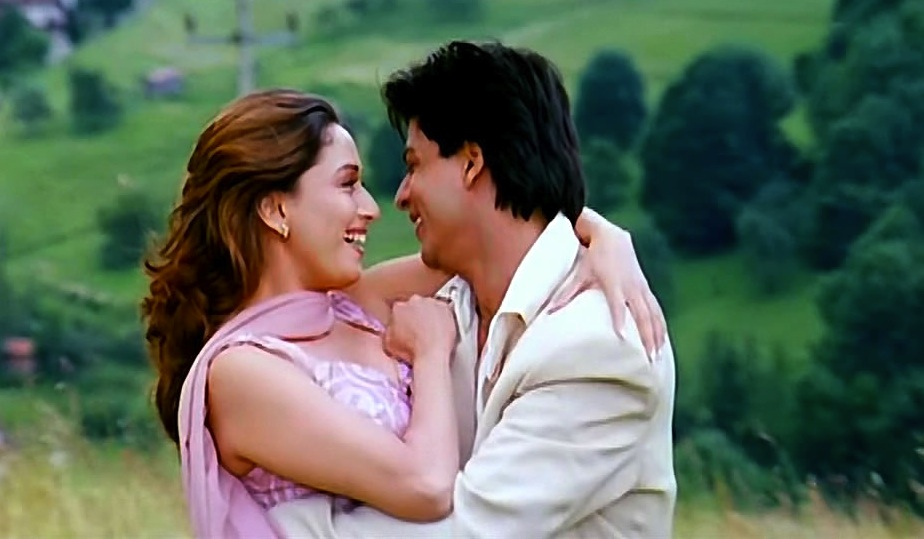
Dharmendra and Rakhee get cozy together in Blackmail (1973).

Yash Chopra: King of Bollywood Romance

Yash Chopra (1932-2012)

Today marks a very sad occasion in the tinsel-lined world of Mumbai filmdom. Legendary filmmaker Yash Chopra has passed away at the famous Lilavati Hospital in Bombay at the age of 80. A timeless pillar of Bollywood romance, Yash Chopra defined generation after generation of Indian love. From his earliest directorial super-hit Waqt (1965) to his later epic romances Veer-Zara (2004), Yash Chopra made the careers of dozens of stars that we know and cherish today. One of his most famous muses, struggling Amitabh Bachchan who starred in Yash Chopra blockbusters like Deewar (1975) and Kabhi Kabhi (1976), was given a new chance at a comeback with Mohabbatein (2001)–a film that led to the evergreen actor’s eventual rebirth as a grand figure in Bollywood once more. For that opportunity, Big B like many great actors remains ever grateful to the man and legend who supported him.

With Yash Chopra’s passing, the neo-golden age of Bollywood film comes as well to a sad close. Films like Dilwale Dulhania Le Jaayenge (1995), Dil To Pagal Hai (1997), and Kuch Kuch Hota (1998) that defined my childhood and that of a generation of hopeless romantics were produced by the Yash Raj banner and carry the hallmark of an era of innocent beauty and carefree romance that brought joy to millions world round. Thank you, Yash Chopra, for the memories and the love. You taught us how to give unconditionally and the precious, crazy things a person can do in the name of love. In the words of your own film Kuch Kuch Hota Hai: tumne na jaane kya sapne dikhaaye

Here is a glimpse at some of Yash Chopra’s most famous films over the years as both director and producer:

Daag (1973)

Daag (1973) starring Rajesh Khanna and Sharmila Tagore.

Waqt (1965)

Waqt (1965) starring Sadhana, Sharmila Tagore, Sunil Dutt, Shashi Kapoor, Balraj Sahni and Rajkumar.

Deewar (1975)

Deewar (1975) starring Shashi Kapoor and Amitabh Bachchan.

Kabhi Kabhi (1977)

Kabhi Kabhi (1977) starring Amitabh Bachchan, Rakhi, Rishi Kapoor, and Nitu Singh.

Silsila (1981)

Silsila (1981) starring Rekha, Jaya Bachchan and Amitabh Bachchan.

Chandni (1989)

Chandni (1989) starring Sridevi and Rishi Kapoor.

Dilwale Dulhania Le Jaayenge (1995)

Dilwale Dulhania Le Jayenge (1995) starring Kajol and Shah Rukh Khan.

Dil To Pagal Hai (1997)

Dil To Pagal Hai (1997) starring Madhuri Dixit, Shah Rukh Khan and Karishma Kapoor.

Kuch Kuch Hota Hai (1998)

Kuch Kuch Hota Hai (1998) starring Shah Rukh Khan, Kajol and Salman Khan.

Mohabbatein (2001)

Mohabbatein (2001) starring Shah Rukh Khan, Amitabh Bachchan and Aishwarya Rai.

Veer-Zara (2004)

Veer-Zara (2004) starring Shah Rukh Khan and Preity Zinta.

What was YOUR favorite Yash Chopra film moment and how have his films affected you? Let us know in the comments!

– Mrs. 55

Jaane Woh Kaise Log Lyrics and Translation: Let’s Learn Urdu-Hindi

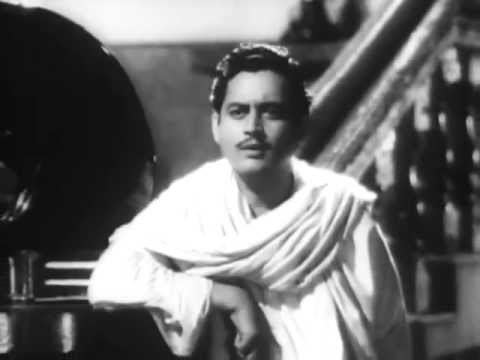
Guru Dutt evokes classic Christ-like imagery in his depiction of Vijay the struggling poet in Pyaasa (1957).

We now present the lyrics and full English translation to one of my all-time favorite Guru Dutt songs “Jaane Woh Kaise” from Pyaasa (1957). I think my undying love for Guru Dutt is pretty evident at this point, but in case you need some convincing to get over the bold Clark Gable ‘stache, start here. Pyaasa is no ordinary film. When released to roaring accolades in 1957, Pyaasa broke precedent upon precedent in both impact and style. Notice how every song in this film seems to flow naturally as a consequence of the plot, as if the lyrics of the songs were a poetic continuation of the spoken dialogue? It was a technique pioneered by Guru Dutt that was later emulated by every great director in Bollywood. And the film hit some hard topics. I discuss more of the political stance of the film and the fascinating struggle Guru Dutt faced behind-the-scenes earlier, but now let us look instead to the classic “Jaane Woh Kaise” hit from the immortal pen of Sahir Ludhviani. It’s a mixture of everything right in the world: Guru Dutt as actor, Hemant Kumar with vocals, S.D. Burman composing, and Sahir in the back with the words of wisdom. This Hemant Kumar gem is truly the industry standard for awkward dinner party songs–even copied in modern times by Mira Nair in her film Vanity Fair (2004)!

Guru Dutt is employed as a dinner party waiter for his rich boss, Rehman, where he is confronted by the reality of his former lover, Mala Sinha, having abandoned him for wealth by marrying none other than the man currently employing him. The injustice of it all gets to him, and by chance, he’s a poet at heart who does what any other tragic poet would do in the situation: drop everything and throw a pity party.

Mala Sinha plays a cold-hearted social climber in Pyaasa (1957).

I love the cinematography in this song–Guru Dutt and his brilliant Director of Photography V.K. Murthy were known for their overblown yet graceful dolly-ins (watch the camera fly in “Waqt Ne Kiya“!), and so too in this song, the camera acts as a silent messenger of emotional turmoil, extracting a beautifully devastating toll on each of the key players in the room. And Guru Dutt holds his ground with arms outstretched as if crucified–a soft-spoken martyr against a background of bookshelves in which his own spoken words will later be immortalized and massacred. Again, you really need to see the film to appreciate the poetic genius of Guru Dutt film-making.

So enough talk, onto the lyrics and English translation of “Jaane Woh Kaise” from Pyaasa (1957)! Check out the picturization on youtube and let us know what you think in the comments!

Jaane Woh Kaise Log Lyrics and Translation

Jaane woh kaise log the jinke pyaar ko pyaar mila
I wonder what kind of people find their love reciprocated
Humne to jab kaliyaa.N maangii kaa.NTo.N kaa haar milaa
Whenever I asked for flowers, I received a garland of thorns

Khushiyo.N kii manzil DhoonDii to gham kii gard milii
I searched for a destination of joy, but I found a circle of sadness
Chaahat ke naghme chaahe to aahe.N sard milii
I desired tales of love, but I received only the coldness of sighs
Dil kii bojh ko duunaa kar gayaa, jo ghamkhwaar milaa
The burdens of my heart only doubled if I met someone meant to relieve my sorrow

BichhaD gayaa har saathii dekar pal do pal kaa saath
Every companion gave me a few moments of company, and left
Kisko fursat hai jo thaame diiwaano.N kaa haath
After all, who has the free time to hold a crazy man’s hand?
Humko apnaa saayaa tak aksar bezaar milaa
Even my own shadow is often weary of me

Isko hii jiina kehte hai.N to yuu.N hii jii le.Nge
If this is what they called life, then I will live like this
Uff na kare.Nge, lab sii lenge, aa.Nsuu pii lenge
I will not sigh, I will seal my lips, and swallow my tears
Gham se ab ghabraana kaisaa, gham sau baar milaa
After all, how can I be concerned by sadness? I have met sadness a hundred times

Humne to jab kaliyaa.N maangii.N kaaTo.N kaa haar milaa
When I asked for flowers, I found a garland of thorns
Jaane woh kaise log the jinke pyaar ko pyaar mila
I wonder what kind of people find their love reciprocated

Glossary:

kali: flower; kaanTaa: thorn; haar: garland; manzil: destination; gham: sadness; gard: circle; chaahat: love, desire; naghma: tale; aah: sigh; sard: chilly, cold; bhoj: burden; duunaa karna: to double; ghamkhwaar: a remover of sadness (note: the w is silent, as in khwaab); bichhaD jaanaa: to become separated; saathi: companion; fursat: free time; haath thaamnaa: to hold hands; saayaa: shadow; bezaar: fed up, weary; lab: lips; aa.Nsuu: tears; gham: sadness: ghabraanaa: to become anxious, concerned

Singing his heart out, Guru Dutt transforms Rehman’s classy dinner gathering into a awkwardly personal pity party in Pyaasa (1957).

Guru Dutt revives the martyr-style mis-en-scene in the reprise of “Yeh Duniya Agar Mil Bhi Jaaye” at the famous finale of the film! The scene has got to be one of the all-time greatest of Hindi cinematic history. For this and about a million other reasons, Pyaasa is absolutely mandatory classic Bollywood viewing!

-Mrs. 55