Roop Tera Mastana Lyrics and Translation: Let’s Learn Urdu-Hindi

Rajesh Khanna Sharmila Tagore HOT Aradhana

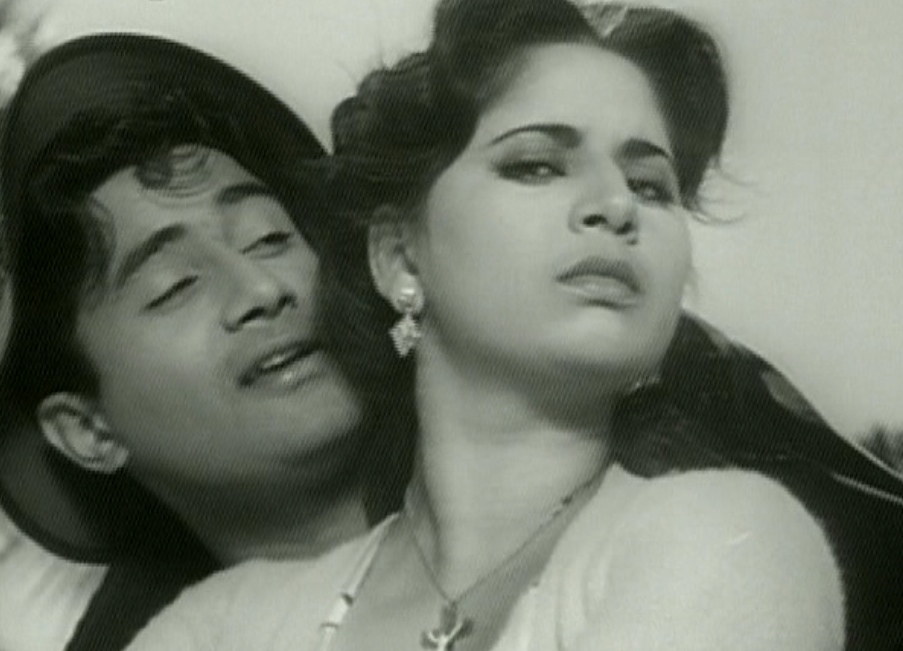
Rajesh Khanna and Sharmila Tagore get too close for comfort in “Roop Tera Mastana” from Aradhana (1969)

Our next post brings you the full lyrics and English translation of the all-time hit “Roop Tera Mastana” from Aradhana (1969). The film stars one of Bollywood’s favorite on-screen couple: the dashing Rajesh Khanna and the elegant Sharmila Tagore. Now this song gets a little racy, so for everyone who isn’t sure they can handle it, please direct yourselves to our G-rated posts (see Rabindranath Tagore’s Influence on S.D. Burman) at this time. Everyone else, grab a seat and a drink of water because it’s about to get a little hot in here.

One of the things I love most about “Roop Tera Mastana” is the cinematography (check out the youtube link here!). The entire song (roughly 4 minutes) is shot in a single long take! The camera swirls around the fire following Rajesh Khanna making his moves on Sharmila, without ONCE cutting for an insert or change in camera angle.

For this to succeed, not only do both the actor and actress need to know exactly where to start and stop with every movement they make during the sequence (any small shift could result in a loss of camera focus), but there is an elaborate dolly track for the camera also laid out all around the floor that they have to be careful not to trip on as they move. And every time the dolly men, the grip guy, the pull-focus team, or heaven-forbid the actors screw up in the 4 minutes you need per take, you start all over again, lose valuable film stock, and probably get a public slap in the face. Check stills from this sequence below!

Rajesh Khanna Sharmila Tagore2

Rajesh Khanna swoops in for the kill.
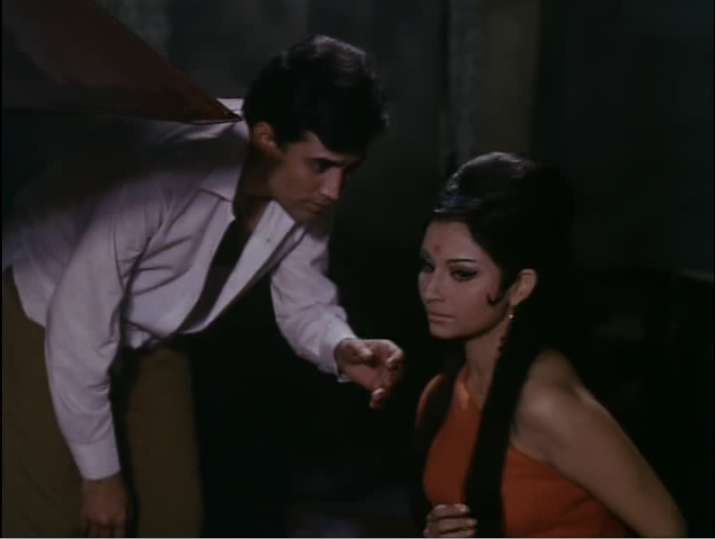
Rajesh Khanna Sharmila Tagore3

Sharmila Tagore senses danger and edges away.

Oh, awkward–Sharmila and Rajesh bump into each other unexpectedly.

Sharmila: To give in or not to give in??!

Rajesh Khanna rushes in from the other side.

Well…maybe this idea isn’t so bad after all…

Sharmila gets so on board, she starts to be a little aggressive.

Things are just getting out of control now with Rajesh and Sharmila.

Gorgeous Rajesh Khanna is abandoned, bursting with chest hair.

Gotcha! Just when you thought you thought you had given him the slip.
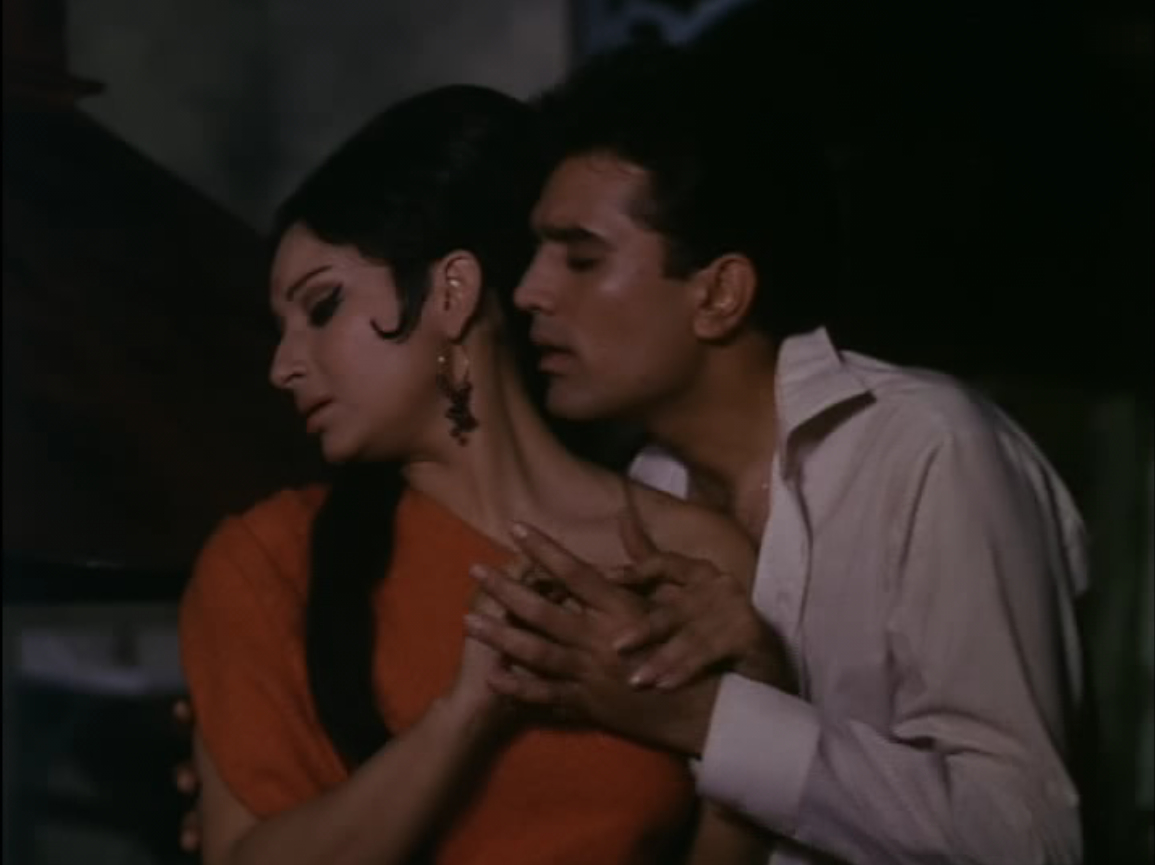
It’s super tense in that room, and I’m not just talking about Sharmila’s sternocleidomastoids.

In the film Aradhana (1969), Sharmila Tagore and Rajesh Khanna have both just come from getting secretly married in a private temple ceremony. They happen upon a shelter lodge, and obviously consummating the marriage is all over Rajesh Khanna’s mind.

Interestingly, the camera itself becomes complicit in the scene. Like the actors themselves, the camera too encircles the fire as if echoing the hallowed rites of Hindu marriage, the saath phere (or seven circles), that give sanctity to their union. It is as if the audience is now the testifying witness of the validity of their marriage, and the camera hesitates–sometimes pausing, sometimes rushing just like the whirlwind of conflicting emotions in the scene. It is extremely symbolic and by eliminating all cutting, the long take seems to slow time down as we grasp the moral and social complexities of this moment, as well as build the tension of what is imminent. Enjoy our English translation of the lyrics of this all-time classic and let us know your opinions in the comments!

Roop Tera Mastana Lyrics and Translation

Roop tera mastana pyaar mera diwaanaa
Your beauty is intoxicating, my love is crazy
Bhool koi humse na ho jaaye
Let me not commit a wrong

Raat nasheelii mast samaa hai
The night is lush, the atmosphere is intoxicating
Aaj nashe mei.N saara jahaa.N hai
Today the whole world seems drunk
Haa.N yeh sharaabii mausam behkaaye
Yes, this intoxicated atmosphere has enticed us
Roop tera mastana pyaar mera diwaanaa
Your beauty is intoxicating, my love is crazy

Aankho.N se aankhe.N miltii hai.N aise
Our eyes met like this
Bechain hoke toofaa.N mei.n jaise
Becoming restless like a storm
Mauj koi saahil se takraaye
Like a wave crashing toward the shore
Roop tera mastana pyaar mera diwaanaa
Your beauty is intoxicating, my love is crazy
Bhool koi humse na ho jaaye
Let me not commit a wrong

Rok rahaa hai hum ko zamaanaa
The world is stopping us
Duur hii rehna paas na aana
We must stay apart and not come closer
Kaise magar koi dil ko samjhaaye?
But how can anyone make our hearts understand this?
Roop tera mastana pyaar mera diwaanaa
Your beauty is intoxicating, my love is crazy
Bhool koi humse na ho jaaye
Let me not commit a wrong

Glossary

roop: beauty; mastaana: intoxicating; diiwaanaa: crazy (in love); bhool: mistake, wrong; nasheelii: lush; samaa: atmosphere; nashe mei.N: drunk; mausam: atmosphere; bechain: restless; toofaa.N: storm; mauj: wave; saahil: shore; zamaanaa: the world

Notice how no one actually gets close to kissing each other in the sequence. I mean, you’d think it happened if you looked at some of these still shots, but in reality the closest thing to physical contact that occurs in this whole sequence is when they hold hands and half-way hug. It would have been awkward, but they pretend like they’re kissing so well, that you hardly notice that no one has touched each other. Oh, the magic of Bollywood!

For more from the magical soundtrack of Aradhana, check out our translation of “Kora Kaagaz Tha” here!

-Mrs. 55
Paaon Choo Lene Do Lyrics and Translation: Let’s Learn Urdu-Hindi

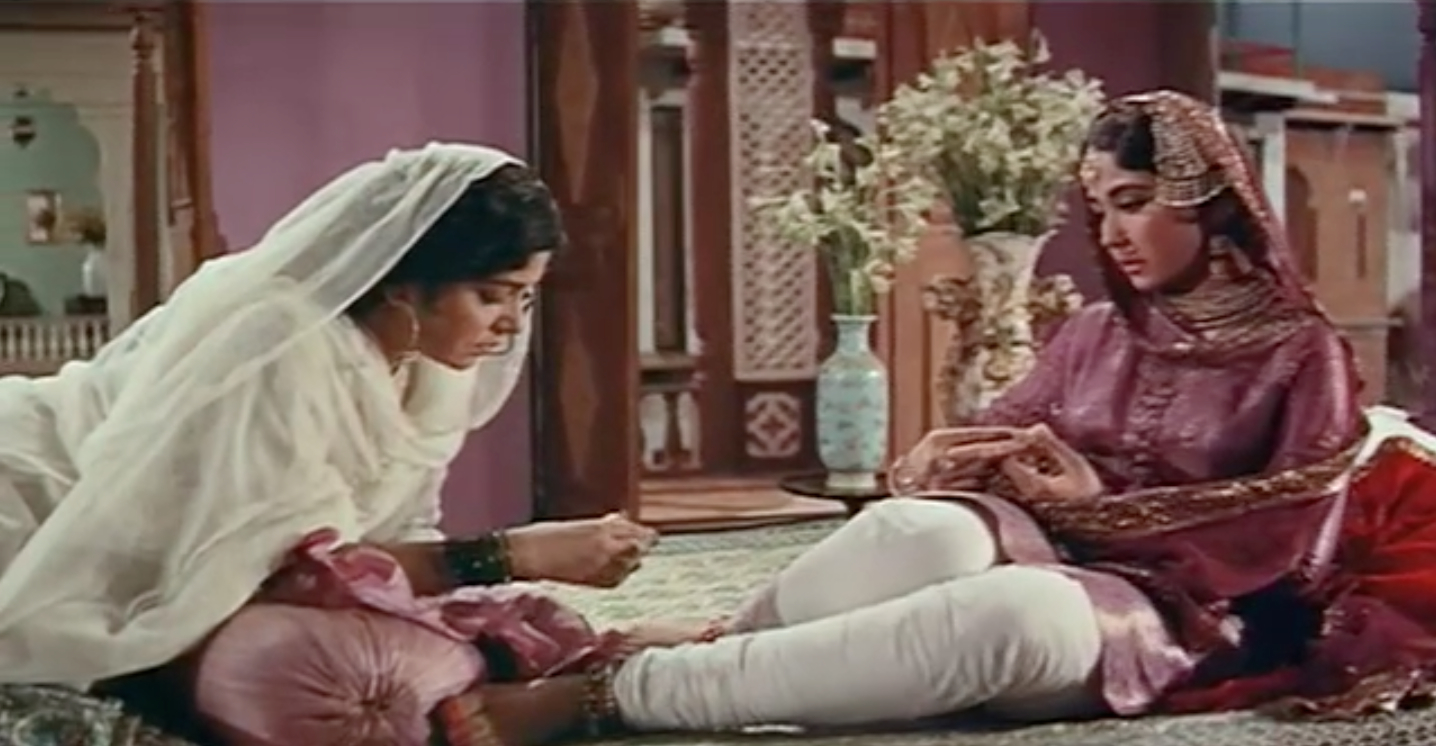
Bina Roy, as Mumtaz Mahal, shys away from Pradeep Kumar in Taj Mahal (1963)

Today we discuss the lyrics and English translation of “paaon choo lene do” from the film Taj Mahal (1963). Lyricist Sahir Ludhianvi and music director Roshan both won Filmfare Awards for their work in Taj Mahal (1963), so it’s not surprising that we’ve decided to discuss a third song from this soundtrack here today (see our previous translations of “jurm-e-ulfat pe” and “khudaa-e-bartar“). “paa.nv chuu lene do” is a duet rendered by Lata Mangeshkar and Mohammed Rafi that was picturized on Bina Roy as Mumtaz Mahal and Pradeep Kumar as Shah Jahan in the film. While “jurm-e-ulfat pe” had some political undertones and “khudaa-e-bartar” was a pacifist statement against war, Sahir’s lyrics in this song from Taj Mahal are purely romantic. The male and female leads flirt back and forth using a savaal-javaab (question-response) structure that focuses on idealizing the heroine’s feet. The female foot has been fetishized in Indian culture and Bollywood cinema over the years, and perhaps the most notable example of this phenomenon occurs in Kamal Amrohi’s magnum opus, Pakeezah: Raaj Kumar is completely smitten after one glance at Meena Kumari’s delicate feet during a train ride.

Krishna decorates Radha’s feet with alta.

What are the origins of the Indian obsession with the foot? Part of this obsession can perhaps be attributed to the importance placed on foot worship in Hindu traditions. For instance, religious imagery in temples and paintings has depicted numerous examples of Krishna painting Radha’s feet or Lakshmi massaging Vishnu’s feet.  Moreover, it is a tradition for women in North India to adorn their feet with a bright red dye called alta during marriages, dances, and religious festivals, like Durga Puja. In fact, during some weddings, brides step into a plate of alta before entering their in-law’s house and leave colored footsteps behind them as they walk. Finally, any child growing up in a Hindu household can attest to the fact that greeting one’s elders by touching their feet is an expected gesture of respect.

Regardless of how you feel about feet, you should definitely take a listen to this duet from Taj Mahal and follow along with our translation/glossary provided below. Indeed, Ludhianvi’s use of language here to highlight the contrast between the hero’s unabashed romantic desires and the heroine’s hesistant modesty is exquisite. As a final note, I just wanted to say that this song was requested by one of our readers Vasuki! We love receiving requests, so please let us know if there is a song you’d like translated, a movie you’d like reviewed, or any other topic you’d like discussed by leaving us a comment here or sending an e-mail to themrandmrs55@gmail.com. Enjoy!

–Mr. 55

The camera fetishizes Bina Roy’s feet in Taj Majal (1963)

Paaon Choo Lene Do Lyrics and Translation

Rafi: paa.nv chhuu lene do, phuulo.n ko inaayat hogii
Please let the flowers touch your feet, it will be favor of kindess to them. 
varnaa ham ko nahii.n, inko bhii shikaayat hogii
Or else, not only I, but they too will protest. 

Lata: aap jo phuul bichhaaye.n unhe.n ham Thukaraaye.n
As I reject the flowers that you have picked for me,
ham ko Dar hai ki yah tauhiin-e-muhabbat hogii
I fear that this will be an insult to love.  

Rafi: dil kii bechain umango.n pe karam faramaao
Please have mercy on the restless yearnings of my heart. 

itnaa ruk ruk ke chalogii to qayaamat hogii
If you walk toward me so hesitatingly, it will be a disaster. 

Lata: sharm roke hai idhar, shauq udhar khii.nche hai
Modesty has held me back here, while desire has drawn me over there.  
kyaa khabar thii kabhii is dil kii yah haalat hogii?
Who knew that my heart would ever be in such a state? 

Rafi: sharm ghairo.n se huaa kartii hai apano.n se nahii.n
One should be modest in the presence of strangers, not with loved ones. 
sharm ham se bhii karogii to musiibat hogii
If you shy away from me, there will be trouble.  

paa.nv chhuu lene do, phuulo.n ko inaayat hogii
Please let the flowers touch your feet, it will be favor of kindess to them.  

Glossary

inaayat: favor; varnaa: or else; shikaayat: complaint; Thukaranaa: to reject; tauhiin-e-muhabbat: insult to love; bechain: restless; umang: hope, yearning; karam faramanaa: to have mercy; ruk ruk ke: hesitatingly; qayaamat: disaster; sharm: modesty; shauq: eagerness, desire; haalat: state, condition; ghair: stranger; musiibat: trouble

Pradeep Kumar as Emperor Shah Jahan in Taj Mahal (1963)

Yeh Raat Yeh Chandni Phir Kahan Lyrics and Translation: Let’s Learn Urdu Hindi

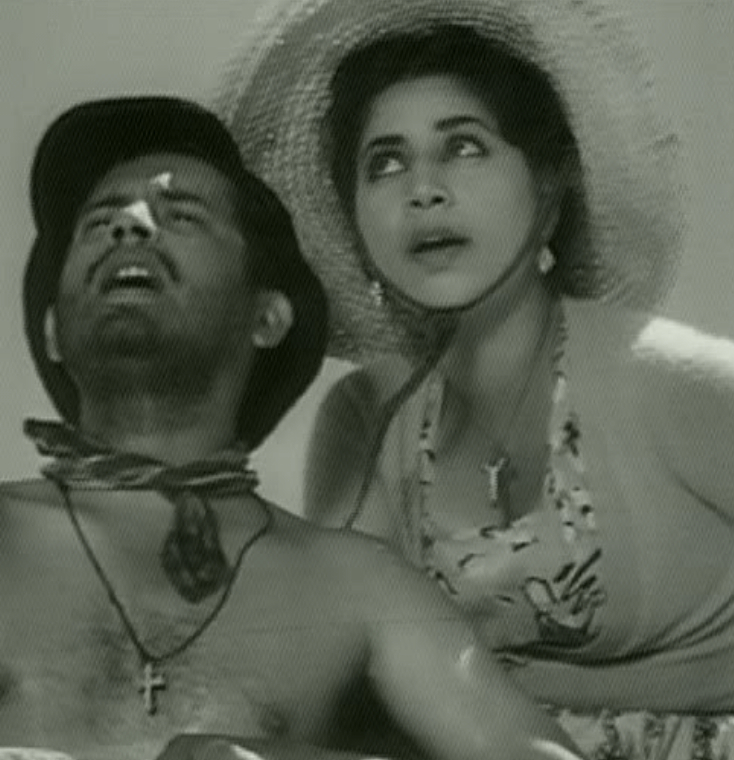
Dev Anand attempts to win over Geeta Bali under the guise of love in Jaal (1952).

We now will present the full lyrics and English translation to the haunting beauty “Yeh Raat Yeh Chandni” from the film Jaal (1952). Starring hit duo Dev Anand and Geeta Bali (who had wowed audiences together in Baazi the year before), Jaal was auteur Guru Dutt’s second film. Unlike Baazi, which mimicked film noirs of the West, Jaal looked outside the crowded cities to the gentle coast of Goa for inspiration. This film is truly one-of-a-kind, exploring life in the Portuguese fishing colony and the interwoven religious themes of forgiveness and love in the unfolding affair between two Christians, Tony (Dev Anand) and Maria (Geeta Bali). Note: Jaal was released before West Side Story hit Broadway, so the names of the lead characters are just a coincidence!

Dev Anand plays a Bombay gold thief who has escaped to Goa and who falls in love with the spunky village belle, Geeta Bali. Their love is tested by society, the law, and ultimately a vow before God that leads Tony to atone for his past and Maria to remain faithful until his sentence is fulfilled. Like most Guru Dutt films, the plot brings something new to the table. Watch out for some wild swing dancing, Johnny Walker making repeated attempts at Arabic, and a generous handful of “amens” throughout the film!

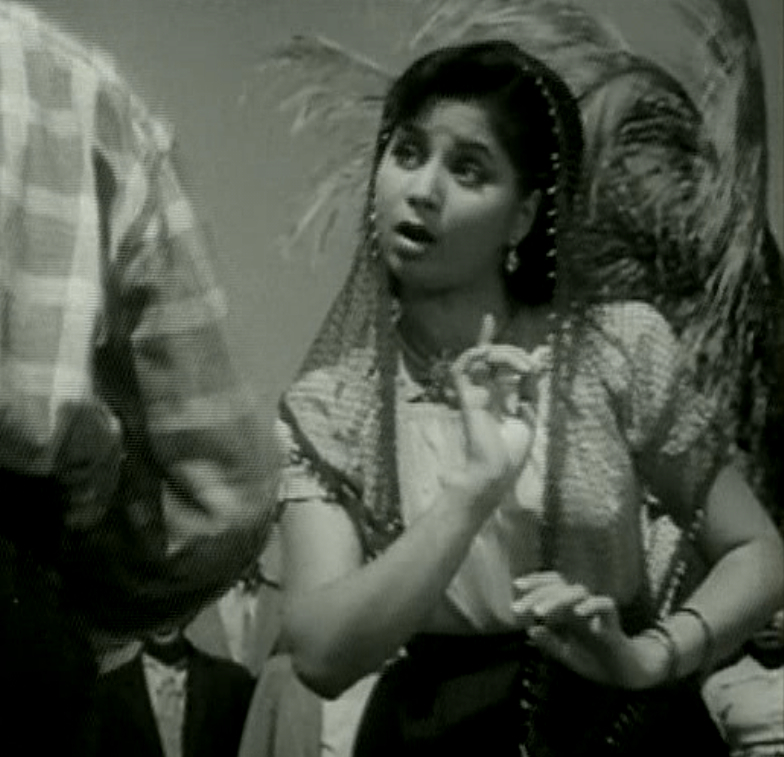
Spunky and fabulous, Geeta Bali leads a Goan dance in Jaal (1952)

The song “Yeh Raat Yeh Chandni” comes in two versions–the tragic Lata Mangeshkar duet, and the initial lilting Hemant Kumar solo. We will translate both to get a fuller understand of the role this song plays in the film, starting with the duet. This version occurs late in the film after Geeta’s friends and family discover Dev Anand’s true past and forcibly remove her from him. However, she is now in love despite his background and sings this tearful song of pining.

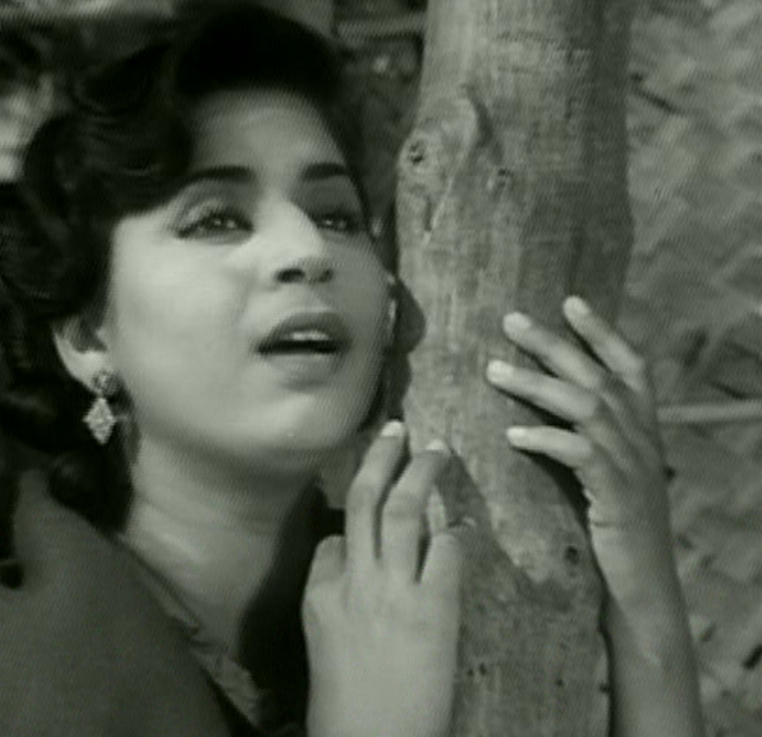
Geeta Bali declares her unwavering love for a wanted criminal in Jaal (1952).

Enjoy our English translation and full lyrics of “Yeh Raat Yeh Chandni” and it’s counterpart “Sun Ja Dil Ki Dastan” below!

Yeh Raat Yeh Chandni Phir Kahan Lyrics and Translation

Duet (Lata Mangeshkar & Hemant Kumar):

Yeh raat yeh chaandni phir kahaa.N
Where will we find this night and this moonlight again?
Sunjaa dil ki daastan
Listen now to the story of my heart

Chaandni raaten pyar ki baaten kho gayi jaane kahaa.N
Where have the moonlit nights and words of love become lost?
Yeh raat yeh chandni phir kahaa.N
Where will we find this night and this moonlight again?
Sunjaa dil ki daastan
Listen now to the story of my heart

Aati hain sada teri TuuTe hue taaro.N se
I sense your presence from the falling stars
AahaT terii suntii hoo.N khaamosh nazaaron se
I hear your footsteps with hushed glances
Bheegii hawa uudi ghaTa kheti hai.N teri kahanii
The moist winds, the soaring clouds speak of your story
Tere liye bechain hain sholo.N mei.N lipti jawaanii
My youth is ablaze in restlessness for you
Seene mei.N balkha raha hai.N dhuaa
The smoke engulfs my chest
Sunjaa dil ki daastan
Listen to the story of my heart

Chandni raaten pyar ki baaten kho gayi jaane kahaa.N
Where have the moonlit nights and words of love become lost?

Leheron ki labon par hai.N khoye hue afsaane
On the lips of the waves lie forgotten fables
Gulzaar umiidon ke sab ho gaye viraane
All the rose gardens of hope have become barren.
Tera pataa paaoo.N kahaa.N? Soone hai.N saare Thikaane
Where can I find where you are? All abodes are deserted
Jaane kahaa.N gum ho gaye jaake ho agle zamaane
I do not know where you have disappeared to in the other world
Barbaad hai.N aarzoo ka jahaa.N
The world of desire has been destroyed
Sunjaa dil ki daastan
Listen now to the story of my heart

Glossary:

raat: night; chaandni: moonlight; TuuTa taaraa: shooting star; aahaT: footsteps; khaamosh: silence, hushed; bheegi: wet; kahaanii: story; bechain: without peace, restless; sholaa: spark, fire: jawaanii: youth; seenaa: heart; chest; dhuaa: smoke; leher: wave; lab: lip; afsaanaa: fable, story; gulzaar: rose garden; umiid: hope; viiraane: wasted, desolate; pataa: whereabouts, address; soonaa: empty, lonely; Thikaanaa: shelter, abode; gumnaa: to become lost; aglaa: next; zamaanaa: world; barbaad: destroyed; aarzoo: desire; jahaa.N: world, place

But before this sad reprise, Dev Anand can be found singing the romantic solo version from his beach side abode. Hemant Kumar’s voice is absolutely magical in this song–he has the perfect blend of richness and allure. At this time in the film, Dev Anand is trying to cinch the deal with his romance and claims he knows that Geeat Bali will come to his hut when she hears this song. His version of “Yeh Raat Yeh Chaandni” has a uniquely tropical Goa flair, but it maintains an exciting sense of urgency in both the lyrics and style. As you can guess, Geeta comes running.

Dev Anand Jaal

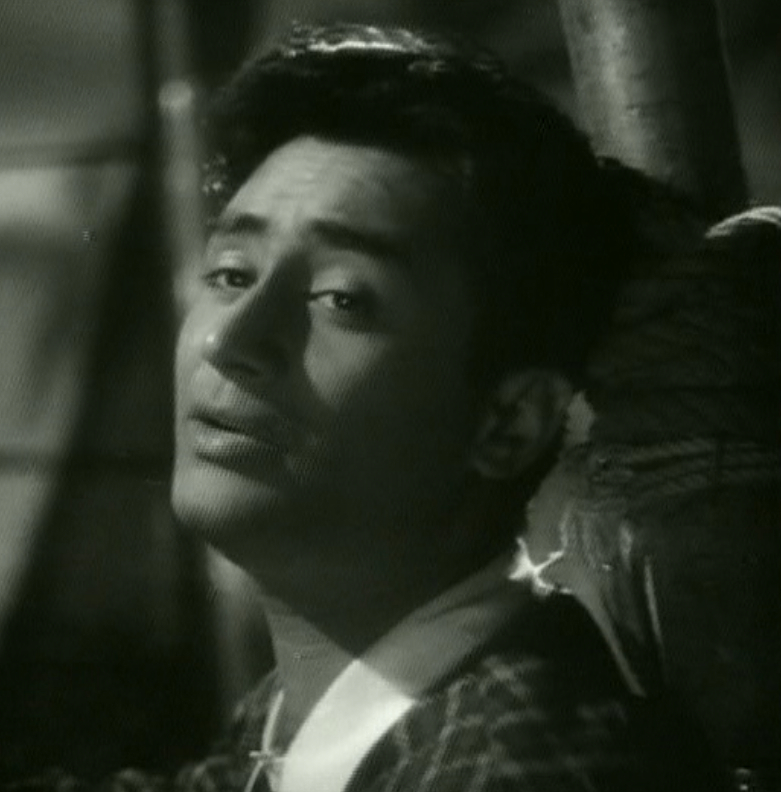
Dev Anand calls to Geeta Bali in the moonlight in Jaal (1952).

Yeh Raat Yeh Chandni Phir Kahan Lyrics and Translation

Male Solo (Hemant Kumar):

Yeh raat yeh chaandnii phir kahaa.N
Where will we find this night and this moonlight again?
Sun ja dil ki daastan
Listen now to the story of my heart

Hey peDo.N ki shaakho.N pe
On the branches of the trees
PeDo.N ki shaakho.N pe soyii soyii chaandnii, peDo.N ki shaakho.N pe…
On the branches of the trees the moonlight slumbers
Tere khayaalo.N mei.N khoyii khoyii chaandnii
In thoughts of you, the moonlight wanders
Aur thoDi der mei.N thak ke laut jaayegii
And soon it will become tired of waiting and return
Raat yeh bahaar ki phir kabhii na aayegii
This night of spring will never come back
Do ek pal aur hai yeh samaa
We have but a few moments left of this atmosphere
Sun ja dil ki daastan
Listen now to the story of my heart

Hey lehero.N ke honTho.N pe
Oh, on the lips of the waves
Lehro.N ke hontho.N pe dhiima dhiima raag hai, lehro.N ke hontho.N pe
On the lips of the waves is a soft melody
Bhiigii hawaao.N mei.N thanDii thanDii aag hai
In the moist wind is a cool fire
Is hasee.N aag mei.N tuu bhii jalke dekhle
In this beautiful fire, you should see what it feels like to burn
Zindagii ke geet ki dhun badal ke dekhle
See what it feels like to change the tune of life’s song
Khulne de ab dhaDkano.N ki zubaan
Free the voice of our heartbeats
Sun ja dil ki daastan
Listen now to the story of my heart

Hey jaatii bahaare hai.N
Oh, the Spring is receding
Jaatii bahaare hai.N uThti jawaaniiyaa, jaatii bahaare hai.N
The Spring is receding, our youth is rising
Taaron ke chaao.N mei.N pehle kahaaniiyaa
In the shadows of the stars lie our stories
Ek baar chal diye gar tujhe pukaarke
If it leaves after calling to you,
Lautkar na aaye.Nge kaafile bahaar ke
The caravans of Spring will not return
Aaja abhi zindagii hai jawaan
Come, life is still young
Sun ja dil ki daastan
Listen to the story of my heart

Glossary:

raat: night; chaandnii: moonlight; peD: tree; shaakh: branch; khayaal: thought; thoDii der mei.N: in a short while, soon; thak hona: to become tired; laut jaanaa: to go back; bahaar: spring; samaa: atmosphere; leher: waves; honT: lip; dhiima: softly; bheega: moist, rainy: ThanDaa: cool; aag: fire; hasee.N: beautiful; dhun: tune; dhaDkan: heartbeat; zubaan: words, language; jawaanii: youth; chhaaye: shadow; kaafile: caravans

Did you know that it was in this movie that Guru Dutt first hired cinematographer V. K. Murthy? V.K. Murthy would continue to work as Guru Dutt’s D.P. (Director of Photography) for all of his following films. In fact, between Guru Dutt and V.K. Murthy grew such trust and friendship, that Murthy eventually encouraged Dutt to start acting in his owns films, including the haunting classics Kaaghaz Ke Phool and Pyaasa. In this film, Guru Dutt actually makes his first cameo–as a shirtless fisherman no less! Ladies, please calm down.

– Mrs. 55

Shirtless Guru Dutt

Guru Dutt makes a brief film debut in Jaal (1952) as a rugged and shirtless fisherman.

The Immortal Dialogue of Pakeezah and English Translation

Now we will explore some classic Pakeezah dialogue, quotes and their English translations from the timeless 1971 film. I think it’s pretty clear that we’re obsessed with this movie. We’ve discussed the making of the film and its songs, but let’s take a moment to appreciate Pakeezah’s dialogue for which there is truly no comparison outside of the ode to spoken Urdu poetry that is Mughal-e-Azam (1960).

Aapke paaoo.N dekhe. Bahut haseen hai.N. Inhe zameen par mat utariiyega. Mele ho jaaye.Nge –Aapkaa ek humsafar…”

[“I have seen your feet. They are beautiful. Please do not place them on the ground. They will become dirty. –A fellow traveler…”]

I have to give a caveat: although we have provided a full English translation of these Pakeezah dialogues, I think the true poetry is lost outside of the Urdu language. Written by Kamal Amrohi himself, the exquisite dialogue of Pakeezah transports you to a languid surrealist fantasy. Among other questions, you may ask did people really talk like that? Do men as devastatingly charming as Raajkumar exist in real life? How fake is that blonde wig from the opening scene, seriously?

Although some of these will remain unanswered, let us now look closer at 3 of my favorite gems of Pakeezah dialogue and English translations that will be sure to get your heart rate up.

Ek har raat, teen baje. Ek rail gaadi apni patriyon se utar gayii, aur meri dil se guzarti hai...

[“Every night, when the clock strikes 3, a train leaves its rails and passes through my heart…”]

The first dialogue comes days after Pakeezah has received Rajkumar’s love letter. She is restless and can no longer focus on her work. Pakeezah confesses the reason for her behavior to her friend, who reacts famously against indulging such dreams. It’s a heartbreaking scene made artful by the grace of the Urdu language. Also please look at those sets and tell me there are architects in America who know how to build them.

PAKEEZAH: Bahut dino.N se, mujhe aisaa kuch lagtaa hai jaise mai.N badaltii jaa rahii hoo.N. Jaise mai.N kisi anjaane safar mei.N hoo.N aur kahii.N jaa rahii hoo.N. Sab kuch chuuTa jaa raha hai. Sahib Jaan bhi mujhse chuuT rahe hai.N, aur mai.N Sahib Jaan se duur hoti jaa rahi hoo.N.

[PAKEEZAH: For many days now, I feel as if I am changing. As if I am on an unknown journey and going somewhere. Everything is going away from me. Sahib Jaan is even leaving me, and I am going far from Sahib Jaan.]

SAHELI: Kaun hai yeh?

[SAHELI: Who is he?]

PAKEEZAH: Kaun?

[PAKEEZAH: Who?]

SAHELI: Yehii. Jisse mai.N pooch rahi hoo.N. Bataao!

[SAHELI: Him, whom I am asking about. Tell me!]

PAKEEZAH: Kya bataaoo.N kaun hai? Ek ajiib waaqaaya hai.

[PAKEEZAH: What should I say about who he is? It is a strange tale.]

SAHELI: Kya?

[SAHELI: What?]


PAKEEZAH: Ek har raat. Teen baje. Ek rail gaadi apni patriyon se utar gayii, aur meri dil se guzarti hai. Aur mujhe ek paighaam de jaati hai.

[PAKEEZAH: Every night at three o’ clock, a train leaves its rails and passes through my heart. And it gives me a message.]

SAHELI: Sahib Jaan, yeh paighaam tere liye nahii.N.

[SAHELI: Sahib Jaan, this message is not for you.]

PAKEEZAH: Kyaa? Nahii.N, nahii.N. Yeh mere hii liye hai. Is se mai.N ne apni hi paaoo.N mei.N rakhaa huaa payaa tha.

[PAKEEZAH: What? No, no, this is for me. It had been placed on my feet.]

SAHELI: Haa.N. Lekin us waqt tere paaoo.N mei.N ghungroo bandhe hue nahii.N ho.Nge. Agar ghungroo bandhe hue hote, to yeh kaise koi kahta ki paaoo.N ko zameen par mat rakhna? Maile ho jaaye.Nge? Merii jaan, yeh paighaam to hai. Lekin bhatak gayaa hai.

[SAHELI: Yes. But at that time, you’re feet were not bound by ankle bells. If they had been bound in ankle bells, how could anyone say “do not place your feet on the ground”? “They will become dirty”? My dear, this is certainly a message, but it is misguided.]

Tragic, right? My next favorite scene comes when Pakeezah has inadvertently landed inside Rajkumar’s own tent. She senses him approaching, and pretends to be asleep. Rajkumar bursts in with an appropriate flush of theme music to accompany him.

Rajkumar stares at sleeping Meena Kumari in Pakeezah (1971)

Pakeezah panics and the audience enters into her thoughts as she narrates her feelings in this beautiful moment of love and fear.

Pakeezah is unable to look at the mysterious man she loves in Pakeezah (1971)

“Allah! Woh mere paas khade hai.N. Aur meri jaan nikal jaa rahi hai. Aap yuu.N hii hairaan hairaan mujhe dekhte rehe.Nge. Mai.N taraste taraste, bina aapko ek nazar dekhe, mar jaaoo.Ngii. Aap hi ke samne, aap hi ke bistar par khatam ho jaaoo.Ngii. Zara muu.N phenk lijiye. Mai.N ek saa.Ns leloo.N! Ek chalak aapke dhekh loo.N!”

[“God! He is standing near me. And I feel as if I am dying. You will continue to stare at me in surprise, and I will slowly die without glancing at you even once. Beside you, on your bed itself, I will be finished. Please turn your face away so that I can take a breath! Let me take just a glimpse of you!’]

I can’t get enough of this scene–her words are so poetically expressed, but so vividly capture the anxiety of the moment!

Wondering what all the hype is about? Here are Meena Kumari’s exquisite feet in Pakeezah (1971)

“Afsos ki log duudh se bhi jal jaate…”

[“How unfortunate that people are burned even by mere milk…”]

The last epic dialogue I’ll discuss comes when Rajkumar brings Meena Kumari home for the first time. Do arguments really happen like that? In my house, an argument never devolves into an Urdu poem–but then again, we don’t have those outfits on.

D.K. Sapru plays a very scary Hakim Sahib in Pakeezah (1971)

HAKIM SAAB: Salim, woh kaun hai?

[HAKIM SAAB: Salim, who is this?]

SALIM: Woh ek gumnaam ladki hai.

[SALIM: She is a lost girl.]

HAKIM SAAB: To woh tumhaare saath hai?

[HAKIM SAAB: She is with you?]

SALIM: Jii.

[SALIM: Yes.]

HAKIM SAAB: Yaani?

[HAKIM SAAB: Meaning?]

SALIM: Yeh kaun hai, mai.N bhi nahii.N jaantaa. Yeh ek mazluum ladki ki jo apni aadaash kho chukhi hai. Aur itefaaqan woh meri panaah mei.N aa gayii hai.

[SALIM: Who she is, even I don’t know. She is an oppressed girl who had lost her memory. And by chance, she came into my care.]

HAKIM SAAB: Lekin, tumhaare is bayaan par, kaun yaqeen karegaa?

[HAKIM SAAB: But who will believe this tale of yours?]

Unnaturally handsome Rajkumar stands his ground against his family in Pakeezah (1971)

SALIM: Mujhe iski parva nahii.N

[SALIM: I am not worried about that.]

HAKIM SAAB: Tumhe nahii.N, lekin hame.N iski parva hai. Jo log duudh se jal jaate. Woh chaas bhi phoonk phoonk kar piite.

[HAKIM SAAB: You may not be, but I am. Those people who are burned by milk, drink even the froth with caution.

SALIM: Afsos ki log dhuudh se bhi jal jaate.

[SALIM: How unfortunate that people are burned even by mere milk.] Oh my God, such a good comeback! So poetic, so simple. I die.

HAKIM SAAB: Tum humse bahaz karna chaahte ho? Humse bahaz karne ki zaruurat nahii.N. Aisii ladkii jiskaa koi naam nahii.N, pathaa nahii.N, woh kyuu.N tumhaare saath hai?

[HAKIM SAAB: You want to argue with me? There is no need to argue. A girl with no name, no address, why is she with you?]

SALIM: Isliye ki woh merii panaah mei.N aayii. Aur yeh koi gunaah nahii.N.

[SALIM: Because she came under my care. And that is no crime.]

Meena Kumari grows more and more uncomfortable as she eavesdrops their argument.

HAKIM SAAB: Gunaah to nahii.N. Lekin ismei.N hamaarii badnaami hai.

[HAKIM SAAB: It is not a crime. But I could be dishonored from it.]

SALIM: Jii nahii.N, agar is mei.N koi badnaamii hai, to merii hai.

[SALIM: No, if anyone is dishonored, it is me.]

HAKIM SAAB: Tum kaun ho? Kya humko tumhaara koi rishtaa nahii.N?

[HAKIM SAAB: Who are you? Do you have no relation with me?]

SALIM: Jii hai. Lekin is maumle se aapkaa koi taluk nahii.N.

[SALIM: Yes, I do. But this matter does not concern you.]

HAKIM SAAB: Humaare koi taluk nahii.N?? Agar hamaaraa koi taaluk nahii.N. To phir tum apnii yeh badnaamii hamaare ghar kyuu.N le aaya ho?

[HAKIM SAAB: It does not concern me?? If it does not concern me, then why have you brought this dishonorable girl to my house?]

Rajkumar checks out Pakeezah for some inspiration and proceeds to storm out of the room in a flurry of Urdu poetry.

SALIM: Beshak mujhse ghalati huii. Mai.N bhuul hi gayaa tha. Is ghar ke insaano.N ko har saa.Ns ke baad doosre saa.Ns lene ki ijaazat aapse lenii padhtii hai. Aur aapki aulaad khuda ki banaaii hui zameen par nahii.N chaltii, aapki hatheli par rehti hai.N

[SALIM: Undoubtedly, I have made a mistake. I had forgotten that in his house, after every breath people must ask your permission to take the second. And that your children do not walk on the earth that God made, but live in the palm of your hand.]

Whoa. How do metaphors that awesome just come to you like that? I need to re-evaluate how I insult people. Why do these kinds of situations never happen to me?

As a small note, I just think the one-liner the head aunt says before the song “Chalte Chalte” is pretty sweet. When no one else shows up that night because the rich client has scared them all off, she graciously says to him,

“Log nahiin.N aaye, to na sahii. Sitaaron ki raat se, ek chaandni raat mei.N to kai zyaadaa roshni hoti hai.”

[“Other people did not come, so be it. In a moonlit night there is more radiance than in a night of stars.”]

Wah wah! The movie is teeming with pearls like this!

What is YOUR favorite dialogue from Pakeezah? Let us know in the comments! For more dialogues, check out our post on the beauty of Urdu in classic Bollywood film!

-Mrs. 55

Jani O Jani Lyrics and Translation: Let’s Learn Urdu-Hindi

Next we will discuss the lyrics and translation of the nostalgic Kishore Kumar song “Jani O Jani.” However, this post is going to be a little different since something a little different happened to me this month. My wonderful boyfriend of 2 years proposed to me! We met when he was recruited by a friend to be an extra in the 1950s Bollywood film tribute I was shooting for my thesis at Harvard. The deal was essentially sealed when I realized he had heard more than half the songs on my 60s Mohammed Rafi playlist. Two years later, he planned a surprise engagement proposal straight from a Bollywood dream sequence! I was reminded immensely of an old Kishore Kumar gem, “Jaani O Jaani” from Raja Jani (1972). There is something both nostalgic and hopeful about this song that I love.

Raja Jani (1972) is actually an incredibly fun film–basically the 70s Bollywood version of the American feature-length cartoon Anastasia (1997). It’s colorful, upbeat, and filled with exciting drama at its predictable best. The story is written by the highly-talented Nabendu Ghosh, who also wrote more somber-toned philosophical works like Bandini (1963) and Teesri Kasam (1967).

We don’t often translate Kishore Kumar songs on this site because of my obsession with Mohammed Rafi and Mr. 55’s obsession with Lata (surprise surprise—Mr. 55 and I are just friends!). But this song is special. It’s picturized on Dharmendra driving through the Delhi streets and evokes that sense of travel and beginning a journey found in many of Kishore other great hits (eg. “Musafir Hoo.N Yaaro.N”, “O Maaji Re”, etc.). Very appropriate for the occasion of starting a new life together (oh, give me a break).

Dharmendra and Hema Malini exchange uber cute glances in Raja Jani (1972)

Lyrics and Translation:

Jani O jani
Darling, oh darling
Jaldi se aaja miljaa ke biit jaaye yeh jawaanii
Come meet me quickly because our youth slips away

Bigda naseeba banne ke liye
To correct my misguided fate
Ek ishaaraa tere kaafi hai
Just one signal from you is enough
Aashiq ke jiine marne ke liye
To make the choice between life and death for a lover
Itna sahaara tera kafi hai
That is all the support that is needed
Tujh pe lutadoonga mitadoonga mai.N yeh zindagaani
For you, I would throw away and wipe out this life of mine
Jaani O jaani jaani O jaani
Darling, oh darling

Aankhon mei.N teri tasveer liye
Carrying your picture in my eyes
DhuunDh raha hoo.N tujhe raste mei.N
I search for you along the way
Teri galii mei.N teraa diiwaanaa
In your street, that man who is crazy in love with you
Bech rahaa hai dil saste mei.N
Is selling his heart to you cheaply
Karle yeh sauda leja deja raani dil ki nishani
Accept this bargain and let us exchange, my queen, tokens of our hearts
Jaani O jaani
Darling, oh darling

Glossary:

jaani: darling, sweetheart; jaldi se: quickly; jawaani: youth; naseeba: fate; ishaaraa: signal; aashiq: lover; sahaaraa: support; zindagaani: life; tasveer: picture; sauda: bargain, exchange

I know, I know, this is obnoxious, but I really had to put a picture of my engagement ring here. Is the teal box in the background a subtle enough clue that it’s from Tiffany’s?! Was the complimentary teal background over-doing it?

Why yes, it’s a flawless Tiffany solitaire engagement ring.

OK, OK, I’m done now.

-Mrs. 55