Kar Chale Hum Fida Lyrics and Translation: Let’s Learn Urdu-Hindi

Haqeeqat soldier's child photo

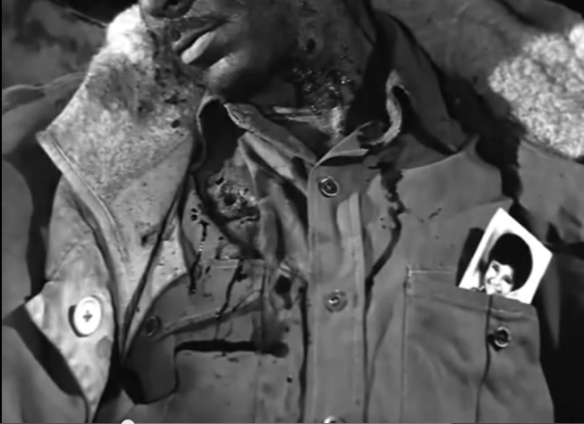
A fallen soldier carries a photo of his son during the Indo-China War of 1962 portrayed in the epic film Haqeeqat (1964)

Happy Independence Day, India! To celebrate this day, we recall the sacrifice and service of our men in uniform through the poetic call to action, “Kar Chale Hum Fida,” from the great war film Haqeeqat (1964). Starring Dharmendra, Jayant, Priya Rajvansh, and Balraj Sahni, Haqeeqat was the first film of its kind to bring audiences straight to the battlefield through the eyes of Indian soldiers (an obvious inspiration for its successful modern interpretation Border in 1997). Director Chetan Anand tells a self-described “mosaic” of a war freshly lost by India, but inspires confidence in the morale-shattered audiences with moving heroism and romance. Set in the ethereal realm of Ladakh along the border of India and China, Haqeeqat revives our hopes for the future of the still growing nation and glorifies the righteousness of Indian values even when defeated. The enemy are seen as scrawny, primitive beings with a limited vocabulary while the Indian fighters are tall, gorgeous, eloquent, and noble. Haqeeqat, meaning “reality,” portrays the real losses of the Indian army, complete with stunning battle re-enactments across the Himalayas, however, the poignancy of the film is how it turns losing a war with honor into a vastly more important moral victory.

“Kar Chale Hum Fida” bears a different kind of optimism than the “Mera Joota Hai Japani” anthem of post-independence India–an outlook now tempered by the marvels of technological and cultural advances with which the nascent country sought to keep pace and by the very real threat of encroaching communism. The song classically depicts the motherland as a new bride to be defended and death as a welcome sacrifice to preserve her honor. With godlike bravery and fortitude that surmounts all obstacles, the soldiers in “Kar Chale Hum Fida” transcend from life to death, from idealistic to divine. Hope is derived from the constant refrain that entrusts the responsibility of the nation to the next generation. Written in a flash of inspiration at 1 AM by Kaifi Azmi, the song’s tune arrived equally serendipitously to composer Madam Mohan the same night and was recorded the next morning.
Haqeeqat soldier death wife daydream editing sequence

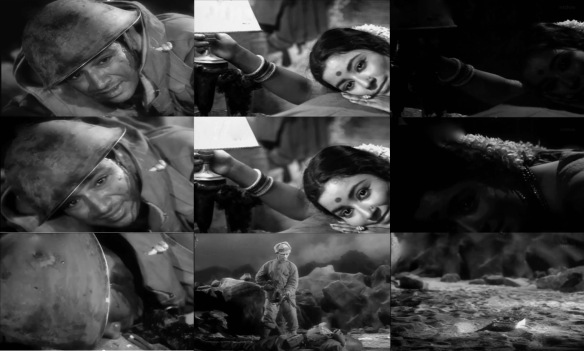
The brilliant montage of a soldier’s death with his wife turning off their bedroom lamp in Haqeeqat (1964). Trace each shot and its mis-en-scene carefully from left to right to understand the genius of this editing sequence.

Before we further discuss the lyrics to what I believe is certainly one of Kaifi Azmi’s most beautiful poems, I need to talk about a moment earlier in the film that is one of the greatest moments in film history. Note that I wrote “film history,” not merely “Bollywood film history.” This sequence is incredible and deserves a full essay. There are some moments in the human experience that can only truly be expressed through the medium of film. These are rare and a gift to any director. Most stories can be well told in prose or acted in a theatre, but the true magic of cinema lives in moments like these that fuel a film director’s dreams. In this case, film editing is the star, the juxtaposition of distinct images harkens back to Soviet montage theory when filmmakers were first exploring the possibilities of the medium. Let’s walk through this together:

Ram Swaroop plays a soldier sent to the border with a tiny boxful of earth and seeds that his young bride tells him to plant in the barren lands of Ladakh. But he is wounded mortally in the crossfire and falls on his side to the ground in a medium close-up. CUT: A reverse shot* of his wife on their bed reaching to the lamp. She flicks the light off. CUT: Reverse reaction shot of Swaroop lying on the battlefield, he smiles at her. CUT: She smiles in return, flirtatiously switching the lamp back on. She turns it off again and moves closer to him. Her eyes close as if to sleep. CUT: A gunshot is heard and Swaroop falls dead in a close-up. CUT: Wide-shot of a Chinese soldier standing over Swaroop’s body with a warm gun. CUT: Close-up of the box of earth his wife had given to him, flung to the side.

What does it mean? In 2015, we take so much about film and our common constructs for granted. Here, a man and a woman completely separated by time and space are juxtaposed back-to-back and we as an audience immediately understand what is happening. How extraordinary, if you think about it. Swaroop is imagining that he sees his wife, recalling an earlier memory of them lying together in bed. We recognize that he is dying and the symbolism of her lamp flicking on-and-off is suddenly clear. When her lamps turns off and she falls asleep, he will never awaken. It is a tantalizing moment as we are both fearful of this inevitable poetic death, but also hypnotized by her flirtatious smile and playfulness with the light. The brilliance of the editing transports us suddenly from the cold battlefield to the warmth of a bedroom and the intimacy of a couple in love. It’s a reminder of what wars are truly being fought for. We want him to join her almost as much as we need him to remain alive. The close-up of earth after Swaroop’s murder assumes the wife’s logical next position in the editing of the sequence, invoking the classic symbolism of India as a new bride whose honor is worth dying for. This is the only medium that has the power to capture this. Take a second for me with this absolutely stunning sequence and just appreciate film–film as a medium, film as poetry.

*Note: For the film nerds among us, you’ll note that the shot of Swaroop’s wife is not technically a “reverse shot.” Classical Hollywood cinema and the 180 degree principle of continuity editing tells us that for a true reverse shot, the eye lines of the subjects must match (ie. his wife’s head should in principle be on the right looking to the left), a construct with which Chetan Anand is exceedingly familiar and employed throughout the film. However, he brilliantly chose to break this rule and instead mirrors (both literally and figuratively) the shot preceding it, thus presenting an entirely alternative reality rather than a simple continuation of ideas. Am I too obsessed?
Haqeeqat Prime Minister Nehru

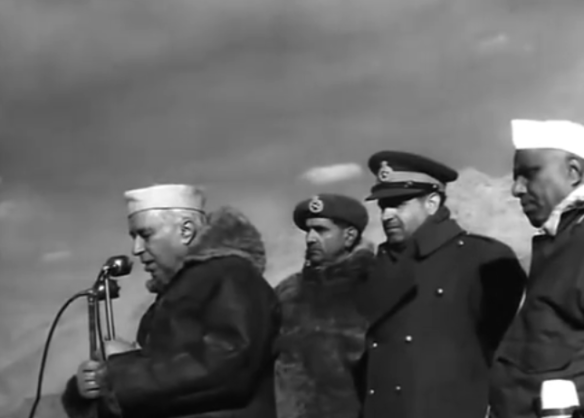
Though criticized for his failure to anticipate Chinese attacks, Prime Minister Nehru himself blesses us with a brief cameo derived from archival footage in the delightfully pro-Indian government film Haqeeqat (1964).

Sorry for that huge stream of consciousness, but the filmmaker in me had to rave (as I simultaneously wipe away tears of appreciation). MOVING ON. Like the heart-wrenching “Aye Mere Watan Ki Logon,” “Kar Chale Hum Fida” effectively celebrates heroism rather than dwell on military strategic failures. We hope you remember some of the men and women in uniform in your life today as we celebrate their sacrifices with the lyrics and English translation of “Kar Chale Hum Fida” below. The video to follow along can be found here. Enjoy!

Kar Chale Hum Fida Lyrics and Translation:

Kar chale hum fidaa jaan-o-tan saathiiyo
We are finished sacrificing our lives and bodies, companions
Ab tumhaare hawaale watan saathiiyo.N
Now we entrust the country to you, companions

Saa.Ns thamtii gayii, nabz jamti gayii, phir bhi baDhte qadam ko na rukhne diyaa
Our breaths kept halting, our pulses kept congealing, but we did not allow our advancing footsteps to pause
KaT gaye sar hamaare to kuch gham nahii.N, sar Himaalaya ka humne na jhukne diyaa
If our heads were cut, we felt no sorrow, for we did not allow the head of the Himalayas to bow
Marte marte rahaa baa.Nkpan saathiiyo
As we died, our chivalry remained, companions
Ab tumhaare hawaale watan saathiiyo
Now we entrust the country to you, companions

Zindaa rahne ke mausam bahut hai.N magar jaan dene ki rut roz aati nahii.N
There are many seasons to live, however, the time to give your life does not come every day
Husn aur ishq dono.N ko ruswaa kare woh jawaanii jo khoo.N mei.N nahaatii nahii.N
What displeases beauty and love are youth that do not bathe in blood
Aaj dhartii bani hai dulhan saathiiyo
Today the earth became our bride, companions
Ab tumhaare hawaale watan saathiiyo
Now we entrust the country to you, companions

Raah qurbaniyo.N kii na viraan ho, tum sajaate hii rehnaa naaye qaafile
Let the path of sacrifice not become barren, you must continue to adorn it with new processions
Fateh ka jashn is jashn ke baad hai zindagii maut se mil rahii hai.N gale
The celebration of victory is after this victory in which life and death are embracing
Baa.Ndh lo apne sar se qafan saathiiyo
Tie the funeral shroud upon your heads, companions
Ab tumhaare hawaale watan saathiiyo.N
Now we entrust the country to you, companions

Khe.Nch do apne khuu.N se zameen par lakeer,* is taraf aane paaye na Raavan koi
Draw out a line upon this earth with your blood and do not let any demons come this way
ToD do haath agar haath uThne lage, chuu.N na paaye na Sitaa kaa daaman koii
Break the enemy’s hand if his hand raises [against you] and let no one dishonor Sita
Raam bhi tum, tum hii Lakshman saathiiyo.N
You are both Ram and Lakshman, companions
Ab tumhaare hawaale watan saathiiyo.N
Now we entrust the country to you, companions

Kar chale hum fidaa jaan-o-tan saathiiyo
We are finished sacrificing our lives and bodies, companions
Ab tumhaare hawaale watan saathiiyo.N
Now we entrust the country to you, companions

Glossary:

kar chalnaa: to depart; fidaa: sacrifice; jaan: life; tan: body; saathii: companion; [kisi ke] hawaale: [in someone’s] care; watan: country; saa.Ns: breath; thhamnaa: to stop; nabz: pulse; jamnaa: to solidify, to freeze; baDhnaa: to advance; qadam: footsteps; [kisi ko] rukhne diyaa: to allow [something] to stop; kaT; cut; sar: head; gham: sorrow; Himaalaay: Himalayan mountains; jhuknaa: to bow; marnaa: to die; baa.Nkpan: chivalry; zindaa rehnaa: to remain living; mausam: season; rut: time, season; roz: every day; husn: beauty; ishq: love; ruswaa: disgrace; jawaanii: youth; khoo.N: blood; nahaanaa: to bathe; dhartii: earth; dulhan: bride; raah: path; qurbaanii: sacrifice; viraa.N: barren, wasteland; sajaanaa: to decorate; qaafile: gathering, procession; fateh: victory; jashn: celebration; [kisi ke] baad: after [something]; maut: death; gale milnaa: to embrace; baa.Ndhnaa: to tie; qafan: funeral shroud; khe.Nchnaa: to pull, to draw; zameen: earth; lakeer: line; taraf: side, toward; raavaan: mythological demon of the Ramayan; toDnaa: to break; haath: hand; uThnaa: to raise; chuu.Nnaa: to touch (in this sense, referring to the dishonorable act of touching Sita’s garments); Sitaa: Queen of Ayodha, wife of Lord Rama; [kisi ka] daaman: end of [someone’s] skirt or garment, [someone’s] company; Raam: Lord Ram, King of Ayodha; Lakshman: brother of Ram, entrusted to protect Sita in the Ramayan

*This is a reference to the ancient myth of the Ramayana in which Lord Rama draws a white circle in the ground through which his enemy, Ravana, cannot pass. As long as his wife Sita, the embodiment of Indian womanhood, remained behind this line, she would remain safe (of course, she is tricked into leaving it or we wouldn’t have a story). Lakshman, Rama’s brother, protects Sita at her side while Rama is away. Both brothers, the offense and defense, are critical to preserving Sita’s honor in the Ramayana.
Haqeeqat

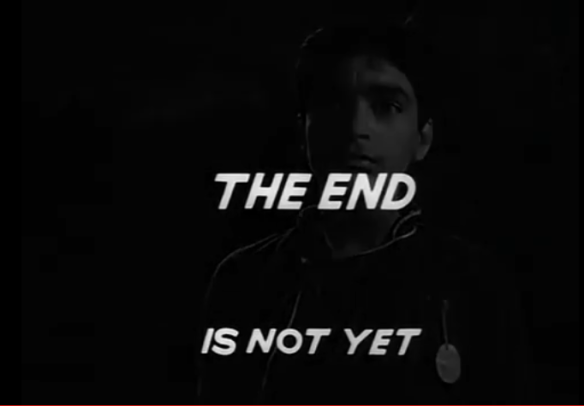
At the end of Haqeeqat (1964), the film fades to black over the battle-scarred face of a younger generation with the words, “THE END IS NOT YET.” Bold move, title card designer guy. Bold move.

This song is dedicated to my late grandfather, a Major-General in the Indian Army, who became an orphan at the age of 12, survived the Partition of India in 1947, fought on the fronts of the Indo-China War of 1962, and received the Ati Vishisht Seva Medal for his service in the Corps of Military Intelligence during the Indo-Pakistani War of 1971. He eventually retired with 3 children and 5 grandchildren who still strive to be as elegant and brave a human being as him.

– Mrs. 55

Beqarar Karke Humen Lyrics and Translation: Let’s Learn Urdu-Hindi

Waheeda Rehman Bees Saal Baad

Mysterious and beguiling, Waheeda Rehman catches the eye of Biswajeet, heir to a legacy of misfortune, in the film noir classic, Bees Saal Baad (1962)

Today we showcase the lyrics and English translation of Hemant Kumar’s “Beqarar Karke” from the film Bees Saal Baad (1962). We often talk about seductive songs and cabaret numbers in classic Hindi films, but invariably those songs are sung by bad girl Helen or a femme fatale who entices our hero down the wrong path. “Beqarar Karke” is different. Sung by that luscious and versatile vocal genius, Hemant Kumar, the song dangerously pulls our heroine into its spell of seduction in broad daylight. It’s not often that we get a song of temptation sung by a dude, and when we do, it’s heaven (no, literally, Hemant Kumar has the voice of God). The brilliance of Hemant Kumar’s composition are in its unexpected opening guitar chords. Set in the rural village of Chandanghat, the film’s atmosphere suddenly becomes infused with jazz and heart-pounding anticipation as Kumar’s voice dips through the first word of the song, leaving everyone as “beqarar” as he foretells. The surprising Western lilt marked Biswajeet as solid hero material! Bees Saal Baad was Biswajeet Bombay debut, and originally, it was Bengali superstar Uttam Kumar who had been the first choice as lead. Fortunately, singer-music director-producer Hemant Kumar lobbied for relative newcomer Biswajeet, and after working diligently to clean up his Bengali accent when speaking Hindi, launched his career!

Bees Saal Baad tells the eerie tale of a nobleman, played by the dashing Biswajeet, who returns to the village where his forefathers were mysteriously murdered. A staple of Bollywood film noir, Bees Saal Baad explores the darkness of the old feudal system with a satisfyingly sick twist ending. But no Indian film noir is complete without romance, and soon after arriving to his ancestral home, Biswajeet naturally falls for the coy village belle (acted superbly by Waheeda Rehman). Unused to his slick city ways, she falls hard for him when he surprises her with a flirtatious serenade in the countryside. With lyrics penned by Shakeel Badayuni, “Beqarar Karke” teases us with glimpses of innocent romance mingled with a fatalistic warning that defines the film. Biswajeet recalls:

I remember during the shooting of the song sequence, “Beqarar Karke Hame.N”, Biren Nag instructed me not to touch Waheeda Rehman, but ooze romance with my looks and smile. I followed him exactly and it was Waheeda Rehman’s regal and serene screen presence which lit up the silver screen during the shot.

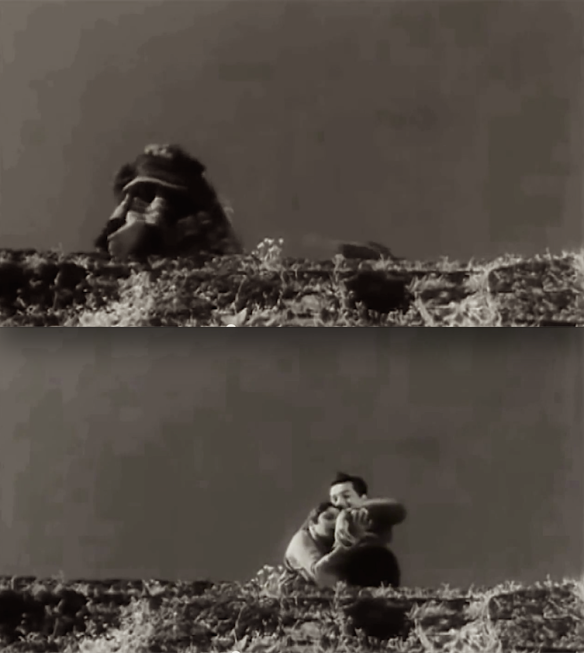
Low Angle Shot Bees Saal Baad Bekarar Karke

Above: Director Biren Nag constructs a clever low angle shot of Waheeda Rehman teetering on the edge of a cliff as Hemant Kumar aptly croons, “Yuu.N qadam akele na aage baDhaaiye.” Below: Seconds later, Biswajeet smoothly slips in for the rescue hug, staring down at the viewers in triumph.

He sort of broke his rule there when he went in for the rescue hug, but we know you’re going to swoon over this song as much as Waheeda! Try to grab control of your beating heart and check out the video for “Beqarar Karke” here as you follow along with our English translation and lyrics below!

Beqarar Karke Humen Lyrics and Translation:

Beqaraar karke hame.N yuu.N na jaaiye
Please do not go away like this and make me restless
Aap ko hamaari qasam lauT aaiye
For my sake, please come back
Dekhiiye woh kaali kaali badaliyaa.N

Look at those small dark clouds above
Zulf kii ghaTaa churaa na le kahii.N
May they not steal away the clouds of your hair
Chorii chorii aake shokh bijliyaa.N
The mischievous lightening comes secretly
Aap kii adaa churaa na le kahii.N
May they not steal away your elegance
Yuu.N qadam akele na aage baDhaaiye
Do not walk forward alone like this
Aap ko hamaare qasam lauT aaiye
For my sake, please come back

Dekhiiye gulaab kii woh Daaliyaa.N
Look at those rose branches
BaDh ke chuum le na aap ke qadam
May they not come and kiss your feet as you walk
Khoye khoye bha.Nware bhii hai.N baagh mei.N
Bumblebees are also hidden in this garden
Koi aap ko banaa na le sanam
May one of them not make you their own
Bahakii bahakii nazaro.N se khud ko bachaaiiye
Save yourself from their roving gazes
Aap ko hamaare qasam lauT aaiye
For my sake, please come back

Zindagii ke raaste ajiib hai.N
The paths of life are strange
In mei.N is tarah chalaa na kiijiiye
Please do not walk across them like this
Khair hai isii mei.N, aap ki huzuur,
For your welfare, your majesty
Apnaa koi saathii DhoonDh liijiiye
Please find yourself a companion
Sun ke dil kii baat yuu.N na muskuraaiiye
Please do not smile upon hearing these words of my heart
Aap ko hamaare qasam lauT aaiye
For my sake, please come back

Beqaraar karke hame.N yuu.N na jaaiye
Please do not go away like this and make me restless
Aap ko hamaare qasam lauT aaiye
For my sake, come back

Glossary:

beqaraar: restless; yuu.N: like this, in this manner; [kisi ke] qasam: [for someone’s] sake; lauT aanaa: to come back; kaalii: dark; badalii: [small] cloud; zulf: hair; ghaTaa: cloud; churaanaa: to steal; chorii chorii: quietly, sneakily; shokh: mischievous; bijlii: lightening; adaa: elegance, style; qadam: footsteps; aage: forward; baDhaanaa: to advance; gulaab: rose; Daal: branch; chuum: kiss; khoyaa: lost; bha.Nwaraa: bumblebee; baagh: garden; bahakaa: flowing, roving; nazar: glance, gaze; khud: self; [kisii ko] bachaanaa: to save [someone]; zindagii: life; raastaa: path; ajiib: strange; is tarah: in this manner; khair: welfare, good; aap ki huzuur: my honor, your majesty; saathii: companion; DhoonDhnaa: to search; dil: heart; baat: words; muskuraanaa: to smile

A quick note for the Hindi-Urdu grammar aficionados: Did you know aap ki huzoor has the same significance as mere huzoor? Bizarre, right?! Both statements confer a title of respect and superiority, despite opposite possessive pronouns (similar to “your honor” versus “my lord”). Huzoor, deriving from the Arabic hudoor denoting royal presence and still written in Nasta’liq with a zuaad, is a formal address found in many Urdu lyrics of Bollywood’s golden age (remember “Huzoor-e-wala” from Yeh Raat Phir Na Aaayegi (1965)?).

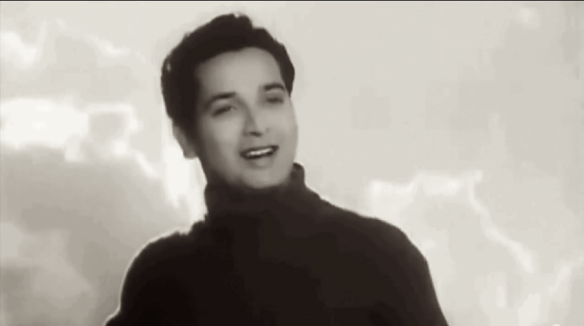
Biswajeet Bees Saal Baad

Like a dark cloud in a black turtleneck, Biswajeet glistens against the sky in Bees Saal Baad (1962).

Big shout-out to fans Ravi Shankar and Sundar who requested this game-spitting winner! For another inspiring Hemant Kumar composition and solo masterpiece, don’t miss “Tum Pukar Lo” from Khamoshi (1969).

– Mrs. 55

Ramaiya Vastavaiya Lyrics and Translation: Let’s Learn Urdu-Hindi

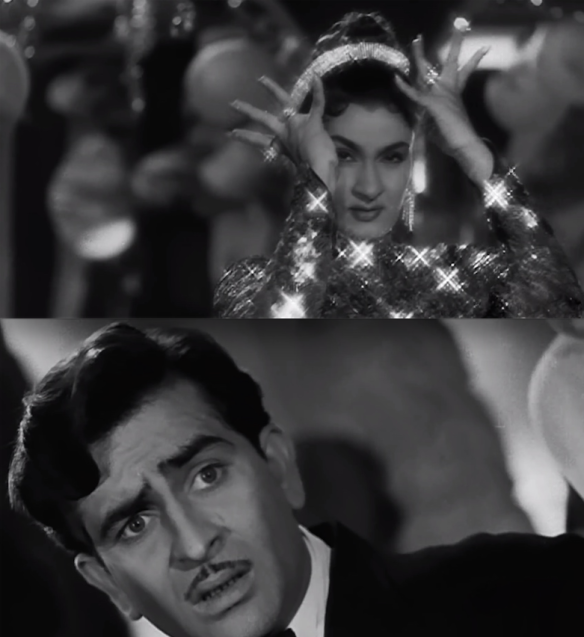
Raj Kapoor Nadira Shree 420

In a classic example of a dutch angle, Raj Kapoor recoils from the snake-like Nadira in Shree 420 (1955).

Today we present the lyrics and English translation of the famous “Ramaiya Vastavaiya” from Raj Kapoor’s 1955 blockbuster Shree 420. One of the most priceless gems of India’s Golden Age of Cinema, Shree 420 is a showman’s dream. In an era when the aesthetic of film was still an experimental playground, Raj Kapoor’s Shree 420 is as original and evocative as it was 60 years ago.

Raju, played by Raj Kapoor himself, arrives in Bombay as a patriotic simpleton crooning “Mera Joota Hai Japani.” In a pawnshop, Raju encounters Vidya (played by Nargis, in her final romantic appearance opposite Raj Kapoor under his banner production company), a pretty teacher who is selling her bangles to help pay for her struggling school (and whose name redundantly means “knowledge.”) For the next few weeks, Raju works hard to both earn a decent living at a laundry service and to woo the principled Vidya, dreaming of a simple and happy future family.

However, this utopian simplicity does not last long. When Raju delivers some pressed shirts to a wealthy flat, he meets Maya (whose name significantly means “illusion”), a high society woman who thrives on parties and gambling with the rich. She recognizes Raju’s untapped potential as a cunning cardshark, and lures him to a fancy soiree where she introduces him as Rajkumar, the Prince of Pipalinagar, of all things ridiculous. This brief taste of luxury and easy money leads Raju to agree to form a partnership with the corrupt industrialist Seth Dharamanand, bringing him instant wealth.

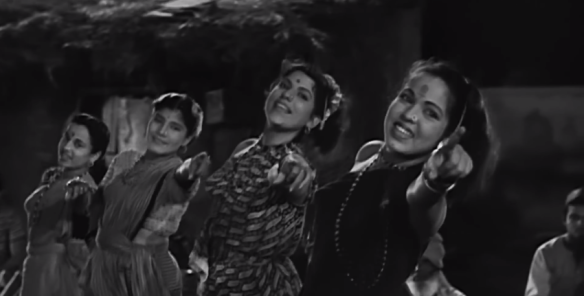
But Raju’s whirlwind romance with high Bombay society is stained by the shame Vidhya instills in him for his actions, and one night at the nightclub, he sees Maya and her world of illusion for what they truly are. He runs away in horror back to the slums that once gave him a home. Enter the song “Ramaiya Vastavaiya,” a cute villager number complete with chorus girls in native dress and a heavy-handed reminder that yes, poor people can be happy too.

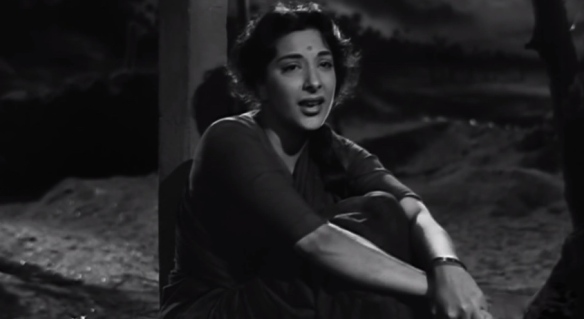
Nargis Shree 420 ramaiya vastavaiya

Nargis plays a virtuous, impoverished schoolteacher who struggles to give her students a better life in Shree 420 (1955).

Of course, the question you really want answered is, what the heck does “Ramaiya vastavaiya” mean?

It turns out Ramaiya vastavaiya is Telegu for respectfully asking, “Ram, won’t you come?” Legend has it that music composer Shankar Singh Raghuvanshi, who grew up in Hyderabad where Telugu is a dominant language, had been demonstrating his composition to director Raj Kapoor using placeholder Telugu lyrics. When Raj Kapoor heard the tune, he loved it so much, he wanted the Telugu title lyrics to be included in the final version! And perhaps the convenient symbolism did not escape Raj Kapoor–like Lord Ram returning at last to his kingdom, Raju finally comes back to the people who love him and his true home.

But all that aside, the real reason everyone has adored “Ramaiya Vastavaiya” for generations is simply that it’s so darn catchy. If you hear it once, you’ll be humming it all day! We hope you enjoy our English translation to the lyrics of this all-time favorite below. Follow along with the video and let us know in the comments how much your mind was blown like ours by the discovery of Ramaiya vastavaiya‘s Telugu roots.

Ramaiya Vastavaiya Lyrics and English Translation:

Mohammed Rafi:
Ramayyaa vastaavayyaa, ramayyaa vastaavayyaa
Ram, will you return?
Lata Mangeshkar:
Mai.N ne dil tujhko diyaa
I have given you my heart
Chorus:
Haa.N ramayyaa vastaavayyaa, ramayyaa vastaavayyaa
Yes, Ram, will you return?
Mai.N ne dil tujhko diyaa
I have given you my heart

village girl

Dancer Sheela Vaz plays a stock village girl with all the right morals in Shree 420 (1955). While shooting the song, Sheila Vaz, who did not speak Hindi, studied a translation of “Ramaiya Vastavaiya” and faked it till she made it!

Mohammed Rafi:
Naino.N mei.N thii pyaar kii roshnii
In your eyes was the light of love
Teri aankho.N me yeh duniyaadaari na thii
This worldliness was not in your eyes then
Lata Mangeshkar:
Tu aur thaa teraa dil aur thaa
You were different, your heart was different
Tere man mei.N yeh miThi kaTaari na thii
This sweet dagger was not in your heart then
Mohammed Rafi:
Mai.n jo dukh paauu.N, to kyaa? Aaj pachhataauu.N, to kyaa?
If I become sad, so what? If I regret today, so what?
Chorus:
Maine dil tujhko diyaa
I have given you my heart
Oh ramayyaa vastaavayyaa, ramayyaa vastaavayyaa
Oh, Ram, will you return?

Mohammed Rafi:
Us desh mei.N tere pardes mei.N
In that country, in your foreign land
Sone chaa.Ndi ke badle mei.N bhikate hai.N dil
Instead of gold and silver, they sell hearts
Lata Mangeshkar:
Is gaao.N mei.N, dard ki chhaao.N mei.N
In this village, in the shadow of pain
Pyaar ke naam par hii dhaDakte hai.N dil
Hearts beat only in the name of love
Chaand taaro.N ke tale, raat yeh gaatii chale
In the tent of the moon and stars, the night sings this songs
Maine dil tujhko diyaa
I have given you my heart
Chorus:
Oh ramayyaa vastaavayyaa, ramayyaa vastaavayyaa
Oh, Ram, will you return?

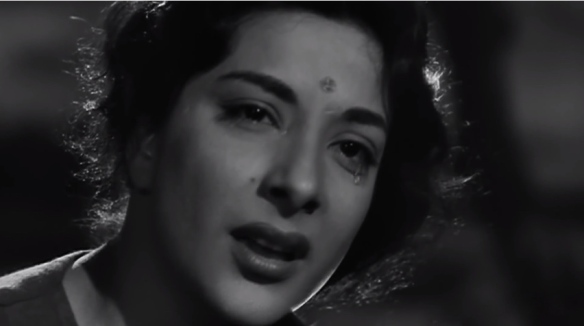
Nargis Shree 420 ramaiya vastavaiya

Joining in on the song playing on everyone’s lips in town, Nargis mourns for her lost love in Shree 420 (1955).

Lata Mangeshkar:
Yaad aati rahii dil dukhaati rahii
I still remember you, my hearts still grieves
Apne man ko manaanaa na aayaa hame.N
But I do not know how to conciliate my own mind
Tu na aaye to kyaa? Bhuul jaaye, to kyaa?
If you do not come, so what? If you forget, so what?
Pyaar karke bhulaanaa na aayaa hame.N
But having fallen in love, I do not know how to make myself forget
Wohii se duur se hii, tu bhi yeh keh de kabhii
Even from far away, say this sometime
Maine dil tujhko diyaa
I have given you my heart
Chorus:
Oh ramayyaa vastaavayyaa, ramayyaa vastaavayyaa
Oh, Ram, will you return?
Mukesh:
Maine dil tujhko diyaa
I have given you my heart
Chorus:
Oh ramayyaa vastaavayyaa, ramayyaa vastaavayyaa
Oh, Ram, will you return?

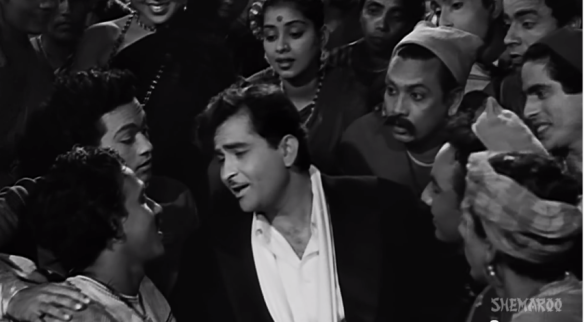
Raj Kapoor Ramaiya Vastavaiya Shree 420

Embodying the return of Lord Ram, Raj Kapoor leaves the glitzy world of Bombay nightlife to engage a captive audience of villagers in Shree 420 (1955).

Mukesh:
Rastaa wohii aur musaafir wohii
The path is the same and the traveler is the same
Ek taaraa na jaane kahaa.N chhup gayaa
But I do not know where that star has hidden itself
Duniyaa wohii duniyaawaale wohii
The society is the same, the citizens are the same
Koi kyaa jaane kiskaa jahaa.N luT gayaa
No one knows whose world has been destroyed
Merii aankho mei.N rahe, kaun jo mujh se kahe?
Who once told me to remain forever in their eyes?
Maine dil tujhko diyaa
I have given you my heart
Chorus:
Oh ramayyaa vastaavayyaa, ramayyaa vastaavayyaa
Oh, Ram, will you return?

Glossary:

Ramya vastavaiyaa: Ram, will you come (Telugu); dil: heart; nain: eyes; pyaar: love; roshnii: light; aankhe.N: eyes; duniyaadaari: wordliness; man: mind; heart; miiThaa: sweet; kaTaarii: small dagger; dukh: sadness; pacchtaanaa: to regret; desh: country (India); pardes: foreign country; sonaa: gold; chaa.Ndii: silver; [kisi ke] badle mei.N: in place of [something]; bhiktaanaa: to sell; gaao.N: village; dard: pain; chaao.N: shadow; naam: name: dhaDaknaa: [the heart] to beat; chaa.Nd: moon; taaraa: star; raat: night; gaanaa: to sing; yaad aanaa: to remember; dukhaanaa: to grieve; manaanaa: to conciliate, to cajole; bhuul jaanaa: to forget; bhuulaanaa: to make [someone] forget; duur: far away; kabhii: sometime; rastaa: path; musaafir: traveler; chhup jaanaa: to hide; duniyaa: society, the world; duniyaawaale: citizens; jahaa.N: world; luT gayaa: destroyed

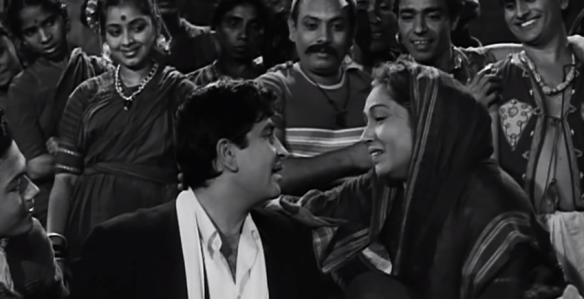
Lalita Pawar Raj Kapoor Shree420

With motherly affection, Lalita Pawar welcomes Raj Kapoor back to the fold with open arms in Shree 420 (1955).

The moral dilemma that plagues Raju’s existence eventually comes to a climax when Seth Dharamanand, Maya, and Raju are incriminated for swindling money from the poor to build communal houses. Seeking to atone for the past, Raju address the scores of poor people awaiting a home. Perhaps it is impossible to build houses for each person individually, he says, but they are a group of a million people, now united, and if they go to the government and demand land, they have the power to build their own homes with their combined money. The cure to poverty for the nation, he preaches, is not dishonesty, but hard-work and determination. Raju is released from his charges, and returns to the lifestyle of an honest workingman as he began, joined by Vidya who has forgiven him. The film finishes, humbled and hopeful, with the two heading down the road of life together.

Thank you to our fans Mustafa and Onima Thakur for this inspiring request!

-Mrs. 55

P.S. Be sure to watch the music video of this song and appreciate Raj Kapoor’s novel song transitions! Halfway through the song, the camera tracks “Ramaiya Vastavaiya” as it is picked up from the dancing villager’s circle by a passing horse carriage, overheard by a bicyclist, who carries the melody to Nargis sitting alone miles away, thereby fluidly retaining the realism of the sequence. Song transitions were still uncharted territory in this infant age of cinema–and Raj Kapoor, like the the great Guru Dutt, was a genius and pioneer. OK, OK I promise that’s the last thing I’m going to say about this song–but seriously, every scene in this movie is a film-lover’s gold mine!

Khoya Khoya Chand Lyrics and Translation: Let’s Learn Urdu-Hindi

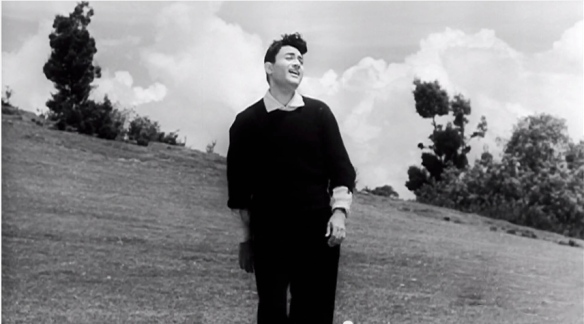
dev anand Khoya Khoya chand kala bazaar

Dapper Dev Anand floats through Ooty with hair that could make Tintin jealous in Kala Bazaar (1960).

Today we highlight the lyrics and English translation to Mohammed Rafi’s “Khoya Khoya Chand” from the film Kala Bazaar (1960). Dev Anand stars as a poor bus conductor with an ailing mother who becomes desperate when he loses his job. He turns to the black market and makes a fortune in underground business dealings. Although he is able to provide well for his mother, he is ashamed when he meets the pure-hearted, but strong-willed Waheeda Rehman who spurns all forms of dishonesty. The strength of Kala Bazaar is in its character study, and though perhaps occasionally heavy-handed, the personalities it portrays are not stereotypic. Both Dev Anand and Waheeda Rehman carry flaws as they navigate the grey space of their moral boundaries, adding a welcome warmth to the film.

Like the effortlessly romantic “Likhe Jo Khat Tujhe,” “Khoya Khoya Chand” makes my top three Mohammed Rafi songs of all time (bonus points if you can guess the third!) Set upon the peaceful Ooty landscape and brimming with whimsy, “Khoya Khoya Chand” is Dev Anand’s ode to the woman he loves and the crossroads at which they stand. The camera breezes alongside him, a cinematographic embodiment of the changing winds, and soars left and right as flirtatiousy as Shailendra’s lyrics. “Khoya Khoya Chand” is quite literally a breath of fresh air that will change the characters (and possibly you) forever! With an open sky of possibility above, what’s there not to love?

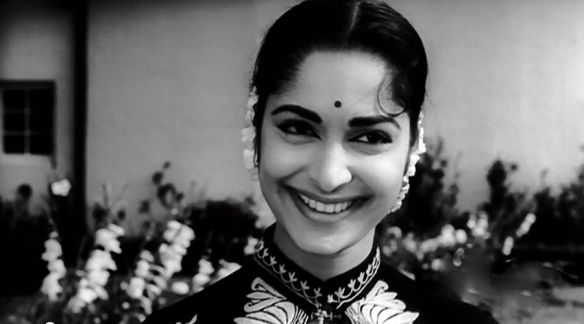
Waheeda Rehman Khoya Khoya Chand

With bold and unafraid eyebrows that make no excuses, Waheeda Rehman glows in the elegant black-and-white cinematography of Kala Bazaar (1960).

We hope you enjoy our English translation of the playful hit song “Khoya Khoya Chand” below! Follow along with our lyrics to the video here and try not to get dizzy as the camera spins with Dev Anand through the Ooty countryside!

Khoya Khoya Chand Lyrics and Translation:

O ho ho, khoya khoya chaand, khula aasmaan
The lost moon in the open sky
Aankhon mei.N saari raat jaayegi
The whole night will fly before your eyes
Tumko bhi kaise nee.Nd aayegi
How will you be able to sleep?
Oh oh, khoya khoya chaand…
Oh, the lost moon

Mastii bharii hawaa jo chalii
The blowing wind is filled with intoxication
Khil khil gayii yeh dil ki kalii
The flower of my heart has blossomed
Man ki gali mein hai khalbalii
There is an agitation in the alley of my soul
Ke unko to bulaao
For I must call out to her
O ho ho, khoya khoya chaand
Oh, the lost moon…

Taare chale, nazaare chale
Stars go, sights go
Sang sang mere woh saare chale
They all go along with me
Chaaro.N taraf ishaare chale
Signals come from every direction
Kisi ke to ho jaao
That I must become someone else’s
O ho ho, khoya khoya chaand
Oh, the lost moon…

Aisii hii raat, bheegii sii raat
On a rainy night like this
Haatho.N mein haath hote voh saath
If she was beside me, hand in hand
Keh lete unse dil kii yeh baat
I would tell her these words from my heart
Ab to na sataao
Now do not torture me
O ho ho, khoya khoya chaand
Oh, the lost moon…

Hum miT chale jinke liye
The person for whom I would disappear
Bin kuch kahe woh chhup chhup rahe
Without saying a word, she sits quietly
Koi zaraa yeh unse kahe
Someone tell her
Na aise aazmaao
Do not test me like this

O ho ho, khoya khoya chaand, khula aasmaan
The lost moon in the open sky
Aankhon mei.N saari raat jaayegi
The whole night will fly before your eyes
Tumko bhi kaise nee.Nd aayegi
How will you be able to sleep?
Oh oh, khoya khoya chaand…
Oh, the lost moon

Glossary:

chaand: moon; aasmaan: sky; aa.Nkh: eye; raat: night; [kisi ko] nee.Nd aanaa: to fall asleep; mastii: intoxication; hawaa: wind; khilnaa: to bloom; dil: heart; kalii: flower; man: soul; galii: alleyway, street; khalbalii: agitation; bulaanaa: to call; taaraa: star; nazaaraa: sights, vision; sang sang: alongside, together; chaaron taraf se: from 4 directions, from everywhere; ishaaraa: signal, sign; bheegii: rainy, wet; haath: hand; baat; word; sataanaa: to torture; miTnaa: to disappear; chhup: quiet; aazmaanaa: to test; to try

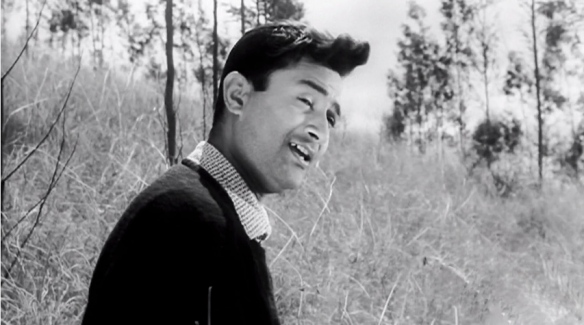
dev anand khoya khoya chand kala bazaar 2

I see you, you sneaky lover of men with vintage hairstyles. Wanna piece of this pompadour?

One of the best moments of Kala Bazaar is earlier in the film when Dev Anand and his posse are selling black market tickets to the premier of the film Mother India (1957)! Real archival footage from the premiere is blended seamlessly into the narrative, giving us a glimpse at the hysteria and excitement of a real-life star-studded movie premiere in the Golden Age of Bollywood. Watch as Mohammed Rafi, Nargis, Lata Mangeshkar, Guru Dutt, Dilip Kumar, Rajendra Kumar and many more make unexpected real-life cameos! There are few things I love more than the existential fairyland that is a film about films.

Mohammed Rafi at the Mother India (1957) premier

Famed playback singer Mohammed Rafi smiles at the real-life Mother India (1957) premiere as seen in Kala Bazaar (1960)!

This fun-loving song was requested by two faithful fans, Sudipta Banerjee and Himani Sood! Many thanks for the brilliant request and if you’re trapped in a snowstorm this week like we are, we hope these lyrics remind you of the joys of warm weather soon to come!

– Mrs. 55

Mera Joota Hai Japani Lyrics and Translation: Let’s Learn Urdu-Hindi

Raj Kapoor Shree 420 Charlie Chaplin

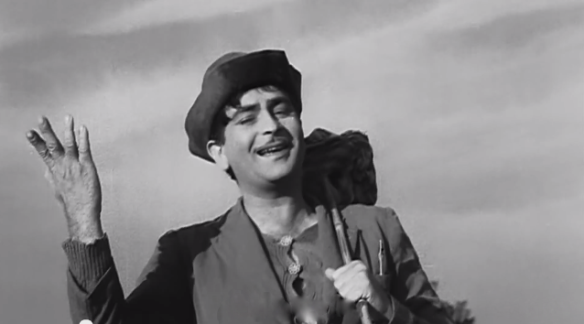
Raj Kapoor in his famous Charlie Chaplin incarnation from hit film Shree 420 (1955)

Today we showcase the lyrics and English translation of “Mera Joota Hai Japani” from Raj Kapoor’s Shree 420 (1955) to mark the occasion of India’s Independence Day! Shree 420 is truly a landmark film in Hindi cinema starring a legendary showman who became known from Bombay to Bulgaria. To understand the film and the ramifications of the enormously popular song of patriotism, “Mera Joota Hai Japani,” we turn to the context of the nation’s not-so-distant past.

When India awakened to independence from British rule in the summer of 1947, the country faced many barriers to united prosperity under Prime Minister Jawaharlal Nehru’s integrated social programs. While the freedom for which it had fought for generations was now realized, the Partition divided the Northern boundary of the nation between Muslims and Hindus, bolstering a mutual fear and hatred that seeped into the many ethnically diverse major cities. There, in turn, a rapid industrialization ideologically distanced the surrounding villagers from the urbanites, and a booming economy further isolated and redefined the gentry and the working class. While the geographic and cultural bars of much of Southern India allowed for a lesser degree of revolution, the Northern states, especially in the metropolises like Bombay where Bollywood blossomed, underwent a dramatic change that was felt at some level by the majority of inhabitants. Some strove to achieve a balance between the traditions of old and the advantages of Westernization, others the romanticism of rural life versus modern city life, and as always, the penniless lower classes wished to close the widening economic gap between themselves and the teeming wealth of the industrialists. In this maze of contradictions and extremes, Nehru tried nobly to guide the nation into forming a unique identity of its own as it moved into the future.

Raj Kapoor phir bhi dil hair hindustani shree 420

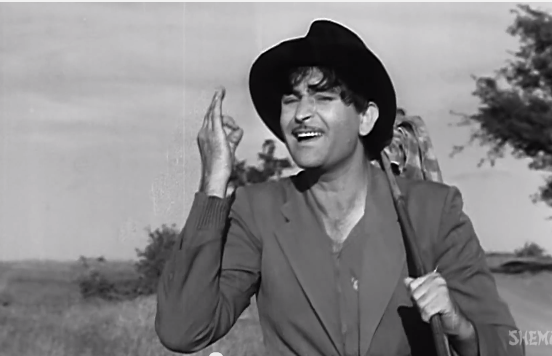
Raj Kapoor famously reminds his audience that “Phir bhi dil hai Hindustani” in Shree 420 (1955).

The elaborate family dramas and mythologicals of pre-independence Bollywood, therefore, no longer completely satisfied the country’s cinematic needs. Raj Kapoor was among the major influential directors and actors that emerged in the early years of independence whose work changed the face of Indian film. With the surfacing of a new middle and lower class audience, he sought to restructure the accessibility and impact of Indian cinema. Raj Kapoor (whose self-proclaimed audience was the underdog and downtrodden) responded to the socio-economic tensions of Nehru’s India through highly stylistic proletariat films that glorified the virtuous poor. His Chaplin-esque comedic appeal and playful optimism made him an iconic figure domestically and across the Middle East and Soviet Union. As a director of many of the era’s greatest hits such as the classic comedy, Shree 420, he established in the 1950s what now seems to be the “formulaic” Bollywood film. His plots mingled wholesome entertainment with social tension, dramatic one-liners, catchy show tunes, and the invariable triumph of Indian purity in the poor over the decadent Westernized ways of the rich.

Shree 420 is the story of a young man, Raju, who wanders from the countryside to find opportunity in city society. With an innocent smile and optimism, he strolls down the street famously singing love for his homeland in “Mera Joota Hai Japani.” His humble cheerfulness and patriotic pride captures the spirit of Nehru’s hopes and ideals for the blooming nation of a newly independent India threatened by corruption. 420, the well-known number from which the film derives its title, is the Indian penal code for fraud and dishonesty, and foreshadows Raju’s discovery of the means to survive in “modern” society.

Raj Kapoor mera joota hai japani

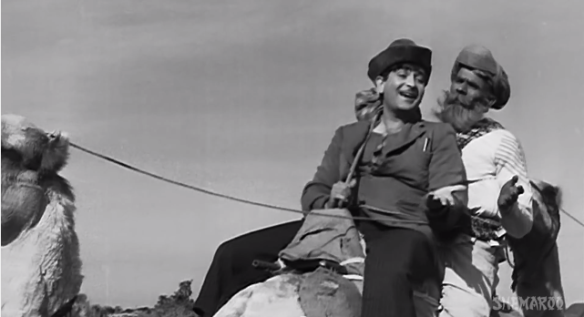
Raj Kapoor hops on a camel with an old guy who doesn’t seem to mind in Shree 420 (1955)

Shree 420 was a milestone production under the R.K. Studios banner that was among the first to be produced, directed, and acted in by Raj Kapoor himself. The son of a widely respected and extremely wealthy actor of the previous era, Prithviraj Kapoor, Raj Kapoor was nurtured in the film industry and had little difficulty in starting his own company with a very liberal amount of freedom. Formed in 1946, R.K. Studios went on to create some of the most successful films of Indian cinema. With lyrics by Shailendra and the soulful voice of Mukesh, we hope you enjoy our English translation of the lyrics to one of the thespian’s most beloved solos, “Mera Joota Hai Japani!”

Mera Joota Hai Japani Lyrics and Translation:

Meraa juuta hai Japaanii, yeh patluun Englishtaanii
My shoes are Japanese, these pants are British
Sar pe laal topii Ruusi, phir bhi dil hai Hindustanii
On my head is a red Russian hat, nonetheless my heart is Indian

Nikal paDe hai khulii saDak par, apnaa seenaa taane
I set out upon the wide open road confidently
Manzil kahaa.N, kahaa.N ruknaa hai, uparwaalaa jaane
Where is my destination, where must I stop, only God knows
BaDhte jaaye.N hum sailaanii, jaise ek Dariyaa toofanii
We advance forward relentlessly, as if a hurricane in a river
Sar pe laal topi Ruusi phir bhi dil hai Hindustani
On my head is a red Russian hat, nonetheless my heart is Indian
Mera juuta hai Japaanii…

Uupar-niiche niiche-uupar, leher chale jeevan kii
High to low, low to high, the waves of life flow
Nadaa.N hai jo baiThe kinaare, puuchhe raah watan kii
Those who wait by the shore are naive, ask for the path toward the motherland
Chalna jeevan kii kahaanii, rukna maut kii nishaanii
Going is the story of life while stopping is a sign of death
Sar pe laal topi Ruusi phir bhi dil hai Hindustani
On my head is a red Russian hat, nonetheless my heart is Indian
Mera juuta hai Japaanii…

Ho.Nge raaje rajkanwar ham bigaDe dil shehzaade
I will become the prince of fallen hearts
Ham singhaasan par jaa baithe.N jab jab kare.N iraade.N
I will sit upon a throne whenever I desire
Surat hai jaani-pehchaanii, duniyaa walo.N ko hairanii
My face will become familiar, it will be a surprise to the world
Sar pe laal topi Ruusi phir bhi dil hai Hindustani
On my head is a red Russian hat, nonetheless my heart is Indian
Mera juuta hai Japaanii…

Glossary:

juuta: shoe; Japaanii: Japanese; patluun: pants; Englishtani: British; sar: head; laal: red; topii: hat; Ruusii: Russian; phir bhi: nonetheless; however; dil: heart; Hindustani: Indian; nikal paDnaa: to set out; khulii: open; saDak: road; seenaa taannaa: (literally) to puff out the chest with pride, confidently; manzil: destination; ruknaa: to stop; uparwaalaa: God, he who is above; sailaanii: relentlessly; Dariyaa: river; toofaan: hurricane; uupar: high; niiche: low; leher: wave; jeevan: life; nadaa.N: naive; foolish; baiThnaa: to sit; kinaaraa: shore; raah: path; watan: motherland; country; maut: death; nishaanii: sign, symbol; raajaa: king; rajkanwar: prince; bigaDnaa: to fall; shehzaadaa: prince; singhaasan: throne; iraadaa: desire; surat: face; jaan-pehchaan: familiar; hairaani: surprise

Rural India to city transition

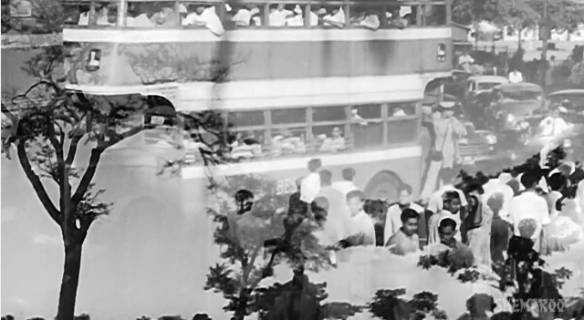
Raj Kapoor elegantly transitions with a cross-fade from rural India to a bustling city at the end of “Mera Joota Hai Japani.”

In the 1960s Raj Kapoor would drop his former image of the lovable proletariat and direct movies that resonated as family dramas of the wealthy, an increasing surrender to commercialism. The socio-political atmosphere of India had changed, and with it, the wants of the people. Movies that emphasized the difficulties of the developing period of the nation, or the unforgiving nature of that society were not the sell-outs they once were. The transition to a new era was over.

– Mrs. 55

camel

My fiance and I camel-spotting à la Raj Kapoor on our journey from New Delhi to Agra in a recent trip! Phir bhi dil hai Hindustani, as they say…