
Likhe Jo Khat Tujhe Lyrics and Translation: Let’s Learn Urdu-Hindi

Likhe jo Khat Tujhe Shashi Kapoor

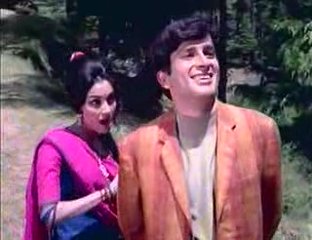
Shashi Kapoor and Asha Parekh star in Kanyadaan (1968)

For our next song, we translate the lyrics of my all-time favorite Mohammed Rafi song, Likhe Jo Khat Tujhe. The lyrics and translation of Likhe Jo Khat Tujhe have no frills, no super complicated Urdu, just verse straight from the heart. The metaphors of the lyrics have a simple beauty to them and the handsome voice of Mohammed Rafi brings them to sublimity. Although the film Kanyadan (1968) glorifies the social oppression of women and child marriages (highly objectionable and not worth the three hours I lost watching it), this song epitomizes what classic Bollywood love is all about. Boy falls for girl. Girl has an extremely cute colorful native outfit on and hides coyly behind local trees. Boy attempts to win over girl by serenading her. Girl and boy do not kiss, but you know by the way the camera pans around the flora that it’s on their minds. Likhe Jo Khat Tujhe is a blissfully adorable reminder of all things magical that Bollywood romance once meant: the charming poetry of innocent love. Can that ever get old?
Handsome shashi kapoor smile .png

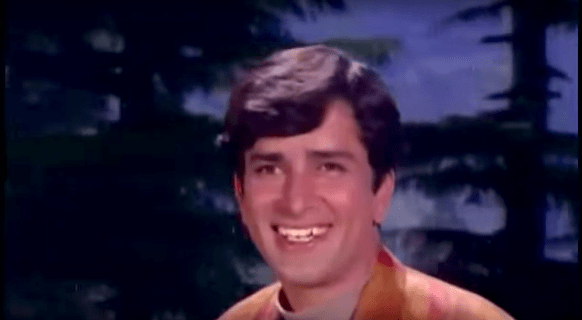
Shashi Kapoor flashes his famous smile, somehow made even more handsome by the crooked teeth.

Also note the clever use of Shashi Kapoor’s sleek convertible as the object around which the actors flirt and evade each other. As if we weren’t already convinced of how cool it was to be modern in the 60s…

Likhe Jo Khat Tujhe Lyrics and Translation:

Likhe jo khat tujhe woh teri yaad mei.N
Those letters that I wrote to you
Hazaaro.N rang ke nazaare ban gaye
Became a wondrous sight of a thousand colors
Sa.Nveraa jab huaa to phool ban gaye,
When morning came, they became flowers
Jo raat aayi to sitaare ban gaye
When night fell, they became stars
Likhe jo khat tujhe…

Koyi naghma kahii.N goonjaa kahaa dil ne yeh tu aayii
A melody resonated somewhere as my heart sensed your presence
Kahin chatki kali koyi main yeh samjha, tu sharmaayi
Somewhere a flower blossomed and it appeared as if you had blushed
Koi khushboo kahii.N bikhrii lagaa yeh zulf lehraayi
A fragrance filled the air and it seemed to me your hair had billowed

Fiza rangeen, adaa rangeen, yeh ithlaana, yeh sharmaana
The ambiance is colourful, your style is colourful, you sometimes swagger, you are sometimes demure
Yeh angaDaaii, yeh tanhaayii yeh tarsa kar, chale jaana
This preparedness, this isolation, this way you torture me, then walk away
Bana de ga nahii.N kisko jawaa.N jadoo yeh deewaanaa?
Who would not go crazy with your youthful magic?
Likhe jo khat tujhe…

Jahaa.N tu hai, vahaa.N main hoo.N, mere dil ki tu dhaDhkan hai
Wherever you are, I am there. You are my heartbeat
Musaafir mai.N tu manzil hai, main pyaasaa hoo.N tu saawan hai
I am a traveler, you are my destination. I am thirsty, you are the monsoon
Meri duniya yeh nazare.N hai.N, meri jannat yeh daaman hai
My world is held by the way you look at me, my paradise lies in your embrace
Likhe jo khat tujhe…

Glossary:

khat: letter; yaad: memory; sa.Nveraa: morning; khushboo: fragrance; zulf: hair; rangeen: colorful; tanhaayii: loneliness; jadoo: magic; musaafir: traveler; pyaasaa: thirsty; jannat: paradise

For all the Urdu-Hindi grammar junkies, you’ll notice that we’ve written the word “naghma” with an “h” although it’s often seen written without. This because the word naghma in Urdu is actually spelled with a ghain, not a regular “g” (in Hindi, the “ga” would have a dot below to indicate this). Ghain makes the “g” a more gutteral, difficult sound to pronounce, but if you’re trying to impress your friends at your next Bollywood Night, be sure to enunciate this clearly. Other words like kaaghaz (paper), baagh (garden), maghruur (proud) and ghalat (mistake) also contained frequently overlooked ghains.

-Mrs. 55

Who Is Mani Rabadi?

Gallery

This gallery contains 32 photos.

You’ve probably never heard of Mani Rabadi, but I’ll bet you’ve seen her work before. A behind-the-scenes legend, Mani Rabadi was a fashion designer to the stars. This woman was the final word in costume design for Bollywood films of … Continue reading

O Mere Shah-e Khuban Lyrics and Translation: Let’s Learn Urdu-Hindi

Clad in a tight kimono, Asha Parekh prances about Japan in Love in Tokyo (1966)

Next we will explore the lyrics and translation of the hit song “O Mere Shah-e Khuban” from Love in Tokyo. Shot on location in Japan shortly after the 1964 Olympics, Love in Tokyo (1966) is nothing short of an “exotic” tourist fantasy. The film is one of a trilogy of films I put in this category from the same era with Night in London (1967) and An Evening in Paris (1967). These are movies that dazzled Indian audiences with a glimpse into a lifestyle and culture outside the familiar homeland, and on occasion were almost laughably politically incorrect. Love in Tokyo stars Asha Parekh (playing an Indian woman raised Japanese) and Joy Mukherji who finds himself in Tokyo for reasons almost too complicated to discuss here (or probably anywhere outside a psychiatric ward).

But say what you want about the worth of the film’s plot, Love in Tokyo’s soundtrack is wonderful (the cheesy title song grows on you in spite of its lyrics). The real gem of the album is the love ballad “O Mere Shah-e Khuban”, with music by Shankar-Jaikishen. Lata Mangeshkar and Mohammed Rafi each sing a version at different points in the film. I naturally prefer Rafi’s because of that deep sublime silky voice, but it’s open for argument. The lyrics have some rare Urdu vocabulary and is an example of probably the only time you will ever hear the “h” in “shaah” actually pronounced because of the “-e-” conjunct that follows! This Hasrat Jaipuri ghazal harkens to a famous couplet of Mughal era poet Momin Khan Momin: “Tum mere paas hote ho goyaa/Jab koi doosraa nahii.N hotaa.” The lines can be interpreted on several levels, literal and spiritual, and are a beautiful example of classical Urdu poetry’s rich legacy in contemporary music.

I loved the intro music to this song so much, I actually featured it in my Harvard thesis film. Enjoy our English translation of “O Mere Shah-e Khuban” below!

O Mere Shah-e Khuban Lyrics and Translation:

O mere shaah-e khubaa.N, o meri jaan-e janaana
Oh my beautiful ruler, the love of my life
Tum mere paas hote ho
You are beside me
Koi doosra nahi.N hota
Let no one else take your place

O mere shaah-e khubaa.N…

Kab khayaalo.N ki dhoop dhalti hai
When the sunlight fades from my thoughts
Har qadam par shamaa si jalti hai
Then with every step there is a light as if from a candle
Mera saayaa jidhar bhi jaataa hai
For wherever my shadow goes
Teri tasveer saath chalti hai
It goes with your image

O mere shaah-e khubaa.N…

Tum ho saharaa mei.N, tum gulistaan mei.N
You are in the desert, you are in the rose gardens
Tum ho zarron mei.N tum biyaabaan mei.N
You are in every particle, you are in the wilderness
Mai.N ne tumko kahaa.N kahaa.N dekha
I have seen you everywhere
Chhupke rehte ho tum rag-e-jaan mei.N
You are hidden within my very veins

O mere shaah-e khubaa.N…

Meri aankho.N ki justaju tum ho
You are that for which my eyes are searching
Iltijaa tum ho, aarzoo tum ho
You are my prayer, and you are my desire
Main kisi aur ko to kya jaanuu.N?
What could I know about anyone else
Meri ulfat ki aabroo tum ho
The honor of my love lies with you

O mere shaah-e khubaa.N…

Glossary:

Shaah: ruler; khubaa.N: radiant, beautiful; janaanaa: beloved; doosra: second, other; dhoop: sunlight; shamaa: light, candle; saayaa: shadow; tasveer: photograph, image; saharaa: desert; gulistaan: rose garden; zar: particle; biyaabaan: wilderness, desert; rag: vein, vessel; justaju: quest, search; iltijaa: request, prayer; aarzoo: desire; ulfat: love; aabroo: honor

As a bizarre bit of trivia, in the film Asha Parekh often does her hair in cutsy ponytails with a beaded elastic. The hairdo became known as “The Love in Tokyo” and was enjoyed a brief period of popularity among the masses. But men, don’t think you’re above this sort of fad–that classy plaid fedora from Jewel Thief? Sold-out in Indian stores across the nation after the film’s release. So let’s just try be grateful for what dignity we have.

Sweet ‘do, Asha. You totally blend in now!

-Mrs. 55