Allah Tero Naam Lyrics and Translation: Let’s Learn Urdu-Hindi

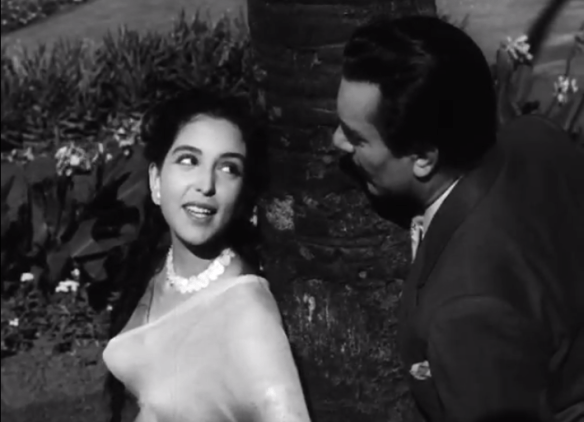
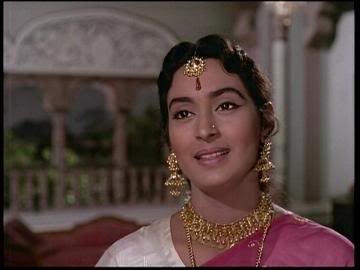
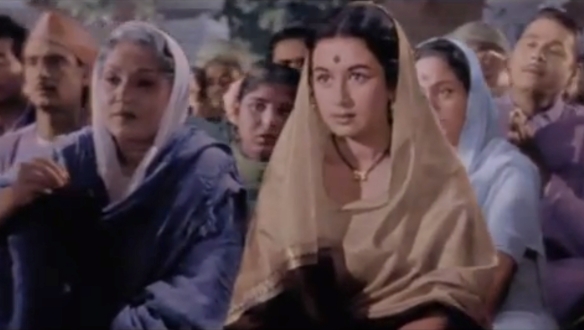
Nanda prays for her husband in the army in Hum Dono (1961).

Nanda prays for her husband in the army in Hum Dono (1961).

Happy New Year’s to all our readers! What an incredible year it’s been for us to write this blog and to have enjoyed discovering so many fellow fans of classic Bollywood cinema! I grew up in a Hindu Punjabi family, and in my house, we always celebrate the New Year’s with a havan the morning of January 1st with friends in the community. There’s something calming and cozy about these annual gatherings–we keep it casual where I’m from while taking a break to reflect on the year behind on us and what lies ahead. In the spirit of auspicious beginnings, we shall present the lyrics and full English translation to one of Bollywood’s greatest bhajansAllah Tero Naam” from Hum Dono (1961). Rendered impeccably by Lata Mangeshkar, “Allah Tero Naam” soars with bi-partisan Hindu-Muslim appeal in a humble call to God for wisdom and strength. The iconic number is one of Lata’s personal favorite Jaidev compositions!
nanda allah tero naam 3

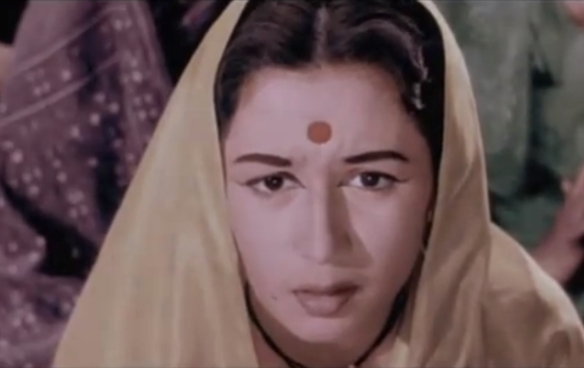
Nanda sings the gentle bhajan “Allah Tero Naam” in Hum Dono (1961) as a special expression of bipartisan devotion in Hindi films.

For me, Hum Dono (1961) is one of the finest films of Dev Anand’s illustrious career: it glows with a constantly-twisting plot and a golden soundtrack that places the film among the legends of cinematic history. Dev Anand was well-known for pushing the envelope of societal norms as a director, and the troubling predicaments his characters find themselves in always astound–whether falling in love with a woman who thinks he’s her brother (Bombay Ka Babu), conducting whirlwind affairs with three women at once (Teen Devian) or romancing another man’s wife who believes he’s her real husband (Hum Dono). The plots are scintillating and the acting invariably superb. Furthermore, did I mention Hum Dono a quasi-twin movie too? Couple that with a war-time theme and you can readily imagine the opportunities for confusion of epic Bollywood proportions. See our earlier translation of “Main Zindagi Ka Saath” from the same film!

The Lata Mangeshkar solo is one of the film’s many high points, arriving midway through the film as Nanda prays for her husband’s safe return from the war. The time period was arguably when Lata’s voice was at her most angelic, and the graceful, gentle maneuvers of this song will leave you breathless for more!

Perhaps one of the greatest aspects to “Allah Tero Naam” is the Hindu-Muslim crossover lyrics. Reminiscent of “Ishwar Allah Tero Naam” later rendered by Mohammed Rafi in Nayaa Raastaa (1970), this bhajan encompasses an important and unique aspect of Indian spirituality–the transcendence of religious barriers (which holds a particular intrigue in a war-time themed filmed!) You guessed it, the lyrics are penned by that sensitive soul Sahir Ludhiviani, who’s feelings against war and it’s horrors are a theme in many later works (“Khuda-e-bartar,” anyone?). So whether you adore this song for the lyrics, the rendition, or just for Nanda’s emotive eye-batting, we hope you enjoy the lyrics and our English translation to “Allah Tero Naam” and wish you a happy New Year!

Allah Tero Naam Lyrics and Translation:

Allah tero naam, Ishwar tero naam
Your name is Allah, your name is Ishwar
Sab ko sanmatii de, Bhagwan
Bless everyone with equanimity, God

Maango.N kaa sindoor na chhuuTe
Do not let the sindoor disappear from the part of our hair [Let us not be widowed]
Maa.N bahano.N kii aas na TuuTe
Do not shatter the hopes of mothers and sisters
Deha binaa, Daataa
Without a body, Lord…
Deha binaa bhaTake na praan
Let the soul not wander without a body

O saare jag ke rakhwaale
O keeper of the whole world
Nirbal ko bal denewaale
The giver of strength to the weak
Balwaano.N ko
To the strong…
Balwaano.N ko de de gyaan
Bestow wisdom to the strong

Glossary:

Allah: God [Muslim]; Ishwar: God [Hindu]; sanmatii: equanimity, advise; maaNg: the parting line in a woman’s hair; sindoor: red powder worn in a woman’s hair part to signify marriage; maa.N: mother; bahan: sister; aas: hope; TuuTnaa: to break, to shatter; deha: body; Daataa: Lord; bhataknaa: to wander; praan: soul, life; rakhwaalaa: the keeper; nirbal: weak; bal: strength; balwaan: one who is strong, a warrior; denewaalaa: the giver; gyaan: wisdom, knowledge
dev anand hum dono allah tero naam

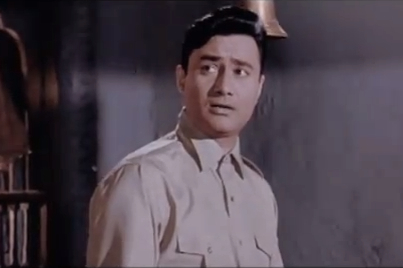
Dashing as always Dev Anand is torn from his family and caught in a moral dilemma in Hum Dono (1961).

Ever wondered why some songs use the term “tero” instead of “teraa” such as in this devotional? It’s a grammatical exception in the Hindustani language that you’ll only find in a direct address to God! It’s always nice to start a new year with linguistic trivia. Here at Mr. and Mrs. 55, our New Year’s resolution is to blog more often–we’re almost nearing our 100th post!

– Mrs. 55
Jaane Kaise Sapnon Mein Lyrics and Translation: Let’s Learn Urdu-Hindi

Two Bharat Ratnas come together: Pt. Ravi Shankar and Lata Mangeshkar

Today, we present a guest blog entry by one of our favorite readers Pothik Chatterjee:

“The classical sun of India has set and a darkness has come over. There is no artist who spread Indian music this rapidly across the world.”

–Lata Mangeshkar, on the passing of Ravi Shankar

Legendary Indian classical musician and composer Pandit Ravi Shankar, passed away recently on December 11, 2012 at the age of 92 near his home in Encinitas, California. Shankar, a winner of the prestigious Bharat Ratna award, was a proponent of  “world music” before the term became fashionable in the field. He is most famous in the West for his collaborations with violin virtuouso Yehudi Menuhin, minimalist composer Phillip Glass, and Beatles singer George Harrison. Shankar’s legacy is a testament to the fact that truly great music can overcome cultural barriers and achieve appreciation on a universal scale.

In 2006, I received the opportunity to hear Pandit-ji and his daughter Anoushka Shankar perform live in Washington D.C.  It was a sublime musical experience that I cherish fondly to this day. Even as a child, I have memories of watching Satyajit Ray’s film, Pather Panchali (1955)  and being moved to tears by the touching story of a Bengali family in rural India. The soundtrack that Shankar composed for Ray’s film and the entire Apu Trilogy was so powerful and emotionally stirring that it could be regarded as one of the film’s major characters in itself. Shankar also composed the soundtrack for Richard Attenborough’s Gandhi, earning him a coveted Oscar nomination.

Pt. Ravi Shankar teaches George Harrison on the sitar.

It is less well-known that that Pandit-ji also composed a handful of soundtracks in the arena of Bollywood cinema, including Anuradha (1960), Godaan (1963) and Meera (1979). As a tribute to Ravi Shankar’s contributions to Hindi film music, we provide the lyrics and English translation for jaane kaise sapno.n me.n from Anuradha (1960). Directed by Hrishikesh Mukherjee, this film is based on a short story by Sachin Bhowmick that was originally inspired by Gustave Flaubert’s novel Madame Bovary. The film tells the story of  Anuradha (played by Leela Naidu), who goes against her father’s wishes by marrying an idealistic doctor (Balraj Sahni). Anuradha sacrifices her singing career to move to the village with her husband, and the film depicts her ensuing feelings of marginalization and entrapment.

The soundtrack to this film is especially memorable for Ravi Shankar’s collaboration with Lata Mangeshkar. Lata navigates effortlessly through the difficult classical compositions of this soundtrack, matching Shankar’s musical genius every step of the way. In this particular song, Shankar crafts a pleasant melody based on raga Tilak Shyam, a hybrid creation of Pandit-ji himself that fuses the evening ragas Tilak Kamod and Shyam Kalyan. Appropriately enough, the picturization here depicts the beautiful and expressive Leela Naidu walking with Balraj Sahni through a grove of coconut trees in the evening with the sun setting behind them.  As a joyous and exuberant raga, Tilak Shyam is often performed at a fast tempo, evoking a sense of romantic delirium that is also reflected in this song’s lyrics penned by Shailendra.

Leela Naidu makes her debut as a Bollywood heroine in Anuradha (1960)

Even diehard fans of vintage Hindi cinema may not recognize the name Leela Naidu. Born to an Indian father and Irish-French mother, Naidu received an elite education in Switzerland and began her training as an actress under the renowned French director Jean Renoir. In 1954, she was named Miss India and made Vogue magazine’s top ten list of most beautiful women in the world. In 1960, Naidu made her Bollywood debut in Anuradha. However, despite her beauty and competence as an actress, she failed to achieve success in the Bollywood industry. There are some interesting parallels between Shankar and Naidu’s experiences in Hindi cinema: the Western exposure and upbringing of both artists alienated them as outsiders in some ways, and this may have prevented them from reaching their full potential in the industry. Perhaps they could only be fully appreciated by the classes, and not the masses of Bollywood fans.

On the other hand, Ravi Shankar did command immense respect from the music directors and singers in the Hindi film world. Such was his aura that when music director Ravi (of Chaudhvin ka Chand fame) entered the film industry, he happily gave up the last part of his name out of reverence. Initially, he was called Ravi Shankar but he did not want to be confused with Pandit-ji.

To conclude, I’ll leave you with an interesting tidbit of controversy about Ravi Shankar and Lata Mangeshkar that originated from their work together during the recordings for Anuradha. Because Lata had failed to show up to one of her recording sessions for the this film without prior notice, tensions flared between these two legendary artists. Years later, Ravi Shankar returned to mainstream Hindi cinema in 1979 to compose the music of Gulzar’s directorial venture Meera. In place of Bollywood’s reigning playback queen, Vani Jairam sang all the compositions on this soundtrack, and she even received a Filmfare Award for her work! Clearly, it doesn’t always pay to be a diva…

-Pothik Chatterjee (@pothik on Twitter)

Jaane Kaise Sapnon Mein: Lyrics and Translation

jaane kaise sapno.n me.n kho gayii.n a.nkhiiyaa.n?
Who knows in which dreams my eyes have become lost?
mai.n to huu.n jaagii, morii so gayii.n a.nkhiyaa.n
I am awake, yet my eyes have fallen asleep.

ajab diivaanii bhayii, mose a.njaanii bhayii
My eyes have become wondrously mad and unfamiliar to me.
pal me.n parayii dekho ho gayii.n a.nkhiiyaa.n
in a moment, my own eyes have turned into strangers.
mai.n to huu.n jaagii, morii so gayii.n a.nkhiyaa.n
I am awake, yet my eyes have gone to sleep.

barsii yah kaisii dhaaraa, kaa.npe tan-man saaraa
Such a torrent has rained upon me that my entire body and soul is quivering.
ra.ng se a.ng bhigo gayii.n a.nkhiyaa.n
Along with my body, my eyes have become soaked in color.
mai.n to huu.n jaagii, morii so gayii.n a.nkhiyaa.n
I am awake, yet my eyes have gone to sleep.

man ujiyaaraa chhaayaa, jag ujiyaaraa chhayaa
When my mind was illuminated, the world lit up.
jag-mag diip sanjo gayii.n a.nkhiyaa.n
The glimmering candles in my eyes have become enshrined.
mai.n to huu.n jaagii, morii so gayii.n a.nkhiyaa.n
I am awake, yet my eyes have gone to sleep.

koii man bhaa gayaa, jaaduu vah chalaa gayaa
Someone has pleased my mind; he has cast his magic upon me.
man ke do motiyaa.n piro gayii.n a.nkhiyaa.n
The two pearls of my mind have been joined together as my eyes.
mai.n to huu.n jaagii, morii so gayii.n a.nkhiyaa.n
I am awake, yet my eyes have gone to sleep.

jaane kaise sapno.n me.n kho gayii.n a.nkhiyaa.n?
Who knows in which dreams my eyes have become lost?

Glossary:

sapnaa: dream; kho jaanaa: to become lost; a.nkhiiyaa.n: eyes; morii: my, an archaic form of merii; jaagii: awake; so jaanaa: to go to sleep; ajab: strange, wondrous; diivaanaa: mad, crazy; mose: from/to me, an archaic form of mujhse; anjaanii: unknown, unfamiliar; paraayaa: stranger, foreign; barasnaa: to rain; dhaaraa: torrent, tide; kaa.npnaa: to quiver; tan-man: body and soul; a.ng: body; bhigo jaanaa: to become soaked; ujiyaaraa chhanaa: to be illuminated, to light up; jag-mag: glimmering; diip: candle; sanjo jaanaa: to become enshrined; man bhaanaa: to please the mind; jaaduu chalaanaa: to cast magic; motii: pearl; piro jaanaa: to be joined together.

Leela Naidu experiences her first love with Balraj Sahni in Anuradha (1960)

Leela Naidu experiences her first love with Balraj Sahni in Anuradha (1960)

Aao Tumhein Chand Pe Le Jaaye Lyrics and Translation: Let’s Learn Urdu-Hindi

Asha

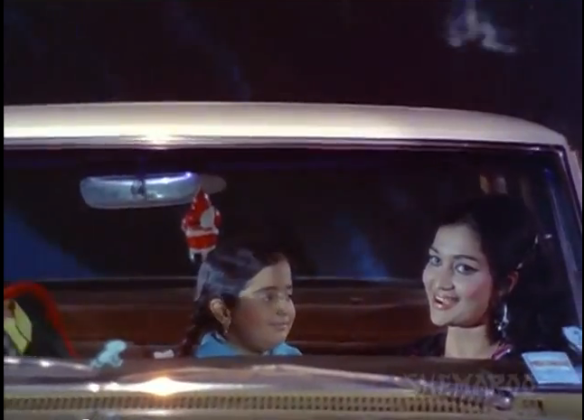
Asha Parekh sings a song for Baby Pinky on the ride back from Simla in Zakhmee (1975).  Take note of the Santa Claus figurine hanging off the rearview mirror.

Merry Christmas! Mrs. 55 and I hope that your holiday season is filled with lots of joy, laughter, and great music with your loved ones. In the spirit of the holidays, we are providing the lyrics and English translation to one of the few Christmas-themed songs that has ever graced the Bollywood silver screen: aao tumhe.n chaa.nd pe le jaaye.n from Zakhmee (1975).

Lata Mangeshkar sings for Asha Parekh and Sushma Shreshta sings for Baby Pinky in this song composed by Bappi Lahiri and penned by Gauhar Kanpuri. As is expected for a children’s anthem, the lyrics and melody in this song are nothing fancy. Here, in his debut film, Bappi Lahiri composes a catchy, pleasant tune that builds off of the classic Christmas carol “Jingle Bells.” In the introduction, we even get the rare opportunity to hear Lata Mangeshkar singing a snippet in English from the chorus of “Jingle Bells.” Her accent isn’t too distracting, so we won’t dwell on that point. Interestingly though, you might have noticed that the traditional lyrics to “Jingle Bells” have been modified to include a reference to Santa Claus.

When Baby Pinky asks where Santa Claus lives, Asha Parekh responds that he lives on the Moon and offers to take her there through this song. While I certainly can appreciate a fantasy lunar world now and again, I have to point out that the entire premise here is flawed! Santa Claus lives at the North Pole, which has nothing to do the with the Moon.  It is of slight concern to me that films back then were exposing Indian children to blatant geographical inaccuracies (outer space is not the same thing as the North Pole!) while butchering cherished holiday folklore!

Technicalities aside, we hope that watching this song will spread holiday cheer in true Bollywood style with its outrageous dream sequences, melodramatic facial close-ups, and heart-warming spirit. Enjoy, and have a very merry Christmas! Even if you wanted to go to the Moon, we hope that you received all the presents that you asked for this year. Until next time…

-Mr. 55
Asha

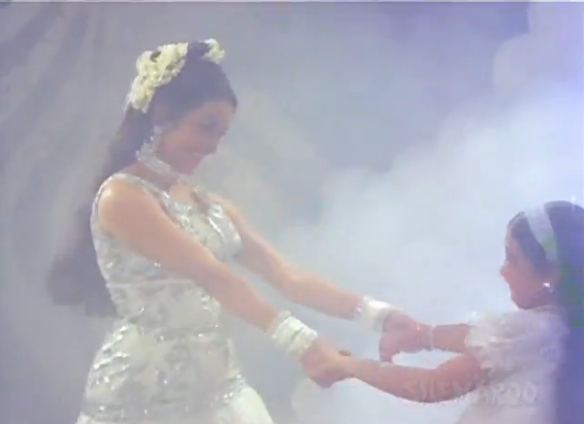
Asha Parekh and Baby Pinky dance together in a dream sequence depicting a fantasy lunar landscape.

Aao Tumhein Chand Pe Le Jaaye: Lyrics and Translation

Jingle bells, jingle bells,
jingle all the way!
Santa Claus is coming to town,
Riding on a sleigh!

Baby Pinky: Miss, Santa Claus kaa ghar kahaa.n hai?
Asha Parekh: chaan.d pe
Baby Pinky: hame.n bhii vahaa.n pe le chaliye na!
Asha Parekhacchaa?

aao tumhe.n chaa.nd pe le jaaye.n
Come, let’s take you to the Moon, 
pyaar bhare sapne sajaaye.n
and create dreams filled with love.
chhoTaa-saa ba.nglaa banaaye.n
Let’s build a small home,
ek nayii duniyaa basaaye.n
and settle a new world.

pyaar kii hai duniyaa duur aasmaa.n pe
A world of love exists in the far skies.
mil ke na bichhDe koii vahaa.n pe
No is separated after being united there.
aisii bhii ek Dagar hai, aisaa bhii ek nagar hai
There is a path to such a place.

gham jahaa.n soye aur khushi jaage
Sorrow sleeps there, while joy awakens.
aas kii hai manzil taaro.n se aage
It is a destination of hope beyond the stars.
vahaa.n dil rote nahii.n hai.n, aan.nsuu to hote nahii.n hai.n
Hearts do not cry there, for tears do not even exist.

aao tumhe.n chaa.nd pe le jaaye.n
Come, let’s take you to the Moon.

Glossary

chaa.nd: the Moon; sapne sajaanaa: to create dreams; ba.nglaa: a house in the Bengali style, a bungalow; duniyaa basaanaa to settle a world; bichhaDnaa: to be separated; Dagar: path; nagar: place, town; aas: hope; manzil: destination; aa.nsuu: tears.

Kirkland House Holiday Dinner and Dance

My blockmates and me at my last winter holiday formal at Harvard! (12.08.2012)

Raat Ke Humsafar Lyrics and Translation: Let’s Learn Urdu-Hindi

S

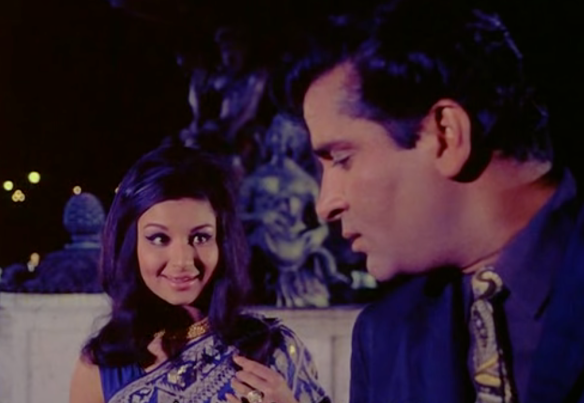
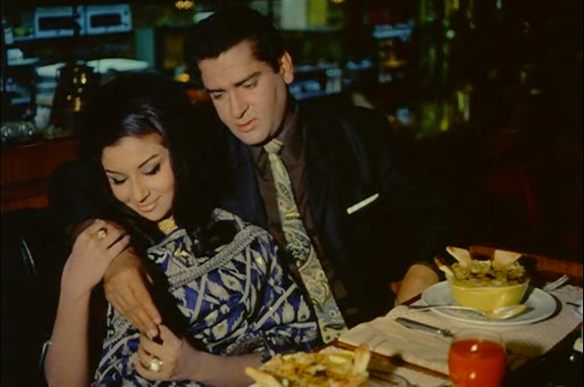
Sharmila Tagore and Shammi Kapoor enjoy the magic of Paris at night in An Evening In Paris (1967).

“If you are lucky enough to have lived in Paris as a young man, then wherever you go for the rest of your life, it stays with you, for Paris is a moveable feast.”

This quote by Ernest Hemingway is perhaps my favorite description of Paris, the quintessential city of lights and love. Being in Paris is truly a feast for all senses, but it is an opportunity that the average citizen in 1960s India would never receive. Not in person, at least.

In the 1960s, the advent of a new escapist genre of films allowed Indian audiences to be transported to exotic cosmopolitan locales through cinema. Films like Love in Tokyo (1966) and Night in London (1967) offered Indian movie-goers the chance to catch a glimpse of foreign culture from the comfort of their seats in a movie theater. In these tourist fantasies, consistency in plot and character development was not important; the real star of the show was the international destination being featured in the film.  The lyrics and English translation that we have provided today come from one of this genre’s most well-known examples: Shakti Samanta’s An Evening in Paris (1967) starring Sharmila Tagore and Shammi Kapoor.

The soundtrack for this film, composed by Shankar-Jaikishan and penned by Shailendra/Hasrat Jaipuri, contains a number of memorable hits. Yet, in my opinion, “raat ke hamsafar stands out from the rest for its beautiful melody, poetic lyrics, and passionate rendition by Mohammed Rafi and Asha Bhonsle. This romantic duet reflects a strong Western musical influence, which is enhanced by the gorgeous strings-centered orchestration and the non-traditional modulations in Rafi and Asha’s voices.

To bring an interesting perspective that may not be known to all fans of this song, there is a story behind its making that has been narrated by Nandu Chawathe, a musician in Shankar-Jakishan’s troupe. In a tragic turn of events, composer Shankar’s mother died the same morning that a musical sitting was planned for “raat ke hamsafar.”  Jaikishan, Shammi Kapoor, and others were waiting for Shankar, but most of the group left after hearing the news under the assumption that Shankar would like to take the day off. When Shankar arrived late, he asked Nandu Chawathe why everyone had left before the sitting occurred. Shankar was angry when he realized everyone had left and canceled the sitting without telling him when it was his mother who had died. An evening sitting was rescheduled the same day. When Shankar arrived, he turned off all the lights and lit a candle, much to everyone’s surprise. He hummed the opening line of “raat ke hamsafar,” and everyone was stunned instantly. The first line of the mukhDaa was even Shankar’s own words! Shammi Kapoor approved the composition, Shailendra finished out the rest of the lyrics, and a treasured gem of Hindi film music was born.

French onion soup!

Sharmila Tagore and Shammi Kapoor snuggle in a Parisian cafe as they enjoy a late-night snack–French onion soup!

Raat Ke Humsafar: Lyrics and Translation

raat ke hamsafar thak ke ghar ko chale.n
Oh companion of the night, let us wander home wearily,
jhuumtii aa rahii hai subaah pyaar kii
as the dawn of love arrives, swaying about.
dekh kar saamne ruup kii raushnii
After encountering the light of your beauty,
phir luTii jaa rahii hai subaah pyaar kii
the dawn of love is being stolen away.

sonevaalo.n ko ha.ns kar jagaanaa bhii hai
Those who are sleeping are to be awakened with a smile.
raat ke jaagato.n ko sulaanaa bhii hai
Those who have stayed awake tonight are to be lulled to sleep.
detii hai jaagne kii sadaa saath hii
Though it also gives the call to awaken,
loriyaa.n gaa rahii hai subaah pyaar kii
this dawn of love evokes calm by singing lullabies.

raat ne pyaar ke jaam bhar kar diiye
The night has filled our wine goblets of love.
aankho.n-aankho.n se jo mai.ne tum ne piiye
You and I drank from them with our eyes.
hosh to ab talak jaa ke lauTe nahii.n
After leaving us, our consciousness has yet to return.
aur kyaa laa rahii hai subaah pyaar kii?
What else does this dawn of love have in store?

kyaa kyaa vaade hue, kis ne khaayii qasam?
What promises were made tonight? Who has sworn to new vows?
is nayii raah par ham ne rakhe qadam
Upon this new path, we have taken our first steps.
chhup sakaa pyaar kab? ham chhupaaye.n to kyaa?
When could our love be hidden? Even if we could, so what?
sab samajh paa rahii hai subaah pyaar kii
This dawn of love is able to understand everything.

raat ke hamsafar thak ke ghar ko chale.n
Oh companion of the night, let us wander home wearily,
jhuumtii aa rahii hai subaah pyaar kii
as the dawn of love arrives, swaying about.

Glossary

hamsafar: companion; thaknaa: to be tired, weary; jhuumnaa: to sway; subaah: dawn; ruup: beauty; raushnii: light; luTaa jaanaa: to be stolen away; jaagat: one who is awake; sulaanaa: to lull to sleep; sadaa: call; saath hii: also; lorii: lullaby; jaam: wine goblet; hosh: consciousness; ab talak: yet; vaadaa: promise; qasam khaanaa: to take a vow; qadam rakhnaa: to take steps; chhupaanaa: to hide; samajh paanaa: to be able to understand.

Seine

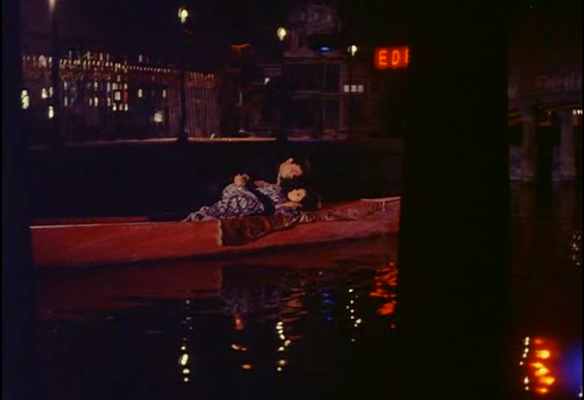
Sharmila Tagore and Shammi Kapoor float away into the night on the Seine.

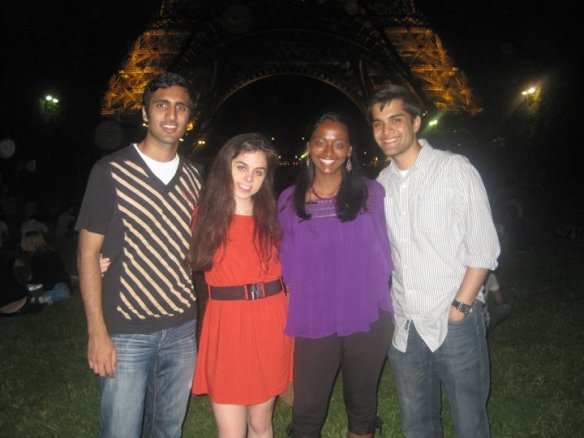
As an aside, I thought that I would say a word about the time that I spent in Paris during the summer of 2011! I was fortunate enough to receive a fellowship to conduct a research internship for three months in a cancer immunology laboratory at the Institut Curie. Besides the academic opportunities presented to me in the lab, my summer in Paris was a formative experience in terms of cultural enrichment and personal growth. I always look back fondly upon the time I spent in Paris, and the memories of that summer have stayed with me ever since. In keeping with the theme of this post, a couple of my pictures of Paris by night are presented below. Enjoy! À bientôt!

-Mr. 55
Seine

An early evening view of the Seine river.

EiffelTower

Enjoying the Eiffel Tower with friends on a Parisian summer night.

Five Anti-Feminist Bollywood Songs That Will Make You Cringe

Nutan Khandan 1965

Nutan literally worships the ground beneath her husband’s feet in Khandan (1965).

There is a careful line to be drawn in classic Bollywood cinema between love for a man and all-out worship. The songs below represent that unfortunate relic of Bollywood songs that transformed the excitement and bliss of romantic love into something plain unhealthy. We all know the genre I refer to. The trouble is, the songs are so good on a purely artistic level that we can’t help but keep playing them over and over again. Most of them were smash hits at the time of their release and continue to keep a significant slice of Indian audiences captivated, despite shifting social norms.

It’s easy to oversimplify this phenomena by saying, “it’s cultural” or “that was the way of thinking back then.” Yes, in India as in many countries, many women were raised to believe their ultimate role was in service to their husband and the framework for sexuality revolutionized worldwide in the 60s and 70s. But you can’t let it go at that for any similar explanation undermines the contradictory evidence within Indian history and the inherent wrong of this mindset. I don’t care if you lived in the 17th century or were born yesterday, we can’t raise our daughters like this. India is a country famous for electing the first female Prime Minister, for revering the strength and wisdom of its many awe-inspiring female gods, and where women become IT specialists and make salaries equivalent to their male counterparts. But there’s an uglier side too, and hopefully today we all feel a collective awkwardness when reminded of it in that great reflection of culture: film.

You’ll notice that all the songs on our cringe-tastic list are Lata Mangeshkar (half of them Nutan) hits, and it’s no surprise. Of course, it would be the heroine, not the bad modern girl left with an Asha side number, that would sing the song of self-flagellistic devotion. It’s a bad sign that some of these lines were thought to be representative of the “ideal” woman or wife–have we really improved anything by turning women into half-naked screens sirens instead? You decide.

Nutan just loves doing household chores and singing about her god-like husband in Saudagar (1973).

Personally, I have a violent reaction hearing some of these words come out of these actresses. Have a gander yourself and listen carefully to so-called Indian love of the 1950s and 1960s. Can you make it to the bottom of this list without squirming?

1. Tumhi Mere Mandir (Khandan 1965)

Cringe-worthy line: “Tumhi mere mandir, tumhi mere pujaa, tumhi devta ho.” (“You alone are my temple, you alone are my prayer, you alone are my God.”)

Gurrl, please stop it. This is seriously not healthy. Husbands should not take the place of God in your day-t0-day logic. How are you even functioning right now?

2. Aap Ki Nazaro.n Ne Samjha (Anpadh 1962)

Cringe-worthy lines: “Aap ki nazaro.n ne samjha pyaar ke qaabil mujhe…Keh rahi hai har nazar, banda parwar shukriya.” (“Your glances deemed me worthy of your love…every glance of mine says ‘Thank you, Lord.'”)

AAAAAAAAAAH. I’m in so much pain right now. So you’re telling me, you’re grateful that your husband “deemed you worthy” of his love? Help me. Check out our full translation if you’re in the mood for punishment!

3. Tera Mera Saath Rahe (Saudagar 1973)

Cringe-worthy line:”Tu kabhi mere khuda, mujhse bezaar na ho.” (May you never become angry with me, my revered God!)

Although this film is actually really good and takes some unexpected twists that make you love Nutan, I can’t deal with her in this song. She frolics around doing the chores with a pep in her step, just wishing and hoping that her GOD, oh wait, sorry, that man you married, will never be angry at her.

4. Hum Tere Pyaar Mei.N (Dil Ek Mandir 1963)

Cringe-worthy line: “Is tere charan kii dhuul se ham ne apnii jiivan maa.ng bharii…Ab in charano.n me.n dam nikle bas itnii aur tamannaa hai.” (“I put sindoor on my forehead from the dust at your feet…now I have but one more wish, which is to die at your feet.”)

OMG, calm down, girlfriend. You are legit scaring me. I don’t care if you’re being figurative, go take a cold shower and re-evaluate yourself!!! Our English translation of this monster is here.

5. Dheere Dheere Machal (Anupama 1966)

Cringe-worthy line: “Mujhko karne de! Karne de! Solah sringar! Koi aataa hai!” (Oh let me, let me, let me adorn myself and put on full-make up! He is coming!”)

OK I get it, we all try to look good for our man, but it’s the sheer frenzied desperation here that bothers me. Do you think your man gets that crazy to straighten his tie and brush his hair when he hears your painted toenails pattering on the ground in approach??

So how’d you do? Survived? Well done! Sorry about my rant, I just prefer a little equality in a relationship. For a rebuttal (and there are plenty to choose from), be sure to read our post on Mukesh’s “Koi Jab Tumhara Hriday” just in case you were afraid it was only women who knew how to grovel. Did we miss any cringe-worthy gems that always rankle your bones? Let us know in the comments!
-Mrs. 55