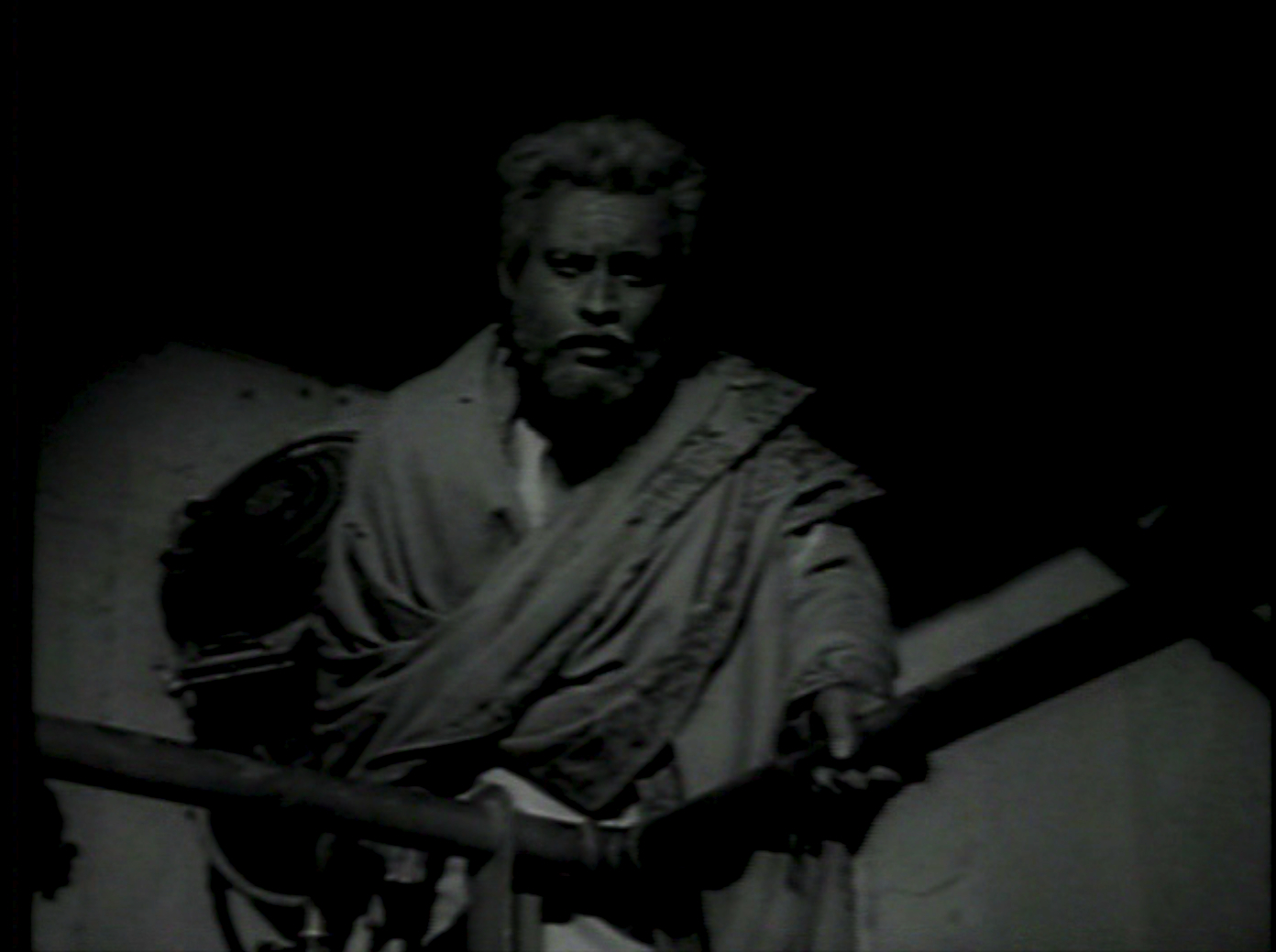
Guru Dutt reflects on his life as a once-great Bollywood director in the semi-autobiographical epic Kaagaz Ke Phool (1957).
The lyrics and English translation of Dekhi Zamane Ki Yaari are among the most beautiful you can find. The very soul of Guru Dutt can be found in the lyrics of Dekhi Zamaane Ki Yaari. The song is the heart of his masterpiece Kaagaz ke Phool (1957), and I contend contains the most passionate poetry you will ever find in a Bollywood song. Mohammed Rafi brings legendary Urdu poet Kaifi Azmi’s lyrics to an unheard of, feverish of climax that evokes a tragedy much deeper and more painful than any normal loss. Indeed, Kaagaz ke Phool tells a story of a different kind, and not one often explored: the slow destruction of an unfulfilled artist. I have already discussed some of the autobiographical parallels in this film in my translation of Waqt Ne Kiya, and will now present the actual story alongside the lyrics. It is one of the most haunting and powerful songs of that era.
Dekhi Zamaane ki Yaari reprises at different chapters in the film. The first starts in the opening as Guru Dutt plays an aged, dying film director who has returned to his old studio set before dawn. He sits up in the rafts and looks down on the empty world of show business below him. The song begins.
Dekhi Zamane Ki Yaari Lyrics and Translation:
Dekhi zamaane ki yaari
I have seen what goes for friendship in this world
Bichhade sabhee, bichhade sabhi baari baari
Everyone disperses, one by one they all leave
Kya le ke mile.N ab duniya se? Aa.Nsuu ke siva kuch paas nahii.N
What will I take with me now to greet this world? Besides tears I have nothing
Ya phuul hi phuul the daaman mei.N, ya kaanto.N ki bhi aas nahii.N
I was either embraced by flowers, or other times did not even aspire to thorns
Matlab ki duniya hai saari
The whole world is selfish
Bichhade sabhee, bichhade sabhi baari baari
Everyone disperses, one by one they all leave
The old man flashes back to younger days, when he was at the height of his career as a studio Bollywood director. The flashback transitions through a watery image of a lotus flower and a series of dutch-angled shots of eager fans. The high chorus interlude of the music inspires a sense of the divine, but when coupled with the teetering shots of the silent mob, also foreshadows something unnatural.

Guru Dutt smokes contemplatively on a balcony as fans await him below in Kaagaz Ke Phool (1957).
Waqt hai maherabaan, aarzuu hai javaan
During generous times, desires are young
Fikr kal ki karen, itni fursat kahaa.N
There is no leisure to worry about tomorrow
Daur yeh chaltaa rahe, rang uchaltaa rahe
Let this cycle continue, these colors keep splashing
Roop ko badalta rahe, jaam badalata rahe
Let the attractions keep changing, the intoxicants keep changing

Fans crowd Guru Dutt for signatures on empty pieces of paper that embody the theme of his film.
And here Guru Dutt masterfully transitions, for this is a story that is more than merely a tragic fall from societal grace. He shows us a character who has always felt alone–both when the world stood with him and when it abandoned him, searching for meaning in the dazzling lights of his own studio. It’s the kind of tragedy that doesn’t scream and doesn’t cause a colorful sensation. It’s one that softly and slowly erodes the soul–a desperate hunt for a human connection.

Guru Dutt comes home to a perpetually empty house in Kaagaz Ke Phool (1957)
Raat bhar mahamaan hai.N bahaare.N yahaa.N
Here, Spring is our guest the entire night
Raat gar dhal gayi, phir ye khushiyaa.N kahaa.N
But if the night ends, where do these joys go?
Pal bhar ki khushiyaa.N hai.N saari
All of these joys are only momentary
Badhane lagi beqaraari, badhane lagi beqaraari
And then restlessness begins to grow, restlessness begins to grow
Falling down a spiraling slope, he finds love at last and loses not only her, but his chance at happiness with his daughter, his friends, a wife, and his work. No producer will hire him, no actors will work with him. Everything these people once said and did for him was false. He returns years later to his old studio and sees Waheeda Rehman, the woman he loved and runs away in horror. Mohammed Rafi cries out with a violent passion in this segment–a ferocious plea to society and a desperate call to the suffering of his being. It is here that the meaning of “kaagaz ke phool” is explained–that dangerous unfeeling world of pretense. As the song comes to an end, Rafi gently sings the line, “Yeh khel hai kab se jaaari…” [“This game has been played so long…”] In his voice is the awful beauty of true resignation. You feel how tired this man is.

Utterly defeated, Guru Dutt looks back for a final time at the woman he loved and the world that once belonged to him in Kaagaz Ke Phool (1957).
Ud jaa! Ud jaa pyaase bha.Nvare! Ras na milega khaaro.N mei.N
Fly away thirsty bumblebee! You will not find nectar in these thorny shrubs
Kaaghaz ke phuul jahaa.N khilte hai.N, baiTh na un gulzaaro.N mei.N
Do not sit in those gardens where flowers of paper bloom
Naadan tamanna reti mei.N, ummiid ki kashti khaiti hai
In the sands of innocent desire, the boat of hope struggles to stay afloat
Ek haath se deti hai duniyaa, sau haatho.N se le leti hai
What the world gives with one hand, it takes away with one hundred
Yeh khel hai kab se jaari…
This game has been played for so long…
Bichhade sabhee, bichhade sabhi baari baari
Everyone disperses, one by one they all pull away

Returning to the director’s chair, Guru Dutt bids farewell to society in Kaagaz Ke Phool (1957)
Then the flashback ends. He is an old man again hiding in the alcoves of his former studio. With careful decision, he sits down once more in the director’s chair in the center of the set.
Dekhi zamaane ki yaari
I have seen what goes for friendship in this world
Bichhade sabhee, bichhade sabhi baari baari
Everyone disperses, one by one they all leave
Light floods the empty set. Dawn has broke and the crew enters to find an old unfamiliar man who has died sitting in the director’s seat. The producer yells for his body to be removed so shooting can begin. And the cycle continues.

Kaagaz Ke Phool (1957) finishes over the blurred image of studio lights.
Glossary:
yaari: friendship; aa.Nsuu: tears; matlab: selfish (a homonym translates as “meaning”); duniyaa: society, world; waqt: time; aarzuu: desire; fikr: worry; fursat: leisure; daur: cycle, generation; rang: colour; uchalnaa: to splash, to scatter; jaam: intoxicant; mahamaan: guest; beqaraari: restlessness; bha.Nwara: bumblebee; ras: nectar; khaar: thorny shrub; kaaghaz: paper; gulzaar: garden; naadaan: innocent; reti: sand; ummiid: hope; kashti: boat; khel: game
-Mrs. 55

 Mr. & Mrs. 55 - Classic Bollywood Revisited!