O Duniya Ke Rakhwale Lyrics and Translation: Let’s Learn Urdu-Hindi

BB

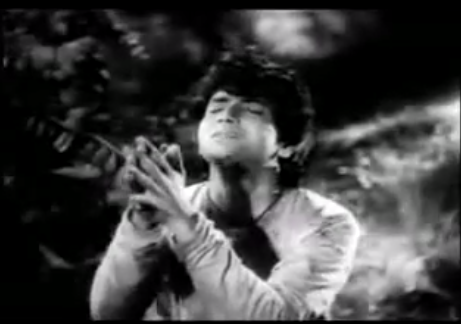
Agonized by his fate, Bharat Bhushan entreats the Lord to heed his grievances in Baiju Bawra (1952)

On April 15, 2013, an unspeakable tragedy hit my current hometown of Boston when two bombs were set off at the finish line of the Boston Marathon. This annual event held on Patriot’s Day attracts nearly 500,000 spectators who come to watch amateur and professional runners from all over the world. Considered one of the largest acts of terrorism ever to strike Boston, the marathon bombings killed 3 individuals and wounded nearly 300 victims. Tragedy is always unsettling, but these attacks have been particularly difficult to grapple with because of their proximity to home. As the local community finds the strength to overcome, our thoughts and prayers at Mr. and Mrs. 55 are with all those who were affected by this senseless act of violence in Boston.

Five days after the attack, a harrowing manhunt for one of the suspects at large put the entire city of Boston on lockdown with a “shelter in place” order for all residents.  Within the safe confines of my dorm at Harvard, I found comfort during this time in old Hindi film songs–something familiar and close to my heart.  In the aftermath of this tragedy, there was one song in particular that resonated deeply with my state of mind: o duniyaa ke rakhvaale from Baiju Bawra (1952). In commemoration of the victims of the Boston Marathon bombings, we offer the lyrics and English translation to this timeless devotional classic. 

521732_10152739462480304_1562200480_n

Composed by Naushad in the somber and grave raga Darbari Kanada, this evergreen number from Baiju Bawra (1952) is one of Mohammed Rafi’s best renditions. His pathos-laden voice navigates through a difficult melody spanning nearly two octaves that culminates in a high Bb4 (taar shuddh ma in the key of F) during the final climax. In light of the recent tragedy, however, we will focus on the message presented by Shakeel Badayuni’s lyrics. Without using elevated vocabulary, Badayuni masterfully captures the essence of an important philosophical maxim that may help us cope with the recent events: the reconciliation of opposites. Expressed as frustration and anger, the song’s protagonist struggles to accept the contradictory nature of the world he inhabits. Why were storms created along with ships? Why must we be separated from our loved ones after being united? Why does hope exist along with despair? And ultimately, why was evil created along with good? 

Failing to find adequate responses to these difficult questions, the protagonist lashes out in grievance against his Lord. Indeed, Badayuni makes a bold move in the context of a bhajan by having the protagonist refer to his Lord as harjaayii (unfaithful, betrayer). The protagonist’s frustration is understandable given that everything familiar to him in this world has turned against him. Using metaphorical imagery, Badayuni describes this feeling through the transformation of conventional entities: rain into fire, flowers into embers, night into snake, and stars into stones. The lyrics continue to take a few unconventional turns when the protagonist asks the Lord to take his life (“jiivan apnaa vaapas le le, jiivan denevaale“) and when the devotee subversively offers his blessings to the Lord (“bhagvaan bhalaa ho teraa!”) in sardonic resignation. 

At their core, these lyrics encourage the listener to appreciate the value of prajna, a Sanskrit term used to describe the wisdom of non-duality. Based on the fundamental reconciliation of dual phenomena, this worldview posits that the demarcation of polar opposites leads to further conflict and suffering.  Instead of placing last week’s tragic events within a framework of good versus evil, valuing prajna instructs us to focus our energy on reflection and the discovery of underlying causes.  Additionally, in Shakeel Badayuni’s words, we must not lose hope in the face of misfortune (“qismat TuuTii aas na TuuTii) as we rise above our differences and provide support to one another in this trying time of need.  

Here at Mr. and Mrs. 55, we would like to reiterate our deepest condolences and sympathies to all those in our community and beyond who were affected by the recent Boston Marathon attacks. For those who are interested, we encourage donations to One Fund Boston, a charitable organization established by Mayor Thomas Menino and Gov. Patrick Deval to support the victims of this tragedy. Stay strong, Boston!

-Mr. 55
s

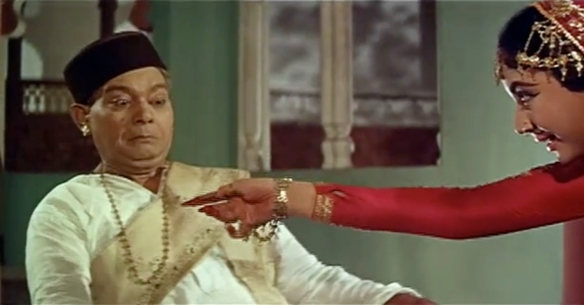
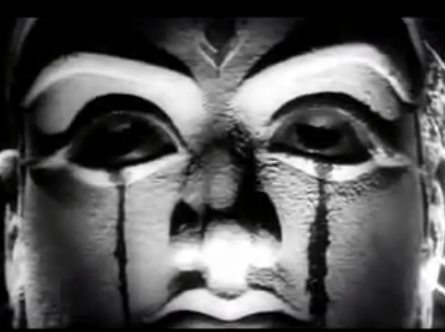
Lord Shiva sheds tears upon his devotee’s plight in Baiju Bawra (1952)

O Duniya Ke Rakhwale: Lyrics and Translation

bhagvaan, bhagvaan, bhagvaan!
Oh Lord!

o duniyaa ke rakhvaale! sun dardbhare mere naale
Oh protector of this world! Please heed my woeful lamentations.

aash niraash ke do rango.n se duniyaa tuu ne sajaayii
You have adorned this world with the two colors of hope and despair.
naiyaa sang tuufaan banaayaa, milan ke saath judaayii
You created the storm along with the boat, separation along with union.
jaa dekh liyaa harjaayii
Lord, I have witnessed your betrayal.
 o luuT gayii mere pyaar ki nagarii, ab to niir bahaa le
Oh! My city of love has been plundered; now shed a few tears upon my plight.

aag banii saavaan kii barkhaa, phuul bane angaare
The monsoon rains have turned into fire, while the flowers have become embers.
naagin ban gayii raat suhaanii, patthar ban gaye taare
The beautiful night has become a snake, while the stars have turned into stones.
sab TuuT chuke hai.n sahaare
All of my support has been lost.
o jiivan apnaa vaapas le le, jiivan denevaale
Oh provider of life! Please take back this life from me.

chaa.nd ko Dhuu.nDe paagal suuraj, shaam ko Dhuu.nDe saveraa
The mad Sun seeks the Moon, while the morning searches for the night.
mai.n bhii Dhuu.nDuu.n us priitam ko ho na sakaa jo meraa
I too search for the beloved who could not be mine.
bhagvaan bhalaa ho teraa!
Lord, may you be blessed!
o qismat phuuTii aas na TuuTii, paa.nv me.n paD gaye chhaale
Oh! I have suffered misfortune without losing hope, though my feet have become sore with blisters.

mahal udaas aur galiyaa.n suunii, chup-chup hai.n diivaare.n
The palace is forlorn with its deserted alleys and silent walls.
dil kyaa ujaDaa, duniyaa ujaDii, ruuTh gayii hai.n bahaare.n
My heart has been ravaged, my entire world has been destroyed, and even the new spring sulks in displeasure.
ham jiivan kaise guzaare.n?
How can I spend my life like this?
o mandir girtaa phir ban jaataa, dil ko kaun sambhaale?
Oh! Fallen temples can be rebuilt, but who can mend my broken heart?

o duniyaa ke rakhvaale! sun dardbhare mere naale
Oh protector of this world! Please heed my woeful lamentations.

Glossary

bhagvaan: Lord; duniyaa: word; rakhvaalaa: protector; dardbharaa: woeful; naale: lamentation; aash: hope; niraash: despair; sajaanaa: to adorn; naiyaa: boat; tuufaan: storm; milan: union; judaayii: separation; harjaayii: betrayer, unfaithful one; luuT jaanaa: to be plundered; nagrii: city, town; niir bahaanaa: to shed tears; aag: fire; saavan: monsoon; barkhaa: rain; naagin: snake (female); suhaanii: lovely, beautiful; sahaaraa: support; jiivan: life; vaapas lenaa: to take back; denevaalaa: provider; chaa.nd; Moon; paagal: mad, crazy; suuraj: Sun; shaam: evening, night; saveraa: morning; priitam: beloved; “(kisii kaa) bhalaa ho!“: an expression used to indicate the offering of blessings to someone; chhaalaa: blister; mahal: palace; udaas: sullen, forlorn; galii: alley; suunaa: empty, deserted; chup-chaap: silent; diivaar: wall; ujaDnaa: to be uprooted, ravaged or destroyed; ruuTh jaanaa: to sulk; bahaar: spring; jiivan guzaarnaa: to spend life; mandir: temple; sambhaalnaa: to manage, mend.
shadows

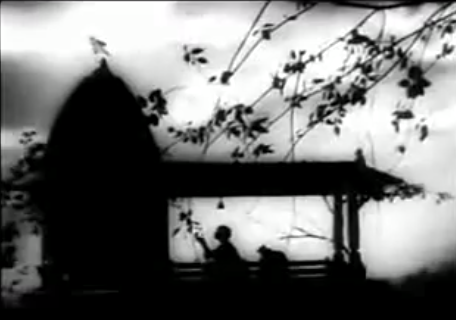
A dejected Bharat Bhushan asks for his life to be taken back in Baiju Bawra (1952)
Inhi Logon Ne Lyrics and Translation: Let’s Learn Urdu-Hindi

MK

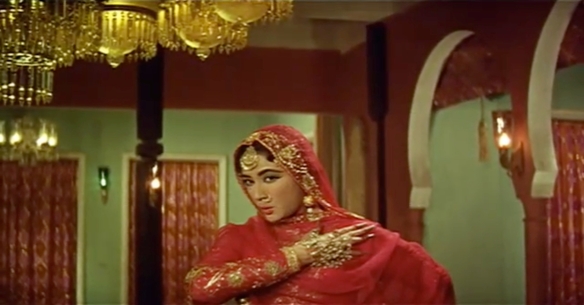
The tragically beautiful film Pakeezah (1972) stars Meena Kumari in its leading role.

Today, we continue our series on the eternally beautiful Pakeezah (1972) by providing the lyrics and English translation to inhii.n logo.n ne, a classic gem that has defined the genre of Bollywood mujras since its release.  

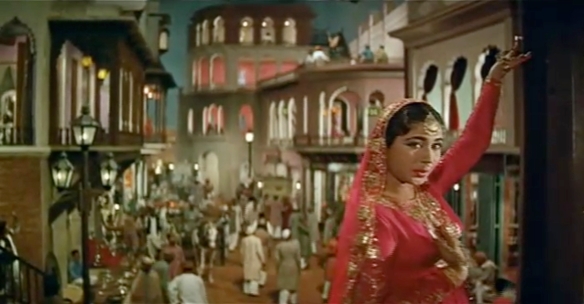
Tuned by Ghulam Mohammed and penned by Majrooh Sultanpuri, this song was perhaps the most widely appreciated number (it reached #2 on the 1972 Binaca Geet Mala list!) from a soundtrack full of memorable compositions like chalte chalte and mausam hai aashiqaanaa. Although its light, Yaman-based melody evokes a playful sprit, the underlying tragedy expressed in the lyrics of this song is unexpectedly ironic. In spite of the pain she suffers from being stigmatized as a tavaaif, Meena Kumari is forced to render this mujraa with verve and a smile for her patrons at the brothel. While addressing her beloved saiyaa.n, she laments how the men around her have stolen her innocence and modesty, which is symbolically represented by the loss of her DupaTTaa. To persuade her lover, she implores him to ask three characters in the song to confirm that her virtue was soiled against her will: the cloth merchant, the cloth dyer, and the constable. Representing different facets of society, these characters serve as witnesses to her loss of innocence and sometimes take part in the process (e.g. when the constable snatches her scarf away at the market.) To add to the irony, the red color of the lost scarf and Meena Kumari’s on-screen outfit are reminiscent of the colors adorning a South Asian bride on her wedding day. Yet, the audience is acutely aware that a courtesan in such a position will provoke condemnation and disgust for attempting to engage in the conventional structures of love and marriage established by the society around her. 

In addition to carrying a powerful message about social stigma in Indian society, these lyrics are memorable for their apabhransa (corrupt, non-grammatical) use of Urdu-Hindi. Reminiscent of the Awadhi dialect, a number of modifications to modern standard Hindi have been used here for poetic effect:

le liinaa = le liyaa (have taken)
bajajvaa = bajaj (cloth merchant)
hamrii = hamaarii (my, our)
sipaiyaa = sipaahii (constable)
bajariyaa = bazaar (market)

These substitutions really stick in the listener’s mind and give the lyrics of inhii.n logo.n ne a unique linguistic flavor that stands out from other compositions from the same period. Non-standard dialects such as Braj find prominence in classical Hindustani bandishes, but the lyricists for Bollywood cinema of the Golden Age tended to rely on standard Urdu-Hindi for most of their work. 

Songs like inhii.n logo.n ne have historically cast a sympathetic light on the tragic lives led by courtesans of yesteryear, and it is a well-known fact that fans have been fascinated with this genre of music and movies since the earliest days of the Hindi film industry. To conclude, I’ll leave you with a thought-provoking question: given the conservative social climate of 1960s and 1970s India, why did courtesan-based films (e.g. Pakeezah, Mughal-e-Azam, Amar Prem) resonate intimately with Indian audiences? Although deep-seated stigmas surround tavaaifs and their profession, what is the driving force behind India’s obsession with the story of a courtesan with a heart of gold? Let us know your thoughts in the comments!

-Mr. 55

P.S. Check out a rare black and white version of this song filmed on a younger Meena Kumari in 1956 (16 years before the film’s eventual release)!

MK

Meena Kumari’s playful spirit in ‘inhii.n logo.n ne belies the tragic reality of her profession as a courtesan in Pakeezah (1972).

Inhi Logon Ne: Lyrics and Translation

inhii.n logo.n ne, inhii.n logo.n ne
These people, these people
inhii.n logo.n ne le liina DupaTTaa meraa

These people have taken away my scarf of modesty.

hamrii na maano, saiyaa.nbajajvaa se puuchho
If you don’t accept my word, oh beloved, ask the cloth merchant
jis ne asharfii gaj diinaa DupaTTaa meraa
who sold me a yard of its fabric for a gold coin.

hamrii na maano, saiyaa.n, ra.ng rajvaa se puuchho
If you don’t accept my word, oh beloved, ask the cloth dyer
jis ne gulaabii ra.ng diinaa DupaTTaa meraa
who gave my scarf its pink color.

hamrii na maano, saiyaa.n, sipaiyaa se puuchho
If you don’t accept my word, oh beloved, ask the constable
jis ne bajariyaa me.n chhiinaa DupaTTaa meraa
who stripped away my scarf at the market.

inhii.n logo.n ne le liinaa DupaTTaa meraa
These people have taken away my scarf of modesty.

Glossary

le lenaa: to take away; DupaTTaa: a long scarf covering a woman’s chest, a traditional symbol of modesty and honor for Indian women; hamrii (baat): my word; maannaa: to accept, believe; bajajvaa: cloth merchant; asharfii: a gold coin issued by Muslim dynasties; gaj: a unit of measurement equivalent to a yard; saiyaa.n: beloved; rang rajvaa: cloth dyer; gulaabii: pink; sipaiyaa: constable; bajariyaa: market; chiinnaa: to strip away.

MK

Adorned in red and gold ornaments, Meena Kumari’s appearance resembles that of an Indian bride in Pakeezah (1972).

Jab Dil Hi Toot Gaya Lyrics and Translation: Let’s Learn Urdu-Hindi

KL Saigal in Shahjehan 1946

Pre-independance Indian actor and singer, K.L. Saigal plays a Mughal-era lover in in Shahjehan (1946).

Our next lyrics and English translation is of the ageless song “Jab Dil Hi Toot Gaya” from Shahjehan (1946). Known widely as early playback singer K.L. Saigal’s swansong, “Jab Dil Hi Toot Gaya” is a song close to my heart and family. K.L. Saigal was my great-great uncle through my Kashmiri Nani who grew up in Jammu near Saigal sahib‘s birthplace. It’s a song that defined a generation, and one that sadly, many of my generation have never known. The great K.L. Saigal’s voice was the voice of my grandparents–the voice of men and women who can remember a time before India gained independence, before the partition destroyed Punjab, and before Bollywood was redefined as a spectacle of the mass ornament. He was a superstar before there was Mohammed Rafi and before the rise of Lata Mangeshkar. For he lived and died in an era that did not know the glitter of Eastmancolor or the dazzle of expensive special effects. K.L. Saigal was an artist when poetry reigned supreme.

KL Saigal Devdas 1935

K.L. Saigal and co-star Jamuna by the riverbanks in the 1935 Hindi epic Devdas.

Like Al Jolson in America, K.L. Saigal revolutionized music in the 1930s and 1940s in the early days of “talkies” when the concept of a “playback singer” had not been born. He acted in his own films–including the famous 1935 Devdas that has been since remade by countless Bollywood thespians. You may not know his work, but you know his legacy. He left a profound stylistic impact on the great singers of the Golden era that would follow (think Mukesh’s “Dil Jalta Hai” from Pehli Nazar to understand how hard these artists sought to emulate Saigal sahib)! Perhaps you recall the song playing in background of Dilwale Dulhania Le Jayenge (1995) as Simran’s father returned home–it was none other than K.L. Saigal’s “Gham Diye Mushtaqil,” meant to represent the traditions of an backward generation–but in my opinion that sells it unfairly short. K.L. Saigal’s masterpieces may seem old-fashioned now, but they were the hallmark of those who fought for civil rights and equality, who dreamed of romance and greater things than the dull lives they were trapped in, and who believed in a future better than their own. Perhaps his audience is not so different from today’s. Me, when I hear “Jab Dil Hi Toot Gaya“, I am always reminded of my grandparents who used to sing this song at the most unexpected moments–for in its words are not just the roots of Bollywood as we know it, but of our own traditions.

KL Saigal

K.L. Saigal (1904-1947) passed away at the age of 43 after years of struggling with alcoholism. Someone tell me he doesn’t look straight from a German Expressionist film here–look at those piercing eyes!

I hope I can convince you to open your mind to the world of Hindi cinema before the Golden Age–at least this once! I think Saigal sahib‘s depth will surprise you–and perhaps you’ll recognize in the soulful lyrics of Majrooh Sultanpuri the many reincarnations of a similar theme that followed. In Shahjehan (1946), K.L Saigal plays a rejected lover involved in a complicated royal coup that ultimately ends in both a happy marriage for him and the construction of the Taj Mahal for eternity. Intriguing, no? Our lyrics and English translation to “Jab Dil Hi Toot Gaya” are below. Follow along with the video, and do let us know your thoughts on this old school number in the comments!

Jab Dil Hi Toot Gaya Lyrics and Translation:

Jab dil hii TuuT gayaa
When my heart is broken
Ham jii ke kyaa kare.Nge?
What can I do by living?

Ulfat ka diyaa hamne is dil mei.N jalaayaa thaa
I lit the flame of love in my heart
Umiid ke phoolo.N se is ghar ko sajaayaa thaa
I decorated this house with the flowers of hope
Ek bhedii looT gaayaa
And one of my own stole everything
Ham jii ke kyaa kare.Nge?
What can I do by living?
Jab dil hii TuuT gayaa
When my heart is broken

Maaluum na thaa intii mushkil hai.N merii raahe.N
I was not aware that my paths would prove so difficult
Armaan ke bahe aa.Nsuu, hasrat ne bhari aahe.N
I shed tears of desire, unfulfilled wishes filled my sighs
Har saathii chhuuT gayaa
Every companion abandoned me
Ham jii ke kyaa kare.Nge?
What can I do by living?
Jab dil hii TuuT gayaa
When my heart is broken

Glossary:

ulfat: love; diyaa: flame, candle; umiid: hope; phool: flower; bhedi: an insider, one of your own; maalum: awareness; mushkil: difficult; armaan: desire; aa.Nsuu: tears; hasrat: unfulfilled wish; aah: sigh; saathii: companion

Did you know that at the age of 13, a young Mohammed Rafi actually met K.L. Saigal? According to a new biography, Rafi sahib got the chance to meet his idol at a K.L. Saigal concert in Lahore in which young Rafi spontaneously performed a Punjabi solo to the accolades of the crowd. K.L. Saigal was so impressed with the boy’s talent, he patted him on the head and declared he would be a great singer one day!

-Mrs. 55